
Dyslexia Friendly Education: A School and Home Guide
Dyslexia-friendly education centers on multisensory, structured, sequential instruction paired with simple classroom and home adaptations that any teacher or parent can start this week. The International Dyslexia Association and the U.S. Department of Education both point to the same foundation: explicit, systematic literacy instruction delivered early, consistently, and across settings. Programs recommending 30–45 minutes per day of focused practice show meaningful gains, especially when classroom and home routines align.
Start here today:
- Request a universal screening from your child’s teacher or school specialist if you have not already.
- Swap board backgrounds to cream or off-white and increase font size to reduce visual strain.
- Add 15 minutes of multisensory phonics practice at home each evening using letter stamps, sand trays, or tactile manipulatives.
- Ask the school for a written intervention plan aligned to a structured literacy scope and sequence.
- Pair literacy work with a hands-on STEAM activity to rebuild confidence after a hard reading session.
Table of Contents
- What dyslexia-friendly education looks like in practice
- Structured literacy is the gold standard for dyslexic learners
- Classroom adaptations teachers can put in place this week
- Screening, assessment, and intervention: when to act
- Assistive tools and accessible content available in the U.S.
- Daily home routines parents can use right now
- How to measure progress and what it realistically costs
- Key Takeaways
- Why hands-on STEAM changes the story for dyslexic learners
- Teamgeniussquad STEAM kits: a confidence-building complement to literacy intervention
- Authoritative sources and where to learn more
What dyslexia-friendly education looks like in practice
Dyslexia-friendly education means deliberately designing instruction, environment, and assessment so that students with reading differences can access, engage with, and demonstrate learning without the format itself becoming the barrier. It is not a single program or a diagnosis-gated service. The IDA defines Structured Literacy as explicit, systematic, cumulative, and diagnostic instruction covering phonology, sound-symbol relationships, morphology, syntax, and semantics. The U.S. Department of Education’s inclusive practices guidance extends that principle: good instruction, flexible assessment, and multiple ways to demonstrate learning benefit every student in the room, not just those with a formal diagnosis. Universal classroom supports remove the need for students to “prove” a disability before receiving access.
Structured literacy is the gold standard for dyslexic learners
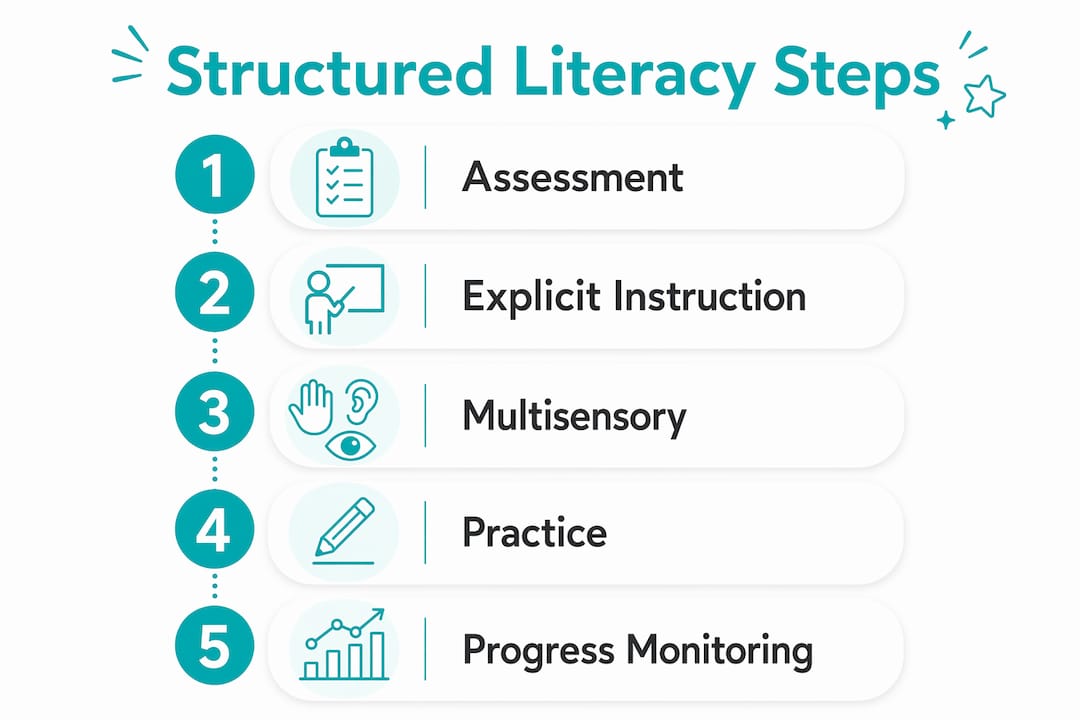
Structured Literacy, the umbrella term the IDA uses for validated reading instruction methods, is the most research-supported approach for students with dyslexia. It is explicit (nothing is left to inference), systematic (skills build in a deliberate sequence), cumulative (new learning connects to prior learning), and diagnostic (the teacher adjusts based on ongoing data). Three well-known program families sit within this approach:
- Orton-Gillingham family: The foundational multisensory method from which many current programs descend; lessons integrate visual, auditory, and kinesthetic-tactile channels simultaneously.
- Wilson Reading System: A structured, 12-step program built on Orton-Gillingham principles, designed for students who have not responded to other interventions.
- Lindamood-Bell methods (LiPS): Focuses on phoneme awareness and the sensory-motor feedback of speech sounds, particularly useful for students with weak phonological processing.
Intensive one-on-one structured literacy instruction is the gold standard for developing automatic word recognition. Students need immediate corrective feedback and a high volume of structured practice. A common pitfall is expecting classroom teachers to replace structured literacy specialists. The better model: coordinate classroom instruction with outside therapists, aligning goals and materials to the same scope and sequence so the student hears one consistent language of learning.
Pro Tip: Schedule a brief weekly check-in between the classroom teacher and any outside reading specialist. Even a five-minute alignment call prevents the student from receiving conflicting phonics rules in two different settings.
Classroom adaptations teachers can put in place this week
Small environmental changes reduce visual processing strain significantly before a single lesson is redesigned. Research-backed adjustments include:
- Front or distraction-reduced seating
- Cream or off-white board backgrounds instead of bright white
- High-contrast print (dark ink on light, matte paper)
- Enlarged fonts (14pt minimum for handouts) with generous line spacing
- Simplified worksheet layouts with one task per section
Beyond the physical setup, teaching strategies matter just as much. Explicit instruction means stating the learning target plainly, modeling the skill, guiding practice with corrective feedback, and releasing responsibility gradually. Chunked directions (one step at a time, written and spoken) reduce working memory load. Pre-teaching vocabulary before a lesson means students spend cognitive energy on decoding meaning, not decoding words.
For hands-on activity ideas, letter-stamp sets let students build words physically, reinforcing phoneme-grapheme connections through touch. STEAM-styled literacy integration, where students write a hypothesis, label a diagram, or narrate an experiment, gives reading and writing a purposeful context. The U.S. Department of Education recommends multiple demonstration pathways: oral presentations, hands-on projects, and portfolios alongside or instead of traditional tests.
Screening, assessment, and intervention: when to act
Early identification changes outcomes. The graduated approach moves from universal supports to targeted intervention to intensive one-on-one work, escalating only when progress data shows a student needs more.
- Universal screening (kindergarten or grade 1): All students complete a brief phonological awareness and letter-sound screen. Flag students scoring below benchmark for closer monitoring.
- Progress monitoring (every 2–4 weeks): Track fluency and accuracy with brief curriculum-based measures. If a student is not closing the gap after 6–8 weeks of classroom-level support, escalate.
- Targeted small-group intervention (Tier 2): Three to five students, three to five times per week, using a structured literacy curriculum. Document goals and review data monthly.
- Intensive one-on-one intervention (Tier 3): Daily structured literacy sessions, 30–45 minutes each, with a trained specialist. This is the MTSS Tier 3 or special education level.
- Formal evaluation for IEP/504: If intensive intervention does not produce adequate progress, request a comprehensive psychoeducational evaluation through the district. Under IDEA, the school must complete the evaluation within 60 days of written parental consent.
- Legal rights: IDEA guarantees a free appropriate public education (FAPE) for eligible students. Section 504 of the Rehabilitation Act covers students who need accommodations but may not qualify for special education. Both laws apply in U.S. public schools. For older students navigating testing accommodations, documentation from this process is often required.
Contact sequence: classroom teacher → reading specialist or school psychologist → district assessment team.
Assistive tools and accessible content available in the U.S.
| Tool Category | Primary Use Case | Strength | Caution |
|---|---|---|---|
| Text-to-speech (e.g., built-in iOS/Android readers) | Accessing grade-level text independently | Reduces decoding burden | Does not build decoding skill on its own |
| Audiobook libraries (Learning Ally, Bookshare) | Curriculum access for print-disabled students | Human-narrated, curriculum-aligned | Requires eligibility verification |
| OpenDyslexic font | Reducing letter-reversal confusion | Free, browser/device installable | Mixed research; try it and measure response |
| Tactile manipulatives and screen-free STEAM kits | Multisensory phonics and concept building | Reduces screen fatigue; builds engagement | Needs pairing with explicit literacy instruction |
| Speech-to-text (Google Docs Voice Typing, built-in dictation) | Bypassing handwriting barriers for written output | Immediate access | Students still need explicit writing instruction |
Learning Ally provides human-narrated audiobooks specifically for students with print disabilities; membership is available through schools or families. Bookshare offers a free library for U.S. students with qualifying disabilities, including dyslexia. Both require a brief eligibility process.
Over-reliance on digital tools can raise cognitive load by adding screen-switching costs. Pairing tech with physical alternatives, such as screen-free STEAM kits and tactile manipulatives, reduces that burden and keeps engagement high. For a balanced look at digital options, apps for dyslexic learners can complement, but should never replace, structured literacy practice.
Daily home routines parents can use right now
A consistent 20–30 minute home routine, aligned with what the classroom is working on, accelerates progress more than any single tool.
- Multisensory phonics (5–10 min): Use letter stamps, sand trays, or clay to build and blend the week’s target words. Saying, seeing, and touching simultaneously strengthens the connection.
- Read-aloud (10 min): Read to your child at a level above their independent reading level. This builds vocabulary and comprehension without the decoding pressure.
- Vocabulary pre-teach (3–5 min): Before a new school unit, introduce three to five key words using pictures, gestures, or real objects.
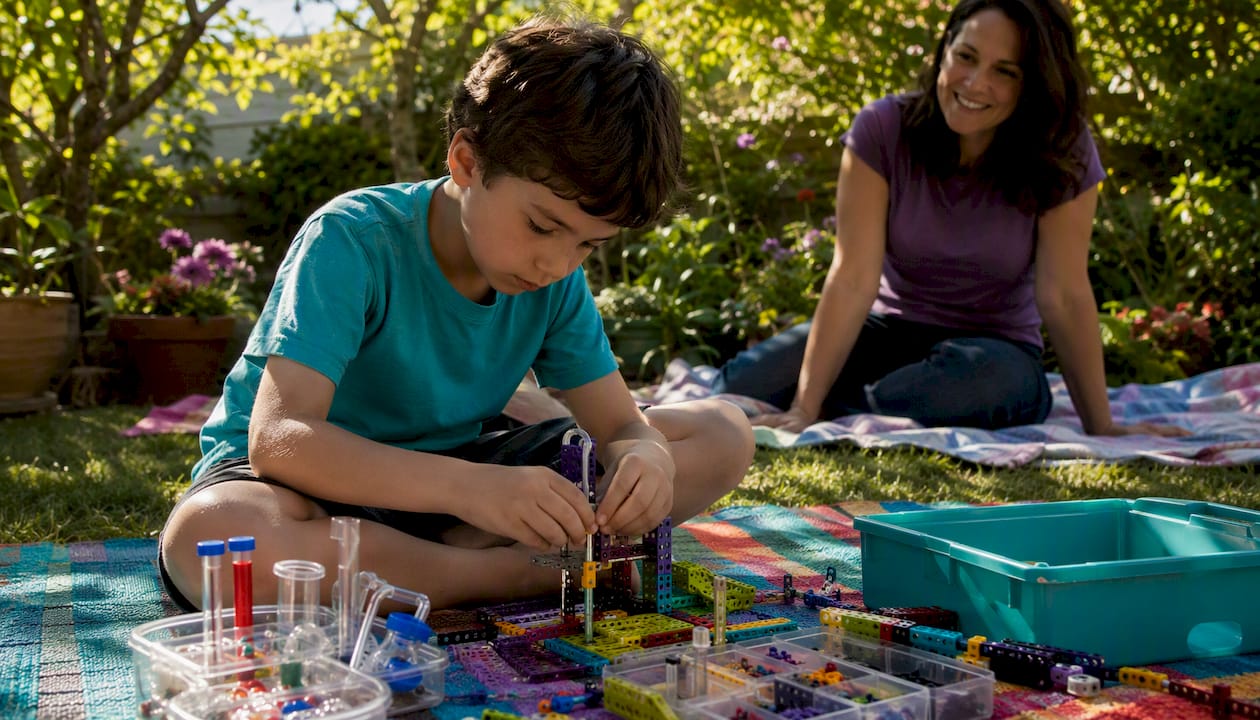
- Hands-on STEAM project (15–20 min, 2–3 times per week): Frame it as invention or discovery. Framing tasks as discovery shifts the student’s mindset from failure toward curiosity, a practical reframing that research supports for sustained engagement.
- Reflection journal (5 min): Ask your child to draw or dictate one thing they discovered. Identity-building through the role of “scientist” or “inventor” counters the shame cycle that often accompanies reading difficulty.
STEAM literacy integration at home does not require elaborate materials. A simple experiment paired with a labeled diagram or a spoken explanation builds the same multisensory pathways as a formal lesson. Research finds roughly 60% of individuals with dyslexia have at least one co-occurring condition, so keeping the emotional tone of home practice warm, low-stakes, and success-oriented matters as much as the content itself.
How to measure progress and what it realistically costs

Realistic timeline: Meaningful gains in word reading accuracy typically appear after 12–20 weeks of daily structured instruction. Fluency and comprehension gains follow. Early intervention (kindergarten through grade 2) produces the fastest results; intervention at older ages still works but requires more time.
Progress indicators to track:
- Oral reading fluency (words correct per minute, measured monthly)
- Phoneme segmentation and blending accuracy
- Spelling accuracy on taught patterns
- Reading comprehension on grade-level passages (oral retell or multiple choice)
- Behavioral engagement: willingness to read, anxiety level, self-reported confidence
| Metric | Recommended Frequency | Notes |
|---|---|---|
| Daily intervention duration | Daily | an appropriate daily duration for early remediation |
| Fluency probe | Monthly | Compare to grade-level norms |
| Co-occurrence awareness | Ongoing | ~60% of dyslexic students have at least one co-occurring condition |
Cost considerations: Private psychoeducational evaluations in the U.S. typically range from $1,500 to $5,000 depending on the provider and region. One-on-one structured literacy tutoring typically costs a variable rate depending on provider and region. School-based evaluations under IDEA are free to families. Funding options include school-based IEP services, 504 accommodations, state dyslexia grants, and nonprofit organizations. Some families use targeted tutoring programs to supplement school services, particularly at the secondary level.
Key Takeaways
Structured, multisensory literacy instruction delivered daily, combined with simple environmental changes and identity-building STEAM activities, produces the most consistent gains for students with dyslexia.
| Point | Details |
|---|---|
| Start with structured literacy | Orton-Gillingham, Wilson, and Lindamood-Bell methods are the evidence-backed core; daily practice is recommended to support literacy development. |
| Adapt the environment first | Cream backgrounds, high-contrast print, and chunked directions reduce visual strain before any curriculum change. |
| Screen early and escalate deliberately | Move from universal screening to Tier 2 small-group to Tier 3 one-on-one using MTSS; request a formal IEP evaluation if progress stalls. |
| Pair tech with tactile alternatives | Tools like Learning Ally and Bookshare expand access; screen-free manipulatives reduce cognitive load and sustain engagement. |
| Teamgeniussquad kits build confidence alongside literacy | Screen-free STEAM kits and identity-building role-play complement structured literacy by rebuilding the curiosity and self-belief that reading difficulty can erode. |
Why hands-on STEAM changes the story for dyslexic learners
There is a pattern worth naming directly: children with dyslexia often arrive at a STEAM activity carrying the weight of every reading session that felt like failure. What changes when the task is building a solar energy circuit or stamping out a hypothesis is not just the activity. It is the identity. When a child puts on a lab coat, earns a badge, and calls herself a scientist, she is rehearsing a self-narrative that intensive phonics practice alone cannot build.
Teamgeniussquad was born from exactly that insight. Founder Ava N. Simmons’s own family journey with dyslexia and dysgraphia shaped every design decision: screen-free materials that reduce cognitive switching, role-play elements that build identity, and the proprietary E³ Method (Engage, Encourage, Empower) that mirrors the gradual-release structure of good structured literacy instruction. The STEAM vs. traditional education conversation is not either/or. Hands-on STEAM activities align naturally with U.S. Department of Education inclusive practices guidance because they offer multiple demonstration pathways, reduce the testing penalty on dyslexic learners, and keep motivation alive during the long arc of literacy intervention. The child who discovers she can harness solar power is far more likely to push through a hard decoding lesson the next morning.
Teamgeniussquad STEAM kits: a confidence-building complement to literacy intervention
Structured literacy intervention is the clinical core of dyslexia support. Teamgeniussquad kits are what you reach for when the session is over and your child needs to remember why learning is worth it.

Each kit is screen-free, tactile, and built around the E³ Method, so children ages 5–13 move from exploration to mastery without a screen in sight. The Science Solar Energy Kit is a strong starting point: it pairs a real experiment with reflection prompts and role-play elements that reinforce the “I am a scientist” identity. STEAM books, puzzles, and writing workbooks in the STEM-STEAM collection extend literacy integration naturally into play. These kits work best alongside, not instead of, a structured literacy program. Families who pair daily phonics practice with a weekly hands-on STEAM session report that children approach reading with noticeably less resistance. Visit shop.teamgeniussquad.com to find the kit that fits your child’s age and interests, and check the Whole Foods Launch page for current availability near you.
Authoritative sources and where to learn more
- International Dyslexia Association (IDA): The primary professional body for dyslexia research and practice in the U.S.; publishes fact sheets, program standards, and the Structured Literacy framework.
- IDA/CEEDAR Dyslexia in the Classroom Toolkit: Practical handbook for teachers covering identification, intervention, and classroom accommodations.
- Utah Dyslexia Handbook (2025): One of the most comprehensive state-level guides; covers screening timelines, program recommendations, and co-occurrence data.
- U.S. Department of Education Inclusive Practices Guidance: Federal guidance on IDEA-aligned inclusive instruction, MTSS, and flexible assessment.
- Brighton & Hove Dyslexia Guidance: UK-based but widely cited for its practical environmental and classroom adjustment checklists; note figures apply to a UK context.
- BDA Dyslexia Friendly Schools Good Practice Guide: Useful for school-wide policy and universal design arguments; UK origin, broadly applicable principles.
This article is general educational information, not legal or clinical advice. Confirm current eligibility rules, evaluation timelines, and accommodation rights with your school district or a qualified education specialist for your child’s specific situation.


Leave a comment
This site is protected by hCaptcha and the hCaptcha Privacy Policy and Terms of Service apply.