Letter stamp sets: Hands-on literacy for neurodivergent kids
If your child resists every pencil-and-paper activity you put in front of them, you are not alone, and you are not failing. Many neurodivergent children simply learn differently, and traditional writing drills can feel overwhelming rather than motivating. The good news is that fine-motor skills link directly to spelling performance, which means hands-on activities like letter stamping can genuinely support literacy progress. In this guide, we walk you through exactly what to look for in a letter stamp set, review the top options available, compare them side by side, and share practical strategies for making stamp activities work beautifully at home.
Table of Contents
- What makes a great letter stamp set for neurodivergent learners?
- Top letter stamp sets for hands-on literacy practice
- Letter stamp sets compared: Which one fits your child’s needs?
- Adapting letter stamp activities for confidence and skill-building
- Why hands-on doesn’t mean one-size-fits-all: Our expert take
- Bring hands-on STEAM learning home
- Frequently asked questions
Key Takeaways
| Point | Details |
|---|---|
| Fine-motor literacy link | Hands-on letter stamping engages fine-motor skills, which are closely tied to spelling and reading progress. |
| Choose multisensory features | Look for stamp sets that include varied textures and ergonomic grips to appeal to different sensory needs. |
| Adapt and scaffold | Pace activities, offer short sessions, and adjust support to build confidence and avoid frustration. |
| Variety boosts engagement | Pair stamps with other STEAM tools or creative materials to keep literacy practice fresh and motivating. |
| Evidence over dogma | Both screen-based and tactile activities can work—focus on your child’s engagement and progress. |
What makes a great letter stamp set for neurodivergent learners?
Choosing a letter stamp set is not as simple as grabbing the first colorful option you find online. For neurodivergent children, especially those navigating dyslexia, dysgraphia, sensory processing differences, or attention challenges, the right features can make the difference between an activity your child loves and one they avoid entirely.
Here are the core qualities to evaluate before you buy:
- Size and grip: Stamps that are too small can be frustrating for children with fine-motor challenges. Look for chunky, easy-to-hold designs that fit comfortably in small hands without requiring a tight pinch grip.
- Material and sensory quality: Silicone, foam, and wood each offer different tactile feedback. Foam stamps are soft and forgiving; wooden stamps feel sturdy and substantial; silicone stamps are flexible and often the easiest to clean.
- Washable ink compatibility: Mess anxiety is real for many families. Stamps that work with washable, non-toxic ink pads reduce stress for both children and parents.
- Durability: Neurodivergent children often explore tools with intensity. Stamps that crack or lose their shape quickly become a source of frustration rather than joy.
- Multi-sensory potential: The best stamp sets invite more than one sense into the activity, pairing visual letter recognition with tactile pressure and even the smell of scented ink pads.
Research strongly supports the value of graphomotor practice, which refers to the physical movements involved in forming letters, for early literacy. A Springer Nature study on letter recognition found significant improvements in letter recognition, naming, and handwriting performance when children engaged in hands-on graphomotor activities compared to typing alone. This tells us that the physical act of forming or pressing a letter shape matters deeply for how the brain stores and retrieves letter knowledge.
“Multi-sensory letter learning, which engages touch, sight, and movement together, is one of the most effective strategies for children who struggle with traditional writing instruction.” This insight, widely shared among multi-sensory letter strategies in occupational therapy practice, reinforces why stamp sets are more than just a fun craft activity.
For children who resist traditional writing, stamps offer a brilliant workaround. The child is still forming letters, still building the motor memory associated with each shape, and still practicing spelling, but the experience feels like play rather than work. You can find additional literacy supports and STEAM books that pair wonderfully with stamp-based activities.
Pro Tip: Introduce stamps gradually. Start with just three to five letters that are meaningful to your child, like the letters in their name, before expanding to the full alphabet. Pair each stamp press with a verbal cue, such as saying the letter sound aloud, to reinforce the phonics connection.
Top letter stamp sets for hands-on literacy practice
Now that you know what to look for, here are several standout letter stamp sets with practical details for neurodivergent learners. Each one has been evaluated for sensory quality, ease of use, and literacy-building potential.
1. Chunky silicone alphabet stamp set Silicone stamps are flexible, easy to grip, and incredibly easy to clean. This type of set typically includes uppercase and lowercase letters in a size that works well for children ages 4 and up. The soft compression of silicone provides satisfying tactile feedback when pressed, which many sensory-seeking children find deeply engaging.
- Strengths: Gentle on hands, easy cleanup, flexible enough to stamp on curved surfaces
- Drawbacks: May not produce the crispest ink impressions on very textured paper
2. Wooden alphabet stamps with ergonomic handles Wooden stamps with rounded, easy-grip handles are a classic choice, and for good reason. The weight of the wood gives children proprioceptive input, which is the sensation of pressure and resistance that helps the nervous system feel grounded and calm. Many occupational therapists recommend heavy, resistive tools for children who are sensory-seeking or who have low muscle tone.
- Strengths: Durable, satisfying weight, excellent for proprioceptive input
- Drawbacks: Require more hand strength to press evenly; may be challenging for children with very low grip strength
3. Foam alphabet stamps Foam stamps are the softest option and the most forgiving for children who are still developing fine-motor precision. They require very little pressure to produce a clear impression, making them ideal for younger children or those with significant fine-motor challenges. Clinician-style resources, including OT-style multisensory approaches that describe modeling letters in clay and using tissue paper, consistently highlight foam tools as accessible entry points for reluctant learners.
- Strengths: Very low pressure required, soft and non-threatening for tactile-sensitive children, affordable
- Drawbacks: Less durable; foam can tear with heavy use
4. Magnetic letter stamps for multi-modal learning Some newer stamp sets combine magnetic backing with letter stamps, allowing children to arrange letters on a magnetic board before stamping them onto paper. This adds a planning and sequencing layer to the activity, which supports executive function skills alongside literacy.
- Strengths: Encourages word-building before stamping, adds a kinesthetic planning step, great for older children in the 7 to 13 age range
- Drawbacks: More pieces to manage; may be overwhelming for children who struggle with transitions between steps
Pairing any of these stamp sets with an energy-based STEM tool or a STEM experiment bundle can turn a literacy session into a full STEAM afternoon that keeps energy and curiosity flowing.
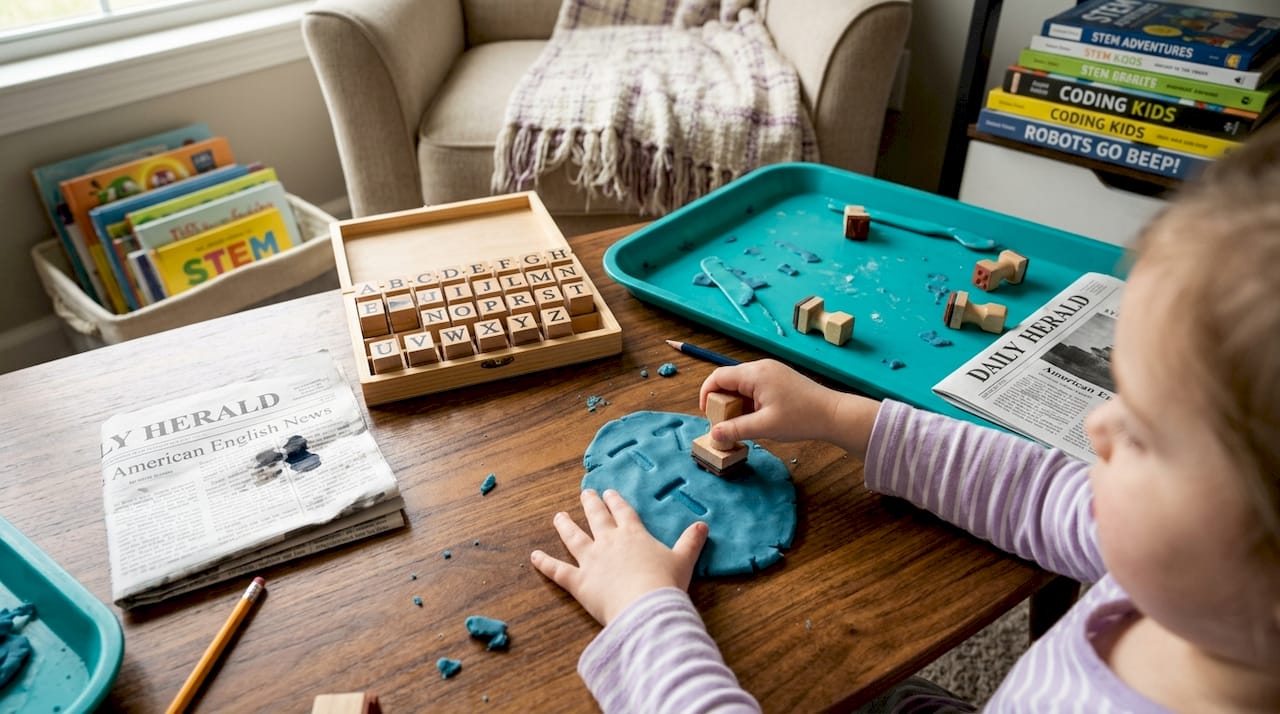
Pro Tip: Place stamps on a tray of play-dough, kinetic sand, or textured paper before using ink. This gives children a low-stakes way to practice the pressing motion and explore the letter shape before committing to ink on paper, which reduces anxiety and builds confidence.
Letter stamp sets compared: Which one fits your child’s needs?
You’ve seen the individual strengths of each set. Now let’s compare them side by side so you can make a decision that truly fits your family.
| Feature | Silicone set | Wooden set | Foam set | Magnetic set |
|---|---|---|---|---|
| Material | Flexible silicone | Solid wood | Soft foam | Mixed materials |
| Sensory quality | Soft, tactile | Heavy, grounding | Very soft, gentle | Varied |
| Grip difficulty | Low | Medium | Very low | Low to medium |
| Durability | High | Very high | Low to medium | Medium |
| Cleanup ease | Very easy | Moderate | Easy | Moderate |
| Best age range | 4 to 10 | 5 to 13 | 3 to 8 | 7 to 13 |
| Estimated price | $12 to $20 | $18 to $30 | $8 to $15 | $20 to $35 |
| Ideal for | Sensory-seeking, easy cleanup | Proprioceptive input needs | Low grip strength | Word-building, sequencing |
Research continues to affirm that fine-motor skill and spelling are meaningfully connected, which means investing in a quality stamp set is genuinely an investment in your child’s literacy development, not just a craft purchase.
If your child is working on building their writing identity alongside their skills, the DIY publishing workbook is a wonderful companion resource that helps children see themselves as authors and storytellers.
Pro Tip: Use the table above as a matching tool. If your child is tactile-sensitive and dislikes mess, the silicone set with washable ink is your safest starting point. If your child craves deep pressure and heavy input, go straight for the wooden set.
Adapting letter stamp activities for confidence and skill-building
Selecting the right set is one step; using them effectively is just as important. Here’s how you can adapt stamp activities to build both skill and genuine confidence over time.
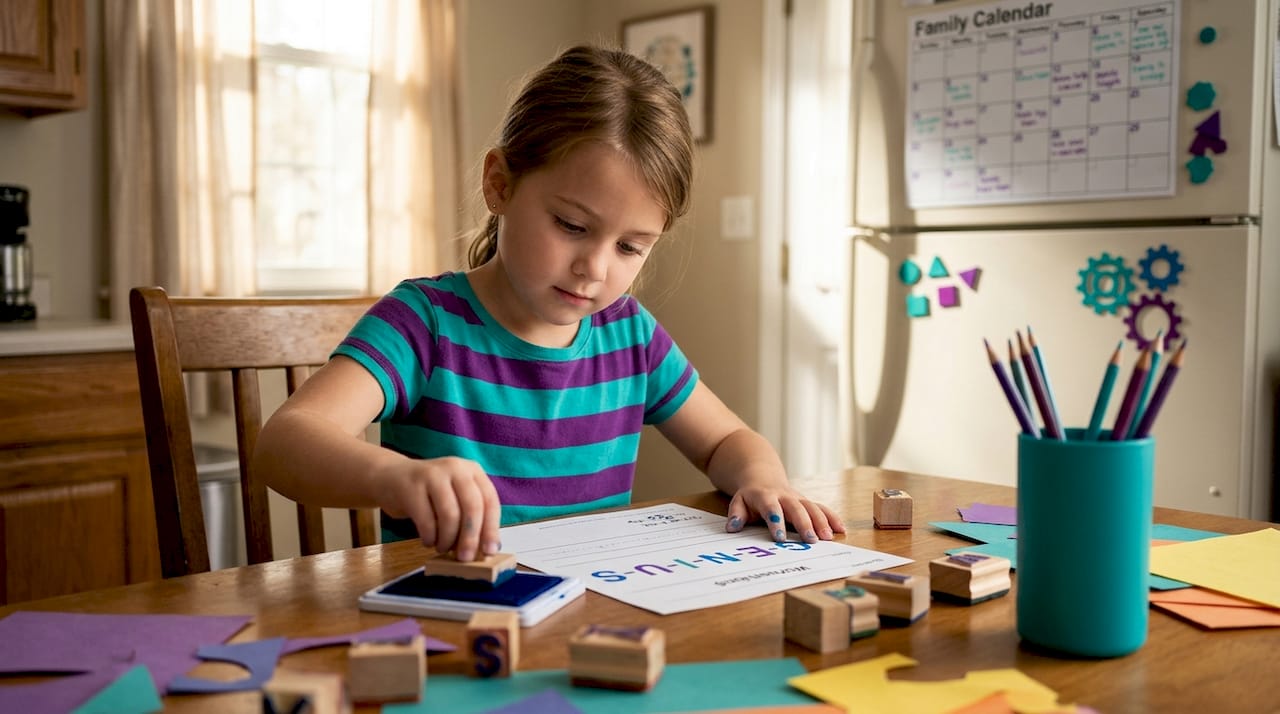
- Start with the child’s name. Begin every stamping session with letters that already feel meaningful and familiar. Stamping their own name gives children an immediate sense of ownership and pride, which fuels motivation for the harder work ahead.
- Introduce multistep stamping activities gradually. Once your child is comfortable with individual letters, move to simple three-letter words, then short phrases. Celebrate each milestone visibly. Motivation sticker sheets are a wonderful way to mark progress and keep energy high.
- Integrate stamps into daily routines. Label lunchbox items, stamp story titles onto homemade books, or use stamps for scavenger hunt clues around the house. When literacy practice is woven into real life, it stops feeling like a task and starts feeling like part of who your child is.
- Reduce support gradually. At first, you might hold the ink pad steady, suggest which letter comes next, or help press the stamp firmly. Over time, step back one support at a time. This scaffolding approach, sometimes called the gradual release model in effective tutoring styles, builds independence without overwhelming the child.
- Observe and respond to energy levels. Some days your child will stamp enthusiastically for twenty minutes. Other days, five minutes is the ceiling, and that is completely okay.
Research on spelling and fine-motor skill reminds us that when fine-motor demands are high, cognitive resources for spelling can be stretched thin. Keeping sessions short and joyful protects both skill development and your child’s relationship with learning.
Pro Tip: If stamina is low, aim for two or three short sessions of five to seven minutes spread across the day rather than one long session. Frequency matters more than duration when building motor memory and letter knowledge.
Why hands-on doesn’t mean one-size-fits-all: Our expert take
As you try out letter stamp activities, consider this deeper truth from both research and real-world experience: the goal was never to find the perfect tool. The goal is to find the right tool for your child, right now, and to stay curious enough to change course when something stops working.
Here at Team Genius Squad, we hear from parents who feel guilty when their child moves on from stamps to a stylus, or from a stylus back to clay, or from any hands-on tool to something that looks a little more digital. We want to say clearly: that flexibility is not failure. It is responsive parenting, and it is exactly what the research supports.
A Frontiers study on fine-motor and spelling found no immediate advantage or disadvantage for children with low fine-motor skills when using digital versus non-digital modes. What this tells us is that the medium itself matters less than the underlying engagement of the fine-motor system. Whether your child is pressing a foam stamp, tracing a letter in sand, or using a stylus on a tablet, what counts is that their hands and brain are working together on letter formation.
The real danger is not choosing the “wrong” tool. It is insisting on any single tool long after your child’s curiosity has moved on. We have seen children thrive with stamps for one season, then blossom with a different approach the next, and the through-line in every success story is a parent who kept watching, kept adjusting, and kept celebrating every small win. You can find more of our thinking on this at our team insights blog, where we share stories from real families navigating these exact questions.
The evidence-based approach is not a rigid protocol. It is a mindset of joyful, attentive experimentation, which is something every neurodivergent learner deserves.
Bring hands-on STEAM learning home
If letter stamp sets have sparked your interest in screen-free, confidence-building learning tools, there is a whole world of discovery waiting for your child. At Team Genius Squad, every product is designed with neurodivergent learners in mind, combining hands-on exploration with identity-building experiences that help children see themselves as capable, creative innovators.

You can explore our full range of STEM experiment kits to find hands-on activities that complement literacy practice beautifully, or visit our literacy training resources page for tools specifically designed to support children with dyslexia and dysgraphia. We are also proud to share our story through our Whole Foods Launch partnership, which reflects our commitment to making these resources accessible to every family. Your child’s confidence is worth every creative experiment you try together.
Frequently asked questions
How do letter stamp sets support literacy for kids with dyslexia or dysgraphia?
Letter stamp sets engage fine-motor and multisensory pathways, offering a screen-free way to practice letter recognition and spelling, and research links fine-motor skill directly to improved spelling outcomes.
Can I combine letter stamp sets with other learning tools?
Yes, pairing stamp sets with activities like play-dough modeling, scented ink pads, or sticker reward charts can significantly enhance motivation and help reinforce consistent learning routines at home.
Are letter stamp activities suitable for older elementary students?
Absolutely, and letter stamps can be adapted for older learners by focusing on multi-syllable words, sentence building, or creative storytelling, with graphomotor practice shown to benefit learners across a wide age range in intervention studies.
How can I prevent my child from getting frustrated during letter stamp activities?
Break tasks into short, manageable steps and let your child choose the ink color, paper texture, or which words to stamp, because pacing and scaffolding stamp tasks keeps working-memory load reasonable and frustration low.
Do digital alternatives offer any literacy advantage over hands-on activities?
For most children, hands-on fine-motor activities are equally beneficial to digital letter tools, because research found no digital mode advantage for children with low fine-motor skills, suggesting that engagement and fine-motor activation matter more than the medium.

Leave a comment
This site is protected by hCaptcha and the hCaptcha Privacy Policy and Terms of Service apply.