
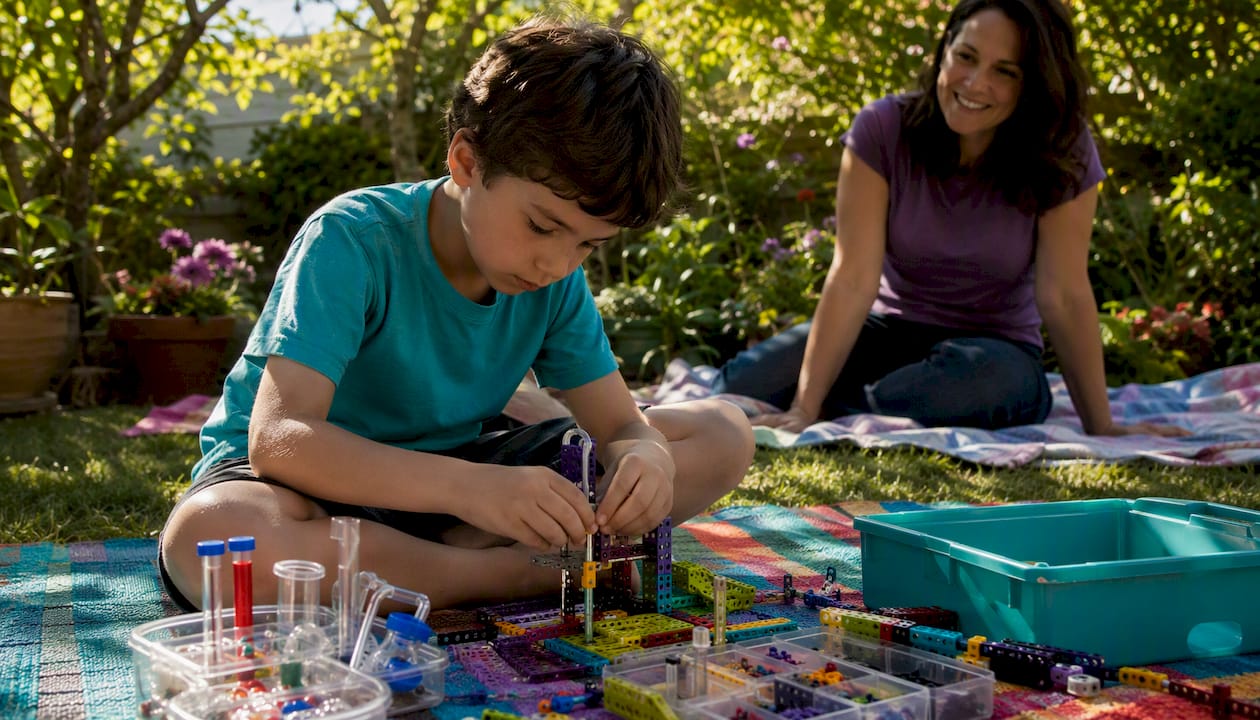
How to Support Neurodivergent Learners: STEAM for Ages 5–13
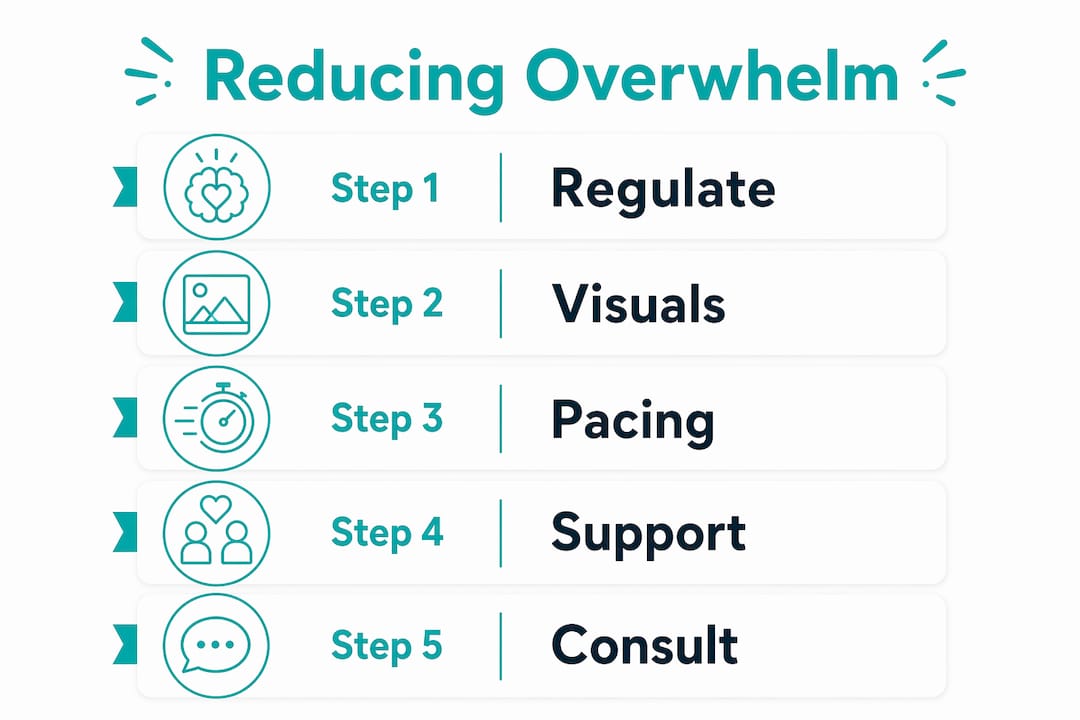
The fastest way to support neurodivergent learners in STEAM is to pair nervous-system regulation with clear, scaffolded, tactile activities. Before any experiment begins, three moves make the biggest difference: set a 3-step sensory regulation routine (deep breath, pressure squeeze, quiet corner), introduce a single hands-on micro-experiment with no more than three steps, and externalize the task with a visual checklist and countdown timer. Children who get these supports consistently show better focus, fewer meltdowns during transitions, and noticeably higher engagement with hands-on materials.
What you can expect when these supports are in place:
- Calmer entry into learning tasks because the nervous system has a predictable on-ramp
- Longer sustained attention because cognitive load is reduced before the activity starts
- Growing confidence as children complete visible, checkable steps and see their own progress
Table of Contents
- What supports actually reduce overwhelm for neurodivergent learners?
- How does the E³ Method make STEAM activities neuro-affirming?
- Age-banded STEAM activities with sensory and executive-function adaptations
- How do you choose a hands-on STEAM kit for neurodivergent learners?
- A four-session plan for starting with a new kit or STEAM activity
- Teamgeniussquad discovery kits: built for the way neurodivergent kids actually learn
- Key Takeaways
- The origin story behind these kits
- Useful sources for deeper learning and school advocacy
What supports actually reduce overwhelm for neurodivergent learners?
Regulation comes before teaching, every time. A dysregulated child cannot access new information, and attempting to correct behavior during that state only compounds the stress. Start every session with a low-demand entry: dim the lights, offer a fidget option, and give the child 2–3 minutes of unstructured exploration before any instruction begins.
Once the nervous system is settled, executive-function supports carry the learning forward. Laminated visual schedules, single-step task cards, and a visible countdown timer (a Time Timer works well) turn invisible internal demands into something a child can see and manage. Externalizing executive function this way builds independence over time rather than creating reliance on adult prompting.
Sensory accommodations deserve the same priority as the lesson plan itself. Families who systematically address sensory needs, including lighting adjustments, noise control, and weighted or deep-pressure options, report 50–80% reduction in meltdowns after consistent accommodation. That kind of shift frees up enormous cognitive bandwidth for actual learning.
Quick-reference supports to put in place today:
- Offer ear protection or noise-canceling headphones before sessions start
- Use warm or natural lighting instead of fluorescent overhead lights
- Provide a laminated 3-step experiment card for every activity
- Build in a 2-minute movement break between steps
- Keep a “calm corner” with a weighted lap pad and a visual feelings chart
- Post a simple “if overwhelmed” flow: stop → breathe → squeeze → ask for help
Pro Tip: If a child consistently shuts down at step two of an activity, the goal may be too large, not the child too small. Break it into one-step micro-tasks and celebrate each one.
When a child regularly cannot access any part of an activity despite these supports, that is a signal to consult a school psychologist, occupational therapist, or the child’s IEP/504 team for a modified goal.
How does the E³ Method make STEAM activities neuro-affirming?
The E³ Method, Engage → Encourage → Empower, is Teamgeniussquad’s proprietary framework for designing STEAM experiences that meet neurodivergent learners where they are. Each stage has a specific job. At Engage, the goal is curiosity without pressure: offer the materials, let the child touch and explore, and ask an open question (“What do you think this does?”). At Encourage, introduce the structured experiment with a visual step card and celebrate every small discovery aloud. At Empower, the child explains what happened in their own words, draws a result, or earns a badge, building a positive identity as a scientist and problem-solver.
Neuro-affirming approaches shift the goal from compliance to connection and competence. That reframe changes everything about how an activity is designed. Compare these pairs:
- Choice vs. forced participation: Offer two experiment options; let the child pick the entry point.
- Sensory-friendly setup vs. standard setup: Swap scratchy materials for smooth alternatives; pre-sort components into labeled trays.
- Scaffolded steps vs. open-ended instructions: Use numbered picture cards instead of a paragraph of text.
- Celebration of process vs. evaluation of outcome: “You figured out step two!” beats “Did you get the right answer?”
A solar energy experiment illustrates this well. In a standard setup, a child reads a paragraph, assembles parts, and records results. In a neuro-affirming version, the materials arrive pre-sorted by color, a 3-picture step card guides assembly, and the child uses a mirror disk to redirect sunlight before any writing is required. The science is identical; the access is completely different.
Designing for neurodiversity benefits everyone. Clarity, flexible pacing, and reduced sensory load are improvements every learner in the room feels, not just the child with a diagnosis.

Age-banded STEAM activities with sensory and executive-function adaptations
| Age Band | Activity | Core Goal | Session Length | Key Adaptations |
|---|---|---|---|---|
| 5–7 | Color-mixing water play | Observe cause and effect | 15 min | Pre-filled dropper bottles; 2-picture step card; seated on floor with towel |
| 8–10 | Solar energy mirror experiment | Understand light reflection | 20–25 min | Pre-sorted parts tray; 3-step visual card; noise-canceling option; solar kit available |
| 11–13 | Simple circuit building | Explore conductors and insulators | 25 min | Component labels with symbols; partner roles defined; written reflection replaced with drawing or sticker chart |
Activity notes and quick adaptations:
- Ages 5–7: swap droppers for squeeze bottles if fine-motor control is a challenge; allow standing or kneeling instead of sitting
- Ages 8–10: the solar mirror activity works well outdoors, which adds a natural movement and sensory reset; reduce steps to two if attention is short
- Ages 11–13: assign defined roles during pair work (one child handles materials, one records) to reduce social ambiguity and support collaboration
For all age bands, keep materials lists to five items or fewer, use tactile and screen-free options wherever possible, and build the reflection step into the activity rather than adding it at the end.
How do you choose a hands-on STEAM kit for neurodivergent learners?
A good kit removes barriers before the child even opens the box. Use this checklist when evaluating any option:
- Tactile, screen-free materials: physical components the child can touch, sort, and manipulate
- Visual step-by-step instructions: numbered picture cards, not dense paragraphs
- Sensory-friendly options: no strong chemical smells, no unexpectedly sharp edges, predictable textures
- Optional challenge levels: a simpler entry and an advanced extension so the activity grows with the child
- Literacy tie-ins: reading prompts, reflection journals, or writing workbooks that connect STEAM to language
- Age-range clarity: explicit guidance for 5–7, 8–10, and 11–13 so you are not guessing fit
- Replacement parts policy: ask whether individual components can be reordered if lost or damaged
Most quality hands-on STEAM kits in the US generally fall within a moderate price range per kit. Realistic timeline for seeing engagement improvement: most families and educators notice a shift in willingness to participate after a few sessions when regulation supports are already in place.
Teamgeniussquad’s discovery kits meet every item on this checklist and are built specifically from a neurodivergent-inspired design process. More on what they include is in the section below.
A four-session plan for starting with a new kit or STEAM activity
- Session 1 (15–20 min): Regulation and exploration. Sensory check-in first. Offer the materials with no instructions and let the child explore freely. Your only job is to stay present and curious alongside them.
- Session 2 (20 min): Scaffolded micro-experiment. Introduce one to three steps using a visual card. Build in a 2-minute break after step two. Celebrate completion, not correctness.
- Session 3 (20–25 min): Collaborative variant. Pair the child with a partner and assign clear roles before starting. Use low-demand social prompts (“Your job is to hold the mirror; my job is to write what we see”) to reduce the cognitive load of negotiating roles mid-activity. Executive function coaching approaches consistently show that defined roles reduce conflict and increase on-task time during group work.
- Session 4 (20 min): Reflection and celebration. Ask the child to explain what happened in their own words, draw the result, or fill a sticker chart. A small recognition, a printed certificate or a badge, builds the identity piece: “I am a scientist.”
Adult observation checklist after each session:
- Did the child enter the activity without significant resistance?
- Which step caused the most friction, and why?
- Did the child initiate any part of the activity independently?
- What sensory adjustment would make next session smoother?
Teamgeniussquad discovery kits: built for the way neurodivergent kids actually learn
Every child deserves a learning experience that starts with who they are, not who they are expected to become. Teamgeniussquad discovery kits are hands-on, screen-free, and designed from a real family journey with dyslexia and dysgraphia. Each kit includes tactile experiment materials, scaffolded visual instructions, literacy tie-ins through reading and reflection prompts, and identity-building elements like lab coats, badges, and certificates that help children step into the role of scientist and innovator.

The kits map directly to the E³ Method and the accessibility checklist above: sensory-friendly components, no screen required, optional challenge levels, and clear age-range guidance for 5–13. The Science Solar Energy Kit is a strong starting point for ages 8–10, pairing a tactile mirror-disk experiment with reflection prompts that connect science to literacy. Classroom bundles are available for educators, and the Teamgeniussquad store lists current availability, including retail options through the Whole Foods launch. Ask about replacement parts and accommodation options when ordering for a child with specific sensory needs.
Key Takeaways
Regulation before instruction, tactile materials, and scaffolded steps are the three non-negotiable pillars of effective STEAM support for neurodivergent learners.
| Point | Details |
|---|---|
| Regulate first | A dysregulated child cannot learn; start every session with a sensory check-in and low-demand entry. |
| Externalize executive function | Visual schedules, step cards, and timers turn invisible demands into manageable, visible supports. |
| Sensory accommodations matter | Systematic sensory adjustments, such as lighting and noise control, can reduce meltdowns by 50–80%. |
| Scaffold and celebrate progress | Break activities into 1–3 steps, assign defined roles in group work, and mark every completion with recognition. |
| Teamgeniussquad kits | Screen-free, tactile discovery kits built on the E³ Method for ages 5–13, with literacy tie-ins and identity-building tools. |
The origin story behind these kits
When you watch a child shut down in front of a worksheet, not because they are not curious but because the format is working against their brain, something shifts in you. That is where Teamgeniussquad began. Inspired by a real family experience with dyslexia and dysgraphia, the kits were designed around one question: what does learning look like when it starts with the child’s strengths instead of their gaps?
The E³ Method grew directly from that question. Engage first, because curiosity is always there even when confidence is not. Encourage through scaffolded steps that make success feel inevitable. Empower by giving children the language and the identity to call themselves scientists. Screen-free and tactile was not a marketing choice; it was the only format that actually worked for the children this brand was built around.
If you try a kit and something does not fit your child’s sensory profile, adjust it. Swap a material, shorten a step, skip the writing and draw instead. The goal is never compliance with the kit. The goal is a child who finishes a session believing they can figure things out.
Useful sources for deeper learning and school advocacy
These resources are worth bookmarking, whether you are a parent preparing for an IEP meeting or an educator building a more inclusive classroom from the ground up.
- NESTL Toolkit (University of Oxford): A four-area framework for neurodivergent-inclusive teaching, co-developed with neurodivergent students and educators. Institutions can use it to audit classroom practices, assessment formats, and adjustment policies.
- Child Mind Institute: Supporting Neurodiverse Students: Practical, parent-facing guidance on classroom supports including visual schedules, checklists, and sensory accommodations.
- MALA Family: Neurodiverse-Affirming Parenting: A clear introduction to shifting from compliance-focused to connection-focused parenting and teaching.
- NeuroTribe UK: Strength-Based Parenting: Particularly useful for parents who share neurodivergence with their child; addresses self-regulation as essential parenting infrastructure.
- IEP and 504 basics: The U.S. Department of Education’s IDEA overview explains eligibility, rights, and how to request classroom accommodations. Start there before any school meeting.
This article is general educational information, not professional or clinical advice. For your child’s specific needs, consult a qualified occupational therapist, school psychologist, or licensed educational specialist.



Leave a comment
This site is protected by hCaptcha and the hCaptcha Privacy Policy and Terms of Service apply.