Why STEAM for Elementary Students: A Parent's Guide
STEAM education is defined as the integration of science, technology, engineering, arts, and mathematics into a single, connected learning model that builds creativity, critical thinking, and problem-solving skills from an early age. Understanding why STEAM for elementary students matters is not a question of trend-chasing. It is a question of giving children the mental tools they need before habits calcify. Research from 2026 confirms that STEAM programs produce measurable gains in cognitive skills and creativity compared to traditional instruction. The arts component is what separates STEAM from STEM, and that distinction changes everything about how young children engage with learning.
What evidence shows STEAM improves skills in elementary students?
A 2026 study of 100 students aged 11–13 compared STEAM-based instruction using the 5E Learning Model and Engineering Design Process against traditional classroom methods. The STEAM group showed significant improvements in cognitive skills, creativity, and problem-solving. That gap matters because elementary school is precisely when children form their identity as learners.
A separate quantitative survey of 108 twelfth-grade students found that STEAM learning strongly improves critical thinking (R²=0.619), creativity (R²=0.655), and collaboration (R²=0.580). These are not soft, unmeasurable outcomes. They are statistically significant results across multiple competencies at once, which is rare in educational research.
| Skill Area | Effect Found | Study Context |
|---|---|---|
| Critical thinking | R²=0.619 | Survey of 108 high school students |
| Creativity | R²=0.655 | Survey of 108 high school students |
| Collaboration | R²=0.580 | Survey of 108 high school students |
| Cognitive skills | Significant improvement | 100 students, ages 11–13, 5E Model |
| Problem-solving | Significant improvement | Experimental vs. control group comparison |
The consistency across studies is the real story. When multiple research designs point in the same direction, educators and parents can act with confidence rather than hope.
Pro Tip: When reading education research, look for effect sizes and R² values rather than just “significant improvement.” Higher values mean the intervention explains more of the outcome, which signals a stronger, more reliable result.
How does adding the arts to STEM transform learning?
Arts integration is not decoration added to a science lesson. Authentic arts integration requires meaningful cognitive demand, not surface-level additions to STEM subjects. A child who designs a bridge and then sketches it from multiple angles is using visual thinking to deepen engineering understanding. That is a fundamentally different cognitive act than filling in a worksheet.
Arts in STEAM develops emotional intelligence and empathy alongside technical skills. Children who practice both modes of thinking become better at approaching complex, real-world problems because they can hold multiple perspectives at once. This is the kind of mental flexibility that no single-subject curriculum builds reliably.
The benefits of arts-based learning within a STEAM curriculum include:
- Divergent thinking: Children generate multiple solutions instead of searching for one correct answer.
- Emotional expression: Drawing, building, and storytelling give children non-verbal ways to process and communicate ideas.
- Reduced anxiety: Creative tasks lower the stakes of being “wrong,” which encourages more risk-taking and deeper engagement.
- Inclusivity for neurodiverse learners: Neurodivergent students benefit significantly from arts components that offer non-linear ways to express understanding.
- Gender inclusivity: The European Commission’s 2025 STEM Education Strategic Plan identifies STEAM as a direct response to gender imbalances in technical fields, because arts-integrated learning aligns with a wider range of student engagement styles.
The shift from STEM to STEAM is a pedagogical shift from passive content delivery to active knowledge creation. Children stop receiving information and start producing it. That change in role is what builds confidence alongside competence. You can read more about why inclusive STEAM matters for children with different learning profiles.
What practical strategies help educators and parents implement STEAM?
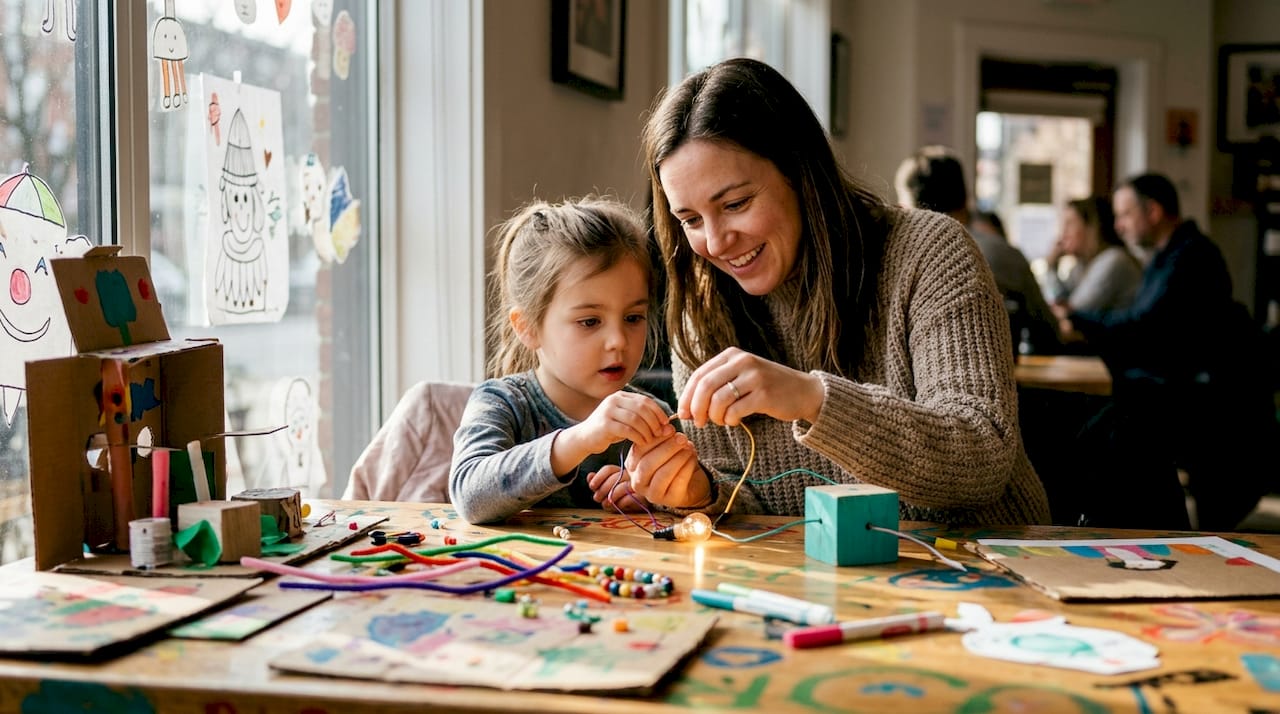
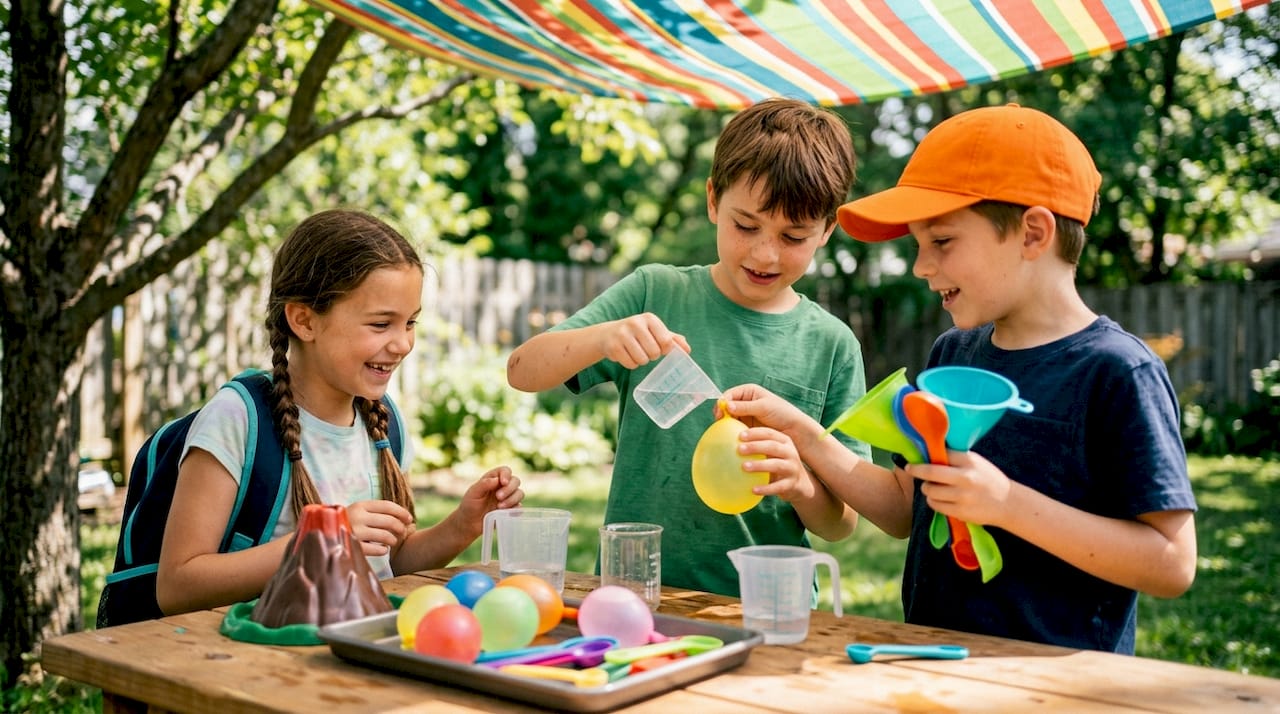
Effective STEAM implementation starts with the process, not the product. Experts stress prioritizing iterative learning where students test, fail, and redesign rather than aiming for a polished final result. A child who rebuilds a cardboard tower three times learns more about engineering than one who gets it right on the first try.
Low-tech materials like cardboard and recyclables often produce better creative outcomes than expensive technology kits. Removing the complexity of devices forces children to focus on the design process itself. A paper bridge stress-tested with pennies teaches load distribution just as effectively as a digital simulation, and it costs almost nothing.
Here are proven steps for bringing STEAM learning to life at home or in the classroom:
- Start with a real question. Ask children to solve a problem they actually care about, such as “How do we keep our snacks cold at the park?” Real stakes drive real thinking.
- Use the Engineering Design Process. Ask, imagine, plan, create, and improve. This five-step cycle gives children a repeatable framework for any challenge.
- Embrace the redesign phase. When a design fails, celebrate it. Say “What did we learn?” instead of “What went wrong?” The language shift changes how children relate to difficulty.
- Gather low-cost materials. Cardboard tubes, rubber bands, tape, and recyclables are enough to run dozens of experiments. Accessibility removes barriers for families at every income level.
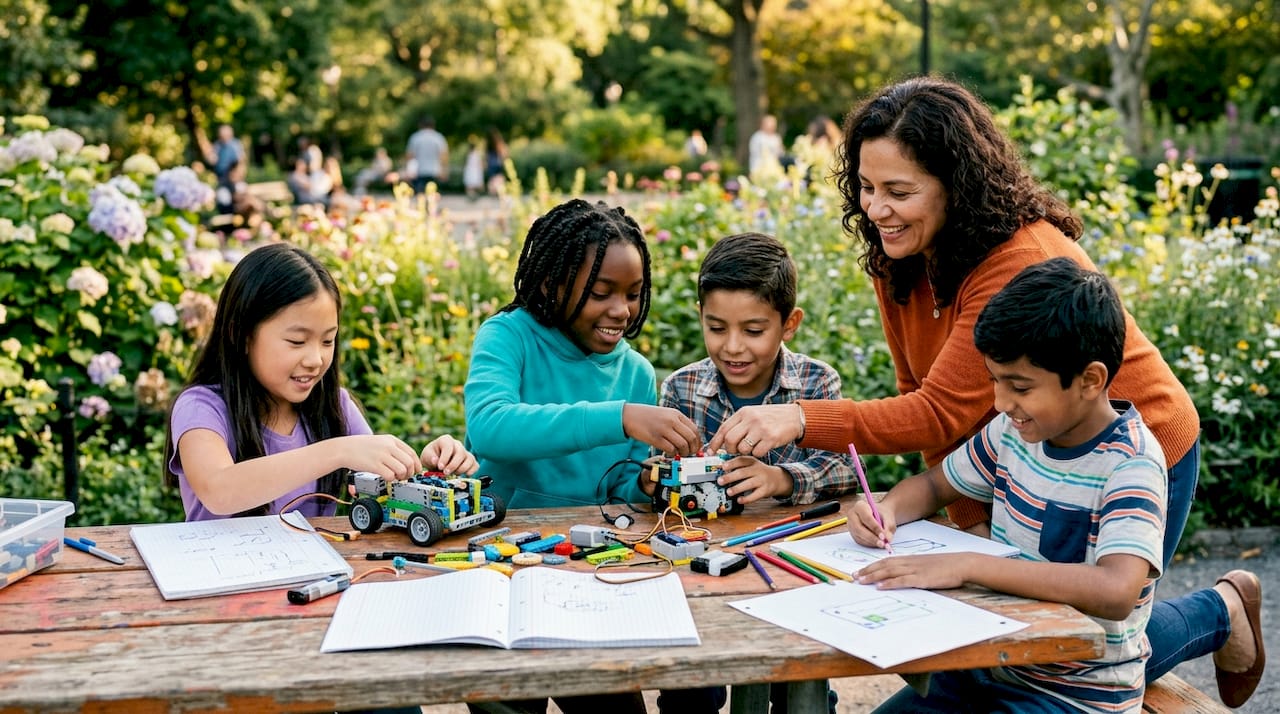
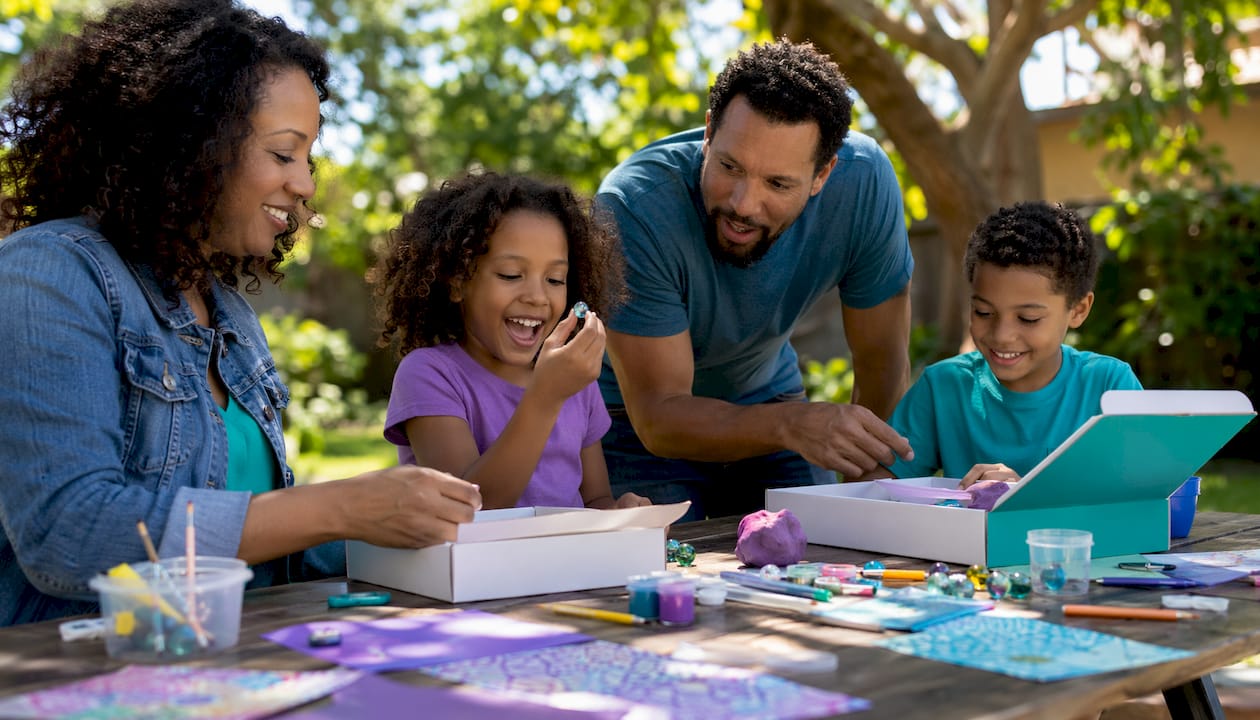
- Involve parents as co-investigators. When caregivers ask questions alongside children rather than providing answers, they model curiosity as a lifelong habit.
- Pursue sustained professional development. Research on elementary teacher perceptions confirms that one-off training is not enough. Teachers need ongoing, practice-based support and mentoring to build real confidence in STEAM instruction.
Pro Tip: Use virtual field trips to extend STEAM learning beyond the classroom. Resources like virtual tours in homeschool settings show how digital exploration can complement hands-on experiments without replacing them.
The STEAM checklist for parents from Teamgeniussquad offers a practical starting point for families who want to build these habits at home without needing a formal curriculum.
How does STEAM prepare elementary students for future success?
Early STEAM exposure builds the skills that employers and universities consistently rank as most critical. A meta-analysis of 27 studies from 2011–2025 found that STEAM programs produce a moderate positive effect (Hedges’ g = 0.45) on career-related STEM interest and awareness in K-12 learners. Starting that exposure in elementary school means children have years to build on that interest before they face academic tracking decisions.
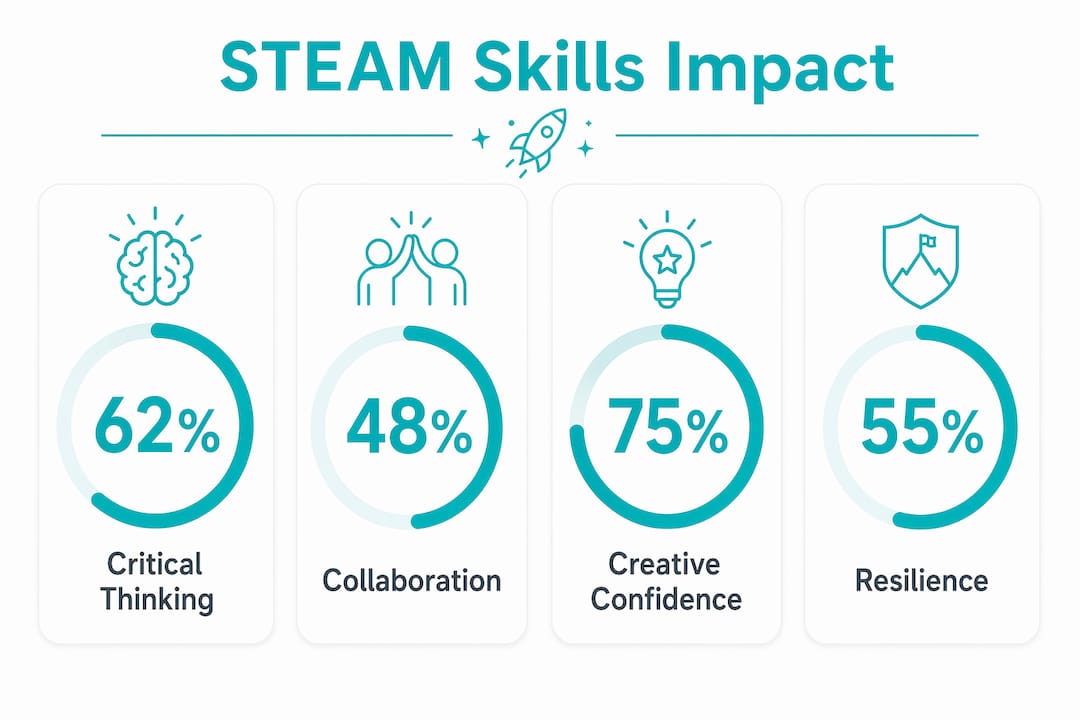
The skills STEAM builds are not just technical. Resilience, collaboration, and creative confidence are transversal skills that transfer across every subject and every career path. A child who learns to redesign a failed bridge at age seven is practicing the same mental habit a software engineer uses when debugging code at age thirty.
| STEAM Skill | Future Application |
|---|---|
| Iterative problem-solving | Engineering, product design, research |
| Creative thinking | Arts, marketing, entrepreneurship, medicine |
| Collaboration | Every professional field and team environment |
| Emotional intelligence | Leadership, counseling, education, healthcare |
| Scientific reasoning | Data analysis, policy, environmental science |
STEAM also closes opportunity gaps. The European Commission’s 2025 plan specifically names STEAM as a tool for addressing gender gaps in STEM by making technical learning accessible to students who engage through creative and relational modes. Starting this work in elementary school, before self-limiting beliefs take hold, is the most effective timing possible.
The benefits of STEAM for kids extend well beyond test scores. Children who see themselves as capable problem-solvers carry that identity into every classroom and eventually into every workplace.
Key Takeaways
STEAM education builds creativity, critical thinking, and collaboration in elementary students, and research confirms these gains are measurable, consistent, and lasting.
| Point | Details |
|---|---|
| Research-backed skill gains | Studies show STEAM significantly improves critical thinking, creativity, and collaboration over traditional methods. |
| Arts integration is core | Adding arts to STEM creates active, inclusive learning that benefits neurodiverse and underrepresented students. |
| Process beats product | Embracing iterative failure builds resilience and deeper understanding more effectively than polishing final results. |
| Low-tech works | Cardboard and recyclables are enough to run meaningful STEAM experiments at home or in any classroom. |
| Long-term career impact | A meta-analysis of 27 studies confirms early STEAM exposure moderately increases STEM career interest in K-12 learners. |
What I’ve learned from watching STEAM work in real classrooms
I have spent years watching children light up the moment a lesson stops being about memorizing and starts being about making. The research confirms what educators see every week: STEAM changes the relationship a child has with difficulty. When a child rebuilds something instead of giving up, that is not just a STEAM outcome. That is a life skill being formed in real time.
The biggest barrier I see is not resources. It is the fear that STEAM requires expensive equipment or specialized training. It does not. The most powerful STEAM moments I have witnessed involved cardboard, tape, and a question nobody knew the answer to yet. The materials are almost irrelevant. The mindset is everything.
What I find most underappreciated is the role of identity. Children who are told they are scientists, engineers, and creators start to act like scientists, engineers, and creators. That identity shift is what Teamgeniussquad’s E³ Method (Engage, Encourage, Empower) is built around, and it is why role-play elements like lab coats and badges are not gimmicks. They are signals to a child’s brain that this is who they are, not just what they are doing today.
My honest advice: do not wait for the perfect curriculum or the ideal classroom setup. Start with one question, one material, and one child who is curious. The rest builds itself.
— Tita
Teamgeniussquad’s hands-on STEAM kits for young learners
Teamgeniussquad designs screen-free, hands-on STEAM experiment kits built specifically for children ages 5–13. Each kit is powered by the proprietary E³ Method, guiding children from curiosity to confidence through real experiments, scientist role play, and identity-building tools like lab coats and achievement certificates.
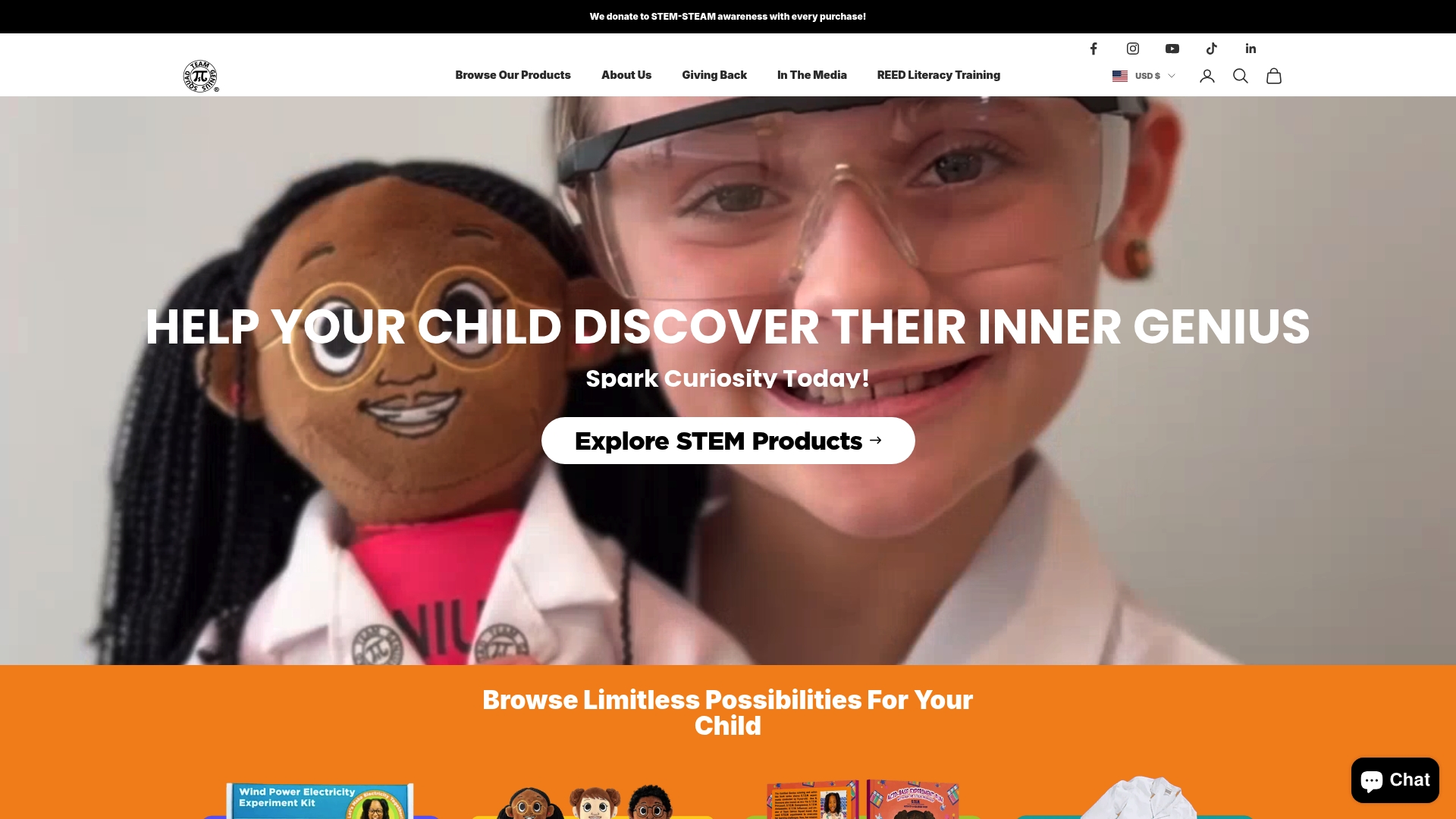
Inspired by a real family journey with dyslexia and dysgraphia, every kit is designed to help children who learn differently experience genuine success. Whether your child is building a solar energy model or exploring the science of slime, each experience is crafted to make them feel capable, creative, and seen. Teamgeniussquad kits are now available through the Whole Foods Launch, making hands-on STEAM discovery more accessible than ever for families across the country.
FAQ
What is STEAM education for elementary students?
STEAM education integrates science, technology, engineering, arts, and mathematics into connected, hands-on learning experiences. For elementary students, this means building, experimenting, and creating rather than passively receiving information.
Why does adding arts to STEM matter for young children?
Arts integration develops emotional intelligence, divergent thinking, and creative confidence alongside technical skills. Research shows it also makes STEAM more inclusive for neurodiverse learners and underrepresented groups.
How early should children start STEAM learning?
STEAM learning is effective from preschool age, with educational tools like hands-on kits supporting motivation and cognitive development from the earliest years. Starting in elementary school gives children years to build identity and skills before academic tracking begins.
Can parents support STEAM learning at home without special equipment?
Cardboard, rubber bands, and recyclables are enough to run meaningful STEAM experiments at home. The Engineering Design Process gives children a repeatable framework that works with any materials.
Does STEAM education improve long-term career outcomes?
A meta-analysis of 27 studies from 2011–2025 found a moderate positive effect (Hedges’ g = 0.45) on STEM career interest among K-12 students exposed to STEAM programs. Early exposure builds both interest and the transversal skills employers value most.

Leave a comment
This site is protected by hCaptcha and the hCaptcha Privacy Policy and Terms of Service apply.