STEAM vs traditional education: Hands-on paths for neurodivergent learners
Many parents are told that the best way to support a neurodivergent child’s learning is to embrace technology early and often. Apps, interactive screens, and digital programs seem like obvious solutions in a world that celebrates innovation. But a growing body of research tells a more nuanced story, one that challenges the assumption that more technology always means better outcomes. For children with dyslexia, ADHD, dysgraphia, autism, and other learning differences, hands-on, screen-free STEAM activities may be among the most powerful confidence-building tools available, and understanding why can change everything for your family.
Table of Contents
- What is STEAM education and how does it differ from traditional approaches?
- Hands-on, screen-free learning: Why it matters for neurodivergent kids
- Comparing STEAM and traditional education for neurodivergent learners
- Practical STEAM activities for confidence and problem-solving
- Why a balanced approach works best for neurodivergent learners
- Discover hands-on STEAM kits and resources for your child
- Frequently asked questions
Key Takeaways
| Point | Details |
|---|---|
| Hands-on STEAM wins | Screen-free STEAM activities outperform traditional education in boosting confidence and problem-solving for neurodivergent children. |
| Limit tech-only solutions | Evidence shows technology should complement—not replace—physical, predictable learning for neurodivergent kids. |
| Adapt for process | Focus on creative routines and celebrate repeated effort, not just outcomes, when designing STEAM projects. |
| Practical tools available | Effective, hands-on STEAM kits and activities exist to help families support their child’s growth at home. |
What is STEAM education and how does it differ from traditional approaches?
STEAM stands for Science, Technology, Engineering, Arts, and Math. It is an educational philosophy that brings these disciplines together through creative, project-based learning rather than separating them into isolated subjects. A child building a working model bridge is doing engineering, math, and art simultaneously, and that integration mirrors how the real world actually works.
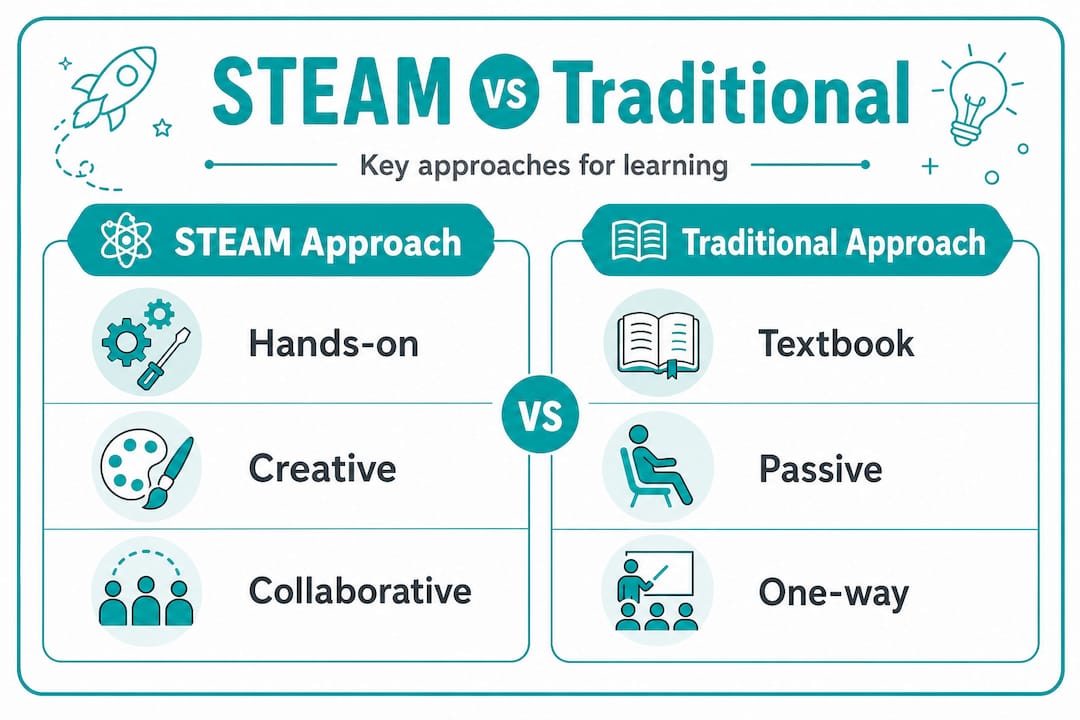
Traditional education, by contrast, tends to rely on passive instruction. A teacher lectures, students listen, worksheets get filled out, and assessments measure whether the correct answer was reached. For many children, this model works reasonably well. For neurodivergent learners, it often does not, because it rewards a specific style of processing and expression that may not match how their brilliant minds actually work.
STEAM education turns this around. The core principles of STEAM include:
- Project-based learning: Children tackle real challenges with multiple possible solutions.
- Iterative design cycles: Kids design, test, fail, improve, and try again, building resilience through every round.
- Collaborative exploration: Learning happens through conversation, teamwork, and shared discovery.
- Process over product: The journey matters as much as, and often more than, the final result.
- Creative integration: Art and storytelling are woven into science and engineering, giving every type of thinker a way in.
The contrast with traditional methods is significant, as the table below illustrates.
| Feature | STEAM education | Traditional education |
|---|---|---|
| Instruction style | Hands-on, project-based | Lecture and worksheet driven |
| Focus | Process and creativity | Correct answers and grades |
| Learning pace | Flexible, iterative | Fixed curriculum timeline |
| Assessment | Observation and portfolio | Standardized testing |
| Neurodivergent fit | High: multiple entry points | Low: one-size-fits-all model |
Research supports this shift. According to one controlled quasi-experimental study, STEAM-style learning is associated with improved problem-solving skills in preschoolers compared to standard curriculum. That is not a small finding. Problem-solving is the foundational skill that neurodivergent children need most, and STEAM builds it naturally through play and discovery.
“Every child is a natural scientist. STEAM education simply creates the environment where their curiosity can catch fire.” This is the belief that drives everything we build at Team Genius Squad.
Parents who want to explore screen-free STEAM strategies will find that the shift away from passive, screen-heavy instruction opens up a world of tactile, identity-building experiences. Combining those activities with hands-on literacy ideas also allows children who struggle with reading and writing to access STEAM concepts through physical engagement rather than printed text alone.
Hands-on, screen-free learning: Why it matters for neurodivergent kids
Once you understand what STEAM education is, the next question becomes: why does the screen-free part matter so much, especially for neurodivergent children? The answer lies in how physical, tangible learning supports the brain differently than digital interaction does.
Neurodivergent children often experience challenges with executive function, which includes skills like planning, impulse control, working memory, and flexible thinking. Physical, hands-on activities create predictable, repeatable experiences that support executive function development in ways that fast-moving, variable screen environments often do not. When a child can hold a material, manipulate it, and physically observe cause and effect, they are engaging multiple sensory pathways at once, creating richer, more durable learning connections.
Research has raised real concerns about screen-driven schooling, with experts warning that excessive digital instruction may reshape how students’ brains process information and reduce their capacity for sustained attention and autonomous thinking. This is particularly important for children who already face attention and regulation challenges.
On the other side of the coin, the evidence for tangible play is genuinely exciting. A peer-reviewed study found that loose parts play, where children freely explore open-ended materials like wooden blocks, fabric scraps, and natural objects, is associated with significantly more observed STEM behaviors compared to control conditions. Children who played with loose parts were more likely to ask questions, test ideas, and make predictions, all core STEM skills that build naturally when hands and materials connect.
Consider the difference in your child’s experience. Tapping through a science app might show an animation of a chemical reaction. But mixing baking soda and vinegar in a bowl, watching it fizz and overflow, smelling the reaction, and feeling the temperature change creates a memory that lives in the body, not just on a screen. That embodied memory is where genuine confidence grows.
Here is a quick comparison of what the research tells us about each approach:
| Learning approach | Impact on STEM behaviors | Impact on attention | Confidence-building potential |
|---|---|---|---|
| Loose parts / hands-on play | Significantly higher STEM behaviors | Sustained focus | High: success is physical and visible |
| Screen-based learning | Moderate STEM content exposure | Variable, often disrupted | Moderate: dependent on design quality |
| Screen-free STEAM kits | High STEM behaviors and skill-building | Predictable structure supports focus | Very high: repeated success cycles |
Pro Tip: If your child currently has significant unstructured tech time built into their day, try replacing one session per week with a hands-on STEAM activity. Even one consistent screen-free session focused on building, creating, or experimenting can begin to shift how your child experiences learning and how they see themselves as a learner.
Families who commit to boosting STEAM confidence through consistent, physical engagement often notice not just skill growth but a change in their child’s self-story. The child who once said “I’m not good at science” begins to say “I want to try that again.” That shift in identity is exactly what effective teaching methods for young learners emphasize: engagement comes before retention, and identity comes before achievement.
Comparing STEAM and traditional education for neurodivergent learners
With the evidence for hands-on, screen-free learning clearly established, it is worth getting specific about how STEAM and traditional education compare in practice for neurodivergent children, including where each model has genuine strengths and real limitations.
STEAM-based education, when done well, emphasizes the creative process. A child is celebrated for trying five different solutions, not just for landing on the right one. This approach is transformative for children with ADHD, for example, because it turns their tendency to explore many paths simultaneously into an asset rather than a distraction. Research into creative problem-solving in children with ADHD specifically used engineering-style manipulative tasks to study how these children approach problems, and found distinct exploratory patterns that actually reflect divergent thinking strengths. In a traditional classroom, those same patterns might be labeled as off-task behavior.
Traditional education, by contrast, may unintentionally undervalue the problem-solving skills that neurodivergent children naturally develop. When the only valued outcome is the correct answer delivered in a specific format, children who think differently rarely get to show what they actually know. Their intelligence gets hidden behind the method of assessment.
Technology-based solutions occupy a complicated middle ground. Evidence for XR and immersive technology in inclusive education for neurodivergent children does exist, but it is heterogeneous, often based on small sample sizes and inconsistent outcome measurements. This does not mean technology is useless; it means parents should approach tech-centered STEAM programs with realistic expectations and healthy skepticism, especially when claims seem too broad or too good.
Here is a direct comparison of what each approach looks like in practice for your child:
| Dimension | STEAM learning | Traditional learning | Tech-only approach |
|---|---|---|---|
| Values creative exploration | Yes, by design | Rarely | Sometimes |
| Supports neurodivergent learners | High, when hands-on | Low, one-size model | Mixed evidence |
| Builds confidence through success | Yes: iterative cycles | Inconsistent | Dependent on design |
| Evidence base | Growing and positive | Established but rigid | Heterogeneous |
| Screen-free option | Yes | Yes | No |
To make the most of STEAM education for your neurodivergent child, keep these priorities in mind:
- Choose activities with multiple right answers so your child can experience success no matter which path they take.
- Use rubrics that reward exploration, noting when your child tries something new or improves on a previous attempt.
- Celebrate the process out loud. Say “I loved the way you tried that three different ways” rather than only commenting on the final result.
- Look for STEAM confidence strategies that incorporate role play and identity building, helping your child see themselves as an innovator.
- Consider tools like a STEM puzzle for neurodivergent kids that combine structured challenge with open-ended creativity.
Practical STEAM activities for confidence and problem-solving
Theory matters, but what parents really need is a starting point. Here are concrete, evidence-informed STEAM activities you can bring into your home today, each designed to build confidence through physical discovery and repeated success.
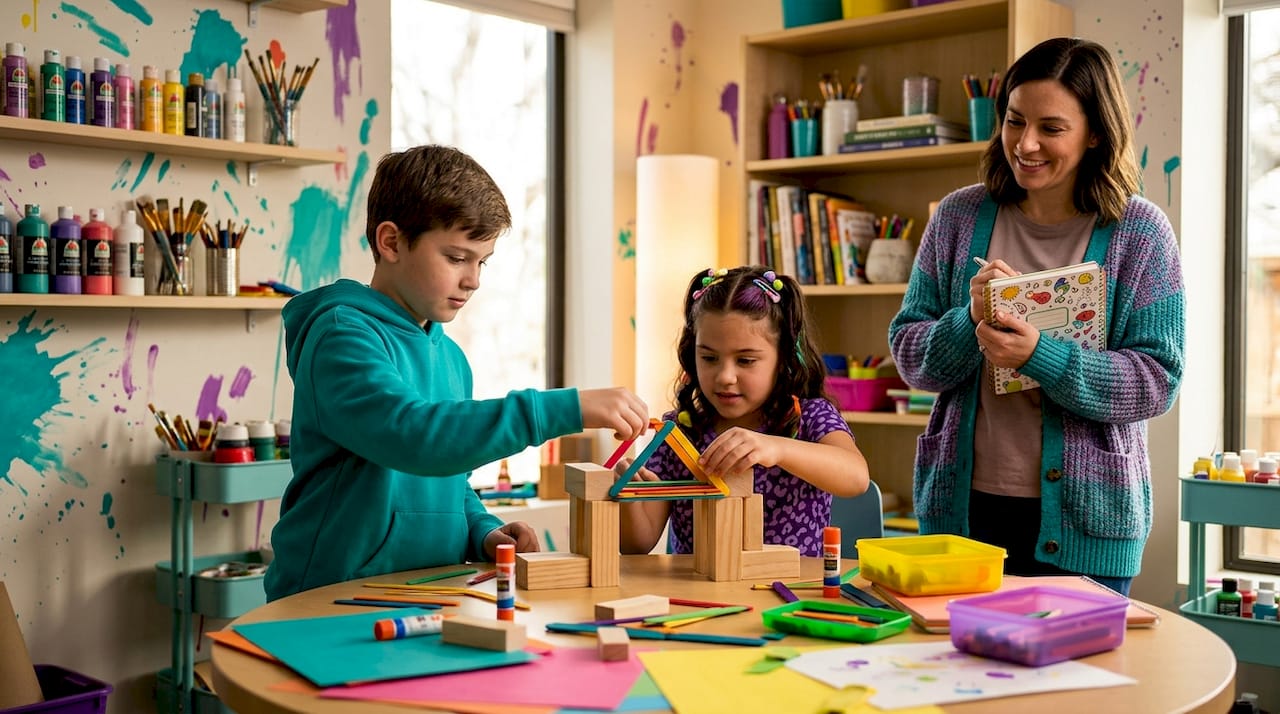
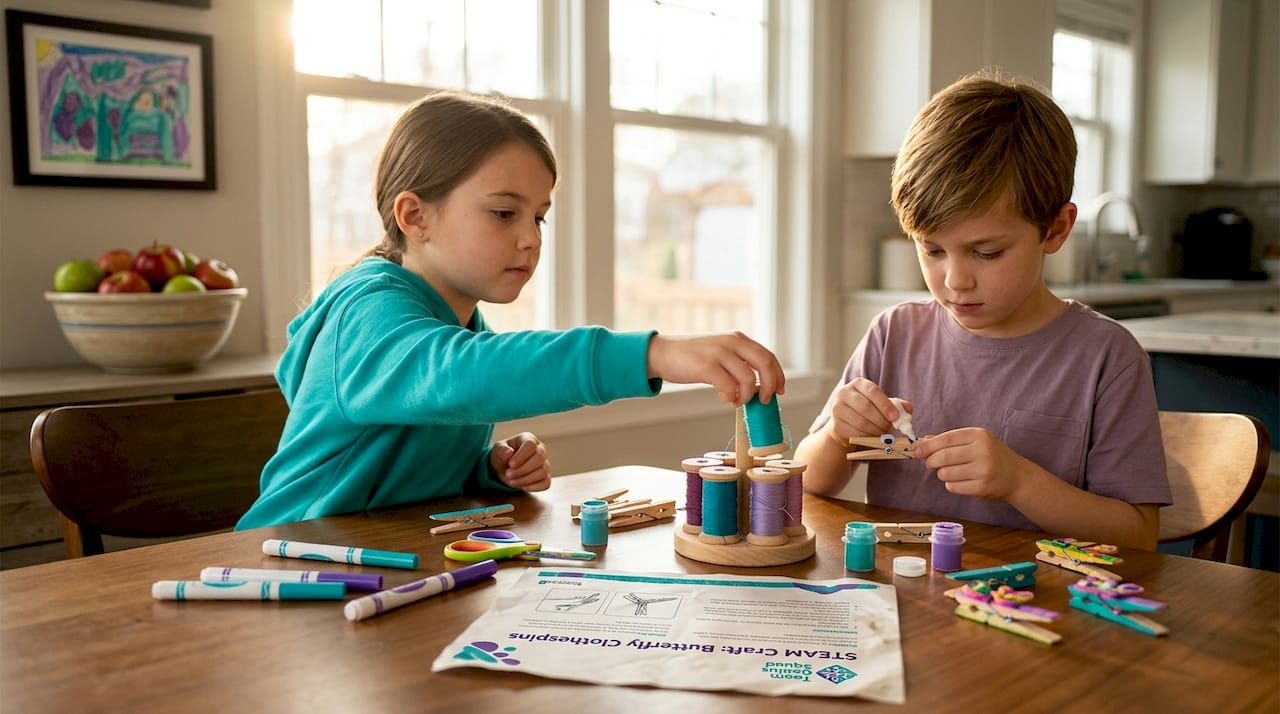
Loose parts play is one of the most accessible and research-backed options available. Gather natural materials, wooden blocks, fabric pieces, bottle caps, or small containers, and invite your child to build, sort, or create something of their own design. There is no wrong answer. The act of handling and arranging materials fires curiosity and builds the same STEM behaviors that formal education tries to teach through worksheets. The key is to step back and observe rather than direct.
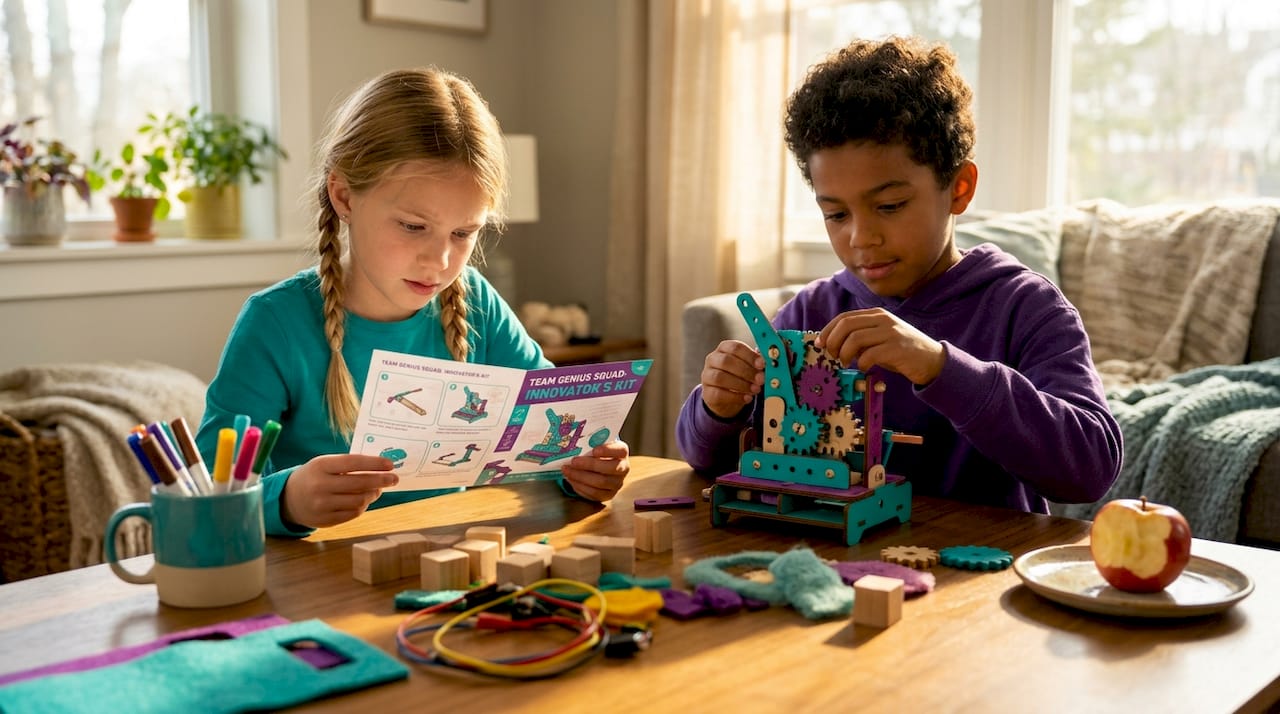
Modular robotics and engineering kits give children a physical challenge with a clear goal but unlimited paths to get there. These activities draw directly on the creative problem-solving patterns seen in children with ADHD, turning the same divergent thinking that can be challenging in a traditional classroom into a superpower in an engineering context. Your child is not just building a robot; they are practicing iteration, spatial reasoning, and persistence.
Hands-on science kits bring real experiments into the home, letting children observe chemical and physical changes with their own eyes and hands. The difference between reading about surface tension and actually placing a paper clip on water with careful hands is the difference between knowing a fact and experiencing a discovery.
Literacy stamp sets and physical writing tools support children who struggle with dyslexia or dysgraphia by letting them engage with language through movement and touch rather than pencil pressure and fine motor challenge. Exploring hands-on literacy tools allows neurodivergent children to participate in STEAM’s reading and reflection components without the barrier of traditional writing tasks.
Pro Tip: When your child finishes a STEAM activity, ask them to tell you one thing they would change if they tried it again. This single question builds metacognitive awareness, which is the ability to think about one’s own thinking, and makes every activity a foundation for the next one rather than a finished product to be judged.
Why a balanced approach works best for neurodivergent learners
Here is something worth saying directly: the goal is not to eliminate technology from your child’s life or to treat every screen as an enemy. That extreme is just as unhelpful as the opposite extreme of replacing all tactile learning with apps and digital programs. The honest, experience-backed answer is that how you use each approach matters far more than which one you choose.
What we know from working closely with neurodivergent children and their families is that the magic happens in predictability, structure, and the feeling of genuine success. A well-designed screen-free STEAM kit delivers all three. A carelessly implemented digital program may deliver none. The pedagogy, the “how” of teaching, is what separates transformative learning from busy-screen time.
The real risk of over-relying on technology is not that screens are inherently harmful. It is that they can create the illusion of engagement without the reality of confidence building. A child who taps through a science animation has not yet experienced the pride of making something work with their own hands. That pride, that “I did that” moment, is what fosters self-belief in children who have too often been told, by traditional schooling structures, that learning does not come naturally to them.
For neurodivergent learners especially, the goal is never just knowledge transfer. It is identity transformation. It is a child moving from “I’m not a science person” to “I’m a scientist.” That shift does not happen through apps. It happens through consistent, structured, hands-on making, iterative engineering cycles, and adults who frame the process with celebration and encouragement.
Discover hands-on STEAM kits and resources for your child
Your child carries a mind that thinks differently, and that difference is exactly the kind of thinking the world needs more of.
At Team Genius Squad, every kit, puzzle, and learning tool we create is designed to turn that different mind into a confident, curious innovator. Our E³ Method, which guides children from Engage to Encourage to Empower, gives neurodivergent learners a repeatable path to success that traditional schooling rarely offers. Whether you are looking for a complete STEAM discovery kit, a hands-on puzzle, or screen-free activity ideas, you will find resources built specifically for children like yours. Each product is inspired by a real family journey with dyslexia and dysgraphia, so every design decision is intentional, tested, and made with your child’s confidence in mind.
Frequently asked questions
What makes STEAM education more effective for neurodivergent learners than traditional schooling?
STEAM emphasizes hands-on, repeatable activities and structured creative cycles, which improve problem-solving skills and build confidence, particularly for neurodivergent children who thrive with multiple valid paths to success rather than one correct answer.
Does technology have a positive or negative impact on neurodivergent kids in STEAM learning?
Technology can complement physical STEAM activities, but replacing hands-on learning with tech-only approaches may disrupt attention and learning processes, since screen-driven schooling has raised expert concerns, and XR evidence for neurodivergent children remains mixed and incomplete.
What are examples of screen-free STEAM activities I can use at home?
Loose parts play, modular robotics, hands-on science kits, and literacy stamp sets are all evidence-based options, since loose parts play increases STEM behaviors in young children and engineering-style tasks support creative problem-solving in children with ADHD.
How should I adapt STEAM activities to suit my child’s unique needs?
Focus on the creative process rather than the final product, allow repeated attempts without judgment, and reward exploration and iteration, because distinct exploratory patterns in ADHD show that process-based rubrics better capture the real problem-solving strengths these children naturally bring.

Leave a comment
This site is protected by hCaptcha and the hCaptcha Privacy Policy and Terms of Service apply.