Engaging clothespin crafts: Creative activities for kids
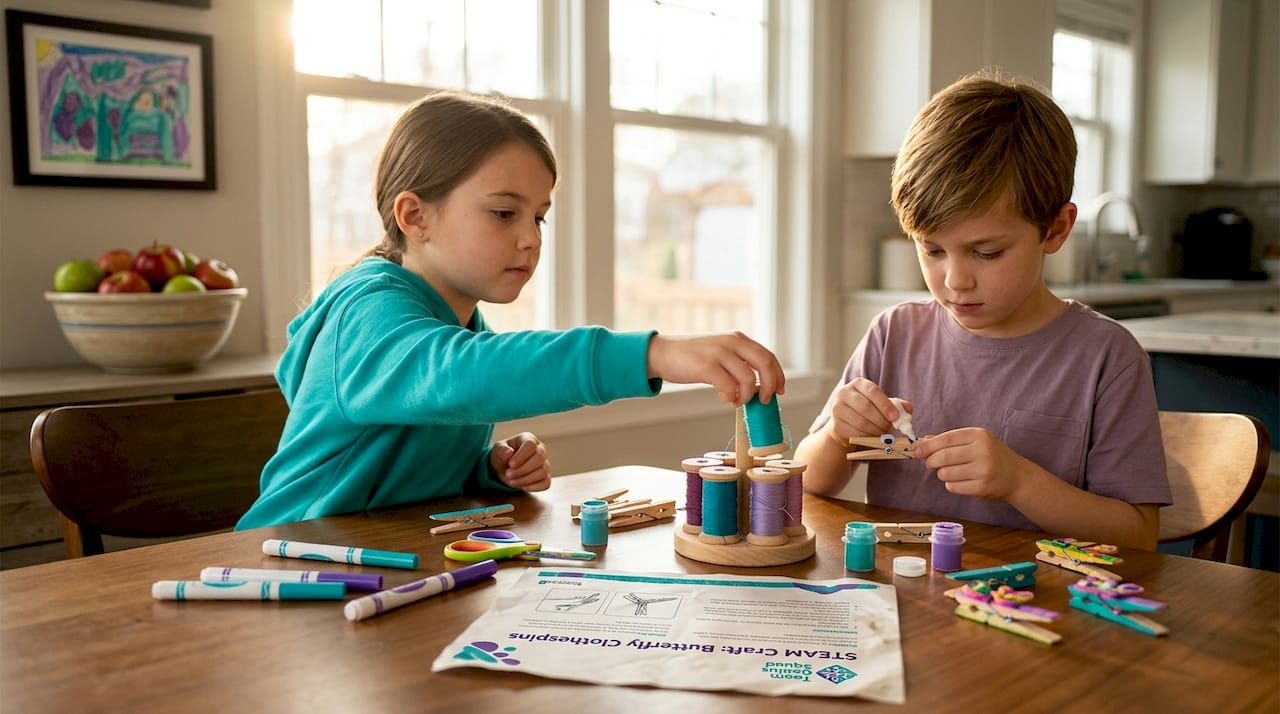
Finding screen-free activities that genuinely hold a child’s attention while building real skills is one of the quiet struggles parents and educators face every single day. Clothespin crafts rise to that challenge in a way that feels almost too simple, yet the developmental payoff is surprisingly powerful. Pinching, pulling, decorating, and assembling clothespins exercises the exact hand movements children need for writing, drawing, and self-care tasks. Research on similar pinching activities shows an N-Gain of 0.83 improvement in fine motor skills like pincer grasp, which tells us these little wooden clips carry serious educational weight. This guide gives you the criteria, the project ideas, a side-by-side comparison, and the practical tips to make clothespin crafts a confident, regular part of your child’s creative routine.
Table of Contents
- How clothespin crafts build essential skills
- Top 7 clothespin craft ideas for kids
- How these crafts stack up: Age, effort, and mess factor
- Adapting clothespin crafts for every learner
- Why hands-on crafts matter more than ever
- Discover more STEM hands-on adventures
- Frequently asked questions
Key Takeaways
| Point | Details |
|---|---|
| Fine motor boost | Clothespin crafts directly strengthen pincer grasp and hand skills in kids. |
| Creative learning | These crafts blend hands-on art with educational concepts for engaging, screen-free fun. |
| Easy adaptations | Clothespin activities can be tailored for all ages and abilities with simple adjustments. |
| Affordable setup | Materials are low-cost and easy to find, making crafts accessible at home or school. |
| Next-step inspiration | Readers can extend creative exploration with STEM-focused kits and resources. |
How clothespin crafts build essential skills
Understanding why these crafts work sets the stage for choosing the best projects. When a child squeezes a clothespin open, holds it in position, and releases it with control, three things happen at once: the small muscles of the hand strengthen, the pincer grasp tightens, and the brain builds new coordination pathways. These are not trivial outcomes. Pincer grasp is the foundation of holding a pencil, buttoning a shirt, and eventually typing on a keyboard. The benefits of hands-on crafts extend well beyond fine motor gains; they also support focus, sequencing, and the kind of patient problem-solving that children carry into every subject at school.
There is also a brain development bonus that many parents overlook. When a child reaches across the body’s center line to clip something on the opposite side of a project, that movement, called cross-midline movement, stimulates both hemispheres of the brain simultaneously. Including cross-midline tasks in craft time is like giving the brain a gentle, playful workout. Pairing clothespin crafts with sensory play activities amplifies this effect even further by engaging touch, sight, and sometimes sound all at once.
Research on pinching and gripping tasks confirms what occupational therapists have observed for years. Pinching activities show an impressive N-Gain of 0.83 in fine motor skill development, placing this type of play in the “high effectiveness” category.
When selecting crafts, consider four practical criteria:
- Simplicity: Can the child complete most steps independently or with minimal guidance?
- Age appropriateness: Does the pinching demand match the child’s current hand strength?
- Minimal supplies: Are the materials easy to source and store without overwhelming a workspace?
- Educational value: Does the project connect to a learning concept like letters, numbers, animals, or basic engineering?
Projects that check all four boxes deliver the most lasting satisfaction for both children and the adults supporting them.
Top 7 clothespin craft ideas for kids
With clear benefits in mind, here are seven craft ideas you can use right away. Each one is designed to spark creativity, build skills, and invite the kind of focused play that keeps children genuinely engaged.
-
Clothespin puppets. Children decorate clothespins with markers, felt, googly eyes, and yarn to create characters for storytelling. The skill focus is narrative thinking, fine motor control, and creative expression. Best for ages 5 and up, this project requires only basic craft supplies and invites dramatic play that builds language skills naturally.
-
STEM engineering bridges. Children use multiple clothespins, popsicle sticks, and rubber bands to build small bridges tested with pennies for weight. This hands-on engineering challenge targets problem-solving, measurement concepts, and teamwork. Recommended for ages 7 and up, it introduces basic load and structure principles without a single worksheet.
-
Decorative refrigerator magnets. Paint clothespins, add small magnets to the back, and embellish with stickers, glitter glue, or washi tape. The process builds creativity and fine motor precision while producing a functional keepsake. Ages 5 and up can participate, with younger children focusing on painting and older children handling more detailed decorating steps.
-
Learning clips for letters and numbers. Write letters on clothespins and attach pictures to cards; children clip the matching letter onto the correct image. This activity reinforces phonics, early reading, and number recognition in a tactile format that reaches children who struggle with pencil-and-paper tasks. Ideal for ages 5 to 8 and perfect for classroom centers.
-
Animal critters. Twist pipe cleaners around clothespins, add foam shapes for ears, and draw on faces to create ladybugs, butterflies, or cats. This project develops spatial reasoning, creativity, and pinching precision. Ages 5 and up enjoy this craft, and educators can tie it to science units on insects or habitats.
-
Weather wheels. Attach clothespins to a paper plate divided into weather sections (sunny, cloudy, rainy, snowy). Children clip the correct pin to today’s weather each morning. This daily routine builds observation skills, weather literacy, and a sense of classroom ownership, working beautifully for ages 5 to 8.
-
Art display chains. String twine or ribbon across a wall and let children decorate clothespins with their names or favorite colors to hang artwork. This community-building project gives every child ownership of their displayed work, reinforcing pride and a sense of belonging in the classroom or at home. Any age can participate with simple supervision.
Pro Tip: Encourage children to use their non-dominant hand for at least one step of each project. Alternating hands and crossing the midline during craft tasks accelerates bilateral coordination and brain development in ways that standard two-handed activities simply cannot match. For younger children who struggle with hot glue, switch to a low-temperature glue gun or a strong craft stick glue to keep the experience safe and successful.
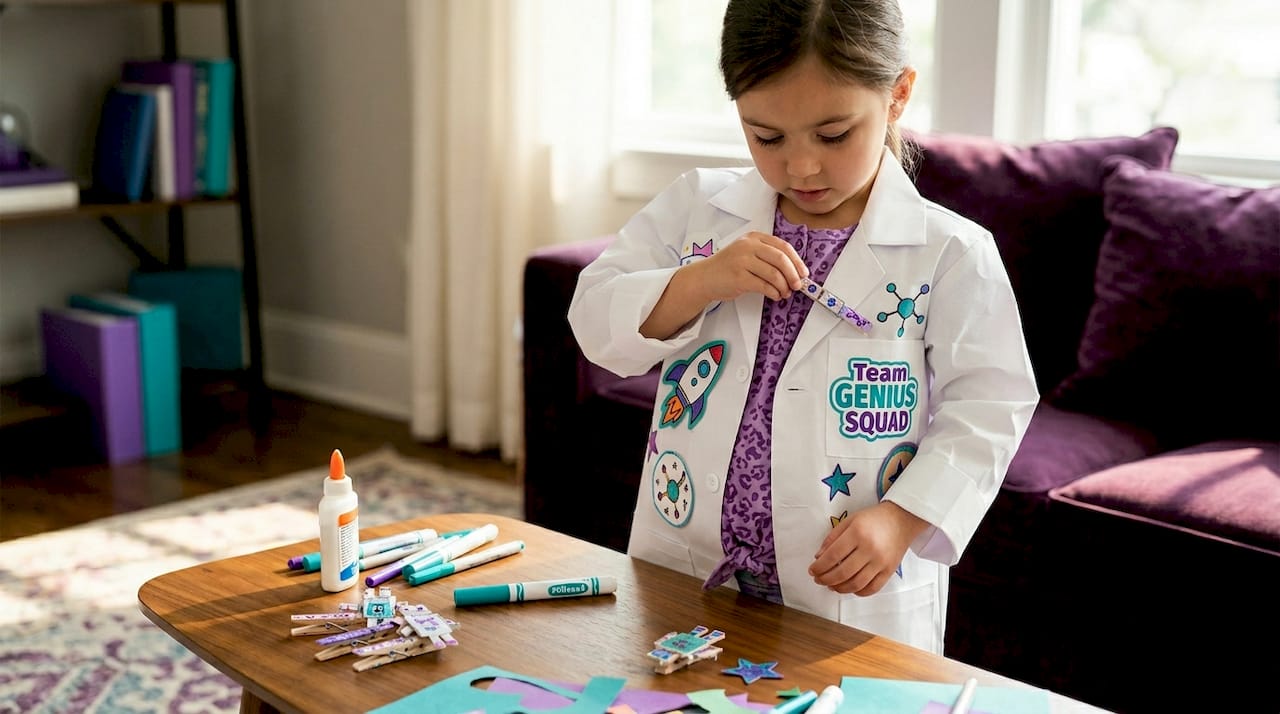
These crafts also become richer when children dress the part. Slipping on dress-up crafts accessories like a mini lab coat transforms craft time into a full innovator experience, helping children see themselves as young creators. Adding personalizing clothespin projects with STEM encouragement stickers turns each finished piece into a celebration of the child’s effort and identity.
How these crafts stack up: Age, effort, and mess factor
Having so many options can feel overwhelming, so here is a simple comparison to help you choose the right project for your group or your child.
| Craft | Age range | Prep time | Mess level | Skill focus | Supervision needed |
|---|---|---|---|---|---|
| Clothespin puppets | 5 and up | 5 min | Low | Creativity, language | Minimal |
| STEM bridges | 7 and up | 10 min | Low | Engineering, math | Moderate |
| Decorative magnets | 5 and up | 10 min | Medium | Fine motor, art | Low to moderate |
| Learning clips | 5 to 8 | 15 min | Very low | Literacy, numeracy | Minimal |
| Animal critters | 5 and up | 10 min | Medium | Spatial reasoning | Low to moderate |
| Weather wheels | 5 to 8 | 20 min | Low | Science, observation | Minimal after setup |
| Art display chains | All ages | 5 min | Very low | Community, pride | Minimal |
A few quick cleanup and adaptation tips that make a real difference in group settings:
- Lay down a silicone mat or old tablecloth before painting or gluing to catch drips and cut cleanup to under two minutes.
- Pre-sort materials into small cups or trays so children can work independently without reaching across each other’s spaces.
- For classroom groups larger than 15, set up two or three craft stations with different projects running at the same time to keep wait times low and engagement high.
- Crafts rated “Very low” mess, like learning clips and art display chains, are ideal for after-school homework clubs or library programs where cleanup time is limited.
Hands-on project adaptations like adjustable lab coats for different body sizes mirror the same mindset: small modifications create big access for every child in the room. When children feel set up to succeed before they even start, their willingness to try new things grows noticeably. For younger children needing glue assistance, always use low-temp tools to keep safety front and center without slowing the creative momentum.
Adapting clothespin crafts for every learner
Every group is unique, so here is how to make these crafts work for all kids, regardless of age, ability, or learning style. The best clothespin crafts are the ones that every child in the room can access, and a few thoughtful modifications go a very long way.
Consider these practical adjustments based on specific needs:
- For children with limited hand strength: Use larger, spring-free clothespins or bulldog clips that require less squeezing force while still building coordination.
- For sensory-sensitive learners: Replace glitter and loose embellishments with smooth stickers or foam shapes that have predictable textures and less sensory overwhelm.
- For children with visual processing differences: Use bold outlines on craft templates, high-contrast color coding on learning clips, and large printed letters to make tasks visually clear and less frustrating.
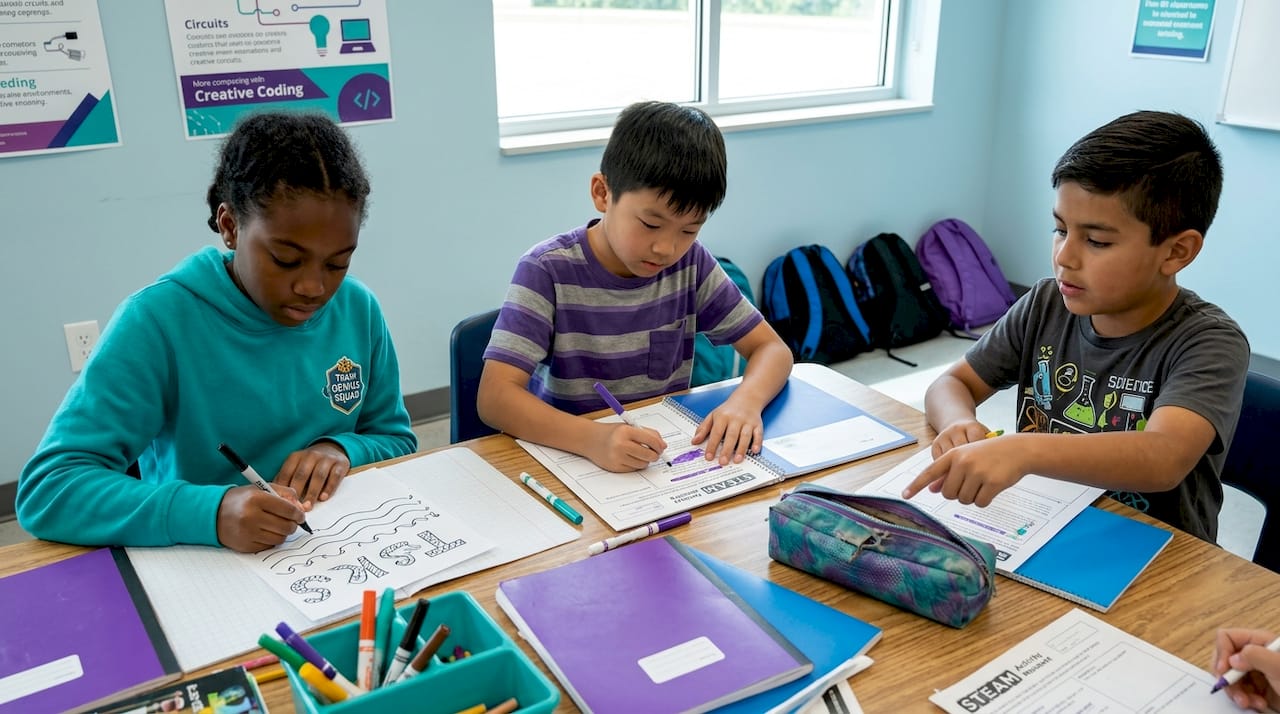
- For advanced learners ages 9 to 13: Add a journaling component where children sketch their design first, label the materials they plan to use, and write one sentence about what they discovered after finishing. This STEAM plus literacy integration deepens the learning without slowing the fun.
- For large classroom groups: Assign roles. One child clips, one child decorates, one child checks the finished product against a simple visual checklist. This cooperative structure mirrors real team innovation and builds social skills alongside craft skills.
Customizing craft activities with personal touches like name charms or color choices gives every child a sense of ownership over their creation, which research consistently links to increased motivation and task completion. For educators managing classrooms with diverse learners, the key insight is that flexibility in materials and process does not water down the learning. It actually deepens it, because every child is working at the edge of their own ability, which is precisely where growth happens.
Pro Tip: Build alternating hands and cross-midline movements directly into your instructions. Say something like, “Now clip this piece on the other side using your other hand.” This simple verbal prompt, backed by expert fine motor guidance, makes a therapeutic-quality developmental activity feel like just another fun step in the project. When you support adapting for diverse learners through environment and materials, the whole class benefits, not just the children who seem to need extra support.
Why hands-on crafts matter more than ever
There is a conversation happening in education right now that focuses almost entirely on apps, platforms, and coding bootcamps as the path to developing future-ready children. And while digital literacy absolutely matters, this focus quietly sidelines something essential: the irreplaceable value of making something with your hands.
Clothespin crafts are a small but meaningful stand against the idea that only high-tech tools build STEM skills. A child who figures out how to balance a bridge made of clothespins and popsicle sticks is learning load distribution, iterative design, and failure tolerance. None of that requires a screen, a subscription, or a power outlet. It requires curiosity, a handful of materials, and an adult who trusts the child enough to let the process unfold.
There is also an emotional dimension to physical crafting that digital tools rarely replicate. When a child holds a finished puppet, magnet, or engineering bridge, they feel the weight of their own effort. That physical object becomes evidence of what they are capable of, and that evidence is far more convincing to a child than a star on a digital achievement badge. Children who build things develop a relationship with perseverance that carries into every other challenge they face.
We believe, from everything we have seen and experienced, that the children who are told “different minds can build the future” need more than encouraging words. They need a project in their hands that proves it. Clothespin crafts do exactly that. They are low-stakes enough to encourage risk-taking, tangible enough to build confidence, and open-ended enough to honor every child’s unique creative vision. That is not a replacement for technology. That is the foundation that makes technology meaningful.
Discover more STEM hands-on adventures
Ready for your next creative challenge? Clothespin crafts are a brilliant starting point, but the world of hands-on STEM discovery does not stop there. Team Genius Squad builds screen-free kits that take children from simple crafts into full science experiments, role-play innovation, and real confidence-building moments that they carry with them long after the project is done.

Families and educators who are ready to go deeper will love the electricity lab bundle, which brings circuits, energy, and hands-on discovery together in one immersive kit. For a broader look at what is possible, explore the full experiment kits collection and find the perfect next step for the young innovator in your life. Every kit is powered by our E³ Method: Engage, Encourage, Empower. Because every child deserves to experience what it feels like to be a scientist, a creator, and a future problem-solver.
Frequently asked questions
Are clothespin crafts safe for all age groups?
Clothespin crafts are generally safe for children ages 5 and up with appropriate supervision, particularly around adhesives. For younger children, always use low-temp glue guns or non-toxic craft glue sticks to eliminate burn risk while keeping the creative process flowing smoothly.
How do clothespin crafts help fine motor skills?
The repeated pinching and releasing motion directly strengthens the small muscles of the hand, builds pincer grasp, and improves overall dexterity. Studies on similar pinching tasks report a high N-Gain of 0.83 in fine motor skill development, placing clothespin activities among the most effective tactile tools available for this age group.
What materials do I need for basic clothespin crafts?
Most projects require only standard wood or plastic clothespins, craft glue, washable markers, colored cardstock or construction paper, and simple embellishments like googly eyes, foam stickers, or pipe cleaners, all of which are inexpensive and widely available at craft stores.
Can these crafts support children with special needs?
Yes, absolutely. With adaptations like larger clothespins for easier gripping, tactile materials that match sensory preferences, bold visual cues on templates, and role assignments for group work, clothespin crafts become genuinely inclusive for diverse learners across a wide range of abilities and learning styles.

Leave a comment
This site is protected by hCaptcha and the hCaptcha Privacy Policy and Terms of Service apply.