
Screen-free STEAM kits: empower neurodivergent kids
Removing screens from a child’s learning routine might sound like a step backward in a tech-driven world, but research tells a different story. Guided activity kits can foster rich STEM talk and inquiry without a single digital interface, and that finding changes everything about how we think about hands-on learning. For parents and educators supporting neurodivergent children, screen-free STEAM kits are not a compromise. They are a purposefully designed path toward deeper curiosity, stronger confidence, and the kind of joyful discovery that sticks with a child long after the experiment is done. This guide will help you understand what these kits are, why they work, and how to choose the right one for your learner.
Table of Contents
- What are screen-free STEAM kits and why do they matter?
- How do screen-free STEAM kits boost learning and confidence?
- Choosing the right kit: structure, flexibility, and neurodiversity
- Inside a successful screen-free STEAM kit: methodologies and strategies
- Beyond “screen-free”: is limited tech ever helpful?
- A new lens: what most guides miss about screen-free STEAM for neurodivergent kids
- Bring screen-free STEAM learning home
- Frequently asked questions
Key Takeaways
| Point | Details |
|---|---|
| Hands-on wins | Screen-free STEAM kits boost engagement and problem-solving by letting kids build and explore. |
| Flexible design matters | Tailoring kit structure and materials supports different neurodivergent learning needs. |
| Guided play is powerful | Adult prompts and collaborative routines maximize the impact of every kit. |
| Purposeful tech is OK | Some technology can support STEM learning when used in moderation and for a clear purpose. |
What are screen-free STEAM kits and why do they matter?
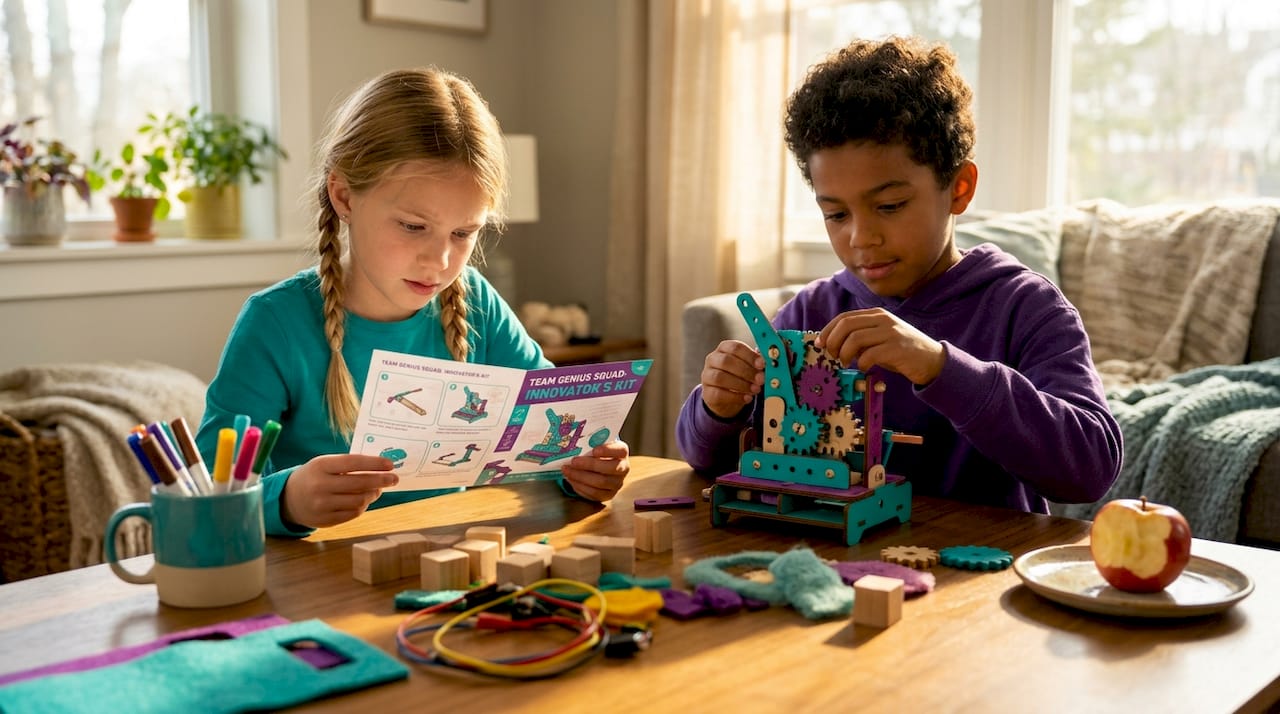
Screen-free STEAM kits are collections of physical, tangible materials designed to guide children through science, technology, engineering, art, and math activities without relying on tablets, apps, or any child-facing digital interface. Think building materials, experiment supplies, activity cards, loose parts, and guided prompts that a child can hold, manipulate, and explore with their hands. They are intentionally designed to make learning feel like play, because for children between the ages of 5 and 13, that distinction matters enormously.
For neurodivergent learners, including children with dyslexia, dysgraphia, ADHD, autism spectrum differences, or sensory processing needs, these kits carry special weight. Traditional classroom learning often leans heavily on reading, writing, and sitting still. Screen-based learning trades one form of passive consumption for another. Screen-free STEAM kits flip that model entirely, inviting children to touch, build, test, and wonder.
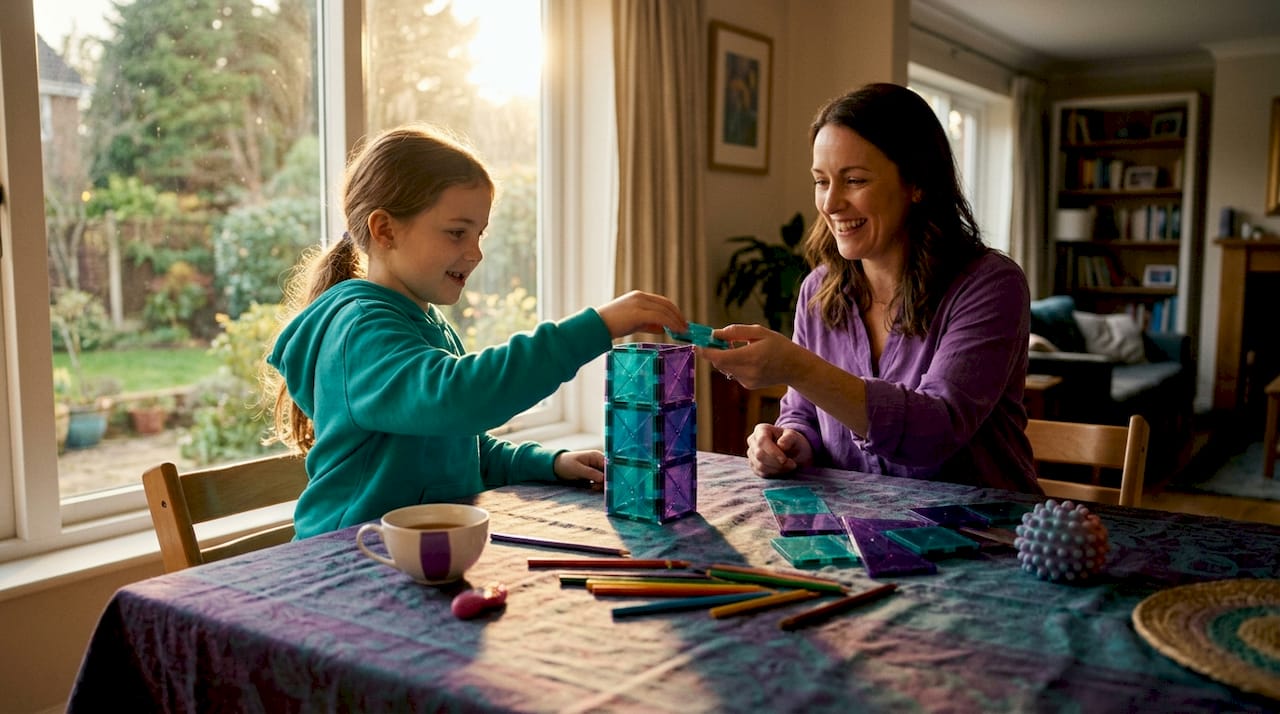
Research confirms that guided play and scaffolding can support STEM talk and inquiry without relying on child-facing digital tools, making these kits especially powerful when paired with an engaged adult asking curious questions. And according to the NESTL Toolkit, embodied and tangible supports are particularly relevant for neurodivergent learners’ engagement, because they offer multiple ways to interact with a concept beyond reading or listening alone.
Common misconceptions are worth clearing up here. Screen-free does not mean low-tech or less rigorous. A kit that asks a child to build a bridge from index cards, test its weight-bearing capacity, and document results is doing serious engineering work. A slime experiment that explores viscosity and chemical reactions is genuine chemistry. The absence of a screen does not reduce the science. It often deepens it.
Here is what sets effective screen-free STEAM kits apart from generic craft boxes:
- Purposeful design: Every material serves a learning goal, not just entertainment.
- Guided language prompts: Built-in questions encourage children to think out loud and build vocabulary.
- Flexible materials: Options for children with different sensory tolerances or cognitive styles.
- Adult scaffolding support: Instructions that help parents and educators guide without taking over.
- Identity building: Tools that help children see themselves as scientists and innovators, not just participants.
“Screen-free STEAM kits don’t remove innovation from learning. They bring it back to the child’s hands, where it always belonged.”
Explore screen-free STEAM strategies that pair beautifully with physical kits to build a fuller learning experience at home or in the classroom.
How do screen-free STEAM kits boost learning and confidence?
The evidence behind these kits is compelling. Hands-on STEAM activities are associated with improved problem-solving in early childhood compared to standard curriculum approaches, and the gains are especially notable when guided questioning is part of the experience. For neurodivergent children who often feel left behind in traditional learning environments, that kind of measurable progress is more than academic. It is transformative.
One of the most important mechanisms at work is what researchers call “STEM talk,” which refers to the science and math language children use when they describe what they are observing, predicting, or testing. When an adult asks “What do you think will happen if we add more baking soda?” rather than simply handing over instructions, the child’s language skills, reasoning, and engagement all increase together. This is not accidental. It is the direct result of a well-designed kit paired with an empowered adult.
Here is a snapshot of what the research shows when comparing guided STEAM kit experiences to standard learning:
| Outcome measured | Guided STEAM kit group | Control group |
|---|---|---|
| Problem-solving improvement | Significant gains | Minimal change |
| STEM vocabulary use | Increased notably | Baseline only |
| Adult-child STEM conversation | Measurably higher | Infrequent |
| Child engagement duration | Longer sessions | Shorter attention |
| Confidence in self-directed tasks | Reported improvement | No change noted |
The numbers tell a story, but so do the children. When a child successfully builds something that works, or predicts an outcome correctly, or discovers why a reaction happened, something shifts inside them. They begin to see themselves as capable. That identity shift is the real learning outcome.
Here are four best practices for getting the most out of any screen-free STEAM kit:
- Ask open-ended questions rather than giving answers. “I wonder what would happen…” is one of the most powerful phrases in a parent’s vocabulary.
- Let the child lead the pace of the activity, even if it moves slowly or goes in an unexpected direction.
- Celebrate observations, not just correct answers. Noticing something is the foundation of all scientific thinking.
- Connect the activity to daily life so the child sees STEAM as a natural part of their world, not a school subject.
Pairing kit experiments with hands-on literacy activities creates an integrated learning loop that reinforces both STEAM and language development simultaneously.
Choosing the right kit: structure, flexibility, and neurodiversity
Understanding why these kits work leads directly to a key practical question: How do you pick the right one for your specific learner? The answer depends largely on how your child processes information, responds to open-ended challenges, and manages sensory input.
Research published in Nature Partner Journals shows that loose parts materials can increase children’s spontaneous STEM behaviors, but the benefits depend on cognitive and home-learning factors rather than applying uniformly to every child. In plain terms, some children flourish when given a box of materials and told “build anything you want.” Others need a clearer starting point to feel safe enough to explore. Neither response is wrong. Both are completely valid.
Here is a comparison to help you match kit type to learner style:
| Kit type | Best for | Considerations |
|---|---|---|
| Highly structured kits | Children who need clear steps and defined outcomes | Less flexibility; may frustrate creative thinkers |
| Flexible or loose-parts kits | Children who love open-ended exploration | May overwhelm children who need more direction |
| Adjustable scaffolded kits | Neurodivergent learners with varied needs | Requires adult observation and responsive support |
| Role-play integrated kits | Children who engage through storytelling | Builds identity alongside skills |
Pro Tip: Before purchasing a kit, spend ten minutes watching your child interact with unstructured materials at home, like craft supplies, blocks, or kitchen tools. Do they dive in independently, or do they look to you for guidance first? That observation will tell you more about the right kit choice than any product description.
When in doubt, look for kits that offer adjustable options, where adults can add more structure or step back as needed depending on the child’s response on any given day. Neurodivergent learners often have variable days, and a kit that can flex with them is far more sustainable than one with a single fixed approach.
Visit our STEAM confidence tips for more guidance on matching activities to individual learning profiles.
Inside a successful screen-free STEAM kit: methodologies and strategies
With an idea of what to look for, here is how to recognize or build a successful, neurodiversity-friendly STEAM kit from the ground up. The most effective kits share a consistent structure that research supports and experienced educators have validated through real-world use.
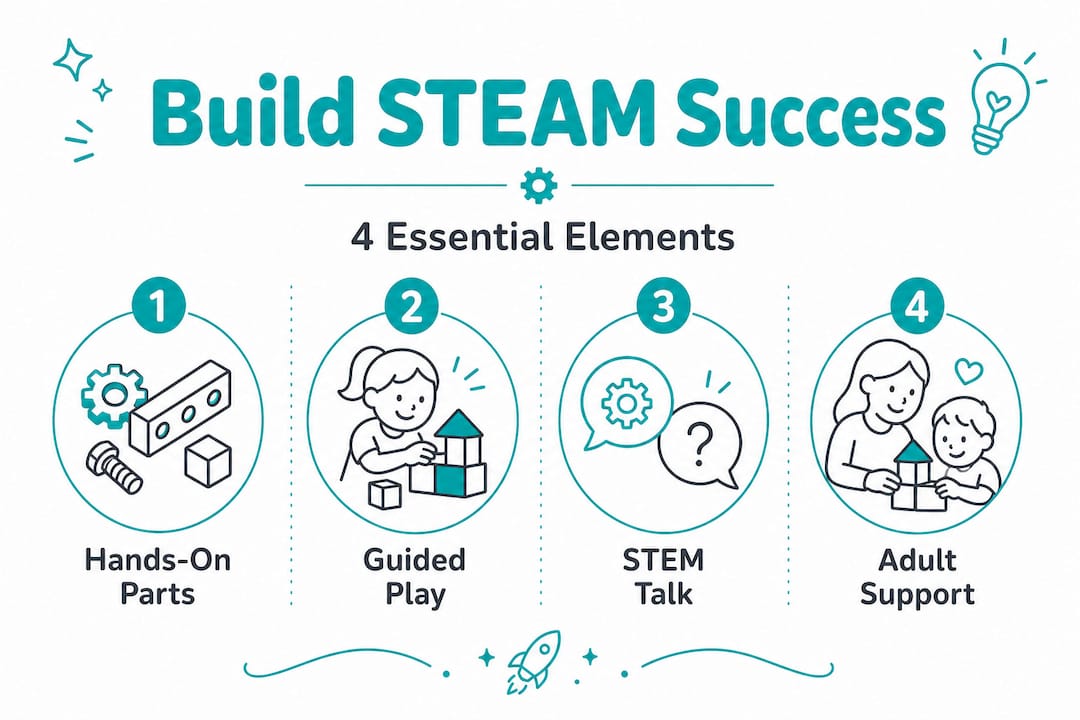
According to guided activity kit research, the most impactful screen-free STEAM experiences include four core elements: tangible inputs like parts, cards, and loose pieces; short build-and-test cycles that give children quick feedback; adult or peer-mediated STEM language prompts that encourage verbal reasoning; and flexible materials that accommodate different sensory needs and preferences.
The NESTL Toolkit further recommends offering multiple ways to access an activity, using materials that are physically accessible, and adjusting the challenge level based on what the learner tells you, either through words or body language, about how the experience is going.
A practical daily rhythm might look like this:
- 5 minutes: Introduction ritual (putting on a lab coat, reviewing the mission card, making a prediction)
- 10 to 15 minutes: Hands-on experiment or building challenge
- 5 minutes: Verbal or visual documentation (drawing, dictating, or writing what happened)
- 5 minutes: Celebration and reflection (What worked? What surprised you? What would you try differently?)
This structure takes less than 30 minutes but delivers real scientific process skills within a container that feels exciting rather than academic.
Key components to look for in any high-quality kit include:
- Mission-based framing: Activities presented as challenges or adventures rather than assignments.
- Multiple sensory entry points: Visual instructions, tactile materials, and verbal prompts together.
- Low-stakes testing cycles: Opportunities to try, fail, and try again without penalty.
- Identity markers: Items like lab coats, badges, or certificates that help children physically step into the role of innovator.
- Adult guidance cards: Prompts that empower parents and educators to ask great questions even without a STEM background.
Pro Tip: Let your child help customize the kit before you begin. Letting them choose which experiment to try first, what color notebook to use, or what to name their “lab” increases buy-in dramatically and makes the experience feel personally meaningful from the very first moment.
Practical STEAM strategies can help you build this kind of routine into your weekly schedule without it feeling like additional work.
Beyond “screen-free”: is limited tech ever helpful?
Once you have mastered screen-free approaches, you may still wonder if limited, purposeful technology has its own value in a neurodivergent child’s learning experience. The answer, grounded in current research, is a thoughtful yes, with important conditions attached.
Some forms of technology-mediated play can support STEM behaviors, which means families may benefit from a “screen-limited and purposefully structured” approach rather than a rigid all-or-nothing rule. The key word here is purposeful. A timer app that helps a child track their experiment, or a camera used to document results, is very different from a passive video or a game that replaces hands-on engagement.
“Rigid rules about screen time can sometimes get in the way of truly responsive, learner-centered practice. What matters most is whether technology is serving the child or the other way around.”
Before adding any tech component to a screen-free kit, ask yourself these questions:
- Does this technology help the child interact more deeply with the physical activity, or does it replace that interaction?
- Would the child lose access to hands-on learning if the tech element were removed?
- Is the child choosing the technology themselves, or is it adult-imposed?
- Does the technology support communication or documentation for a child with specific access needs?
- Can the tech element be removed easily if it becomes a distraction?
The goal is always to protect and expand the hands-on, identity-building experience. Technology, when used intentionally and sparingly, can occasionally support that goal. But it should never become the center of the experience.
A new lens: what most guides miss about screen-free STEAM for neurodivergent kids
Here at Team Genius Squad, we have seen something that most articles on this topic consistently overlook: the label “screen-free” can become its own kind of rigidity, and that rigidity can actually work against the neurodivergent learner it was meant to serve.
Most guides focus on removing screens as the primary goal, treating it as a victory in itself. But the real goal was never screen removal. It was connection, confidence, and curiosity. When a child who struggles with attention or sensory regulation finds one moment of deep engagement through a short digital timer or a document camera showing their experiment up close, insisting on strict screen-free rules in that moment prioritizes the category over the child.
What we have learned, both through research and through the real family journey that inspired our brand, is that learner-responsive practice matters far more than any single rule. Observe your child. Ask them what feels exciting. Notice when they lean in and when they check out. Build the learning experience around those responses, not around a policy.
The biggest confidence wins we have witnessed come from collaborative discovery, from a child and an adult building something together, getting it wrong, laughing about it, and trying again. That experience does not require screens, but it also does not require their complete absence. It requires presence, curiosity, and the belief that this child is fully capable of being a scientist, creator, and problem-solver right now.
Explore real-world screen-free experiences that put that belief into action every single day.
Bring screen-free STEAM learning home
Every child deserves a learning experience that meets them where they are, celebrates how their mind works, and builds the confidence to keep discovering. Team Genius Squad kits are designed with exactly that in mind, drawing on research-aligned principles, neurodivergent-inspired design, and the E³ Method to guide children from curiosity to confidence in every session.

Whether you are just starting your hands-on STEAM journey or looking to expand what you already do at home or in the classroom, we have options that flex with your learner. Browse our experiment kits for guided, sensory-friendly science experiences, try our popular hands-on slime STEM kit for an unforgettable introduction to chemistry, or explore our growing collection of STEAM books and puzzles that integrate reading, reflection, and discovery. Your young innovator is ready. Let’s build something amazing together.
Frequently asked questions
What materials are common in screen-free STEAM kits?
Most kits include tangible inputs like building parts, activity cards, and loose materials that children manipulate physically rather than interact with through a screen. Common examples include experiment supplies, sorting pieces, art materials, and guided prompt cards.
Are screen-free STEAM kits effective for all neurodivergent learners?
They benefit many neurodivergent children, but loose parts benefits depend on individual cognitive and home-learning factors, which means adjusting kit structure and flexibility to match the specific learner is essential for best results.
How can adults support STEAM learning with these kits?
Using open-ended guided questions alongside the kit is one of the most powerful moves a parent or educator can make, since parent STEM talk increases measurably when families use guided activity kits together, deepening both engagement and learning.
Is it ever okay to add technology to a screen-free kit?
Yes, intentionally and sparingly. Technology-mediated play can support STEM behaviors when it enhances the hands-on experience rather than replacing it, such as using a camera to document results or a timer to structure build-and-test cycles.



Leave a comment
This site is protected by hCaptcha and the hCaptcha Privacy Policy and Terms of Service apply.