

What Is Literacy Integration? A Guide for Educators
Literacy integration is defined as the deliberate blending of reading, writing, speaking, listening, language, and thinking within content instruction across all subjects and grade levels. It treats these skills as inseparable, not as separate lessons reserved for language arts class. Approximately 40% of all students read only at a basic level, and nearly 70% of fourth graders from low-income families fail to reach basic reading proficiency. Those numbers make integrated literacy instruction one of the most urgent priorities in education today.
What is literacy integration and why does it matter?
Literacy integration, also called integrated literacy instruction, is the practice of embedding literacy skills across every subject from Pre-K through 12th grade. A science teacher who asks students to read a lab report, discuss findings aloud, and write a conclusion is practicing literacy integration. So is a math teacher who has students explain their problem-solving steps in writing.
The significance of this approach goes well beyond reading scores. Reading difficulties in early grades affect performance in math, science, and social studies, creating a cascade of academic failure that compounds over time. Addressing literacy only in English class leaves that cascade unchecked in every other subject.
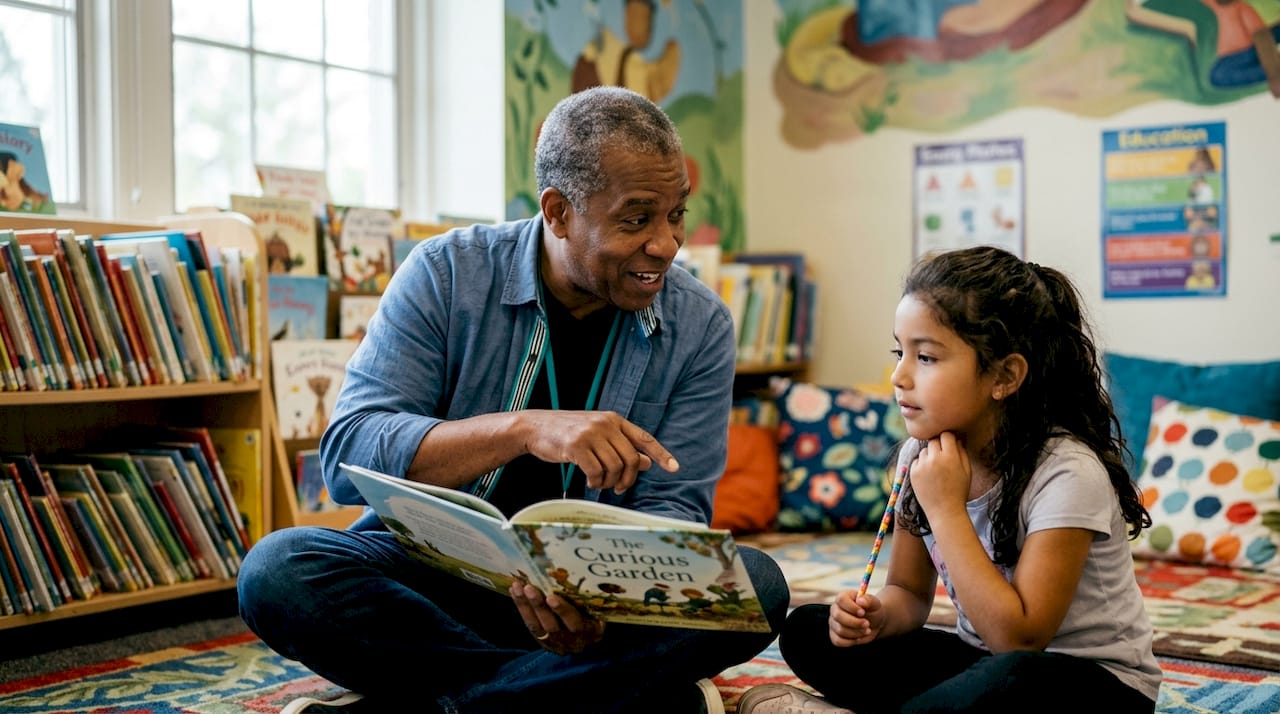
Integrated literacy instruction also recognizes that literacy itself is multidimensional. It includes not just decoding words but also visual representation, critical thinking, and oral communication. When all teachers share responsibility for these skills, children get consistent practice in every classroom, every day.
How does literacy integration support student success?
The benefits of literacy integration reach every learner, but they are especially powerful for students who face the greatest barriers. Research shows that integrating literacy with science and social studies enriches both knowledge-building and literacy achievement at the same time. That dual gain matters because content knowledge and reading comprehension reinforce each other: the more a child knows about a topic, the better they understand what they read about it.
For students from low-income backgrounds and English learners, integrated instruction provides something extra: more exposure to academic vocabulary and content-rich conversation within the same instructional time. These students often have fewer opportunities to encounter complex texts and disciplinary language outside of school. Literacy integration closes that gap without requiring additional class periods.
Key outcomes linked to integrated literacy instruction include:
- Stronger reading comprehension across content areas, not just in language arts
- Expanded academic vocabulary through repeated exposure in meaningful contexts
- Improved content mastery in science, social studies, and math
- Reduced risk of academic failure cascades starting in early elementary grades
- Higher engagement and motivation, particularly for students who struggle with traditional reading instruction
One concept that deepens this picture is disciplinary literacy. Disciplinary literacy involves merging content-specific literacy practices rather than applying general reading skills everywhere. A historian evaluates primary sources differently than a scientist interprets a graph. Teaching students to read and write like practitioners in each field builds both subject expertise and genuine literacy strength.
What are the most effective literacy integration strategies?
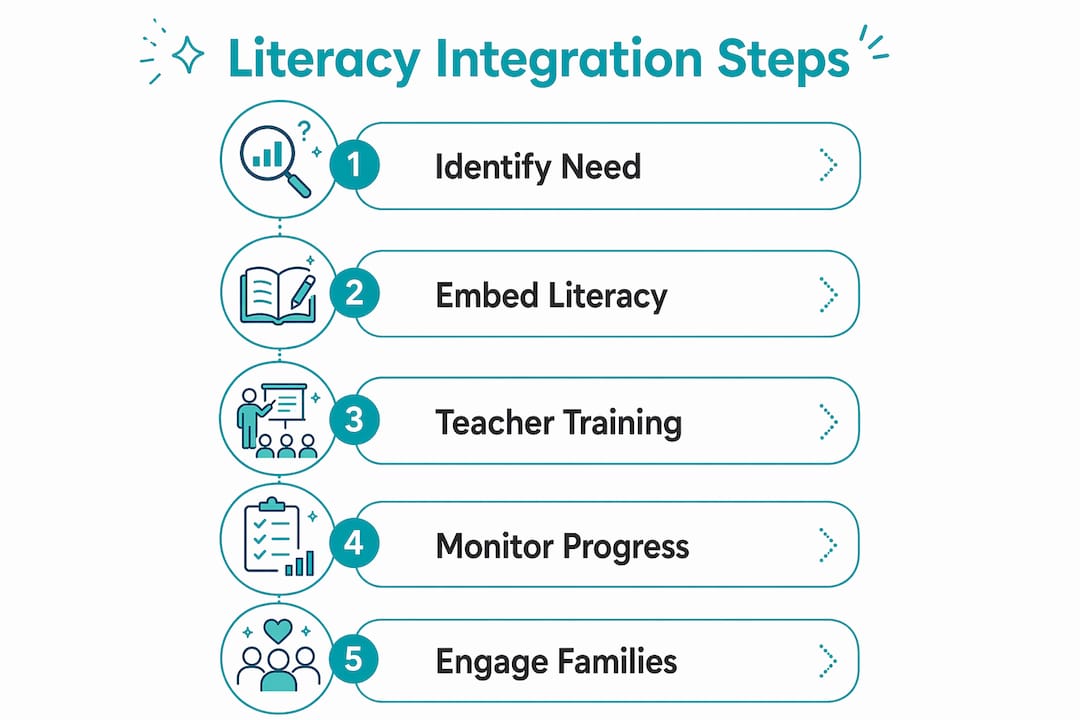
Effective integrated literacy instruction does not happen by accident. It requires deliberate planning and specific instructional moves that connect literacy skills to content learning.
The most well-supported strategies include:
- Conceptually coherent text sets: Groups of texts on the same topic, at varied reading levels, build background knowledge while giving all students access to content. A unit on ecosystems might include a picture book, a magazine article, and a primary data table.
- Content-rich conversations: Structured discussions where students use domain-specific vocabulary push both language development and content understanding. Sentence frames and discussion protocols make these conversations accessible to English learners.
- Writing to learn: Short, low-stakes writing tasks, such as exit tickets, science journals, or response paragraphs, help students process and retain content. Writing-to-learn practices are among the most consistent predictors of content comprehension gains.
- Read-alouds with complex texts: Teachers reading aloud from grade-level or above-grade-level texts exposes all students to sophisticated language and ideas, regardless of their independent reading level.
- Mentor texts: Using published writing as a model teaches students how experts in a field communicate, from a scientist’s lab report to a historian’s argument.
Pro Tip: Start with one subject outside of language arts, such as science or social studies, and add just one literacy routine, like a weekly reading response journal. Small, consistent changes build teacher confidence and student habit without requiring a full curriculum overhaul.
Scheduling and professional development are the two biggest structural barriers. Barriers like limited instructional time and lack of professional development consistently hinder implementation, especially in primary grades. Schools that succeed with literacy integration build it into collaborative planning time and treat it as a schoolwide commitment, not an individual teacher’s side project.
Common myths and challenges in integrated literacy
The biggest myth about literacy integration is that it belongs only to English and language arts teachers. Literacy is a shared responsibility requiring systemic professional development across all content areas. When a school assigns literacy only to one department, science and social studies teachers miss the opportunity to build the very skills their subjects demand.
A second common misconception is that integration means adding more work. Effective literacy integration replaces isolated skill drills with purposeful reading and writing within content instruction. Students practice literacy while learning science, not instead of it.
Other persistent challenges include:
- Secondary teachers who received little or no literacy training in their credential programs
- Scheduling structures that isolate subjects and make cross-curricular planning difficult
- Unequal access to high-quality texts and materials, particularly in under-resourced schools
- Leadership that treats literacy as a short-term initiative rather than a long-term instructional commitment
“Viewing literacy as a universal tool that spans all subjects curbs early academic failure and the behavioral challenges that often follow. When every teacher sees themselves as a literacy teacher, students stop falling through the cracks between subjects.”
Equity is the thread running through every challenge. Students in under-resourced schools are least likely to encounter integrated literacy instruction and most likely to need it. Addressing access gaps requires intentional resource allocation and leadership that prioritizes literacy as a schoolwide value, not a single classroom practice.
How parents and counselors can support literacy integration
Parents and counselors play a real role in reinforcing integrated literacy, even outside the classroom. When families and counselors collaborate with educators to encourage literacy practice across home and school settings, students’ academic outcomes improve measurably.
For parents, the most effective moves are often the simplest:
- Talk with your child about what they are learning in science, history, or math, not just how school went
- Read nonfiction books and articles together on topics your child finds interesting
- Ask your child to explain a concept they learned, which builds both comprehension and oral language
- Provide access to STEM and STEAM books that connect reading with real-world discovery
- Encourage writing at home through journals, letters, or even captions for photos
Counselors can advocate for integrated literacy at the school level by pushing for professional development that includes all content-area teachers, not just English teachers. They can also connect struggling students to literacy support resources early, before reading difficulties compound into broader academic failure. Counselors who understand the literacy training resources available in their community can make targeted referrals that change a child’s trajectory.
The most powerful outcomes happen when educators, families, and counselors align around the same message: reading, writing, and thinking are everyone’s job, in every subject, every day.
Pro Tip: Ask your child’s teacher which content areas they are reading and writing in this week. That one question signals to the school that you value integrated literacy and opens a conversation about how to reinforce it at home.
Key Takeaways
Literacy integration is the most effective way to build both content knowledge and reading skills simultaneously, and it requires every educator, parent, and counselor to treat literacy as a shared responsibility.
| Point | Details |
|---|---|
| Definition is broad | Literacy integration blends reading, writing, speaking, listening, and thinking across all subjects, not just language arts. |
| Stakes are high | Nearly 70% of low-income fourth graders read below basic proficiency, making integrated instruction urgent. |
| Disciplinary literacy matters | Content-specific literacy practices, like reading science graphs, build deeper expertise than general reading skills alone. |
| Barriers are structural | Limited time, weak professional development, and unequal resources are the main obstacles to successful implementation. |
| Everyone has a role | Parents, counselors, and all teachers share responsibility for reinforcing literacy across home and school settings. |
Why I believe literacy integration is the missing piece in most schools
I have watched schools pour resources into reading intervention programs that pull students out of science and social studies to practice isolated decoding skills. The students return to class having missed the very content-rich instruction that would have built their vocabulary and comprehension in the first place. That cycle is one of the most counterproductive patterns in education, and it persists because literacy is still treated as one teacher’s job.
The research is clear: integrated instruction enhances motivation and literacy achievement, especially in early grades when knowledge-building is most critical. But the mindset shift required is harder than any curriculum change. Science teachers do not see themselves as reading teachers. Math teachers do not see themselves as writing teachers. Until that changes at the school leadership level, integration stays a talking point rather than a practice.
What gives me real hope is the growing number of schools treating literacy as a schoolwide commitment, backed by job-embedded professional development and collaborative planning. When a biology teacher and an English teacher co-plan a unit around a shared text set, something shifts. Students see that reading and thinking are tools for understanding the world, not just skills for passing a test. That is the mindset every child deserves, especially those who learn differently.
— Tita
Teamgeniussquad’s approach to literacy-rich learning
Teamgeniussquad builds literacy integration directly into every hands-on STEAM discovery kit. Each kit pairs real experiments with reading, writing, and reflection activities, so children practice science and literacy at the same time.

Powered by the trademarked E³ Method (Engage, Encourage, Empower), Teamgeniussquad kits are designed for children ages 5–13, including those who learn differently. The kits are especially well-suited for elementary school settings where integrated instruction builds the strongest foundation. Educators and parents can explore the full range of experiment kits to find hands-on tools that make literacy integration feel like discovery, not a lesson plan. Teamgeniussquad also supports the Whole Foods Launch initiative, expanding access to these resources for more families and communities.
FAQ
What is the literacy integration definition in simple terms?
Literacy integration is the practice of teaching reading, writing, speaking, and thinking skills within content subjects like science, math, and social studies, rather than only in language arts class.
Why is literacy integration important for all grade levels?
Reading difficulties that start in early grades affect performance in every subject, creating academic failure that compounds over time. Integrated literacy instruction addresses this across all grades and content areas.
How does disciplinary literacy differ from general reading instruction?
Disciplinary literacy focuses on content-specific reading and writing practices, such as interpreting a science graph or evaluating a historical document, while general reading instruction teaches broad decoding and comprehension skills.
What are the biggest barriers to literacy integration in schools?
Limited instructional time, lack of professional development for content-area teachers, and unequal access to high-quality texts are the most common obstacles to successful literacy integration.
How can parents support literacy integration at home?
Parents can talk with their children about content-area topics, read nonfiction together, and encourage writing at home. Connecting with educators about what subjects children are reading and writing in each week also reinforces the school’s integrated approach.



Leave a comment
This site is protected by hCaptcha and the hCaptcha Privacy Policy and Terms of Service apply.