Scientific Inquiry Explained: A Guide for Students and Teachers
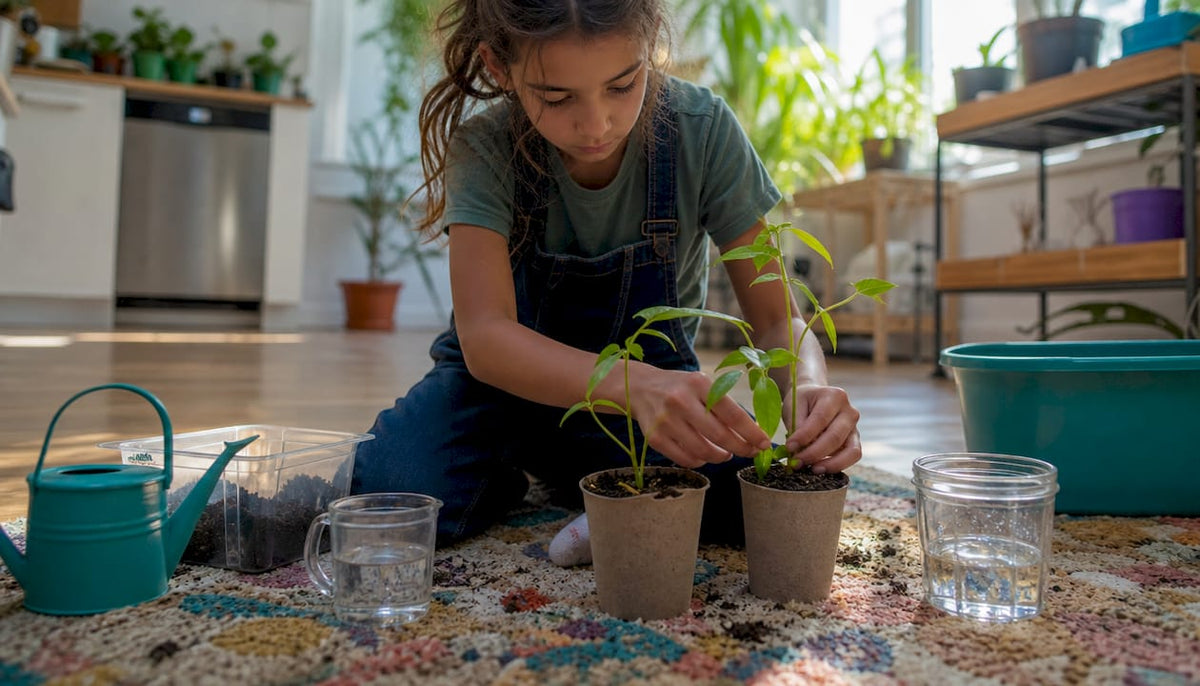
Scientific inquiry is the process of asking a testable question about the natural world, gathering evidence to answer it, and revising your thinking as new evidence comes in. That’s the definition scientists use in the lab, and it’s the same skill the National Research Council’s National Science Education Standards asks classrooms to build in students. Picture a fourth grader watching a plant lean toward a window, wondering why, then setting up two pots (one in light, one in a closet) to find out. That’s inquiry at work: observation, question, evidence. The National Science Teaching Association (NSTA) and UnderstandingScience.org both frame it the same way: inquiry is less a checklist and more a habit of mind, one that looks a little different every time you use it.
Key Takeaways
Scientific inquiry is a flexible, evidence-driven process of asking testable questions and revising ideas, not a fixed sequence of steps to memorize.
| Point | Details |
|---|---|
| Definition covers two settings | Scientific inquiry describes both professional research methods and the classroom skills students build through investigation. |
| Evidence is non-negotiable | Empirical evidence gathered with proper tools is what makes science self-correcting over time. |
| No universal step sequence | Real inquiry loops, backtracks, and starts from serendipity, unlike the linear 5 or 7 step textbook models. |
| Reflection makes experience stick | Hands-on activity alone doesn’t build inquiry skills; students need guided reflection paired with it. |
| Teamgeniussquad kits pair action with reflection | Hands-on, role-play STEAM kits give kids real variables to test alongside built-in prompts for reflection. |
Table of Contents
- What Is Scientific Inquiry, Really?
- Core Principles Behind Sound Scientific Inquiry
- Is Scientific Inquiry the Same as the Scientific Method?
- Are There Fixed Steps in Scientific Inquiry?
- What Does Scientific Inquiry Look Like in Practice?
- How Do Teachers Build Inquiry-Based Learning in the Classroom?
- What Do People Get Wrong About Scientific Inquiry?
- Where Can You Learn More About Scientific Inquiry?
- How Hands-On Kits Build Real Inquiry Skills
- A Publisher’s Note on Teaching Inquiry Well
- Bring Inquiry Home With Hands-On STEAM Kits
- Frequently Asked Questions
- Sources
What Is Scientific Inquiry, Really?
Scientists and teachers use the term “scientific inquiry” to describe two overlapping things. In professional science, it’s the diverse set of ways researchers investigate the natural world, from a marine biologist tagging sharks to a physicist smashing particles. In the classroom, it’s the process by which students develop those same abilities: asking questions, planning simple investigations, collecting data, and explaining what the data means. Both versions share the same backbone. You don’t start with an answer. You start with curiosity, build a question you can actually test, and let evidence do the talking.
This matters because a lot of people confuse scientific inquiry with a rigid sequence of steps memorized for a worksheet. It isn’t. It’s a way of thinking that scales from a kitchen-table experiment about which paper towel absorbs more water to a decades-long study on climate patterns. What connects a second grader’s cup of ice cubes to a research team’s satellite data is the same underlying discipline: test your idea against reality, then be willing to change your mind.
Core Principles Behind Sound Scientific Inquiry
Good inquiry isn’t defined by fancy equipment or big words. It’s defined by a handful of habits that separate real investigation from guessing dressed up in a lab coat.
Evidence comes first, always. Empirical evidence gathered with the right tools is what makes science self-correcting rather than a matter of opinion, according to Britannica’s overview of empirical evidence. A claim without evidence is a guess. A claim tested against evidence, even a flawed one, is inquiry.
Findings stay tentative. Scientific claims are provisional. They get updated, refined, or thrown out entirely when better evidence shows up, and that’s a feature, not a weakness.
Other people get to check your work. Peer review, replication, and open critique catch errors that a single researcher (or a single student) might miss, a process the NCBI Bookshelf’s discussion of self-correction describes as central to how science stays reliable over time.
Assumptions get named, not buried. Real inquiry means asking what you’re taking for granted and whether another explanation fits the evidence just as well.
Here’s how those principles translate directly into the classroom:
- Evidence-based testing — students should collect real data, even if it’s just counting seeds sprouted in a cup, rather than reciting an expected answer.
- Iteration and tentativeness — a “wrong” hypothesis isn’t a failure; it’s a chance to ask a sharper question next time.
- Community scrutiny — having students explain their results to a partner or class mimics peer review and often catches sloppy reasoning fast.
- Naming assumptions — asking “what are we assuming here?” before running an experiment builds the same critical thinking Britannica ties to strong empirical work.
Pro Tip: Before any experiment, ask students to write down what they expect to happen and why. When the result surprises them, that gap is the most valuable teaching moment in the whole activity.
Is Scientific Inquiry the Same as the Scientific Method?
No. Scientific inquiry is not a single linear recipe you follow start to finish, and that’s worth saying plainly because so many textbooks imply otherwise. The “scientific method” most students memorize (question, hypothesis, experiment, analyze, conclude) is a simplified teaching model. It’s useful for structuring a first lab report. It is not how most real science actually happens.
Real investigations loop back on themselves constantly. A scientist might run an experiment, get a confusing result, redesign the tools, ask a completely different question, and only then land on something publishable. UnderstandingScience’s blueprint for scientific investigations describes this as an iterative process with many entry points, including serendipity and new technology, not a straight line from A to Z.
Consider the difference:
- Textbook version: Ask a question about plant growth, hypothesize that more sunlight helps, test it, record results, conclude.
- Real-world version: A researcher studying soil bacteria notices an odd side effect in unrelated samples, chases that observation for months, revises the original question twice, and publishes a finding that has nothing to do with the original project.
Philosophical scholarship backs this up directly. The Stanford Encyclopedia of Philosophy’s entry on scientific method argues there’s no single universal toolkit that all sciences use. Method depends on the question, the field, and the tools available. Both models still earn their place: the simplified steps give beginners a scaffold, while framing inquiry as flexible and iterative prepares older students for how science actually functions.
Are There Fixed Steps in Scientific Inquiry?
Most students first meet inquiry through a numbered list. A common 5-step version runs: ask a question, form a hypothesis, test it, analyze results, draw a conclusion. A 7-step variant often adds background research at the start and communicating results at the end. Both are common, both are useful for a first lab report, and neither is universal. Different questions genuinely require different methods, a point Understanding Science’s own reporting on inquiry makes directly.
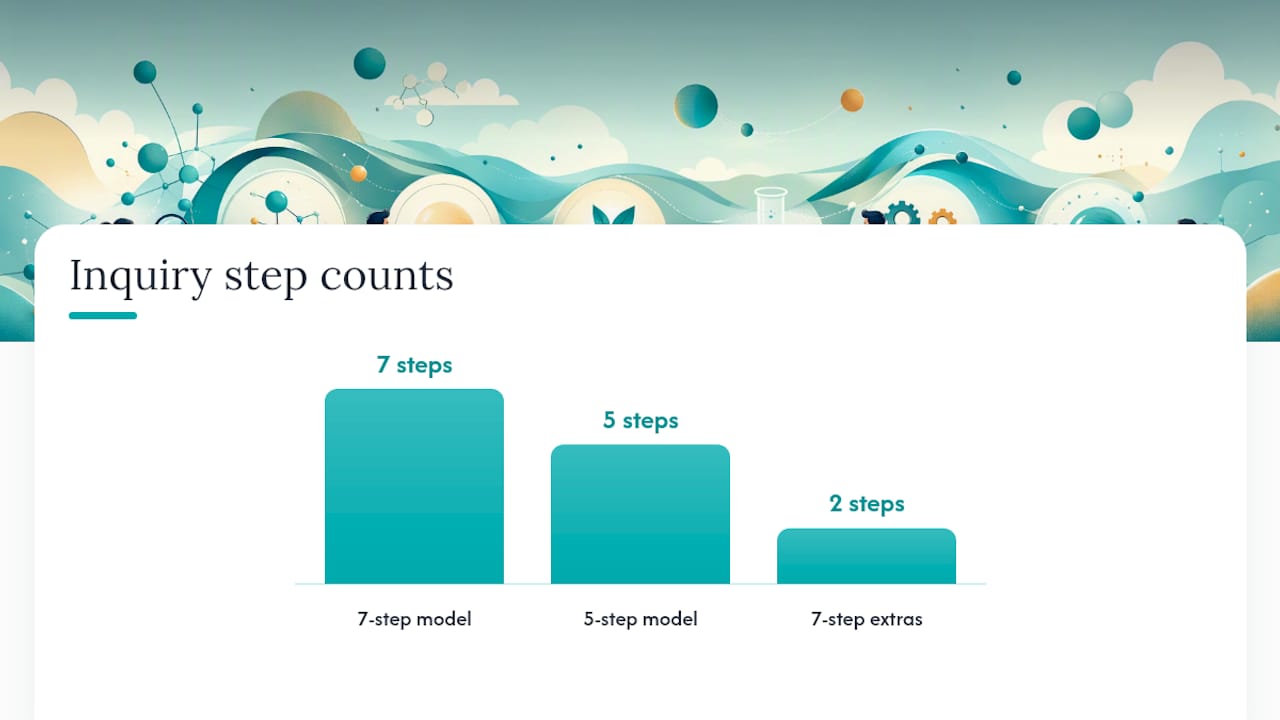
Here’s how the common models line up:
| Step Label | 5-Step Version | 7-Step Version | Classroom Note |
|---|---|---|---|
| Ask | Question | Question | Works well for controlled labs with one variable |
| Research | (skipped) | Background research | Helps older students avoid re-testing known facts |
| Hypothesize | Hypothesis | Hypothesis | Best framed as “testable guess,” not a final answer |
| Test | Experiment | Experiment | Should isolate one variable at a time for clarity |
| Analyze | Analyze data | Analyze data | Data can be numbers, drawings, or observations |
| Conclude | Conclusion | Conclusion | Should explicitly connect back to the hypothesis |
| Communicate | (skipped) | Report/share findings | Mimics real peer review when shared with classmates |
Use a fixed step-list when a simple, controlled experiment calls for it, like testing which liquid rusts a nail fastest. Reach for open or guided inquiry when the question is messier, when there’s no single expected outcome, or when you want students practicing the judgment calls real scientists make daily.
- Follow a step-list for a first experience with variables and controls.
- Shift to guided inquiry once students can handle choosing their own variable.
- Save fully open inquiry for students who’ve already practiced both, since it demands more independent judgment.
What Does Scientific Inquiry Look Like in Practice?
Abstract principles land better with examples students can picture or try themselves.
Guided classroom activity: Give students cups, water, salt, sugar, and a hot plate, then ask which dissolves faster in warm versus cold water. You supply the question and materials; they design the test, collect the data, and draw the conclusion. This is evidence-based testing in miniature, and the “why” behind the result often surprises them.

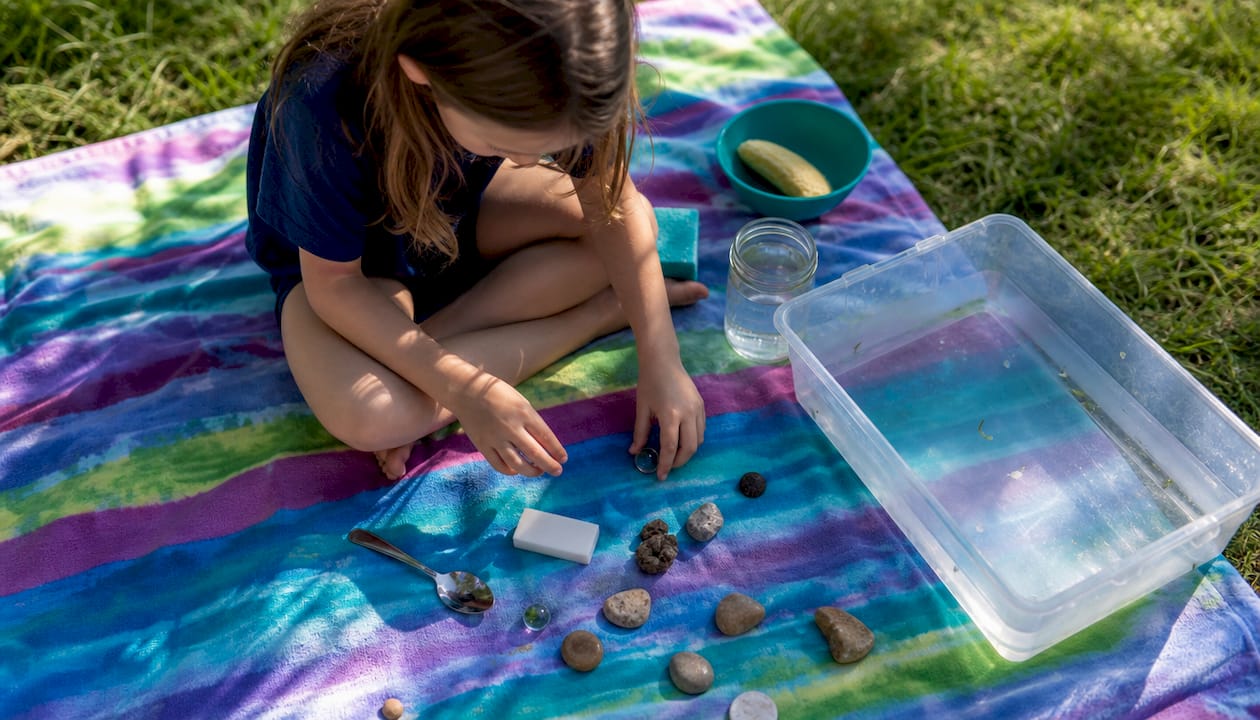
Open exploration activity: Set out a table of ordinary objects (a spoon, a rock, a sponge, a marble) and ask, “Which of these float, and why do you think so?” Let students group objects by their own criteria before testing. There’s no single expected hypothesis, which forces real reasoning instead of guessing the “right” answer.
Real science, non-linear path: Penicillin wasn’t discovered through a hypothesis-first experiment. Alexander Fleming noticed mold contaminating a bacterial culture and killing the bacteria around it, an accident he chose to investigate rather than discard. That’s serendipity driving inquiry, a pattern UnderstandingScience’s account of the real process of science says is far more common than textbooks suggest.
Real science, technology-enabled: Astronomers didn’t hypothesize the existence of exoplanets and then happen to find one. Better telescopes and light-detection tools made observations possible that simply couldn’t have been made before, and the questions followed the new evidence rather than the other way around.
Each example hinges on the same three features: a specific type of evidence, a way of testing the idea against that evidence, and (eventually) other people checking the result.
How Do Teachers Build Inquiry-Based Learning in the Classroom?
Inquiry-based instruction looks like students doing the thinking, not the teacher delivering conclusions. A teacher sets up conditions for discovery, then steps back enough for genuine questions to surface.
- Pick a learning goal first, then let the investigation question grow out of it, not the other way around.
- Choose materials that allow real variation, so results aren’t predetermined before students even start.
- Decide how much scaffolding the group needs. Younger or newer students often do better with guided inquiry, where you supply the question but they own the method.
- Build in a reflection step before the activity ends, not after grading.
- Assess the thinking, not just the final answer.
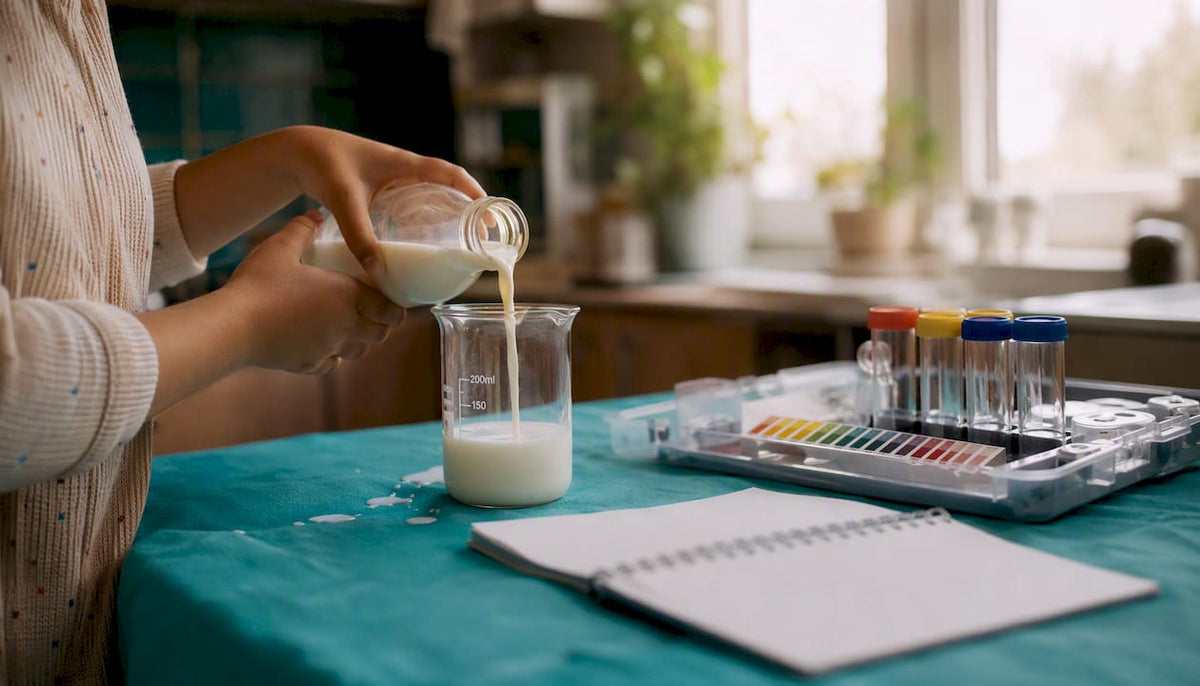
Scaffolding matters more than most lesson plans admit, as explained in the role of behavioral science in education. The National Academies’ chapter on inquiry and the standards is direct about this: hands-on experience alone doesn’t teach inquiry skills. Students need guided reflection alongside the activity itself. A lab notebook prompt like “What surprised you, and why do you think that happened?” does more for long-term learning than another worksheet of steps to fill in.
NSTA’s own guidance on investigative techniques backs this up, recommending that teachers pair every hands-on activity with structured metacognitive prompts, since experience by itself doesn’t automatically build inquiry ability. A quick practical checklist for planning inquiry activities can help here, especially for teachers juggling multiple grade levels.
Use a short checklist to judge any activity: Did students form their own question or test? Did they collect evidence rather than just observe a demonstration? Did they explain their reasoning to someone else? If the answer to any of those is no, the activity may be a demonstration, not inquiry.
Pro Tip: Ask “What would change your mind?” after a student states a conclusion. If they can’t answer, they haven’t really tested their idea, they’ve confirmed what they already believed.
What Do People Get Wrong About Scientific Inquiry?
Myth: Inquiry always follows one set of steps. Fact: there’s no universal fixed sequence, and real investigations branch, backtrack, and restart constantly.
Myth: A hypothesis has to be right to count as good science. Fact: a hypothesis that gets disproven by evidence is a successful test, not a failed one.
Myth: Inquiry means students figure everything out alone. Fact: guided inquiry, where the teacher supplies structure, is a legitimate and often necessary stage before open exploration.
Myth: More hands-on time automatically builds inquiry skills. Fact: without reflection prompts, experience alone often fails to transfer into lasting understanding.
Myth: Evidence is only numbers from an instrument. Fact: careful observations, drawings, and comparisons all count as evidence when gathered systematically.
Myth: Once a scientific idea is published, it’s settled. Fact: findings stay tentative and open to revision as new evidence surfaces.
These misconceptions persist because the simplified textbook model is easier to test on a quiz than the messier reality. Naming the myth directly, right alongside the correct version, tends to stick better than a paragraph of dense explanation.
Where Can You Learn More About Scientific Inquiry?
A few sources cover this ground with real authority, and each serves a different reader.
- National Science Education Standards (National Academies) — the foundational classroom-level definition of inquiry and its four major goals for students.
- UnderstandingScience.org — the clearest reading-friendly breakdown of how the real, non-linear process of science works, ideal for students.
- NSTA’s investigative techniques guidance — practical, classroom-ready recommendations for teachers on pairing activity with reflection.
- Stanford Encyclopedia of Philosophy — the deepest dive into why no single universal method exists, useful for curriculum designers building cross-discipline standards.
Teachers planning lessons should lean on NSTA; students wanting a plain-language explanation should start with UnderstandingScience; anyone writing standards language should read the Stanford entry closely.
How Hands-On Kits Build Real Inquiry Skills
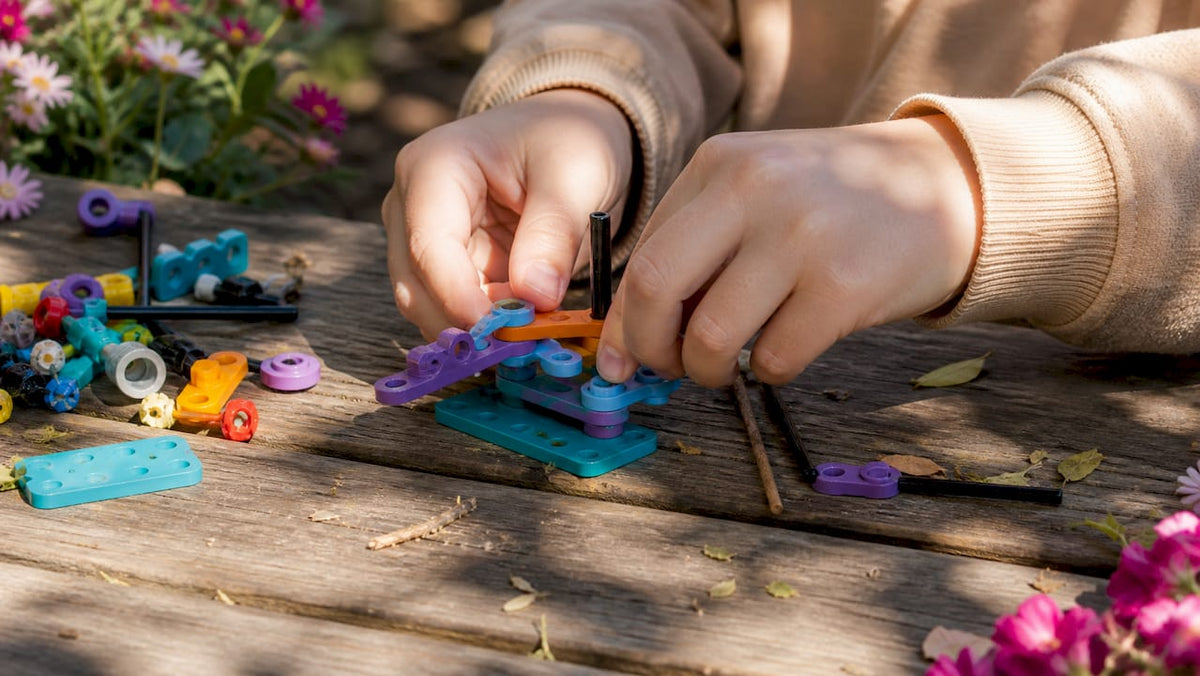
Tactile materials give kids something a worksheet never can: a chance to actually be wrong and find out why. When a child builds a circuit that doesn’t light up, or a solar mirror that doesn’t quite focus the sun’s heat, that’s evidence forcing a revision, the exact loop the National Academies’ research says builds lasting inquiry skills.
Role play adds another layer. A child in a lab coat isn’t just following instructions, she’s stepping into the identity of someone who tests ideas for a living, which imaginative scientist play research ties to deeper engagement with the material.
Two examples: a solar energy kit where kids test mirror angles against heat output mirrors real hypothesis testing. A home reflection journal paired with any experiment adds the metacognition NSTA says experience alone can’t provide.
A Publisher’s Note on Teaching Inquiry Well
We built Teamgeniussquad’s approach around one belief: kids learn to think like scientists by doing messy, hands-on work and then talking through what happened, not by memorizing a five-step diagram. That’s why our kits pair experiments with reflection prompts and role-play identity-building, echoing what the role of hands-on kits in STEAM learning shows about turning activity into actual understanding.
Bring Inquiry Home With Hands-On STEAM Kits
Reading about inquiry only gets a family so far. The gap most parents and teachers hit is turning “ask a question, test it, reflect” into something a kid can actually do on a Tuesday afternoon without screens or a science degree in the house. That’s where Teamgeniussquad’s kits earn their keep: every box is built around a real testable question, materials to gather actual evidence, and a role-play identity (lab coat, badge, notebook) that makes the reflection step feel like part of the fun instead of homework tacked on at the end.
If you’re planning a unit around evidence and hypothesis testing, the solar energy kit with mirror disk gives kids a genuine variable to test (mirror angle, distance, material) with a real, measurable outcome. For teachers building out a full unit, the lesson plans page maps activities directly to inquiry skills like evidence-gathering and iteration, so you’re not building scaffolding from scratch. Browse either page and pick one activity to try this week.
Frequently Asked Questions
What is scientific inquiry in simple terms? It’s the process of asking a testable question, gathering evidence to answer it, and being willing to change your conclusion when the evidence says something different than you expected.
What is the main difference between scientific inquiry and the scientific method? The scientific method is a simplified, linear teaching model (question, hypothesis, test, conclude). Scientific inquiry is the broader, often messy reality, where investigations loop back, restart, and follow unexpected evidence.
Why is scientific inquiry important for kids to learn? It builds the habit of testing ideas against real evidence instead of accepting claims at face value, a skill that transfers well beyond the science classroom.
Can scientific inquiry happen without a hypothesis? Yes. Some real investigations start with an observation or an accident, like Fleming’s discovery of penicillin, and the hypothesis forms later as researchers chase the unexpected result.
How can parents support inquiry-based learning at home? Ask open questions instead of giving answers, let kids test their own ideas even when you know the outcome, and follow up with a simple reflection question like “What surprised you?”
Sources
- A blueprint for scientific investigations | UnderstandingScience.org (UC Berkeley)
- Scientific method | Stanford Encyclopedia of Philosophy
- Investigative Techniques | NSTA (static PDF)
- Self-correction and peer review | NCBI Bookshelf

Leave a comment
This site is protected by hCaptcha and the hCaptcha Privacy Policy and Terms of Service apply.