Why Does Milk Spoil? The Science Behind Sour Milk
Milk spoils because bacteria like Lactobacillus feed on lactose, its natural sugar, and convert it into lactic acid, which drops the pH and causes the main protein, casein, to clump into curds. That single chemical shift explains almost everything you smell, see, and taste when milk turns.
A few forces speed that process up or slow it down:
- Temperature — bacteria multiply fastest in the “danger zone” between 40°F and 140°F.
- Time — every hour milk sits unrefrigerated compounds the bacterial head start.
- Light and contamination — sunlight degrades flavor and nutrients, and repeated exposure to air or dirty utensils introduces new microbes.
If milk sits out more than 2 hours at room temperature (or just 1 hour above 90°F), or if it smells sour or looks curdled, throw it out. No amount of curiosity is worth a stomach bug.
Key Takeaways
Milk spoils when bacteria convert lactose into lactic acid, dropping the pH until casein curdles and off-flavors develop, a process controlled almost entirely by temperature and time.
| Point | Details |
|---|---|
| Core cause | Lactic acid bacteria ferment lactose into lactic acid, lowering pH and curdling casein. |
| Danger zone rule | Discard milk left out over 2 hours (1 hour above 90°F) to avoid rapid bacterial growth. |
| Sensory limits | Smell and texture changes often lag behind bacterial growth, so don’t rely on them alone. |
| Date labels aren’t safety cutoffs | Unopened, refrigerated milk can stay low in bacteria for several days past the printed date. |
| Storage habits matter most | Keep milk below 40°F, store it away from the door, and limit light and air exposure. |
Table of Contents
- What Happens Chemically and Microbially When Milk Spoils
- How Fast Does Milk Actually Go Bad?
- What Bacteria Actually Cause Milk To Spoil?
- How Can You Tell if Milk Is Spoiled?
- Why Are Milk Expiration Dates So Confusing?
- Is It Safe To Drink or Cook With Slightly Sour Milk?
- Practical Ways To Keep Milk Fresh Longer
- How Is Milk Spoilage Actually Tested?
- Where Milk-Safety Guidance Actually Comes From
- Frequently Asked Questions
- Sources
What Happens Chemically and Microbially When Milk Spoils
Fresh milk isn’t sterile. It carries a small population of bacteria even after pasteurization, and once refrigeration slows down, those microbes wake up. Lactic acid bacteria, particularly Lactobacillus and its relatives, feed on lactose and excrete lactic acid as a byproduct. That’s fermentation, the same basic process that turns cabbage into sauerkraut or grape juice into wine, just less welcome in your coffee.
As lactic acid accumulates, the milk’s pH falls from a neutral 6.5 or so toward the acidic range. Casein, the dominant protein in milk, is stable at neutral pH but unravels and clumps together as acidity rises. That’s the curdling you see: solid white lumps floating in thinner, watery liquid. Other enzymes, some produced by the souring bacteria and some naturally present in milk, break down fats and proteins independently, generating the bitter, rancid, or “off” flavors that show up even before visible curdling.
Here’s the part most people miss: some of these spoilage enzymes are heat-resistant enough to survive pasteurization and even ultra-high-temperature (UHT) processing. The bacteria that made them may be dead, but their enzymatic residue keeps working quietly in the carton.
- Lactose fermentation produces lactic acid.
- Lactic acid lowers pH and triggers protein coagulation.
- Enzymes break down fat and protein for off-flavors, independent of acid levels.
- Some enzymes survive heat treatment entirely.
Pro Tip: A pH drop is a late-stage signal, not an early warning. Bacteria can multiply for hours or days before the acidity climbs enough for your nose or tongue to notice, which is exactly why time and temperature rules matter more than a sniff test.
How Fast Does Milk Actually Go Bad?
Government food-safety guidance treats 40°F to 140°F as the danger zone, the range where bacteria double roughly every 20 minutes. That single fact drives almost every practical rule about milk storage.
- Two-hour rule. Milk left at normal room temperature for more than 2 hours should be discarded; that window shrinks to 1 hour above 90°F, such as a hot car or an outdoor picnic table.
- Refrigerator target. Keep your fridge sufficiently cold as higher temperatures significantly shorten milk’s shelf life.
- Container size matters. A gallon jug in the fridge door warms and cools slowly; a small glass left on the counter hits danger-zone temperatures within minutes.
Light exposure adds a second, less obvious clock. Fluorescent and LED lighting in grocery store coolers can accelerate flavor breakdown and nutrient loss, which is why opaque cartons and jugs outperform clear glass bottles for shelf life, even at identical temperatures.
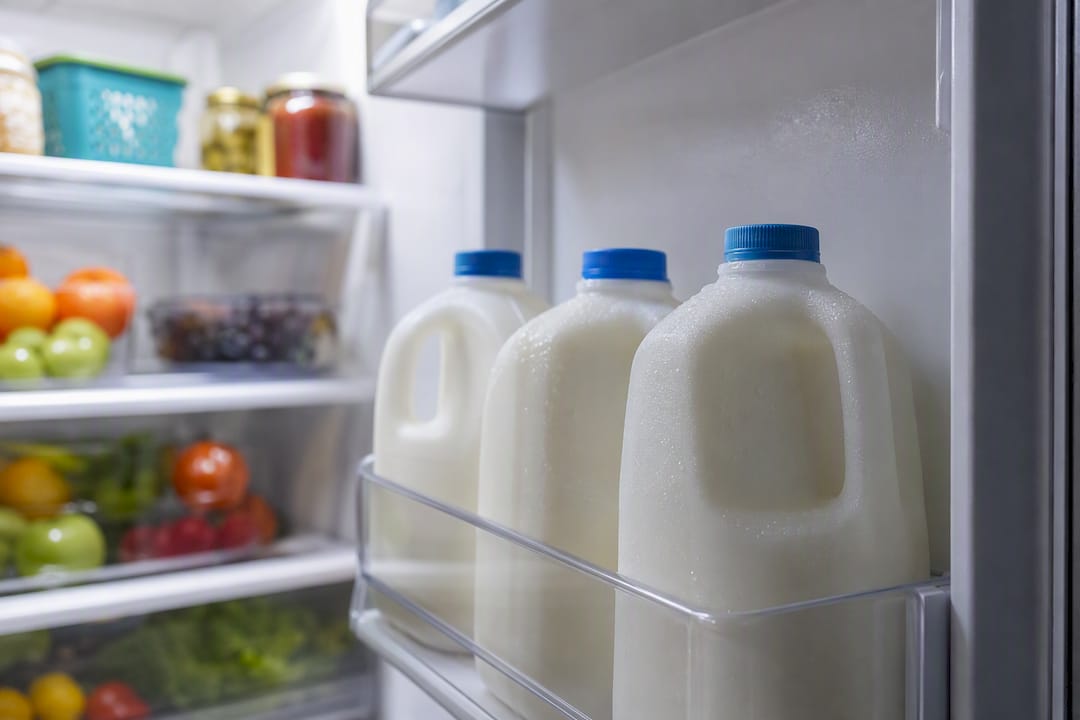
Pro Tip: Store milk on an interior shelf, never the door. The door is the warmest, most temperature-variable spot in the whole refrigerator.
What Bacteria Actually Cause Milk To Spoil?
Different microbes cause different kinds of spoilage, and knowing the cast of characters explains why milk doesn’t always go bad the same way twice.
- Lactic acid bacteria (Lactobacillus and relatives) drive the classic souring and curdling most people picture.
- Pseudomonas, a psychrotrophic bacterium that thrives even at refrigerator temperatures, breaks down fats and proteins to cause rancidity and slimy, “ropy” texture changes.
- Bacillus, including Bacillus cereus, forms heat-resistant spores that can survive pasteurization and later cause bitterness or gastrointestinal illness.
- Yeasts and molds occasionally appear in improperly sealed or long-stored dairy, adding fuzzy growth or musty odors.
Pasteurization kills the majority of pathogens but doesn’t sterilize milk outright. Surviving psychrotrophic bacteria and heat-stable enzymes keep working in the fridge, which is why initial milk quality and clean handling after pasteurization matter as much as the treatment itself. Raw milk, lacking that heat step entirely, carries a more diverse and unpredictable microbial load and typically spoils faster unless chilled immediately and carefully.
How Can You Tell if Milk Is Spoiled?
Trust your senses, but don’t trust them completely. Sour smell, visible curdling, lumpy texture, yellowing, or a slimy film are all reliable red flags once they show up.
- Sour, tangy, or “off” odor
- Curdled or lumpy texture
- Visible separation or yellow tint
- Sliminess or stringiness when poured
The catch: sensory changes often lag behind bacterial growth. Milk can harbor a meaningful bacterial population before it smells or tastes noticeably different, and some pathogens don’t change flavor at all. That’s a real gap in the “just smell it” method that most people rely on without realizing its limits. When milk has spent time in the danger zone, discard it regardless of how it smells. Time and temperature rules override a clean sniff test every time.
Why Are Milk Expiration Dates So Confusing?
“Sell by,” “best by,” and “use by” dates look official, but the FDA generally doesn’t regulate most food date labels (infant formula is the main exception). Manufacturers set these dates mostly for quality and inventory tracking, not hard safety cutoffs, and that confusion contributes meaningfully to household food waste tied to date-label misunderstanding.
Research on pasteurized milk found that unopened, refrigerated cartons stayed low in bacterial growth for several days past the printed date, though whole and 2% milk developed noticeable sensory changes sooner than fat-free milk in that study. Fat content appears to influence how quickly flavor shifts, even when bacterial counts stay comparable.
- Check that the carton was never opened and stayed continuously refrigerated.
- Smell before pouring, even if the date hasn’t passed.
- Treat “sell by” as a store restocking cue, not a safety deadline.
Pro Tip: If you’re donating milk to a food pantry or using it soon after the printed date, do a quick smell and pour test first. When in doubt, don’t pass along milk you wouldn’t drink yourself.
Is It Safe To Drink or Cook With Slightly Sour Milk?
No. Spoiled milk can carry bacteria capable of causing gastrointestinal illness, and cooking doesn’t reliably fix that. Heat kills many live bacteria, but some toxins and heat-stable enzymes survive cooking temperatures entirely, so baking with sour milk doesn’t guarantee safety just because it goes in the oven.
- Discard milk that smells sour, tastes tangy, or shows any curdling.
- Don’t rely on boiling or baking to “cook away” spoilage.
- Repurpose questionable milk for composting or a kitchen-safe experiment instead of consumption.
A partner resource on food quality standards for smarter dining covers similar ground on reading labels and judging freshness across other perishables, worth a look if you want the bigger food-safety picture.
Practical Ways To Keep Milk Fresh Longer
Small habits add up. Store milk in the coldest interior part of the fridge, never the door, and reseal the cap tightly every time. Limit how long the carton sits on the counter during breakfast or baking, and freeze extra milk if you won’t finish it within a few days.
- Choose opaque cartons or jugs over clear glass when buying.
- Buy a size you’ll actually finish before it turns.
- Never drink straight from the carton; it introduces saliva and bacteria back into the supply.
- Rotate stock so older milk gets used first.
Pro Tip: Pour into a smaller pitcher once a large jug is half empty. Less airspace at the top means less warm air contact every time you open it.
How Is Milk Spoilage Actually Tested?
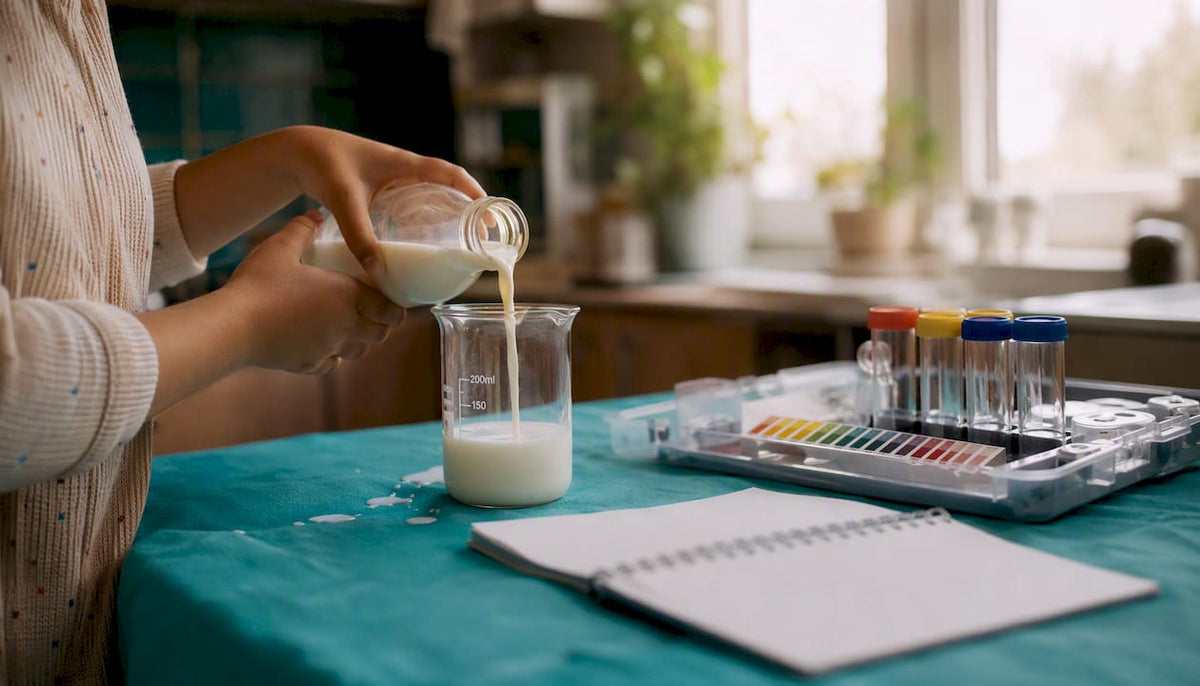
Curious readers and food scientists can gauge freshness with a spread of tools, from a simple pH strip to lab-grade equipment.
| Test | Speed | Equipment Needed | What It Detects |
|---|---|---|---|
| pH strip | Minutes | Strip or meter | Acidity level |
| Methylene blue reduction | Hours | Dye, incubator | Microbial metabolic activity |
| Bacterial plating | 1–2 days | Petri dishes, incubator | Live colony counts |
| Infrared spectroscopy | Minutes | Lab spectrometer | Chemical composition changes |
- Home and classroom tests: pH strips, smell checks, and the methylene blue reduction test.
- Industry and lab tests: bacterial plate counts, spectroscopy, gas sensors, and enzyme assays.
A Note From Tita on Why This Science Matters at Home
I think about milk spoilage the way I think about most kitchen science: it’s an everyday mystery hiding real chemistry. At Teamgeniussquad, we build that same curiosity into hands-on tools like the Just Add Milk S.T.E.M. Experiment Kit, which lets kids safely watch pH and texture change right in front of them.
Where Milk-Safety Guidance Actually Comes From
The conventional wisdom on milk spoilage treats it as a single event, one day it’s fine, the next it’s not. That’s not how bacteria work, and it’s not what the research shows. Spoilage is a gradient. Bacteria are multiplying long before you smell anything, and by the time your nose registers sourness, the microbial population has often already crossed a threshold that matters more than the calendar date on the carton.
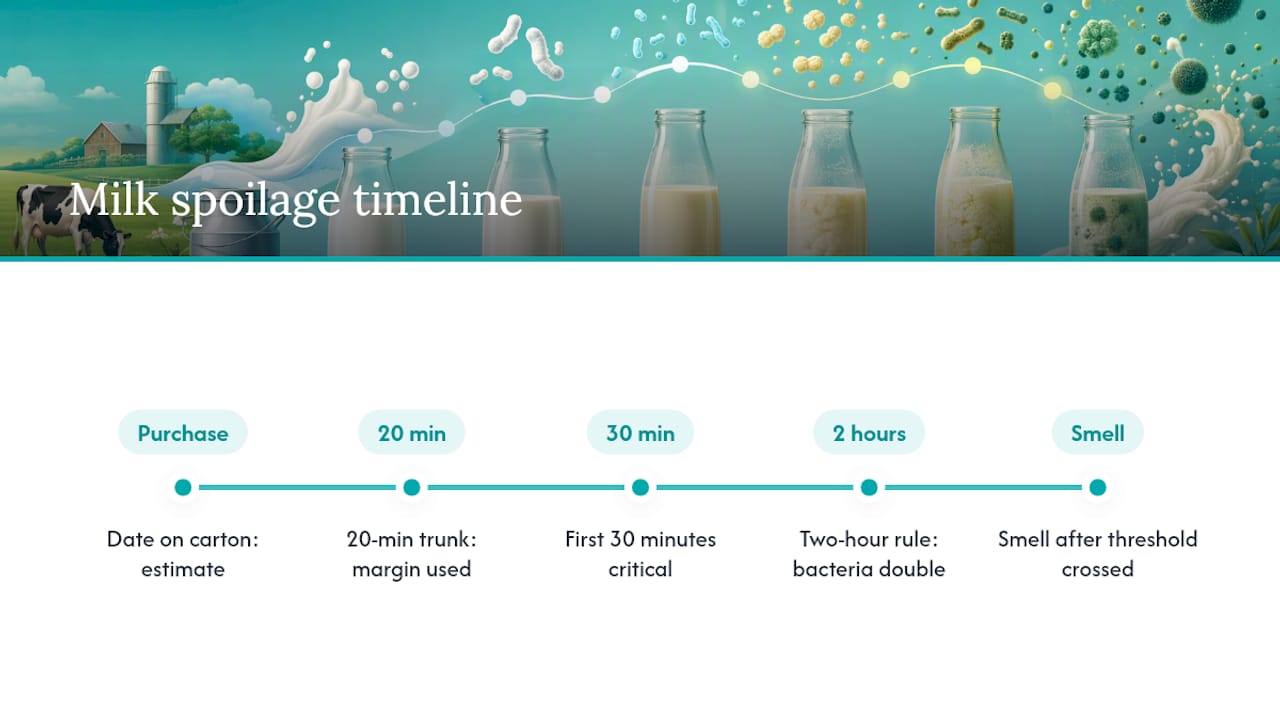
What gets underestimated is how much control sits in the first thirty minutes after you get milk home from the store. A carton that rode in a hot trunk for twenty minutes has already used up part of its safety margin before it even reaches your fridge. People fixate on the printed date and ignore the handling that happened days earlier, which is backward. The date on the carton is a manufacturer’s estimate; your actual handling determines whether that estimate means anything at all.
If there’s one thing worth internalizing from all this microbiology, it’s that the two-hour rule isn’t bureaucratic caution. It’s a direct reflection of how fast bacteria double in the danger zone, and it applies whether the milk looks fine or not.
Frequently Asked Questions
Why does milk spoil even in the refrigerator? Refrigeration slows bacterial growth but doesn’t stop it. Psychrotrophic bacteria like Pseudomonas can still multiply slowly at cold temperatures, which is why even properly stored milk eventually sours.
What causes milk to smell sour? Lactic acid buildup from bacterial fermentation creates the tangy smell, along with additional off-flavor compounds from enzymatic fat and protein breakdown.
Does milk go bad faster after the sell-by date? Not automatically. Research on unopened, refrigerated milk found bacterial growth stayed relatively low for several days past the printed date, though flavor can shift sooner depending on fat content.
How long is milk good after opening? Most opened milk stays safe for about a week under proper refrigeration, but always check smell and texture rather than relying on the date alone.
Can boiling spoiled milk make it safe to drink? No. Heat kills many live bacteria, but some enzymes and toxins survive cooking, so spoiled milk should be discarded rather than cooked with.
This article is general information, not a substitute for advice from a qualified doctor. Consult a qualified healthcare professional about your own circumstances before acting on anything here.
Sources
- PMC11640447
- FSIS danger zone 40°F–140°F guidance
- How Long Can Milk Sit Out? Milk Safety and Storage Tips | U.S. Dairy
- The Biodiversity of the Microbiota Producing Heat-Resistant Enzymes Responsible for Spoilage in Processed Bovine Milk and Dairy Products


Leave a comment
This site is protected by hCaptcha and the hCaptcha Privacy Policy and Terms of Service apply.