What Is Imaginative Scientist Play for Kids Ages 5–13
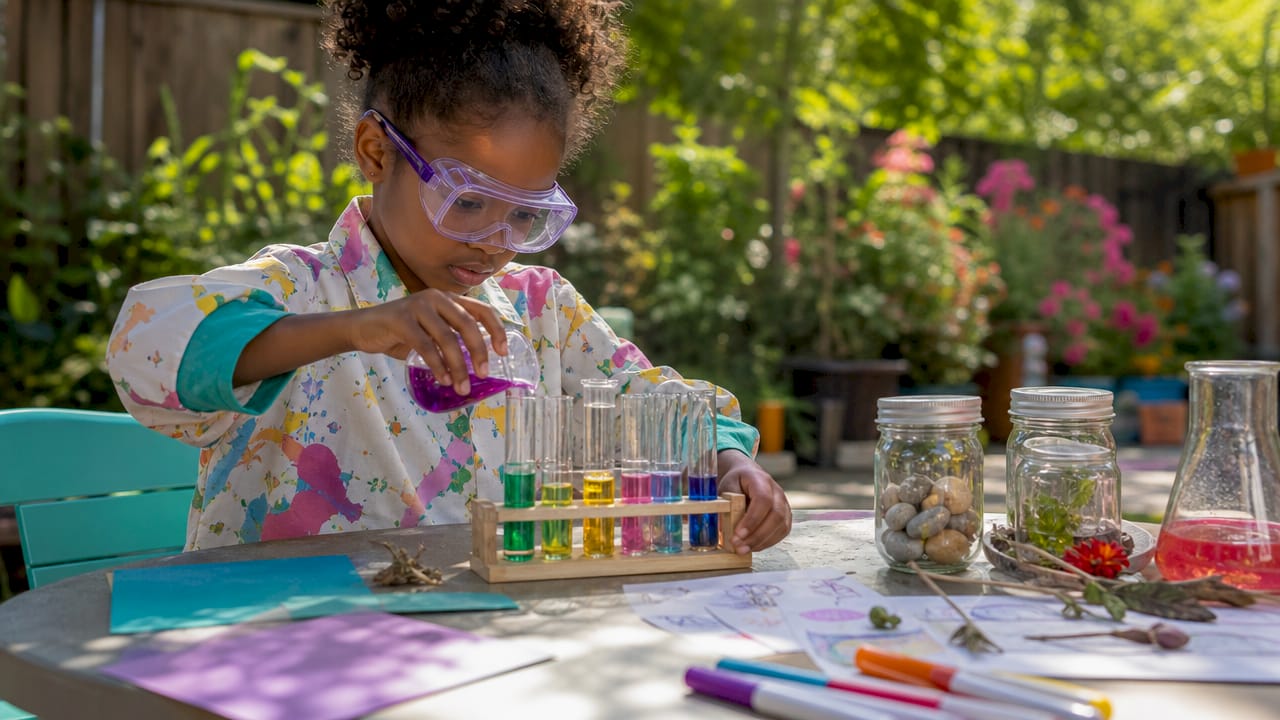
Imaginative scientist play is defined as child-led role play in which children adopt the identity of a scientist to explore, experiment, and solve problems through creative, open-ended scenarios. Known formally as scientific pretend play or scientist role play, this approach goes far beyond mixing baking soda and vinegar. It builds the cognitive architecture children need to think like real scientists: persistence, flexible thinking, and the confidence to ask “What if?” Research shows that identity-shifting through play dramatically increases how long children stay engaged with challenging science tasks, making this one of the most powerful tools educators and caregivers have.
What is imaginative scientist play and why does it matter?
Imaginative scientist play is the practice of children stepping into a scientist’s role, complete with the mindset, vocabulary, and problem-solving behaviors that scientists use. The child is not just doing an experiment. The child is the scientist. That identity shift is the core mechanism that separates this approach from standard science activities.
The formal term used in early childhood education research is “Conceptual PlayWorld,” a pedagogical model developed to combine narrative immersion with STEM problem-solving. The Conceptual PlayWorld model works by first engaging children emotionally through a story or scenario, then embedding a real STEM challenge inside that narrative. Children internalize scientific concepts because they are motivated to solve a problem that matters to their character in the story.
This matters for children ages 5–13 because the brain is building its most critical learning structures during this window. Pretend play at this stage trains executive function, language, and social-emotional skills. These are not soft extras. They are the foundation for every future science class, engineering challenge, and creative problem a child will face.
Teamgeniussquad was built on exactly this principle. Its E³ Method (Engage, Encourage, Empower) mirrors the three-phase structure of effective scientist role play: draw the child in emotionally, support their growing confidence, and release them to lead their own discovery.
How does scientist role play boost cognitive development?
Scientist role play strengthens the brain in ways that direct instruction simply cannot replicate. When a child pretends to be a marine biologist cataloging ocean creatures, the brain activates memory, language, spatial reasoning, and emotional regulation simultaneously. That multi-system activation is what makes play so powerful for learning.
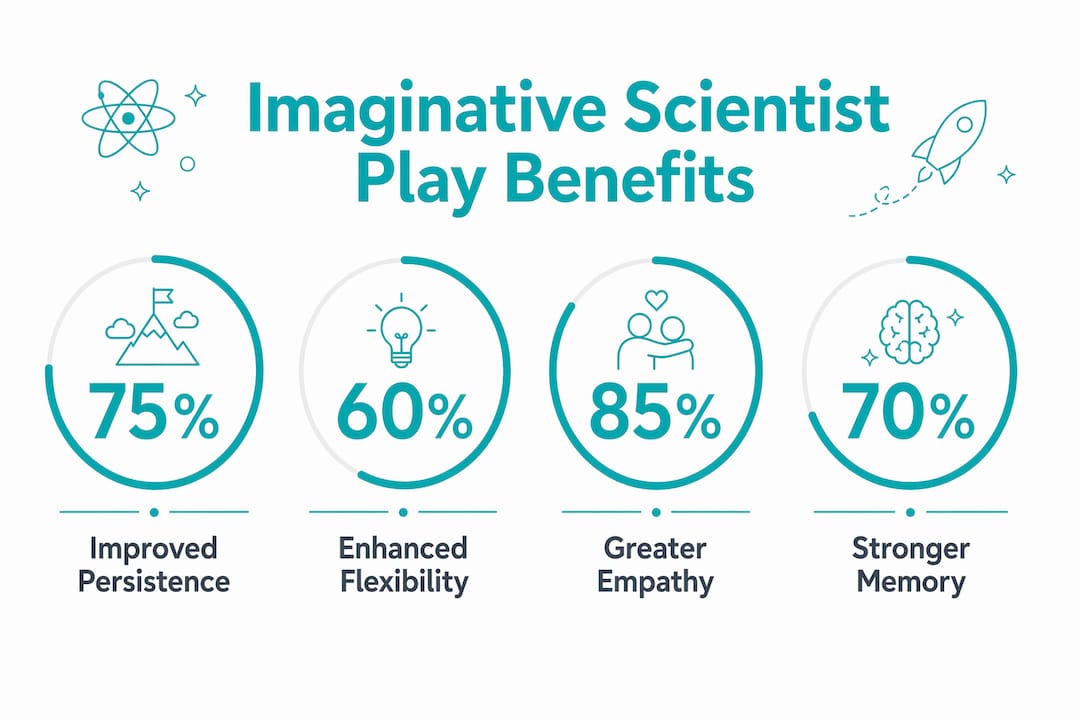
The persistence gains are striking. Girls who pretended to be Dr. Marie Curie completed about 12 trials on a science sink-or-float game, roughly double the number completed when playing as themselves. That doubling of effort came from identity, not instruction. It means the single most effective way to get a child to push through a hard science task is to help them see themselves as a scientist first.
Open-ended pretend play develops eight distinct skills, including empathy, flexible thinking, and memory, all of which are directly relevant to scientific inquiry. Flexible thinking, in particular, is what allows a child to form a hypothesis, test it, fail, and try a different approach without giving up.
Pro Tip: Give your child a name tag or badge with a scientist title before starting any experiment. Research shows these “identity anchors” help children maintain focus and stay in the scientist mindset longer.
Here is what cognitive development looks like across the age range:
- Ages 5–7: Children build basic cause-and-effect reasoning through simple role play scenarios like “I am a weather scientist checking the clouds.”
- Ages 8–10: Children begin forming and testing hypotheses, using scientific vocabulary naturally within their play narratives.
- Ages 11–13: Children can sustain collaborative role-play simulations lasting 15–20 minutes, taking on roles like engineers or policy makers to solve real-world problems.
What makes imaginative scientist play effective?
The most effective scientist role play shares three characteristics: open-ended materials, child-led narratives, and a story that gives the science a purpose.
Open-ended materials beat prescriptive toys
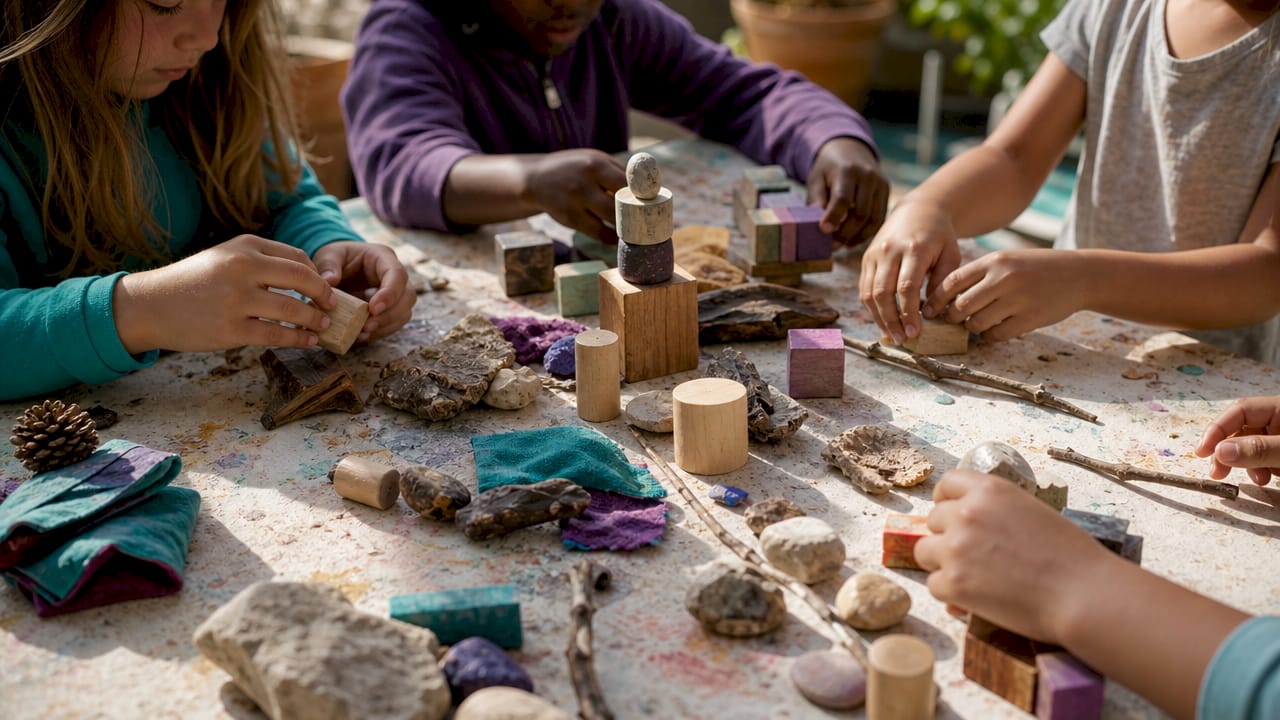
Boxes, cloth, and natural items produce richer creative and scientific output than toys with a single predetermined function. A cardboard box can become a laboratory, a submarine, or a space station. A toy labeled “science kit” locks the child into one scenario. NAEYC recommends flexible materials over scripted play items for exactly this reason. Transforming a box into a lab exercises problem-solving and spatial reasoning more than any elaborate prepackaged toy.
The Conceptual PlayWorld approach
The Conceptual PlayWorld model gives educators a structured way to design scientist play without scripting it. The sequence works like this:
- Introduce a narrative. (“A mysterious creature has been spotted in the pond. We need scientists to investigate.”)
- Assign scientist identities with props: lab coats, badges, clipboards.
- Embed a real STEM challenge inside the story. (“We need to figure out what this creature eats.”)
- Let children lead the investigation. Adults observe and ask questions rather than provide answers.
- Debrief in character. (“What did you discover? What would you test next?”)
This structure keeps the play emotionally engaging while ensuring real scientific thinking happens inside it.
Child autonomy is non-negotiable
Children who define their own stories and science rules develop stronger engagement than children in adult-directed scenarios. Autonomy is not just nice to have. It is the mechanism that builds genuine scientific confidence. When a child decides the rules of their experiment, they own the outcome, and that ownership is what makes the learning stick.
Pro Tip: Resist the urge to correct a child’s “wrong” hypothesis during play. Let them test it. The moment they discover it does not work is the most powerful learning moment in the entire session.
What are good imaginative scientist play activities?
Practical activities do not need to be expensive or elaborate. The best ones use everyday materials and give children a clear scientist identity to inhabit.
Activities for ages 5–8
- Sink or Float Scientist: Give the child a tub of water and a collection of household objects. Assign them the role of “Dr. [Child’s Name], Water Scientist.” Ask them to predict, test, and record results on a clipboard. The scientist identity, not the activity itself, is what drives persistence.
- Weather Station Observer: Set up a window observation post with a notepad. The child plays a meteorologist recording cloud shapes, wind direction, and temperature. Introduce vocabulary like “cumulus,” “barometer,” and “data.”
- Soil Scientist: Give the child three types of soil (sand, clay, potting mix) and a watering can. Their mission: figure out which soil drains fastest. They record findings as field scientists.
Activities for ages 9–13
- Marine Biology Simulation: Children role-play as marine biologists studying a fictional reef ecosystem. They classify “species” (drawn cards), track population changes, and present findings to the group.
- Engineering Challenge Debate: Assign roles including engineer, environmental scientist, and community planner. Present a real-world problem like building a bridge over a wetland. Groups debate solutions using evidence, mirroring the role-play simulations used in formal science education.
- Chemistry Script Writing: Children write and perform a short script where they physically act out a chemical reaction, with each child playing a molecule. Embodying scientific concepts through roleplay increases recall and deepens understanding of abstract processes.
All of these activities integrate scientific vocabulary naturally. Children absorb terms like “hypothesis,” “variable,” and “observation” because they need those words to play the role convincingly.
How can adults support creative science play at home and in school?
Adults play a supporting role, not a directing one. The goal is to set the stage, then step back.
Applying three lenses helps adults recognize science already happening in children’s play: actions (what the child is doing), exploration (what the child is investigating), and environment (what materials and space are available). When you see a child repeatedly dropping objects from different heights, that is physics. Name it gently, then let them keep going.
Practical ways to support scientist play at home and in the classroom:
- Stock open-ended materials. Cardboard boxes, measuring tape, magnifying glasses, containers, and natural objects like rocks and leaves give children the tools to build any scenario.
- Create a dedicated “lab” space. A corner of a room with a small table and a few supplies signals to the child that science play is valued and expected here.
- Ask “How? Why? What if?” questions. These three question types mirror the scientific method and keep children thinking without taking over the narrative.
- Introduce STEM books and puzzles that feature scientist characters. Stories normalize the scientist identity for children who do not yet see themselves in that role.
- Celebrate the process, not just the result. When a child’s experiment fails, respond with “Interesting! What do you think happened?” rather than explaining the correct answer.
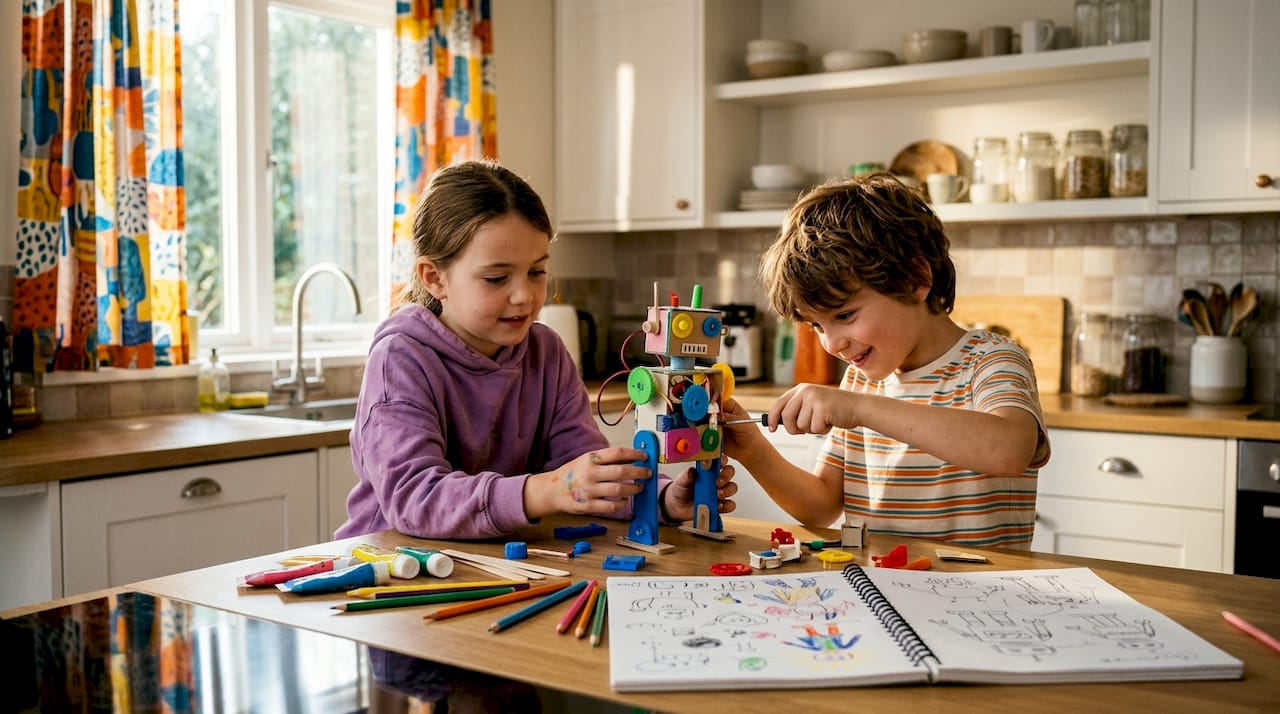
Pro Tip: Keep a “scientist journal” near the play area. Encourage children to draw or write their observations after each session. This builds scientific communication skills and gives them a record of their own discoveries to feel proud of.
Sensory play also supports this development. Sensory experiences during play build the cognitive and scientific skills children need to engage deeply with experiments, making tactile materials a natural fit for scientist role play.
Key Takeaways
Imaginative scientist play builds persistence, flexible thinking, and scientific identity in children ages 5–13 more effectively than direct instruction alone.
| Point | Details |
|---|---|
| Identity drives persistence | Children who adopt a scientist persona complete significantly more trials on hard science tasks than children playing as themselves. |
| Open-ended materials win | Boxes, cloth, and natural objects produce richer scientific thinking than single-function toys. |
| Child autonomy is the mechanism | Letting children lead their own narratives builds genuine confidence and authentic scientific vocabulary. |
| The Conceptual PlayWorld model works | Embedding STEM challenges inside a story gives science play emotional purpose and intellectual depth. |
| Adults observe, then scaffold | Recognizing natural scientific inquiry in play and asking “How? Why? What if?” supports learning without taking over. |
Why I believe imaginative scientist play changes everything
I have watched children who struggle in traditional classroom settings come alive the moment you hand them a badge that says “Dr.” and tell them there is a mystery to solve. The transformation is not subtle. A child who could not sit still for a worksheet will spend 30 minutes testing which materials float, because now they are a scientist and scientists do not quit.
What the research confirms, and what I have seen play out repeatedly, is that persistence is not a fixed trait. It is a response to identity. When a child believes they are a scientist, they behave like one. That is not a small insight. It is the entire argument for why scientist role play deserves a central place in every home and classroom, not just as a fun Friday activity, but as a core learning strategy.
The adults who get the best results are the ones who resist the urge to teach during play. They set up the scenario, hand over the materials, and watch. They ask questions that open doors rather than close them. They let the child be wrong, and they celebrate the moment the child figures out why. That restraint is harder than it sounds, but it is the most powerful thing an adult can do in a scientist play session.
Simplicity matters more than most people realize. A cardboard box and a question will outperform an expensive kit every time, if the child has the freedom to lead. The goal is never the experiment. The goal is the child who walks away believing they can figure things out.
— Tita
Teamgeniussquad brings scientist play to life
Teamgeniussquad builds hands-on, screen-free STEAM discovery kits designed to put children ages 5–13 directly into the scientist role. Each kit is powered by the E³ Method (Engage, Encourage, Empower), the same framework that research supports for building persistence and scientific identity. Children do not just follow instructions. They conduct real experiments, wear their scientist identity, and walk away with confidence they earned through discovery.
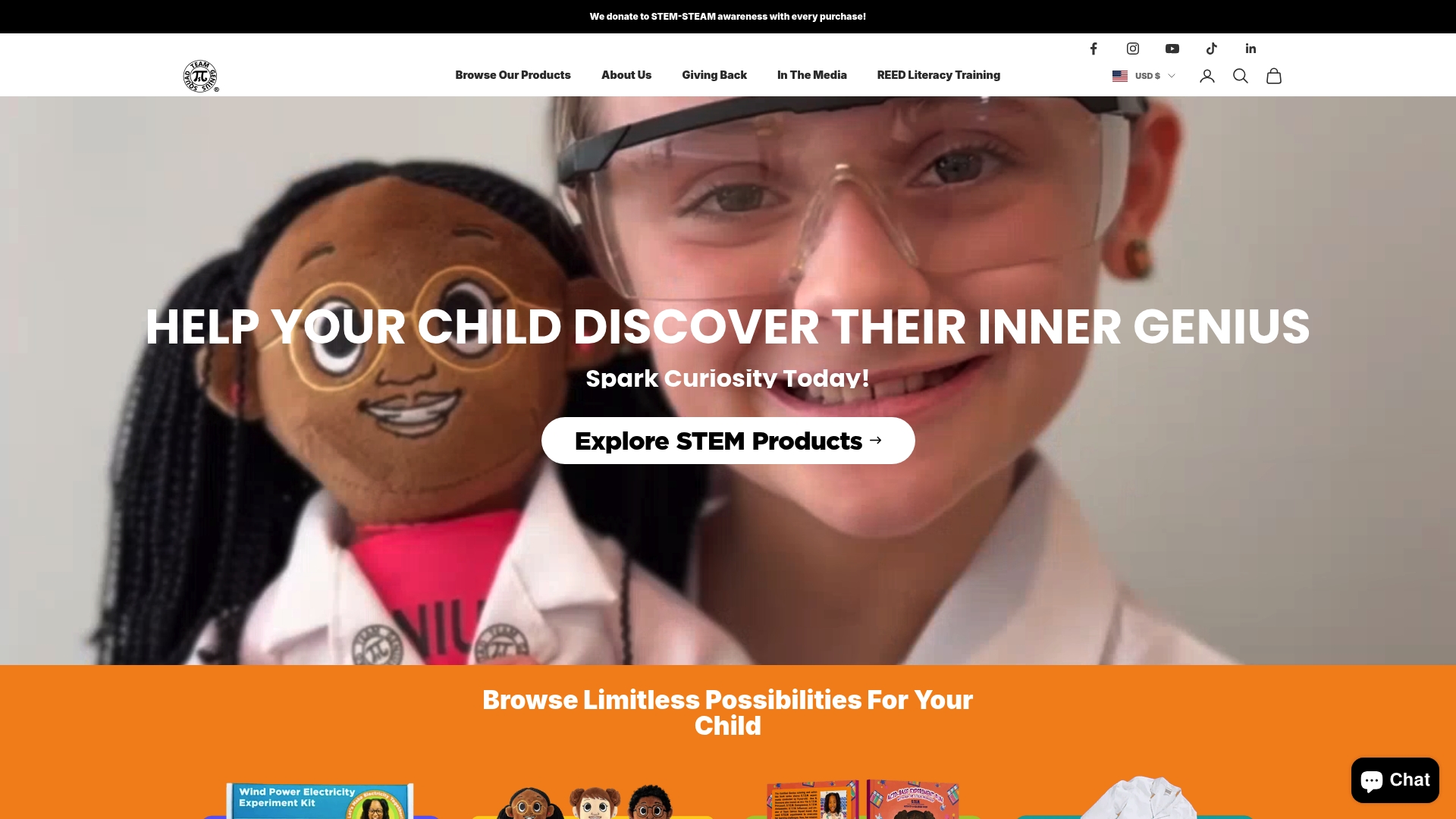
The STEM Electricity Lab Bundle is one of the most popular options for children who are ready to step into a real scientific challenge. For families looking to explore the full range of kits, the experiment kits collection offers options across every STEAM subject. Every kit is designed to make the scientist identity feel real, because when children believe they are scientists, they act like ones.
FAQ
What is imaginative scientist play?
Imaginative scientist play is child-led role play in which children adopt a scientist’s identity to explore, experiment, and solve problems through open-ended, creative scenarios. It is also called scientific pretend play or, in formal education research, Conceptual PlayWorld.
What age is best for scientist role play activities?
Scientist role play is effective for children ages 5–13. Younger children benefit from simple identity-based activities like sink-or-float experiments, while older children thrive in collaborative simulations involving real-world problem-solving.
How does pretend science play build STEM skills?
Pretend science play builds executive function, flexible thinking, memory, and scientific vocabulary by activating multiple brain systems at once. Children who adopt a scientist persona also show significantly greater persistence on challenging tasks.
What materials work best for creative science games at home?
Open-ended materials like cardboard boxes, measuring tools, magnifying glasses, and natural objects produce richer scientific thinking than single-function toys. NAEYC recommends flexible materials over scripted play items for this reason.
How can educators encourage scientific exploration play in the classroom?
Educators support scientific exploration play by creating a dedicated lab space, asking open-ended questions like “What if?” and “Why?”, and observing children’s natural inquiry rather than directing it. Introducing scientist identity props like badges and clipboards significantly increases engagement and persistence.

Leave a comment
This site is protected by hCaptcha and the hCaptcha Privacy Policy and Terms of Service apply.