
Why Choose Science Kits for Kids: Benefits for Parents & Teachers
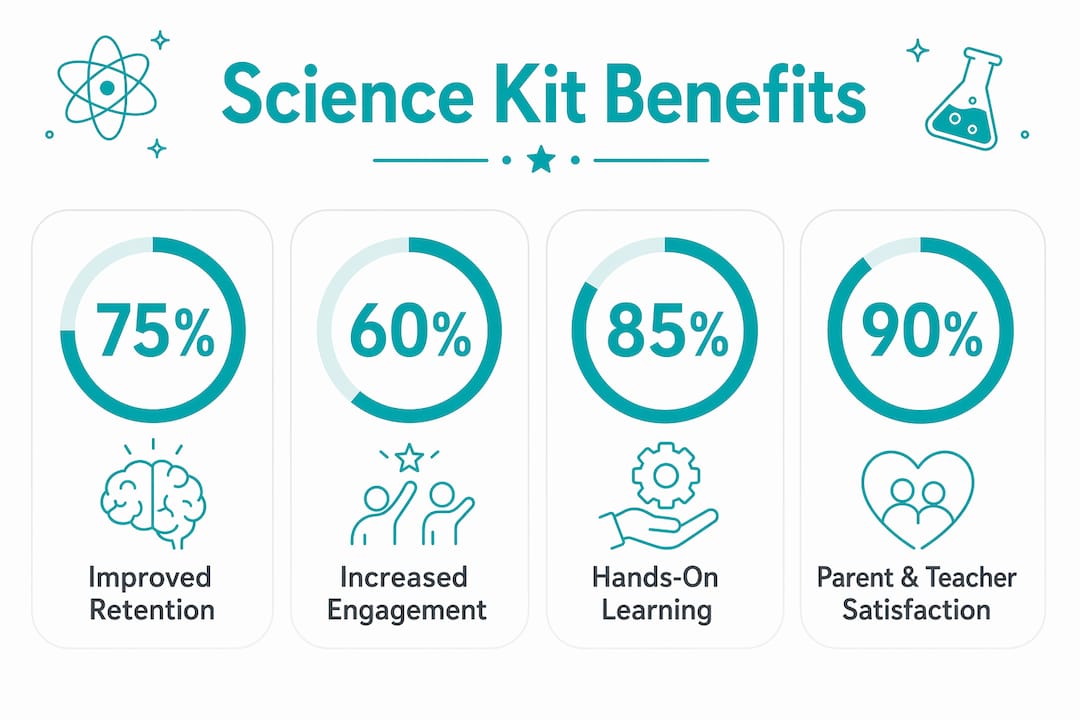
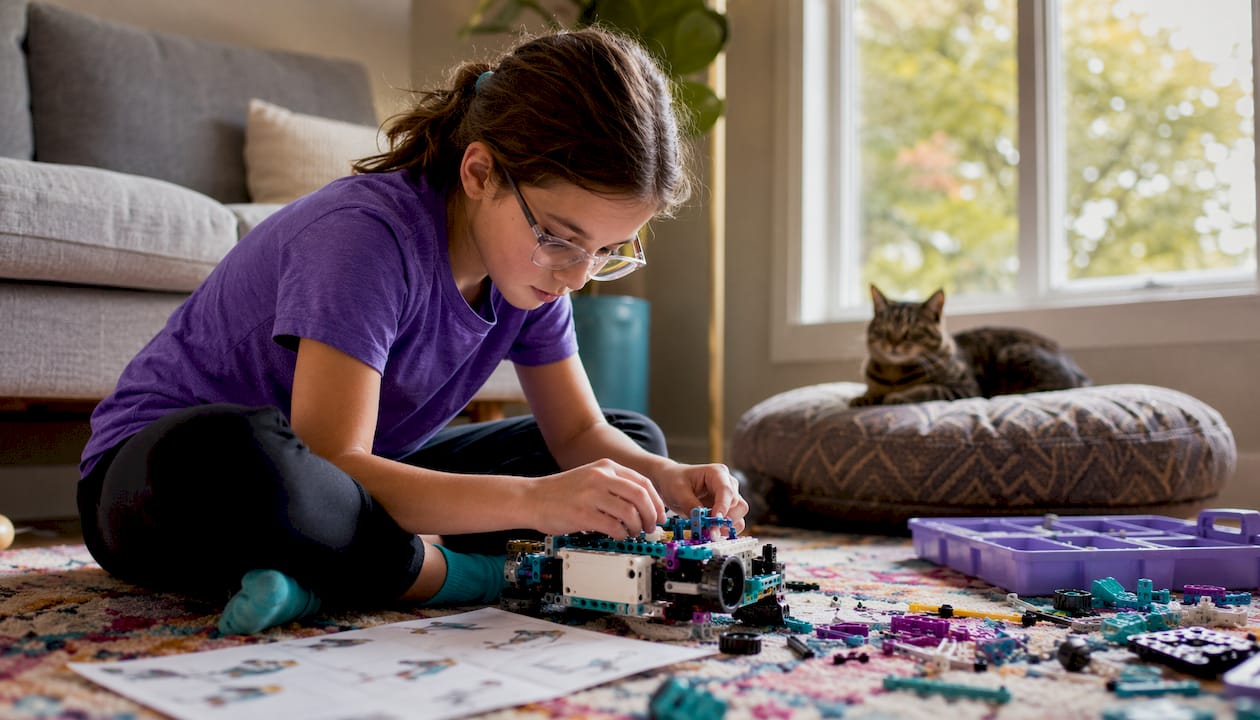
Science kits are worth choosing because they turn abstract ideas into active, memorable learning that builds durable skills — and the evidence backs that up consistently. Hands-on inquiry helps children retain concepts faster than textbook-only instruction, and the skills they develop go well beyond any single lesson.
Here is why science kits belong in your home or classroom:
- Hands-on learning sticks. Children who experiment retain concepts more deeply than those who only read or listen.
- Skills that transfer. Critical thinking, resilience, and collaboration develop naturally through guided experimentation.
- Genuine engagement. Enjoyment increases time-on-task and supports deeper learning.
- Flexible fit. The same kit works as a classroom warm-up, a family weekend activity, or a summer enrichment project.
Pro Tip: Before you buy, check whether the kit includes a structured guide with open-ended questions. That single feature separates a one-time “wow” experiment from a learning experience that keeps building.
Table of Contents
- What educational benefits do science kits actually deliver?
- How science kits support learning at home and in the classroom
- What types of science kits are available, and what does each teach?
- How do you choose the right science kit for your child or classroom?
- How do you get the most learning out of any science kit?
- How Teamgeniussquad designs kits that build real confidence
- Key Takeaways
- The case for kits that go deeper than the experiment
- Teamgeniussquad screen-free STEAM kits for classrooms and homes
- Useful sources and further reading
What educational benefits do science kits actually deliver?
The primary benefit is improved retention through hands-on inquiry. When children physically manipulate materials, form hypotheses, and observe results, they are doing the cognitive work that makes knowledge stick. Research confirms that students learn faster through experimentation than through textbook-only instruction, and one classroom study found 92.5% engagement and 80.2% assessment success when kits were integrated into regular chemistry lessons.
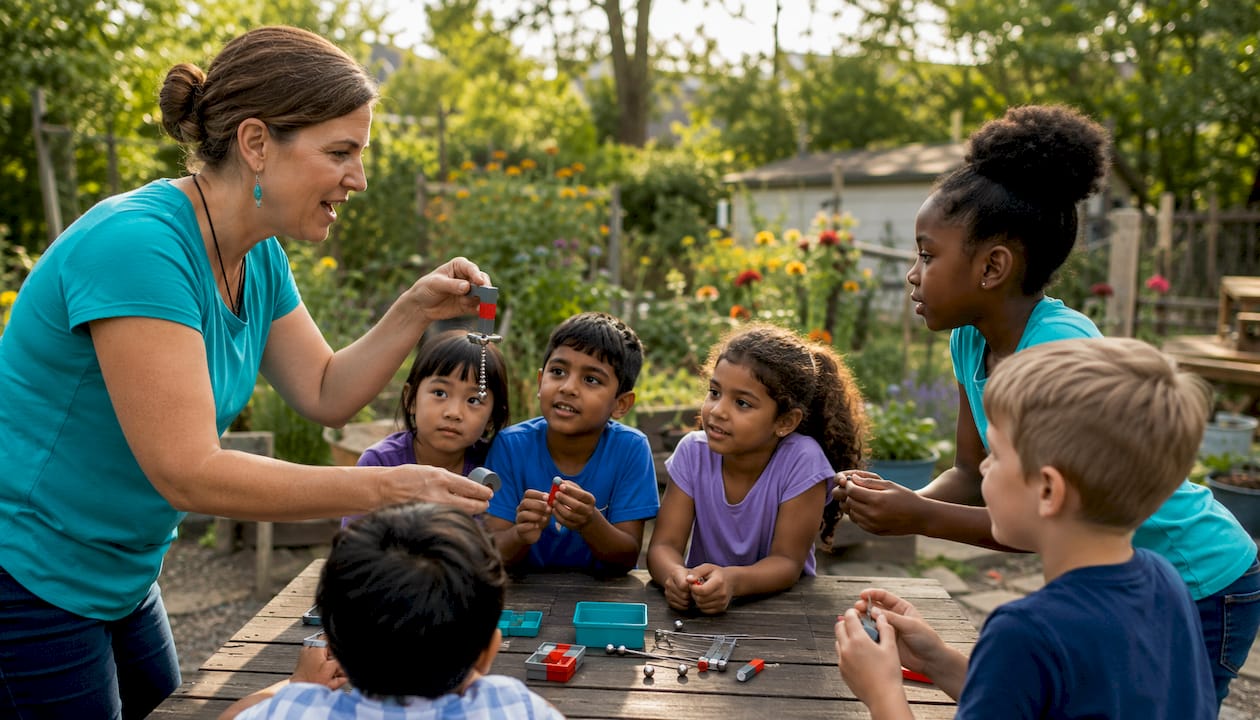
Beyond content knowledge, consistent kit use builds a set of life skills that show up long after the experiment is over. Studies and practitioner reports link kit use with improved problem-solving, a scientific mindset, and positive attitudes toward science. These are not soft extras — they are the foundations of academic confidence.
Skills children develop through regular science kit use:
- Critical thinking: Forming and testing hypotheses, evaluating results, and revising ideas.
- Resilience: Learning that a failed experiment is data, not defeat.
- Collaboration: Working through group activities and sharing observations.
- Science literacy: Reading instructions, interpreting results, and communicating findings.
- Patience and focus: Following multi-step processes without rushing to the answer.
- Curiosity: Asking “what if” questions that extend beyond the kit’s instructions.
The enjoyment factor matters here too. When children find an activity genuinely fun, they stay engaged longer and revisit concepts voluntarily — which is exactly the kind of self-directed learning parents and teachers hope to spark.
Pro Tip: Watch for these early signs of progress: a child who starts asking “why did that happen?” instead of just “what do I do next?” is already thinking like a scientist. That shift in questioning is one of the clearest signals that inquiry-based learning is taking hold.
How science kits support learning at home and in the classroom
Science kits are genuinely useful in both settings, and the reasons differ enough that it is worth thinking about each one. Structured kits remove the “where do I start” barrier for non-science parents and teachers alike, which means experiments actually happen instead of getting pushed aside.
In the classroom, the practical advantages are significant:
- Pre-organized materials eliminate sourcing and prep time, freeing teachers to focus on facilitation.
- All-in-one kits deliver consistent materials across every student group, so no one gets a shortchanged version of the activity.
- NGSS-friendly activities slot into existing curriculum plans without major redesign.
- Group experiment formats naturally support cooperative learning and peer discussion.
- Built-in assessment prompts give teachers a quick window into student understanding.
At home, the benefits shift toward enrichment and family connection:
- Screen-free exploration gives children a productive alternative to passive media time.
- Parents and grandparents can co-learn alongside children without needing a science background.
- Kits prevent summer slide by keeping scientific thinking active between school years.
- Short experiments (10–15 minutes) fit into busy evenings, while multi-day projects work well for weekends or school breaks.
Teacher training and ready-to-run lesson guides significantly increase how effectively kits get used in classrooms. A kit sitting in a cabinet because the instructions feel unclear is a missed opportunity for every student in that room.
Pro Tip: For classroom use, try a 5-minute “predict and observe” warm-up before the full experiment. Ask students to write or say what they think will happen, then compare predictions to results afterward. This one routine turns any kit activity into a complete inquiry cycle.
What types of science kits are available, and what does each teach?
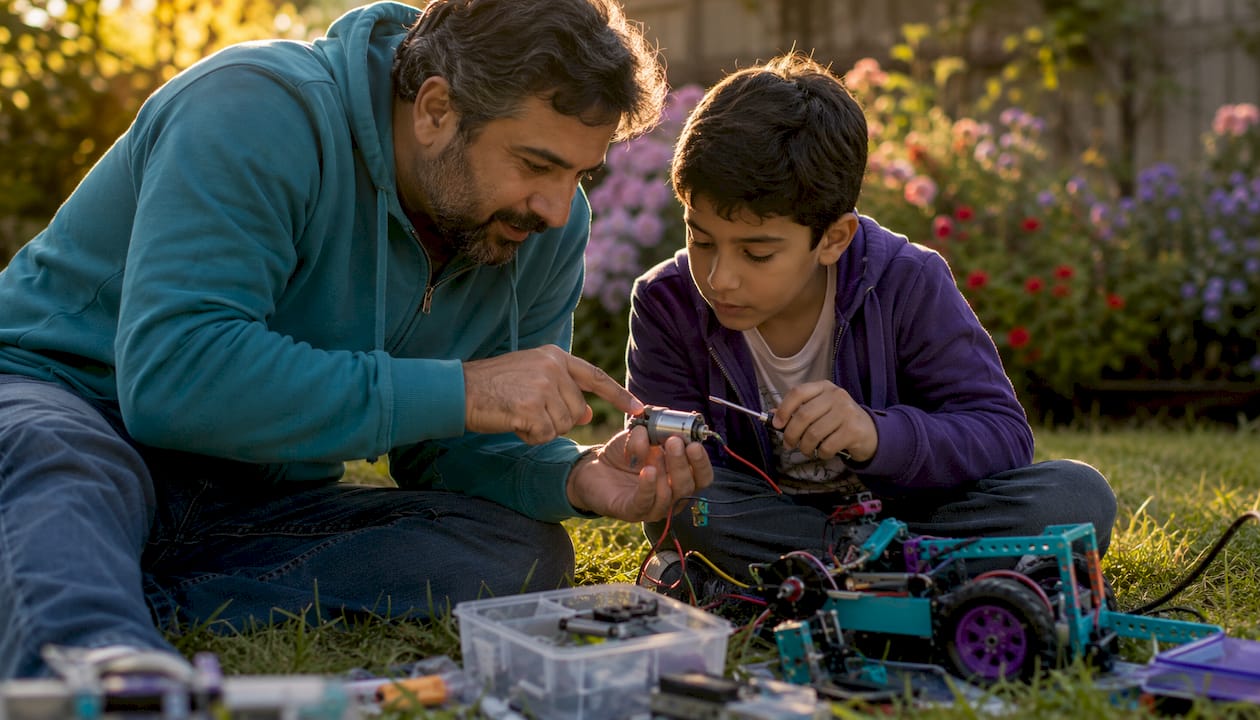
Science kits span six broad categories, each targeting a different cluster of concepts and skills. Matching a kit to a child’s current curiosity — or a teacher’s curriculum unit — makes the difference between a kit that gets used once and one that becomes a go-to resource.
| Category | Key Concepts Taught | Example Hands-On Activities |
|---|---|---|
| Chemistry & materials science | States of matter, reactions, polymers, pH | Slime-making, acid-base indicators, crystal growing |
| Life science & biology | Plant growth, ecosystems, the human body | Seed germination, dissection models, food webs |
| Earth & environmental science | Solar energy, weather, water cycles | Solar-powered devices, erosion experiments, water filtration |
| Engineering & STEAM design | Structures, simple machines, circuits | Bridge-building, pulley systems, basic robotics |
| Physics & electricity | Force, motion, conductors, energy transfer | Ramp experiments, circuit building, magnet exploration |
| Sensory & early science (ages 5–8) | Observation, sorting, cause and effect | Color mixing, texture sorting, floating and sinking |
A few extension ideas worth keeping in mind: after a chemistry kit, challenge children to design their own reaction using household materials. After an earth science kit, track local weather for a week and compare it to the experiment’s predictions. These small extensions are where the deepest learning happens, because children move from following steps to designing their own investigations.
How do you choose the right science kit for your child or classroom?
The single most important criterion is age-appropriateness paired with clear learning goals. A kit pitched at the wrong developmental level — too simple or too complex — loses a child’s interest within minutes. Everything else on this list matters, but that pairing is where to start.
Selection checklist:
- Age range: Does the kit specify a realistic age band, and does it match the child’s current abilities?
- Learning outcomes: Are the skills and concepts the kit teaches stated clearly, not just implied by the theme?
- Instruction clarity: Can a non-specialist parent or teacher follow the guide without prior science training?
- Safety labeling: Does the kit carry appropriate safety information for each material used?
- Consumables and refillability: Can you replace used materials, or is this a one-time-only kit?
- Replay value: Does the kit include multiple experiments or variations, or just one “wow” activity?
- Curriculum alignment: Does the kit reference NGSS standards or provide a teacher guide that maps to learning objectives?
- Cost per use: Divide the price by the number of experiments — a higher upfront cost often means better long-term value.
A practical STEM checklist for ages 5–13 can help you map kit features to specific developmental milestones before you buy.
Red flags to watch for:
- Instructions that assume prior knowledge without explanation.
- A single dramatic experiment with no follow-up activities.
- Missing safety information for chemicals or small parts.
- No spare parts, refill packs, or replacement options.
- Vague age labels like “for curious kids” with no developmental guidance.
Questions worth asking a seller before purchasing:
- Can I order replacement consumables separately, and what is the shipping timeline?
- Is there a classroom pack or bulk pricing option for educators?
- Does the kit include a teacher guide or lesson plan aligned to NGSS?
- Are there digital or print extension activities available after the kit is completed?
How do you get the most learning out of any science kit?
Treat the kit as a structured inquiry, not a finished demonstration. The biggest mistake parents and teachers make is running through the steps, watching the result, and moving on. The learning lives in what happens before and after the experiment, not just during it.
Step-by-step approach for running a kit activity well:
- Set the stage. Before opening the kit, ask children what they already know about the topic and what they are curious about.
- Preview the materials. Let children handle and describe each component before the experiment begins — this builds vocabulary and observation skills.
- State a hypothesis. Ask every child (or group) to predict the outcome in writing or out loud.
- Run the experiment. Follow the instructions, but pause at key moments to ask “what are you noticing right now?”
- Document the result. Have children draw, write, or photograph what happened.
- Compare and discuss. Return to the original hypothesis. Was it right? Why or why not?
- Iterate. Ask: “What would happen if we changed one thing?” Then try it.
Reflection questions to ask children after any experiment:
- What surprised you most about what happened?
- What would you do differently if you ran this experiment again?
- Where else in real life do you think this science shows up?
- What new question does this experiment give you?
A simple three-criterion rubric teachers and parents can use:
| Criterion | Beginning | Developing | Confident |
|---|---|---|---|
| Hypothesis formation | No prediction made | Prediction stated but not explained | Prediction stated with reasoning |
| Observation quality | Describes only the final result | Notes some steps and changes | Describes process, changes, and outcome |
| Reflection depth | “It worked” or “It didn’t work” | Identifies one reason for the result | Connects result to a broader concept |
Treating failed experiments as high-value learning events is one of the most powerful shifts a parent or teacher can make. A simple troubleshooting worksheet where children document their hypothesis, what went wrong, and their next attempt turns a frustrating moment into the most memorable lesson of the session.
How Teamgeniussquad designs kits that build real confidence
Teamgeniussquad uses the trademarked E³ Method — Engage, Encourage, Empower — to structure every kit so children move from initial curiosity all the way to genuine confidence. This is not a marketing label; it is a deliberate pedagogical sequence built into the materials, the guides, and the role-play elements that come with each kit.
What the E³ Method looks like in practice:
- Engage: Each kit opens with a story-driven scenario that pulls children into a scientist identity before the first experiment begins. Lab coats, badges, and character narratives make the role feel real.
- Encourage: Step-by-step guides with open-ended prompts keep children moving through challenges without shutting down curiosity. The instructions are written so a non-specialist adult can facilitate confidently.
- Empower: Completion certificates, reflection activities, and extension challenges give children a tangible record of what they accomplished and a clear path to go further.
The design was inspired by a real family journey with dyslexia and dysgraphia, and that origin shapes every product decision. Screen-free, tactile activities and identity-building elements engage learners who often disengage in traditional classroom settings; this is intentional and central to the design.
Product examples and the learning each supports:
- Science Solar Energy Kit with Mirror Disk: Children harness real solar energy using a mirror disk to explore renewable energy concepts, cause-and-effect relationships, and basic physics. The kit maps directly to earth and environmental science objectives.
- Diving into Slime, Gel, and Goop: A chemistry-focused sensory kit where children explore polymers, viscosity, and states of matter through hands-on mixing and observation. The tactile nature makes it especially effective for kinesthetic learners.
- Hand Energy Ball: An interactive tool that teaches conductivity and energy transfer through the child’s own body. It is one of the most immediate “I did that” moments in the lineup, which is exactly the kind of early success that builds confidence for harder challenges.
- Team Genius Squad STEM Puzzle: Combines spatial reasoning, problem-solving, and character-based storytelling so children build identity alongside skills. It works as a standalone activity or as a warm-up before a full kit experiment.
The STEAM + literacy integration built into each kit means children are also practicing reading, writing, and reflection alongside their experiments — a feature that matters especially for educators working to meet cross-curricular standards.
Key Takeaways
Science kits deliver the most lasting value when they are age-appropriate, inquiry-structured, and used consistently — not just as a one-time activity.
| Point | Details |
|---|---|
| Hands-on learning outperforms passive instruction | Students retain concepts faster through experimentation, with one study reporting 92.5% engagement and 80.2% assessment success when kits were used in lessons. |
| Life skills are the real long-term return | Critical thinking, resilience, and collaboration develop through regular kit use, not just content knowledge. |
| Replay value predicts long-term worth | Choose kits with multiple experiments or variations over single “wow” activities — they deliver more learning per dollar. |
| Age-appropriateness is the first filter | Match the kit’s developmental level to the child before evaluating any other feature. |
| Teamgeniussquad’s E³ Method structures confidence | The Engage, Encourage, Empower sequence turns each kit into a full learning arc, from curiosity to documented achievement. |
The case for kits that go deeper than the experiment
There is a version of science kit culture that I find genuinely exciting, and a version that concerns me. The exciting version is what happens when a child finishes an experiment, looks up, and immediately asks “what if we tried it differently?” That moment — that pivot from following instructions to designing their own investigation — is the whole point. The concerning version is the kit that delivers one dramatic reaction, earns a “wow,” and then sits on a shelf.
The difference almost always comes down to design intent. Kits built around a single spectacle are optimized for the purchase decision, not the learning outcome. Kits built around a pedagogical sequence — like the E³ Method — are optimized for what happens after the box is opened. Parents and educators who understand that distinction make much better buying decisions, and children get a fundamentally different experience.
What I find underappreciated in most conversations about science education is the identity piece. Children who see themselves as scientists behave differently during experiments. They persist longer, ask better questions, and recover faster from failure. Role-play elements — lab coats, scientist badges, completion certificates — are not decorative. They are doing real cognitive work by shifting how a child understands their own relationship to science. That is worth taking seriously, especially for children who have been told, directly or indirectly, that science is not for them.
The executive function skills that kit-based learning builds — planning, working memory, cognitive flexibility — are the same skills that predict academic success across every subject. A well-designed science kit is not just a science tool.
Teamgeniussquad screen-free STEAM kits for classrooms and homes
Teamgeniussquad offers something specific that most STEAM products do not: a full learning arc in every box, designed from the ground up for children who learn differently and built to work without a screen in sight. The Science Solar Energy Kit with Mirror Disk and the Diving into Slime, Gel, and Goop kit are two of the strongest starting points — one for earth science and physics, one for chemistry and sensory exploration — and both include the step-by-step guides and open-ended prompts that make facilitation easy for any adult.
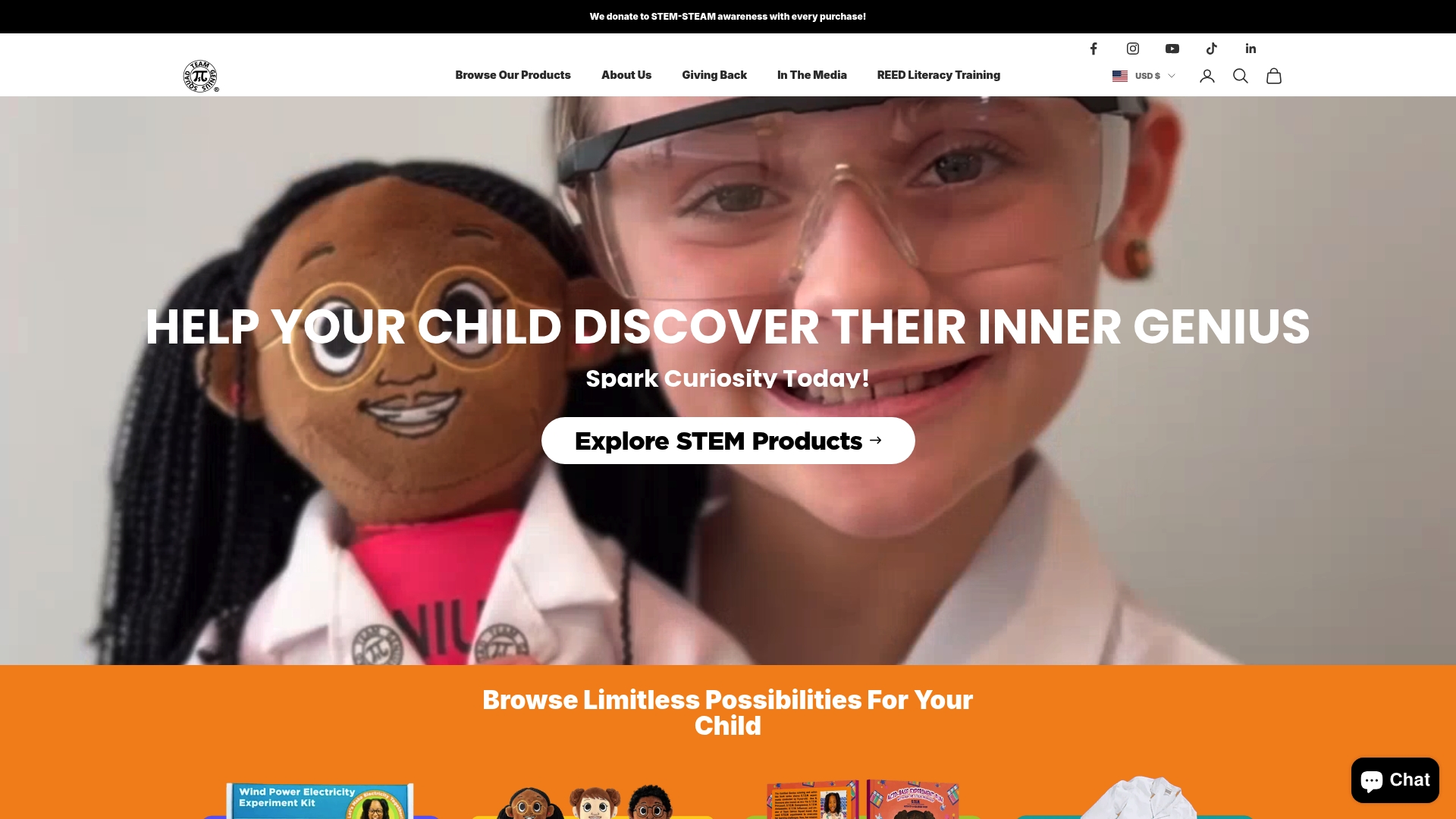
Classroom packs and educator resources are available for teachers who want to bring the E³ Method into their curriculum. Every kit ships with materials, a structured guide, and the identity-building elements that help children see themselves as scientists from the first activity. Visit the lab kits and puzzles collection to browse the full lineup, or go directly to the product pages to check classroom bundle options and current availability.
Useful sources and further reading
- Importance of Science Experiment Kits for School Students — JHS Blog: Explains how hands-on experimentation improves retention compared with textbook-only instruction; supports the educational benefits section.
- ERIC: Teacher and Parent Perceptions of Science Kits: Qualitative research on how structured kits reduce the intimidation factor for non-specialist educators; supports classroom and home use claims.
- Examining Teachers’ and Students’ Perceptions on Science Kits — PRBL: Reports 92.5% engagement and 80.2% assessment success in chemistry classes using kits; the strongest quantitative evidence point in the article.
- Implementation Challenges with Science Kits — JST: Identifies common pitfalls (incomplete use, missing parts, lack of training) and supports the how-to-choose red flags section.
- How a Science Kit Can Help a Child Learn — EatHealthy365: Practitioner-focused overview of life skills developed through kit use; supports the skills bullet list and the failed-experiment tip.
- 10 Benefits of Using All-in-One Science Kits — EduLab: Covers prep-time savings and consistency benefits for classroom educators; supports the classroom use section.
- How Science Kits Support Inquiry-Based Learning — WriteUpCafe: Education commentary on the pedagogical value of enjoyment and engagement; supports the “fun is pedagogically valid” argument.
- STEAM Discovery Kit Instructional Guide — Teamgeniussquad Blog: Teacher-facing guide showing how structured lesson plans increase kit effectiveness; supports classroom implementation tips.
- The Role of Hands-On Kits in STEAM Learning — Teamgeniussquad Blog: Brand resource connecting hands-on kit design to STEAM learning outcomes; supports the educational benefits and E³ Method sections.
- Why Writing Workshops Help Students Improve Skills — David TC Tutoring: Partner resource on literacy and skill-building through structured activities; relevant to Teamgeniussquad’s STEAM-plus-literacy integration approach.


Leave a comment
This site is protected by hCaptcha and the hCaptcha Privacy Policy and Terms of Service apply.