
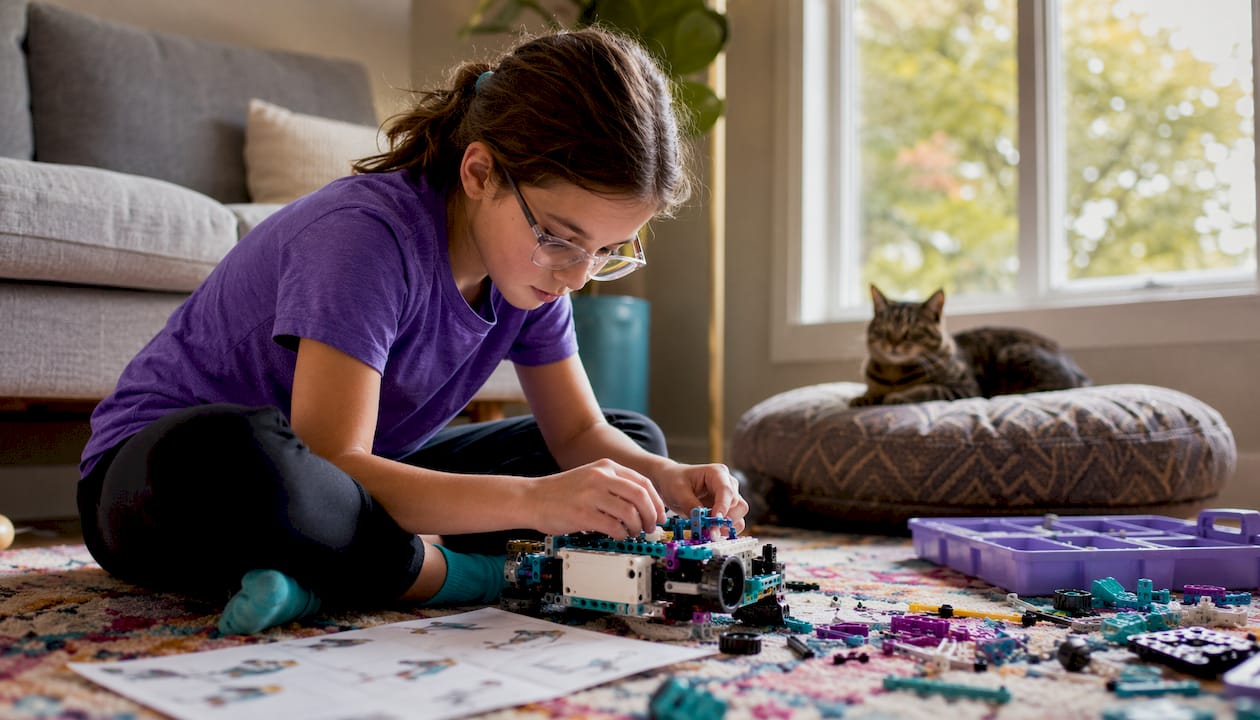
Toys for 4th Graders: STEM Picks Parents and Teachers Trust
The best toys for 4th graders combine hands-on challenge with real learning outcomes. For most children in fourth grade, that means STEM and science kits, logic puzzles, strategy board games, and creative engineering sets that grow with their skills. One standout pick: the Team Genius Squad STEM Puzzle, which weaves reading prompts and identity-driven play into a screen-free STEAM experience built for this exact grade.
TL;DR:
- Fourth graders thrive with toys that challenge their reasoning, not just their dexterity. STEM kits, coding toys, and multi-level puzzles hit that mark.
- Screen-free, hands-on options tend to hold attention longer and transfer better to classroom skills.
- Look for toys with clear challenge modes so the same purchase stays engaging for two or more years.
- Teamgeniussquad’s kits are designed specifically for children who learn differently, making them a strong choice for neurodivergent kids and curious learners alike.
Pro Tip: When shopping for a fourth grader, prioritize toys that have at least two difficulty levels built in. A toy that grows with the child is worth twice the price of one they outgrow in a month.
Table of Contents
- What are the best toy categories for 4th graders?
- Which skills do different toy types actually build?
- How do you choose the right toy for a fourth grader?
- Where should you buy toys for fourth graders in the U.S.?
- Why Teamgeniussquad STEAM kits stand out for 4th graders
- Key Takeaways
- Why grade-specific, hands-on toys matter more than most people realize
- Teamgeniussquad STEAM kits: a clear next step for curious fourth graders
- Useful sources for parents and educators
What are the best toy categories for 4th graders?
Fourth grade is a turning point. Kids this age can follow multi-step instructions, test hypotheses, and hold a strategy in mind across a game. The right toy meets them there, not two years behind.
STEM and coding kits are among the highest-leverage purchases you can make. Coding and robot toys scale from simple symbol-based commands all the way to debugging and complex logical sequencing by upper elementary grades, making them a long-term investment rather than a one-season toy. When you introduce them with minimal instruction, kids naturally fall into “test, fail, fix” thinking, which is exactly the kind of scientific reasoning fourth-grade teachers are building toward.

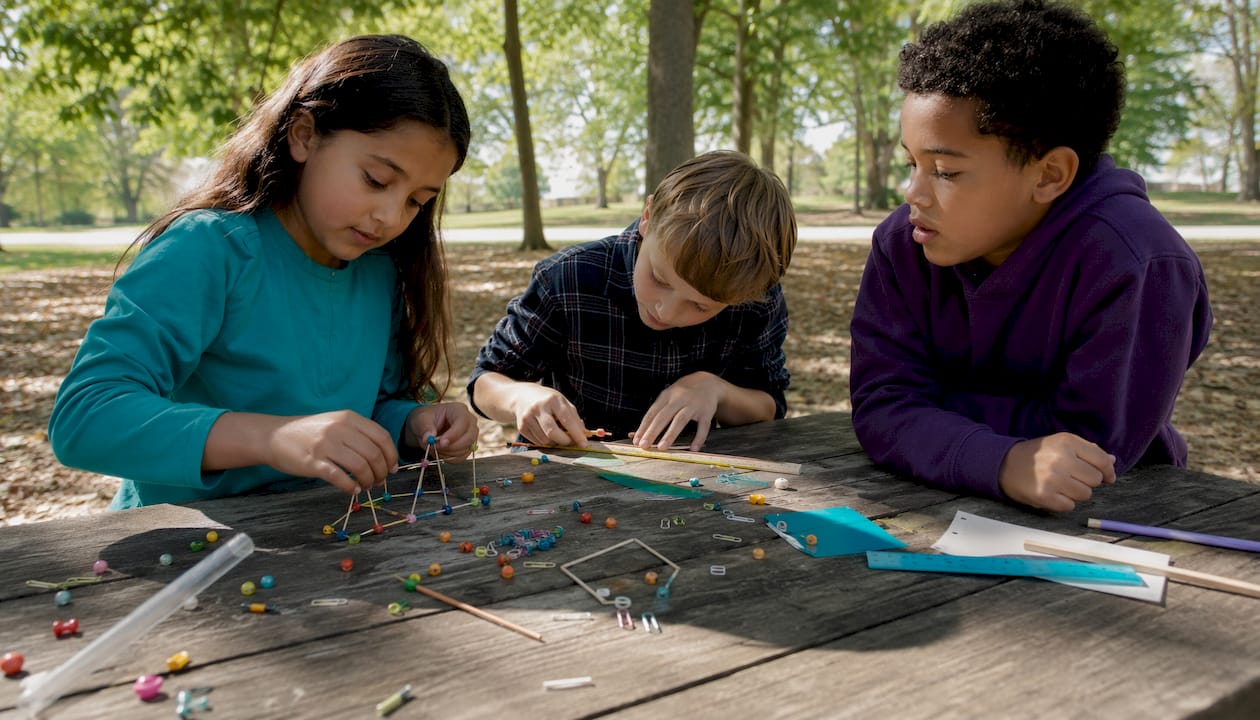
Building and engineering sets support spatial reasoning and persistence. Marble runs, bridge-building kits, and modular construction sets let kids design, fail, and redesign without a wrong answer. They’re also naturally collaborative, which makes them useful in classroom stations.
Logic and single-player puzzles are underrated for this age. A well-designed puzzle with increasing difficulty levels keeps a child engaged independently for weeks. The Smart Sparks Brain Puzzles Grade 4 kit, for example, includes 50 puzzles, 112 magnets, and a writing screen in a travel-friendly box, making it practical for brain-break stations and car trips alike.
Strategy board games build planning, probability thinking, and graceful losing. Games that require two to four players also develop negotiation and collaboration, skills the fourth-grade social curriculum leans on heavily.
Hands-on science kits let kids run real experiments, not just watch videos of them. Solar energy kits, electricity experiments, and chemistry sets at this level introduce the scientific method in a concrete, memorable way. For classroom use, look for kits with clear storage and modular challenge modes so teachers can reuse them across multiple groups.
Arts and crafts that scale include anything from architectural model kits to textile design sets. The key word is “scale”: a craft kit that produces one finished product and then sits in a drawer is not the same as one with open-ended prompts that invite new creations each time.

Books and literacy kits round out the list. The Brain Quest 4th Grade Smart Cards are teacher-vetted, Common Core-aligned, and updated to include technology and coding questions, making them a useful supplement to classroom reading.
Outdoor and active toys matter too. Jump ropes with math challenges, sports science kits, and nature exploration sets connect physical activity to learning goals without requiring a screen.
Pro Tip: Choose toys with at least two built-in challenge modes. A single purchase that works at age 9 and still engages at age 11 delivers far more value than a one-level toy that peaks in a semester.
Which skills do different toy types actually build?
Matching a toy to a learning goal takes more than reading the box. Here is a practical map of how each category connects to the cognitive and academic skills fourth graders are actively developing.
| Skill | STEM/Coding Kits | Building Sets | Logic Puzzles | Strategy Games | Science Kits | Arts & Crafts | Literacy Kits |
|---|---|---|---|---|---|---|---|
| Critical thinking | ✓✓ | ✓✓ | ✓✓ | ✓✓ | ✓✓ | ✓ | ✓ |
| Math reasoning | ✓✓ | ✓ | ✓✓ | ✓✓ | ✓ | — | ✓ |
| Spatial sense | ✓ | ✓✓ | ✓✓ | ✓ | ✓ | ✓✓ | — |
| Coding logic | ✓✓ | — | ✓ | ✓ | — | — | — |
| Scientific method | ✓ | ✓ | — | — | ✓✓ | — | — |
| Fine motor skills | ✓ | ✓✓ | ✓ | — | ✓✓ | ✓✓ | ✓ |
| Collaboration | ✓ | ✓✓ | — | ✓✓ | ✓ | ✓ | ✓ |
| Reading/literacy | — | — | ✓ | ✓ | ✓ | — | ✓✓ |
(✓✓ = primary skill target; ✓ = secondary benefit; — = minimal)
Science kits and coding toys are the strongest all-around performers for critical thinking and reasoning. Building sets lead on spatial sense and fine motor development. Strategy board games are the clearest path to math reasoning in a social context, which is why they translate so well to classroom use.
For teachers running short stations, a logic puzzle or hands-on STEAM kit works well in 15-minute rotations. Students can pick up where they left off without needing a full lesson reset. Science kits with modular steps are especially practical here because one group can complete step one while another finishes step three.
Parents looking to support math reasoning at home will find that strategy games played two to three times per week reinforce the same probability and planning concepts their child encounters in fourth-grade math. For families exploring structured enrichment, Art of Problem Solving offers curriculum resources that pair well with math-focused toys and games.
How do you choose the right toy for a fourth grader?
A few focused questions cut through the noise faster than any star rating.
Buying checklist:
- Does it align with a learning goal? Name one skill you want the child to build. If the toy doesn’t clearly support it, keep looking.
- Does it have challenge modes? A toy with one difficulty level will be outgrown quickly. Look for adjustable complexity or expandable content.
- Does it carry appropriate safety and age labels? For fourth graders (typically ages 9–10), check for ASTM F963 compliance and confirm small-parts warnings match the child’s maturity.
- Is it durable enough for repeated use? Cardboard-only kits wear out fast. Look for laminated cards, sturdy plastic components, or metal parts where relevant.
- Is it screen-free or screen-optional? Screen-dependent toys can limit where and how often a child uses them. Screen-free options work anywhere.
- Are replacement parts available? Kits with proprietary pieces that can’t be replaced become useless when one component breaks.
- Does it include educator or parent resources? Teacher guides, extension activities, and reflection prompts extend the toy’s value significantly.
Price guidance for U.S. buyers:
- Entry-level ($10–$25): Card games, single-subject quiz decks, basic puzzle sets. Good for stocking stuffers or classroom prizes, but limited in depth.
- Mid-range ($25–$60): Most STEM kits, logic puzzle sets, and strategy board games fall here. This is where the best value lives for fourth graders.
- Premium ($60–$120+): Programmable robots, multi-kit science sets, and subscription-based STEAM boxes. Justified when the kit includes educator resources, modular challenges, and durable materials.
Red flags to watch for:
- Toys marketed as “educational” with no specific skill or standard listed
- Kits that require a companion app to function (screen dependency)
- Products with no age range or a suspiciously wide one (“ages 3–12”)
- Novelty items dressed up as learning tools with no repeatable challenge
Where should you buy toys for fourth graders in the U.S.?
The channel matters almost as much as the product. Here is where to look, and what to watch for in each.
- Specialty STEM and education retailers like Lakeshore Learning carry grade-specific educational products including engineering kits, math games, and classroom manipulatives. Their fourth-grade collection is curated by educators, which filters out novelty items quickly.
- Teamgeniussquad’s own shop at shop.teamgeniussquad.com carries screen-free STEAM kits designed for ages 5–13, with grade-specific challenge modes and educator-facing guides included.
- Major retailers (Amazon, Target, Walmart) offer convenience and fast shipping, but require more filtering. Sort by educator reviews rather than overall star ratings, and cross-reference with a teacher’s recommendation list when possible.
- Bulk and novelty suppliers like Oriental Trading are useful for classroom prize bins and party favors, but their grade-labeled novelty items vary widely in educational value. Use them for volume, not depth.
- Curated teacher marketplaces (Teachers Pay Teachers, educational co-ops) sometimes list physical kits alongside digital resources and are worth checking for classroom-specific bundles.
Pricing and savings tips:
Tax-free weekends vary by state but typically fall in late July or early August in states like Texas, Florida, and Ohio. School supplies often qualify; check whether educational toys meet your state’s definition. Holiday sales (Black Friday, Cyber Monday) are the most reliable time to buy premium kits at a discount. For classroom bulk buys, contact specialty retailers directly since many offer educator pricing that isn’t listed publicly.
Always read the return policy before buying a kit. Some specialty STEAM kits are considered “opened consumables” once the packaging is broken, which limits return windows. Educator reviews on retailer sites tend to be more useful than parent reviews for assessing classroom durability and skill alignment.
Pro Tip: When comparing kit prices, divide the total cost by the number of activities or challenge levels included. A $50 kit with 12 distinct experiments costs less per learning session than a $20 kit with three.
Why Teamgeniussquad STEAM kits stand out for 4th graders
Teamgeniussquad builds hands-on, screen-free STEAM discovery kits for children ages 5–13, and several of their products are a particularly strong fit for fourth graders navigating that leap from concrete to abstract thinking.
Key kits for this grade:
- Team Genius Squad STEM Puzzle: Combines story-driven reading prompts with hands-on puzzle challenges, reinforcing both literacy and STEAM identity. Kids don’t just solve a puzzle; they step into the role of a young scientist and reflect on what they discovered. The STEM Puzzle is designed to align with fourth-grade literacy and STEAM goals simultaneously.
- Solar Energy Kit: Introduces renewable energy concepts through direct experimentation. Children build, test, and observe real solar-powered reactions, connecting classroom science vocabulary to something they can hold and adjust.
- Hand Energy Ball: A kinesthetic tool that makes electricity concepts tangible. Kids complete a circuit with their own bodies, which tends to produce the kind of “wait, how does that work?” moment that drives genuine curiosity.
What separates these kits from generic science toys is the E³ Method: Engage, Encourage, Empower. Every kit is structured to first pull the child into an experience (Engage), then support them through challenge without removing the productive struggle (Encourage), and finally celebrate their discovery in a way that builds identity, not just knowledge (Empower). Lab coats, badges, and completion certificates are part of the kit design, helping children see themselves as scientists rather than students completing an assignment.
Teamgeniussquad’s design was inspired by a real family journey with dyslexia and dysgraphia, and that origin shapes every product decision. The kits use visual learning structures, tactile components, and minimal text-heavy instruction, making them genuinely accessible for neurodivergent learners without watering down the challenge for anyone else.
For classroom use, the kits include teacher-facing guidance and are built with clear storage and modular steps that make rotation-based use practical. A teacher can run the Solar Energy Kit across three stations in a single period without losing setup time between groups.
Key Takeaways
The strongest toys for fourth graders combine hands-on challenge, clear learning goals, and multi-level difficulty so a single purchase grows with the child across multiple grades.
| Point | Details |
|---|---|
| Prioritize multi-level challenge | Toys with adjustable difficulty stay engaging longer and deliver more value per dollar. |
| Match toy to skill goal | Use the skills map to align purchases with critical thinking, math, coding, or literacy targets. |
| Mid-range is the sweet spot | Most of the best educational toys for fourth graders fall in the $25–$60 range. |
| Check safety and durability | Look for ASTM F963 compliance, durable materials, and available replacement parts before buying. |
| Teamgeniussquad for STEAM + literacy | The STEM Puzzle and Solar Energy Kit combine screen-free discovery with identity-building play designed for this grade. |
Why grade-specific, hands-on toys matter more than most people realize
There is a tendency to treat “educational toy” as a category rather than a standard. A toy with a math symbol on the box is not automatically a math toy, any more than a book with a rocket on the cover is a science book. What actually moves the needle for a fourth grader is a toy that requires them to think at the edge of their current ability, not comfortably inside it.
The research on coding and engineering toys makes this clear. When children are given minimal instruction and allowed to test, fail, and iterate, they develop debugging thinking that transfers directly to academic problem-solving. That is not a feature of the toy itself. It is a feature of how the toy is designed to be used. Grade-specific kits that build in productive struggle, rather than removing it for the sake of a smooth experience, are the ones that actually show up in classroom outcomes.
For fourth graders specifically, this is the year when many children start to decide whether they are “a math person” or “a science person.” A well-chosen toy at this age can quietly rewrite that story.
Teamgeniussquad STEAM kits: a clear next step for curious fourth graders
If you have been searching for a toy that does more than occupy an afternoon, Teamgeniussquad’s STEAM discovery kits are worth a close look. The Science Solar Energy Kit gives fourth graders a real, working experiment with renewable energy concepts, role-play elements, and reflection activities built in. No screen required. No app to download. Just a child, a kit, and a genuine moment of discovery.

The kits are designed for children ages 5–13, with fourth grade sitting squarely in the sweet spot of the E³ Method’s challenge range. They work equally well at home, in a classroom station, or as a birthday or holiday gift. Teachers have used them in rotation-based science periods; parents have pulled them out on rainy weekends and watched an hour disappear.
Visit shop.teamgeniussquad.com to see the full kit lineup, check availability, and find the right match for the fourth grader in your life.
Useful sources for parents and educators
-
Learning Toys and STEM Toys We Love | Wirecutter: Wirecutter’s editor-tested roundup organizes learning toys into four practical categories (games, building toys, electronics/circuitry, robots) and explains how age-flexible challenge modes extend a toy’s useful life across grades. A reliable starting point for any parent comparing categories.
-
Brain Quest 4th Grade Smart Cards | Hachette Book Group: The revised fifth edition is teacher-vetted, Common Core-aligned, and updated to include technology and coding questions for ages 9–10. Useful for parents who want a literacy-forward supplement that travels well.
-
Smart Sparks Brain Puzzles Grade 4 | Safari Ltd: A teacher-created magnetic puzzle kit with 50 challenges in a self-contained travel box. Well-suited for classroom brain-break stations and independent play at home.
-
4th Grade Educational Products | Lakeshore Learning: Lakeshore’s fourth-grade collection is curated by educators and spans engineering kits, math games, and classroom manipulatives. A strong channel for teachers buying in bulk or parents who want educator-vetted options.
-
Practical STEM Checklist for Kids Ages 5–13 | Teamgeniussquad: A short, practical checklist for evaluating STEM kit features before you buy. Covers challenge modes, safety labels, and classroom suitability in plain language.


Leave a comment
This site is protected by hCaptcha and the hCaptcha Privacy Policy and Terms of Service apply.