Role of Scientists in Childhood Development, Explained
Scientists shape childhood development by producing the evidence that tells us what young minds need, then translating that evidence into standards, programs, and classroom practices adults can actually use. A meta-analysis from the University of Michigan’s Youth Policy Lab found that children in structured early childhood science programs show stronger science achievement alongside gains in literacy and social-emotional skills. Institutions like the Center on the Developing Child at Harvard University exist specifically to turn that kind of research into guidance families and schools can put to work today.
Here’s what that means in practice for the people raising and teaching young children:
- Practice: Hands-on, inquiry-based science instruction pays off beyond the science lesson itself.
- Policy: Consensus reports and committee recommendations steer public investment toward what actually works.
- Monitoring: Growth standards and screening tools, built by researchers, catch developmental concerns early enough to matter.
For educators and parents, the takeaway isn’t abstract. It’s permission, backed by data, to let kids get their hands dirty with real investigation instead of worksheets about science.
Key Takeaways
Scientists build the evidence, standards, and tools that determine what young children need, and translating that evidence into action-focused, hands-on practice is what actually improves outcomes.
| Point | Details |
|---|---|
| Structured science pays double | A meta-analysis found early science programs boost science achievement plus literacy and SEL gains. |
| Serve-and-return is foundational | Responsive back-and-forth interaction shapes brain architecture, per Harvard’s Center on the Developing Child. |
| Say “do science,” not “be a scientist” | Action-focused language predicts more inclusive beliefs and stronger engagement than identity labels. |
| Representation reduces exclusion | Diverse materials and consistent action language counter early essentialist stereotypes about who does science. |
| Teamgeniussquad supports this approach | Hands-on, screen-free kits and lesson plans use the E³ Method to turn action-focused science into daily practice. |
Table of Contents
- What Is the Role of Scientists in Childhood Development?
- What Do Consensus Reports Say About Early Brain Development?
- How Does Scientific Evidence Shape Classroom Science Practice?
- Should Kids Be Called Scientists or Just Do Science?
- How Do Stereotypes Form in Early Science Learning?
- How Do Scientists Turn Findings Into Policy?
- How Can Schools Partner With Researchers?
- What Activities Help Kids Practice Being Young Scientists?
- What Ethical Issues Come Up in Child Development Research?
- A Teacher’s Perspective on Why This Research Matters
- Bring Research-Backed Science Play Into Your Classroom or Home
- Frequently Asked Questions
- Sources
What Is the Role of Scientists in Childhood Development?
Developmental scientists wear more hats than most people assume. They’re not just running lab experiments. They’re building the measurement tools, evaluating the programs, and writing the reports that shape what happens in a kindergarten classroom or a pediatrician’s office.
Six roles cover most of what these scientists actually do:
- Basic research into how attention, language, memory, and self-regulation develop in the first eight years of life.
- Measurement and standards, including growth charts, developmental screening tools, and school-readiness assessments.
- Intervention design and evaluation, testing whether a specific program or curriculum produces measurable gains.
- Longitudinal cohort studies that track the same children for years, sometimes decades, to see which early conditions predict later outcomes.
- Consensus statements, where multiple experts synthesize competing findings into unified guidance for practitioners.
- Public translation, converting technical findings into formats teachers, pediatricians, and policymakers can use without a research degree.
Each role produces a distinct output. Basic research generates the theory. Measurement work generates the tools, think validated screening instruments used to flag developmental delays before a child ever sets foot in kindergarten. Intervention studies generate manuals and training protocols. Longitudinal cohort research on early growth and nutrition, for instance, has shown how patterns established in the first years connect to health and human capital outcomes decades later, which is exactly why pediatric growth monitoring exists in its current form.
One pathway makes the whole system visible: a university lab studies how hands-on measurement activities affect early number sense. That research gets published, then picked up by a curriculum developer who builds it into a validated program. A school district pilots the program, tracks outcomes, and if the data holds up, the approach spreads to other districts. Each step depends on the one before it, and each step involves a different kind of scientific expertise.
Structured early-science instruction doesn’t just teach science. According to the Youth Policy Lab meta-analysis, it produces measurable secondary gains in literacy and social-emotional learning, making it one of the more efficient levers available to early educators.
That statistic matters because it reframes the investment question. A school deciding whether to fund a hands-on science kit versus another round of phonics worksheets isn’t choosing between science and literacy. The evidence suggests good science instruction supports both. Scientists also carry a responsibility that goes beyond publishing. As the Center on the Developing Child’s public engagement work argues, producing a finding isn’t the finish line, because research that never gets translated into usable practice helps no one. That’s the piece often missing from how people picture “the role of scientists”: not just discovery, but follow-through.
What Do Consensus Reports Say About Early Brain Development?
A handful of principles show up again and again across decades of child development research, and they’re consistent enough that major institutions have built formal consensus statements around them.
The Center on the Developing Child’s foundational consensus paper lays out the core findings that most childhood development experts treat as settled ground:
- Serve-and-return interaction shapes brain architecture. When a baby babbles and an adult responds, coos back, or asks a question, that back-and-forth builds neural connections. A caregiver who consistently ignores those cues, even unintentionally, is missing a window that doesn’t stay open forever.
- Brain architecture is built from the bottom up. Basic skills form the scaffolding for more complex ones. A child struggling with self-regulation at age three will likely struggle more, not less, with the executive function demands of a first-grade classroom.
- Toxic stress disrupts development. Chronic, unbuffered adversity, without a supportive adult relationship to cushion it, changes stress-response systems in ways that show up later as attention, learning, and health problems.
- Timing matters. Some skills are easier to build during specific developmental windows. Missing the window doesn’t make growth impossible, but it usually makes it harder.
Each principle changes what a reasonable adult does differently. Serve-and-return means a teacher pauses to actually respond to a child’s question about why the sky changes color, instead of redirecting to the next activity on the schedule. Bottom-up development means a preschool program prioritizes self-regulation and sustained attention over early reading drills, because the drills won’t stick without that foundation. Understanding toxic stress means a school invests in predictable routines and consistent adult relationships, not just curriculum content.
Caregiving research synthesized by the American Academy of Arts and Sciences reinforces this last point directly: predictable, responsive caregiving environments support brain development across cultures and contexts, which is one of the more replicated findings in the entire field. That’s not a soft or sentimental claim. It’s one of the most consistently reproduced findings in developmental science, cited across national policy reports and cohort studies alike.
Committee reports compiled through the National Academies go a step further, calling for integrated research programs that connect basic science directly to workforce development and intervention design, rather than letting each operate in isolation. That’s a structural recommendation, and it explains why so many effective early-childhood programs today involve researchers embedded in the design process rather than handing down findings from a distance.
How Does Scientific Evidence Shape Classroom Science Practice?
Structured, hands-on science instruction isn’t a nice extra for early classrooms. The Youth Policy Lab meta-analysis found consistent gains in science achievement alongside secondary boosts to literacy and social-emotional learning, which means a strong science block does double duty in a schedule that’s already packed. Practitioner resources from Early Childhood Research & Practice back this up, arguing that young children learn science best through direct materials-based exploration rather than lecture-style instruction.
That research translates into specific, repeatable classroom habits. A strong early-science routine usually includes:
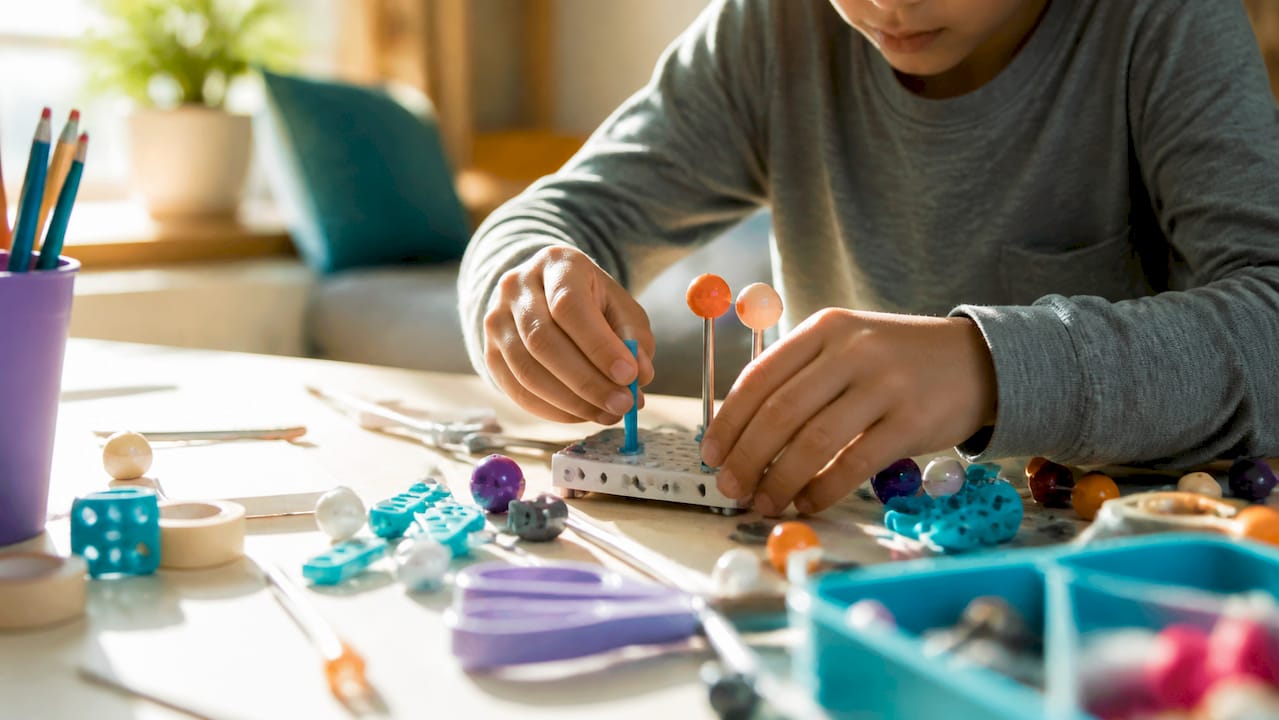
- A weekly block of unstructured exploration time with real materials, magnets, water tables, plants, not worksheets about those materials.
- Open-ended questioning from the teacher (“What do you notice?” “What do you think will happen?”) instead of leading questions with one correct answer.
- Observation journals or drawings, even for children who can’t yet write, to build the habit of recording what happens.
- Small-group investigation over whole-class demonstration, so more children get hands directly on the materials.
- Deliberate connection to literacy, reading a short nonfiction text before or after an investigation to reinforce vocabulary.
A basic materials checklist doesn’t need to be expensive: magnifying glasses, a set of magnets, simple ramps and balls, seeds and soil, a few thermometers. Space matters almost as much as materials. Children need room to spread out an investigation without knocking over a neighbor’s tray, and time matters even more. A very short science slot squeezed between transitions rarely produces real inquiry.
Pro Tip: Skip the formal quiz. A quick oral prompt, “Tell me one thing you noticed today and one thing you’re still wondering about”, gives you a faster, more honest read on what a child actually understood than a worksheet ever will.
The teacher’s role in all this is closer to a facilitator than a lecturer. Scientists studying early education consistently find that the adult’s job is to ask good questions, provide materials, and resist the urge to hand over the answer too quickly. That’s a harder shift for many teachers than it sounds, because it means tolerating a little more noise and a little more uncertainty in the room. For guidance on the developmental case behind this approach, why STEAM matters for elementary students breaks down the literacy and SEL connection in more depth.
Should Kids Be Called Scientists or Just Do Science?
Here’s a finding that surprises most educators the first time they hear it: telling a child “you’re a scientist” can actually backfire. Research published in PMC found that identity-focused language, phrases like “let’s be scientists”, shows up constantly in children’s media and classrooms, and it’s linked to more exclusive, essentialist beliefs about who gets to do science. Action-focused language, “let’s do science”, predicts more inclusive beliefs and stronger engagement instead.

The mechanism makes sense once you think about it. Identity language implies a fixed category: some people are scientists, others aren’t. A five-year-old who doesn’t see herself reflected in the scientists she’s shown, in books, on TV, in the classroom poster, may quietly conclude the category doesn’t include her. Action language sidesteps that trap entirely. Doing science is something anyone can try, regardless of whether they picture themselves as belonging to a special group.
One prekindergarten study cited in that research found this effect could be shifted with small language changes in a classroom setting, which is a striking result given how minor the intervention was.
Turning this into daily phrasing is simpler than it sounds:
- Swap “Scientists observe carefully” for “Let’s observe carefully and see what we notice.”
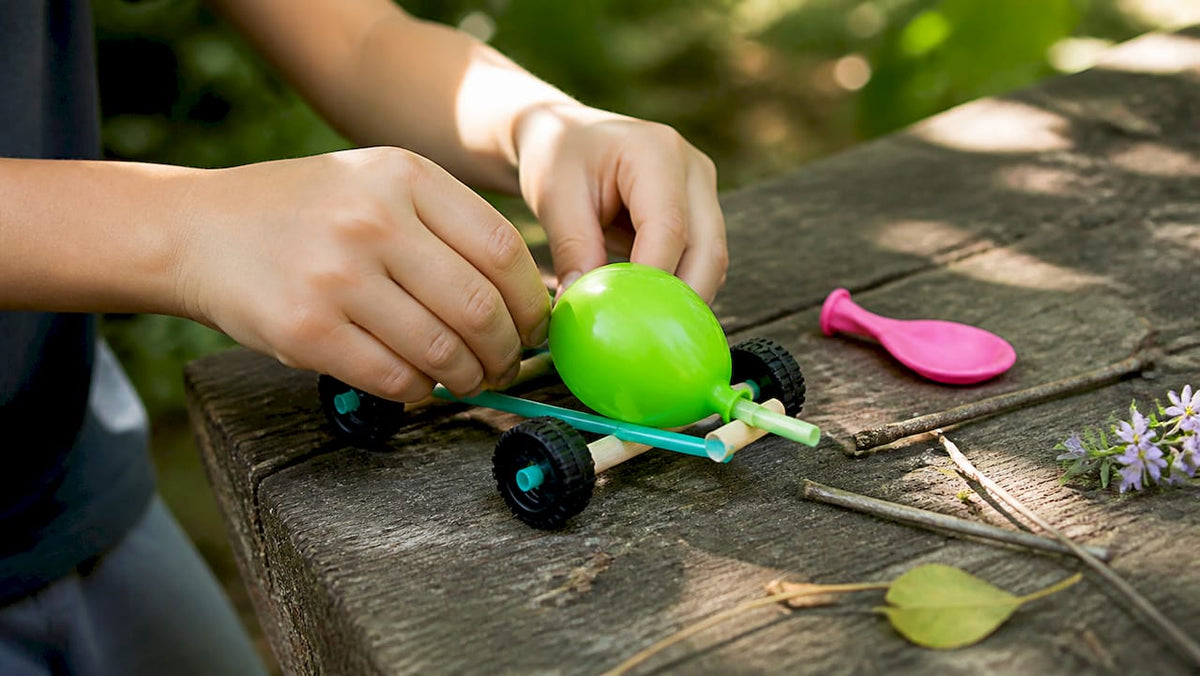
- Swap “You’re such a good scientist!” for “You tried three different ways to make that boat float. That’s exactly what scientists do.”
- Frame activities as verbs: investigating, testing, building, recording, not as titles to earn.
Age matters here too. Younger children respond well to action framing because their sense of social category is still forming. By adolescence, identity language can actually motivate persistence, once a young person has already built confidence in the doing.
Pro Tip: Praise the process, not the person. “You changed your approach when the first idea didn’t work” builds resilience far better than “You’re so smart,” because it teaches a child that struggle is part of the method, not a sign they don’t belong. Bank Street’s early education researchers make a similar case for why young children are natural experimenters, built on trial-and-error learning rather than getting it right the first time. For more phrasing examples, see how STEAM fosters curiosity in kids ages 5–13.
How Do Stereotypes Form in Early Science Learning?
Children start absorbing ideas about who “belongs” in science far earlier than most adults assume, often before kindergarten. The same PMC research on exclusionary language found that media and classroom materials routinely reinforce a narrow, essentialist image of what a scientist looks like, and children pick up on those cues quickly. A picture book that only shows scientists as older white men in lab coats teaches a lesson the text never states out loud.
Countering that pattern takes deliberate, repeated effort rather than a single lesson:
- Rotate books, posters, and video clips that show scientists across race, gender, age, and disability.
- Use action-focused language consistently, since the same research ties it to more inclusive beliefs across a prekindergarten sample.
- Invite guest visitors from varied backgrounds when possible, rather than relying only on textbook portrayals.
- Avoid framing science ability as innate (“she’s just a natural”) in favor of framing it as buildable through practice.
When adults consistently frame science as something you do rather than something you are, children hold less exclusive beliefs about who gets to participate, a pattern that showed up clearly even among prekindergarten-age children in controlled classroom language studies.
The stakes are practical, not just philosophical. A child who quietly opts out of raising her hand during science time at age six carries that hesitation forward. Inclusive STEAM design that reflects varied identities from the start heads that pattern off before it calcifies.
How Do Scientists Turn Findings Into Policy?
Research doesn’t become public investment on its own. It travels through fairly predictable channels: consensus reports that synthesize dozens of studies into unified recommendations, advisory committees that vet evidence before it reaches legislators, program evaluations that prove or disprove whether a funded intervention actually works, and policy briefs that translate all of it into plain language for people who don’t have time to read a 40-page report.
Scientists occupy a specific, sometimes uncomfortable position in that chain. They’re responsible for protecting the quality of the evidence, flagging where findings are preliminary, where sample sizes are small, where results haven’t replicated, even when a cleaner, more confident story would be easier to fund. That’s a real tension. A committee report that hedges every claim is harder to act on than one that sounds certain, but overstating certainty erodes trust when a program later underperforms.
- Consensus reports (like those from the Center on the Developing Child) synthesize competing findings into shared guidance.
- Advisory committees translate that guidance into specific funding and program recommendations.
- Program evaluations provide the real-world test of whether the guidance actually works at scale.
Programs scaled up without iterative evaluation often lose fidelity to the model that made them work in the first place, according to National Academies committee findings, which is why ongoing measurement matters even after a program proves successful in a pilot.
One clear example of this pipeline working: early-childhood cognitive and language research fed directly into national school-readiness standards over the past several decades, standards that now shape how states fund pre-K programs. That didn’t happen because one study was persuasive. It happened because researchers kept refining, testing, and re-communicating findings until policymakers had enough confidence to act.
How Can Schools Partner With Researchers?
Research-practice partnerships sound academic, but the mechanics are simpler than they seem. Three models cover most real-world examples: a visiting researcher running a live demonstration or data-collection session in a classroom, a formal university-school partnership where a local college embeds graduate students in a district, and co-designed classroom trials where teachers and scientists jointly develop and test a new approach together.
Getting one started follows a fairly consistent sequence:
- Identify a shared question. Start with something the teacher genuinely wants to know, not a research agenda imposed from outside.
- Find the right contact. Local university education or psychology departments often maintain outreach lists specifically for this purpose.
- Clarify consent and ethics early. Any data collection involving children typically requires parental consent and, for formal research, institutional review board approval.
- Set a realistic timeline. Classroom schedules and academic research calendars rarely align cleanly, so build in buffer time.
- Define mutual goals up front. The researcher wants clean data; the teacher wants something usable in the classroom. Name both goals before starting.
Common friction points show up predictably. Teachers worry the partnership will eat instructional time; researchers worry classroom conditions will make their data messy. The fix in both cases is usually the same: start small, with a single lesson or a single week, before committing to a semester-long collaboration. A behavioral science perspective on education makes a similar case for grounding classroom decisions in tested principles rather than intuition alone.
What Activities Help Kids Practice Being Young Scientists?
Evidence-grounded activity design doesn’t require a lab. It requires a structure: observe, predict, test, record, reflect. Here are formats that hold up across age ranges with light adjustments.
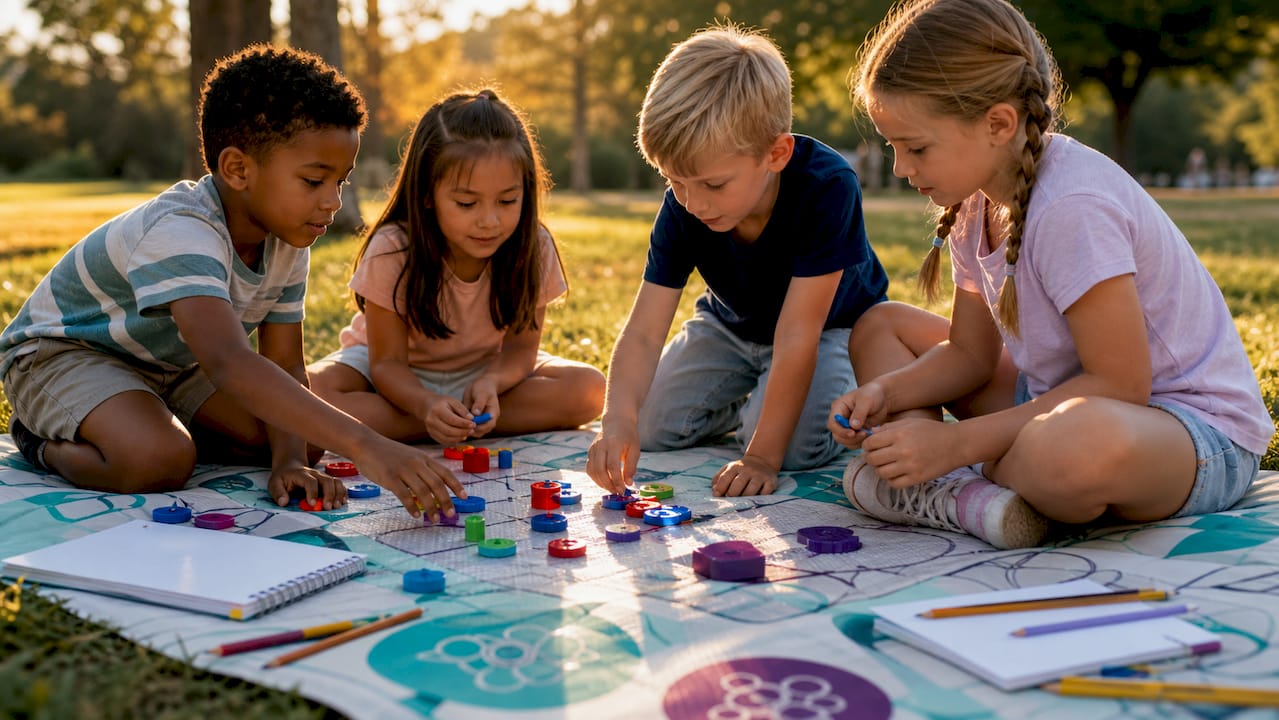
- Sink or float sorting. Kids predict, test, and sort household objects, then record results in a simple drawn chart. Works for ages 5 to 8; older kids can add a hypothesis-writing step.
- Shadow tracking. Trace a shadow’s position at three points during the day and discuss what changed and why. Builds patience and pattern recognition.
- Plant growth journals. Kids observe and sketch a seedling every few days, noting height and changes. Reinforces both science observation and early writing.
- Magnet exploration stations. Set out varied materials and let kids test what’s magnetic, recording guesses before testing. Naturally self-correcting when a prediction fails.
- Simple circuit building. Older kids in the 8 to 13 range can wire a basic circuit and troubleshoot when it doesn’t work the first time, a genuine lesson in persistence.
- Weather observation logs. Daily five-minute recording of temperature, cloud cover, and precipitation builds long-term data literacy.
Materials don’t need to be expensive: magnets, seeds, a magnifying glass, and simple household items cover most of these. For neurodivergent learners, adapt with visual step cards instead of verbal-only instructions, shorter observation windows to match attention spans, and tactile recording options like stamps or stickers for kids who find handwriting difficult, adaptations well documented in guidance on supporting neurodivergent learners in STEAM.
A simple fidelity check keeps any of these honest: did the child spend real time observing before predicting, did an adult ask at least one open-ended question, and is there some record, drawn or written, of what happened? Each activity above ties to a specific developmental goal, literacy through journaling, self-regulation through patient observation, SEL through group magnet stations, so the science time is never doing just one job. A curated list of curiosity-boosting activities offers more formats organized by age.
What Ethical Issues Come Up in Child Development Research?
Studying young children raises stakes that adult-focused research doesn’t carry. Children can’t give informed consent the way adults can, so researchers depend on parental consent plus the child’s own assent, a willingness to participate that a child can withdraw at any point, even mid-session.
Vulnerability cuts both ways. Poorly designed studies risk exposing children to stress, confusion, or repeated testing that offers little benefit to the child themselves. At the same time, excluding certain groups, low-income families, non-English speakers, children with disabilities, from research samples produces findings that don’t generalize, which then produces programs and policies that don’t serve those same excluded groups well.
Longitudinal studies carry their own dilemma: tracking children for years means researchers accumulate deeply personal data on families over time, raising real questions about privacy, data security, and who gets access to results later.
There’s also a quieter ethical obligation that gets less attention: researchers who find a program doesn’t work, or works only for some groups, have a responsibility to report that clearly, even when null results are less exciting than positive ones and harder to get published. How a finding gets framed, as a deficit story about “at-risk” children versus an opportunity story about under-resourced contexts, shapes how the public and policymakers respond, which makes careful, honest communication part of the ethical work itself, not an afterthought to it.
A Teacher’s Perspective on Why This Research Matters
The research on serve-and-return interaction and action-focused language changed how I think about ordinary classroom moments, the ones that don’t feel like “instruction” at all. A kid asking why the ice cube melted faster in sunlight isn’t a distraction from the lesson plan. That’s the lesson, if an adult treats it that way.
What strikes me most is how small the interventions are relative to their effect. Swapping “you’re a scientist” for “let’s do science” costs nothing and takes no training budget, yet the research ties it to real differences in how included children feel. That’s rare in education, where most fixes require money or time nobody has.
None of this replaces ongoing professional development, though. Teachers need real partnerships with researchers, not a one-time workshop, to keep translating new findings into classroom habits as the evidence evolves.
Bring Research-Backed Science Play Into Your Classroom or Home
Everything above points to the same practical conclusion: kids build science identity through hands-on doing, not lectures or labels. Teamgeniussquad exists for exactly that gap. Our kits use the E³ Method (Engage, Encourage, Empower) to turn action-focused science language into a physical, screen-free experience, lab coats, real materials, genuine investigation, so kids build confidence through doing rather than being told what to be.
Before choosing any kit for a classroom or home, run it against a short checklist: Does it fit the child’s age range without needing heavy adult scaffolding? Does it offer adaptations for neurodivergent learners, visual instructions, tactile materials, flexible pacing? Does it map to a real activity goal, observation, hypothesis testing, recording, rather than just assembly? Our Solar Energy Kit with Mirror Disk is a solid example of one that supports genuine observation and cause-effect testing rather than a scripted result.
If you’re an educator building out a unit, our curriculum-aligned lesson plans pair directly with kit-based investigation, so a science block can hit literacy and SEL goals alongside science content. Browse the experiment kits collection and pick one activity to try this week.
Frequently Asked Questions
What is the role of scientists in childhood development? Scientists study how young children learn and grow, then translate those findings into standards, screening tools, and evidence-based programs that guide teachers, parents, and policymakers.
How do scientists influence child development in the classroom? Their research shapes curriculum design, teacher training, and classroom routines, particularly the shift toward hands-on, inquiry-based science over lecture-style instruction.
Why is action-focused language better than calling kids “scientists”? Research shows identity language (“you’re a scientist”) can create exclusive beliefs about who belongs in science, while action language (“let’s do science”) predicts broader engagement and more inclusive attitudes.
What organizations lead research on early childhood development? The Center on the Developing Child at Harvard University, the National Scientific Council on the Developing Child, and practitioner resources like Early Childhood Research & Practice and Bank Street Graduate School of Education are central sources.
Can parents apply this research at home without formal training? Yes. Simple shifts, responsive conversation, open-ended questions, action-focused phrasing, and hands-on materials, reflect the same principles researchers recommend for classrooms.
Sources
For readers who want to go deeper, these sources anchor most of the claims covered above:
- Effects of early childhood science educational interventions on children’s outcomes (meta-analysis) — Youth Policy Lab, University of Michigan
- How children’s media and teachers communicate exclusive and essentialist views of science and scientists (PMC article)
- Center on the Developing Child at Harvard University
- Committee report on early childhood development and policy (National Academies / NCBI)

Leave a comment
This site is protected by hCaptcha and the hCaptcha Privacy Policy and Terms of Service apply.