Kindergarten STEM Activities That Actually Build Confidence
The best kindergarten STEM activities are short, hands-on, inquiry projects paired with a read-aloud. They run in 20 to 30 minutes, ask a real question a five-year-old can investigate, and align to kindergarten NGSS science and engineering standards. Three that work almost every time: sink-or-float sorting with classroom junk drawer items, a marble roller coaster built from foam pipe insulation, and seed germination in a clear cup so kids watch roots grow day by day.
- Sink-or-float: a tub of water, ten mixed objects, one prediction sheet, 20 minutes.
- Marble roller coaster: pipe insulation, tape, one marble, an open-ended engineering challenge.
- Seed germination: bean seeds, a damp paper towel, a clear cup, and daily observation over one to two weeks.
Pro Tip: Open every activity with a short picture book connection. A story hook gives kids the vocabulary to explain what they see before you ask them to predict anything.
These activities show up again and again in classroom-tested collections because they are cheap, visual, and forgiving of chaos. Below, you’ll find the categories that map to kindergarten standards, a dozen ready-to-run micro-lessons, and the classroom management moves that keep 25 five-year-olds from turning “science time” into “everyone touches the water at once” time.
Key Takeaways
Kindergarten STEM works best as short, repeatable, hands-on inquiry paired with a read-aloud and a role-play identity that makes every child feel like a real scientist.
| Point | Details |
|---|---|
| Keep sessions to 20-30 minutes | Match the active window to kindergarten attention spans, with a quick win up front. |
| Pair activities with a read-aloud | A short story before a build challenge boosts engagement and gives kids language for observation. |
| Repeat strong activities | Revisit the same experiment within two weeks so kids notice new details and build mastery. |
| Use open-ended engineering prompts | Ask, imagine, plan, create, and improve outperforms step-by-step instructions for young builders. |
| Reduce prep with ready-made kits | Team Genius Squad kits bundle NGSS-aligned activities, role-play tools, and literacy prompts into one low-prep box. |
Table of Contents
- Kindergarten STEM Activities by Category
- 12 Classroom-Ready Kindergarten Science Activities
- How to Plan, Manage, and Assess a Kindergarten STEM Lesson
- Making STEM Work for Every Kind of Learner
- A Quick Classroom Win Worth Repeating
- Team Genius Squad Turns These Activities Into a Ready-Made Kit
- Where to Find More Kindergarten STEM Activities
- Frequently Asked Questions
- Sources
Kindergarten STEM Activities by Category
Every strong kindergarten STEM activity fits into one of six buckets, and knowing which bucket you’re pulling from tells you what materials to grab and what question to ask. You don’t need six different activities a week. You need one solid activity per category, rotated across the month, so kids build a mental map of what scientists, engineers, and mathematicians actually do.
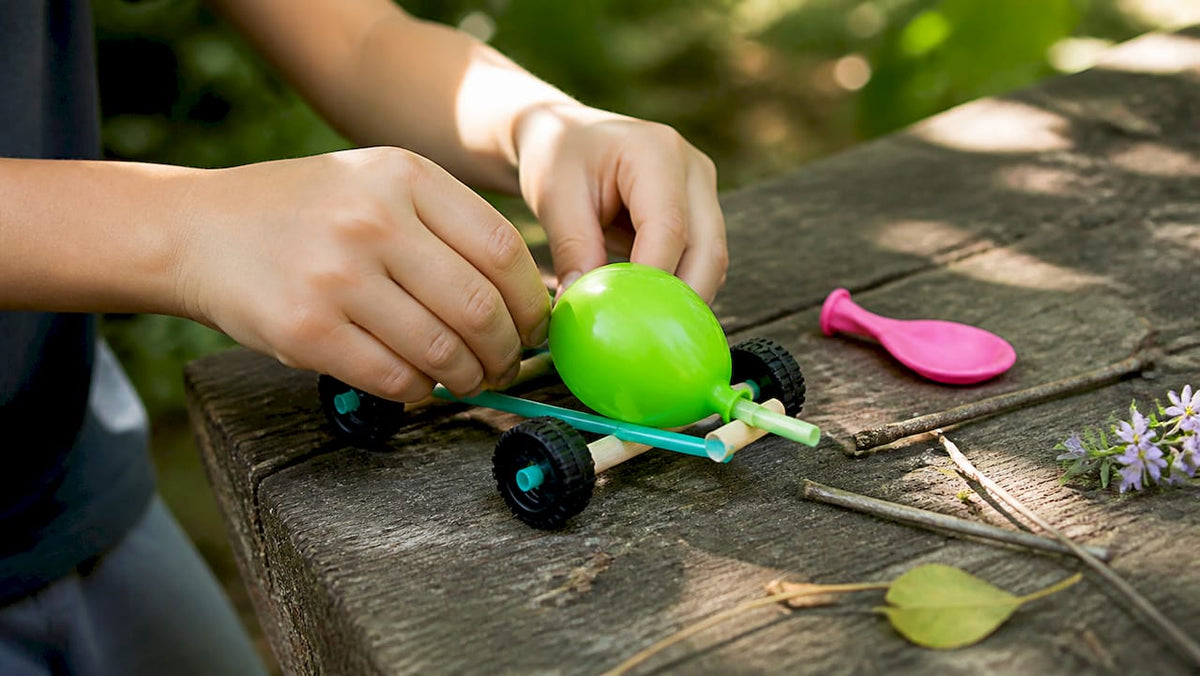
Physical science activities explore forces and motion using things that roll, push, or fall. A marble run, a balloon-powered car, or a ramp race with toy cars all teach the same underlying idea: objects move because something pushes or pulls them. This maps to Kindergarten Physical Science standard K-PS2-1, which asks students to plan and conduct an investigation into the effects of pushes and pulls on an object’s motion. These are almost always instant demos: set it up, let kids play, ask questions as you go.
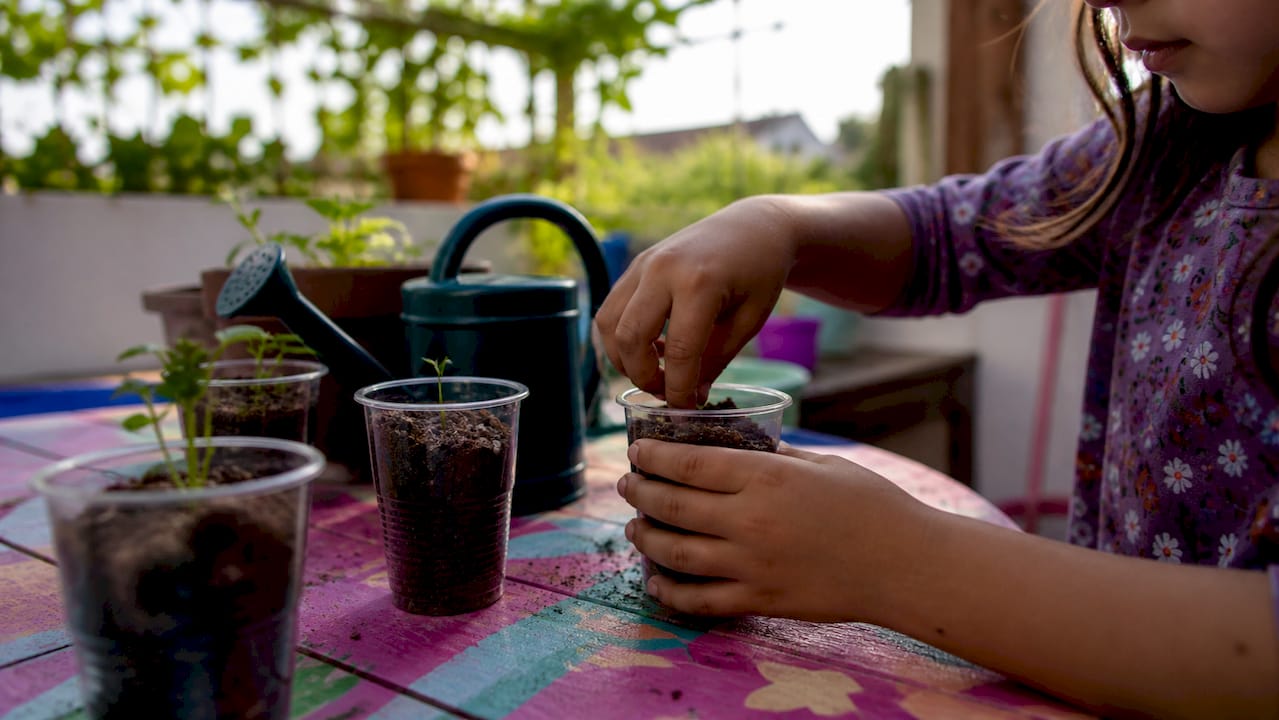
Life science activities center on plants, animals, and what living things need to survive. Seed germination, an ant farm observation station, or a “what do plants need” experiment with light and no light all build toward Kindergarten Life Science standard K-LS1-1, which requires students to use observations to describe patterns of what plants and animals need to survive. Plant activities are multi-session by nature. Budget at least a week of five-minute check-ins.
Earth and weather investigations cover sun, shadows, weather patterns, and simple ideas about the environment. A shadow-tracing activity where kids mark a shadow’s position at three points in the day works beautifully here and connects to Kindergarten Earth Science standard K-PS3-1 on sunlight and warmth. Weather charting (a daily “what’s the sky doing” tally) is a low-prep, one-session-per-day habit that builds data literacy without kids realizing it’s math.
Engineering challenges are where kindergarten STEM gets its best reputation, because they’re loud, collaborative, and visibly hard. A build-a-shelter challenge, a bridge for the three little pigs, or a tower that holds a stuffed animal all fit Kindergarten Engineering standard K-2-ETS1-1, which asks students to define a simple problem and identify criteria for a successful solution. The strongest version of these challenges skips step-by-step instructions entirely. Kids ask, imagine, plan, create, and improve on their own terms, and research on early engineering design shows that open-ended prompts consistently outperform prescriptive recipes for this age group.
Simple math and data investigations don’t get labeled “STEM” often enough, but sorting, graphing, and counting are foundational. A “which object sinks” tally chart or a button-sorting-by-attribute station teaches data collection before kids can spell the word. These pair naturally with almost any physical or life science activity as a wrap-up step.
Low-tech technology and digital literacy demos round out the category list. This doesn’t mean screens. It means simple tools: magnifying glasses, magnets, a see-saw balance, or a basic pulley system made from string and a spool. Kids learn that “technology” means any tool built to solve a problem, not just tablets.
| Category | Typical materials | Prep level |
|---|---|---|
| Physical science | Marbles, ramps, balloons, tape | Instant demo |
| Life science | Seeds, cups, soil, magnifying glass | Multi-session |
| Earth and weather | Chalk, sunlight, weather chart | One session per day |
| Engineering challenges | Cardboard, tape, craft sticks, string | One to two sessions |
| Math and data | Sorting mats, tally sheets, buttons | Instant demo |
| Simple technology tools | Magnets, magnifiers, pulleys | Instant demo |
12 Classroom-Ready Kindergarten Science Activities
These are the micro-lessons that show up on rotation in strong kindergarten classrooms because they’re cheap, visual, and genuinely teach something. Each one includes what you need, roughly what to do, and two questions that turn the activity from “fun” into “learning you can assess.”
- Sink or Float. Materials: clear tub, water, 10 household objects. Steps: predict, test one at a time, sort into two piles, chart results, discuss surprises. Ask: “What do the things that floated have in common?” Time: 20 minutes. Best as a whole-class demo or small-group center.
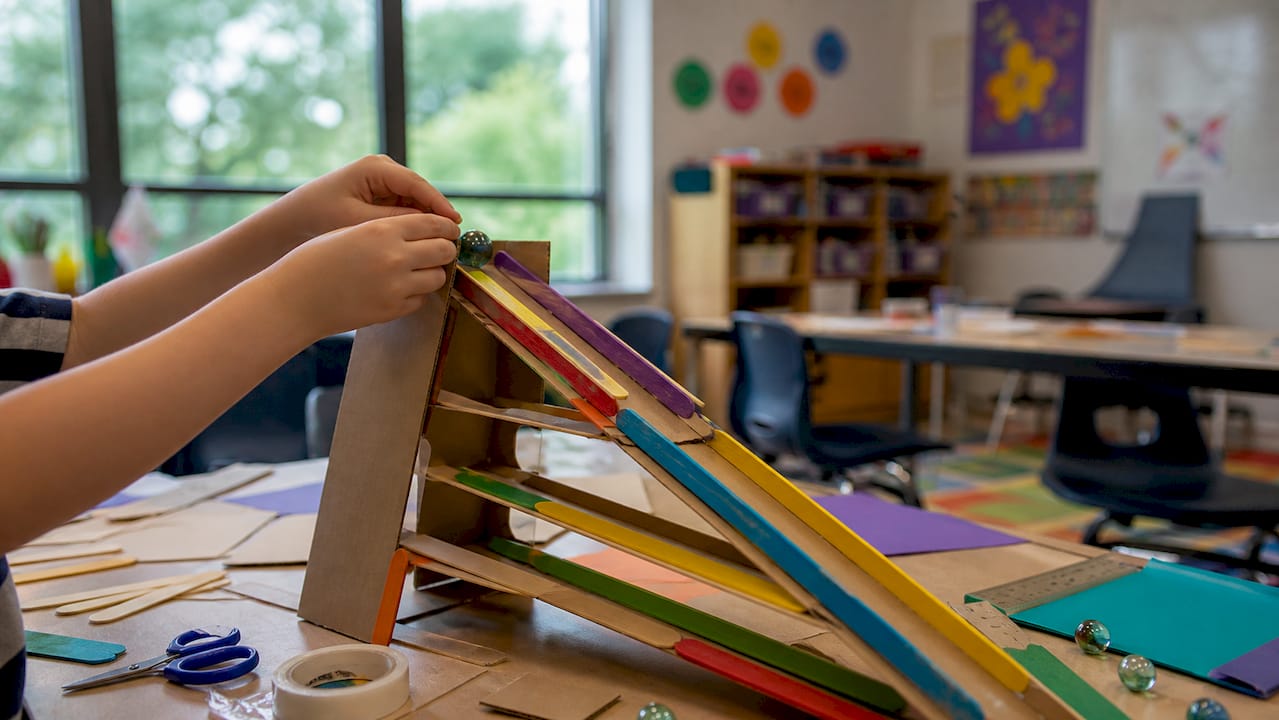
- Marble Roller Coaster. Materials: foam pipe insulation (cut lengthwise), tape, marbles. Steps: tape sections to a wall or cardboard, test the marble’s path, adjust slope, add a loop, retest. Ask: “What happened when you made the hill steeper?” Time: 25 minutes. Small-group challenge.
- Seed Germination Cup. Materials: clear plastic cup, paper towel, bean seeds, water. Steps: wet the towel, press seeds against the cup wall, observe daily, draw changes. Ask: “What did the seed need before it changed?” Time: 10 minutes daily over one to two weeks. Whole-class or individual centers.
- Shadow Tracing. Materials: sidewalk chalk, sunny day. Steps: trace a partner’s shadow at three times, compare lengths and directions, discuss why it changed. Ask: “Why do you think your shadow moved?” Time: 15 minutes across a full day. Small-group or whole-class outdoor activity.
- Magnet Discovery Table. Materials: magnets, mixed classroom objects (some metal, some not). Steps: sort objects into “attracts” and “doesn’t attract,” chart results, test a surprising object. Ask: “What do all the magnetic things have in common?” Time: 20 minutes. Center rotation.
- Walking Water. Materials: clear cups, food coloring, paper towels. Steps: alternate full and empty cups, fold towels as bridges, observe color travel over several hours. Ask: “How is the water moving without anyone pouring it?” Time: 10 minutes setup, check throughout the day. Whole-class demo.
- Oobleck (Cornstarch Slime). Materials: cornstarch, water, tray. Steps: mix, let kids poke and squeeze, discuss solid versus liquid behavior. Ask: “Is it a solid or a liquid? How do you know?” Time: 20 minutes. Small-group center, best with an adult nearby for mess control.
- Balloon Car Race. Materials: small cardboard base, bottle caps for wheels, straw, balloon, tape. Steps: build, inflate balloon, release and measure distance, redesign. Ask: “What changed when you used a bigger balloon?” Time: 30 minutes. Small-group engineering challenge.
- Build-a-Shelter Challenge. Materials: craft sticks, index cards, tape, a small toy to shelter. Steps: ask what the toy needs, imagine designs, build, test with a “storm” (fan or shaking), improve. Ask: “What part of your shelter needs to be stronger?” Time: 30 minutes. Small-group challenge, pairs well with a read-aloud like The Three Little Pigs.
- Color Mixing Investigation. Materials: primary-color paint or food coloring, water, cups, droppers. Steps: predict combinations, mix, record results on a chart. Ask: “Could you have guessed that color before mixing?” Time: 20 minutes. Center rotation.
- Floating and Sink Density Cups. Materials: clear cup, honey, dish soap, water, vegetable oil. Steps: pour liquids slowly in order, observe layers, drop small objects in and predict where they’ll land. Ask: “Why did the layers not mix together?” Time: 20 minutes. Whole-class demo, adult-led pouring.
- Simple Sound Experiments. Materials: rubber bands, tissue boxes, rice, a drum or plastic container. Steps: stretch rubber bands over a box, pluck and observe vibration, sprinkle rice on a drum surface and tap. Ask: “What do you see happening when the sound gets louder?” Time: 20 minutes. Small-group center.
How to Plan, Manage, and Assess a Kindergarten STEM Lesson
Running these activities well is less about the science and more about the logistics of five-year-olds and shared supplies. A few structural moves make the difference between organized discovery and total chaos.
- Set up supply stations before kids arrive. Pre-portion materials into bins or trays per group so no one waits, and no one fights over the tape.
- Open with a two-to-three-minute quick win. A fast, guaranteed-success moment (like predicting one sink-or-float object) builds confidence before the harder task begins.
- Run the core activity for 20 to 30 minutes. This window matches kindergarten attention spans without rushing observation or slowing into restlessness.
- Close with a two-minute reflection. Ask one question kids answer verbally or by drawing, not writing paragraphs.
- Repeat the same activity within two weeks. Repetition of successful experiments builds mastery and lets kids notice new details the second time through.
- Assess through observation, not worksheets. Use a simple checklist (did the child predict, test, and explain?), a draw-and-explain sheet, or sticky notes jotted during center time.
Cleanup routines matter as much as setup. Assign one “materials captain” per table who returns items to bins, and keep a designated wet-activity zone (a tray or towel) so water and oobleck don’t migrate to the reading corner.
Pro Tip: Keep a “redo bin” of activities that worked well and reuse them as substitute-teacher lesson plans. A tested 25-minute activity with clear steps is the easiest thing to hand off when you’re out.
Making STEM Work for Every Kind of Learner
Role-play is one of the fastest ways to turn a shy or reluctant kindergartner into an eager participant. A lab coat, a name badge that says “Junior Engineer,” or a certificate at the end of a challenge gives kids permission to see themselves as capable scientists, not just kids doing an assignment.
Differentiation doesn’t require separate lesson plans for every child. It requires flexible entry points into the same task.
- Offer noise-canceling headphones or a quieter corner for sensory-sensitive kids during louder demos like the balloon car race.
- Use visual schedules (picture cards showing “predict, test, draw, share”) so nonreaders can follow the sequence independently.
- Chunk multi-step challenges like the shelter build into single-step cards kids check off one at a time.
- Reframe a collapsed tower or a car that didn’t roll as “data,” not failure. Simplified engineering language that treats redesign as a normal step helps kids stay in the challenge instead of shutting down.
Kids who struggle with reading or writing often thrive in STEM precisely because the “answer” is something they build or observe, not something they have to spell correctly. Give them a badge, a job title, and a real question, and watch what happens.
Ready-made kits with built-in literacy prompts and role-play tools cut prep time significantly, because the differentiation scaffolds are already designed into the materials instead of something you build from scratch every Sunday night.
A Quick Classroom Win Worth Repeating
One of the strongest lessons I’ve seen come together starts with a read-aloud of a simple shelter or bridge story, followed immediately by a small-group build challenge using craft sticks and tape. Kids who’d been quiet during the story suddenly had opinions about which stick made the strongest wall.
The prep tip that saved the most time: laminate the “ask, imagine, plan” prompt cards once, and reuse them across every engineering challenge all year. You explain the routine once. After that, kids run it themselves.
Team Genius Squad Turns These Activities Into a Ready-Made Kit
Every activity above works. But building materials lists, laminating prompt cards, and writing literacy hooks from scratch takes real time most teachers and parents don’t have on a Tuesday night. Team Genius Squad’s hands-on kits solve that gap by packaging the same NGSS-aligned engineering and science challenges into screen-free boxes that already include the role-play tools, the literacy prompts, and the step-by-step cards.

Each kit is built around the E³ Method (Engage, Encourage, Empower), so kids don’t just complete an experiment. They put on a lab coat, take on a scientist’s identity, and work through a real design challenge with prompts already scaffolded for different learners. That’s differentiation built in, not bolted on after the fact. For teachers who want a full unit rather than a single activity, Team Genius Squad’s lesson plans give you a repeatable structure across weeks instead of a one-off Pinterest print. Browse a kit, check what’s inside, and get the next lesson ready without spending your weekend cutting craft sticks.
Where to Find More Kindergarten STEM Activities
- Science Buddies offers a large, teacher-tested activity bank with materials lists and stepwise instructions built for this age group.
- We Are Teachers rounds up 50 classroom-friendly experiments, including many of the sink-or-float and marble run variations covered above.
- Discovery Education breaks down standards alignment and classroom management strategies for kindergarten science.
- Education provides printable, ready-to-use activity pages across life, physical, and earth science topics.
- Mooshie Moments shares quick, screen-free activity ideas suited for at-home setups with minimal prep.
Frequently Asked Questions
How long should a kindergarten STEM activity last? Most activities work best within a 20 to 30 minute active window, bracketed by a two-minute quick win at the start and a short reflection at the end.
What are the easiest kindergarten STEM activities to start with? Sink-or-float, a marble roller coaster, and seed germination are the three most reliable starting points because they need cheap materials and produce visible results fast.
Do kindergarten STEM activities need to align with NGSS? Standards alignment matters for classroom accountability, and most core activities like force-and-motion investigations or plant-needs experiments map directly onto kindergarten NGSS science and engineering standards.
How do I differentiate STEM activities for neurodivergent kindergartners? Use visual schedules, chunk multi-step tasks into single-step cards, offer quieter alternatives for loud demos, and reframe failed builds as redesign opportunities rather than mistakes.
Are STEM kits worth it for kindergarten classrooms or homes? A kit built with age-appropriate NGSS-aligned content, role-play elements, and literacy prompts can save significant prep time compared to building the same lesson from scratch, particularly for teachers juggling multiple subjects.
Sources
- 50 Easy Kindergarten Science Experiments for Hands-On Learning — We Are Teachers
- Kindergarten science: activities, standards & teaching guide — Discovery Education
- Kindergarten science experiments — Science Buddies
- Engineering design process for young learners — Little Bins for Little Hands
- Education

Leave a comment
This site is protected by hCaptcha and the hCaptcha Privacy Policy and Terms of Service apply.