
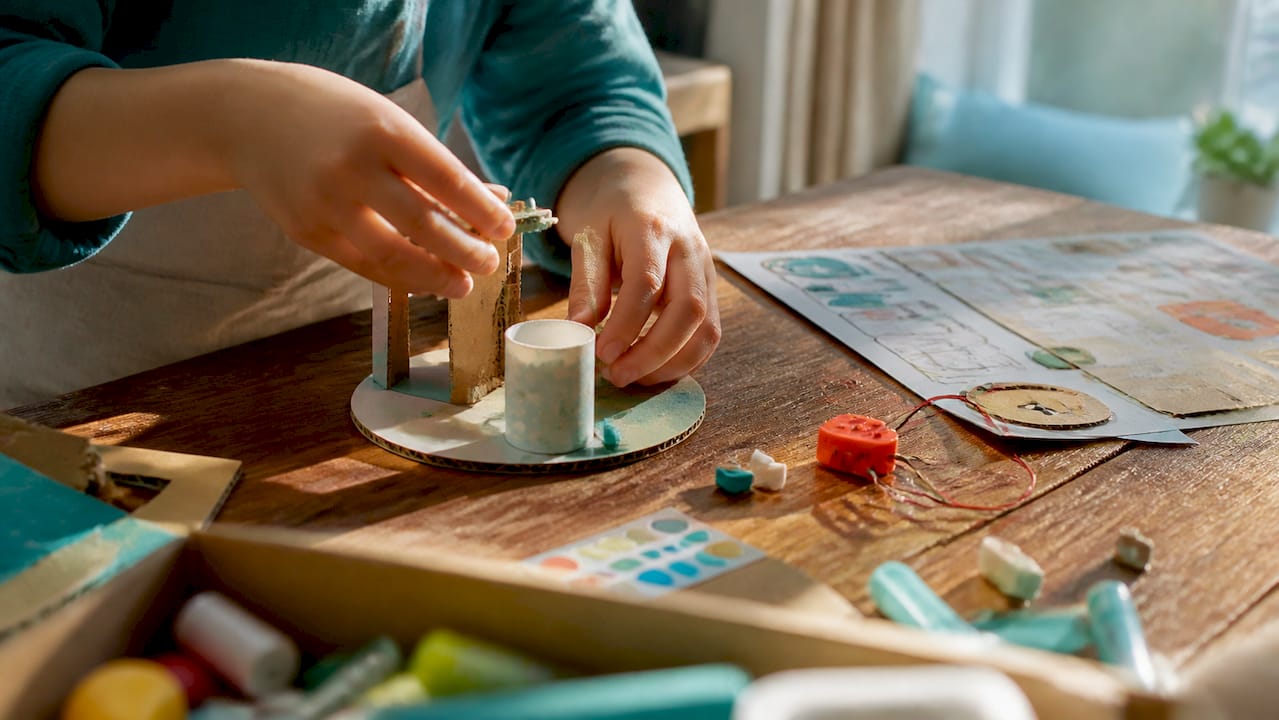
8 Practical Tips for Building Kid Confidence Today
Here are eight things you can start this week to help your child grow more confident, resilient, and ready to take on new challenges:
- Praise the effort, not the result (“You kept trying even when it got hard”).
- Give one small, real responsibility your child owns completely.
- Let your child struggle with something manageable before stepping in.
- Model your own self-talk out loud (“I made a mistake, so here’s how I’ll fix it”).
- Set one tiny “brave step” toward something that makes your child nervous.
- Ask “How did you figure that out?” instead of “Good job!”
- Tell a short story about a time you failed and what you learned.
- Read a feelings book together and name the emotions you both notice.
Pro Tip: Pick just one item from this list, write it on a sticky note, and put it somewhere you’ll see it every morning this week. One consistent action beats eight forgotten intentions.
Key Takeaways
Confidence is a skill built through repeated small experiences of trying, struggling, and succeeding, and parents are the most powerful architects of those experiences.
| Point | Details |
|---|---|
| Praise effort, not traits | Say “You kept trying” instead of “You’re so smart” to build a growth mindset. |
| Use brave practice | Break scary situations into the smallest possible step, rehearse it, then reflect afterward. |
| Allow managed struggle | Pause 60 seconds before helping so your child discovers “I can figure this out.” |
| Match strategies to age | Toddlers need real tasks; tweens need real decisions with real consequences. |
| Teamgeniussquad kits | Hands-on STEAM experiments give children mastery experiences that praise scripts can then reinforce. |
Table of Contents
- Why confidence matters more than you might think
- Tips for building kid confidence: 10 evidence-backed strategies
- How to praise effectively: scripts, mistakes, and what actually works
- Age-adapted actions: what confidence-building looks like at every stage
- When low confidence might signal something more serious
- The thing most parents get wrong about confidence
- Hands-on STEAM play gives kids a confidence edge
- Sources
Why confidence matters more than you might think
Healthy confidence is not the absence of worry. It is the belief that you can handle what comes next, built one small experience at a time. Psychology Today describes it plainly: true confidence means managing anxiety, not eliminating it, and it grows when children shift from seeking external approval toward developing intrinsic satisfaction.
That distinction changes everything about how you parent. A child who has been told she is “so smart” her whole life often freezes when something gets hard, because difficulty threatens the identity. A child who has been praised for persistence tries again, because effort is something she controls.
The Child Mind Institute notes that confidence is learned through experience and a secure emotional base. Children who feel genuinely loved for who they are, not just what they achieve, are more likely to take healthy risks. That security is the soil; the strategies below are the seeds.
Confidence also has downstream effects worth naming. Children who believe in their ability to figure things out tend to adjust more smoothly to new school environments, recover faster from social setbacks, and build stronger peer relationships. The Healthychildren consistently links healthy self-esteem to better academic engagement and emotional regulation across childhood.
A note on what confidence is not: It is not bravado, constant cheerfulness, or never needing help. Children with genuine confidence ask for help when they need it, because they trust that asking is a strength, not a weakness.
Tips for building kid confidence: 10 evidence-backed strategies
These strategies are drawn from clinical guidance by the Child Mind Institute, the Triple P Positive Parenting Program, Nemours KidsHealth, and HealthyChildren.org. Each one follows the same pattern: what to do, why it works, what to say, and one micro-step to try this week.
1. Praise effort, strategy, and persistence. Process-focused praise builds a growth mindset. When you say “You tried three different ways before you got it,” you teach your child that strategy and persistence are what produce results, not fixed talent. HealthyChildren.org recommends prioritizing this kind of praise over trait-based comments. Try this: Tonight at dinner, name one specific thing your child worked at today, not one thing they got right.
2. Model your own self-talk out loud. Children absorb how adults talk to themselves under pressure. Narrating your own problem-solving (“I burned the rice, so I’m going to try lower heat next time”) teaches realistic self-talk and normalizes imperfection. The Child Mind Institute specifically recommends narrating mistakes and fixes as a modeling tool. Try this: The next time something goes wrong in front of your child, say your recovery plan out loud before you fix it.
3. Allow age-appropriate failure and resist rescuing. When you step in too quickly, you remove the moment your child discovers “I can figure this out.” Gradual exposure to manageable frustration, without immediate rescue, builds that internal belief, according to Cincinnati Children’s. Try this: This week, pause for 60 seconds before helping. Watch what your child attempts on their own.
4. Give real autonomy and age-appropriate responsibilities. Packing their own bag, choosing what to wear, or preparing a simple snack tells children their contributions matter. Raising Children Network links age-appropriate autonomy directly to healthy confidence because children see themselves as capable when they do real things. Try this: Assign one task this week that is entirely your child’s to own, and let them do it imperfectly.
5. Use brave practice: small, incremental steps toward scary things. Brave practice means breaking an anxiety-provoking situation into the smallest possible step, then doing it repeatedly until it feels normal. Ordering their own food at a restaurant, saying hello to a neighbor, or raising a hand in class are all entry points. The Child Mind Institute calls this approach central to building social confidence in shy children.
The 3-step brave-practice plan:
- Pick the smallest step (not “make a new friend,” but “say hi to one classmate”).
- Rehearse it at home through role-play or storytelling.
- Do it, then reflect (“How did that feel? What surprised you?”).
6. Teach problem-solving and decision-making. Ask “What do you think you could try?” before offering a solution. This question positions your child as the capable one. Over time, it builds the habit of looking inward for answers rather than waiting to be rescued. Try this: The next time your child comes to you with a problem, ask that question first and wait through the silence.
7. Build social skills through low-stakes practice. Confidence in social situations grows through repetition, not pep talks. Role-playing conversations at home, reading books that explore emotions, and arranging small playdates before big group events all reduce the novelty that makes social situations feel overwhelming. Reading emotional books together is one of the most accessible ways to name feelings and rehearse social responses before they happen in real life.
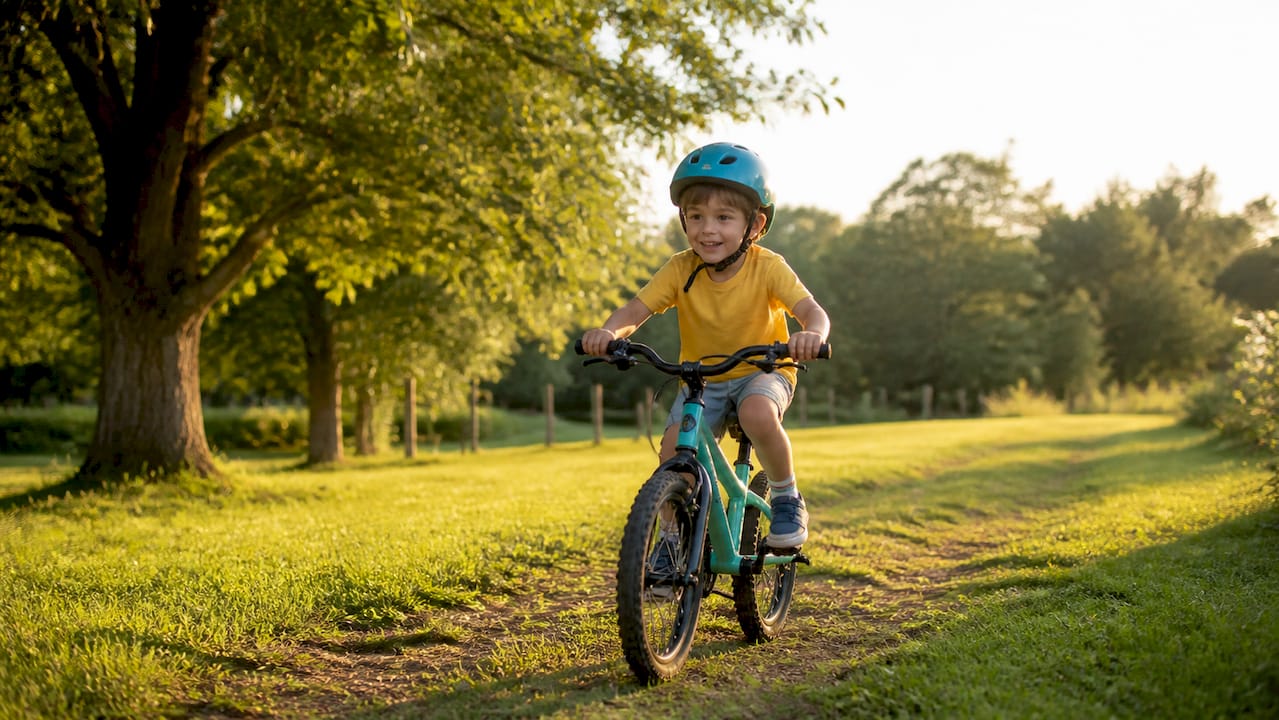
8. Incorporate physical activity. Movement builds self-efficacy in a direct, embodied way. A child who learns to ride a bike, swim a lap, or complete a yoga pose has physical proof that practice produces results. Nemours KidsHealth lists physical activity among its core recommendations for boosting self-esteem across childhood. Try this: Add one 15-minute active challenge this week that your child can visibly improve at.
9. Use storytelling and role-play. Stories let children rehearse courage at a safe distance. When you tell a story about a character who tried something scary and survived, or when you play-act a difficult conversation, you give your child a mental script to draw on. PBS KIDS Parents recommends naming strengths and telling growth stories as practical confidence-builders parents can use any day.

10. Create space for expressing emotions safely. A child who can name what they feel is better equipped to manage it. When you say “It makes sense that you’re nervous, and you can still try,” you validate the feeling without letting it become a stop sign. Confidence and emotional literacy grow together.
Pro Tip: Combine brave practice with physical activity by making the brave step something active: signing up for one swim lesson, joining one pickup game. The body’s experience of “I did something hard” transfers to social and academic confidence faster than most parents expect.
Statistic to keep in mind: Psychology Today notes that confidence is a skill developed through lived experience, and that shifting children from extrinsic rewards toward intrinsic satisfaction is what helps them persist through challenges long-term.
How to praise effectively: scripts, mistakes, and what actually works
The one-sentence rule: praise the process, the strategy, or the effort, never a fixed trait.
“You’re so smart” feels kind, but it teaches children that intelligence is something they either have or don’t. Process-focused questions and comments, according to HealthyChildren.org, increase persistence and reduce reliance on external validation.
Ready-to-use praise scripts
- Homework struggle: “You stayed with that problem even when it felt impossible. That’s exactly what learning looks like.”
- Sports miss: “You kept going after that mistake. That’s what coaches actually notice.”
- Social bravery: “You walked up and introduced yourself. That took real courage.”
- Learning from a mistake: “What do you think you’d do differently next time? That question is how people get better.”
- Creative work: “I can see how much thought you put into this. Tell me about how you decided to do it this way.”
- Trying something new: “You tried something you weren’t sure about. That’s the whole point.”
- Persistence after failure: “You didn’t quit. That’s a skill a lot of adults are still working on.”
- Problem-solving: “How did you figure that out? Walk me through it.”
Three praise mistakes that quietly backfire
- Praising everything equally. When every drawing is “amazing,” children learn to distrust the word. Reserve specific praise for specific effort.
- Praising the outcome, not the path. “You won!” focuses on luck and talent. “You practiced that play all week” focuses on what your child actually controlled.
- Rushing past the struggle. Saying “You’re fine, you’ve got this” before a child has had a chance to feel the difficulty skips the part where confidence actually forms.
Pro Tip: Specific praise feels more authentic than general praise because it proves you were paying attention. “You asked a really good question in class today” lands differently than “You did great today.” The specificity is the signal.
Age-adapted actions: what confidence-building looks like at every stage
Confidence-building strategies work best when they match where a child actually is developmentally. Here is what each stage looks like in practice.
Toddlers (ages 1–3)
At this age, confidence comes from doing, not being told. Let your toddler pour their own water (with a small pitcher), choose between two shirt options, or put their shoes away in the right spot. When they succeed at something small, name it: “You did that yourself.” Brave practice at this stage might be as simple as approaching an unfamiliar dog with you nearby, then reflecting: “You were nervous and you did it anyway.”
Preschool (ages 3–5)
Preschoolers thrive on identity-driven play, where they get to be the scientist, the chef, or the builder. Give them a real job during family routines: setting the table, watering a plant, feeding a pet. Brave practice here looks like speaking to a cashier, joining a new group at the playground, or trying a food they’ve never eaten. Praise script: “You talked to someone you didn’t know. That was brave.”
School-age (ages 6–11)
This is when academic and social comparisons begin, and confidence becomes more fragile. Autonomy looks like managing their own homework schedule, packing their own lunch, or choosing an extracurricular activity. Brave practice might mean raising a hand in class, trying out for a team, or apologizing to a friend. Encourage problem-solving by asking “What’s one thing you could try?” before offering a solution. Celebrating different kinds of minds matters especially here, when children who learn differently can start to feel left behind.
Tweens (ages 11–13)
Tweens need autonomy that feels real, not staged. Let them negotiate a reasonable bedtime, plan a family outing, or manage a small budget. Brave practice at this stage often involves social risk: texting a new friend first, speaking up when something feels unfair, or trying a new activity where they won’t immediately be good. Praise script: “You put yourself out there. That’s harder than most people admit.”
One-week micro-plan (adapt by age)
| Age Band | Daily Action | Time Needed | Expected Outcome |
|---|---|---|---|
| Toddlers (1–3) | Let child complete one self-care step alone | 5 minutes | Builds “I can do it” belief through physical success |
| Preschool (3–5) | Assign one household job; praise the effort after | 10 minutes | Connects responsibility to capability and belonging |
| School-age (6–11) | Ask “What could you try?” before solving their problem | 2 minutes | Builds internal problem-solving habit over time |
| Tweens (11–13) | Let child make one real decision with real consequences | Ongoing | Develops judgment and trust in their own thinking |
Quick activities by age band:
- Toddlers: Pouring, sorting, choosing between two options, simple cleanup tasks.
- Preschool: Role-play scenarios, simple science experiments, greeting a neighbor.
- School-age: Journaling about a hard moment, a STEAM home activity, joining one new club or class.
- Tweens: Planning a family meal, managing a small project, writing a letter to someone they admire.
When low confidence might signal something more serious
Most children go through phases of shyness or self-doubt, and that is normal. But some signs point to anxiety, depression, or other concerns that deserve professional attention.
Watch for these warning signs:
- Declining school performance over several weeks, especially when combined with avoidance of school or specific subjects. Next step: Talk to the teacher and contact your pediatrician.
- Persistent social withdrawal that goes beyond shyness, such as refusing all playdates or stopping contact with close friends. Next step: Consult a school counselor or child psychologist.
- Physical symptoms tied to anxiety, including frequent stomachaches or headaches before school, social events, or tests. Next step: Rule out medical causes with your pediatrician, then discuss anxiety screening.
- Negative self-talk that is extreme or repetitive (“I’m stupid,” “Nobody likes me,” “I can’t do anything right”). Next step: Seek an evaluation from a licensed child therapist.
- Rapid drop in functioning, such as a child who was previously social and engaged becoming withdrawn within a few weeks. Next step: Contact your pediatrician promptly; rapid changes warrant timely evaluation.
- Expressions of hopelessness or worthlessness, especially if they include any mention of not wanting to be here. Next step: Contact a mental health professional immediately. The 988 Suicide and Crisis Lifeline (call or text 988) is available 24/7.
- Avoidance of previously enjoyed activities for more than two weeks. Next step: Discuss with a school counselor or child psychologist.
- Excessive reassurance-seeking that does not decrease even after reassurance is given. Next step: This pattern often responds well to cognitive behavioral therapy (CBT); ask your pediatrician for a referral.
Safety note: If your child expresses any thoughts of self-harm or suicide, contact a mental health professional immediately or call/text 988. For a professional evaluation, Nemours KidsHealth recommends starting with your child’s pediatrician, who can refer you to a child psychologist or licensed therapist experienced in childhood anxiety and self-esteem.
Most low confidence responds well to the strategies in this article. When it does not, that is not a parenting failure. It is information, and professionals have effective tools to help.
The thing most parents get wrong about confidence
Here is an opinion that might push back on what you’ve read elsewhere: the biggest mistake parents make is treating confidence as a feeling to protect rather than a skill to practice.
When we shield children from disappointment, rush to fix their problems, or flood them with praise to counteract a bad day, we are managing our own discomfort more than we are building their capacity. The child who never experiences the discomfort of not knowing, of trying and failing, of being nervous and doing it anyway, never gets the chance to discover what they are actually made of.
What the research consistently shows, from the Child Mind Institute to HealthyChildren.org, is that confidence is built in the gap between “I’m not sure I can” and “I did it.” That gap requires discomfort. Your job as a parent is not to eliminate the gap. It is to stay close enough that your child feels safe crossing it.
The praise scripts and brave-practice steps in this article are not tricks. They are ways of structuring that gap so it is the right size: challenging enough to matter, small enough to cross. A child who crosses it once will cross it again. That repetition is what confidence actually is.
Hands-on STEAM play gives kids a confidence edge
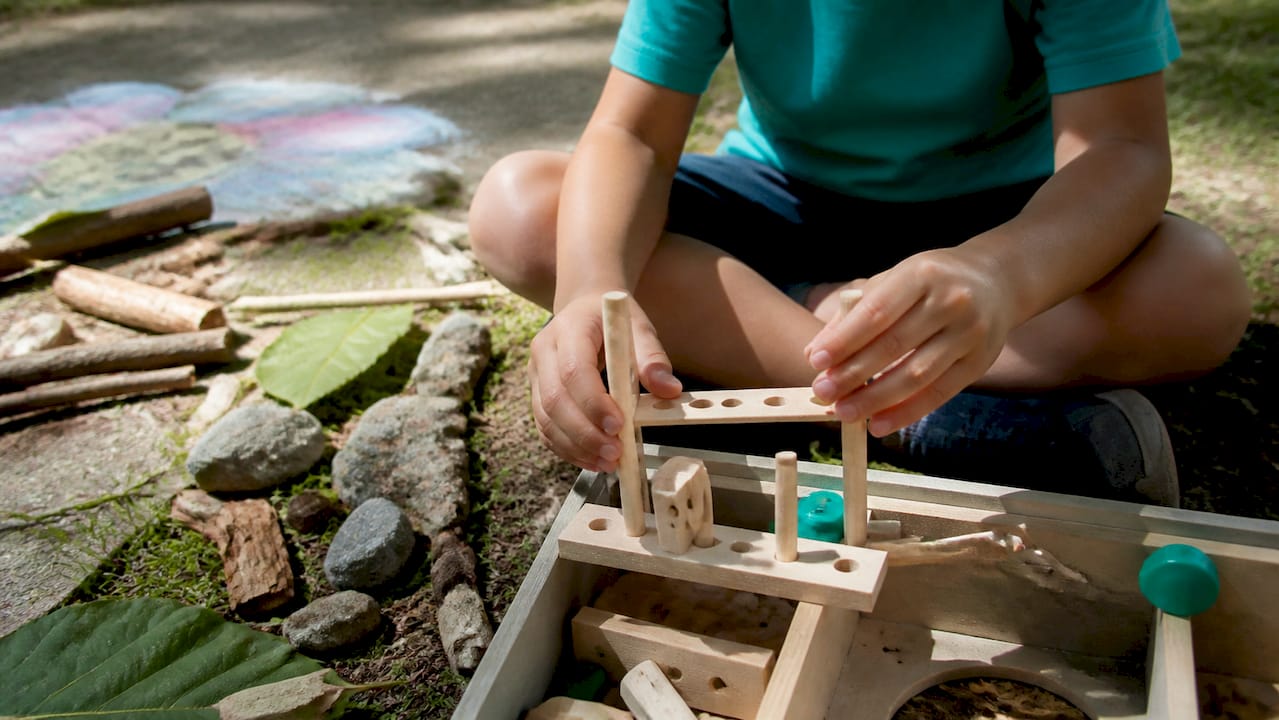
Screen-free, hands-on STEAM play gives children repeated mastery experiences, and mastery is the most direct path to genuine confidence. When a child builds something, tests a hypothesis, or solves a real problem with their hands, they accumulate physical proof that they are capable.

Teamgeniussquad was built on exactly this idea. Inspired by a real family journey with dyslexia and dysgraphia, each STEAM discovery kit uses the proprietary E³ Method (Engage, Encourage, Empower) to guide children ages 5–13 from curiosity to competence. A child who puts on a lab coat, conducts a real experiment with the Science Solar Energy Kit, and earns a certificate at the end has done something the praise scripts in this article can then point to: “You figured out how solar energy works. You did that.” The kit creates the experience; the language you use afterward makes it stick.
Teamgeniussquad’s lesson plans are free to download and designed to work alongside the kits or on their own, giving parents a ready-made structure for the kind of brave, low-stakes practice this article describes. This article is published by Teamgeniussquad, and the kits are what the brand sells, so consider that context when you read this. The confidence-building principles behind them, mastery, problem-solving, identity-driven play, are consistent with the clinical literature cited throughout.
Sources
These are the sources cited throughout this article, each worth bookmarking for a specific reason:
- Healthychildren
- How to raise confident children — Psychology Today
- Building Your Child’s Confidence, One Step at a Time — PBS KIDS Parents
- 9 Ways to Boost Your Child’s Self-Esteem — Nemours KidsHealth


Leave a comment
This site is protected by hCaptcha and the hCaptcha Privacy Policy and Terms of Service apply.