Why Celebrating Different Minds Builds Real Confidence
Every parent of a neurodivergent child has quietly wondered whether their child can truly thrive, not just survive, in learning environments built for one kind of mind. The good news is that science and experience are telling a different story. Children who think, learn, and process the world in unique ways bring extraordinary strengths to STEAM (Science, Technology, Engineering, Art, and Math) fields, and the environments that celebrate those differences are the ones that produce confident, resilient young innovators. This article walks you through what that celebration looks like in practice, what research reveals, and how you can champion your child’s brilliance starting today.
Table of Contents
- What does it mean to celebrate different minds?
- The science: How diverse minds help children thrive
- What works: Practical strategies to nurture every mind
- Common misconceptions and how to reframe them
- Our take: Rethinking success for different minds
- Discover tools to support your child’s unique STEAM journey
- Frequently asked questions
Key Takeaways
| Point | Details |
|---|---|
| Strength in diversity | Different minds bring unique talents that enhance learning for everyone. |
| Confidence through inclusion | Inclusive and flexible STEAM activities help neurodivergent kids build confidence. |
| Beyond comfort zones | Real growth comes from balancing support with authentic challenges, not just reassurance. |
| Practical strategies work | Simple changes like predictable routines and sensory supports can make a big difference. |
What does it mean to celebrate different minds?
Celebrating different minds is not a feel-good slogan. It is a genuine, research-informed commitment to recognizing that children think, learn, and create in ways that are as varied as fingerprints. For parents navigating the world with a neurodivergent child, it means moving beyond the question of “Why can’t my child just learn the way others do?” and asking instead, “What does my child’s unique mind make possible?”
Neurodiversity is the term used to describe the natural range of differences in human brain function and behavioral traits. It covers conditions including autism spectrum disorder, ADHD, dyslexia, dysgraphia, dyscalculia, and other forms of non-typical brain wiring. Rather than treating these differences as deficits requiring correction, a neurodiversity-affirming approach sees them as variations that carry real strengths, whether that’s exceptional visual-spatial thinking, deep pattern recognition, creative problem-solving, or intense focus on topics that spark a child’s passion.
In STEAM learning specifically, celebrating different minds means designing experiences that welcome every type of thinker. It means:
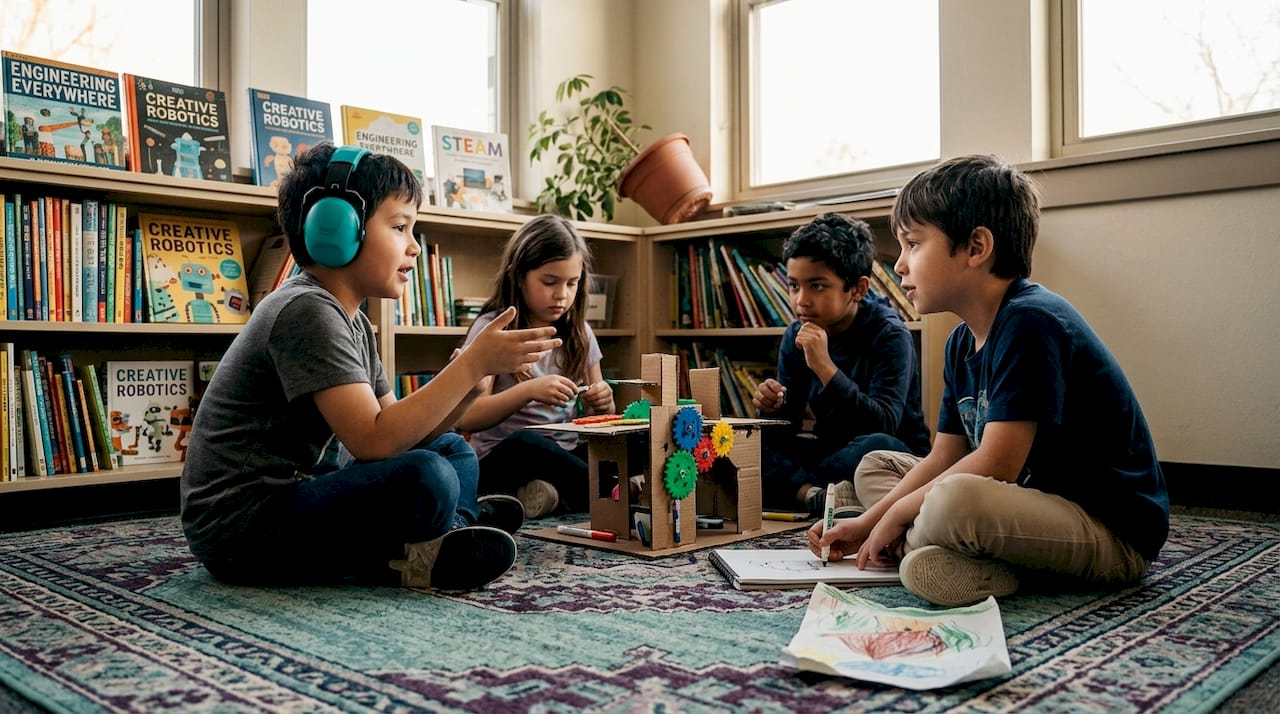
- Flexible teaching methods so children can engage through building, drawing, storytelling, or hands-on experimentation
- Emotional safety so children feel free to try, fail, and try again without shame
- Educator and parent preparation so the adults in a child’s life know how to adapt activities meaningfully
- Equitable access to materials, pacing, and participation formats that match each child’s needs
Inclusive STEM efforts co-develop accessible curricula and ensure neurodiverse learners are included equitably through adaptations and educator professional development. This is not about lowering the bar. It is about widening the door so more children can walk through it with confidence.
“When a child sees that their way of thinking is welcomed, not just tolerated, something remarkable happens. They start believing in themselves as learners and innovators.”
Fostering belief in oneself is the foundation of everything. Building self-awareness for families is an equally important step because when parents understand their own reactions and assumptions about learning, they become far more effective advocates for their children.
The science: How diverse minds help children thrive
With a clear definition in hand, let’s examine what research reveals about the positive impact of supporting different minds. The data is both sobering and encouraging, and it points parents toward a clear path forward.
One of the most consistent findings in recent research is that neurodivergent learners can experience higher levels of academic anxiety than their neurotypical peers. This is not because STEAM is inherently difficult for them. It is because many learning environments are designed without their emotional and sensory needs in mind. Academic anxiety levels are elevated in neurodivergent university students, which implies that confidence-building STEAM experiences must consider emotional and affective supports, not only content delivery.
| Factor | Neurotypical learners | Neurodivergent learners |
|---|---|---|
| Academic anxiety | Moderate | Often elevated |
| Strength-based engagement | Beneficial | Highly beneficial |
| Flexible participation | Helpful | Essential |
| Affective (emotional) support | Useful | Critical |
| Hands-on learning preference | Common | Frequently strong |
The important insight here is that the kind of support matters enormously. A strength-based approach means starting with what a child loves and does well, then building outward from there. A child who has an intense passion for how machines work may struggle to sit still for a lecture but will spend hours designing a circuit. A child who processes language differently may find it much easier to demonstrate understanding by building a model than by writing an essay.

📊 Key insight: When STEAM programs incorporate sensory-aware design, predictable routines, and flexible participation options, neurodivergent children not only engage more deeply but also demonstrate measurable gains in self-confidence and willingness to tackle new challenges.
Exploring STEM-STEAM books together as a family is one practical way to reinforce these strengths at home, giving children story-based windows into how real scientists and innovators think and persist.
Pro Tip: When a child masters a STEAM activity in their own way, celebrate the process out loud, not just the result. Say “I noticed how you figured that out by trying it three different ways.” That kind of specific, process-focused praise builds lasting confidence far more effectively than a general “great job.”
What works: Practical strategies to nurture every mind
Understanding the science is just the start. What about the everyday steps you can take to help your child feel included and confident? The research points to a clear set of strategies that parents can use at home and advocate for in formal and informal settings.
Flexible participation options along with predictability and sensory-aware supports are consistently recommended to help neurodivergent learners feel safe and build trust in STEAM settings. Here is what that looks like in practice:
- Let children show understanding in multiple ways. If your child struggles to write about an experiment, invite them to draw it, narrate it verbally, build a model, or record a short video explanation. The goal is demonstrating understanding, not performing it in one prescribed format.
- Build predictability into learning routines. Before starting any activity, briefly preview what will happen, in what order, and how long each step will take. This reduces anxiety and allows children to direct their energy toward learning instead of managing uncertainty.
- Use visual checklists and step-by-step guides. Many neurodivergent children process visual information more easily than spoken instructions. A simple checklist with pictures or short text allows children to work at their own pace and feel genuinely independent.
- Create sensory-aware spaces. Reduce unexpected loud sounds, flickering lights, or strong smells during STEAM activities. Offer fidget tools or quiet seating options when needed, without making them feel different for needing them.
- Allow and honor breaks. A child who steps away for five minutes to reset is not giving up. They are self-regulating, which is itself a sophisticated cognitive skill that will serve them throughout life.
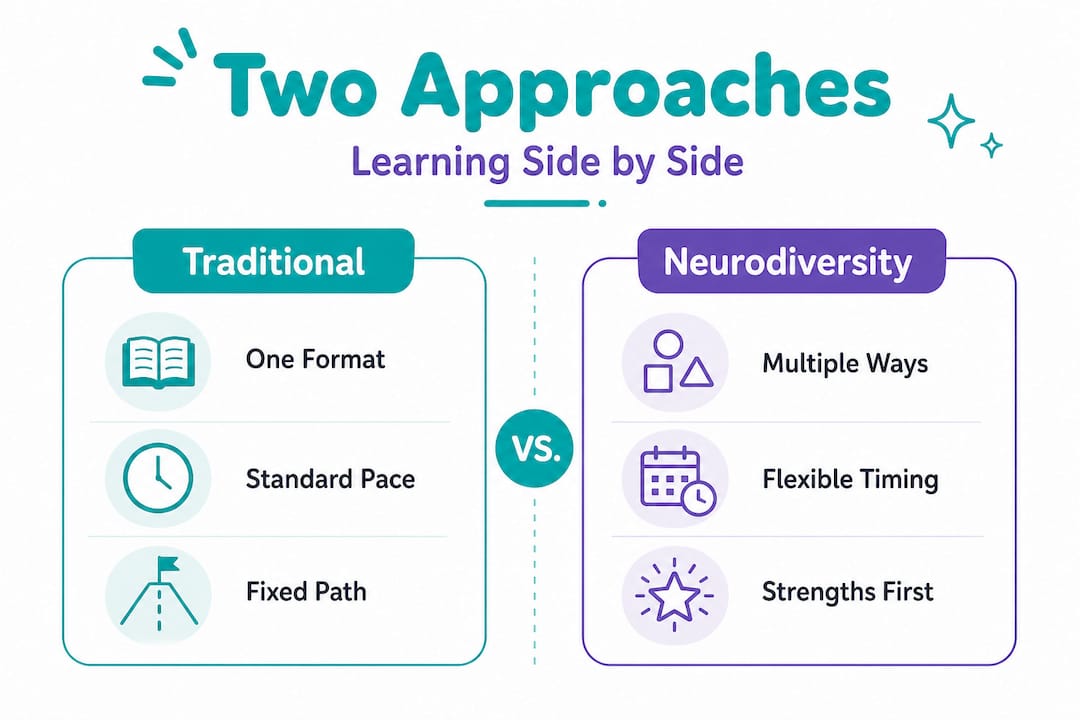
| Traditional approach | Neurodiversity-affirming approach |
|---|---|
| One format for all | Multiple ways to show learning |
| Sink or swim pacing | Self-paced with clear structure |
| Verbal instructions only | Visual guides and checklists |
| Performance under pressure | Predictable, low-threat environment |
| Focus on weaknesses | Build from strengths outward |
You can bring these strategies to life at home by incorporating hands-on tools designed with diverse learners in mind. STEM puzzles for diverse learners encourage problem-solving through tactile exploration, and pairing those activities with kids’ lab coats lets children physically step into the role of scientist, which is a powerful identity-building moment for children who may not yet see themselves that way.
Reading together also plays a meaningful role. Research on e-books and well-being shows that digital reading tools can support children’s learning and emotional development, particularly when texts are engaging and appropriately leveled.
Pro Tip: When approaching teachers or afterschool program coordinators, bring specific, positive language. Instead of “My child can’t do this,” try “My child thrives when given a visual checklist and a hands-on option. Can we try that first?” Specific, solutions-focused requests are far more likely to get implemented.
Common misconceptions and how to reframe them
To maximize your child’s experience, it’s important to clear up some common misunderstandings about what inclusion truly means. These myths can hold parents back from advocating effectively and can quietly limit a child’s opportunities.
Myth 1: Inclusion means lowering standards. Reality: Genuine inclusion raises the ceiling by making authentic challenge accessible to more children. When a child who thinks differently is given the right supports, they are not excused from the challenge; they are given a route to reach it. The goal is meaningful rigor, not easier work.
Myth 2: Neurodivergent children need only affirmation and encouragement. Reality: Affirmation alone is not enough, and well-designed research supports this clearly. Affective factors like anxiety can be elevated for neurodivergent learners, so STEAM experiences must reduce threat through predictability and clear expectations while still maintaining authentic challenge. Comfort and challenge are not opposites. They work together.
Myth 3: There is one best way for all children to learn. Reality: Flexible approaches benefit every learner in a room, not just the ones with identified learning differences. When you create a classroom or home environment that offers multiple pathways to understanding, every child gets a better shot at genuine success.
“Inclusion done well isn’t about making things easier. It’s about making growth possible for every child, on their own terms.”
Parents who understand these distinctions become powerful advocates. With the right framing, you can walk into any conversation with a teacher, administrator, or program coordinator and make a compelling, evidence-informed case for your child’s needs. The free eBook for parents available through Team Genius Squad is a great starting point for building that kind of confident, informed advocacy voice.
Our take: Rethinking success for different minds
Having addressed common misconceptions, here’s a perspective you won’t find in the typical advice column. Most resources for parents of neurodivergent children lean heavily toward creating comfort and safety, and those things absolutely matter. But there is a quieter, more powerful truth that often gets left out: children grow most when they are genuinely challenged, in an environment designed to support their particular kind of mind.
We see this clearly in the story that inspired Team Genius Squad. When a child with dyslexia and dysgraphia is placed in a hands-on STEAM environment where she can build, experiment, and role-play as a scientist, something shifts. She stops asking “Am I smart enough?” and starts asking “What happens if I try it this way?” That shift is not just emotional. It is cognitive. Curiosity is a learning accelerator, and the right environment turns it on.
The advice to simply “accept” different minds is necessary but not sufficient. Acceptance without opportunity is just tolerance. What neurodivergent children deserve is something far bigger: environments where their strengths are used, where they are handed real problems to solve and trusted to bring their unique perspective to the solution.
The future of innovation will reward exactly the kind of thinking that traditional schools have historically undervalued. Pattern recognition, deep focus on specific interests, unconventional problem-solving, visual-spatial creativity. These are not consolation prizes for children who learn differently. They are the skills that build the future.
Fostering self-belief means giving children the chance to experience real success, not manufactured praise, but genuine accomplishment that they can point to and say, “I did that.” That is what changes a child’s relationship with learning for life.
Discover tools to support your child’s unique STEAM journey
If you’re ready to bring these ideas to life at home, explore options designed with every type of learner in mind. Team Genius Squad’s hands-on discovery kits are built specifically to engage children through tactile, screen-free exploration guided by the E³ Method: Engage, Encourage, Empower. Every kit meets children where they are and walks them toward who they can become.
Whether your child is a budding builder, a natural storyteller, or a curious question-asker, there is a kit that fits their learning style and sparks their inner innovator. Browse the full range of STEAM experiment kits designed to make every child feel like a capable, confident scientist. For families ready to go deeper into hands-on discovery, the Electricity Lab Bundle offers an immersive engineering experience that turns real curiosity into real skill, one experiment at a time.
Frequently asked questions
What are some signs my child benefits from neurodiversity-friendly STEAM activities?
Signs include increased engagement, greater willingness to try new challenges, and visible confidence when activities are flexible and structured. Sensory-aware supports and predictable formats allow children to direct energy toward learning rather than managing anxiety.
Does celebrating different minds mean lowering expectations academically?
No. Inclusive approaches raise expectations through authentic challenge and strengths-based support, never through lowered standards. Emotional and affective supports reduce threat without reducing meaningful challenge, creating conditions where real growth happens.
How can I talk to my child’s teacher about supporting different ways of learning?
Share evidence for flexible participation, sensory supports, and strengths-based options, then suggest starting with STEAM activities or afterschool clubs as a low-stakes entry point. Neurodivergent-friendly STEM approaches provide a useful starting framework you can reference in conversations with educators.
Are there resources for helping siblings understand neurodiversity?
Yes. Kids’ books and family e-books about neurodiversity are a wonderful way to help siblings learn about and celebrate different minds together, building empathy and appreciation for the wide range of ways people think and learn.


Leave a comment
This site is protected by hCaptcha and the hCaptcha Privacy Policy and Terms of Service apply.