
What Is Creative Exploration? A Guide for Kids Ages 5–13
Creative exploration is defined as the intentional, playful process of investigating unfamiliar ideas and experiences without a fixed outcome in mind. In developmental psychology, this process is also called open-ended inquiry, and it sits at the heart of how children aged 5–13 build curiosity, resilience, and original thinking. Research confirms that exploration expands possibilities for novel ideas, driving iterative learning that no worksheet or scripted lesson can replicate. For teachers, parents, and caregivers, understanding what creative exploration actually is, and why it matters, is the first step toward raising confident young innovators.
What is creative exploration and why does it matter for children?
Creative exploration is the intentional and systematic process of investigating unknown domains to generate new knowledge by stepping beyond established boundaries into uncertain environments. The key word is “intentional.” This is not random play or free time with no purpose. It is purposeful curiosity, where a child asks “what happens if I mix these two things?” and then actually tries it.
For children aged 5–13, this process is the primary engine of cognitive growth. Play positively correlates with social, physical, and cognitive development outcomes. That means the child building a bridge out of cardboard tubes is not wasting time. She is training her brain to solve problems she has not yet encountered.
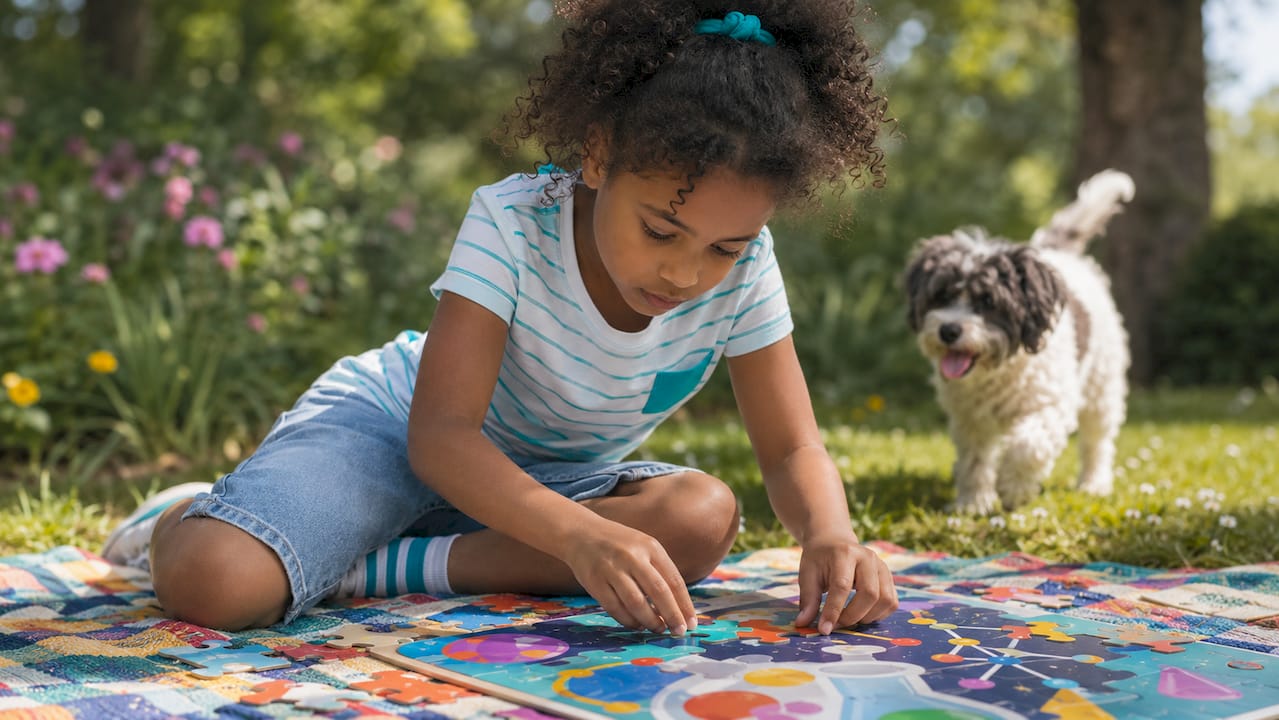
The standard educational term for this process is “exploratory learning,” and it appears across frameworks like project-based learning and inquiry-based instruction. Creative exploration is the informal, child-led version of those frameworks. It happens at the kitchen table, in the backyard, and in any classroom where a teacher hands a child materials and says, “See what you can figure out.”
How does creative exploration support children’s development?
Creative exploration reshapes the brain from the inside out. Creativity facilitates mental transformation by reorganizing memories, emotions, and ideas, making the process itself developmental regardless of what the child produces. A child who builds something that falls apart has still reorganized her thinking. That internal shift is the real outcome.
The cognitive benefits are specific and measurable across several domains:
- Problem-solving: Children who explore freely invent their own problems, which builds far stronger problem-solving skills than solving problems adults hand them.
- Divergent thinking: Optimal creative performance involves moving between diverse concepts and avoiding repetitive idea revisits. Children who explore widely develop this mental flexibility naturally.
- Resilience: Unfinished projects and failed experiments teach children that setbacks are part of the process, not proof of failure.
- Emotional regulation: The low-stakes nature of open-ended play gives children a safe space to experience frustration and work through it without adult intervention.
The emotional benefits are equally significant. Children who explore creatively develop a stronger sense of identity because they see themselves as capable of generating ideas. That self-perception is foundational for confidence in school and beyond.
Pro Tip: Set a “no-outcome” rule for at least one activity per week. Tell the child the goal is to see what happens, not to make something specific. This single shift removes performance pressure and opens the door to genuine exploration.
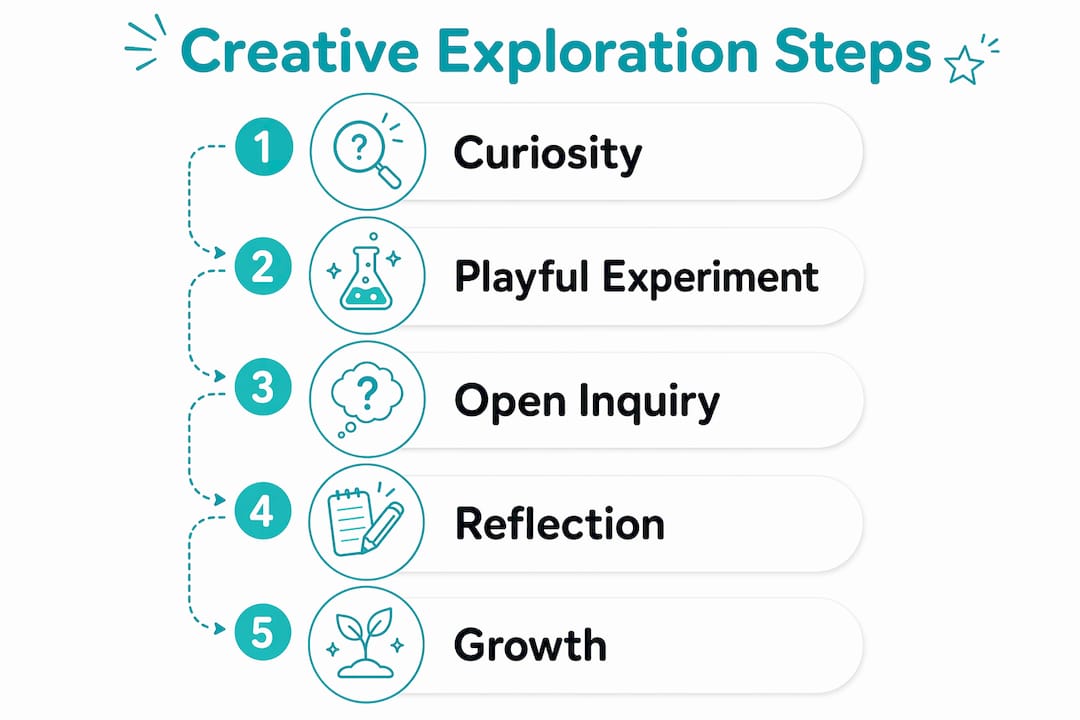
The brain also has a biological preference for this kind of learning. Tasks balancing suspense and challenge enable rapid, low-stakes iteration for learning without emotional stress. The optimal sweet spot sits between “too easy to bother” and “too hard to try.” Creative exploration, by its nature, lives in that sweet spot.
What are the biggest barriers to creative exploration?
Fear is the primary barrier. The fear of appearing incomplete or failing suppresses innovation by pushing children and adults alike to avoid rough, imperfect work. A child who worries about being laughed at will not take the creative risks that lead to real discovery.
Perfectionism compounds this problem. Viewing creativity as accomplishment rather than play is a direct enemy of exploration. When a child believes her drawing must look “right,” she stops experimenting with color and form. The creative space closes before it ever opens.
Adults often unintentionally reinforce these barriers. Offering instant solutions, correcting work too quickly, or praising only finished products all send the same message: the outcome matters more than the process. That message shuts down exploration faster than any distraction.
“The moment a child feels pressured, the creative space closes. Success in creative exploration is measured by engagement and curiosity, not project completion or quality. Judgment shuts down exploration instantly.” — What creative exploration actually is
Three practical shifts help adults remove these barriers:
- Celebrate the mess. Messy work is evidence of active thinking. Telling a child “I love how you tried so many different things” reinforces process over product.
- Model imperfection yourself. When adults try something new and fail visibly, children learn that failure is normal and safe.
- Delay feedback. Give children time to sit with unfinished work before offering any response. Silence communicates trust.
Recognizing these barriers is not just about protecting children’s feelings. Embracing imperfection preserves childlike imagination and directly supports the kind of creative risk-taking that leads to genuine innovation.
What activities best support creative exploration in children aged 5–13?
The most effective activities share three qualities: they are open-ended, low-pressure, and rich with materials that invite experimentation. The goal is never a finished product. The goal is sustained curiosity.
Here are five activity types that reliably spark creative exploration across the 5–13 age range:
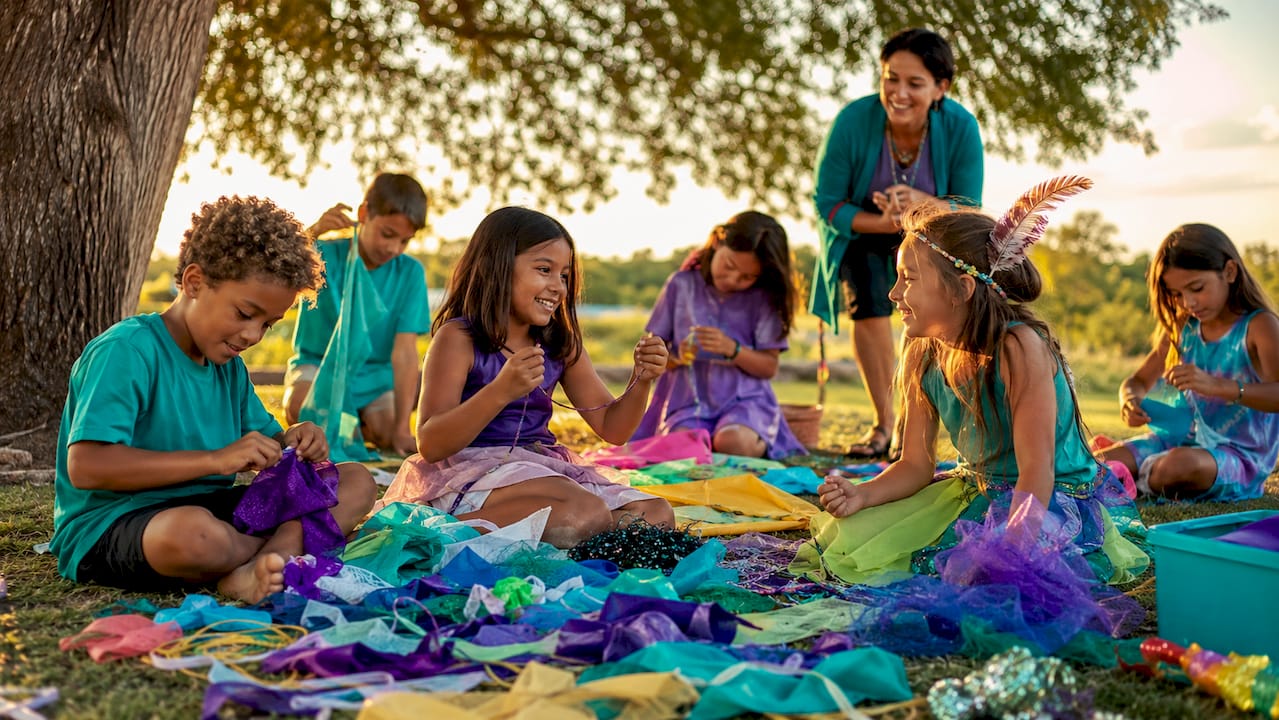
- Loose parts play. Give children a collection of unrelated objects, such as bottle caps, fabric scraps, cardboard tubes, and rubber bands, and ask them to build or create anything they want. The lack of instructions is the point. Children who explore through imaginative scientist play develop stronger creative problem-solving skills than those who follow step-by-step kits.
- Sensory science experiments. Mixing baking soda and vinegar, making slime, or testing which materials float are all forms of hands-on inquiry. These activities work because the result is genuinely unpredictable, which keeps curiosity alive.
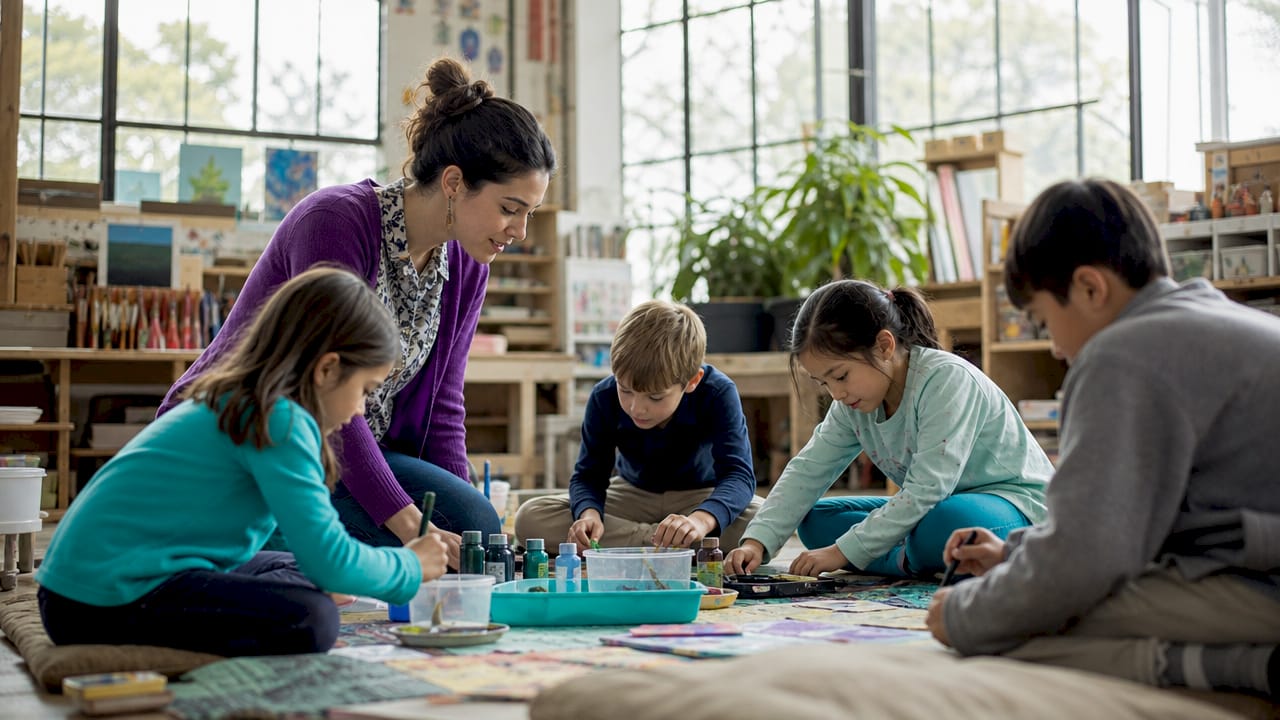
- Open-ended art. Provide paint, clay, or collage materials with no model to copy. Ask the child to represent a feeling, a sound, or a memory. This kind of prompt invites personal interpretation rather than imitation.
- Nature investigation. Send children outside with a magnifying glass and a notebook. Ask them to find three things they have never noticed before. The outdoor environment provides endless novelty, which is exactly what the exploring brain needs.
- Story invention. Give a child three random objects and ask her to invent a story that connects them. This activity builds narrative thinking, vocabulary, and the ability to make unexpected connections, which is a core creative thinking technique.
Pro Tip: Rotate materials regularly. Novelty is a natural motivator. When children encounter new textures, tools, or combinations, their brains automatically shift into exploratory mode.
Messiness and improbable connections in child-led exploration cultivate resilience and innovation skills. Over-directing or providing polished shortcuts removes the training ground for problem-solving. The adult’s role is to provide the environment, then step back.
For families interested in activities that support learning through play, the same principles apply across subjects. Curiosity is transferable. A child who explores freely in art will bring that same openness to language, math, and science.
How can teachers and caregivers integrate creative exploration into daily routines?
Creative exploration does not require a dedicated class period or a special room. It requires a shift in how adults frame time and materials. The table below outlines practical integration strategies for both school and home settings.
| Setting | Strategy | What it looks like in practice |
|---|---|---|
| Classroom | Embed open-ended prompts in existing lessons | Replace “draw the water cycle” with “show me what water does using any materials you choose” |
| Classroom | Build in unstructured maker time weekly | 20 minutes of free building with recycled materials, no instructions given |
| Home | Create a dedicated exploration space | A low shelf with art supplies, science tools, and loose parts always available |
| Home | Ask curiosity questions at dinner | “What’s something you noticed today that surprised you?” |
| Both | Celebrate process publicly | Display unfinished work and drafts alongside finished pieces |
The most important principle across all settings is that creative exploration is non-linear and goal-less. Teachers who grade exploration kill it. Parents who ask “but what is it supposed to be?” close the door. The adult’s language shapes the child’s relationship with uncertainty.
STEAM learning fosters curiosity most effectively when it is woven into daily life rather than treated as a special event. A child who explores creatively at home arrives at school already primed to ask questions, take risks, and persist through difficulty. That readiness is one of the strongest predictors of academic engagement.
For caregivers supporting children who learn differently, screen-free hands-on kits offer a structured entry point into exploration without the pressure of a traditional academic format. They provide the materials and the invitation, while leaving the direction entirely to the child.
Key takeaways
Creative exploration is the most direct path from curiosity to confidence in children aged 5–13, and adults who protect the process over the product give children the greatest creative advantage.
| Point | Details |
|---|---|
| Definition matters | Creative exploration is intentional, open-ended inquiry, not random play or free time. |
| Development is the outcome | The process reorganizes thinking and builds resilience, regardless of what the child produces. |
| Fear is the main barrier | Perfectionism and fear of judgment shut down exploration faster than any external distraction. |
| Activities need three qualities | Effective exploration activities are open-ended, low-pressure, and rich with varied materials. |
| Adults set the tone | Language and environment determine whether children feel safe enough to explore freely. |
Why I think we underestimate what children lose when we skip exploration
I have watched children light up the moment they realize no one is grading them. That shift in posture, from tense to open, happens within seconds. It tells you everything about how much pressure children carry into creative tasks without anyone intending to put it there.
The research on framing creativity as play rather than mastery is not surprising to anyone who has spent time with a five-year-old. Children are natural explorers. Adults train that out of them, slowly, through well-meaning corrections and outcome-focused praise.
What I find most compelling is that creative exploration is not a soft skill or an enrichment add-on. It is the mechanism by which children build the mental flexibility to solve problems that do not yet exist. That is not a small thing. That is the whole game.
The adults who get this right are not the ones with the best art supplies or the most elaborate lesson plans. They are the ones who can sit with uncertainty alongside a child and say, “I don’t know what this will become either. Let’s find out.” That posture, more than any curriculum, is what unlocks a child’s inner genius.
— Tita
Teamgeniussquad kits: hands-on tools for real exploration
Teamgeniussquad builds screen-free STEAM discovery kits designed specifically for children aged 5–13 who learn best by doing. Each kit is powered by the proprietary E³ Method, which moves children from Engage to Encourage to Empower through real experiments and scientist role play.

The kits are built around the same principles this article describes: low-pressure environments, open-ended investigation, and process over product. Children who use Teamgeniussquad kits do not just complete experiments. They step into the identity of a scientist, creator, and problem-solver. Browse the full range of hands-on experiment kits to find the right fit for the curious young learner in your life.
FAQ
What is the simplest definition of creative exploration?
Creative exploration is the intentional process of investigating unfamiliar ideas or materials without a fixed goal, where curiosity and engagement are the measures of success, not the quality of the outcome.
Why should teachers encourage creative exploration in the classroom?
Creative exploration builds problem-solving skills, resilience, and divergent thinking, all of which are stronger predictors of long-term academic engagement than rote memorization or structured tasks alone.
What age is best for starting creative exploration activities?
Children as young as 5 benefit from open-ended exploration, and the skills developed through this process compound across the 5–13 age range as cognitive complexity increases.
How is creative exploration different from free play?
Free play is unstructured and child-directed with no particular intent. Creative exploration is also child-directed but involves intentional investigation of materials, ideas, or problems, making it a purposeful form of discovery.
How do parents support creative exploration at home without formal training?
Parents support exploration most effectively by providing diverse materials, asking open curiosity questions, and resisting the urge to correct or redirect. The environment and the adult’s language do most of the work.

Leave a comment
This site is protected by hCaptcha and the hCaptcha Privacy Policy and Terms of Service apply.