

How STEAM Fosters Curiosity in Kids Ages 5–13
STEAM education is defined as an integrated learning approach that combines science, technology, engineering, arts, and mathematics to build curiosity through active, hands-on discovery. Unlike traditional instruction, where children receive information passively, STEAM invites them to ask questions, test ideas, and learn from what goes wrong. Research from 2026 shows the U.S. Army Corps of Engineers engaged over 2,000 students in South Korea through hands-on STEAM outreach, sparking real inquiries into structural stability and chemical reactions. That kind of wonder is not accidental. It is what happens when children are given the right conditions to explore. Understanding how STEAM fosters curiosity is the first step every parent and educator can take toward unlocking a child’s inner genius.
What specific elements of STEAM spark curiosity in children?
STEAM works because each of its five disciplines opens a different door to questioning. Science invites children to observe and wonder. Technology challenges them to build and solve. Engineering asks them to design, fail, and try again. Arts give them a language for expressing what they discover. Math gives structure to patterns they notice in the world around them. Together, these disciplines create a learning experience that feels less like school and more like play with a purpose.
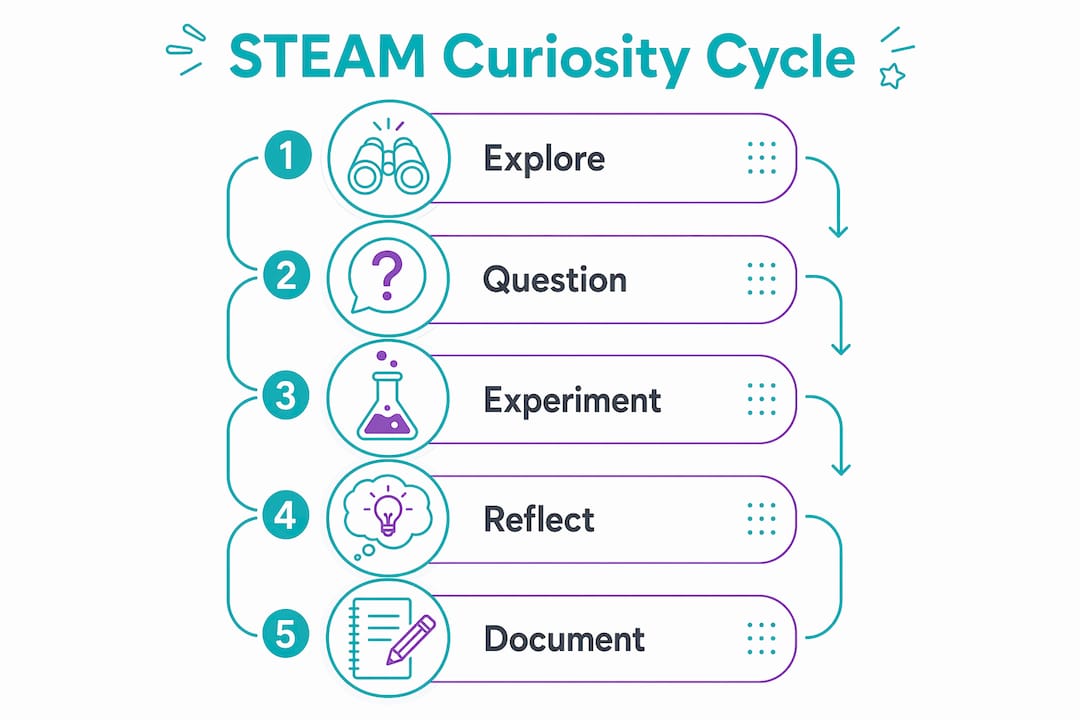
The design-test-redesign cycle is the engine behind this curiosity. STEAM activities for children aged 3–13 typically run 15–25 minutes and follow this iterative loop, which means children rarely feel stuck. When one approach fails, the cycle naturally prompts the next question: “What if I try it differently?” That question is the heartbeat of scientific thinking.
The arts component is often underestimated, but it plays a critical role in deepening engagement. When a child sketches their design before building it, or writes a story about their experiment, they process the experience at a deeper level. This is why STEAM literacy integration matters so much. Combining experiments with reading, writing, and reflection turns a single activity into a multi-layered learning moment.
- Science and engineering challenges invite trial and error, which builds tolerance for uncertainty.
- Arts integration deepens comprehension by connecting abstract concepts to personal expression.
- Math in context makes numbers meaningful, whether a child is measuring water levels or counting bridge supports.
- Technology tasks show children that tools are extensions of their own thinking.
- Open-ended prompts like “Can you make it stronger?” replace closed questions that shut down exploration.
Pro Tip: When introducing a STEAM activity, resist giving instructions first. Place the materials in front of the child and ask, “What do you notice?” That single question can generate 10 minutes of pure curiosity before you say another word.
How do hands-on activities build more curiosity than traditional instruction?
Traditional instruction delivers answers. STEAM activities generate questions. That difference is not subtle. It changes the entire relationship a child has with learning. When a child reads that water expands when frozen, they accept it. When they fill a container, seal it, and watch it crack in the freezer, they believe it, and they immediately want to know why.
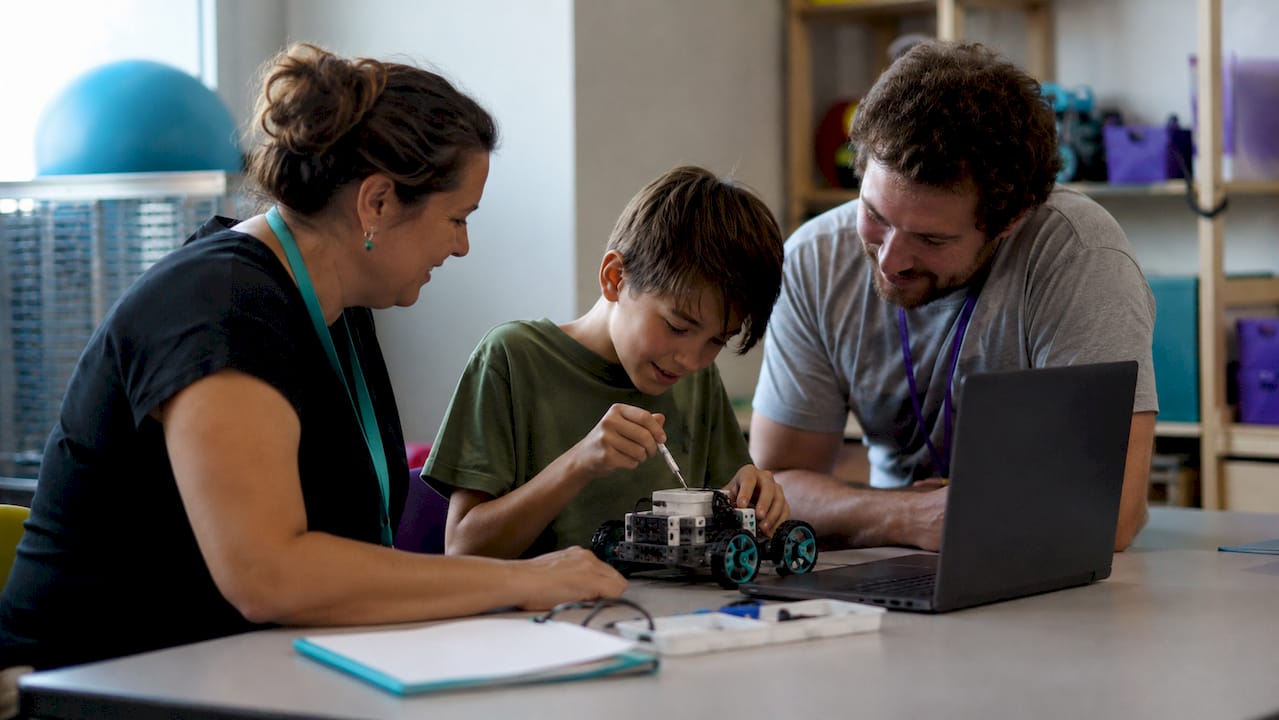
Failure in STEAM activities is a critical driver of engagement and real-world problem-solving. A leaking boat, a collapsing bridge, a circuit that will not close: these are not setbacks. They are the moments that make children lean in. Pre-assembled kits remove this friction, and in doing so, they remove the curiosity too. Raw materials and tactile resistance teach complex concepts intuitively and make learning memorable in a way that a completed model never can.
Here is a practical sequence you can follow to build this kind of curiosity-rich environment at home or in the classroom:
- Start with a challenge, not a lesson. Present a real problem: “Can you build a bridge strong enough to hold five pennies using only index cards?”
- Use household materials. Simple experiments require just 2–3 ingredients and take under 10 minutes, which lowers the barrier to entry and keeps momentum high.
- Let it fail. When a design collapses, celebrate it. Say, “Interesting! What do you think happened?” rather than jumping in to fix it.
- Ask extending questions. “What would happen if you used two layers?” or “Why do you think the tape didn’t hold?” keeps the inquiry alive.
- Step back. The adult’s role is to guide and extend learning rather than prescribe outcomes. Over-directing shuts down curiosity faster than any failed experiment.
Pro Tip: Keep a “wonder jar” in your home or classroom. When a child asks a question you cannot answer during an activity, write it on a slip of paper and drop it in. Revisit those questions together at the end of the week. Children love seeing their own curiosity collected and honored.
How can parents and educators create STEAM environments that sustain curiosity?
The most effective STEAM environments are not elaborate. They are intentional. Planning learning conditions that invite exploration matters far more than planning specific outcomes. When you set up a table with magnifying glasses, a bowl of water, and a few small objects, you are not running a lesson. You are issuing an invitation.

Observing and documenting a child’s interests is the foundation of this approach. Notice what questions they ask repeatedly. A child who keeps asking why the sky changes color at sunset is telling you exactly where their curiosity lives. Build STEAM activities around those natural entry points, and engagement follows almost automatically.
Here are practical strategies for building a curiosity-rich STEAM environment:
- Create a dedicated discovery space. It does not need to be large. A corner of a kitchen table with rotating materials works beautifully for children ages 5–13.
- Rotate materials weekly. Novelty drives curiosity. Swap in new textures, tools, or challenges every few days to keep the space feeling fresh.
- Display questions, not just answers. Post a child’s questions on the wall alongside their observations. This signals that wondering is as valuable as knowing.
- Incorporate reflection time. After every activity, ask three questions: “What did you notice? What surprised you? What do you want to try next?”
- Balance guidance with child-led discovery. Offer a starting point, then follow the child’s lead. The STEAM learner identity grows strongest when children feel ownership over their own exploration.
The table below shows how different environmental setups affect the quality of curiosity-driven learning:
| Environment type | Curiosity outcome |
|---|---|
| Structured lesson with fixed steps | Children complete tasks but rarely generate new questions |
| Open materials with no guidance | Children explore briefly but may lose focus without a starting prompt |
| Invitation-based setup with one open question | Children engage deeply and generate multiple follow-up questions |
| Child-interest-led activity with adult facilitation | Highest sustained curiosity and willingness to revisit the topic |
What role does documentation play in deepening curiosity through STEAM?
Documentation transforms a fun activity into a genuine scientific experience. When children record what they observe, what they tried, and what happened, they shift from passive participants to active analysts. That shift is where curiosity deepens into critical thinking.
A run log is one of the most effective tools for this. Keeping a run log during STEAM activities tracks performance across trials and encourages children to think analytically about their experiments. It does not need to be formal. A simple notebook where a child draws their design, notes what happened, and writes one question for next time is enough to build the habit.
Recording observations helps children transition from observers to analysts, which directly boosts critical thinking and sustains curiosity over time. This is especially powerful for children who struggle in traditional learning environments, where written output can feel like a barrier rather than a tool. When documentation is tied to something they built with their own hands, writing becomes meaningful.
The table below compares two documentation approaches and their impact on sustained curiosity:
| Documentation method | Best for | Impact on curiosity |
|---|---|---|
| Drawing and labeling designs | Ages 5–8, early writers | Builds visual thinking and pride in process |
| Written run log with trial notes | Ages 9–13, developing analysts | Deepens analytical thinking and extends inquiry |
| Photo journal with captions | All ages, visual learners | Connects observation to reflection accessibly |
| Question board | All ages | Keeps curiosity visible and community-driven |
The key insight here is that documentation is not about producing a product. It is about slowing down long enough to notice what happened, and that noticing is where the next great question is born. Play-based learning also shows that when children write in the context of something they care about, their motivation to communicate grows significantly.
Key takeaways
STEAM builds lasting curiosity by combining hands-on experimentation, open-ended challenges, and reflective documentation into a learning cycle that rewards questions more than answers.
| Point | Details |
|---|---|
| Design-test-redesign drives curiosity | Short iterative cycles keep children asking “what if?” rather than waiting for answers. |
| Failure is a feature, not a flaw | Activities that allow things to go wrong generate more engagement than pre-assembled kits. |
| Environment shapes exploration | Invitation-based setups with one open question produce the deepest and most sustained curiosity. |
| Documentation extends inquiry | Run logs and observation journals help children transition from doing to analyzing. |
| Adult role is to guide, not direct | Stepping back and asking extending questions preserves child-led discovery and builds confidence. |
Why curiosity is the curriculum, not the bonus
I have watched a lot of well-meaning adults accidentally turn a great STEAM moment into a mini-lecture. A child’s bridge collapses, and instead of waiting, the adult explains exactly why it failed and how to fix it. The child nods, rebuilds correctly, and learns almost nothing. The curiosity window closes the moment the answer arrives uninvited.
What I have come to believe, after years of watching children learn through discovery, is that curiosity is not something you add to a lesson. It is the lesson. The moment a child asks “but why did that happen?” is the moment real learning begins. Your job as a parent or educator is to protect that moment, not fill it.
The biggest pitfall I see is over-planning. Adults prepare elaborate setups because they want the activity to go well, and that impulse is understandable. But the best STEAM moments I have ever witnessed came from a child noticing something unexpected and being given the space to chase it. A spilled cup of water that creates a pattern. A failed structure that looks like something else entirely. These accidents are not problems. They are the curriculum.
Trust the process. Trust the child. And when you are not sure what to do next, ask a question instead of giving an answer. That single habit will do more for a child’s curiosity than any perfectly planned activity ever could. For children who learn differently, this approach is especially powerful. You can read more about inclusive STEAM approaches that honor every kind of mind.
— Tita
Bring curiosity to life with Teamgeniussquad
Teamgeniussquad was built on the belief that every child carries a scientist inside them, waiting for the right invitation to step forward. Inspired by a real family journey with dyslexia and dysgraphia, Teamgeniussquad’s screen-free discovery kits are designed to do exactly what this article describes: create the conditions for curiosity to thrive. Each kit follows the trademarked E³ Method (Engage, Encourage, Empower), guiding children ages 5–13 from first spark to confident discovery.

Whether you are a parent setting up a discovery corner at home or an educator looking for activities that meet children where they are, Teamgeniussquad has tools built for real exploration. From the STEM-STEAM Electricity Lab Bundle to curated STEAM books and puzzles, every product is designed to turn a child’s natural wonder into a lifelong love of learning. Give your child the experience of unlocking their inner genius.
FAQ
How does STEAM education build curiosity in young children?
STEAM builds curiosity by replacing passive instruction with hands-on challenges that invite children to ask questions, test ideas, and redesign when things go wrong. The design-test-redesign cycle keeps children engaged and generates new questions at every stage.
What are the best STEAM activities for kids ages 5–13?
Simple engineering challenges using household materials, such as building a bridge from index cards or creating a floating boat, are highly effective. These activities take under 25 minutes, require minimal supplies, and naturally prompt children to ask “what if I try it this way?”
How can parents support STEAM curiosity at home without a formal curriculum?
Parents can set up an invitation-based discovery space with rotating materials and one open-ended question to start. Observing a child’s natural interests and building activities around those questions is more effective than following a fixed program.
Why is failure important in STEAM learning?
Failure is the moment curiosity activates most strongly. When a design does not work, children naturally want to understand why, which drives deeper thinking and more creative problem-solving than a successful first attempt ever would.
How does documentation help children learn through STEAM?
Keeping a simple run log or observation journal helps children shift from doing to analyzing. Recording what happened, what surprised them, and what they want to try next builds critical thinking skills and keeps curiosity alive between sessions.


Leave a comment
This site is protected by hCaptcha and the hCaptcha Privacy Policy and Terms of Service apply.