K–8 30–60 Minute STEAM Activities With UDL Tips and Low Prep Kits
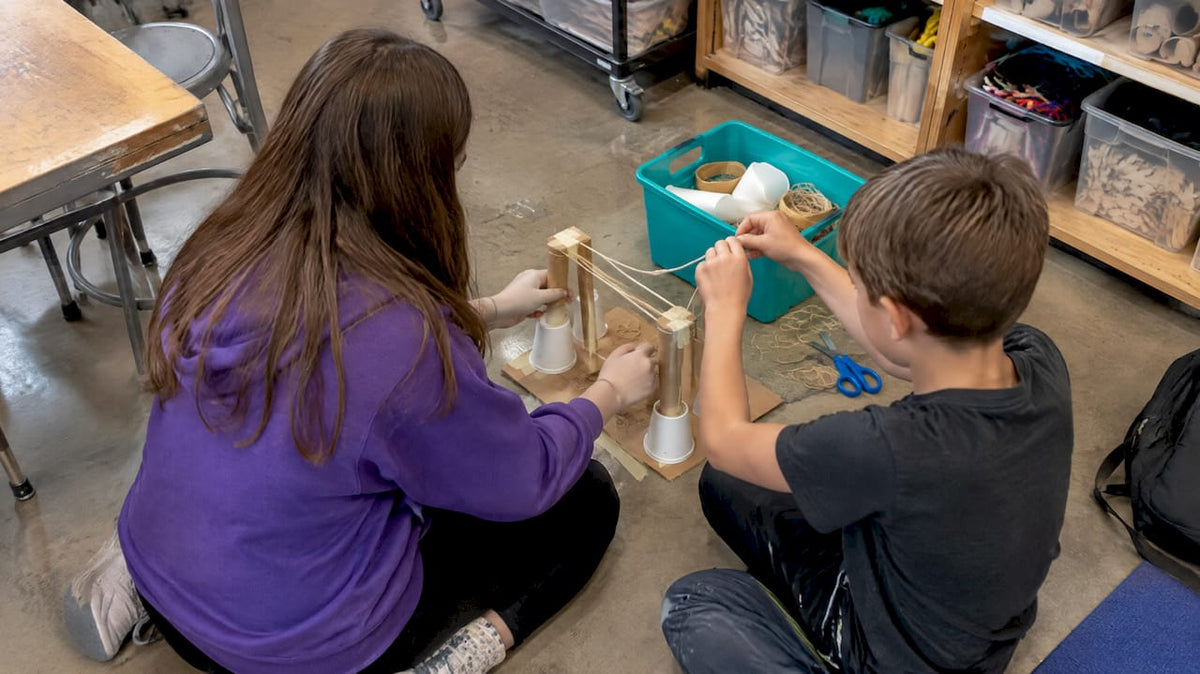
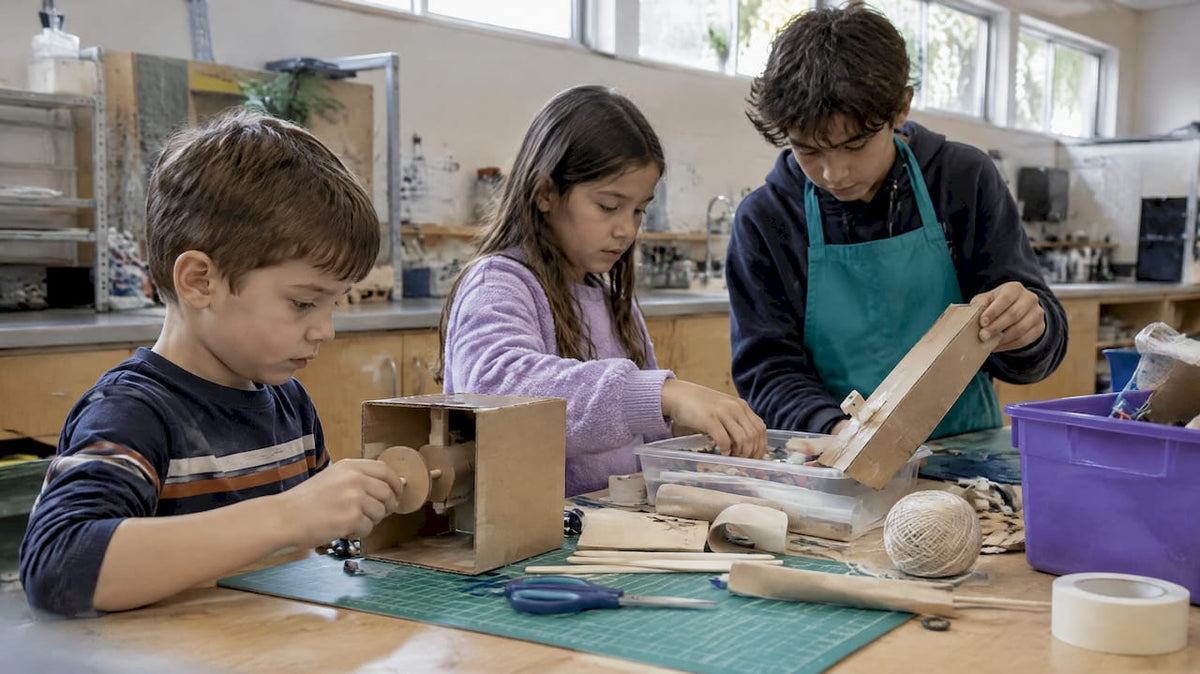
The fastest way to run meaningful K-8 STEAM is grade-banded, hands-on projects that fit a single class period and use low-cost materials. Marshmallow towers, cardboard rovers, and baking-soda volcanoes all work within 60 minutes and build real engineering habits through iteration, not lecture. Below, you’ll find three ready-to-run lessons, a grade-by-grade shortlist, and differentiation tips so every learner in your room gets a way in.
TL;DR:
- Activities should be grade-appropriate, with kindergarten to second grade focusing on sensory builds and older students handling more constraints and redesigns.
- Single-period lessons should divide time into launching, building/testing, and reflecting phases, with timing adjusted for shorter or longer classes.
- Using simple, common materials like cardboard, tape, and pasta allows for quick setup and scalability across grade levels with minimal prep.
- Mapping projects to NGSS standards involves defining problems, testing prototypes, and documenting iterative improvements, with rubrics based on these steps.
- Incorporating role-play, art, and literacy into STEAM projects enhances engagement and supports diverse learning styles without requiring extra supplies.
Table of Contents
- 1. Grade-banded classroom STEAM activities to try this week
- 2. How do you run a STEAM activity in one class period?
- 3. Mapping classroom projects to engineering design and NGSS
- 4. Three classroom-ready STEAM lessons you can run tomorrow
- 5. Why identity-driven, screen-free kits help diverse learners
- 6. Blending art and STEM to deepen creativity
- 7. Connecting STEAM projects to literacy and social studies
- 8. Building collaboration and teamwork into every build
- 9. Adding technology and digital tools to hands-on STEAM
- 10. A practical note on making room for STEAM
- How Team Genius Squad kits fit into a busy STEAM schedule
- FAQ
- Sources
1. Grade-banded classroom STEAM activities to try this week
Every grade band has a sweet spot where curiosity, fine motor skill, and attention span line up. Start with the activity that matches your students’ stamina, then adjust timing as you learn how your class works together.
For kindergarten through second grade, keep builds simple and sensory:
- Cup stacking towers: Stack paper cups into the tallest stable structure in 15 to 20 minutes, practicing balance and early engineering vocabulary.
- Shape sorting bridges: Build a bridge from blocks or cardboard strips that spans a gap, introducing load and span in 20 minutes.
- Nature texture collages: Combine leaves, twigs, and paper for an art-meets-science exploration of pattern and symmetry in 25 minutes.
Grades three through five can handle more testing and redesign:
- Marshmallow and spaghetti towers: Build the tallest freestanding tower using an 18-minute build window followed by a load test, directly aligned with NGSS engineering design practices.
- Balloon-powered cars: Test friction and propulsion with a balloon, straw, and cardboard chassis in about 30 minutes.
- Sound wave jars: Explore pitch and vibration with water-filled jars in 20 to 25 minutes, tying into basic physics standards.
Middle schoolers benefit from more constraints and iteration cycles:
- Cardboard rover builds: Design a rover that crosses a textured surface using rubber bands and recycled materials in 30 to 45 minutes.
- Chemical reaction mapping: Run a baking-soda volcano while charting variables like vinegar volume and reaction time in 20 to 40 minutes.
- Bridge load challenges: Build a popsicle-stick bridge rated for a target weight, then test and redesign in 45 minutes.
Swap marshmallows for mini erasers, spaghetti for dry pasta of any shape, and cardboard for cereal boxes when supplies run short. Every activity above scales up or down depending on how many redesign rounds you allow.
2. How do you run a STEAM activity in one class period?
A single-period STEAM lesson works best when you protect time for reflection, not just building. Break your period into three chunks and resist the urge to let building eat the whole clock.
- Launch (5 to 10 minutes): Pose the problem, show the materials, and set the constraint, such as a height or weight target.
- Build and test (18 to 35 minutes): Let students prototype, test, and redesign at least once; NASA JPL’s spaghetti tower challenge uses an 18-minute build followed by a 15-second load test, a useful template for timing your own.
- Reflect (5 to 10 minutes): Have students sketch their final design, note one change they’d make, and share one observation with a partner.
For shorter blocks, cut the build to 15 minutes and skip the second redesign round. For longer blocks, add a second testing round and a short gallery walk.
Keep a labeled bin of cardboard, tape, rubber bands, paper cups, and string so you’re never scrambling for materials. Check that scissors and tools match student age, clear walking paths before testing, and set a simple cleanup routine where each group owns one bin. A four-point rubric covering problem definition, prototype function, testing, and redesign evidence keeps grading fast and consistent.
Assign roles like builder, tester, recorder, and timekeeper, and rotate them each lesson so every student practices each job.
Pro Tip: Keep a visible countdown timer during build time. It cues transitions without you having to interrupt group work.
3. Mapping classroom projects to engineering design and NGSS
The engineering design process gives structure to what might otherwise feel like free play, and it scales naturally from kindergarten to eighth grade. Younger students define a problem, build one solution, and test it once. Middle schoolers are expected to go further: the NGSS middle school engineering standards call for defining constraints, developing multiple possible solutions, and using systematic testing to optimize a design.

A kindergarten artifact might be a single drawing of a bridge plus the bridge itself. A seventh grader’s artifact should include a labeled sketch, a data table from testing, and a written explanation of what changed between versions.
For performance tasks, write rubrics around four criteria: how clearly the problem was defined, whether the prototype functioned, how testing data was used, and what evidence shows redesign happened. This structure maps directly to NGSS engineering practices and takes only a few minutes to score per group.
Quick formative checks work well too: a thumbs-up scale on confidence before testing, a one-sentence exit ticket on what they’d change, or a quick partner explanation of their design choice.
4. Three classroom-ready STEAM lessons you can run tomorrow
These three lessons need only common supplies and fit inside a standard period.
- Spaghetti tower (K-8, 30 to 45 minutes): Give each group 20 sticks of dry spaghetti, one marshmallow, and tape. Set an 18-minute build timer, then run a 15-second stability test by gently shaking the table. Redesign once, retest, and have students sketch their final tower. For younger students, reduce the stick count and skip redesign; for UDL support, offer a visual step card and allow verbal instead of written reflection.
- Cardboard rubber-band rover (grades 3 to 8, 30 to 45 minutes): Build a small chassis from cardboard, attach wheels from bottle caps, and use a stretched rubber band for propulsion. Test distance traveled across a flat surface, then a textured one like a towel, and record results in a simple table. Extend the lesson by graphing distance against rubber-band stretch length for a quick data literacy tie-in.
- Baking-soda volcano (grades K-8, 20 to 40 minutes): Build a simple volcano shape around a small cup, then test how vinegar volume changes reaction size and duration. Chart variables like vinegar amount, reaction time, and foam height for older students, or keep it purely observational for younger ones. Pair the activity with a short read-aloud about volcanoes for a literacy connection, an approach supported by Edutopia’s guidance on elementary STEAM projects that notes simple hands-on builds integrate easily with existing curriculum.
5. Why identity-driven, screen-free kits help diverse learners
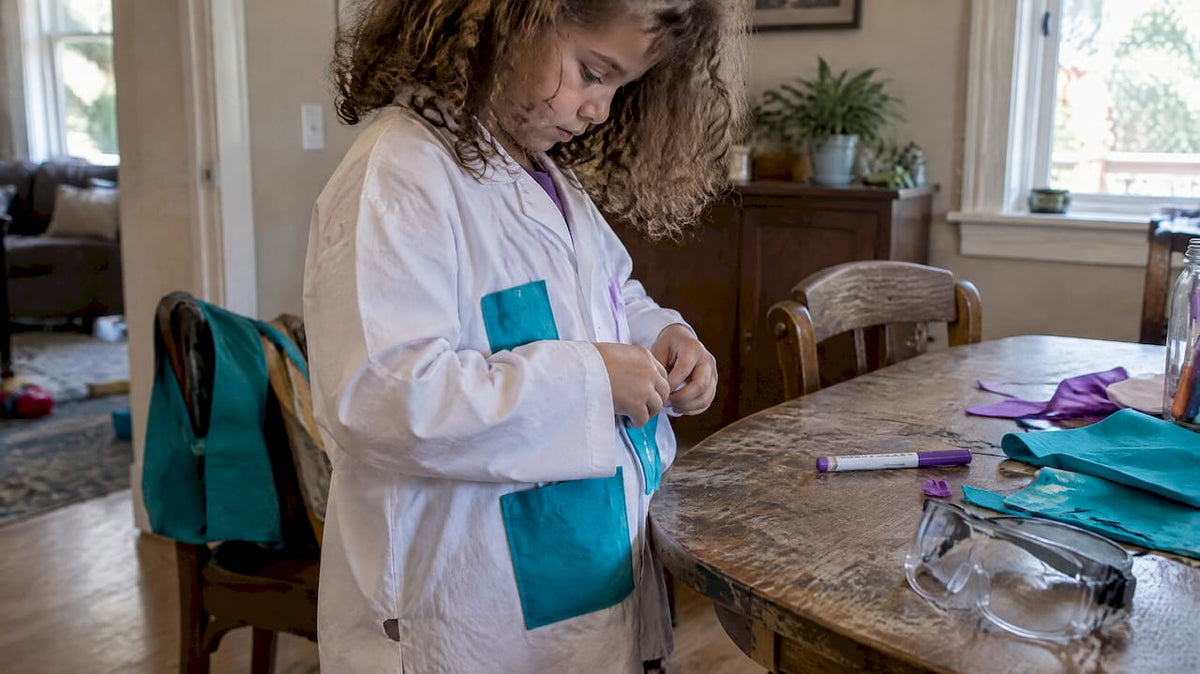
Kits built around role-play and identity give hesitant students a way into STEAM that a worksheet never will. When a child puts on a lab coat and takes on the identity of a scientist, the activity becomes about who they’re becoming, not just what they’re building. A proprietary method structures that progression deliberately, pairing hands-on experiments with literacy and reflection so struggling readers and writers still have a path to success.
A kit earns its place in your week when prep time is your biggest constraint: substitute-ready lessons, small-group interventions, and STEAM centers all benefit from a self-contained box that needs no scavenger hunt for materials.
6. Blending art and STEM to deepen creativity
Art is not decoration on top of STEM content, it is a tool for thinking through a problem. Asking students to sketch a design before building it forces them to clarify their idea, and asking them to illustrate their results afterward deepens understanding of what actually happened.
A rover build becomes richer when students design a mission patch for their vehicle or sketch the terrain it will cross before testing. A volcano lesson becomes a geography lesson when students draw a cross-section of a real volcano and label its parts. Color, pattern, and composition choices in these drawings are not busywork, they reveal whether a student understands the structure they’re representing.

Music and movement fit too: having students act out a chemical reaction with their bodies, or compose a short rhythm to represent a rover’s journey across a surface, gives kinesthetic learners another entry point. None of this requires special art supplies, colored pencils and plain paper cover most of it.
The payoff shows up in engagement as much as in content mastery. Students who resist a straight data table will often fill one in happily once they’ve drawn a picture of what the numbers represent.
7. Connecting STEAM projects to literacy and social studies
A STEAM lesson gains staying power when it ties into what students are already reading and discussing elsewhere in the day. Pairing a baking-soda volcano with a short nonfiction read-aloud about plate tectonics turns a single-day activity into a week-long thread across science and literacy. Our guide on storytelling and read-alouds in STEAM lessons walks through specific ways to frame an engineering challenge with a story first.
Social studies connects just as naturally. A bridge-building challenge pairs well with a unit on historic bridges or infrastructure in a specific region, and a rover build pairs with a unit on space exploration history or current missions. Students can write a short persuasive paragraph pitching their design to a fictional city council or space agency, folding writing practice directly into the engineering task.
Even vocabulary instruction benefits: terms like constraint, prototype, and iteration show up naturally in a STEAM lesson and stick better when students use them to describe their own work rather than memorize them from a list. A five-minute writing reflection at the end of a build, framed as an entry in an “engineer’s journal,” gives you a built-in literacy checkpoint without adding a separate assignment.
8. Building collaboration and teamwork into every build
Group work only teaches teamwork when roles and expectations are clear from the start. Assigning specific jobs, builder, tester, recorder, timekeeper, gives every student a concrete reason to contribute rather than defaulting to whoever talks loudest.
Shifting your own role from director to facilitator changes the dynamic significantly: asking probing questions and encouraging peer-to-peer discussion during prototyping tends to produce stronger student ownership of the final design than giving direct instructions. Instead of answering a stuck group’s question, try asking what they’ve already tried and what they think might happen next.
A quick UDL-friendly icebreaker before the build sets a collaborative tone, especially for classes still learning to work together. Gatherilla’s zero-prep inclusive icebreakers offer a useful starting point for building those norms before diving into a design challenge.
Rotating roles across lessons, rather than letting the same student always build while another always records, spreads skill-building evenly and prevents one role from becoming a rut. A short mid-build check-in, where each group states what’s working and what isn’t, also keeps quieter students included in the conversation rather than letting the loudest voice set the whole direction.
9. Adding technology and digital tools to hands-on STEAM
Technology works best in a STEAM lesson when it supports the hands-on build rather than replacing it. A tablet camera can capture before-and-after photos of a redesign, turning a fleeting moment into a lasting record students can reflect on later.
Simple data tools extend a lesson without adding screen time during the build itself: students can enter rover distance measurements into a shared spreadsheet after testing, then watch a bar graph update in real time. For classrooms with access to basic coding tools, a cardboard rover project extends naturally into a lesson on simple programmed movement using an inexpensive microcontroller kit.
Digital exit tickets, whether a simple form or a shared document, can collect a quick written reflection from every student in under two minutes, useful when class time for discussion runs short. None of this needs to replace the tactile core of the lesson. A volcano reaction or a spaghetti tower stays hands-on and screen-free during the build, with technology entering only at the edges, for recording, graphing, or reflecting.
10. A practical note on making room for STEAM
Most teachers don’t need another reason to want more hands-on learning in their classroom, they need thirty extra minutes that don’t exist. If that’s where you are, try picking just one lesson from this list and running it exactly as written before you adapt anything.
— Tita
How Team Genius Squad kits fit into a busy STEAM schedule
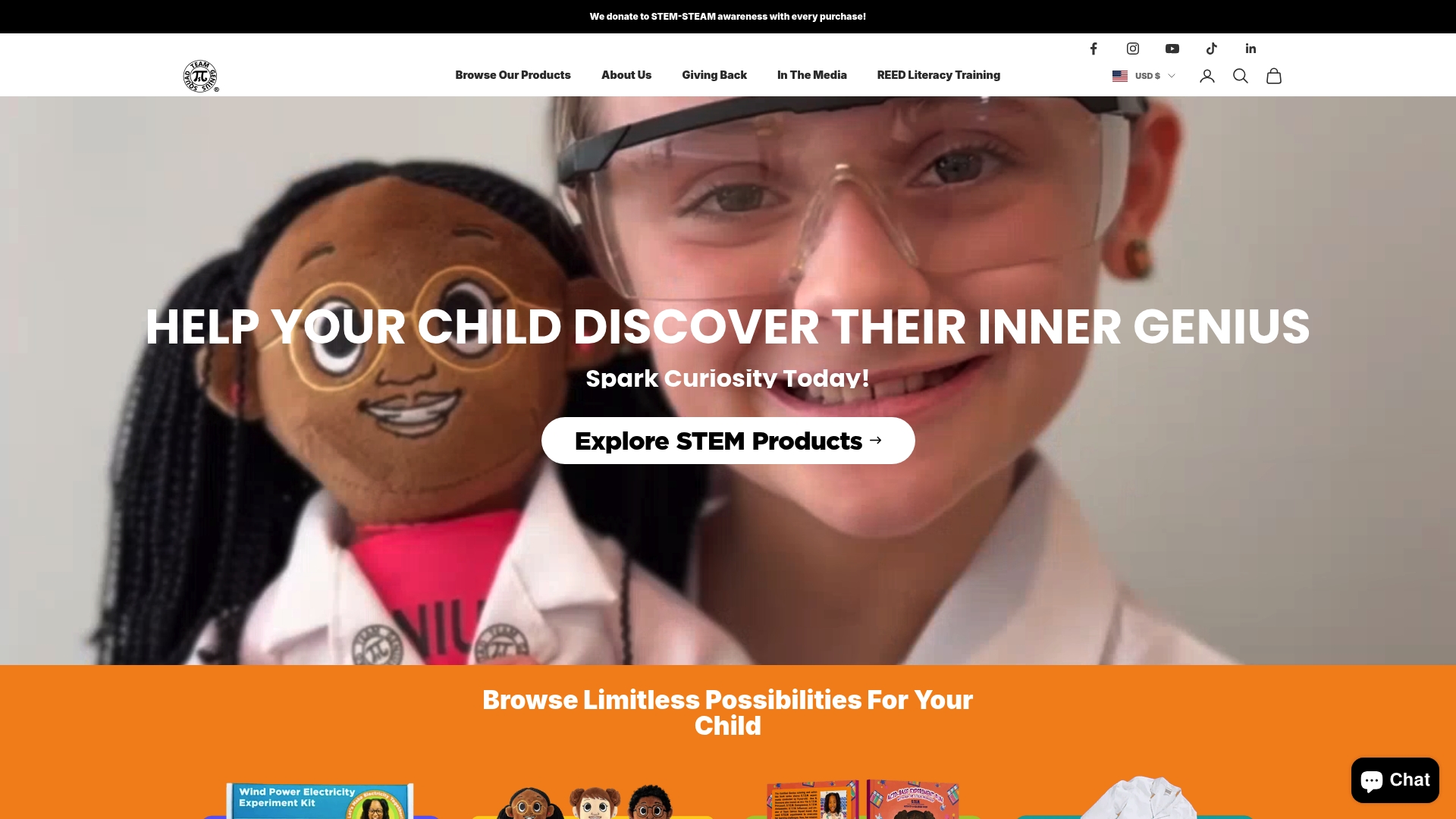
When prep time is the real obstacle, a self-contained kit solves a different problem than a DIY lesson does. Experiment Kits are built for ages 5 to 13, screen-free, and designed around a structured method so children move from guided exploration to independent confidence without a teacher building every material list from scratch.
- Classroom centers: A kit works as a self-directed station while you run small-group instruction elsewhere.
- Substitute days: Clear instructions and included materials mean a substitute can run the lesson without prep.
- Small-group intervention: Role-play elements like lab coats give reluctant learners a way into the activity that a worksheet doesn’t offer.
Browse the full Experiment Kits collection or see the complete shop all catalog of kits, books, and classroom bundles to find the right fit for your grade band.
FAQ
What is the best STEAM activity for a short class period?
Short builds like the marshmallow and spaghetti tower work well because they fit an 18-minute build and test cycle with minimal setup. Choose an activity with a single clear constraint, like height or distance, so students can finish a full design and test cycle without running out of time.
How do I align STEAM projects with NGSS standards?
Map each activity to the engineering design process stages: define the problem, build a prototype, test it, and redesign based on results. The NGSS middle school engineering standards specifically expect students to identify constraints and test multiple solutions, which a simple four-point rubric can capture.
What materials do I need for low-cost classroom STEAM?
Most activities run on cardboard, tape, rubber bands, paper cups, dry pasta, and string, all common classroom or household items. Keep a labeled supply bin stocked so you can run a new challenge without a shopping trip.
How does problem-based learning improve STEAM outcomes?
Problem-based learning that includes collaborative prototyping and teacher facilitation has shown measurable gains in student engagement in an IES study of fourth-grade classrooms. Structuring lessons around iterative testing, rather than a single correct answer, gives students more chances to practice and improve.
Are Team Genius Squad kits suitable for classroom use?
Experiment Kits are designed for ages 5 to 13 and work well as self-directed centers, substitute-day lessons, or small-group interventions. Each kit is screen-free and built around a structured method, pairing hands-on experiments with literacy and role-play elements.
Sources
- Next Generation Science Standards: MS ETS topics (NGSS)
- Building with spaghetti – Engineering Project (NASA JPL)
- IES study on problem-based learning in 4th grade
- STEAM projects for elementary students (Edutopia)

Leave a comment
This site is protected by hCaptcha and the hCaptcha Privacy Policy and Terms of Service apply.