20 Low Prep Science Experiments Teachers & Parents Can Run by Grade
Low prep science experiments are hands-on activities that use everyday household items and run in generally brief durations suitable for classroom or home settings, with little to no setup beyond gathering a few supplies. They let a busy teacher or parent turn ordinary afternoons into genuine discovery. Below, you’ll find a grade-organized list of 20 ready-to-run activities, a materials checklist that shortcuts your prep, and classroom tips that connect these quick demos to real learning goals.
TL;DR:
- Most low-prep experiments can be completed in under 30 minutes, with some like the naked egg needing 24 to 48 hours to see full results.
- Simple materials like vinegar, baking soda, food coloring, and water are sufficient, and pre-measured kits can drastically reduce setup time.
- Differentiation opportunities include guiding younger students with predictions and older students with data recording and variable testing.
- Many activities are adaptable for ongoing investigations by adding observation charts or family prompts, extending engagement beyond a single session.
- Classroom management tips involve rotating groups through stations, assigning roles, and linking activities to NGSS performance standards for meaningful learning.
Table of Contents
- What Are the Best Low Prep Science Experiments by Grade?
- Building Your Low Prep Materials Checklist
- Teacher Tips for NGSS Alignment and Classroom Flow
- How Much Time Should You Actually Plan For?
- Why Team Genius Squad Kits Make Low Prep Even Simpler
- A Teacher’s Note on Why the Quick Wins Matter Most
- Skip the Shopping List With Ready-to-Run Kits
- Where to Find Full Protocols and Printable Worksheets
- Sources
What Are the Best Low Prep Science Experiments by Grade?
Every young Genius deserves the chance to see themselves as a scientist, and that moment often starts with something as simple as vinegar meeting baking soda. The 20 activities below are organized by grade band and scientific concept so you can match the experiment to where your learners are without hunting through a dozen different sources.
K–1: Big reactions, simple wonder
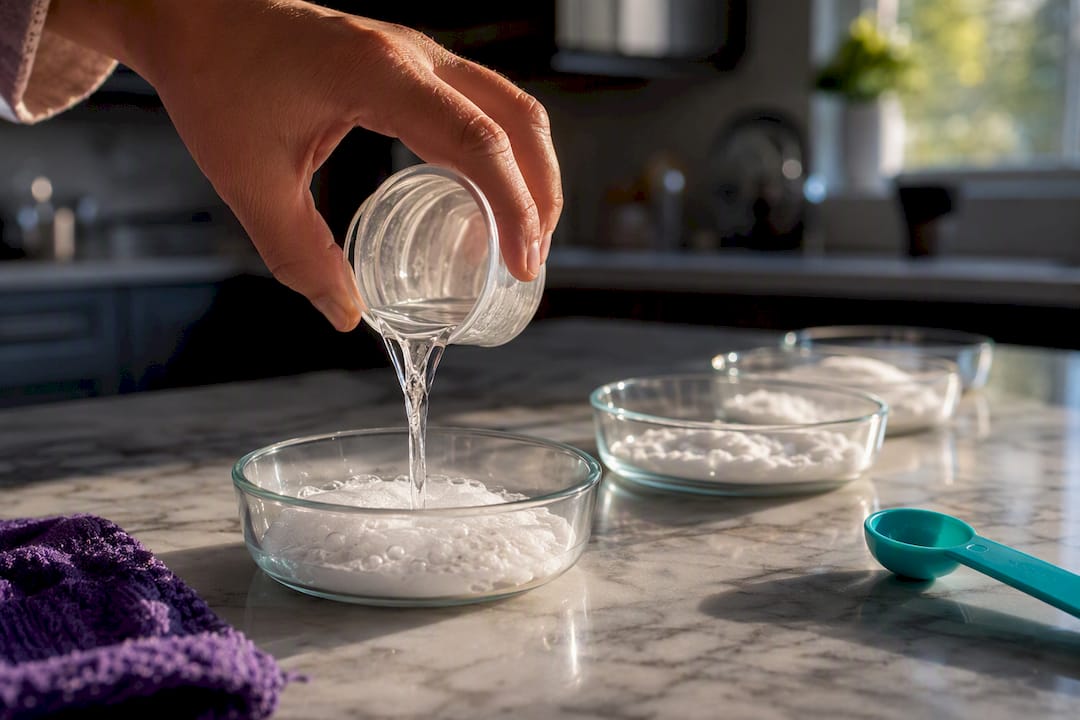
- Baking Soda Volcano (Chemistry, 15 minutes): Mix baking soda, vinegar, and dish soap in a cup for a foamy eruption. Learning goal: chemical reactions produce gas and heat. Steps: fill a cup with baking soda, add a squirt of dish soap, then pour in vinegar and watch it erupt.
- Dancing Raisins (Chemistry, 15–20 minutes): Drop raisins into a glass of clear soda and watch them bob up and down as carbon dioxide bubbles cling to them, a timing pattern confirmed by the Exploratorium’s Science Snacks collection. Learning goal: gas bubbles create buoyancy. Steps: fill a glass with soda, drop in raisins, observe for five minutes.
- Rainbow Milk Explosion (Chemistry, 10 minutes): Add drops of food coloring to a plate of milk, then touch a cotton swab dipped in dish soap to the surface. Learning goal: soap molecules break surface tension. Steps: pour milk on a plate, add color drops, touch with soapy swab.
- Balloon Rocket Race (Physics, 20 minutes): Thread a straw on a string, tape it to an inflated balloon, then let it fly. Learning goal: air pressure creates thrust. Steps: string the straw, tape the balloon, release and measure how far it travels.
- Sink or Float Sort (Physics, 15 minutes): Gather small objects and predict, then test, whether each sinks or floats in a bowl of water. Learning goal: density determines buoyancy. Steps: sort objects into guess piles, test one at a time, record results.
- Cloud in a Jar (Earth Science, 15 minutes): Spray hairspray into a jar with warm water and a lid, then watch a small cloud form, an approach NOAA lists among its quick classroom demonstrations. Learning goal: condensation forms clouds. Steps: add warm water to a jar, spray briefly, seal, and observe.
- Ice Excavation (Earth Science, ongoing overnight plus 20 minutes to explore): Freeze small toys in a container of water overnight, then give kids salt, droppers, and warm water to melt them out the next day. Learning goal: salt lowers the freezing point of water. Steps: freeze overnight, provide warm water and salt, dig and observe melting speed.
2–3: Building explanations, not just reactions
- Walking Water (Chemistry, ongoing, 2–3 hours to overnight): Set up cups of colored water connected by paper towels and watch color travel between them, an activity best framed as an ongoing investigation since results build gradually, per ScienceBuddies’ walking water protocol. Learning goal: capillary action moves liquid against gravity. Steps: alternate empty and full cups, fold paper towels between them, check every hour.
- Naked Egg (Vinegar Dissolves Shell) (Chemistry, ongoing 24–48 hours): Submerge a raw egg in vinegar and watch the shell dissolve, leaving a rubbery membrane. Learning goal: acid reacts with calcium carbonate. Steps: place egg in a jar of vinegar, check daily, gently rinse when the shell is gone.
- Static Electricity Butterfly (Physics, 15 minutes): Rub a balloon on hair, then hold it near a tissue-paper butterfly to make it flutter without touching it. Learning goal: static charge attracts light objects. Steps: cut a paper butterfly, charge the balloon, hold it close and observe.
- Marble Roller Coaster (Engineering, 30 minutes): Tape foam pipe insulation or cardboard tubes to a wall in loops and hills, then race marbles through. Learning goal: gravity and friction affect speed. Steps: build a track, test with a marble, adjust the slope and rerun.
- Paper Bridge Challenge (Engineering, 30 minutes): Fold index cards into different shapes and test how many pennies each can hold before collapsing. Learning goal: shape affects structural strength. Steps: fold three card designs, load each with pennies, compare results.
- Mold Growth Observation (Biology, ongoing 5–7 days): Place a piece of bread in a sealed bag with a few drops of water and check daily for changes. Learning goal: living organisms need moisture and time to grow. Steps: dampen bread, seal in a bag, observe and sketch daily.
- Celery in Colored Water (Biology, ongoing 24 hours): Stand celery stalks in cups of dyed water and watch the color travel up through the leaves. Learning goal: plants transport water through vascular tissue. Steps: cut celery stalks, place in colored water, check the next day.
4–5: Testing variables, recording data
- Lava Lamp (Chemistry, 15 minutes): Combine oil, water, food coloring, and an antacid tablet in a clear bottle for a bubbling, colorful reaction, a classic activity ScienceBuddies catalogs among its under-an-hour projects. Learning goal: density differences and gas production create motion. Steps: fill a bottle with oil and colored water, drop in a tablet piece, observe.
- Homemade Compass (Physics, 20 minutes): Magnetize a sewing needle by rubbing it against a magnet, then float it on a small piece of foam in water. Learning goal: magnetized metal aligns with Earth’s magnetic field. Steps: magnetize the needle, place on foam, float in a bowl, watch it turn.
- Bathymetry Mapping in a Box (Earth Science, 25 minutes): Hide objects under sand or clay in a shoebox, then use a pencil to “probe” depth at grid points and chart the results, an approach adapted from NOAA’s hands-on ocean science activities. Learning goal: scientists map unseen terrain using indirect measurement. Steps: hide objects, probe at marked points, plot depths on graph paper.
- Balloon Car Speed Test (Engineering, 30 minutes): Build a simple car from a bottle cap, straws, and wheels, then power it with a balloon and measure distance across trials. Learning goal: stored air pressure converts to motion energy. Steps: assemble the car, inflate the balloon, release and measure three runs.
- Fossil Imprint Modeling (Earth Science, up to 60 minutes): Press shells or leaves into clay, then pour plaster of Paris to create a cast once the imprint sets. Learning goal: fossils form when sediment preserves an organism’s shape. Steps: press object into clay, remove, pour plaster, let cure.
- Seed Germination Race (Biology, ongoing 5–10 days): Sprout bean seeds in clear cups against the side of damp paper towels so roots are visible daily. Learning goal: seeds need water, warmth, and time to germinate. Steps: line a cup with damp towel, tuck seeds against the glass, water and observe daily.
Prepackaged kits are available for teachers or parents who’d rather skip the shopping list entirely and jump straight to the experiment.
Building Your Low Prep Materials Checklist
A well-stocked supply bin turns any of the 20 experiments above into a five-minute setup. Keep these staples on hand, since most low-prep activities lean on basic kitchen and craft items rather than anything specialized:
- Baking soda, vinegar, and dish soap
- Food coloring and liquid watercolors
- Cornstarch, balloons, and plastic cups
- Straws, tape, string, and paper towels
- Clay, plaster of Paris, and small magnets
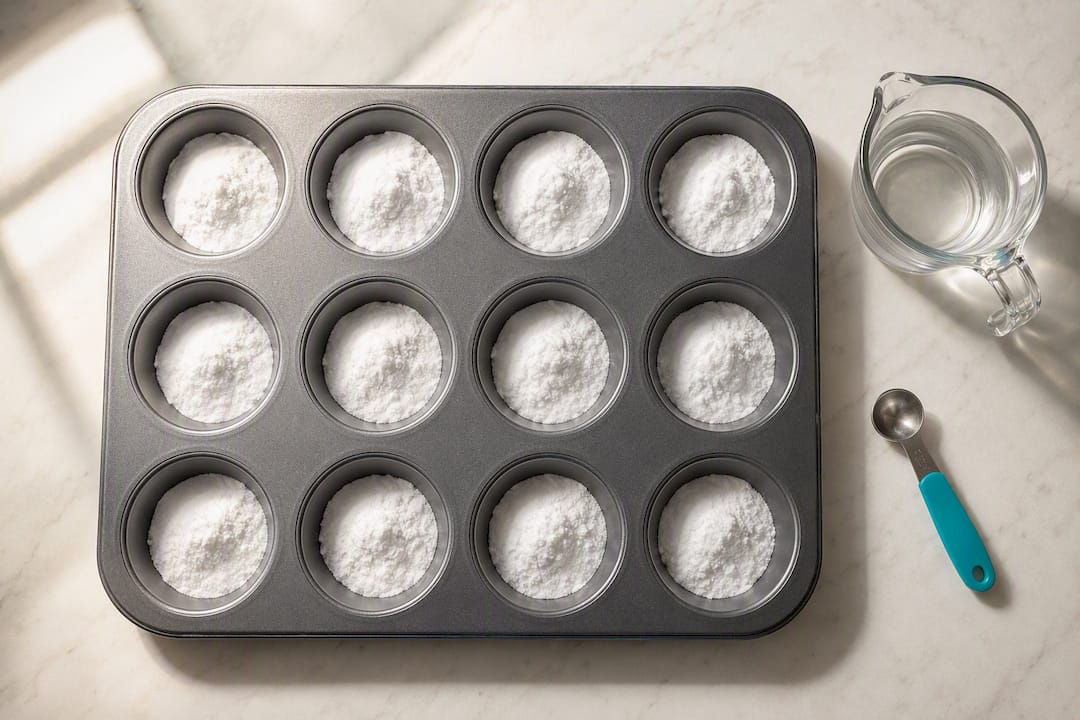
Dollar stores and PTA supply closets are reliable, low-cost sources for nearly everything on that list, and buying food coloring and balloons in bulk keeps per-activity cost near pennies. Pre-portion ingredients into muffin tins or small zip bags before class starts, and rotate small groups through 3–4 stations instead of prepping 25 individual kits.
Pro Tip: Fill a muffin tin with pre-measured baking soda the night before, and vinegar becomes the only thing you pour during class. That single swap can cut station setup time in half.
Teacher Tips for NGSS Alignment and Classroom Flow
The difference between a fun demo and a real science lesson is the question you ask before and after it. Instead of announcing what will happen, ask “What do you think will happen, and why?” then follow up with “What evidence did you see that supports your idea?” You don’t need a science degree to guide this. PBS Parents notes that the adult’s job is to be a curious guide, not an expert with all the answers.
A few classroom management moves make these activities run smoother with 20 or more kids:
- Assign rotating roles: materials manager, recorder, and reporter, so every child has a job.
- Cluster desks into stations and rotate groups every 10 to 15 minutes to avoid bottlenecks.
- Tie activities to specific NGSS performance expectations. The balloon rocket connects to cause-and-effect standards (forces and motion), while celery-in-water connects to structure-and-function standards (plant systems).
- Use a quick three-question exit ticket: what happened, why, and what would you change next time.
Differentiation costs nothing extra in prep time. For the balloon rocket, kindergartners can simply predict which balloon carries a paper streamer farther, while fourth and fifth graders measure exact distance, graph results across trials, and test variables like straw angle or balloon size.
Pro Tip: Keep one “mystery variable” card at each station, like a slightly bigger balloon or a colder cup of vinegar, so older students always have something new to test even during a repeat activity.
How Much Time Should You Actually Plan For?
Set your expectations by category, not by the clock on the wall. Quick chemical reactions like the baking soda volcano or dancing raisins typically complete within a short period, which matches the typical range for reaction-based Science Snacks activities. Physics and engineering builds, like the balloon car or marble roller coaster, run closer to 30 minutes once you count building and testing time. Fossil modeling can stretch toward a full hour because the plaster needs time to set.
Roughly one in five of the activities above are genuinely overnight or multi-day investigations, including walking water, the naked egg, mold growth, and seed germination. Frame these as ongoing science journals rather than single-day demos: start the setup one afternoon, then have students record observations the next morning and again a few days later.
Extending any of these without extra prep is simple:
- Add a one-page observation chart where kids sketch or write predictions before and results after.
- Turn any physics build into a design challenge: whose balloon car goes farthest, whose paper bridge holds the most pennies.
- Send a one-line family prompt home: “Ask your grown-up to guess what color celery leaves will turn, then check tomorrow.”
Why Team Genius Squad Kits Make Low Prep Even Simpler
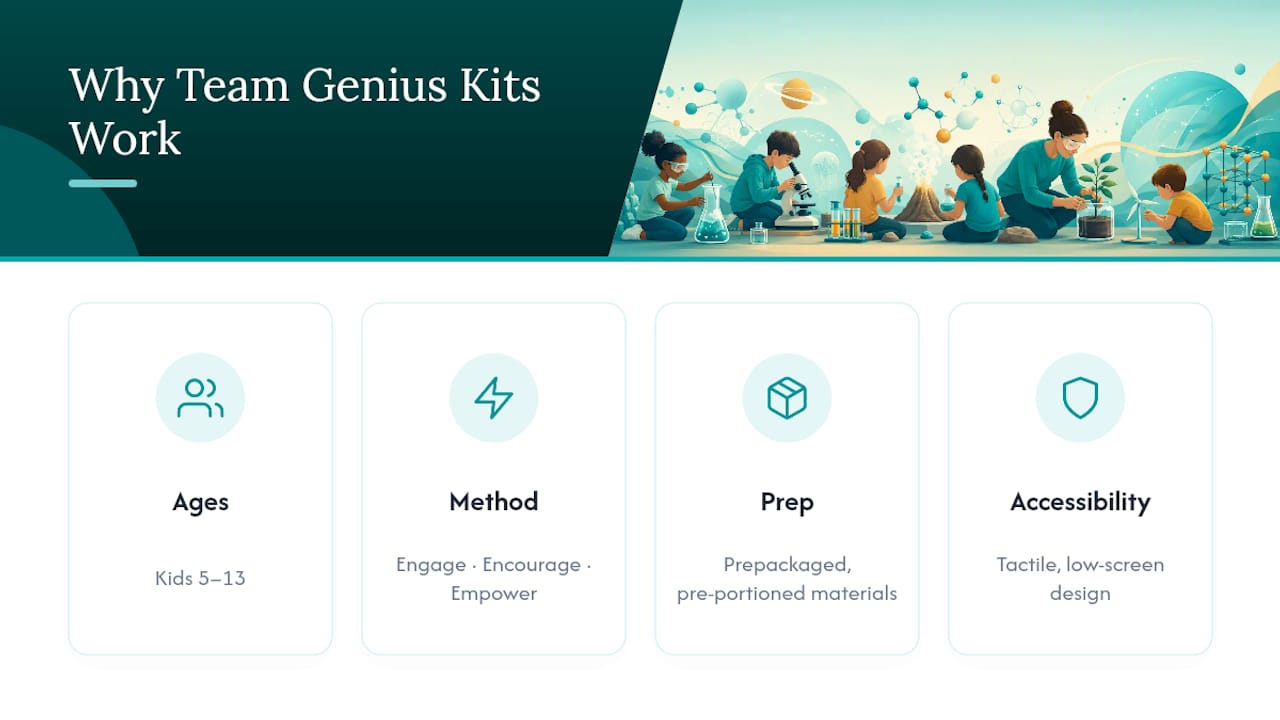
For classrooms and families who want the wonder without the shopping trip, They build hands-on, screen-free STEAM kits specifically for kids ages 5 to 13. Every kit runs on the Engage, Encourage, Empower method, guiding children from first curiosity to genuine confidence rather than just a finished experiment.
Materials arrive prepackaged and pre-portioned, which removes the need for additional prep. Role-play elements like lab coats and badges encourage kids to see themselves as innovators rather than just following steps. The approach is inspired by a family journey with dyslexia and dysgraphia, shaping a design built for children who need a more tactile, less screen-dependent path into learning. You can read more about how hands-on kits support STEAM learning and what makes this hands-on approach different for parents to consider.
A Teacher’s Note on Why the Quick Wins Matter Most
Low prep doesn’t mean low value. Some of the most durable learning happens in the fifteen minutes it takes for raisins to dance or a volcano to fizz, because that’s the window where curiosity has room to lead.
A colleague once described a second-grade class where a walking water station sat quietly in the corner for two days. Most kids checked it once, shrugged, and moved on. But by day two, one student noticed the colors had finally crossed, and word spread across the room in minutes. That child stood there, pointing at the cups, until every classmate had come to look. Nobody assigned that moment. It happened because the setup was patient enough to let it.
— Tita
Skip the Shopping List With Ready-to-Run Kits
Every experiment above works with items already in your kitchen, but if your week doesn’t have room for one more errand, Teamgeniussquad hands you the whole station, prepackaged, pre-portioned, and ready before the bell rings. The Science Solar Energy Kit with Mirror Disk turns energy-transfer concepts from the list above into a guided, screen-free build, while the Mini Fab Science Lab packs a full rotation of hands-on chemistry into one compact box.
Each kit follows the E³ Method, so kids move from Engage to Encourage to Empower instead of just watching a reaction happen and moving on. If your classroom or family runs on messy chemistry days, the Slime, Gel, and Goop STEM Experiment Kit is built around exactly that kind of hands-on curiosity. Check kit availability and pick the one that matches your next lesson at Teamgeniussquad’s shop.
Where to Find Full Protocols and Printable Worksheets
- Exploratorium Science Snacks: Full step-by-step protocols and teacher notes for dozens of tested classroom activities.
- Exploratorium Explore Activities: A searchable library organized by age and materials on hand.
- ScienceBuddies STEM Activities: Grade-labeled projects with printable instructions and time estimates.
- NOAA Hands-On Science Activities: Earth and ocean science demos with standards mapping.
- PBS Parents Simple Science Activities: Home-friendly guidance for non-expert facilitators.
Sources
- Science Snacks – Exploratorium (About)
- Science Snacks – Exploratorium (Activities)
- Simple Science Activities – PBS Parents
- Hands-on science activities – NOAA

Leave a comment
This site is protected by hCaptcha and the hCaptcha Privacy Policy and Terms of Service apply.