
Student Agency in STEAM: What Every Educator Should Know
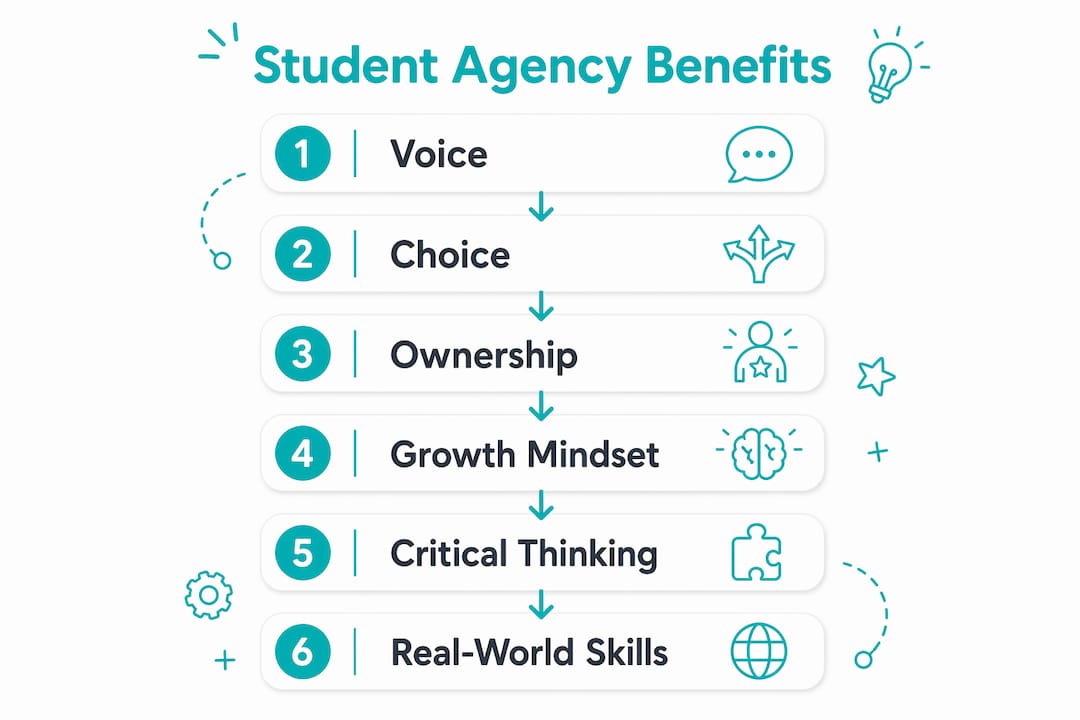
Student agency in STEAM education is defined as the degree to which students exercise voice, choice, and ownership over their own learning processes within science, technology, engineering, arts, and mathematics. The role of student agency in STEAM goes far beyond giving kids options. It shapes how children see themselves as learners, building the identity shift from passive recipient to active creator. Research confirms that full control over learning enhances the quality and sustainability of learning outcomes, not just the speed. For educators and parents of children ages 5–13, understanding this principle is the first step toward raising confident young innovators. Teamgeniussquad was built on exactly this belief.
What is the role of student agency in STEAM?
Student agency is the recognized educational term for learner autonomy and self-direction within structured learning environments. In STEAM specifically, it means a child decides which problem to investigate, how to approach it, and how to share what they discovered. That ownership produces deeper cognitive engagement than any worksheet or lecture can.
The Possible Zone’s theory of change describes this as a progression through three stages. Students move from “I could” (exposure) to “I can” (confidence) to “I am” (identity). That final stage, where a child genuinely sees themselves as a scientist or creator, is the goal of purposeful STEAM learning. It does not happen by accident. It requires deliberate design.

Student empowerment in STEAM also connects directly to growth mindset, intrinsic motivation, and real-world problem-solving. When a child chooses their own experiment, they invest emotionally in the outcome. That emotional investment is what produces perseverance when things go wrong, which they always do in real science.
How does student agency improve STEAM learning outcomes?
The evidence for student agency’s impact on learning is specific and measurable. Students in technology-enhanced STEAM environments with co-creative approaches show a 34% improvement in collaboration competency. Mean critical thinking scores in those environments reach 78.4, compared to 65.7 in traditional instruction. That gap represents a meaningful difference in how children think and work together.
The cognitive mechanism behind this is straightforward. When students control their learning actions, they engage more deeply with the material because the outcome feels personally meaningful. Passive instruction produces surface-level retention. Active ownership produces the kind of flexible problem-solving that transfers to new situations.
The benefits extend beyond test scores. Agency builds executive function skills like planning, self-monitoring, and reflection. Children who practice these skills in STEAM contexts carry them into every other area of learning. The curiosity that STEAM builds in young learners ages 5–13 is directly tied to how much ownership they feel over the process.
| Outcome | Agency-Enriched STEAM | Traditional Instruction |
|---|---|---|
| Critical thinking score | 78.4 | 65.7 |
| Collaboration competency | +34% improvement | Baseline |
| Learning sustainability | Higher, maintained over time | Faster initial gains only |
| Problem-solving flexibility | Significantly higher | Limited transfer |
Pro Tip: Give students two or three different methods to solve the same STEAM challenge. Letting them choose their approach, then reflect on why they chose it, builds metacognitive awareness alongside content knowledge.
What does student agency look like in practice?
Student agency in a STEAM classroom or home setting has concrete, recognizable features. It is not chaos or unstructured free play. It is purposeful exploration with student voice built into every stage.
Educators who promote student voice in STEAM do several things consistently:
- Let students co-create the norms for how the group works together
- Assign rotating leadership roles so every child leads at some point
- Offer open-ended challenges rather than step-by-step instructions
- Build in reflection time so students evaluate their own process
- Connect projects to real community needs students actually care about
At home, parents as facilitators play a critically important role. The shift from directing to facilitating is the key move. A parent who says “What do you think will happen if you try it that way?” builds more agency than one who says “Here’s how you do it.” That single change in language repositions the child as the expert in their own experiment.
Student-led projects in STEAM also benefit from connecting to local, real-world problems. When students investigate something that matters to their neighborhood or community, they develop civic identity alongside scientific thinking. Teach For All documents this clearly: authentic community-rooted STEAM redefines students as leaders from the very start, not after they have mastered content.
Pro Tip: Send a short weekly note home asking parents one question: “What problem did your child try to solve this week?” It keeps families engaged and reinforces that problem-solving, not right answers, is the goal.
How do educators and parents overcome challenges to promoting student agency?
The biggest barrier to student agency is not resources. It is the fear of losing control. Educators and parents both struggle with the discomfort of watching a child struggle without stepping in. That discomfort is natural, but acting on it too quickly robs children of the productive struggle that builds real competence.
These steps address the most common challenges directly:
- Rotate group roles. Structured collaboration with rotating roles prevents stronger students from dominating and ensures every child practices leadership, facilitation, and reflection.
- Embed reflection checkpoints. Ask students to pause mid-project and describe what is working and what is not. This builds self-regulation and prevents passive participation.
- Set boundaries on AI use. Over-reliance on AI tools reduces cognitive engagement. True agency means students decide when and how to use AI, not defaulting to it for every step.
- Name the growth mindset explicitly. Tell students directly that confusion is part of the process. Normalize not knowing the answer yet.
- Co-create norms with students. Eight research-backed strategies for cultivating agency include having students help write the rules of their learning environment. This builds buy-in and shared ownership from day one.
The AI challenge deserves special attention. When a child uses an AI tool to generate an answer rather than wrestle with a problem, they skip the cognitive work that produces real learning. Genuine student empowerment in STEAM means the child remains the thinker. AI can be a resource, the same way a ruler or a calculator is a resource, but the thinking must stay with the student.
Why is student agency in STEAM critical for children ages 5–13?
The window between ages 5 and 13 is when children form their core beliefs about their own intelligence and capability. Agency in STEAM during these years does not just improve academic outcomes. It shapes whether a child grows up believing they can solve hard problems or whether they wait for someone else to solve problems for them.
Student agency counters the transactional model of education, where learning is reduced to grades and efficiency. That transactional model produces children who are good at following instructions but unprepared for a world that demands creativity, adaptability, and original thinking. The Possible Zone identifies this as an existential issue for education, not a pedagogical preference.
The long-term stakes are high for historically underrepresented groups in particular. When children from marginalized communities experience STEAM as something they own and lead, rather than something done to them, their sustained participation in STEAM fields increases. Agency is an equity issue as much as a learning issue.
The STEAM literacy integration that combines hands-on experiments with reading, writing, and reflection builds the whole child. Children who practice agency in STEAM develop the workforce skills that matter most: critical thinking, collaboration, communication, and the confidence to try something new even when failure is possible.
Key Takeaways
Student agency in STEAM education is the single most powerful driver of deep learning, identity formation, and long-term STEAM participation in children ages 5–13.
| Point | Details |
|---|---|
| Agency drives measurable outcomes | Co-creative STEAM environments produce a 34% gain in collaboration and higher critical thinking scores. |
| Identity is the real goal | Students progress from “I could” to “I am” through purposeful ownership of their learning process. |
| Parents are key facilitators | Shifting from directing to questioning builds genuine agency at home, not just in school. |
| AI must be managed intentionally | Students who control their own AI use preserve the cognitive struggle that produces real learning. |
| Equity depends on agency | Rotating roles and structured collaboration prevent stronger students from dominating and ensure every child leads. |
Why I believe agency is the most underrated word in STEAM education
I have watched children light up the moment an adult stops giving them the answer and starts asking them a question instead. That shift, from being told to being trusted, changes everything about how a child relates to learning. It is not a technique. It is a relationship.
What concerns me most is how often agency gets treated as a reward for good behavior or a bonus activity for advanced students. The research is clear: agency belongs at the center of every STEAM experience, for every child, from the very first lesson. Withholding it from struggling learners is exactly backwards. Those are the children who need ownership most.
The AI conversation is one I take seriously. Handing a child an AI tool without building their agency first is like giving someone a calculator before they understand what multiplication means. The tool becomes a shortcut around the learning, not a support for it. Thoughtful integration means the child remains the author of their thinking.
Teamgeniussquad was built on the belief that every child, including those who struggle in traditional classrooms, deserves to experience themselves as a capable innovator. That belief is not optimism. It is the conclusion the research keeps reaching.
— Tita
Teamgeniussquad kits that put student agency into action
Student agency does not happen automatically. It needs the right conditions, and the right materials make a real difference.
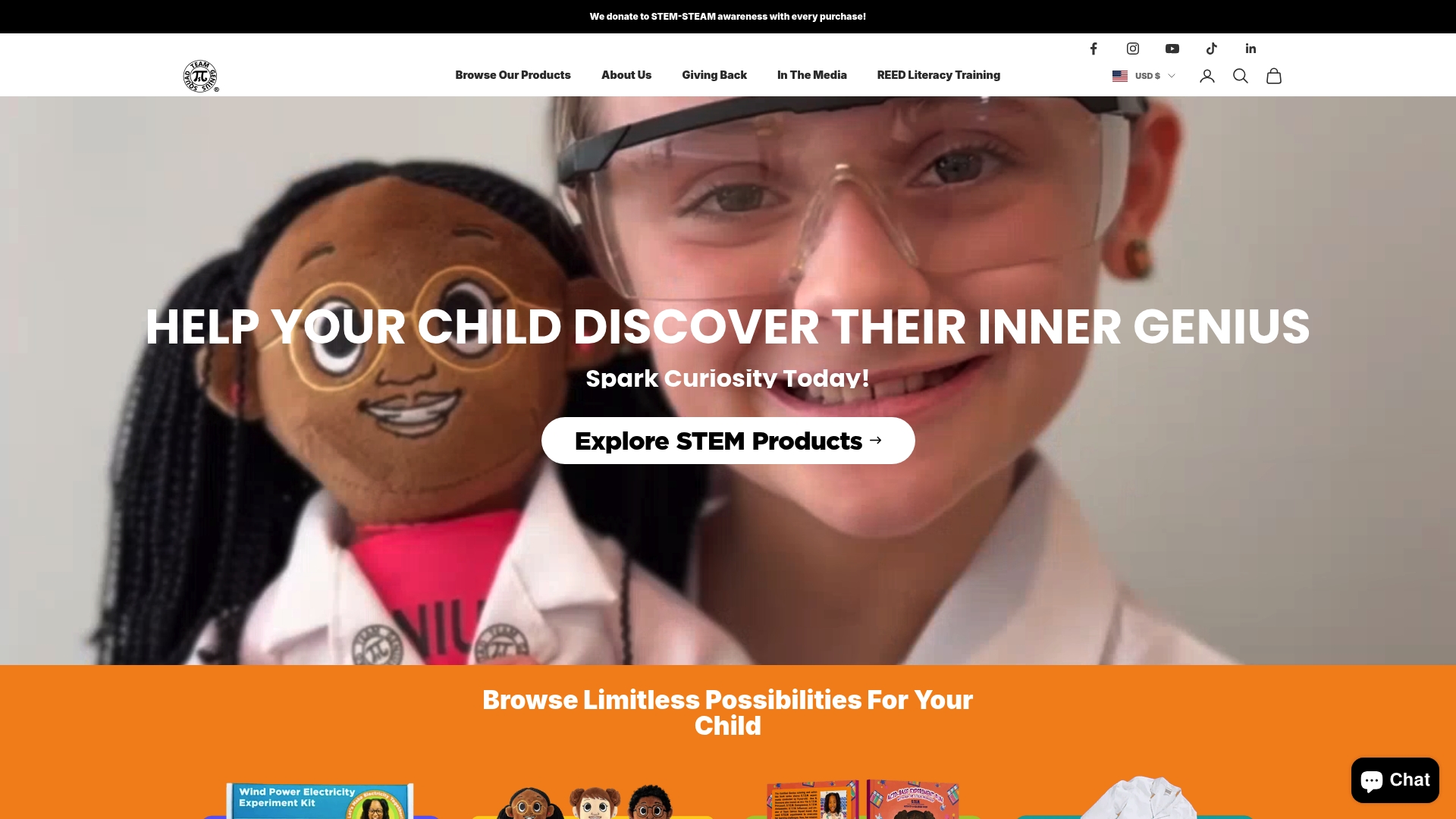
Teamgeniussquad designs hands-on, screen-free STEAM discovery kits built around the E³ Method: Engage, Encourage, Empower. Each kit gives children ages 5–13 a real experiment to lead, a problem to solve, and an identity to step into. The STEAM Electricity Lab Bundle is a flagship example: children direct their own circuit experiments, make predictions, test ideas, and reflect on results. No one tells them the answer first. That is agency by design. Whether at home or in the classroom, Teamgeniussquad kits give every child the chance to say, “I built that. I figured that out.”
FAQ
What is student agency in STEAM education?
Student agency in STEAM is defined as a learner’s ability to exercise voice, choice, and ownership over their learning process within science, technology, engineering, arts, and mathematics. Research confirms that full learner control enhances the quality and sustainability of learning outcomes.
How does student agency affect learning outcomes?
Students in agency-enriched STEAM environments score a mean of 78.4 on critical thinking assessments, compared to 65.7 in traditional settings, and show a 34% improvement in collaboration competency.
How can parents promote student agency at home?
Parents build agency by shifting from directing to facilitating: asking “What do you think will happen?” instead of providing the answer. This positions the child as the expert in their own exploration.
What are the biggest challenges to student agency in STEAM?
The most common barriers are teacher and parent fear of losing control, unequal participation in group work, and over-reliance on AI tools that reduce cognitive engagement. Rotating roles, reflection checkpoints, and intentional AI boundaries address all three.
Why does student agency matter more for children ages 5–13?
Ages 5–13 are when children form core beliefs about their own capability. Agency during these years shapes whether a child grows up as a creator and problem-solver or a passive consumer of other people’s solutions.



Leave a comment
This site is protected by hCaptcha and the hCaptcha Privacy Policy and Terms of Service apply.