Executive Function Activities That Actually Build Real Skills
The fastest way to build executive function is frequent, playful activities that target three core skills: working memory, cognitive flexibility, and inhibition. Real-world tasks with multiple steps, like cooking a meal or planning a scavenger hunt, build these skills better than a worksheet ever will because they force the brain to hold information, switch gears, and manage impulses all at once. Here’s what you’ll find below:
- Activities organized by age, from preschool through the teen years
- Targeted drills sorted by the specific skill they train
- Real implementation tips: how often, how long, and how to know it’s working
- Adaptations for neurodivergent learners, including sensory and attention needs
Key Takeaways
Building executive function requires frequent, age-matched, real-world practice targeting working memory, cognitive flexibility, and inhibition, with gains that fade without repetition.
| Point | Details |
|---|---|
| Three core targets | Focus every activity on working memory, cognitive flexibility, or inhibition. |
| Match activity to age | Preschoolers need short daily bursts; teens do better with longer weekly projects. |
| Real tasks beat worksheets | Cooking, planning, and shopping build skills that transfer to school and home life. |
| Consistency drives results | Gains fade once practice stops, so build a repeatable routine, not a one-time activity. |
| Adapt for different learners | Visual schedules, chunked steps, and role-play identity tools support neurodivergent kids. |
| Hands-on kits support practice | Teamgeniussquad’s screen-free STEAM kits use the E³ Method to build these skills through guided, identity-driven play. |
Table of Contents
- What Are the Core Executive Function Skills?
- Executive Function Activities by Age Group
- Skill-Based Drills for Targeted Executive Function Practice
- How to Turn Activities Into a Real Routine
- Adapting Executive Function Activities for Neurodivergent Learners
- Why Play-First Practice Builds Lasting Confidence
- Build These Skills With Hands-On STEAM Kits From Teamgeniussquad
- Sources
What Are the Core Executive Function Skills?
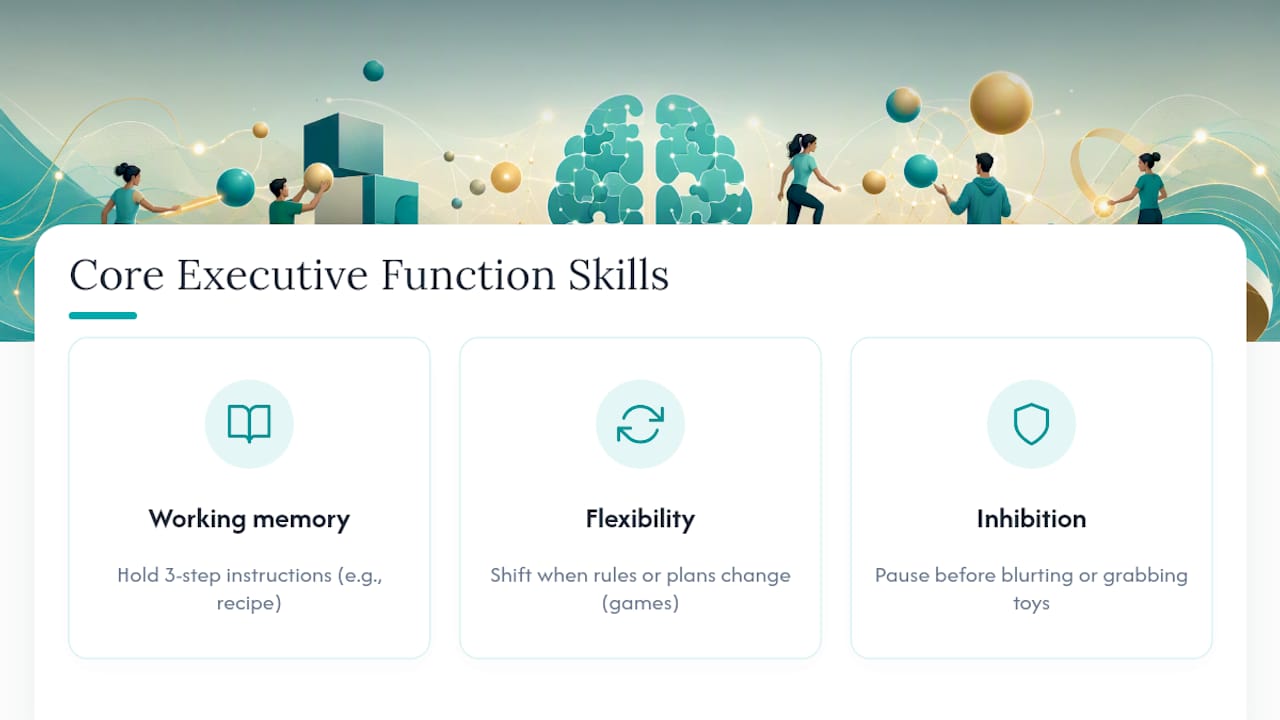
Working memory is the mental sticky note that lets a child hold instructions in their head while acting on them, like remembering three steps in a recipe while measuring flour. Cognitive flexibility is the ability to shift gears when a rule changes or a plan falls apart, the skill a child uses when a board game’s rules get modified mid-play. Inhibition is impulse control: pausing before blurting out an answer or grabbing a toy from a sibling.
These three pillars are the recognized foundation for goal-directed behavior, according to the Cleveland Clinic. One caution worth knowing: performance on a quiet, isolated test doesn’t always predict how a kid handles a noisy classroom or a chaotic kitchen, a gap researchers call the “frontal lobe paradox.” That’s why multi-step, real-world tasks tend to transfer better than flashcards, a point backed by the Oxford Digital Multiple Errands Test research.
Executive Function Activities by Age Group
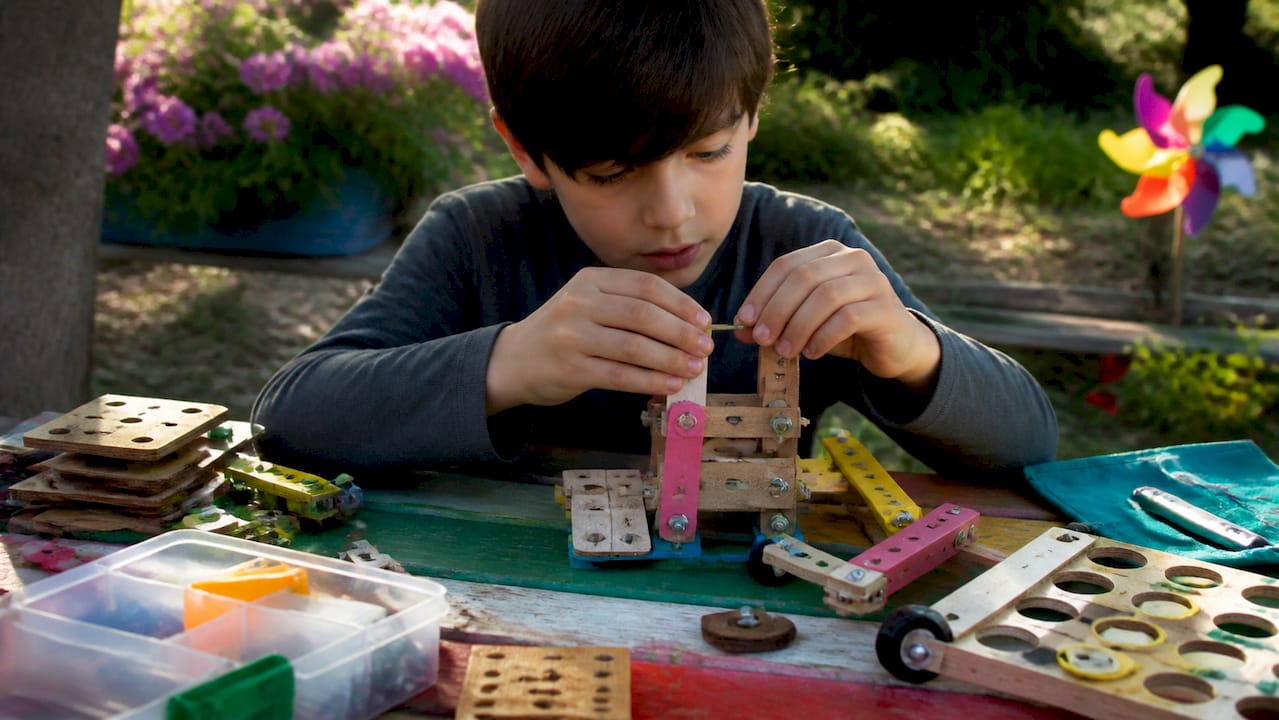
Skill development doesn’t follow a single script at every age. What works for a four-year-old will bore a twelve-year-old and frustrate a teenager, so matching the task to the developmental stage matters as much as picking the right skill to train. Harvard’s activities guide organizes exercises from infancy through adolescence for exactly this reason.
- Preschool (ages 3 to 5). Try memory songs with hand motions that add a new verse each round, simple two-step cooking tasks like “pour, then stir,” and Simon Says variants where the rule flips halfway through. Scaffold by modeling the first round yourself, then stepping back.
- Early elementary (ages 6 to 8). A grocery list game where kids find and check off five items builds working memory and attention. A simple science project with written steps (plant a seed, log growth daily) trains sequencing. Timed cleanup challenges add light time pressure.
- Upper elementary (ages 9 to 12). Multi-day projects like building a diorama over a week teach planning across time. Meal planning for one family dinner, basic budgeting with a $10 allowance, and board games with resource management (think trading or building games) push flexibility and forecasting.
- Adolescents (ages 13 to 17). Cooking a full meal solo, planning a small event like a birthday gathering, managing a group school project, or running a budgeted shopping trip for a specific goal all demand the full executive toolkit at once.
For preschoolers, aim for short daily bursts of a few minutes woven into normal routines. Early elementary kids do well with a few sessions a week of varied lengths. Upper elementary and teens benefit more from one or two longer weekly projects, since their tasks naturally stretch over more steps.
Skill-Based Drills for Targeted Executive Function Practice
Sometimes a child needs work on one specific weak spot rather than a whole project. These shorter drills isolate a single skill so a therapist, teacher, or parent can target it directly.
- Working memory: Repeat multi-step instructions back before starting (“first blue, then red, then fold”), play backward-sequence games (name the days of the week in reverse), or use chunked recall drills that add one item at a time.
- Planning and organization: Map out a project’s steps on paper before starting, build a checklist together, or work backward from a deadline to figure out what needs to happen first.
- Inhibition: Play stop-and-think games where a child must pause for three seconds before answering, try delayed-gratification challenges (one marshmallow now or two in ten minutes), or run a cognitive version of red light/green light where the “stop” signal changes randomly.
- Cognitive flexibility: Card games where the winning rule switches every few rounds, alternate-use brainstorming (“what else could a paperclip do?”), or rapid perspective-taking tasks like retelling a story from a different character’s view.
- Time management: Use a visible timer for a task and ask the child to predict how long it’ll take first, then compare. Break longer projects into labeled time blocks.
Pro Tip: Name the skill out loud while practicing. Saying “we’re working on your working memory right now” helps kids connect the game to the skill, which makes it easier for them to notice when they’re using it elsewhere, like remembering multi-step homework instructions.
How to Turn Activities Into a Real Routine
A single fun activity won’t move the needle. Progress requires repetition, and research on executive function training consistently shows that gains fade once the practice stops, according to the Cleveland Clinic. Building a routine matters more than picking the “perfect” activity.
- Set a frequency that fits the age band. Younger kids need short, frequent practice; older kids do better with fewer, longer sessions, as outlined above.
- Progress the difficulty gradually. Reduce your prompts over time, add more steps to a task, or introduce mild distractions like background noise once a skill feels solid.
- Track it simply. A one-line log (“finished the checklist with one reminder” vs. “finished independently”) works better than a complicated rubric. Watch for whether skills show up outside the activity, like a child using a checklist for homework without being asked.
Combining physical movement with cognitive demand tends to accelerate results. Team sports like basketball require working memory, inhibition, and flexible thinking simultaneously, which the Cleveland Clinic points to as a stronger combination than cognitive drills alone. The Youth Strength and Conditioning Association offers programs built around exactly this kind of movement-based cognitive training for young athletes.
Adapting Executive Function Activities for Neurodivergent Learners
A child with ADHD, dyslexia, or sensory sensitivities doesn’t need a different set of goals. They need a different path to the same skills, and that’s the thinking behind our E³ Method: Engage through hands-on, screen-free discovery and role play, Encourage with scaffolds and specific feedback instead of vague praise, and Empower through identity-building tools like lab coats and certificates that help a child see themselves as capable.
Practical adaptations we build into every kit include visual schedules that break a task into pictures instead of paragraphs, chunked steps so a child never faces more than one instruction at a time, built-in sensory breaks, and role-play elements that turn “finish your task” into “complete your mission as a young scientist.”
Identity-driven role-play paired with tangible rewards like badges and certificates measurably improves engagement for neurodivergent learners, and that engagement is what carries a skill from a kit on the kitchen table into everyday behavior at school.
- Break every multi-step task into visual, numbered chunks
- Build in a sensory reset before pushing to the next step
- Use role-play identity (“You’re the lead scientist”) to boost buy-in
- Loop in a therapist or occupational specialist if a child consistently struggles with the same skill across settings, since a professional can pinpoint whether the barrier is executive function, sensory processing, or something else entirely
Our inclusive STEAM guide for special needs and our neurodivergent learner resource go deeper into specific accommodations for home and classroom use.
Why Play-First Practice Builds Lasting Confidence
I keep coming back to one idea: kids don’t build executive function by being told to concentrate harder. They build it by doing something real, messing it up, and trying again in a context that feels like play instead of a test. That’s the whole premise behind identity-driven learning, where a lab coat and a mission briefing turn “practice your planning skills” into “solve this like a scientist would.” The kids who struggle most in traditional settings, the ones who get labeled distracted or disorganized, often thrive fastest once the activity stops feeling like a worksheet and starts feeling like an adventure they’re actually leading.
— Tita
Build These Skills With Hands-On STEAM Kits From Teamgeniussquad
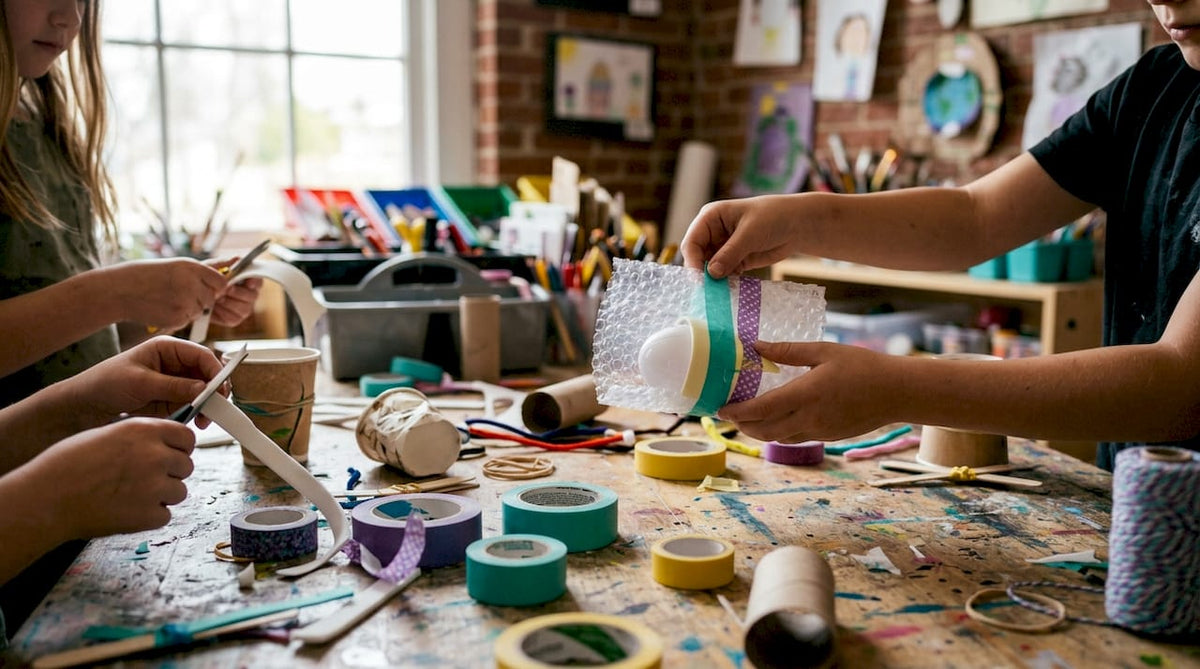
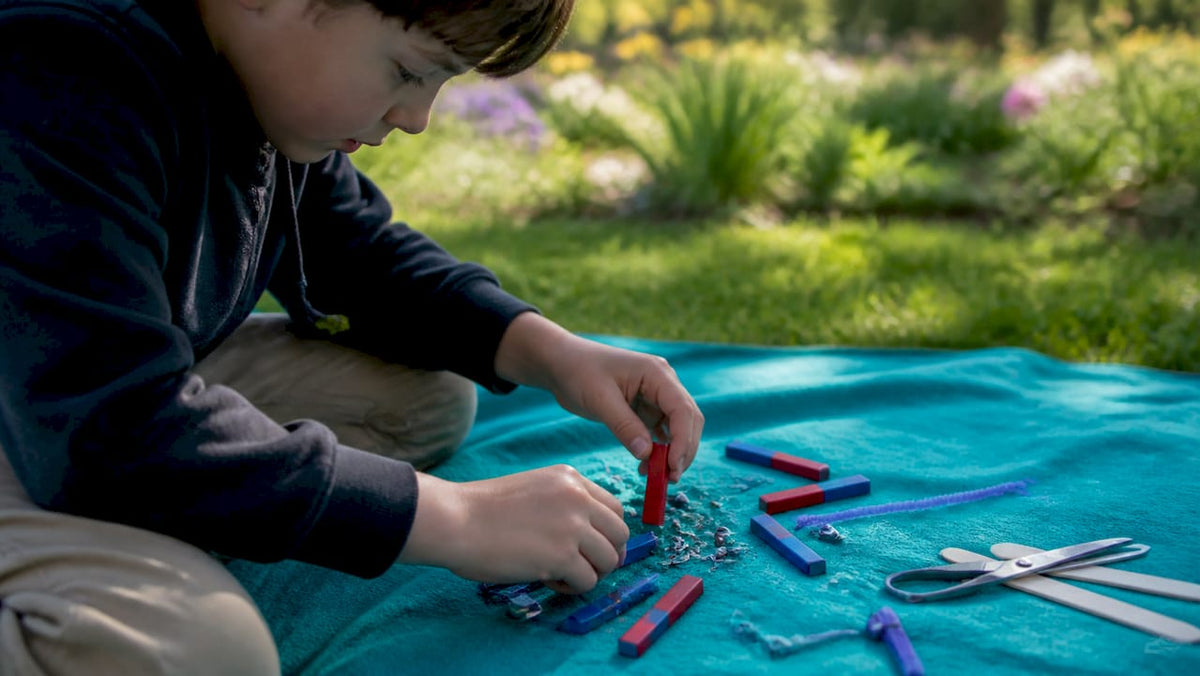
Everything in this guide points to one conclusion: kids build executive function fastest through real, hands-on tasks, not passive instruction. That’s exactly what Teamgeniussquad delivers. Our screen-free kits turn planning, sequencing, and problem-solving into a mission instead of a chore.

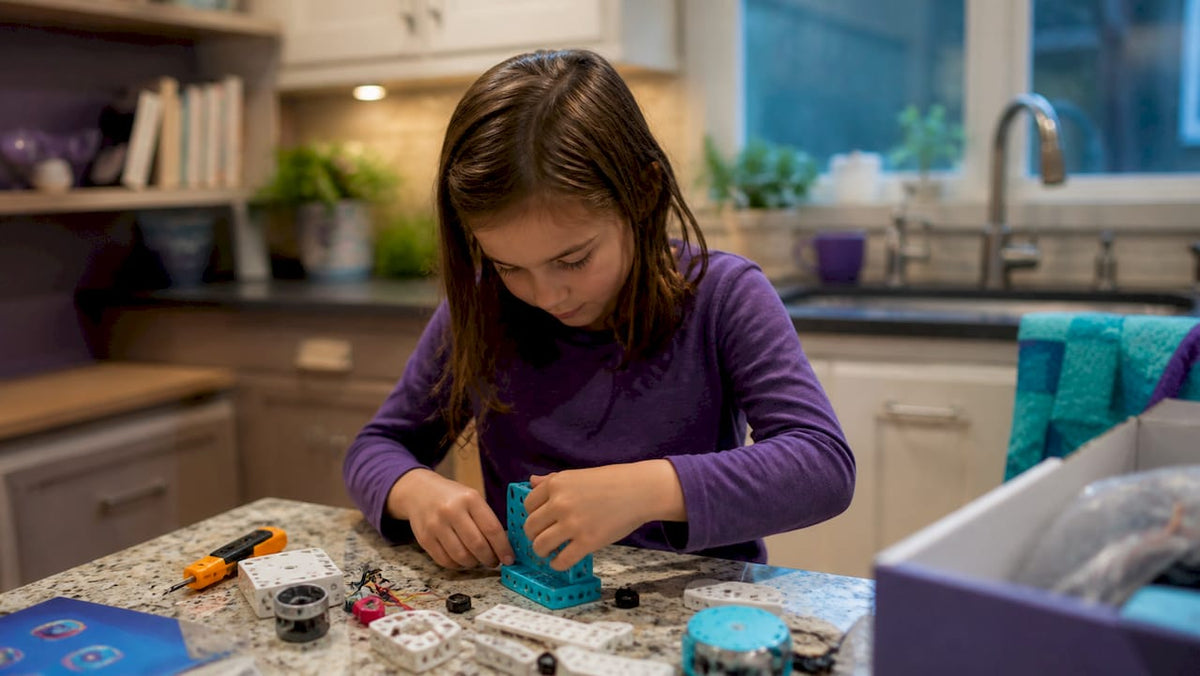
Take the Science Solar Energy Kit with Mirror Disk as one example. Building it requires a child to follow multi-step instructions, hold several pieces of information in mind at once, and adjust when a step doesn’t go as planned, the exact combination of working memory, flexibility, and inhibition this article has been talking about. For families managing dyslexia, dysgraphia, or attention differences, our kits build in the visual scaffolds and identity-driven role play (lab coats, badges, certificates) that make a hard task feel like an achievable mission. If your child does better learning with their hands than with a worksheet, check out our STEAM kits and pick the one that matches their next challenge.
Sources
For more on age-based activities, see Harvard’s Center on the Developing Child guide and the Cleveland Clinic’s executive function overview. For research on real-world task design, review the Frontiers study on multi-step tasks.
- Executive Function: What It Is, How To Improve & Types — Cleveland Clinic
- Activities Guide: Enhancing and Practicing Executive Function Skills — Harvard

Leave a comment
This site is protected by hCaptcha and the hCaptcha Privacy Policy and Terms of Service apply.