
Defining Problem-Solving Skills: Models, Examples, and How to Grow Them
Problem-solving skills are the cognitive and social abilities used to identify an unexpected challenge, generate and evaluate possible responses, and carry out a tested solution while reflecting on the outcome. Three elements sit at the core of every strong definition:
- Define the problem clearly before attempting any solution, because MindTools research identifies unclear problem framing as the most frequent failure point.
- Generate, evaluate, and select from multiple options rather than defaulting to the first idea that surfaces.
- Implement and review, treating the solution as a hypothesis to be monitored, not a final answer.
Why does this matter beyond a classroom definition? The OECD describes problem solving as a multi-stage, domain-specific capacity that develops over time and underpins job readiness, lifelong learning, and personal resilience. Employers agree: NACE research consistently places problem-solving at the top of the attributes hiring managers look for on resumes. Whether you are a parent, an educator, or a professional building your own skill set, getting the definition right is the first step toward teaching and measuring it well.
Key Takeaways
Problem-solving skills develop through deliberate, domain-varied practice guided by clear frameworks, and children who build these skills early carry a measurable advantage into academic and professional life.
| Point | Details |
|---|---|
| Definition first | Problem-solving skills combine cognitive and social abilities to define, generate options for, and implement solutions to unexpected challenges. |
| Use the right model | Match your framework to the problem type: Polya or algorithmic for structured problems, IDEAL or RCA for open-ended ones. |
| Practice deliberately | Vary problem domains, generate at least three options before selecting, and always review results against defined success criteria. |
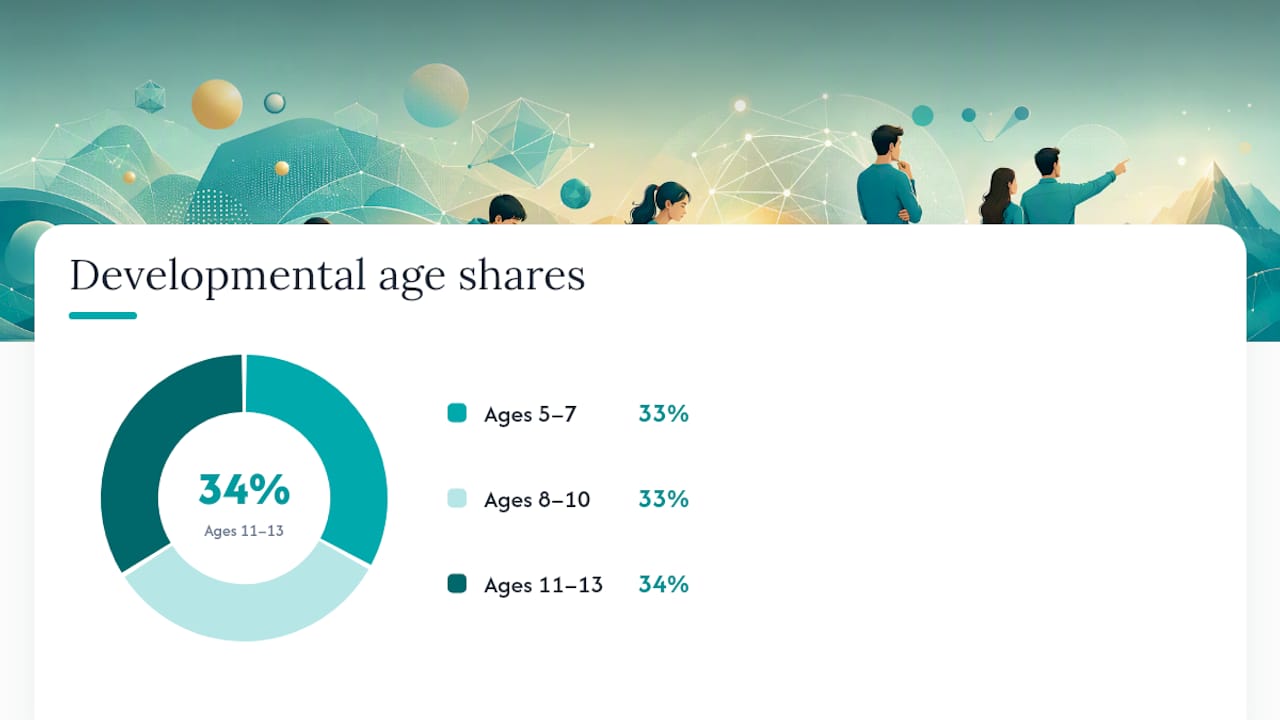
| Teach children by age | Ages 5–7 need sensory, concrete tasks; ages 8–10 benefit from logical sequencing; ages 11–13 can handle multi-step design challenges. |
| Teamgeniussquad kits | Screen-free STEAM kits using the E³ Method give children ages 5–13 a structured, confidence-building way to practice the full problem-solving cycle. |
Table of Contents
- What are the core subskills that make up problem-solving?
- Which problem-solving models and tools should you use?
- What do real examples of problem-solving skills look like?
- How can you practice and improve problem-solving skills?
- How does problem-solving develop in children ages 5–13?
- How do you show problem-solving skills on a resume or in an interview?
- What mistakes do people make when solving problems?
- What types of problems call for different problem-solving approaches?
- What the research gets right, and what most classrooms still miss
- Teamgeniussquad makes problem-solving practice hands-on and screen-free
- Sources
What are the core subskills that make up problem-solving?
Problem-solving is not a single ability. It is a cluster of subskills that work together, and knowing which ones are present or underdeveloped tells you exactly where to focus your practice or instruction.
- Analytical thinking: Breaking a situation into its parts to understand what is actually happening. Example: A student notices her science experiment keeps failing and maps each variable on paper before changing anything.
- Creative thinking: Generating ideas that go beyond the obvious, especially when standard approaches have already been tried. Example: A team stuck on a supply-chain delay brainstorms ten alternative vendors in fifteen minutes before evaluating any of them.
- Decision-making: Weighing options against clear criteria and committing to a choice under uncertainty. Example: A project manager selects a vendor by scoring each option on cost, reliability, and lead time.
- Communication: Articulating the problem, the reasoning behind a chosen solution, and the results to others who need to act or agree. Example: An engineer explains a safety risk to a non-technical executive using a single diagram and three bullet points.
- Emotional regulation: Staying persistent and open-minded when a problem is frustrating or ambiguous. The OECD notes that problem-solving is as much an emotional process as a cognitive one, and psychological safety directly improves persistence on ill-defined challenges.
- Metacognition: Monitoring your own thinking process, noticing when you are stuck, and deliberately switching strategies.
Pro Tip: To spot which subskill is weakest in a learner or team member, give them a novel problem with no obvious answer and watch where they stall. Do they skip straight to solutions (weak definition)? Do they generate only one idea (weak creative thinking)? Do they freeze when the first solution fails (weak emotional regulation)? The stall point is the training target.
Which problem-solving models and tools should you use?
Most frameworks for solving problems converge on the same insight: effective problem solving follows a structured multi-stage process, moving from defining the problem through generating options, selecting the best one, implementing it, and reviewing the result. The differences between models lie in emphasis and context, not in fundamental logic.
| Model | Stages | Best use case |
|---|---|---|
| Polya’s four-step method | Understand → Plan → Carry out → Look back | Math and logic problems; introductory classroom teaching of reflection habits |
| IDEAL framework | Identify → Define → Explore → Act → Look back | Open-ended, ill-defined problems; heuristic thinking in school or workplace |
| Root Cause Analysis (RCA) | Define → Collect data → Identify root cause → Implement fix → Monitor | Quality control, safety incidents, recurring operational failures |
| Simplex | Problem finding → Fact finding → Problem defining → Idea finding → Evaluate → Plan → Sell → Act | Creative and innovation-heavy projects requiring divergent ideation |
MIT’s CCMIT materials draw a useful distinction: algorithmic strategies work well for well-defined problems with a known solution path, while heuristic strategies like IDEAL are better suited to open-ended problems where the path itself must be discovered. Building a personal or classroom “toolbox” of both types measurably improves performance across domains.
Three practical tools map directly onto specific stages of these models:
- Five Whys: Ask “why” five times in sequence to move from a symptom to its root cause. Best used in the define and analyze stages. University of Washington templates offer a ready-to-use worksheet.
- Fishbone (Ishikawa) diagram: A visual cause-and-effect map that organizes potential causes into categories (people, process, equipment, environment). Use it when a problem has multiple contributing factors and you need to see them all at once.
- Decision matrix: A grid that scores each solution option against weighted criteria. Removes gut-feel bias from the selection stage.
Pro Tip: For a well-defined problem with a clear right answer (a math proof, a broken circuit), reach for Polya or an algorithmic checklist. For a messy, human-centered problem with no single correct solution (a team conflict, a curriculum gap), IDEAL or RCA with a Fishbone diagram will serve you better. Matching the model to the problem type is itself a problem-solving skill.
What do real examples of problem-solving skills look like?
Concrete examples make the difference between a definition that sounds good and one you can actually use in a job application, a lesson plan, or a performance review. The following skills appear most often across school, home, and workplace contexts:
- Root cause probing (asking why before acting)
- Data gathering and analysis (collecting evidence before deciding)
- Hypothesis testing (treating a solution as an experiment)
- Pattern recognition (spotting recurring issues across situations)
- Lateral thinking (approaching a problem from an unexpected angle)
- Prioritization (deciding which part of a complex problem to tackle first)
- Collaboration and perspective-taking (drawing on others’ knowledge to fill gaps)
- Iterative refinement (improving a solution through repeated cycles)
- Risk assessment (anticipating what could go wrong before committing)
- Reflection and learning transfer (extracting lessons to apply to future problems)
For four of these, here is how a STAR-style example sounds in practice:
Root cause probing: Situation: Customer complaints about a product defect spiked. Task: Identify the source. Action: Applied Five Whys and traced the defect to a single supplier’s batch. Result: Replaced the batch and reduced defect rate in subsequent periods.

Hypothesis testing: Situation: A third-grade class struggled with fractions. Task: Find a more effective teaching approach. Action: Piloted two different manipulative-based lessons with separate groups and compared quiz scores. Result: The hands-on group showed measurably stronger retention after two weeks.
Collaboration and perspective-taking: Situation: A cross-functional team disagreed on project priorities. Task: Reach a shared plan. Action: Facilitated a structured session where each team member mapped their constraints visually. Result: The team identified two overlapping priorities and agreed on a sequenced plan within a short, focused session.
Iterative refinement: Situation: A prototype app feature kept confusing users. Task: Improve usability. Action: Ran three short user-testing rounds, each followed by a targeted fix. Result: Task completion time dropped significantly by the third iteration.
One important note on context: the same underlying skill reads very differently depending on the domain. “Analysis” for a data scientist means statistical modeling; for a kindergarten teacher, it means noticing which students disengage during transitions. When writing resume bullets or lesson objectives, always anchor the skill to its specific context and measurable outcome.
How can you practice and improve problem-solving skills?
Deliberate practice, not passive exposure, builds problem-solving ability. The OECD is clear that development is domain-specific, which means practicing only one type of problem (say, math puzzles) will not automatically transfer to workplace or social challenges. Varied, realistic practice across multiple domains is what builds transferable skill.
A five-step practice routine:
- Choose a real, slightly unfamiliar problem in your domain. Avoid problems you already know how to solve; the productive struggle is the point.
- Write out the problem in your own words before touching a solution. This single step catches most misdiagnoses early.
- Generate at least three distinct solutions before evaluating any of them. MindTools recommends a deliberate delay before selection to reduce premature commitment and improve solution quality.
- Implement using short plan-do-study-act cycles, with a clear success criterion defined before you start. ASQ’s structured approach uses this iterative method to avoid solution drift and capture learning for future problems.
- Reflect in writing using three prompts: What did I assume that turned out to be wrong? What would I do differently? What pattern here applies to other problems?
Measuring progress:
- Observable behaviors: Does the person ask clarifying questions before acting? Do they generate multiple options? Do they check results against the original goal?
- Rubrics: Score each stage (define, generate, select, implement, review) on a 1–4 scale. A rubric makes growth visible and gives learners a concrete target.
- Self-report: Weekly journaling on one problem encountered and how it was handled builds metacognitive awareness over time.
- Short quizzes or scenario tasks: Present a novel case study and ask learners to walk through their reasoning. The quality of the reasoning process, not just the answer, is what you score.
For group practice, team-building experiments are especially effective because they add the communication and collaboration subskills to the cognitive ones. Run them weekly for four to six weeks and track whether the group’s time-to-solution and solution quality improve.
How does problem-solving develop in children ages 5–13?
Children move from concrete, hands-on problem solving toward abstract, multi-step reasoning as they grow, and the OECD and ERIC research both recommend hands-on, collaborative, and explicitly taught problem-solving activities to support this trajectory at every stage. The key is matching the challenge to the developmental level: too easy and there is no growth, too hard and confidence erodes.
Ages 5–7 (concrete, sensory-based problem solving):
- Sort objects by multiple attributes and explain the rule they used.
- Build a structure with blocks that meets a simple constraint (tallest tower that doesn’t fall).
- Act out a story problem with physical props before drawing or writing a solution.
Ages 8–10 (logical, sequential thinking emerging):
- Use a simple Fishbone diagram to figure out why a class plant keeps wilting.
- Work in pairs to design and test a paper bridge that holds the most weight.
- Apply the Five Whys to a real classroom situation, such as why homework is often forgotten.
Ages 11–13 (abstract reasoning and multi-step planning developing):
- Run a full design challenge: define a community problem, brainstorm solutions, prototype, test, and present findings.
- Analyze a case study from history or current events using a decision matrix.
- Reflect in writing on a failed experiment, identifying what the failure revealed rather than what went wrong.
Pro Tip: Create low-stakes failure opportunities deliberately. A problem where the first attempt is expected to fail teaches children that iteration is the process, not a sign of inadequacy. Role-play scenarios, where a child steps into the role of a scientist or engineer facing a setback, are especially powerful because the identity shift (“I am a scientist; scientists test and adjust”) makes persistence feel natural rather than forced. Imaginative scientist play is one of the most research-consistent ways to build this mindset in younger children.
Teamgeniussquad’s screen-free STEAM kits are built around exactly this developmental logic, pairing hands-on experiments with role-play props and reflection prompts that guide children through the define-generate-test-review cycle at an age-appropriate pace.
How do you show problem-solving skills on a resume or in an interview?
NACE research confirms that employers list problem-solving as a top attribute they look for during hiring, which means vague claims like “strong problem solver” on a resume accomplish almost nothing. What hiring managers actually evaluate is evidence: a specific situation, a clear role, and a measurable result.
Resume bullet templates:
- Diagnosed a recurring production delay using Five Whys analysis; identified a scheduling conflict that, once resolved, reduced average lead time by two days per cycle.
- Redesigned onboarding documentation after surveying new hires; significantly reduced average time-to-productivity.
- Proposed and piloted a new inventory tracking system after identifying a root cause of repeated stock-outs; reduced out-of-stock incidents subsequently.
- Facilitated a cross-team problem-framing session that aligned three departments on a shared project definition, preventing a costly scope change mid-project.
STAR-style interview responses:
Common question: “Tell me about a time you solved a difficult problem at work.”
Strong answer structure: Name the situation in one sentence, state your specific role (not the team’s), describe the method you used (Five Whys, a decision matrix, a structured brainstorm), and close with a concrete result. Hiring managers are listening for the method, not just the outcome.
Common question: “Describe a time when your first solution didn’t work.”
This question tests emotional regulation and iterative thinking. Lead with what you learned from the failure, not an apology for it. Describe the adjustment you made and what the second attempt produced.
When choosing which examples to use, prioritize situations where the problem was genuinely ambiguous, your role was clearly defined, and the outcome is measurable. Harvard Business School Online notes that leaders who demonstrate structured problem framing, not just good outcomes, are the ones who build lasting credibility with hiring teams.
What mistakes do people make when solving problems?
Most problem-solving failures happen before a single solution is tried. The errors cluster around the definition stage, the evaluation stage, and the emotional dynamics of the process.
- Jumping to solutions: Acting on the first idea without defining the problem. Fix: Write the problem statement before brainstorming anything.
- Confusing symptoms with root causes: Treating the visible issue as the problem itself. Fix: Run Five Whys or a Fishbone diagram before selecting a solution.
- Generating only one option: Committing to the first plausible solution. Fix: Require at least three distinct alternatives before any evaluation begins.
- Skipping the review stage: Implementing a solution and moving on without checking whether it worked. Fix: Define success criteria before implementation and schedule a review checkpoint.
- Working in isolation: Missing perspectives that would have caught a blind spot. Fix: Include at least one person with a different role or background in the problem-framing stage.
- Letting stress narrow thinking: Under pressure, people default to familiar solutions even when they are not the best fit. Fix: Build in a brief structured pause (even five minutes of written problem restatement) before deciding.
- Mistaking activity for progress: Holding meetings or producing documents without moving closer to a resolution. Fix: Assign a clear decision or output to every problem-solving session before it starts.
Harvard Business School Online specifically highlights the leader’s tendency to treat symptoms as the problem itself, noting that structured problem framing and psychological safety are the two most powerful correctives a team leader can apply.
A note on monitoring: Even a well-chosen solution can drift from its intended effect over time. Build a simple monitoring checklist into every implementation plan, with a defined review date, so that solution drift is caught early rather than discovered after the problem has returned in a new form.
What types of problems call for different problem-solving approaches?
Not every problem responds to the same strategy, and recognizing the type of problem in front of you is itself a core skill.
Structured problems have a clear definition, known constraints, and a verifiable correct answer. A math equation, a broken circuit, or a scheduling conflict with fixed parameters all fall here. Algorithmic approaches, step-by-step checklists, and Polya’s four-step method work well because the solution path, once found, is repeatable.
Unstructured problems are open-ended, ambiguous, and often involve competing values or incomplete information. Designing a new curriculum, resolving a team culture issue, or responding to a market shift are unstructured by nature. Heuristic frameworks like IDEAL, design thinking’s divergent-convergent phases, and Root Cause Analysis are better suited here because they build in exploration before commitment.
The personal versus professional dimension adds another layer. A personal problem (managing a difficult relationship, deciding on a career change) carries emotional weight that structured frameworks alone cannot address; emotional regulation and perspective-taking become as important as any analytical tool. A professional problem in a team setting adds coordination complexity, meaning communication and shared problem framing matter as much as the quality of the solution itself.
Domain also shapes strategy. Repeated practice with varied, realistic problems in one domain, such as science experiments or coding challenges, builds pattern-recognition and domain-specific heuristics that general frameworks alone do not provide. A child who has run twenty science experiments develops an intuition for experimental design that transfers to new science problems faster than a child who has only read about the scientific method. The same principle applies to adults: a manager who has navigated ten product launches develops a mental model for launch problems that a general problem-solving course cannot replicate.
The practical takeaway is to diagnose before you prescribe. Ask: Is this problem well-defined or open-ended? Is it personal or organizational? Is it in a domain where I have pattern recognition, or am I genuinely new to it? The answers point directly to which model and which tools to reach for first.
What the research gets right, and what most classrooms still miss
The research on problem-solving is remarkably consistent. Define clearly, generate multiple options, test iteratively, reflect deliberately. Every major framework, from Polya to IDEAL to RCA, circles back to those four moves. What the research is less good at capturing is the emotional architecture that makes those moves possible in the first place.
Most classrooms and training programs teach the cognitive steps and skip the conditions. They hand learners a framework and a worksheet, then wonder why performance doesn’t transfer to novel situations. The gap is almost always psychological safety and identity. A child who believes she is “not a math person” will not persist through the productive struggle that problem-solving requires, regardless of how clearly the Five Whys is explained to her. A team member who fears judgment will not surface the dissenting observation that would have reframed the problem correctly.
The most underrated intervention in problem-solving education is not a better framework. It is creating the conditions where learners believe that attempting and failing is part of the process, not evidence of inadequacy. Role-play, low-stakes experimentation, and identity-building tools, such as the lab coats and scientist badges that Teamgeniussquad builds into its kits, do something a rubric cannot: they shift how a child sees herself in relation to hard problems. That identity shift is what makes the cognitive tools stick.
One audit activity worth running in any classroom or team: give learners a problem with no correct answer and observe who speaks first, who stays silent, and who changes their answer when someone else speaks. That thirty-minute observation tells you more about your group’s problem-solving culture than any assessment score. Fix the culture, and the skills follow.
Teamgeniussquad makes problem-solving practice hands-on and screen-free
Children learn to solve problems by actually solving them, not by watching someone else do it. Teamgeniussquad’s screen-free STEAM experiment kits give children ages 5–13 a structured, confidence-building way to practice the full problem-solving cycle at home or in the classroom.

Each kit is built around the proprietary E³ Method (Engage, Encourage, Empower), guiding children from curiosity through experimentation to reflection. Parents and educators get lesson-ready activities, role-play props (lab coats, badges, scientist certificates), and built-in reflection prompts that mirror the define-generate-test-review process described throughout this article. The Science Solar Energy Kit is a strong starting point for children who are ready to test hypotheses and observe real cause-and-effect relationships. For a fuller lab experience, the STEM-STEAM Electricity Lab Experience Bundle supports iterative experimentation across multiple sessions. Visit the Teamgeniussquad store to find the kit that fits your child’s age and curiosity level.
Sources
- Problem solving skills (OECD PDF)
- ASQ - Problem-solving resources
- Problem-solving in business | Harvard Business School Online Blog
- Introduction to Problem Solving Skills | CCMIT (MIT)
- Problem-solving skills: top attributes employers seek on resumes | NACE


Leave a comment
This site is protected by hCaptcha and the hCaptcha Privacy Policy and Terms of Service apply.