
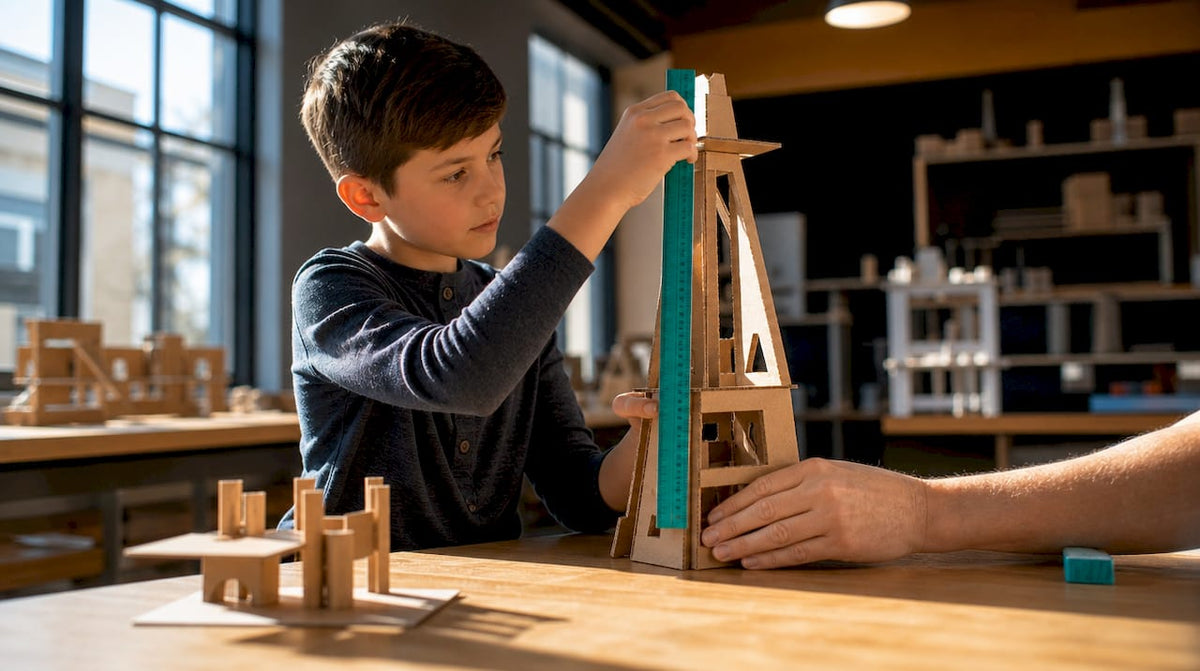
Age Tagged Engineering Projects for Kids, Parents, Teachers
Engineering projects for kids don’t require a lab, a workshop, or a shopping spree. With cardboard, tape, and a rubber band, a five-year-old can build a rover and a thirteen-year-old can turn it into a data-logging experiment. What matters most isn’t the finished build. It’s whether a child designs something, tests it, watches it fail a little, and fixes it. That loop, done right, is the entire point.
TL;DR:
- Children learn more from designing, testing, and fixing rather than just completing the build, with the iterative process being the core of engineering learning.
- Projects should be matched to the child’s age and skill level, with older children measuring results and sketching redesigns to deepen understanding.
- Using a simple, household materials kit encourages frequent, flexible experimentation without extensive preparation or shopping.
- Structuring sessions around a cyclical build-test-reflect process promotes engagement, resilience, and genuine problem-solving skills.
- Role-play and storytelling techniques help children develop confidence and view failures as learning opportunities rather than setbacks.
Table of Contents
- Engineering Projects for Kids by Category
- Adapting Engineering Projects by Age and Skill
- Building a Simple Engineering Kit at Home
- Running a 30–60 Minute Engineering Session
- How the E³ Method Shapes These Projects
- What Actually Matters in Engineering Projects for Kids
- Ready-Made Engineering Kits for Busy Parents and Teachers
- Sources
Engineering Projects for Kids by Category
Every project below lists an age tag, a time estimate, a materials line, and one measurable test, because “engineering” without a measurement is just crafting. Pick a category that matches whatever’s already in your recycling bin.
Vehicles and motion
- Rubber-band rover (ages 6–12, 60 min): cardboard, rubber bands, bottle caps, skewers. Test: how far does it roll on a flat floor? NASA JPL’s cardboard rover project even extends into coding with a micro:bit for kids ready to log rotations against distance.
- Balloon-powered car (ages 7–11, 30 min): cardboard, straws, bottle caps, a balloon. Test: distance traveled on three trials, averaged.
- Rubber-band drag racer (ages 5–8, 20 min): craft sticks, wheels cut from cardboard. Test: does it cross a 3-foot line before stopping?
Bridges and structures
- Index card bridge (ages 8–12, 30 min): index cards, tape. Test: how many pennies can it hold before it sags 1 inch?
- Spaghetti tower (ages 6–13, 40 min): dry spaghetti, marshmallows or clay. Test: height in inches before collapse.
- Straw truss bridge (ages 10–13, 45 min): straws, tape, a small weight set. Test: load held over a table-edge gap. A step-by-step bridge-building activity walks through common failure points kids run into first.
Flight and aerodynamics
- Straw rocket (ages 5–9, 20 min): a straw, paper, tape. Test: launch distance across three tries, per NASA JPL’s straw rocket guide.
- Paper glider redesign (ages 8–13, 30 min): paper, paper clips. Test: flight time with a stopwatch, then adjust wing shape and retest.
- Parachute drop (ages 5–8, 25 min): plastic bag, string, a small toy. Test: does the fall slow down compared to a drop with no chute?
Electricity and circuits
- Mystery circuit box (ages 9–13, 40 min): coin cell battery, LED, copper tape, a shoebox. Test: can a partner find the hidden closed circuit by touch alone?
- Squishy circuit (ages 6–10, 30 min): conductive dough, LEDs, a battery pack. Test: does the light turn on when the dough loop closes?
- Simple motor fan (ages 10–13, 45 min, adult help): small DC motor, battery, propeller blade. Test: measurable airflow with a tissue strip.
Energy and environment
- Solar oven (ages 7–13, 50 min, outdoor sun needed): pizza box, foil, plastic wrap. Test: temperature rise inside after 20 minutes, per Science Buddies’ solar oven writeup.
- Shock-absorbing lander (ages 5–8, 45 min): straws, cotton balls, tape, a small figure. Test: does the “astronaut” survive a drop from increasing heights, per NASA JPL’s lander activity?
- Water wheel (ages 8–12, 40 min): plastic cups, a dowel, a running faucet. Test: can it lift a small weight on a string?
Quick challenges (10–15 minutes)
- Tallest tower with 10 index cards.
- Longest paper chain that holds a book without tearing.
- Widest gap a single sheet of paper can span while holding a coin.
Adapting Engineering Projects by Age and Skill
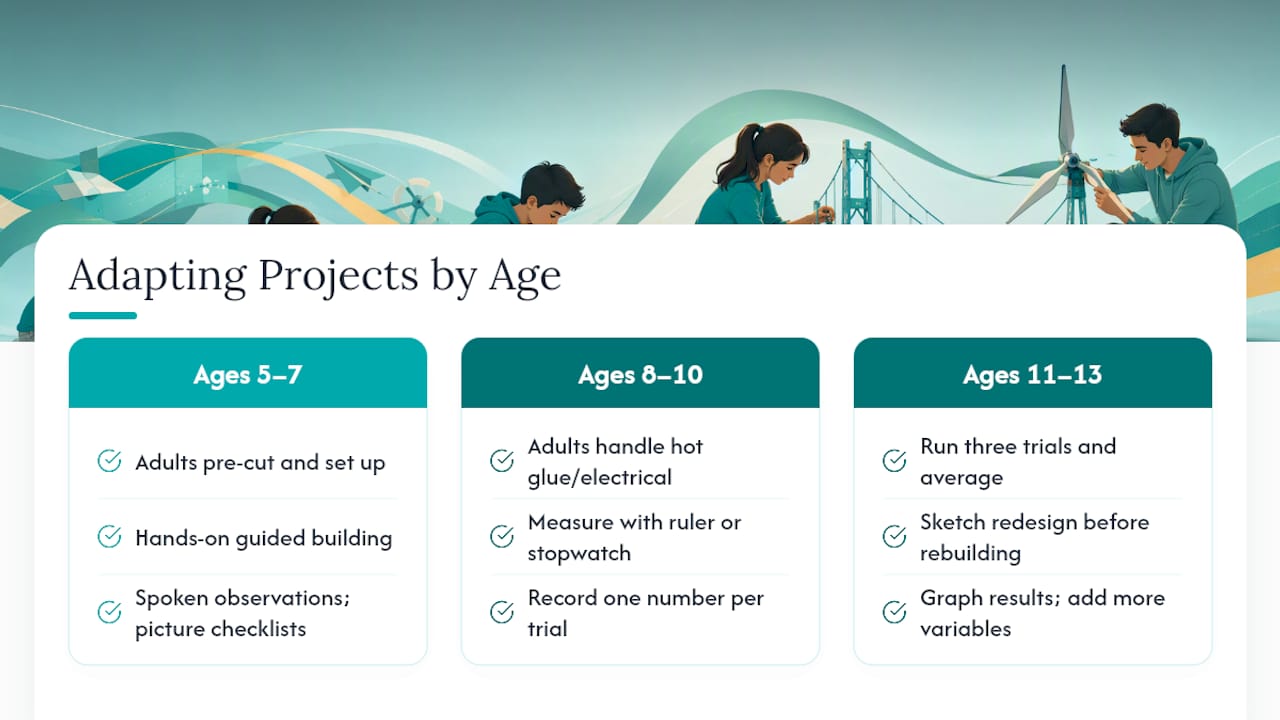
The same project can stretch from kindergarten to middle school. What changes is who holds the scissors and what gets measured.
Ages 5–7: Adults pre-cut sharp materials and set up the workspace. Kids choose materials, build with hands-on guidance, and describe what happened out loud rather than writing it down. Visual checklists with pictures instead of text words help kids who aren’t reading fluently yet, and this age band does best with kindergarten-friendly STEM setups that keep steps short and predictable.
Ages 8–10: Kids measure their own results with a ruler or stopwatch and record one number per trial. Adults still handle hot glue or anything electrical. Add a simple constraint, like “use only 5 pieces of tape,” to force creative problem-solving.
Ages 11–13: Kids run three trials, average the results, and sketch a redesign before rebuilding. This is the age for graphing distance versus design changes, or trying a LEGO-based engineering challenge that layers in more variables.
For neurodivergent learners, predictable steps beat open-ended instructions every time. A sensory play and development guide is worth reading if textures like clay, dough, or wet glue tend to overwhelm a particular child.
Pro Tip: Let kids narrate their build like a scientist logging notes, even if they’re five. “The rover went far, then it hit the rug and stopped” is real engineering data, just spoken instead of written.
Building a Simple Engineering Kit at Home
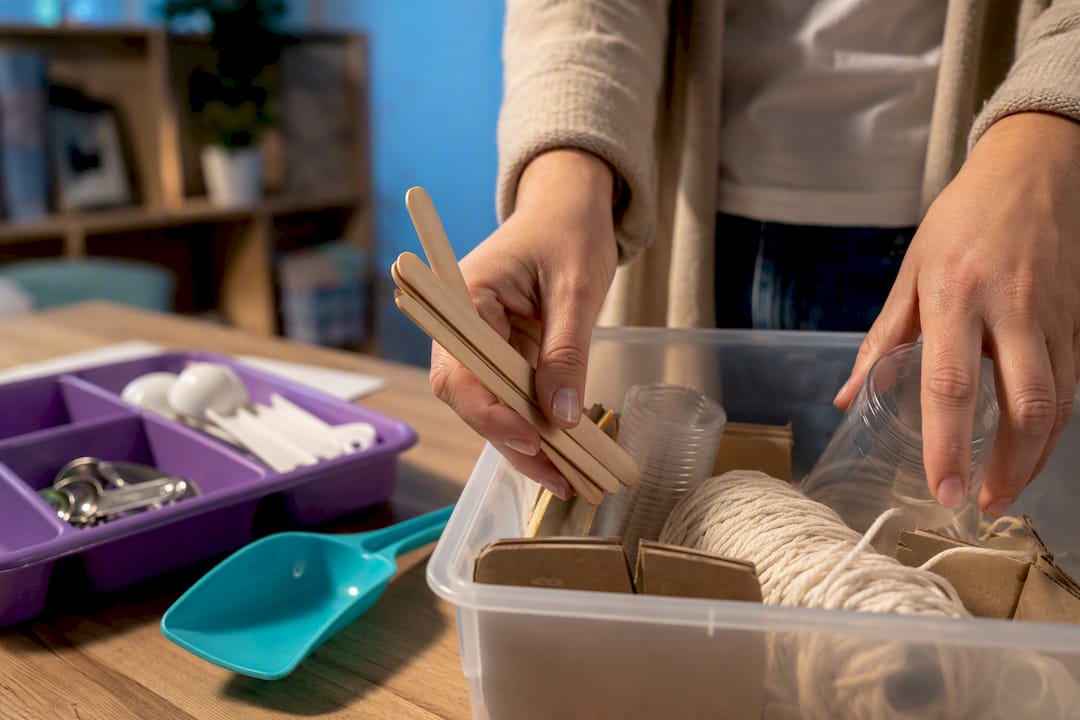
You don’t need a hardware store run. A compact bin covers most of the projects above: cardboard scraps, tape, rubber bands, straws, craft sticks, a bag of balloons, paper clips, and a handful of pennies for weight testing. Add a coin-cell battery and a few LEDs if circuits interest your kid, and keep it all in one box so setup takes minutes, not an hour.
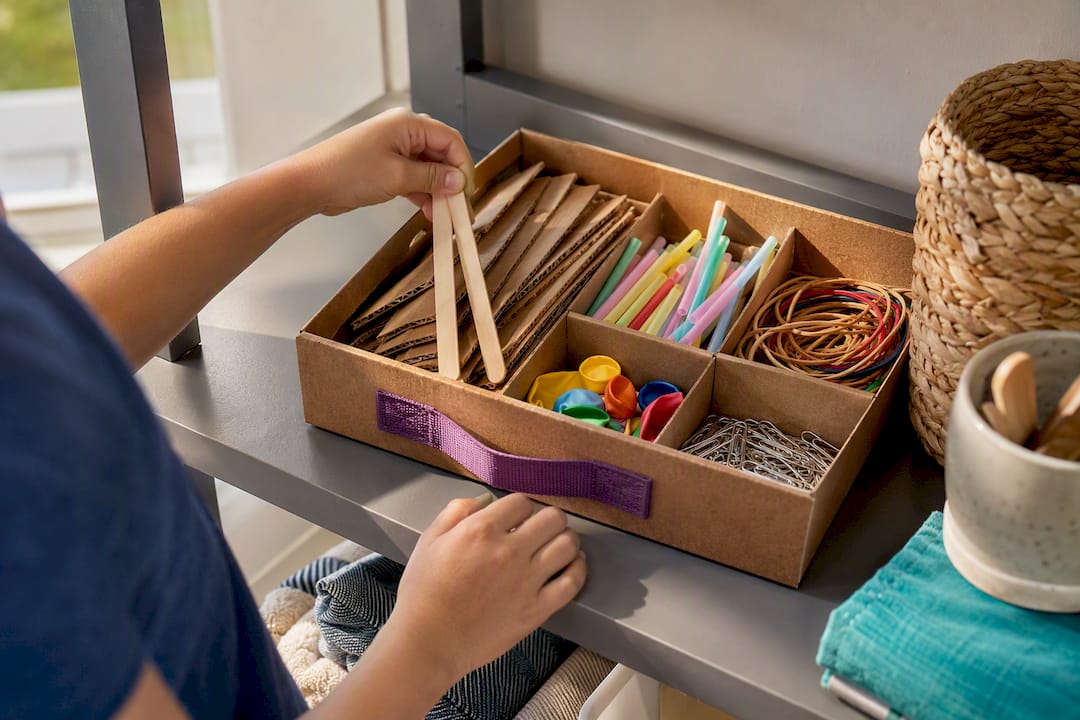
Common substitutes work fine. No skewers? Chopsticks or pencils. No copper tape? Aluminum foil folded into strips. Keep scissors and hot glue guns adult-supervised, always, especially for kids under 8. For anyone experimenting with small motors, note that unstable current can cause a project to sputter unpredictably. Older kids curious about the fix can learn that regulators and capacitors stabilize the power supply, which is a real engineering concept worth naming even if you skip building it.
Lay down a towel or a cheap plastic tablecloth before gluing anything, and you’ll cut cleanup time to almost nothing.
Running a 30–60 Minute Engineering Session
A good session has a rhythm, not a rulebook.
- Brief intro (5–10 min): Name the challenge and the one measurement that counts, like distance or load.
- Build, test, redesign loop (15–40 min): Kids build a first version, test it, and change one thing based on what failed. Repeat.
- Reflection (5–10 min): Ask what changed between version one and the final build, and why.
Watch for four things while kids work: did they plan before building, did they actually test rather than just declare success, did they change something after a failure, and did they collaborate if working in pairs. The STEM Next engineering mindset brief makes a strong case that treating failure as data, not defeat, is the single biggest predictor of whether kids keep trying. For older kids, add a simple data table: attempt number, result, one change made. That’s enough to turn a fun afternoon into something that looks a lot like real engineering.
How the E³ Method Shapes These Projects
A trademarked E³ Method, Engage, Encourage, Empower, maps directly onto the design-test-improve loop these projects are built around. Engage gets a kid curious about why the rover stalled. Encourage keeps them rebuilding after the third failed launch instead of walking away. Empower is the moment they explain their fix out loud, like a young innovator presenting findings.
Role-play matters here more than most parents expect. A lab coat and a “junior engineer” badge change how a child talks about a failed test, from “I broke it” to “the design didn’t work yet.” That reframe, paired with storytelling techniques that turn a build into a mission, is where a straw rocket challenge stops being a craft and starts being an identity-building experience.
What Actually Matters in Engineering Projects for Kids
Most advice on engineering projects for kids obsesses over the build. That’s backwards. The build is the easy part. The valuable part is the moment right after something fails, when a kid either shrugs and quits or asks “what if I move the wheels back?” That second question is the entire skill you’re trying to teach, and it doesn’t show up if adults rush in to fix the tower before it falls.
Where conventional advice falls short is treating every kid the same at every age. A rubber-band rover that takes a 6-year-old forty-five minutes of trial and error might take a 12-year-old five minutes, and boredom kills curiosity faster than difficulty does. Match the constraint to the kid, not the project to a generic age range.
If you do one thing differently after reading this, let a build fail in front of the child without jumping in. Ask what they noticed. That’s where the real engineering happens.
— Tita
Ready-Made Engineering Kits for Busy Parents and Teachers
Not every week allows for a materials hunt through the garage. Screen-free STEAM kits come with the pieces already sorted, a lab coat for role-play, and reflection prompts baked in, so the design-test-improve loop happens without an adult playing project manager. The Science Solar Energy Kit with Mirror Disk pairs directly with the solar and energy projects above, letting kids test heat capture the same afternoon they open the box.

For a smaller footprint that still covers multiple build-test cycles, the Mini Fab Science Lab fits several simple engineering challenges into one compact kit, and the STEAM plush dolls give younger kids a character to build alongside during role-play. If your child struggles with traditional worksheets, a kit designed around identity and confidence, not just instructions, tends to hold their attention longer. Browse the current lineup and pick the kit that matches whichever category grabbed your kid’s interest first.
Sources
- Make a Cardboard Rover – NASA JPL Education
- Make an Astronaut Lander – NASA JPL Education
- Make a Straw Rocket – NASA JPL Education
- Science Buddies — STEM activities
- STEM Next — Engineering mindset brief


Leave a comment
This site is protected by hCaptcha and the hCaptcha Privacy Policy and Terms of Service apply.