

8 Sensory First STEM Activities Teachers and Parents Can Use
Sensory-friendly, interest-led STEM activities, broken into predictable steps, engage children and teens with autism far more consistently than open-ended science surprises. The most effective ones pair task analysis with visual supports and let a child’s existing passions drive the project. Screen-free kits built around exactly this approach can help run activities at home or in a classroom.
TL;DR:
- Visual supports, task analysis, and role rotation significantly reduce stress and improve cooperation in autistic children during STEM activities.
- Predictable, slow-paced, interest-led projects like sensory bottles or nature hunts have higher engagement and less sensory overload than surprise-driven tasks.
- Adapting activities through visual checklists, sensory regulation, and prompt fading enhances independence and accommodates diverse sensory profiles.
- Incorporating short video clips of success and structured social roles increases STEM skill retention and reduces social pressure for autistic learners.
- Ready-made, scaffolded kits with visual instructions and role-play components make implementing adapted STEM activities easier for caregivers and teachers.
Table of Contents
- The Best Autism STEM Activities to Try First
- How to Adapt Any STEM Activity for an Autistic Learner
- STEM Activities by Age: Preschool Through the Teen Years
- What the Research Actually Shows
- Introducing Coding and Robotics Without the Overload
- Why Identity-Building Changes the STEM Equation
- Bring These Activities Home With Ready-Made Kits
- Sources
The Best Autism STEM Activities to Try First
Every activity here comes with a quick read on sensory demand, so you can match it to a child’s current tolerance level instead of guessing.
- Sensory bottles and calm observation jars. Glitter, oil, or water beads in a sealed bottle give a low-arousal, repeatable visual experience. There’s no mess, no noise, and no surprise ending.
- Slow chemistry with predictable reactions. Baking soda and vinegar, color-changing cabbage water, or crystal growing all follow the same script every time. Predictability is the point, not a limitation.
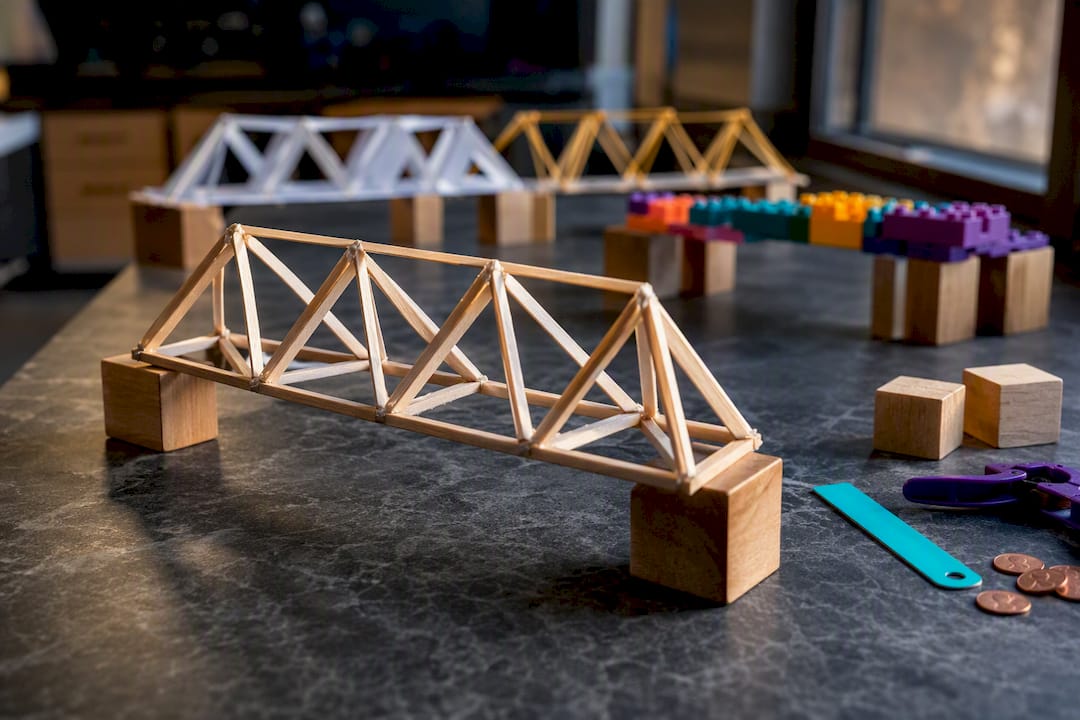
- Fidget maze and tactile engineering builds. Marble runs, popsicle-stick bridges, and cardboard mazes reward repetitive hands-on tinkering without demanding eye contact or verbal exchange.
- Nature pattern hunts. Counting leaf shapes, tracking cloud types, or logging bug sightings outdoors turns citizen science into a calming, observational walk rather than a performance task.
- Unplugged coding puzzles. Block-based logic games, algorithm scavenger hunts, and paper coding mazes teach sequencing without a screen’s flicker or notification noise.
- Simple circuit builds with assigned roles. A basic LED and battery circuit becomes a structured, collaborative task when one child manages materials and another handles assembly.
- Video self-modeling task sequences. Recording a child succeeding at step one of a task, then replaying it before step two, helps learners acquire and maintain STEM skills faster than watching an adult demonstrate the same step.
- Interest-led design challenges. If a child loves trains, build a pulley system for a toy locomotive. The STEM content stays the same; the entry point changes everything.
Slow, calm, and interest-led beats surprise-driven every time for neurodivergent learners tackling STEM projects, and that principle should guide which activity you pick first.
How to Adapt Any STEM Activity for an Autistic Learner
Any activity above can flex to fit a wider range of kids once you build in structure ahead of time. The goal isn’t to water down the science. It’s to remove the unpredictable parts that create stress before the learning even starts.
- Break it into a task-analyzed checklist. Turn “build a circuit” into five or six discrete, visually numbered steps a child can check off.
- Add visual supports. Photo cards of each material, color-coded parts, and a visible timer reduce the guesswork that fuels anxiety. Practitioner guidance consistently points to visual schedules and task analysis as core supports for young autistic learners.
- Control the sensory environment. Dim harsh lighting, offer noise-canceling headphones for anything with a hiss or pop, and swap slime for a drier alternative if texture is a barrier.
- Assign rotating roles. Observer, operator, and material manager give every child a defined job, which lowers social pressure while still building cooperative skills.
- Plan your prompts and fade them. Start with a physical prompt, move to a gesture, then to nothing, and pair each completed step with immediate, specific praise.
Pro Tip: Record a 20-second video of the child completing just the first step correctly, then play it back before starting the full activity. That single clip often does more to build independence than a five-minute verbal walkthrough.
STEM Activities by Age: Preschool Through the Teen Years
Matching the activity to developmental stage matters as much as matching it to sensory profile. Here’s how the same core ideas scale up.
- Preschool (ages 4 to 6): guided sensory exploration. Water bead bins, simple stacking towers, and adult-led video self-modeling introduce cause and effect before language catches up to the concept.
- Elementary (ages 7 to 9): simple circuits and growth logs. A basic flashlight circuit or a daily bean-sprout measurement chart gives structure with a visible, satisfying result. Assign one role per child to build early cooperation.
- Tweens (ages 10 to 12): interest-led design challenges. Let a child’s fixation, whether it’s dinosaurs, weather, or trains, anchor a small engineering brief. Unplugged coding puzzles work well here too, since interest-based afterschool STEM programs show real engagement gains for autistic middle schoolers when the project connects to something they already care about.
- Teens (ages 13 and up): multi-session project-based learning. Longer robotics builds, a solar energy demonstration, or a portfolio-based reflection project give teens ownership over a full arc, from planning to a final write-up of what worked and what didn’t.
A checklist built around these same task-analysis principles can help you plan the right entry point for any age in this range.
What the Research Actually Shows
STEM project-based learning isn’t just engaging. It changes measurable outcomes. A 2025 systematic review and meta-analysis found that STEM-PBL improves cooperation, empathy, and communication in students with autism, while also reducing emotional and behavioral incidents, based on combined teacher, parent, and student feedback across multiple studies.
A separate instructional framework built specifically around role rotation, guided inquiry, and structured reflection after each session found similar gains in cooperation and communication among participants with autism, according to research on STEM activities and social outcomes for students with autism spectrum disorder.
Rotating a child through observer, operator, and material manager roles across sessions, paired with a short reflection question at the end of each one, distributes the social and cognitive load in a way that a single fixed role never does.
Video self-modeling deserves its own line here too. Short clips focused on a child’s own successful first step consistently outperform adult demonstrations for building and maintaining procedural STEM skills, which makes VSM one of the more underused tools in a home or classroom kit.
Introducing Coding and Robotics Without the Overload
Start unplugged before you introduce any device. Paper-based algorithms and logic puzzles teach the sequencing skills coding depends on, without a screen’s glare or a robot’s sudden motion.
- Choose small, slow-moving programmable robots with predictable, repeatable commands over ones with sound effects or erratic movement.
- Treat the robot as a task, not a toy demanding conversation. Robots used as a third-party tool of engagement give kids a concrete job, like “robotics test engineer,” which lowers social pressure while still building cooperative problem-solving.
- Cap screen time per session and offer a tactile alternative, like a wired circuit build, on days when a device feels like too much.
Why Identity-Building Changes the STEM Equation
STEM activities work best when a child sees the project as something they’re doing, not something being done to them. That’s the core of the Engage, Encourage, Empower framework: Engage meets the child where their interests already are, Encourage supports them through the visual and task-analysis scaffolds outlined above, and Empower hands them ownership, often through role-play as a scientist or engineer, once they’ve built the skill.
— Tita
Bring These Activities Home With Ready-Made Kits
Every adaptation strategy above, task analysis, visual supports, role rotation, sensory control, is easier to run when the materials are already built for it. Screen-free STEAM kits with scaffolded steps, visual instruction cards, and role-play elements like lab coats and badges help caregivers or teachers run structured sessions more easily.

The kits pair naturally with the teacher-ready lesson plans, which include the visual materials and step breakdowns this article recommends, so a classroom or home setup can move from idea to activity in one sitting. If circuits and electricity are the interest anchor, the Shocking Electric Science kit gives you a ready-built version of the role-based circuit activity described above. Browse the full experiment kit collection and pick the one that matches your child’s current interest, then build your first adapted session this week.
Sources
- Effects of STEM learning on students with autism spectrum disorder and students with intellectual disability: a systematic review and meta-analysis
- Cultivating STEM learning for young autistic learners — FPG
- Video self-modeling improves task acquisition and maintenance for learners with autism (VSM study)

Leave a comment
This site is protected by hCaptcha and the hCaptcha Privacy Policy and Terms of Service apply.