Ten Ways to Bring Summer STEM at Home This Year
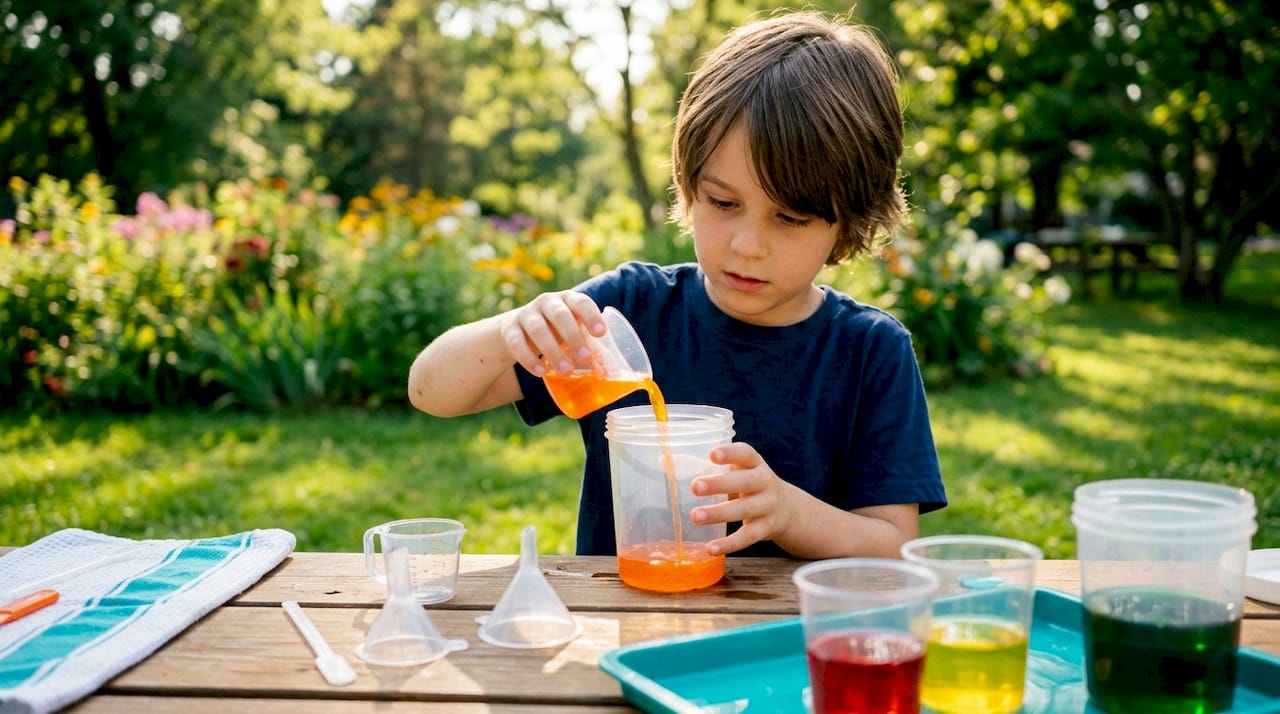
You can run screen-free, confidence-building STEM at home this summer with ten simple activities using items already in your kitchen and recycling bin. Consistent, hands-on STEM practice over the summer months helps prevent the seasonal learning slide that worries so many parents, and it costs almost nothing to start. Science Buddies confirms that most DIY STEM projects work across the 5-13 age range and scale up or down with the child.
Three reasons to start this week:
- It fights summer learning loss without workbooks or drills.
- It builds real confidence through hands-on success, not screen time.
- It costs little to nothing. Cardboard, foil, and balloons do the heavy lifting.
Key Takeaways
Screen-free STEM at home works best when short experiments are paired with a predict-observe-improve journal habit and an identity-driven role, like scientist or engineer, rather than treated as a one-off craft.
| Point | Details |
|---|---|
| Start with household materials | Ten activities above use items like foil, balloons, and cardboard already in most homes. |
| Adapt by independence, not just age | Match difficulty to motor skills and conceptual readiness, not birthday alone. |
| Journal every activity | Three questions, predict, observe, improve, turn a build into a lesson. |
| Trial-run before kids see it | Testing the activity solo first catches sticky steps and saves momentum. |
| Teamgeniussquad kits cut prep time | Pre-sorted experiment kits with lab coats and journals apply the E³ Method without extra shopping. |
Where to Find More Summer STEM Activities
- Science Buddies: searchable project database sorted by age and subject.
- Waterford: research-backed activity lists focused on preventing learning loss.
- PLTW: identity-driven activity ideas built around role-play.
- Invent: short outdoor engineering challenges, including seasonal shadow-tracking projects.
Table of Contents
- Ten Screen-Free Summer STEM Projects You Can Run at Home
- How to Adjust These Summer STEM Activities by Age
- Why Journaling and Role-Play Deepen At-Home STEM Learning
- Prep Checklist and Safety Tips for a Smooth STEM Afternoon
- What Actually Makes Summer STEM Stick
- Teamgeniussquad Makes Screen-Free Summer STEM Easier
- Sources
Ten Screen-Free Summer STEM Projects You Can Run at Home
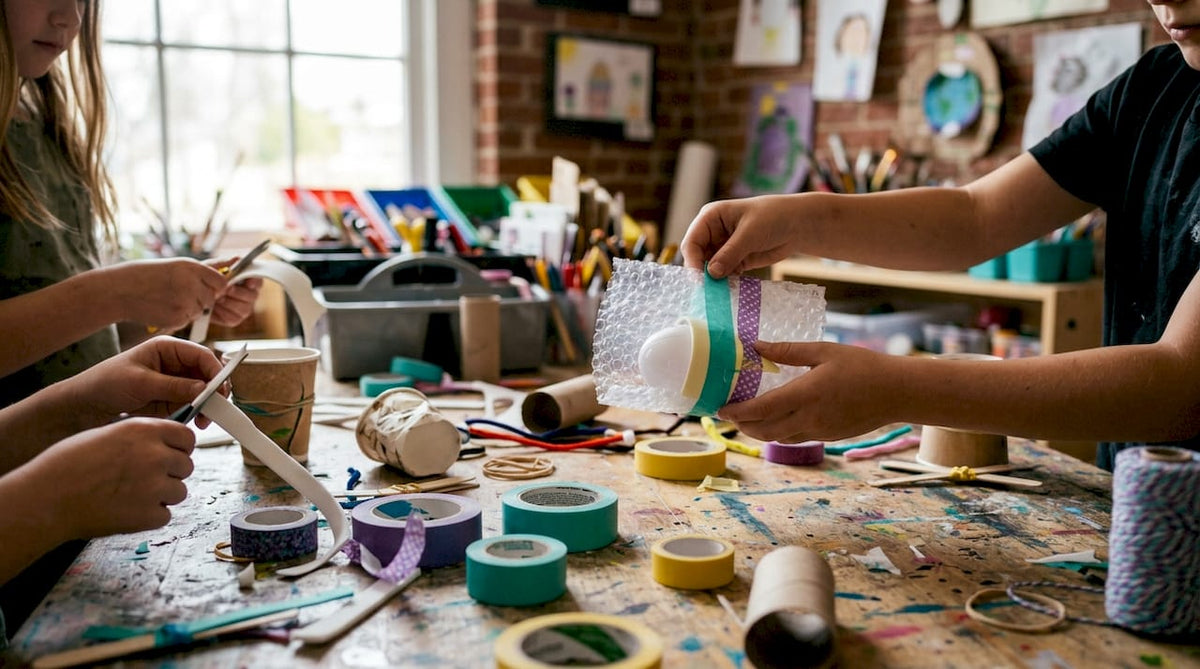
Each project below uses household-first materials, takes a moderate amount of time, typically less than an hour, and teaches a specific concept, reflecting some of the best outdoor learning trip ideas for educators that emphasize hands-on, experiential education. Outdoor picks need sun or open space; indoor picks work on a rainy afternoon or a kitchen table.
- Pizza-box solar oven (outdoor, sunny). Materials: pizza box, foil, plastic wrap, black paper. Line the box with foil, cover the opening with plastic wrap, and prop it toward the sun with a stick. Learning goal: how reflected light converts to heat energy.
- Balloon-powered rocket car (outdoor or hallway, energetic). Materials: balloon, straw, tape, a small cardboard base with bottle-cap wheels. Thread the balloon through the straw, tape it to the cardboard, and release. Learning goal: Newton’s third law in action.
- Paper roller coaster (indoor, quiet). Materials: cardstock strips, tape, a marble. Build loops and curves, then test whether the marble completes the run. Learning goal: gravity, momentum, and friction.
- Aluminum-foil boat challenge (indoor or outdoor, calm). Materials: foil, a tub of water, pennies. Fold a boat and add pennies one at a time until it sinks. Learning goal: buoyancy and load limits.
- Popsicle-stick catapult (outdoor, energetic). Materials: popsicle sticks, rubber bands, a plastic spoon, mini marshmallows. Assemble the frame, load the spoon, and launch. Learning goal: levers and projectile motion.
- Ice cream in a bag (indoor, quiet, edible). Materials: milk, sugar, vanilla, ice, rock salt, two sealable bags. Shake for eight to ten minutes. Learning goal: freezing point depression, an easy entry into chemistry.
- Homemade slime or goop (indoor, sensory). Materials: glue, borax or contact-lens solution, food coloring. Mix and knead. Learning goal: polymers and non-Newtonian fluids.
- Paper bridge engineering (indoor, quiet). Materials: paper, tape, two stacks of books, pennies for weight-testing. Learning goal: structural design and load distribution.
- Straw rocket launch (outdoor, energetic). Materials: straws, paper, tape. Fold small paper rockets and blow them through a launch straw for distance. Learning goal: aerodynamics and air pressure.
- Egg-drop engineering challenge, the week-long option. Materials: an egg, straws, cotton balls, tape, a small box. Spend one day brainstorming, one day building, one day testing from increasing heights, and one day redesigning after failure. Learning goal: protective engineering and iterative design, with enough runway to turn a single afternoon activity into a mini home camp. Little Bins for Little Hands makes the case that a loose week plan like this one keeps a whole summer of at-home STEM projects from fizzling out by day three.
How to Adjust These Summer STEM Activities by Age
The same activity can serve a five-year-old and a thirteen-year-old if you change what you ask, not just what you build.
- Ages 5 to 7: Cut steps in half, pre-measure ingredients, and let an adult handle anything sharp or hot. Success means finishing the build, not perfecting it.
- Ages 8 to 10: Introduce a ruler, a stopwatch, or a scale. Ask “what happens if we change one thing?” and let them test it.
- Ages 11 to 13: Hand over the variables. Let them choose materials, record data across three trials, and write a one-sentence research question before they start.
Match difficulty to three things: how independently your child works, their fine-motor control, and how much abstract thinking the activity demands.
Pro Tip: If you’re not sure which age band fits, start one level down. A child who finishes early can add a variable; a child who’s stuck rarely recovers momentum.
Why Journaling and Role-Play Deepen At-Home STEM Learning
A 20-minute build becomes a real learning cycle the moment you add three questions: What do you predict will happen? What did you actually observe? What would you improve next time? That single habit turns a craft project into a genuine experiment, and it costs nothing but a notebook.
Role-play matters just as much as the journal. A lab coat, a badge, or a homemade “scientist certificate” signals to a child that they’ve stepped into a real identity, not just finished a craft. PLTW’s research on summer STEM found that identity-driven play increases persistence, meaning kids stick with a failed catapult or a sunken foil boat longer when they see themselves as an engineer rather than a kid making a mess.
The Exploratorium’s tinkering mindset frames failure as data, not defeat. A boat that sinks or a rocket that nosedives isn’t a failed activity. It’s the test phase of a real design process, and naming it that way changes how a child talks about their own mistakes.
Teamgeniussquad’s E³ Method turns this into three plain steps any parent can run after an experiment: Engage (what did we just build?), Encourage (what worked, even a little?), and Empower (what would you try differently?). It’s the same arc the role-play and storytelling approach uses to help kids see themselves as the innovator, not just the assistant.
- Predict, observe, improve: three questions that turn a build into a lesson.
- A lab coat or badge signals identity, not just costume.
- E³ gives you a repeatable script: Engage, Encourage, Empower.
Prep Checklist and Safety Tips for a Smooth STEM Afternoon
- Trial-run it yourself first. Build the activity once without your child watching so you catch the sticky steps, like a balloon that won’t stay on the straw, before they do.
- Check materials for allergies and mess tolerance. Borax-based slime, edible experiments, and food dye all need a quick household check.
- Contain the mess zone. A towel, tray, or outdoor table saves a five-minute cleanup from becoming a 30-minute one.
- Watch outdoor conditions. Solar ovens need direct sun; rocket launches need low wind.
- Track results playfully. A stopwatch, tally marks, or a quick sketch works better than a formal data sheet for this age range.
Pro Tip: Running the activity solo first isn’t extra work, it’s the step that prevents the “wait, that doesn’t work” moment that kills momentum mid-project.
What Actually Makes Summer STEM Stick
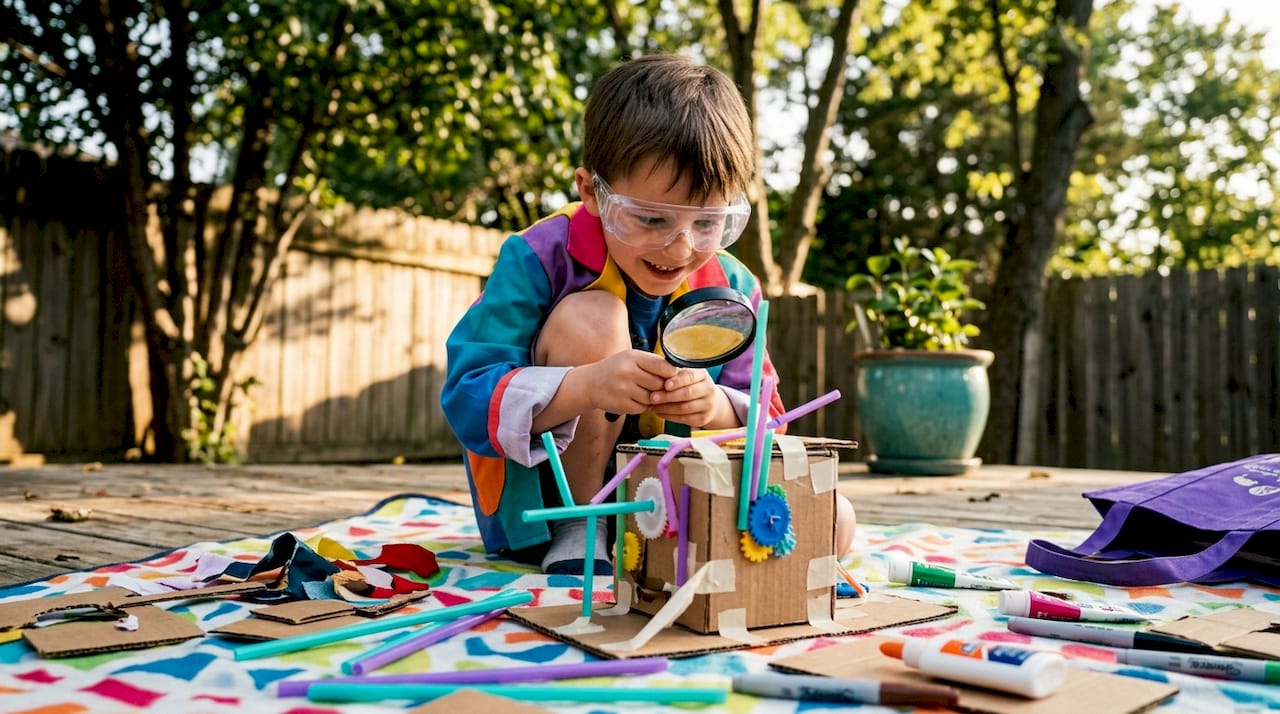
Most summer STEM advice treats the activity as the whole product: build the volcano, watch it fizz, move on. That’s backward. The activity is the delivery mechanism. The identity shift, the moment a kid starts calling themselves an engineer instead of a kid playing with cardboard, is the actual outcome worth chasing, and it’s the piece most guides skip entirely.
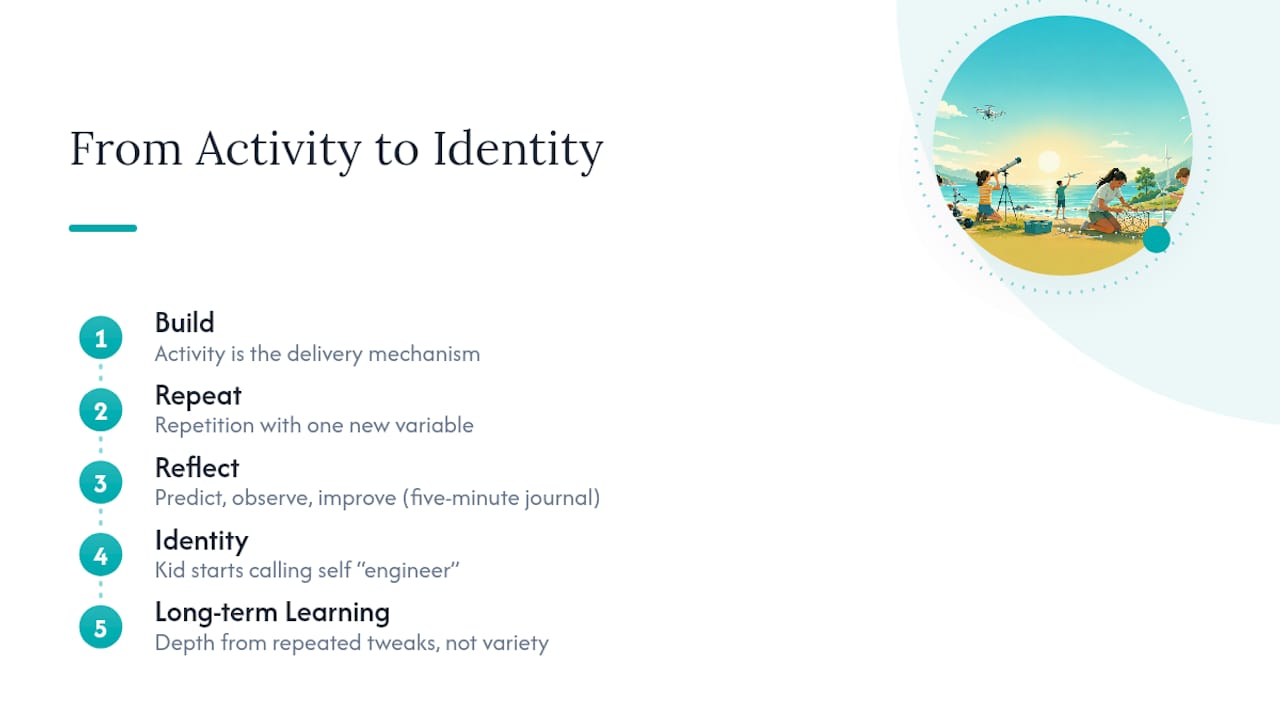
The conventional advice also overrates variety. Ten different projects in ten days teaches less than three projects repeated with one new variable each time, because repetition with a twist is what builds the “I can figure this out” instinct. A kid who redesigns the same egg-drop capsule three times learns more about engineering than one who builds ten unrelated things once each.
Prioritize the journal question over the build itself. A five-minute prediction and reflection habit does more for long-term learning than an extra 20 minutes spent perfecting the catapult. If you only adopt one thing from this article, make it “predict, observe, improve.” Everything else, including the fanciest kit, is scaffolding around that one habit.
— Tita
Teamgeniussquad Makes Screen-Free Summer STEM Easier
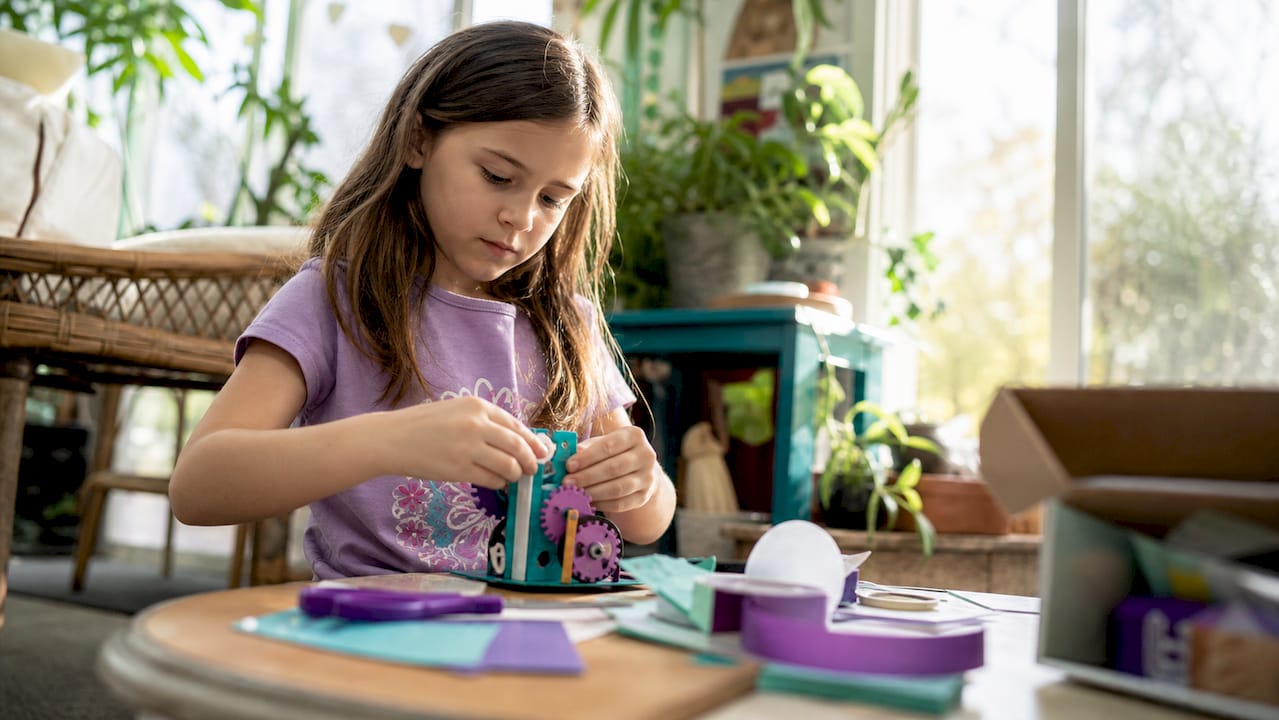
Building ten activities from scratch every week is a real time cost, even with a solid materials list. Teamgeniussquad’s experiment kits arrive pre-sorted by concept, so the prep checklist above is already handled before your child sits down at the table.

The solar energy kit with mirror disk pairs directly with the pizza-box solar oven idea above, and the slime, gel, and goop lab kit covers the polymer chemistry activity without a borax run to the store. Every kit builds on the E³ Method, with a lab coat, badge, and research journal included so the identity-play and literacy pieces aren’t an extra step you have to invent yourself. The design grew out of a real family’s experience with dyslexia and dysgraphia, which is why the instructions lean visual first and text second. Browse the experiment kits collection and pick one that matches the activity your child is already excited about this week.
Sources
- STEM Activities for Kids | Science Buddies
- STEM activities for kids | Waterford
- 15 Super-Cool Summer STEM Activities | PLTW

Leave a comment
This site is protected by hCaptcha and the hCaptcha Privacy Policy and Terms of Service apply.