The Role of Hands-On Kits in STEAM Learning
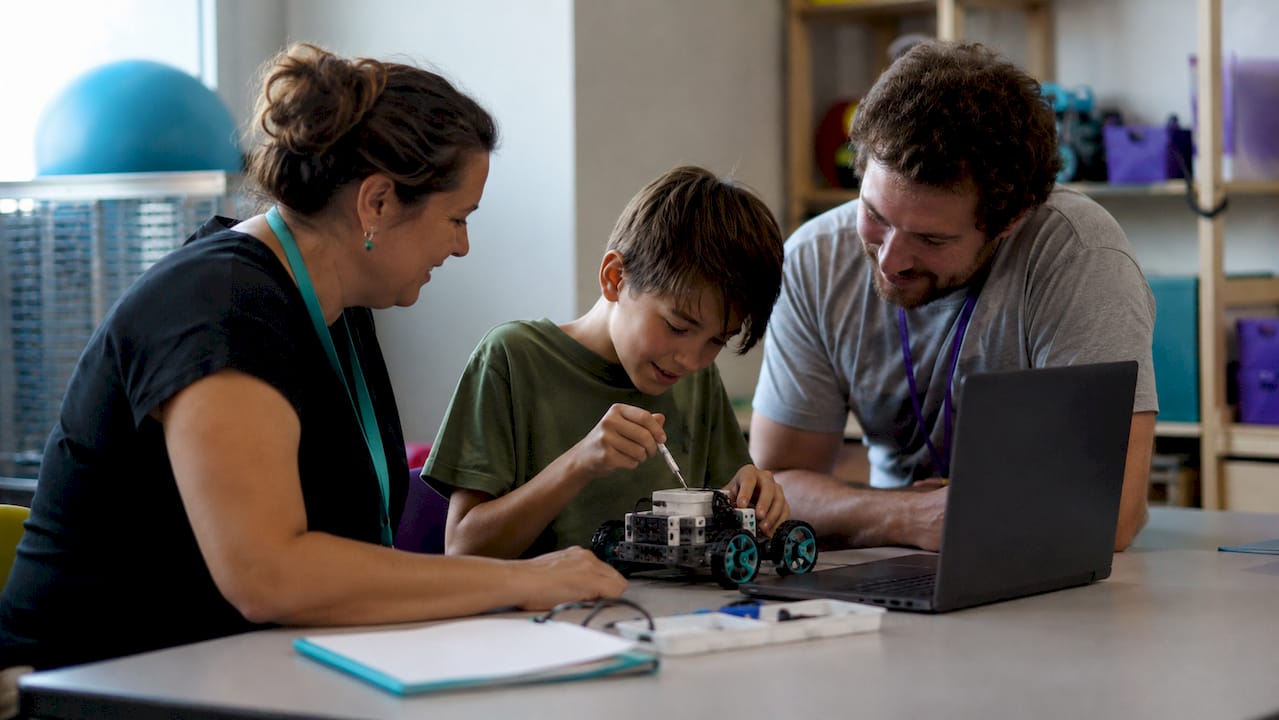
Hands-on kits are structured learning tools that place real materials, experiments, and challenges directly into a child’s hands, making abstract STEAM concepts tangible and memorable. The role of hands-on kits goes far beyond keeping kids busy. Research shows students retain approximately 75% of material learned through active engagement, compared to just 10% through passive reading. That gap is enormous, and it explains why parents, educators, and caregivers are turning to tactile, inquiry-based tools like Teamgeniussquad’s discovery kits to give children ages 5–13 a real learning edge.
How do hands-on kits improve learning outcomes for children aged 5–13?
The science behind hands-on learning is grounded in neuroscience, not just classroom intuition. Hands-on learning activates motor, somatosensory, and prefrontal brain regions simultaneously. That multi-region activation strengthens synaptic connections and builds the neural pathways that support working memory and executive function.
When a child wires a circuit, mixes a chemical reaction, or builds a solar-powered model, the brain encodes that experience across multiple systems at once. Passive reading activates far fewer regions. The result is shallower encoding and faster forgetting.
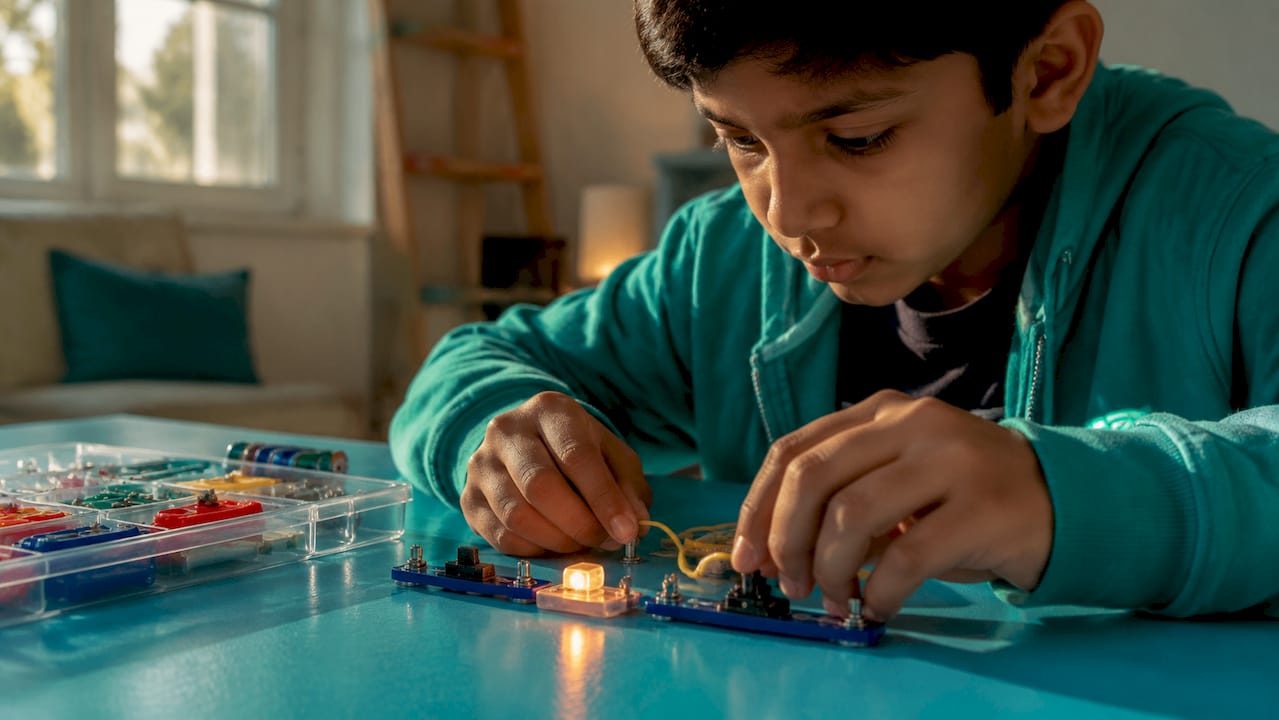
The cognitive benefits extend beyond memory. A systematic review of 25 studies confirmed that kit-based teaching tools integrating microcontrollers and digital sensors significantly enhance higher-order thinking and science process skills in elementary and secondary students. That means children are not just absorbing facts. They are learning to hypothesize, test, and revise, which are the core habits of scientific thinking.
Motivation is another measurable outcome. In one grade four study, 100% of teachers and students reported increased engagement and critical thinking during hands-on experiment sessions. That kind of universal buy-in is rare in education research. It signals that active learning activities connect with children across ability levels, not just high achievers.
Key learning benefits of quality hands-on kits include:
- Deeper retention: Active doing encodes information far more durably than listening or reading alone.
- Critical thinking: Open-ended challenges push children to problem-solve rather than recall answers.
- Intrinsic motivation: Children who choose to keep experimenting after the lesson ends are self-directed learners.
- Science process skills: Observing, measuring, predicting, and recording are practiced naturally within each experiment.
- Confidence through success: Completing a real experiment gives children visible proof of their own capability.
Pro Tip: When a child gets a result they did not expect, resist the urge to correct it immediately. Ask “What do you think happened?” That one question turns a mistake into a discovery.
What advantages do tactile kits offer over traditional teaching tools?
Traditional teaching tools, including textbooks, worksheets, and lectures, deliver information efficiently. They do not, however, engage the full range of ways children process and retain knowledge. Tactile and hands-on learning kits fill that gap by anchoring concepts in physical experience.
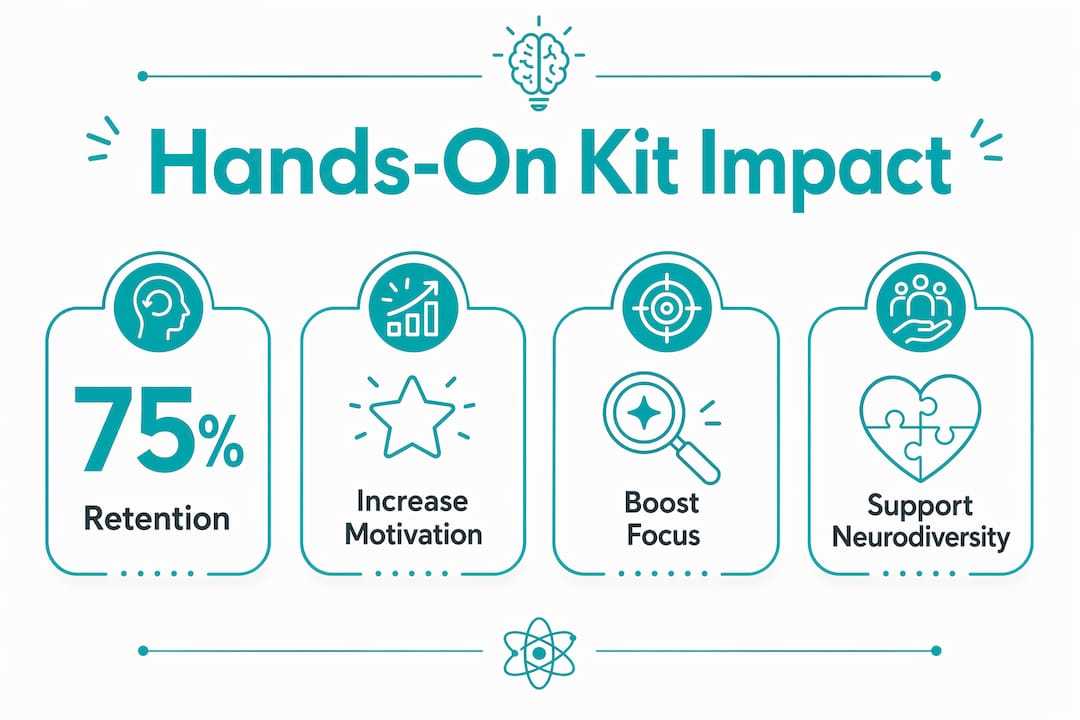
Haptic learning materials reduce extraneous cognitive load and increase intrinsic motivation, especially on complex spatial concepts. For a child trying to understand electricity or molecular structure, holding a physical model makes the abstract concrete. The mental effort required to imagine the concept drops, and the child can focus on understanding it instead.
One important clarification: the “learning styles” model, which claims children are strictly visual, auditory, or kinesthetic learners, is largely discredited by current research. What the science does confirm is that multimodal tactile tools support focus and engagement for all learners, not just those with a supposed kinesthetic preference. Every child benefits from touching, building, and experimenting.
The benefits are especially significant for neurodivergent children. Hands-on tools serve as critical sensory regulation aids for children with ADHD and dyslexia. Physical engagement gives the nervous system something purposeful to do, which reduces the need for disruptive self-regulation behaviors. For families navigating dyslexia or dysgraphia, as Teamgeniussquad’s own founding story reflects, a kit that lets a child succeed through doing rather than reading or writing can be genuinely life-changing. You can explore how screen-free kits support neurodivergent kids in more depth.
The deeper pedagogical shift is this: effective hands-on kits anchor learning in observable phenomena that motivate inquiry, rather than presenting facts to be memorized. A child who watches a mirror disk concentrate sunlight onto a target does not need to memorize the definition of solar energy. They have already felt what it means.
Pro Tip: If a child with ADHD struggles to stay on task during a lesson, swap the worksheet for a physical build. The tactile engagement often holds attention longer than any screen-based alternative.
What features should parents and educators look for in effective STEAM kits?
Not all kits deliver equal educational value. Choosing well means looking past colorful packaging and checking for features that actually support learning.
-
Age-appropriate challenge. A kit designed for ages 5–7 should involve simple circuits or basic chemical reactions. Kits for ages 10–13 can incorporate microcontrollers, sensors, and multi-step engineering challenges. Mismatched difficulty either bores or overwhelms.
-
Alignment with STEAM standards. Quality kits connect to real science and math concepts children encounter in school. Look for kits that name the concepts being explored, not just the activity being done.
-
Open-ended design. The best kits include a core experiment and then invite children to modify, extend, or redesign it. That iterative testing habit is how real scientists work.
-
Safety and material quality. All components should be non-toxic and sized appropriately for the age group. Kits using recyclables alongside purpose-built components teach resourcefulness alongside science.
-
Parent and educator support materials. A good kit comes with clear instructions, background explanations, and prompts for discussion. This matters especially for caregivers who do not have a science background.
-
Identity and confidence elements. Teamgeniussquad’s kits include lab coats, badges, and certificates that help children step into the role of scientist or innovator. That identity layer is not decoration. It shapes how a child sees themselves during and after the activity.
Physical manipulatives do not need to be expensive to be effective. 3D printed models cost as little as $0.50–$2.00 per student and still deliver meaningful tactile classification and exploration experiences. The key is purposeful design, not price.
How can hands-on kits be integrated into home and classroom environments?
Buying a kit is the easy part. Getting consistent educational value from it requires a bit of structure, especially in classroom settings.
Effective hands-on STEM programs involve forming a dedicated STEM committee to pilot materials, train facilitators, and incorporate student feedback for continuous improvement. That process sounds formal, but the core idea applies at home too. Try a kit once, note what confused your child or sparked the most curiosity, and adjust how you use it the next time.
Strategies that consistently improve outcomes include:
- Pilot before committing. Run one experiment from a kit before building a full lesson plan around it. Identify where children get stuck and prepare guiding questions in advance.
- Integrate with existing curriculum. A solar energy kit pairs naturally with a unit on renewable resources. An electricity lab connects directly to physics concepts. Linking kits to what children are already studying deepens both.
- Invite open-ended inquiry. After the guided experiment, ask “What would happen if we changed this?” That question shifts the child from follower to investigator.
- Engage parents at home. Send a simple one-page guide home with each kit activity. Parents do not need to be scientists. They need to know which questions to ask.
- Celebrate the process, not just the result. A child who gets an unexpected result and figures out why has learned more than one who followed the steps perfectly. Recognize that.
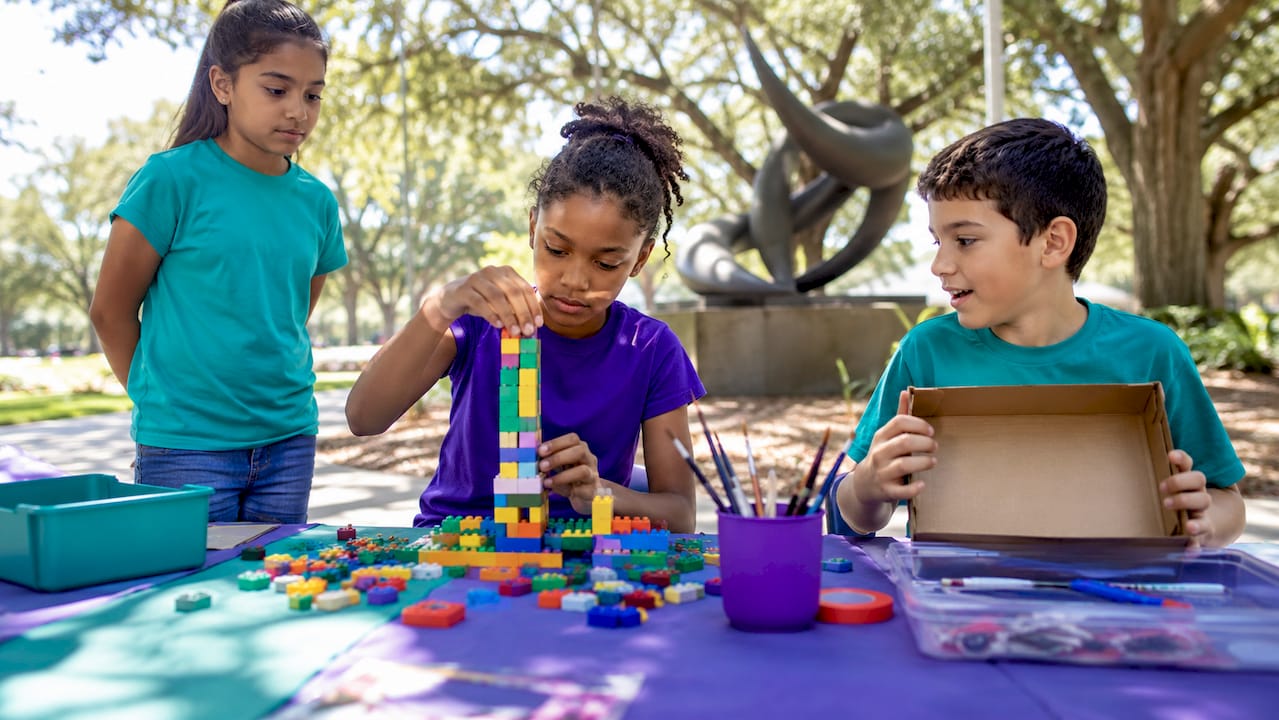
The social-emotional benefits of group kit work are real and measurable. Children who collaborate on experiments practice communication, negotiation, and shared problem-solving. Those skills transfer directly to academic and personal success. An interactive STEAM learning tool used in a small group setting can generate more conversation and peer teaching than an entire class period of direct instruction.
Key Takeaways
Hands-on kits are the most effective tools available for building STEAM skills, confidence, and long-term knowledge retention in children ages 5–13.
| Point | Details |
|---|---|
| Retention advantage | Active doing produces 75% knowledge retention versus 10% from passive reading. |
| Neuroscience foundation | Hands-on learning activates motor and prefrontal brain regions, building stronger neural pathways. |
| Neurodivergent support | Tactile kits reduce cognitive load and serve as sensory regulation tools for ADHD and dyslexia learners. |
| Kit selection criteria | Prioritize age-appropriate challenge, open-ended design, and built-in identity elements over price. |
| Implementation matters | Piloting kits, training facilitators, and gathering child feedback drives better learning outcomes over time. |
What I have learned from watching children unlock their inner genius
I have spent years watching children interact with hands-on materials, and the moment that never gets old is the one where a child stops following instructions and starts asking their own questions. That shift, from compliant participant to curious investigator, is what hands-on kits make possible. No worksheet produces that look.
The most common barrier I hear from parents and educators is not budget or time. It is the fear of doing it wrong. Adults worry they will not know the answer when a child asks why something happened. Here is the truth: not knowing the answer is the best possible position to be in. When you say “I don’t know, let’s find out together,” you model exactly the mindset you want your child to develop.
The second barrier is the belief that a child who struggles in traditional school simply is not a science kid. That belief is wrong, and the evidence is clear. Children who find reading or writing difficult often thrive when given a physical challenge. The hands know things the pencil cannot express. Teamgeniussquad was built on exactly that insight, born from a real family’s experience with dyslexia and dysgraphia.
My honest advice: start with one kit, one experiment, and zero expectations about the outcome. Watch what your child does with it. The confidence that grows from a single successful discovery has a way of spreading into every other area of learning.
— Tita
Discover hands-on STEAM kits built for young innovators
Teamgeniussquad designs screen-free, tactile discovery kits that put real science in children’s hands and real confidence in their hearts. Every kit is powered by the trademarked E³ Method, guiding children from curiosity to capability through purposeful play.
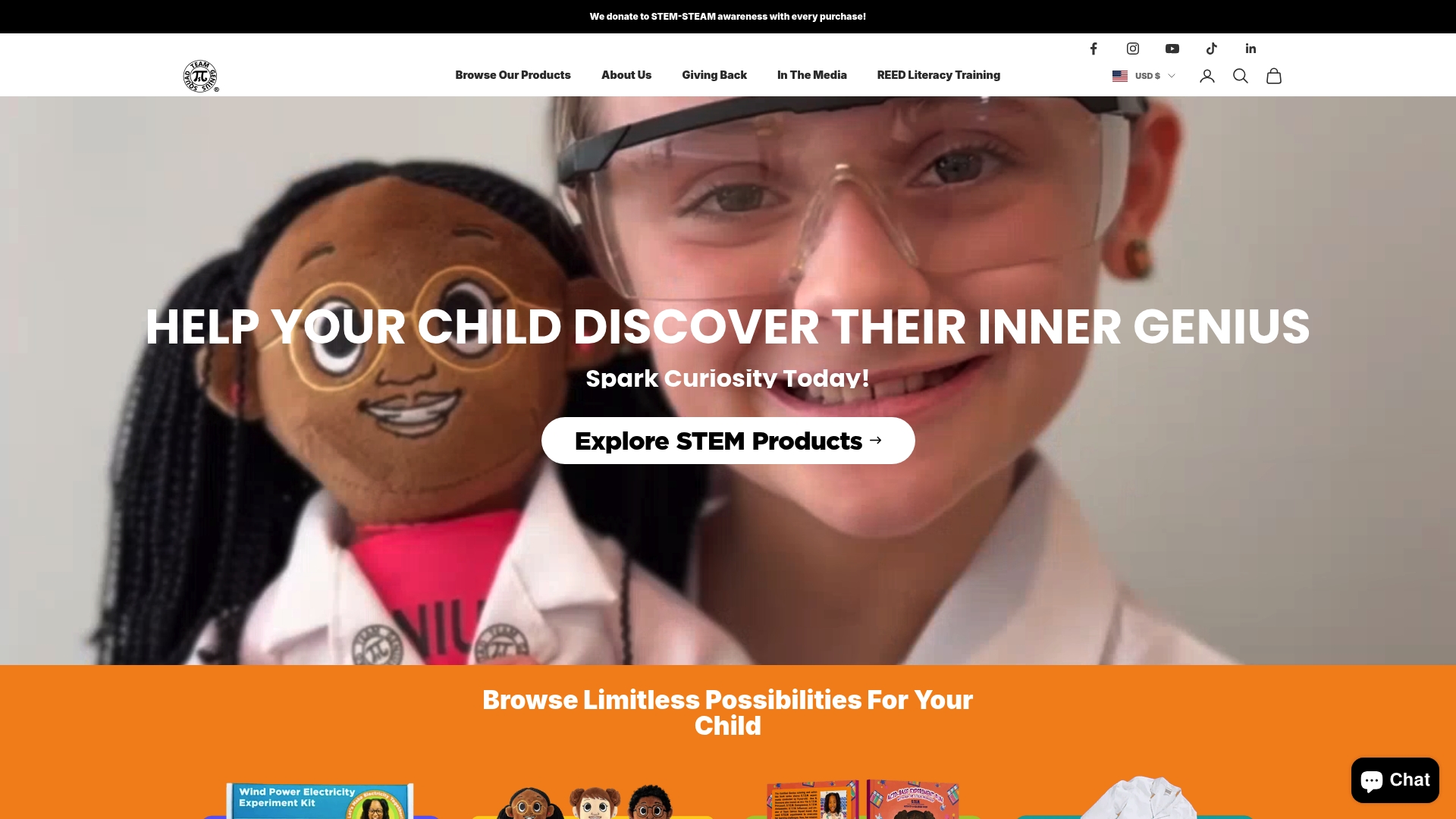
The STEM-STEAM Electricity Lab Bundle is one of Teamgeniussquad’s most engaging kits, letting children ages 5–13 explore electricity concepts through real experiments, not simulations. Each kit includes educator support materials, identity-building tools, and open-ended challenges designed to grow with your child. Browse the full collection of experiment kits and find the right fit for your young innovator today.
FAQ
What is the role of hands-on kits in STEAM education?
Hands-on kits anchor learning in real, observable phenomena that motivate inquiry and build science process skills. They replace passive fact delivery with active discovery, producing deeper retention and stronger critical thinking.
Why do hands-on science kits work better than textbooks alone?
Students retain approximately 75% of material learned through active engagement versus 10% through passive reading. Physical experiments also activate multiple brain regions simultaneously, creating stronger and longer-lasting memory.
Are hands-on kits effective for neurodivergent children?
Yes. Tactile kits serve as sensory regulation tools for children with ADHD and dyslexia, reducing disruptive behaviors by giving the nervous system purposeful physical engagement. They allow neurodivergent learners to succeed through doing rather than reading or writing.
What age range benefits most from hands-on learning kits?
Children ages 5–13 show strong gains in motivation, focus, and science skills from kit-based learning. The key is matching the kit’s complexity to the child’s developmental stage, with simpler builds for younger children and multi-step engineering challenges for older ones.
How often should children use hands-on kits for best results?
Regular, repeated use produces better outcomes than occasional one-off sessions. Programs that pilot materials, train facilitators, and refine activities based on student feedback consistently outperform those that treat kits as one-time events.


Leave a comment
This site is protected by hCaptcha and the hCaptcha Privacy Policy and Terms of Service apply.