Sculpture in the Round: A Complete Artist's Guide
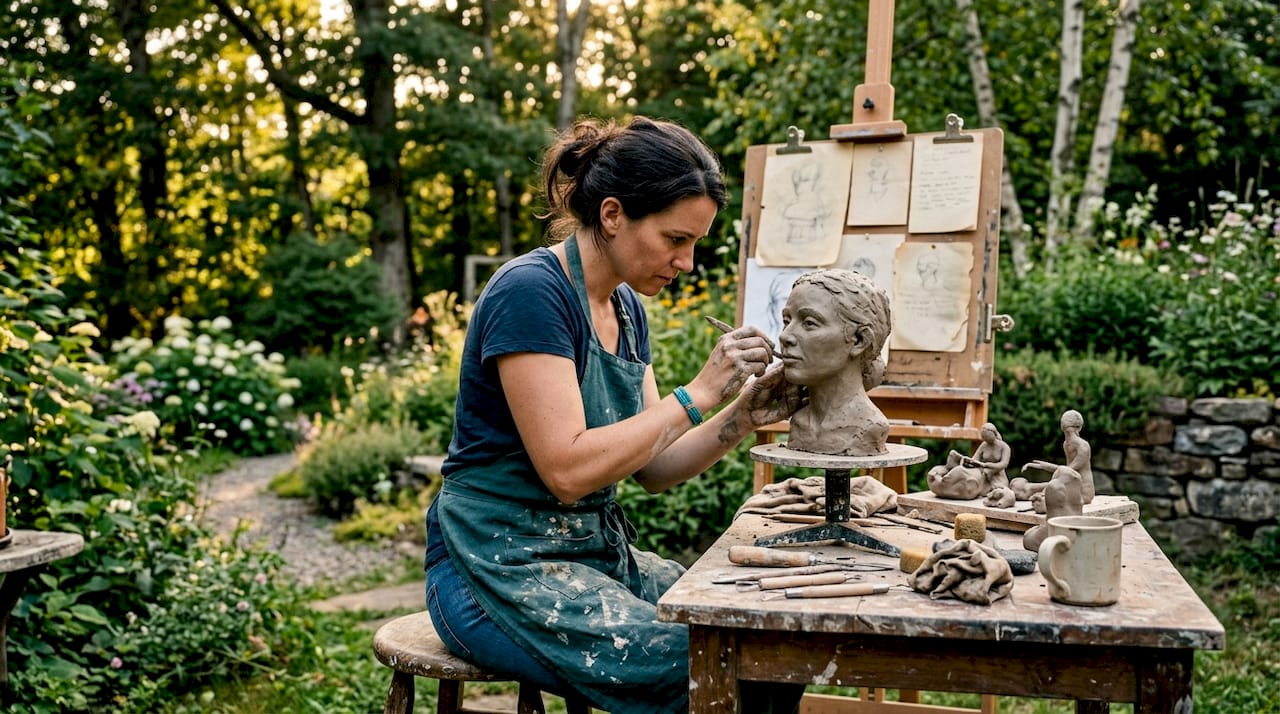
Sculpture in the round is defined as any freestanding, 360-degree viewable three-dimensional form not attached to a wall or background. Unlike relief sculpture, which is fixed to a surface and viewed primarily from the front, a work in the round stands completely free in space. Every angle tells part of the story. That total spatial presence is what separates this sculptural form from nearly every other art medium, and it is exactly why artists, educators, and art enthusiasts keep returning to it as one of the most demanding and rewarding creative disciplines.
What materials and methods are used in sculpture in the round?
The material you choose shapes everything about a freestanding sculpture. Common materials include bronze, stainless steel, corten steel, stone, glass, and timber, and each one behaves differently in light, weather, and space. Bronze holds fine detail and develops a rich patina over time. Corten steel weathers to a warm, rust-colored surface that suits outdoor environments. Stone carries weight and permanence. Glass and aluminum open up possibilities for transparency and lightness that heavier materials cannot offer.
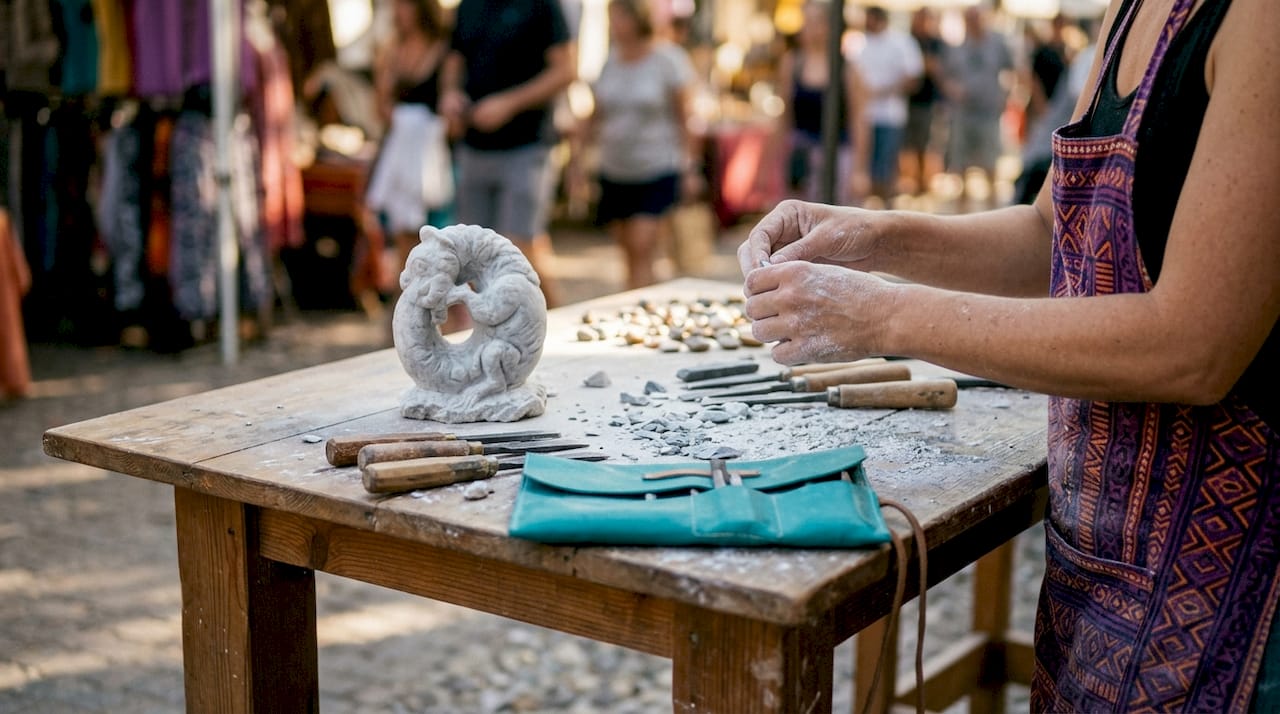
Material choice also determines where a sculpture can live. A large stone carving may be too heavy for an interior gallery floor. A timber piece may need sealing for outdoor display. Matching material to environment is a practical decision that affects the sculpture’s long-term integrity and visual impact.
Core sculptural techniques
Four primary techniques apply to three-dimensional sculpture:
- Carving: Removing material from a solid block of stone, wood, or ice. This subtractive method demands planning because mistakes cannot be undone.
- Modeling: Building up form using clay, wax, or plaster. This additive method is forgiving and ideal for beginners learning to think in three dimensions.
- Casting: Pouring liquid material, typically bronze or resin, into a mold. Casting reproduces complex forms with high precision.
- Assembling: Joining separate components using welding, adhesives, or mechanical fasteners. This method suits mixed-media and large-scale work.
Each technique produces a different surface quality and structural logic. A carved marble figure reads differently from a cast bronze figure, even when both depict the same subject.
Pro Tip: Start with aluminum foil or clay before committing to permanent materials. Foil transforms flat sheets into three-dimensional forms in a matter of hours, teaching spatial volume without cost or waste.
How does sculpture in the round engage viewers differently than other art forms?
Freestanding sculpture demands physical participation from the viewer. Walking around the piece reveals new perspectives, making the viewer an active part of the experience rather than a passive observer. A face seen from the front may appear calm. From the side, the same face may show tension or grief. That shift happens because the sculptor designed every angle with intention.
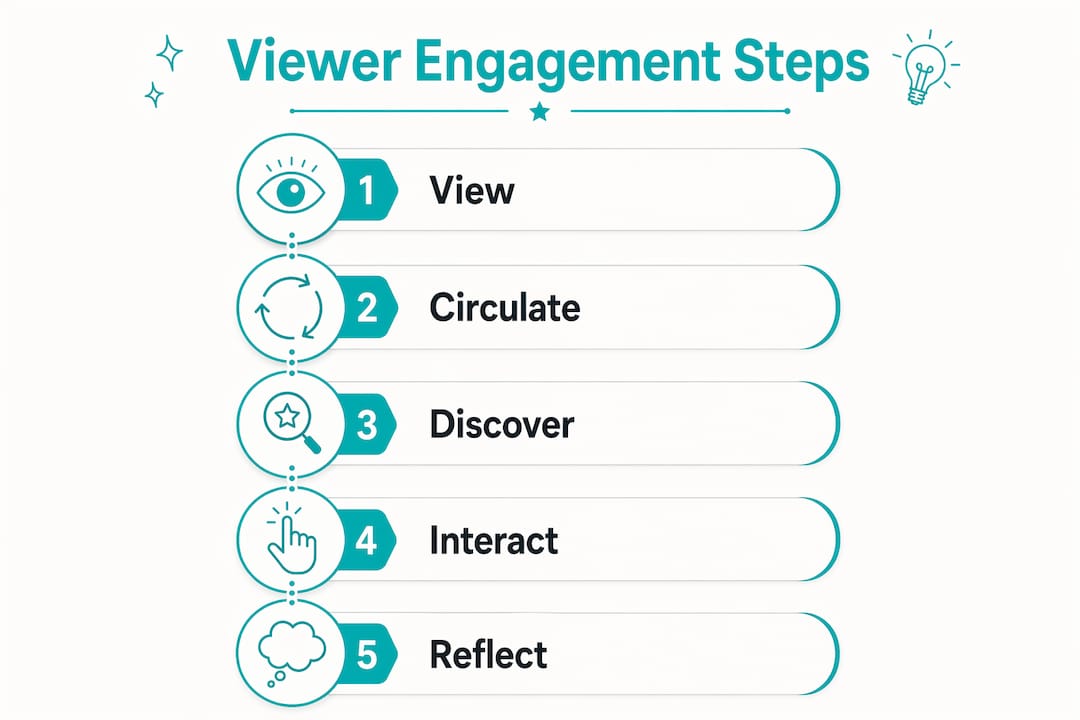
Light and shadow amplify this effect. As natural or artificial light moves across a surface, it reveals texture, depth, and contour that flat photographs simply cannot capture. A polished bronze surface reflects its surroundings differently at dawn than at midday. This constant visual change is built into the form itself.
Henry Moore, one of the most studied sculptors of the twentieth century, articulated this quality directly:
“Sculpture in the round allows multiple discoveries as viewers move around it, revealing different characters and forms from every angle. The act of circling the work becomes a narrative exploration in itself.”
That idea, multiple discoveries through movement, is the defining quality of this art form. Relief sculpture and painting fix the viewer in place. Freestanding sculpture sets the viewer in motion.
What artistic challenges do sculptors face creating freestanding sculpture?
Designing a freestanding sculpture is harder than it looks. Every side requires equal creative attention because there is no hidden backstage. A sculptor who focuses all energy on the front view will produce a piece that disappoints from every other angle. That discipline separates competent sculptors from exceptional ones.
The key challenges include:
- Negative space: The empty space around and through a sculpture is as expressive as the material itself. Negative space shapes movement and balance, guiding the viewer’s eye and creating a sense of rhythm across the whole form.
- Angle transitions: Moving from one view to the next must feel intentional, not accidental. Abrupt transitions read as unresolved design problems.
- Structural integrity: A form that looks balanced visually must also be physically stable. Thin extensions and cantilevered elements require careful engineering, especially in stone or bronze.
- Scale relationships: A figure that reads well at tabletop scale may feel awkward at monumental size. Proportions shift as scale increases.
Composition in three dimensions requires the sculptor to think simultaneously about what the viewer sees from every position. That is a fundamentally different cognitive challenge from painting or drawing.
Pro Tip: Study the work by walking around it every 15 minutes during creation. Rotate a clay model on a turntable to catch transitions that feel unresolved. Spatial relationships that look fine from one angle often reveal problems from 90 degrees away.
How can artists and educators introduce sculpture in the round through hands-on activities?
Hands-on making is the fastest path to understanding three-dimensional form. Working in 3D enhances spatial awareness and creative problem-solving in learners of all ages, and institutions like the Rhode Island School of Design treat three-dimensional work as foundational to creative development. You do not need a studio or expensive materials to start.
Here are four beginner activities that build real sculptural understanding:
- Aluminum foil figures: Twist and compress foil into human or animal forms. This teaches volume, proportion, and the difference between flat and three-dimensional thinking in under an hour.
- Clay pinch pots and figures: Modeling clay builds the additive technique from scratch. Beginners learn how adding material changes the whole form, not just the area being touched.
- Paper sculpture: Folding, scoring, and curling paper creates surprising structural forms. Paper sculpture teaches how flat material can become spatial through simple manipulation.
- Ice carving (supervised): Carving a block of ice with simple tools introduces the subtractive method. The material’s transparency and rapid change make the process vivid and memorable.
The table below shows how each activity maps to core sculptural skills:
| Activity | Primary skill developed | Recommended age range |
|---|---|---|
| Aluminum foil figures | Spatial volume and proportion | 6 and up |
| Clay modeling | Additive form building | 5 and up |
| Paper sculpture | Structural thinking | 8 and up |
| Ice carving | Subtractive technique | 12 and up |
Starting with small-scale tactile materials builds the foundational spatial awareness that carries directly into more permanent media. Educators who introduce these activities before formal art instruction report that students approach three-dimensional problems with greater confidence and less hesitation. Hands-on clothespin and foil crafts follow the same principle: tactile making builds spatial intelligence that no worksheet can replicate.
Key Takeaways
Sculpture in the round demands full 360-degree design, active viewer engagement, and mastery of negative space, making it the most spatially complex and rewarding form of three-dimensional sculpture.
| Point | Details |
|---|---|
| Definition is foundational | Sculpture in the round is freestanding and viewable from all angles, unlike relief sculpture. |
| Material shapes everything | Bronze, stone, corten steel, and timber each determine weight, finish, and display environment. |
| Viewer movement is built in | Walking around the piece reveals new light, shadow, and narrative at every angle. |
| No backstage areas exist | Every side requires equal compositional attention; unresolved angles undermine the whole work. |
| Tactile making builds spatial skill | Starting with foil or clay develops the three-dimensional thinking needed for permanent media. |
Why sculpture in the round still matters more than ever
I have spent years watching students and adult learners encounter freestanding sculpture for the first time, and the reaction is almost always the same: they circle it. Nobody tells them to. They just do it instinctively, because the form invites movement in a way that no painting or screen ever will.
What strikes me most is how this art form teaches a kind of thinking that transfers far beyond the studio. When you design something that must work from every angle, you stop thinking in single perspectives. You start anticipating how a form reads from positions you cannot currently see. That is spatial intelligence, and it is exactly the kind of thinking that STEM puzzle activities and engineering challenges also develop.
The contemporary art world sometimes treats sculpture in the round as a classical relic. I disagree strongly. The physical, embodied experience of moving around a well-designed form is something no digital medium replicates. At a time when most art is consumed on a screen, the demand for work that requires your body to engage with it feels more vital, not less.
— Tita
Teamgeniussquad and the art of three-dimensional thinking
Three-dimensional thinking is not just an art skill. It is a foundation for science, engineering, and creative problem-solving at every age.

Teamgeniussquad builds hands-on, screen-free STEAM discovery kits that develop exactly this kind of spatial and creative intelligence in children ages 5–13. The E³ Method (Engage, Encourage, Empower) guides each kit from first exploration to genuine confidence. Whether a child is sculpting with foil, building circuits, or stepping into the role of a young scientist, the process mirrors what great sculptors do: make, observe, adjust, and grow. Explore the full range of hands-on experiment kits or visit the Teamgeniussquad product launch to find the right kit for your classroom or home.
FAQ
What is sculpture in the round?
Sculpture in the round is a freestanding three-dimensional form designed to be viewed from all 360 degrees. It is not attached to any wall or background surface.
How is sculpture in the round different from relief sculpture?
Relief sculpture is attached to a flat background and viewed primarily from the front. Sculpture in the round stands completely free in space, requiring intentional design on every side.
What materials work best for beginners?
Aluminum foil and clay are the best starting materials for beginners. Both are affordable, forgiving, and teach spatial volume without requiring studio equipment.
Why does negative space matter in freestanding sculpture?
Negative space guides the viewer’s eye and creates movement and balance across the whole form. Ignoring it produces sculpture that feels heavy and static from multiple angles.
How does working in three dimensions benefit learners?
Three-dimensional work develops spatial awareness and creative problem-solving skills that apply across art, science, and engineering. Institutions like the Rhode Island School of Design treat it as foundational to creative education.


Leave a comment
This site is protected by hCaptcha and the hCaptcha Privacy Policy and Terms of Service apply.