
Ring Toss: The Complete Family Game Guide
Ring toss is defined as a game where players toss rings toward an upright peg or bottle, scoring points only when a ring fully encircles the target. That single rule makes the game easy to learn and endlessly replayable for kids and adults alike. You will find ring toss at backyard birthday parties, school carnivals, and community fairs because it requires almost no space and almost no budget. Brands like PlanToys have built dedicated children’s sets around the game, proving that its appeal reaches well beyond the county fair. Whether you are planning a party for twenty or a quiet afternoon with your kids, this guide walks you through everything from equipment to scoring.
What is ring toss and why does it work for families?
Ring toss is a target game built on one clear mechanic: toss a ring and land it cleanly around a peg. The scoring rule is strict by design. Partial contact does not count. A ring must fully encircle the peg to earn a point. That clarity removes arguments and keeps the game moving, which is exactly what you want at a busy party or school event.
The game works for families because the skill gap between a five-year-old and an adult is closeable. A younger child standing two feet from the peg and an older sibling standing six feet away are playing the same game at different difficulty levels. That built-in flexibility is rare in outdoor games. It means nobody sits on the sidelines waiting for a turn they can actually enjoy.
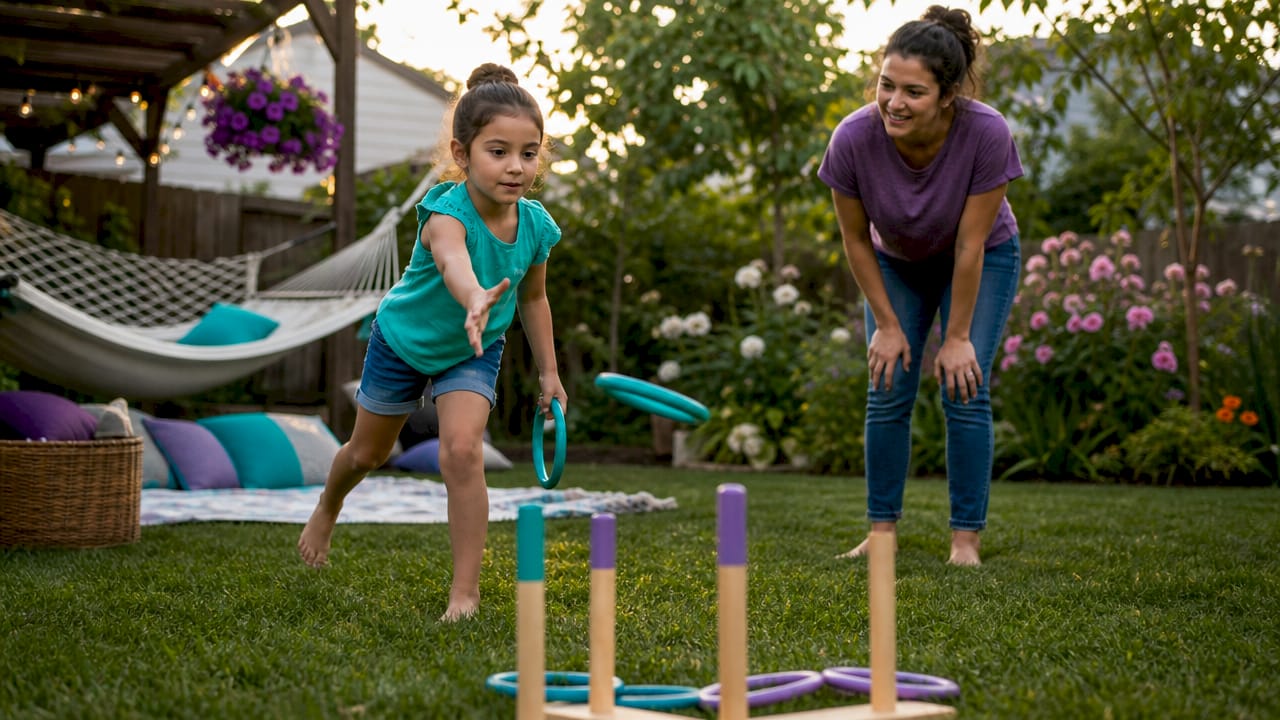
Ring toss also builds real skills without feeling like a lesson. Repeated throws develop hand-eye coordination, patience, and spatial awareness. Children practice estimating distance and adjusting their technique after each toss, which is the same feedback loop that drives learning in any hands-on activity.
What equipment do you need for a ring toss setup?
A standard ring toss setup has three components: rings, pegs or posts, and a base that holds the posts upright. The rings are typically made from rope, rubber, or plastic. The posts are wooden dowels, PVC pipes, or glass bottles. The base can be a flat board with drilled holes or a patch of soft ground where posts are pushed in.
Purchased sets vs. DIY materials
| Feature | Purchased set | DIY setup |
|---|---|---|
| Cost | $15–$50 | Under $25 |
| Durability | High (tested materials) | Varies by build quality |
| Customization | Limited | Full control |
| Setup time | Under 10 minutes | 1–2 hours |
| Best for | Quick parties | Themed events, crafts projects |
The PlanToys Meadow Ring Toss set is a strong example of a purchased option. It includes 6 rope rings and 3 wooden posts with adjustable spacing, making it suitable for children ages 3 and up. The rope rings are gentler on surfaces and safer for younger players than hard plastic alternatives.
For families who prefer building their own, a DIY ring toss game can be assembled for under $25 using rope, wooden dowels, and a painted board. Weather-resistant paint extends the life of outdoor sets significantly. Allow glue to dry fully before outdoor use, especially if rain is expected.
- Rings: rope coils, rubber rings, or cut pool noodle sections work well
- Posts: wooden dowels (3/4 inch diameter), PVC pipes, or glass bottles
- Base: a 12 x 24 inch plywood board with drilled holes holds posts securely
- Throwing line: painter’s tape on grass or a rope laid flat on the ground
Pro Tip: Paint each post a different color and assign point values by color. Red post scores 1 point, blue scores 2, and yellow scores 3. This adds a math element that keeps older kids engaged and gives younger kids a visual target to aim for.
How do you set up the playing area?
Setting up the playing area correctly determines whether the game feels fun or frustrating. Start by placing the base on a flat, stable surface. Uneven ground causes posts to lean, which changes the difficulty unpredictably and creates disputes about whether a ring truly encircled the peg.
- Place the base on flat ground and confirm all posts stand upright.
- Mark a throwing line with painter’s tape, rope, or a chalk mark.
- Set the throwing distance based on player age: 3–5 feet for children under 6, 6–8 feet for older children, and 10 feet or more for adults.
- Clear a safety zone of at least 3 feet behind the throwing line so players do not back into each other during throws.
- Check the area behind the posts for obstacles. Rings that miss will travel forward, so keep pets, younger siblings, and breakable objects out of that zone.
Testing your outdoor setup before the first full round prevents most common gameplay failures. Wind affects lightweight rope rings more than rubber rings. If you are playing on a breezy day, move the throwing line closer or switch to heavier rings. Target post diameter also matters. A thicker post catches rings more easily, which is better for beginners. A thinner post is harder to land on and suits competitive play.
Pro Tip: Run three practice throws before the game starts. If fewer than one in three lands, move the throwing line 12–18 inches closer. If every throw lands easily, move it back. This quick calibration takes two minutes and saves the whole game from being either too easy or too hard.
How do you play ring toss and keep score fairly?
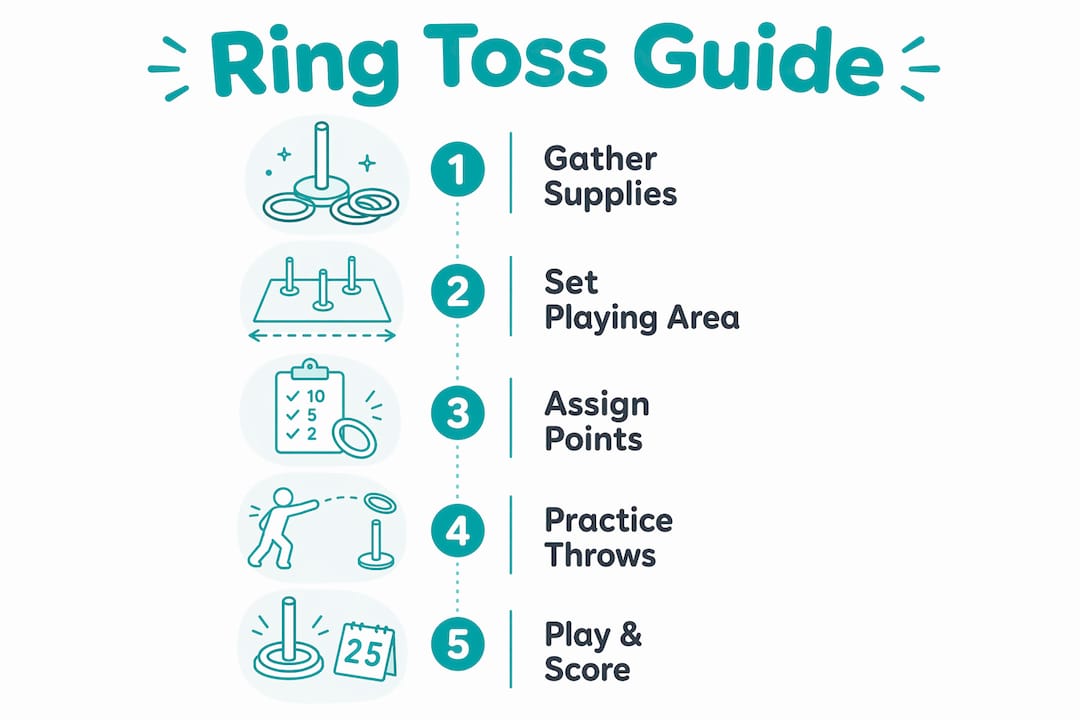
The basic rules of ring toss are straightforward. Players stand behind the throwing line and toss 3–5 rings per turn toward the posts. Points count only when a ring fully encircles a post. Turns rotate among players. The winner is the first to reach a target score, or the player with the most points after a set number of rounds.
- Decide the number of rings per turn before the game starts. Three rings per turn works well for parties. Five rings per turn suits competitive play.
- Assign point values. A single post setup scores 1 point per ring. A multi-post setup can score 1, 2, or 3 points depending on which post the ring lands on.
- Announce the winning score before the first throw. Ten points works for short games. Twenty points suits longer sessions.
- Rotate turns clockwise so every player knows when they are up next.
- Tally points on a visible scorecard after each round.
A ring that touches the post but does not fully encircle it scores zero. Write this rule on a card and tape it to the base before the game starts. Visible rules prevent disputes before they begin.
Short turns with 3–5 rings keep the game moving and give every player a chance to adjust their technique between rounds. Long turns slow the game and cause younger players to lose focus. Keeping turns brief is the single most effective way to maintain energy at a party.
Clear scoring rules displayed publicly reduce the chance of arguments significantly. A visible scorecard or a simple whiteboard next to the game lets everyone track progress and removes any doubt about who is winning.
How can you adapt ring toss for all ages and occasions?
Ring toss adapts to almost any group with small adjustments to distance, post spacing, and ring size. The key is removing frustration for beginners while keeping the challenge real for experienced players.
Adjustable peg spacing is the most effective tool for mixed-age groups. Place posts close together for beginners and spread them wider for advanced players. This single change lets a four-year-old and a twelve-year-old play the same game without either one feeling bored or defeated.
- For toddlers and beginners: Use a paper plate ring toss version. Cut paper plates into rings and use a cardboard tube as the post. Stand just 2 feet away. This version builds eye-hand coordination and timing with zero risk of injury.
- For school events: Color-code rings and posts to add a counting or color-matching element. Children earn bonus points for matching ring color to post color. This turns a party game into a quiet math activity.
- For birthday parties: Create a themed setup. Use decorated bottles as posts and assign each bottle a character or prize value. Players aim for their favorite character’s bottle.
- For competitive groups: Add a time limit. Each player has 30 seconds to toss as many rings as possible. The player with the most rings on posts when time runs out wins the round.
- For large groups: Run a tournament bracket. Pair players in head-to-head rounds. Winners advance. This format works well for school carnivals and community events.
Teamgeniussquad’s approach to hands-on learning maps directly onto these adaptations. When children practice hand-eye coordination activities through games like ring toss, they build the same focused attention that drives success in science experiments and creative projects. The game is not just entertainment. It is purposeful play.
Pro Tip: For a party with a wide age range, set up two throwing lines at different distances and let each player choose their line. Younger children use the closer line without feeling singled out, and older players self-select the harder challenge.
Key takeaways
Ring toss is a fair, flexible game that rewards clear rules, proper setup, and small adjustments for age and skill level.
| Point | Details |
|---|---|
| Core scoring rule | A ring must fully encircle the peg to score. Partial contact counts as zero. |
| DIY is practical | A homemade set costs under $25 and can be customized for any theme or age group. |
| Distance matters | Set the throwing line at 3–5 feet for young children and 10 feet or more for adults. |
| Short turns keep energy high | Three to five rings per turn lets players adjust technique without slowing the game. |
| Visible rules prevent disputes | Post the scoring rules on a card next to the game before the first throw. |
Why ring toss has never gone out of style
I have watched ring toss show up at every kind of gathering, from a quiet Tuesday afternoon in the backyard to a school carnival with two hundred kids. What strikes me every time is how quickly it creates connection. Two strangers standing at a throwing line will start coaching each other within three throws. That social warmth is not something you can engineer into a game. It just happens when the rules are simple and the stakes are low.
The game’s portability is underrated. You can carry a full set in a canvas bag. You can set it up on a patch of grass in under five minutes. No electricity, no screen, no instruction manual longer than a sentence. For families who want to put phones down and actually be together, ring toss delivers that without any friction.
What I find most valuable, especially for younger children, is the patience it builds. A child who misses ten times in a row and keeps trying is practicing something far more important than aim. They are learning that adjustment and persistence produce results. That lesson shows up later in reading, in science experiments, in every challenge that requires trying again. Ring toss is a small game with a long reach.
— Tita
Hands-on learning tools from Teamgeniussquad
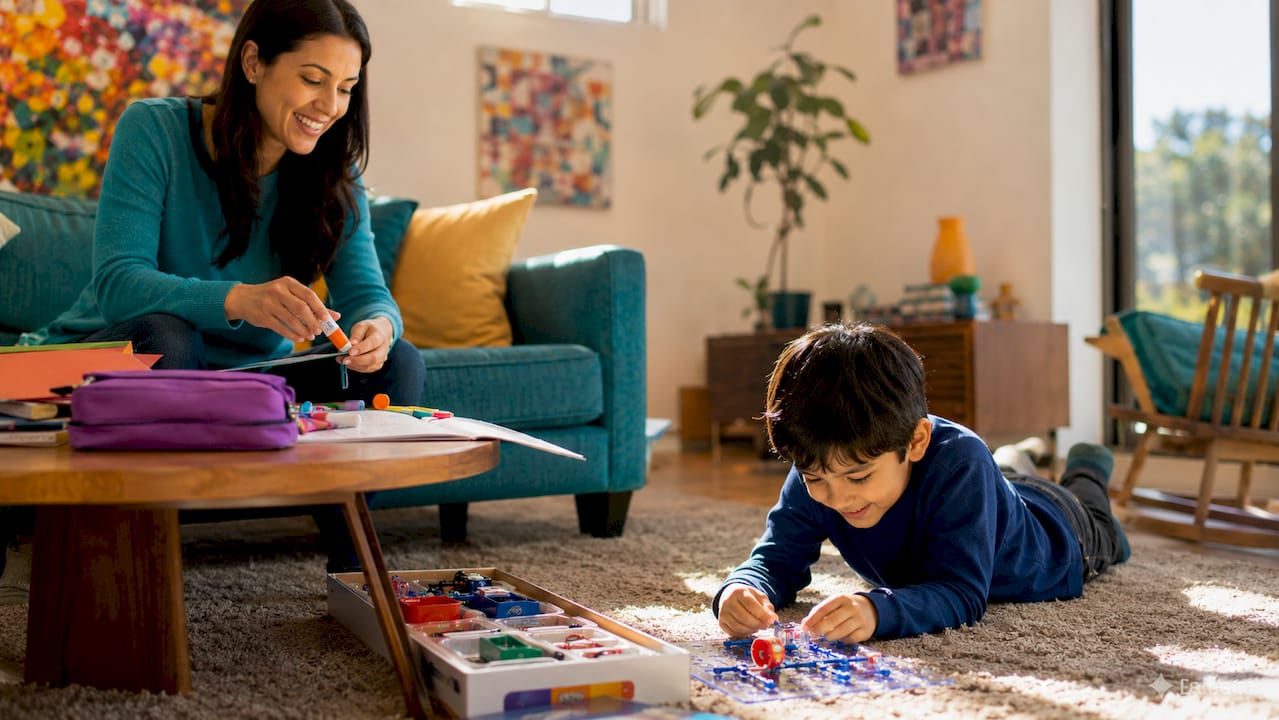
Ring toss proves that the best learning happens when children are moving, thinking, and having fun at the same time. Teamgeniussquad builds on that same idea with screen-free, hands-on STEAM kits designed for children ages 5–13.

The STEM-STEAM Electricity Lab Bundle brings that same spirit of discovery indoors, with real experiments that build confidence and curiosity. For families who love active, purposeful play, the full range of experiment kits at Teamgeniussquad offers something for every young learner. Each kit is built around the E³ Method: Engage, Encourage, Empower. Because children who play with purpose grow into thinkers who build the future.
FAQ
What is ring toss?
Ring toss is a target game where players toss rings toward an upright peg or bottle and score points only when a ring fully encircles the target. Partial contact does not count.
How far should you stand when playing ring toss?
The throwing distance depends on age and skill level. Children under 6 do well at 3–5 feet, while adults typically play at 10 feet or more. Testing the distance before the game starts helps you find the right challenge level.
How do you make a DIY ring toss game?
A DIY set uses rope rings, wooden dowels, and a plywood base with drilled holes. The full setup costs under $25 and can be customized with paint and themed decorations for any party.
How many rings does each player toss per turn?
Standard play gives each player 3–5 rings per turn. Three rings per turn works best for parties because short turns keep energy high and give every player frequent chances to play.
Can ring toss be played indoors?
Yes. A paper plate version uses cut paper plate rings and a cardboard tube post, making it safe and suitable for toddlers and indoor spaces. Reduce the throwing distance to 2–3 feet for small rooms.

Leave a comment
This site is protected by hCaptcha and the hCaptcha Privacy Policy and Terms of Service apply.