
Launch in One Week: Inclusive Classroom Makerspace Ideas for K–12 Teachers
The highest-impact classroom makerspace ideas fall into a handful of categories: recycled-material engineering challenges, maker bins with task cards, simple circuits and paper circuits, storytelling and prop design, and sensory STEAM tubs. Each one is low-prep, adaptable across grades, and pairs easily with classroom routines and safety checks. Start with a recycled-material challenge this week, then layer in the others as your supplies and confidence grow.
TL;DR:
- Recycled-material challenges like cardboard bridges and weather stations are quick to implement and suitable for a range of grades from K-6.
- A makerspace cart with tiered supplies and clear organization can deliver effective hands-on learning without requiring a dedicated room.
- Structured routines, clear roles, and safety checks using ASTM D-4236 labels ensure smooth and hazard-aware makerspace sessions.
- Inclusive design options, such as adjustable work surfaces and alternative tools, help engage diverse learners across all student abilities.
- Short, formative assessments like student reflections, peer demos, and photo documentation support standards alignment and ongoing improvement.
Table of Contents
- 1. Classroom-ready makerspace projects you can run this week
- 2. Building a makerspace cart on a real school budget
- 3. How do you schedule and manage makerspace time?
- 4. Safety basics every teacher should check first
- 5. Designing a makerspace that works for every student
- 6. Connecting maker projects to standards and assessment
- 7. Team Genius Squad: how our kits support classroom makerspaces
- 8. Teacher quick-start checklist: launch your makerspace in a week
- 9. Shop-ready classroom options from Team Genius Squad
- FAQ
- Sources
1. Classroom-ready makerspace projects you can run this week
These projects are listed low-prep first, with grade-band notes so you can match them to your students right away.
Cardboard engineering challenge (Grades K-5, 30–45 minutes). Students build a structure, bridge, or vehicle from cardboard, tape, and found materials. Skills: engineering design, persistence, basic physics concepts like balance and load. Core items: cardboard scraps, masking tape, scissors, rulers, recycled bottle caps. Adaptation: give struggling builders a pre-cut base so they focus on the design challenge rather than cutting.
Paper circuits (Grades 3-8, 45 minutes). Kids build a simple light-up circuit using copper tape, a coin battery, and an LED glued onto a folded card or book page. Skills: basic electricity, sequencing, fine motor control. Core items: copper foil tape, 3V coin batteries, LED bulbs, cardstock, binder clips. Adaptation: pre-fold the circuit template for younger or lower-dexterity students.

Maker bins with task cards (Grades K-8, 20–40 minutes, any time filler). Rotating bins of loose parts (buttons, gears, pipe cleaners, wooden blocks) paired with a task card (“build something that rolls,” “build a creature with five legs”). Skills: open-ended problem-solving, vocabulary, fine motor skills. Core items: plastic bins, assorted loose parts, laminated task cards. Adaptation: offer picture-based task cards for emerging readers.
Storytelling prop design (Grades 1-6, one to two class periods). Students design a prop, puppet, or setting piece for a story they are writing or reading. Skills: narrative writing, spatial reasoning, collaboration. Core items: felt, yarn, paper bags, markers, glue sticks, recycled containers. Adaptation: pair with a class novel so the prop illustrates a specific scene.
Sensory STEAM tubs (Grades PreK-3, 15–30 minutes). A tub of sand, rice, or water beads holds small objects for counting, sorting, or simple cause-and-effect experiments. Skills: sensory regulation, early math, vocabulary. Core items: large plastic tub, dry rice or sand, scoops, small sorting objects. Adaptation: offer a dry version (rice, beans) alongside a wet version for students sensitive to texture.

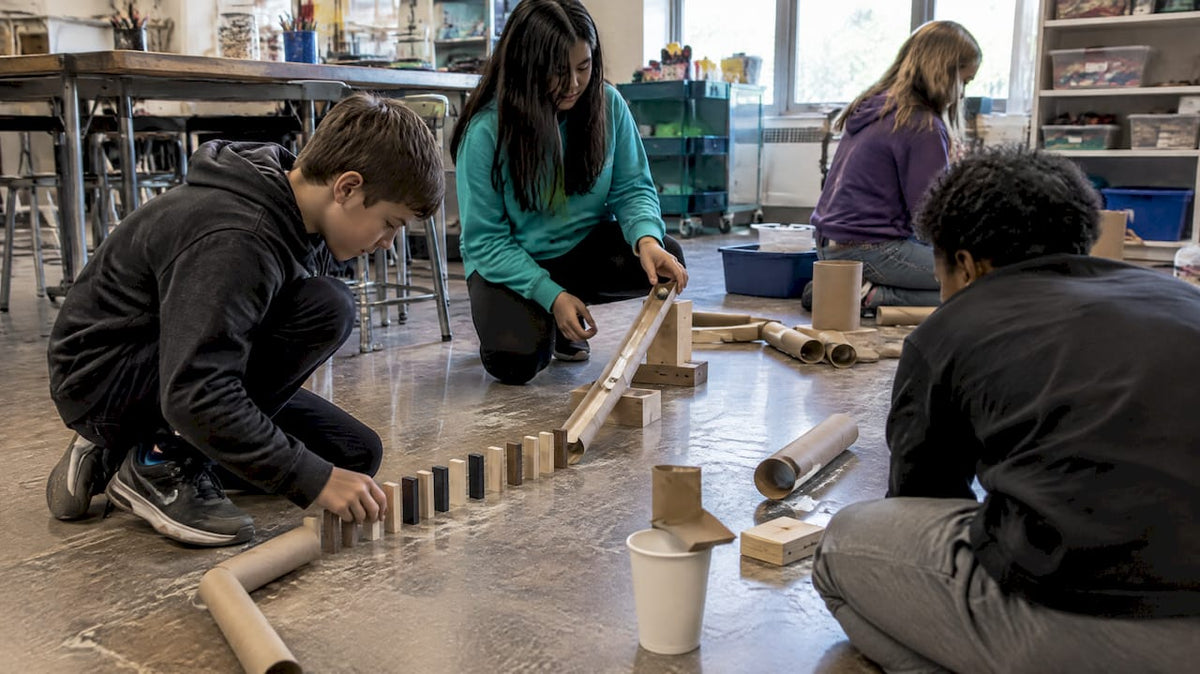
Rube Goldberg chain reaction (Grades 3-8, two class periods). Teams build a multistep contraption that completes a simple task like dropping a marble into a cup. Skills: sequencing, iteration, teamwork. Core items: cardboard tubes, dominoes, marbles, tape, rulers. Adaptation: cap the number of steps for younger groups so the project stays achievable.
Recycled musical instruments (Grades K-5, 45 minutes). Students build a shaker, drum, or string instrument from containers and household items. Skills: sound science, fine motor skills, creative expression. Core items: oatmeal containers, rubber bands, dried beans, tape. Adaptation: connect to a unit on sound waves for upper elementary.
Simple machines challenge (Grades 2-6, one class period). Students use levers, pulleys, or wheels built from classroom supplies to move an object across a table. Skills: physics vocabulary, hypothesis testing. Core items: rulers, string, spools, small boxes, pencils. Adaptation: give advanced students a weight limit or distance goal to hit.
Micro:bit story prototypes (Grades 4-8, two to three class periods). Students use a simple block-coding interface to add light or sound effects to a story prop, which raises engagement while keeping the coding straightforward, according to a practical makerspace guide. Skills: coding logic, narrative structure. Core items: micro:bit kits, craft materials, tablets or laptops. Adaptation: pair strong readers with emerging coders for peer support.
Design-a-logo or badge challenge (Grades K-8, 30 minutes). Students sketch and build a wearable badge or patch representing their maker identity. Skills: self-expression, symbol design. Core items: felt, fabric markers, safety pins, cardstock. Adaptation: connect to a class “innovator” theme where badges get worn during maker sessions.
Weather station build (Grades 3-6, two class periods). Teams build a simple rain gauge or wind vane from recycled bottles and straws. Skills: measurement, data recording, earth science. Core items: plastic bottles, straws, tape, rulers, a notebook for data. Adaptation: have teams compare designs and discuss which measured most accurately.
For more recycled-material ideas built for a low-prep classroom, our classroom ready recycled STEM projects post breaks down several additional builds step by step.
2. Building a makerspace cart on a real school budget
A makerspace does not need its own room to work. A mobile makerspace cart paired with scheduled maker days can deliver the same learning outcomes as a dedicated space, as long as you prioritize flexible furniture, clear storage, and pre-bagged consumable kits that speed up transitions.
Think in tiers so you can grow the cart over time:
- Starter tier: cardboard, tape, scissors, paper, markers, glue sticks, rulers, a bin of mixed loose parts.
- Basic tier: copper tape, LEDs, coin batteries, basic hand tools, a small supply of felt and fabric scraps.
- Expanded tier: a micro:bit set, simple motors, a hot glue gun with adult supervision, a small 3D printer for teacher-led demonstrations.
Label each bin by project type rather than material type: “Circuits,” “Build and Balance,” “Story Props.” This cuts down on searching and keeps cleanup fast. A simple checkout system, a clipboard with a sign-out sheet for shared tools like glue guns or scissors, keeps track of what is out and who has it.
For sourcing, PTA supply drives, classroom donation requests, and local hardware store scrap bins are reliable low-cost sources. Reclaimed materials, cereal boxes, bottle caps, fabric scraps from home, cost nothing and often work better than store-bought kits for open-ended building. Our five-minute reset guide covers quick storage tricks that translate well from a home maker corner to a classroom cart.
3. How do you schedule and manage makerspace time?
Makerspace sessions run smoothly when students know exactly what role they play and what the time block looks like.
- Pick a rotation model. Station rotations (15–20 minutes per station) work well for younger grades; longer single-project blocks (45–60 minutes) suit upper elementary and middle school builds.
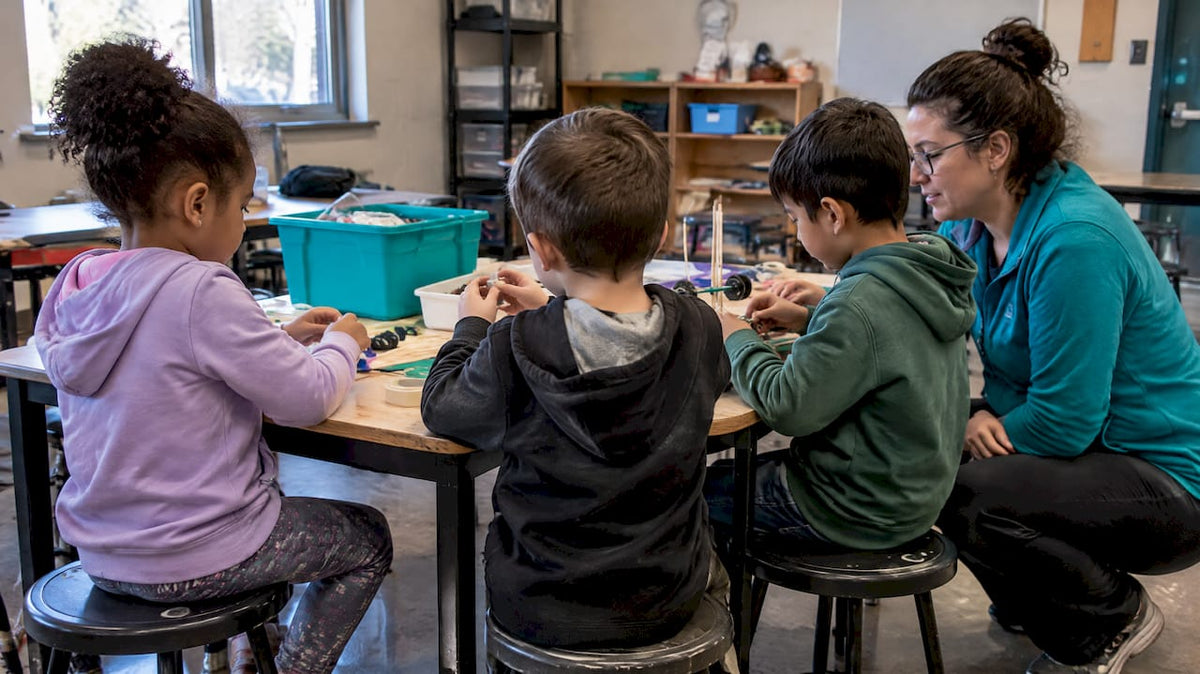
- Assign roles. A materials manager gathers and returns supplies, a timekeeper tracks the clock, and a safety monitor checks that tools are used as agreed. Rotate roles weekly so every student gets practice.
- Script your opening. A 60-second opener (“Today’s challenge is X. Your safety job is Y. You have Z minutes.”) sets expectations before hands touch materials.
- Co-create essential agreements with students rather than handing down a list of rules. Successful makerspaces balance freedom and structure by building norms together, which research on makerspace facilitation ties to stronger peer teaching and shared ownership.
- Use a simple safety rubric (ready, caution, stop) so students can self-check before using a tool like scissors or a glue gun.
Pro Tip: Post the day’s roles on a small whiteboard so students can self-assign without asking you, which frees you up to circulate and coach.
4. Safety basics every teacher should check first
Before any material reaches a student’s hands, confirm it carries an ASTM D-4236 label, the standard that flags whether an art or craft material poses chronic health risks. This one check prevents most hazardous-material surprises before a project even starts.
Common hazards and quick mitigations:
- Fumes from 3D printing: run printers in a ventilated area and supervise material handling, since printing hazards reviewed by CPSC point to fumes and training gaps as the main risks.
- Small parts: keep loose beads, batteries, and magnets away from students under 3 and supervise closely with younger elementary groups.
- Sharp tools: require a quick demonstration and a “tool license” badge before a student uses scissors unsupervised or a hot glue gun at all.
- Adhesives and paints: choose washable, non-toxic formulas and store them away from food-prep areas.
A single labeling standard, ASTM D-4236, tells you whether an art material has been evaluated for chronic health hazards, which makes it the fastest check before stocking any new supply.
5. Designing a makerspace that works for every student
An inclusive makerspace removes barriers before a student even asks for help. Universal design guidance from DO-IT points to diverse materials and flexible activities as the biggest lever for participation.
- Offer tiered task cards: a basic version, a stretch version, and a picture-based version for emerging readers.
- Provide adjustable work surfaces or floor options for students who use wheelchairs or prefer to stand.
- Keep noise-canceling headphones and a quiet corner available for sensory-sensitive students.
- Stock alternative tools, adaptive scissors, easy-grip markers, so fine motor differences do not block participation.
- Build project prompts that reflect different cultures and family structures, and invite students to co-design new challenge cards.
Pro Tip: Ask a student who struggled with a past project what would have made it easier, then turn that answer into your next task card.
6. Connecting maker projects to standards and assessment
A cardboard bridge challenge can target NGSS engineering design standards, while a storytelling prop project doubles as an ELA narrative assessment. The trick is deciding what you are checking for before the glue comes out.
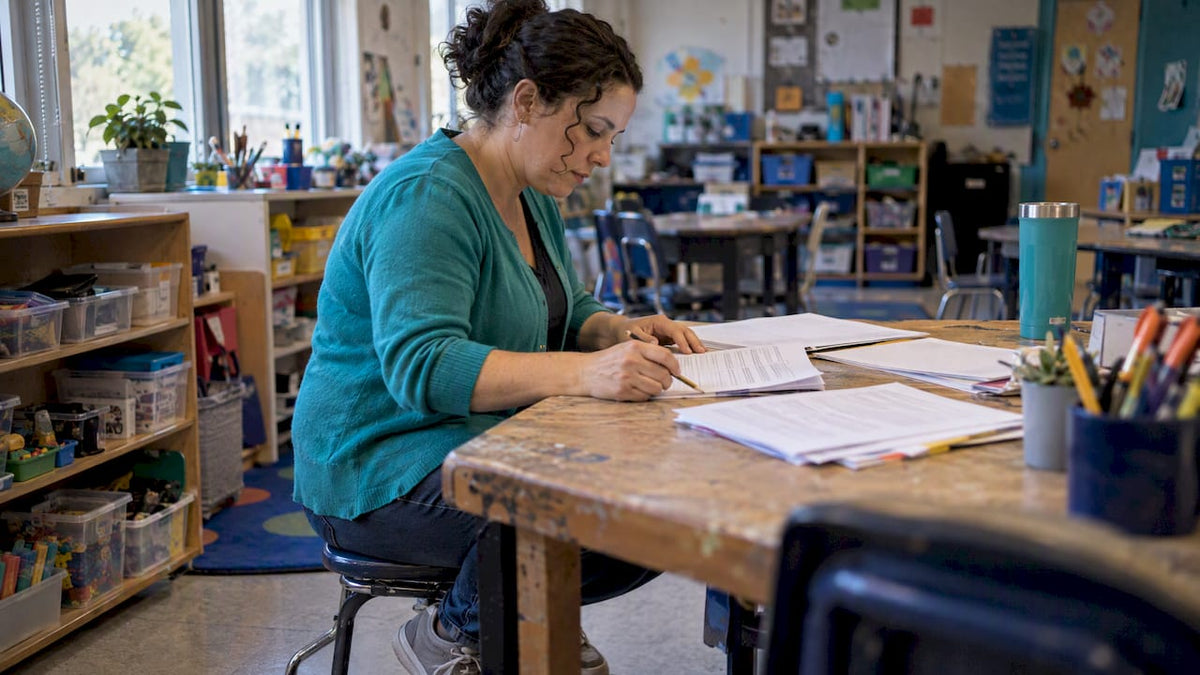
Quick formative checks work better than long rubrics for most maker sessions: a one-minute reflection (“What worked? What would you change?”), a 30-second peer demo, or a one-page design journal entry. A simple three-point rubric (met the challenge, showed persistence, explained their thinking) covers most projects without slowing down the pace.
For documentation, a photo of each stage (plan, build, test) plus a short caption gives you a record without demanding a formal write-up. Framing projects through a design-thinking cycle, empathize, define, ideate, prototype, test, gives multi-week projects structure while supporting measurable growth in maker mindsets.

7. Team Genius Squad: how our kits support classroom makerspaces
Our approach guides every kit we design, turning open-ended materials into a structured path toward confidence. Each experience leans on role play, lab coats, badges, and certificates that help kids see themselves as scientists and creators, not just participants in an activity. That identity piece grew out of a personal family journey, which shapes how we build in literacy and reflection alongside hands-on experiments.
In a classroom, our kits work as a plug-in lesson for a single period, a rotating station alongside your other maker bins, or an enrichment option for students who finish early. For teachers who want a ready-made starting point, our experiment kits collection and lab coats are built to drop directly into a rotation without extra prep.
8. Teacher quick-start checklist: launch your makerspace in a week
Pick one project Monday, prep a starter cart Tuesday, run a short pilot Wednesday, and collect quick student feedback Thursday. Friday, adjust based on what stalled. If supplies ran short, trim the group size. If instructions confused students, add a picture card. If cleanup ran long, build in a two-minute warning.
— Tita
9. Shop-ready classroom options from Team Genius Squad
A low-prep makerspace station does not have to start from scratch. Experiment kits and lab coats can give a ready-made maker experience to drop straight into a rotation without extra sourcing or cutting required, and live, interactive STEM sessions led by a young entrepreneur can be available without any setup on your end.

- Experiment kits: plug into a station or small-group rotation; browse the experiment kits collection.
- Lab coats and role-play accessories: build maker identity and ownership; see kids lab coats.
- Meet Ava experiences: a live Zoom session or in-person visit that brings STEM storytelling directly to your class.
Visit our shop collection to see current kits, coats, and Meet Ava booking options for your classroom.
FAQ
What are some fun activities for a makerspace?
Cardboard engineering challenges, paper circuits, storytelling prop design, and sensory STEAM tubs are reliable favorites because they need few supplies and work across a wide age range. Rotating maker bins with task cards also keep things fresh without requiring new prep each week.
How do you create a makerspace in the classroom?
Start with a mobile cart stocked with tiered supplies rather than waiting for a dedicated room, since a cart-based setup paired with scheduled maker days can match the outcomes of a fixed space. Add clear storage bins, a simple checkout system, and co-created safety agreements before your first session.
What are the 5 C’s of classroom management?
Definitions vary across educators, but a common version centers on clarity, consistency, caring, communication, and commitment. These apply well to makerspace sessions, where clear roles and predictable routines keep hands-on time productive rather than chaotic.
What are some examples of makerspaces?
Examples range from a single rolling cart with bins of loose parts to a dedicated room with stations for circuits, building, and digital tools like a 3D printer. The right setup depends on available space and budget, with a cart-based model working just as well as a full room when staged correctly.
How do you keep a makerspace safe for young students?
Check that art and craft materials carry an ASTM D-4236 label before stocking them, and require a quick tool demonstration before students use scissors or glue guns independently. For digital fabrication tools like 3D printers, ventilate the space and supervise material handling to limit fume exposure.
Sources
- Set up a makerspace — K-12 Maker Lab at the MIT Edgerton Center
- New law takes effect for labeling hazardous art materials — U.S. Consumer Product Safety Commission (CPSC)
- Making a makerspace: guidelines for accessibility and universal design — DO-IT (University of Washington)
- Lessons from the makerspace — Harvard Graduate School of Education

Leave a comment
This site is protected by hCaptcha and the hCaptcha Privacy Policy and Terms of Service apply.