3 Grade Bands of Low Prep Claim, Evidence, Reasoning Starters for K–8
CER is a three-part scaffold, claim, evidence, reasoning, that helps K through 8 students support answers with data and explain why the evidence fits. The single best starter move is simple: pick a short, observable phenomenon (a candle going out under a jar, an ice cube melting faster in sunlight) and ask one guiding question. Kids as young as five can build a claim from what they notice, and by middle school they can defend it with real reasoning.
TL;DR:
- Most students can develop increasingly complex arguments, from simple observations in early grades to weighing multiple explanations by eighth grade.
- Evidence is the fact or measurement, while reasoning is the scientific explanation connecting that evidence to the claim, and children often confuse the two.
- Practice with real phenomena and physical activities helps students grasp the claim, evidence, and reasoning process more effectively than worksheets alone.
- Scaffolded sentence starters and visual organizers support students’ ability to articulate their reasoning clearly and build scientific thinking skills over time.
- Using hands-on kits and modeling strategies, teachers can foster a deeper understanding of CER and improve classroom discussions, writing, and critical thinking across grade levels.
Table of Contents
- What is claim evidence reasoning and how does it grow by grade?
- Why CER matters for reasoning and writing development
- Grade-band activities that put CER into action
- Sentence starters and organizers that make reasoning concrete
- Simple rubrics and feedback that build independence
- How hands-on kits turn CER into a hands-on habit
- What I have learned watching kids meet CER for the first time
- Bring CER to life with hands-on kits from Team Genius Squad
- Where to find the standards and research behind CER
- Sources
- FAQ
What is claim evidence reasoning and how does it grow by grade?
A claim answers the question in one sentence. Evidence is the data, observation, or measurement that backs it up. Reasoning is the part kids find hardest: the explanation of why that evidence actually supports the claim, tied to a scientific idea they already know.
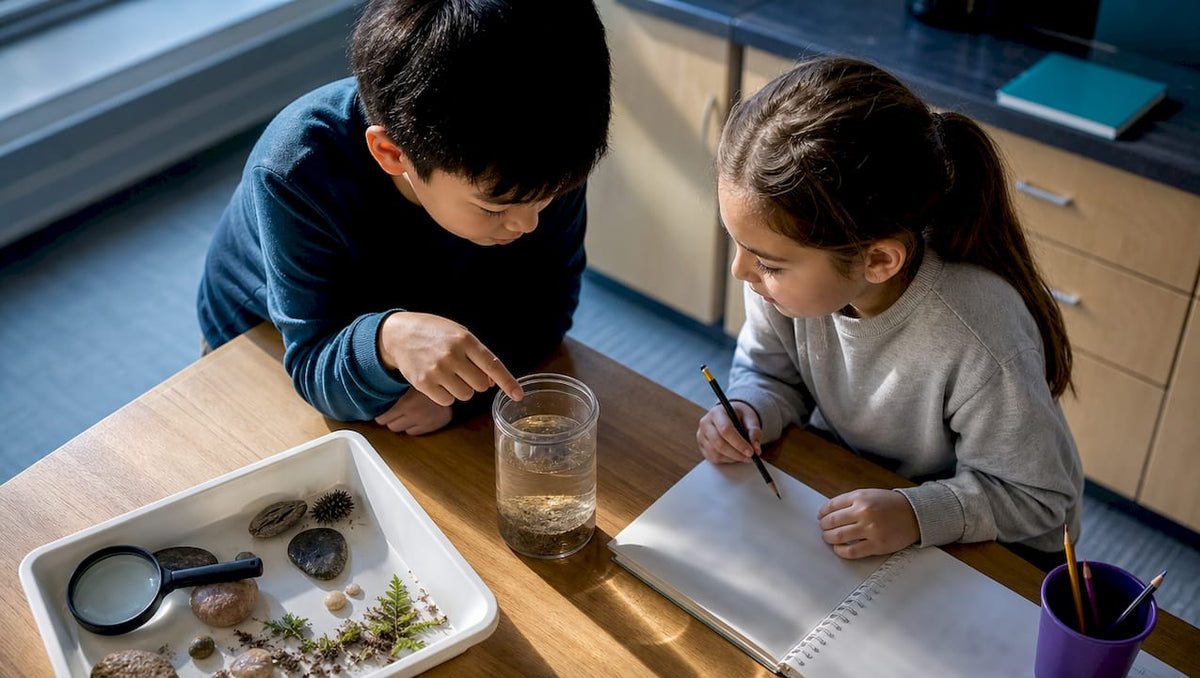
Picture a first-grader watching an ice cube melt on a sunny windowsill and another in a shaded corner. The claim: “The ice by the window melted faster.” The evidence: “It was a puddle in 10 minutes, and the shaded one still had ice.” The reasoning: “Sunlight brings heat, and heat turns ice into water.” That last sentence is the piece that separates a science thinker from a kid who just reports what happened.
The NGSS practice of arguing from evidence lays out a clear progression across grade bands:
- In kindergarten through grade 2, students construct and compare simple arguments based on what they observe.
- In grades 3 through 5, students critique explanations and cite relevant evidence to support or challenge a claim.
- In grades 6 through 8, students construct convincing arguments that support or refute explanations for more complex phenomena.
That progression matters because it tells you what “good enough” looks like at each age. A kindergartner does not need a research-paper level of reasoning; she needs to notice a pattern and say why it makes sense to her. A seventh grader, on the other hand, should be able to weigh two competing explanations and choose the one the evidence actually supports.
The most common mix-up, at every age, is confusing evidence with reasoning. Evidence is the fact itself: the number, the observation, the measurement. Reasoning is the sentence that connects that fact to the claim using a rule or principle. Kids will often stop after evidence, assuming the connection is obvious. It rarely is, and that gap is exactly where teaching needs to focus.
Why CER matters for reasoning and writing development
Reasoning does not appear overnight. Kids begin to make more logical connections and reliably evaluate whether evidence is trustworthy starting around age 7, and that ability continues to develop through middle school, according to Understood. Before that age, plenty of kids can still form claims, but the “why” behind the evidence often needs adult modeling.
CER practice builds metacognition alongside science content. When a child has to explain why her evidence supports her claim, she is forced to check her own thinking rather than just repeating what she observed, and that habit of self-checking is exactly the skill Understood.org ties to stronger evidence evaluation over time.
The payoff reaches beyond the science table. A child who practices building reasoning chains in a science journal starts writing sturdier persuasive paragraphs in language arts, because the underlying skill, connecting a claim to support with a clear “because,” is the same one. Classroom discussions get sharper too: instead of kids trading opinions, they start asking each other “what’s your evidence?” and “how does that prove it?” That shift alone often changes the whole tone of a science circle, turning it from a guessing game into a genuine debate grounded in what the group actually observed. Teaching CER is not just a science strategy. It is an early investment in how a child argues, writes, and questions for years afterward, a point worth keeping in mind when designing activities that grow problem-solving skills more broadly.

Grade-band activities that put CER into action
The fastest way to teach CER is to hand kids a real mystery and let the framework do its job. Below are ready-to-run starters organized by grade band, each built around a short phenomenon and one guiding question.
K through 2: notice, name, and explain
Young children need physical, immediate phenomena they can watch unfold in a few minutes.
- Sink or float: Drop five household objects into a bin of water. Guiding question: “Which objects float, and why do you think so?” Kids claim which floated, point to what they saw as evidence, and reason using “heavy things sink” or “air makes things float.”
- Melting race: Place two ice cubes in different spots (sun and shade). Guiding question: “Which will melt first?” This builds directly on the earlier windowsill example and works well as a five-minute morning check-in.
- Bouncy ball drop: Drop different balls from the same height. Guiding question: “Which ball bounces highest, and what do you think makes it bounce more?”
Materials and time: a clear bin, water, five small objects, two ice cubes, and two or three balls, all household items. Each activity runs 10 to 15 minutes including group talk. For home use, a parent can swap in toys from around the house instead of buying anything new.
3 through 5: collect data, then defend it
Upper elementary kids can handle a slightly longer investigation and should start citing specific evidence rather than just describing what happened.
- Plant light test: Grow two bean seedlings, one in a sunny spot and one in a closet, and track height over a week. Guiding question: “Does sunlight affect how tall a plant grows?”
- Paper airplane distance test: Fly three plane designs and measure distance with a tape measure. Guiding question: “Which design flies farthest, and why?”
- Salt and freezing: Add salt to one cup of ice water and leave another plain. Guiding question: “Why does the salty ice melt faster?”
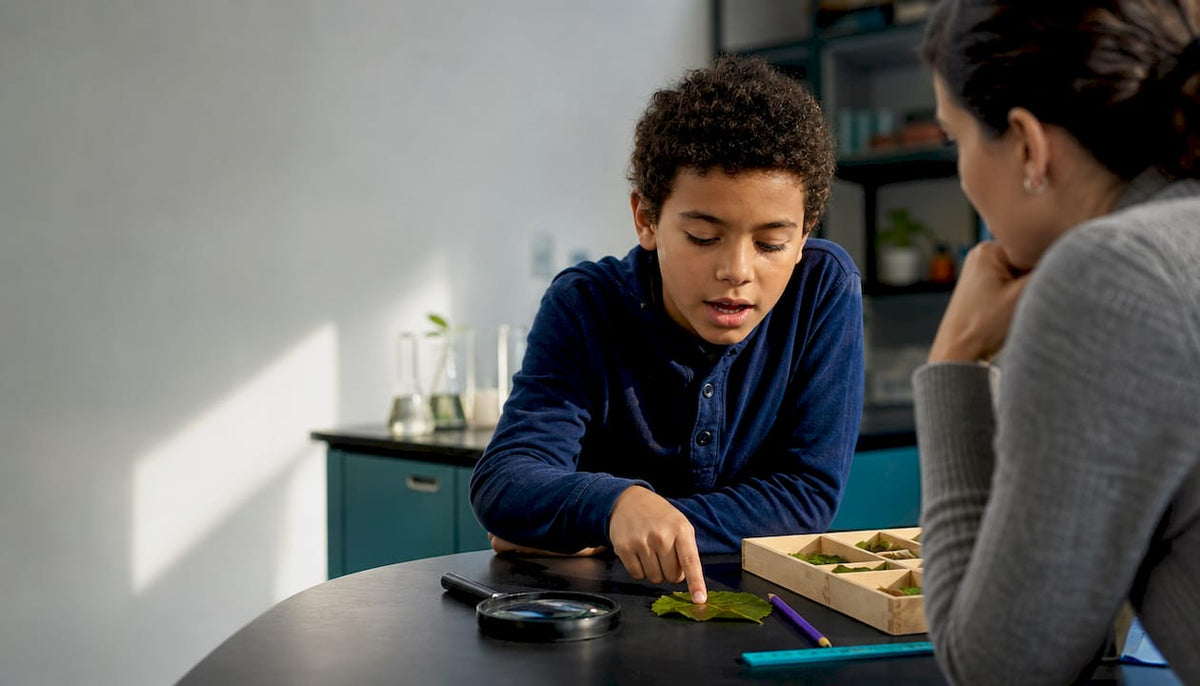
- Rock absorption test: Soak different rocks in water for five minutes and weigh them before and after. Guiding question: “Which rock absorbed the most water?”
Adaptations: for a full classroom, run these in small groups of three or four so every child gets hands-on time; for one child at home, a parent can simply take the “group” role and ask the guiding question aloud. Materials and time: each activity needs basic supplies (seeds, paper, salt, rocks, a scale or measuring cup) and runs 20 to 30 minutes across setup, observation, and writing.
Pro Tip: Have kids record their evidence in numbers or measurements whenever possible. A specific number, “grew 2 inches,” gives them something concrete to point back to when writing their reasoning.
6 through 8: argue for or against a claim
Middle schoolers are ready to handle more ambiguity and should practice weighing competing explanations, which lines up with the NGSS evidence statements for MS-LS2-4, which expect students to construct arguments backed by empirical evidence and connect that evidence to claims about ecosystems and populations.
- Density tower mystery: Layer liquids of different densities (honey, dish soap, water, oil) in a jar. Guiding question: “What determines the order the liquids settle in?”
- Battery and bulb circuit test: Build simple circuits with varying numbers of batteries. Guiding question: “Does adding more batteries always make the bulb brighter?”
- Erosion model: Pour water over a tray of packed sand at different angles. Guiding question: “Does a steeper slope cause more erosion?”
Materials and time: these run 30 to 45 minutes, since middle schoolers should collect at least two rounds of data before claiming anything. A discrepant event, a result that seems to contradict what kids expected, works especially well at this age; research on discrepant events suggests that a surprising result pushes older kids to reconsider prior assumptions instead of just confirming what they already believed, which is exactly the muscle CER is meant to build.
Sentence starters and organizers that make reasoning concrete
Reasoning is the piece kids skip most, so scaffolds should target it directly rather than treating claim, evidence, and reasoning as equally hard.
Sentence starters work best when they are leveled to the child’s writing stage:
- For early writers: “I saw ___, so I think ___.”
- For developing writers: “My evidence is ___. This shows ___ because ___.”
- For independent writers: “The data show ___, which supports my claim that ___ because ___ (scientific idea).”
- For ELL and newer English speakers: pair every starter with a picture card showing the sentence frame plus a matching icon (a magnifying glass for evidence, a lightbulb for reasoning).
- For neurodiverse learners: let kids speak their reasoning into a recorder or dictate to an adult before writing it, removing the handwriting barrier from the thinking task.
Two organizer formats cover most classrooms:
| Organizer | Best for | Quick use guide |
|---|---|---|
| Three-box CER strip | K through 5, first-time CER writers | Kids fill claim, evidence, and reasoning in three connected boxes, left to right |
| Evidence-to-reasoning bridge | Grades 5 through 8, students ready for multiple evidence points | Kids list two or more evidence points, then draw a line to the reasoning sentence that ties them together |
Newsela’s guide to teaching CER frames reasoning as a bridge connecting evidence to the claim, an analogy that gives kids a mental picture instead of an abstract instruction to “explain why.”
Talk moves help before the writing even starts. Try “turn and tell your partner your claim” before anyone picks up a pencil, or have a small group build one CER response together on a whiteboard before individuals write their own. Gradual release, model first, guide next, then release to independent work, increases student independence on CER tasks over the course of a unit, according to ERIC’s collection of classroom resources on claims, evidence, and reasoning. For more writing prompts organized by age, a set of science writing prompts tagged by grade can slot directly into any of the organizers above.
Simple rubrics and feedback that build independence
A rubric only helps if kids and teachers can see the same thing when they look at a response. Keep it to three rows.
- Claim: Does the student state a clear answer to the question, with no hedging or restating of the question itself?
- Evidence: Does the student cite a specific observation, measurement, or data point rather than a vague impression?
- Reasoning: Does the student explain why the evidence supports the claim, using a scientific idea rather than just repeating the evidence?
Evaluate the reasoning chain’s logical connection to the disciplinary idea more heavily than grammar or length, especially for younger grades, a priority NSTA’s classroom research on scaffolding scientific explanations backs directly. A messy sentence with sound reasoning beats a polished one that never explains why.
Quick formative checks work well between full CER assignments:
| Check | When to use it | What it reveals |
|---|---|---|
| Exit ticket claim-only | End of a lesson | Whether students can commit to an answer at all |
| Evidence wall sort | Mid-unit | Whether students can tell strong evidence from weak evidence |
| Partner reasoning critique | Before independent writing | Whether students can spot a missing “why” in someone else’s work |
Treat early CER attempts as feedback opportunities rather than graded work. A comment like “your evidence is strong, now tell me why it proves your claim” moves a student forward more than a score does, and it keeps the focus on reasoning growth instead of compliance with a format.
How hands-on kits turn CER into a hands-on habit
Some educational kit makers build their kits around the concept of Engage, Encourage, Empower, a sequence that mirrors the CER flow almost exactly. Engage hands kids a real phenomenon to notice. Encourage guides them to collect and describe evidence, often through role-play as a scientist wearing a lab coat and badge. Empower pushes them to explain their thinking in their own words, written or spoken, which is the reasoning step in action.
A typical at-home script: a child runs an experiment kit, records what happens on an included worksheet, then answers a guiding question using a claim and evidence sentence starter before finishing with “because” to force the reasoning connection. The identity-driven role-play, becoming a “junior chemist” or “junior engineer” for the afternoon, tends to lower the resistance kids feel toward writing, since they are documenting their discovery as a scientist rather than filling out a worksheet.
- Kits supply the phenomenon step without any lesson-planning time.
- Built-in worksheets prompt evidence collection in the child’s own words.
- Role-play framing can help reluctant writers see reasoning as part of the experiment, not an add-on assignment.
What I have learned watching kids meet CER for the first time
The first time I introduced CER to a room of second-graders, half of them wrote a claim, then just… stopped. They had seen the ice melt, but “because” felt like a foreign word to them. That gap between observing and explaining is where nearly every kid gets stuck, and it is worth expecting rather than treating as a setback.
Three things that work every time: give the guiding question out loud before kids touch any materials, so they know what they are watching for. Model one full CER response yourself before asking for theirs, even a simple one. And never accept “because it just does” as a final answer, gently push for the one scientific idea underneath it.
For neurodiverse learners, letting a child say their reasoning out loud before writing it down changes everything about how much they are willing to attempt.
— Tita
Bring CER to life with hands-on kits from Team Genius Squad
CER works best when kids have something real in front of them, not a worksheet describing an experiment someone else ran. Team Genius Squad’s screen-free experiment kits hand kids a genuine phenomenon to investigate, built-in prompts for collecting evidence, and the E³ Method’s Encourage and Empower steps to walk them toward writing their own reasoning, all without a parent or teacher needing to build a lesson from scratch.
- Browse the Experiment Kits collection for ready-made phenomena that map directly to the K through 8 activities above.
- Book Meet Ava, the STEM Ambassador, for a live guided session that walks a child or a group through claim, evidence, and reasoning in real time.
- Explore the full shop for books, puzzles, and accessories that extend CER practice beyond a single kit.
Whether a child works through a kit at the kitchen table or a classroom runs one during a unit on matter or ecosystems, the goal stays the same: give kids a real reason to say “because,” and let that habit carry into every subject that follows.
Where to find the standards and research behind CER
Teachers who want the primary language behind these grade-band expectations can go straight to the source. The NGSS practice of engaging in argument from evidence lays out the K through 8 progression in full. Grade-specific evidence statements, including kindergarten’s K-ESS2-2 and fifth grade’s 5-LS1-1, spell out the observable features graders look for at each level.
- NGSS’s argumentation practice page for the full K through 8 progression.
- Grade-specific evidence statement PDFs for classroom-ready performance expectations.
- NSTA’s classroom research on scaffolding written explanations for practical rubric language.
Sources
- Understood
- K-ESS2-2 evidence statements (NGSS)
- Scaffolding scientific explanations and SSE handouts (NSTA)
FAQ
Can you give an example of claim, evidence, and reasoning?
A child watching an ice cube melt faster in sunlight than in shade might claim “sunlight melts ice faster.” The evidence is the observed difference in melt time between the two spots, and the reasoning connects that observation to the idea that sunlight adds heat, and heat turns ice into water.
What is claim, evidence, reasoning in simple terms?
Claim, evidence, reasoning, often called CER, is a three-part way of answering a question: state your answer, back it up with what you observed or measured, then explain why that evidence actually supports your answer. The NGSS argumentation practice frames this as a skill that grows from simple comparisons in kindergarten to full arguments by eighth grade.
How do you find the claim, evidence, and reasoning in a piece of writing?
The claim is usually the sentence that directly answers the question, often near the start. The evidence follows as a specific fact, number, or observation, and the reasoning is the sentence that explains why that fact supports the claim, typically signaled by words like “because” or “this shows.”
What are good sentence starters for claim, evidence, and reasoning?
Simple starters work well across ages: “I think ___ because I saw ___” for younger kids, and “The evidence shows ___, which supports my claim that ___ because ___” for older students. Pairing each starter with a visual icon helps English language learners and neurodiverse students connect the sentence frame to its purpose.


Leave a comment
This site is protected by hCaptcha and the hCaptcha Privacy Policy and Terms of Service apply.