K–5 Teachers: STEM Morning Tubs with 15 Task Cards Per Grade Band
Yes, use STEM morning tubs. Set out a few labeled bins with simple manipulatives and a stack of tiered task cards, teach the routine once, and let students work independently while you take attendance. This setup fits both K–2 and 3–5 classrooms with only the task cards changing by grade band.
TL;DR:
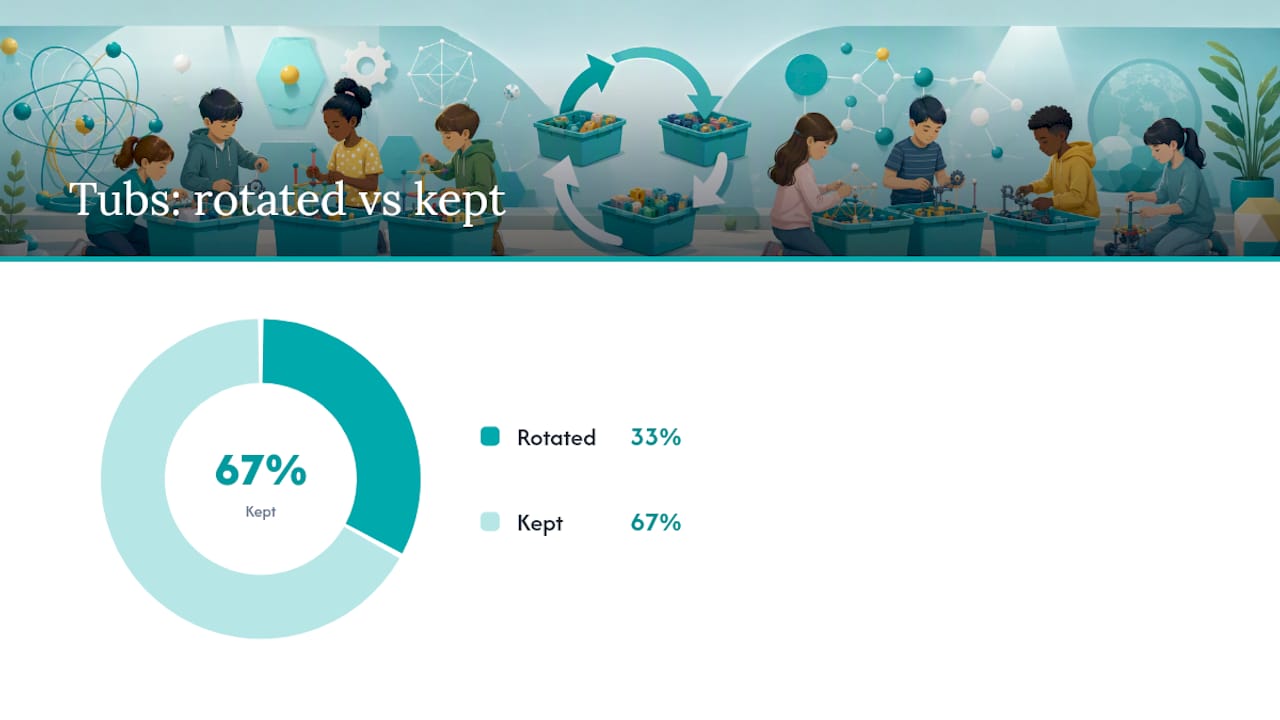
- Use one set of task cards per grade band and rotate about a third of them every few weeks to keep the activities fresh and engaging.
- Build your STEM tubs around four purposeful categories: engineering and building, measurement and data, simple circuits, and fine motor or pattern play.
- Establish a structured morning routine with clear steps, modeling and practicing clean-up, to ensure calm transitions and consistent engagement.
- Rely on low-cost manipulatives like buttons, craft sticks, and clay, supplemented with durable items like Magna-Tiles, stored in labeled, stackable containers for quick setup.
- Incorporate ready-made kits with task cards, role-play props, and reflection prompts to save prep time and seamlessly integrate STEM activities into the daily routine.
Table of Contents
- What to Put in Stem Morning Tubs
- Setting Up Morning Routines That Actually Run Themselves
- Differentiating Task Cards for K–2 and 3–5
- Budget-Friendly Sourcing and Storage That Saves Prep Time
- How Team Genius Squad Kits Fit a Morning Tub Rotation
- What Teacher-Tested Routines Get Right (and Wrong)
- Get Classroom-Ready Kits Without the Prep Work
- Sources
What to Put in Stem Morning Tubs
The best bins start with a learning goal, not a supply closet raid. Building your inventory around four categories keeps every tub purposeful instead of a random toy bin.
- Engineering and building: linking cubes, wooden blocks, Lego bricks, and Brain Flakes for open-ended construction challenges.
- Measurement and data: rulers, clipboards, sticky notes, and small counters for graphing and comparing.
- Simple circuits and cause-effect: batteries and small motors, always under direct supervision for younger grades.
- Fine motor and pattern play: buttons, craft sticks, and modeling clay for sorting, sequencing, and sculpting.
Interlocking plastic discs, wooden blocks, craft sticks, buttons, and clay show up again and again in teacher-built STEM tub collections, largely because they cost almost nothing and hold up to daily handling.
Pro Tip: Buy one extra set of whatever manipulative gets used most. Pieces go missing under desks and behind bookshelves, and a backup bag saves you from a mid-week supply run.
For circuits and anything with small batteries, set a clear rule that those bins only open with an adult present. Everything else can go straight into rotation the first week of school.
Setting Up Morning Routines That Actually Run Themselves
The arrival flow decides whether your morning feels calm or chaotic, and it only takes a week of repetition to lock in.
- Students put away backpacks and coats first, no exceptions.
- They complete a short journal entry or assigned morning task.
- Once finished, they choose a tub or move to independent reading.
- A rotation schedule (by table group or Velcro name tags) sends each group to a new tub every few days so the novelty stays fresh.
This sequence mirrors what teacher-tested morning tub routines already use in real classrooms, and it works because students never have to guess what comes next.
Spend the entire first week modeling each step out loud: how to carry a bin, how many pieces stay on the table, how to signal a question without leaving a seat. Pair that modeling with a consistent clean-up cue, a two-minute timer or a short song, so students learn that the signal means stop and sort, not stop and argue.
Pro Tip: Run a “silent practice” round during week one where the whole class rotates through cleanup without talking. It feels slow at first, but it cuts weeks off the adjustment period.
Classroom reports consistently describe calmer transitions and stronger engagement once a soft-start routine like this replaces immediate seatwork, according to teacher observations of morning work tubs.
Differentiating Task Cards for K–2 and 3–5
One bin can serve two grade bands if the task cards do the heavy lifting. Teachers who build tiered STEM bins typically prepare around 15 cards per grade band, which is enough variety to avoid repeats for weeks without becoming a filing project.
For K–2, keep prompts concrete and hands-on:
- Sort buttons by color, then graph the totals on a sticky note.
- Build a shape using exactly ten linking cubes.
- Thread beads to create a repeating pattern, then describe it out loud.
For 3–5, raise the reasoning demand with practical engineering challenge ideas and teacher-facing guidance for egg-drop activities:
- Measure three classroom objects and graph the results by length.
- Design a structure that holds a small book off the table using only craft sticks.
- Build a symmetrical design, then write the rule you followed.
| Grade band | Cards to prep | Sample focus |
|---|---|---|
| K–2 | Several | Sorting, simple building, patterns |
| 3–5 | Several | Measurement, design challenges, symmetry |
Rotate roughly a third of the cards every few weeks so returning tubs feel new. For quick evidence of learning, skip formal grading and ask for a one-line written reflection or a checklist tick: “I built,” “I measured,” “I wrote my rule.” That single line is often enough to show you who needs a nudge the next day.
Budget-Friendly Sourcing and Storage That Saves Prep Time
Most of what fills a strong tub already exists in a dollar store or a supply closet nobody has opened in months.
- Buttons, craft sticks, clothespins, and modeling clay are reliably cheap and reusable across many themes, a pattern echoed in low-cost STEM bin sourcing guides.
- Save real budget for durable, one-time buys like Magna-Tiles or sturdy linking cubes. They cost more upfront but survive years of daily use, which beats replacing flimsy sets every semester.
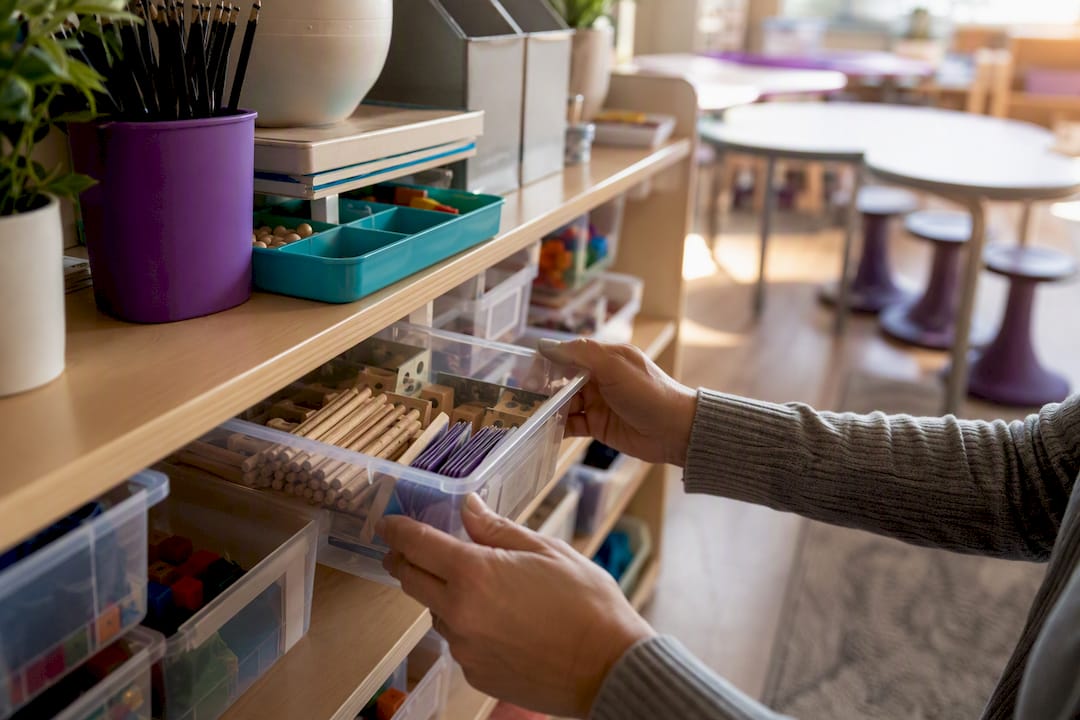
- Stackable bins and zipper pouches keep pieces sorted, and labeling each one by theme cuts the morning setup down to seconds instead of minutes.
Store bins on a low shelf near the door so the arrival flow never bottlenecks at your desk.
How Team Genius Squad Kits Fit a Morning Tub Rotation
A Team Genius Squad kit can become one full week’s tub with almost no extra prep. Each kit already includes task cards, role-play props like lab coats and badges, and a short hands-on experiment sized for a 10 to 15 minute session.
- Engage: the experiment hooks curiosity in the first few minutes.
- Encourage: the role-play piece lets a child step into the identity of a scientist while working through the challenge.
- Empower: a quick reflection prompt closes the loop and captures what they discovered.
Swap in one kit per week, pair it with a single reflection sheet, and the bin runs itself.
What Teacher-Tested Routines Get Right (and Wrong)
The routines above hold up because they respect two limits teachers actually face: time and noise. Do keep bins to a few at first. Don’t assign a new theme every single day. Scale group size to your class count, cap tub time at 15 minutes, and let the timer, not your voice, end the session.
— Tita
Get Classroom-Ready Kits Without the Prep Work
Building tubs from scratch works, but it eats planning periods you don’t have. Kits arrive with the task cards, role-play props, and reflection prompts already included, so a bin that would take you an evening to assemble takes ten minutes to unpack and drop into rotation.

A typical kit includes a hands-on experiment, an identity-driven role-play element like a lab coat or badge, and a short reflection prompt, everything you need for one week’s tub without cutting a single card yourself. If you want printable structure to go with it, the lesson plans page offers ready-to-use templates that pair directly with the E³ Method. For a design-challenge tub that needs almost no setup, the solar energy kit works well for upper elementary students who are ready for a bigger build. Browse a sample kit or lesson plan bundle on the shop page and see which one fits your rotation this month.

Leave a comment
This site is protected by hCaptcha and the hCaptcha Privacy Policy and Terms of Service apply.