
Curiosity-Boosting Activities List for Kids Ages 5–13
Curiosity-boosting activities are purposeful exercises designed to ignite children’s natural desire to explore, question, and create. The best ones build cognitive flexibility, resilience, and a genuine learner identity — not just a love of facts. This curiosity-boosting activities list covers everything from five-minute “appetizers” to hour-long projects, giving parents and educators a tiered, expert-backed framework that works for children ages 5–13. Whether you are planning a classroom session or a Saturday afternoon, these ideas meet kids where they are and grow with them.
1. What makes a good curiosity-boosting activities list?
Effective curiosity activities share three traits: they invite questions, reward exploration, and leave room for surprise. They are not worksheets with right answers. The best activities feel like play but build real skills, from observation and pattern recognition to creative problem-solving. Teamgeniussquad’s E³ Method (Engage, Encourage, Empower) captures this perfectly. Children first get hooked, then get supported, then get the confidence to go further on their own.
Educational experts recommend organizing these activities by time investment. Short and long formats serve different purposes: quick sessions spark interest, while longer projects sustain it. Knowing which format to reach for makes the difference between a child who dips a toe in and one who dives deep.
2. Quick “appetizer” activities to spark curiosity fast
Short activities (5–10 minutes) work as curiosity starters. They lower the barrier to entry and fit into tight schedules without pressure.
Try these with children ages 5–13:
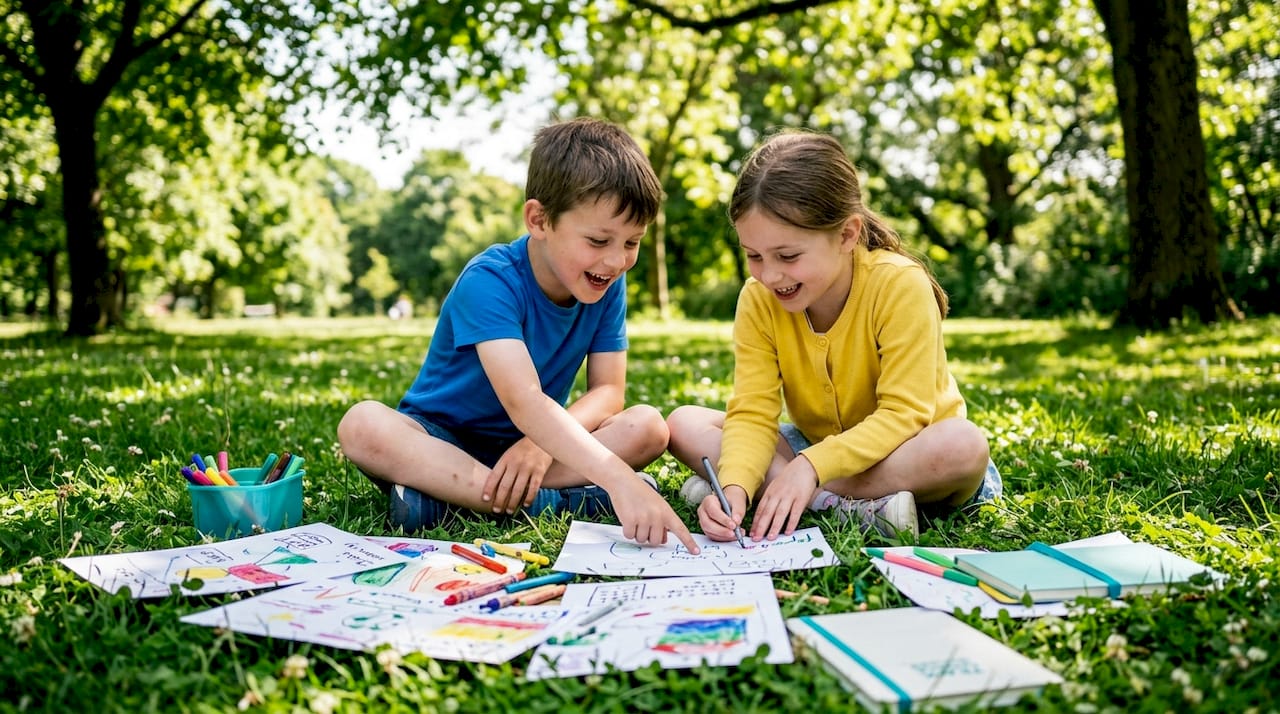
- Micro journaling: Give a child one prompt (“What would happen if gravity worked sideways?”) and three minutes to write or draw. No grading, no corrections.
- Random topic deep-dives: Open a physical encyclopedia or a trusted reference site to a random page. Read one paragraph together and ask, “What do you want to know next?”
- Continuous doodling: Set a timer for five minutes. The child draws without lifting the pencil. Discuss what shapes emerged and why.
- Sensory mystery bags: Fill a bag with five objects of different textures. The child reaches in, describes what they feel, and guesses what it is before looking.
Narrating actions aloud during these activities builds vocabulary and deepens observation. When you say, “I notice this leaf has jagged edges — I wonder why,” you model the exact thinking you want children to practice.
Pro Tip: Attach one appetizer activity to an existing daily routine, such as breakfast or the car ride home, so it becomes a habit rather than an event.
3. Deeper “entrée” projects that sustain children’s curiosity
Longer activities (30–60 minutes) build the skills that short bursts cannot: patience, iteration, and pride in a finished product. These are the activities that children remember.
Strong entrée activities include:
- Air-dry clay sculpting: Children design and build a creature or machine they invent. The constraint of working with clay forces creative problem-solving.
- Three-ingredient cooking: Pick three ingredients and challenge the child to create something edible. This combines chemistry, math, and sensory exploration.
- Painting from memory: Show a child an image for 30 seconds, then put it away. They recreate it from memory. Discuss what they noticed and what they missed.
- Simple circuit building: Using a battery, wire, and a small bulb, children test which materials conduct electricity. This is hands-on STEAM learning at its most direct.
Educational experts recommend a four-step framework for these projects: brainstorming, pitching, researching, and creating. This framework transforms a single activity into a passion project that builds deeper learning. A child who pitches their idea before building it learns to think like an innovator, not just a participant.
Pro Tip: When a child gets stuck, resist fixing the problem. Ask, “What have you tried so far?” That one question shifts them from frustrated to curious.
4. How interdisciplinary activities boost cognitive flexibility
Crossing subject lines is one of the most powerful things a curiosity activity can do. A 2024 study found that jumping between unrelated topics correlates with higher cognitive flexibility and well-being in learners. That means an activity connecting art and science is not just fun. It is building a more adaptable brain.
Here are strong interdisciplinary options:
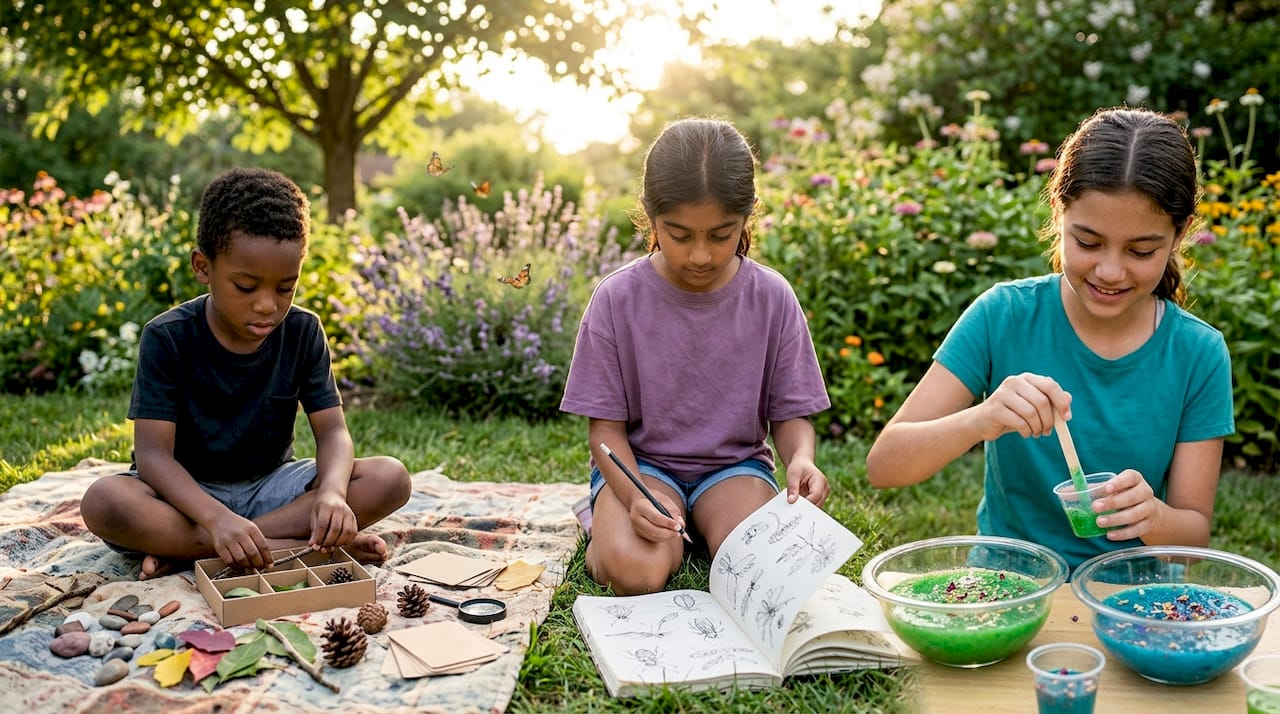
- Nature scavenger hunts with sketching: Children find five natural objects, draw them in detail, then research one fact about each. Science meets art meets literacy.
- Story-based science experiments: Read a short story involving a problem (a bridge collapses, a plant dies), then challenge children to design a solution using available materials.
- History-through-food projects: Research what people ate in a specific era, then prepare a simple version. History, geography, and cooking combine naturally.
| Activity type | Focus areas | Best age range |
|---|---|---|
| Nature scavenger hunt | Science, art, literacy | 5–10 |
| Story-based experiment | Science, language arts | 7–13 |
| History-through-food | History, geography, cooking | 8–13 |
| Random topic deep-dive | Research, critical thinking | 6–13 |
The science behind interdisciplinary programs confirms that crossing domains builds mental flexibility that single-subject activities cannot replicate. Children who practice this kind of thinking become better at connecting ideas across contexts, which is a skill that serves them in every subject.
5. Why unstructured time and adult narration matter
Unstructured time is not wasted time. Allowing children to invent their own games and direct their own exploration builds ownership of learning and a genuine curiosity identity. A child who chooses what to investigate is practicing the same skill as a scientist who designs their own study.
Adult behavior shapes how much curiosity children express. The key behaviors that support curious minds include:
- Narrating wonder aloud: Say “I wonder why the sky turns pink at sunset” instead of immediately explaining it.
- Prompting how to find answers: Ask “How could we figure that out?” instead of providing the answer directly.
- Practicing patience: Sit with an unanswered question together. Model that not knowing is the beginning of learning, not a failure.
- Encouraging repeated observation: Return to the same subject multiple times. A backyard patch observed over three weeks teaches more than a single dramatic experiment.
“Avoid giving direct answers to children’s why-questions. Focus instead on how to find answers to empower them as learners and help them see themselves as scientists and problem-solvers.”
Slow labs — calm, repeated observations of one subject over time — develop scientific habits more effectively than dramatic one-time experiments. A child who watches a caterpillar every day for two weeks learns patience, data collection, and the joy of a slow reveal.
6. How to build a balanced curiosity activity plan for kids 5–13
A sustainable curiosity plan mixes short appetizers, longer entrée projects, interdisciplinary tasks, and unstructured time across the week. No single format does everything. The goal is variety that keeps children engaged without overwhelming them.
Use this comparison to plan your mix:
| Format | Time needed | Complexity | Key materials | Primary outcome |
|---|---|---|---|---|
| Appetizer activity | 5–10 minutes | Low | Minimal (paper, pencil) | Sparks interest, builds habit |
| Entrée project | 30–60 minutes | Medium | Varies by activity | Sustains focus, builds identity |
| Interdisciplinary task | 20–45 minutes | Medium | Depends on domain | Cognitive flexibility |
| Unstructured exploration | Open-ended | Child-led | Whatever is available | Ownership, creativity |
Watch how your child responds to each format. Some children light up during hands-on building but disengage during journaling. Others love research but resist making things. Use those responses as data, not judgments. Adapt the plan to fit the child, not the other way around.
Identity-driven STEM activities work best when children see themselves as the main character in their learning story. Role play, scientist badges, and project portfolios all reinforce that identity. Teamgeniussquad builds this directly into every kit through its E³ Method, giving children a structured path from first spark to confident creator.
Pro Tip: Schedule one “productive failure” moment per week. Give children a challenge slightly beyond their current skill level and step back. Navigating that struggle builds resilience faster than any smooth success.
Key takeaways
The most effective curiosity plan combines timed appetizer activities, sustained entrée projects, interdisciplinary tasks, and unstructured exploration to build both skills and a learner identity.
| Point | Details |
|---|---|
| Use a tiered time framework | Mix 5–10 minute starters with 30–60 minute projects to sustain engagement across the week. |
| Narrate wonder aloud | Adults who verbalize curiosity model active investigation and build children’s vocabulary. |
| Avoid giving direct answers | Asking “How could we find out?” builds scientific thinking and confidence in children. |
| Include unstructured time | Child-directed exploration builds ownership of learning and a genuine curiosity identity. |
| Embrace productive failure | Letting children struggle before stepping in builds resilience and deeper problem-solving skills. |
What I have learned about curiosity that most activity lists miss
By Tita
Most curiosity activity lists treat curiosity as a checklist. Do ten things, check ten boxes, done. That misses the point entirely. Curiosity is an identity. A child who sees themselves as a curious person will keep asking questions long after the activity ends. That shift in self-perception is the real goal.
What I have seen, working with children across different learning profiles, is that the format matters less than the adult’s response. A child who asks a wild question and gets a dismissive answer learns to stop asking. A child who gets “I don’t know — let’s find out together” learns that questions are valuable. That modeling of curiosity is the most powerful tool any parent or educator has, and it costs nothing.
The other thing most lists skip is productive failure. Children need to hit a wall, sit with it, and find their own way through. That is where real learning happens. Your job is not to remove the wall. Your job is to stay nearby and believe they can climb it.
Curiosity is not a subject. It is a habit of mind. Build it slowly, protect it fiercely, and watch what children do with it.
— Tita
Teamgeniussquad kits that put curiosity into action
Children learn best when curiosity meets a real challenge they can hold in their hands. Teamgeniussquad designs screen-free STEAM discovery kits built around exactly that idea, giving children ages 5–13 the tools to conduct real experiments, step into scientist role play, and build genuine confidence through discovery.

The Science Solar Energy Kit lets children harness real solar power with a mirror disk, turning abstract energy concepts into something they can see and control. The Hand Energy Ball makes electrical circuits tangible and immediate. Both kits follow Teamgeniussquad’s E³ Method, guiding children from first spark to confident creator. Every kit is designed to work alongside the activities in this list, not replace them. Pair a kit with unstructured exploration time and watch what your child builds next.
FAQ
What are curiosity-boosting activities for children?
Curiosity-boosting activities are purposeful exercises that invite children to explore, question, and create. They range from five-minute observation games to hour-long interdisciplinary projects.
How often should children do curiosity activities?
Daily short activities and two to three longer projects per week create a sustainable rhythm. Consistency matters more than duration.
What is the best age to start curiosity-driven activities?
Children as young as five benefit from sensory and observational activities. The activities in this list scale from ages 5–13 by adjusting complexity and time.
Why should adults avoid answering children’s questions directly?
Teaching children how to find answers rather than providing them builds scientific thinking and confidence. It shifts children from passive receivers to active investigators.
How does unstructured time support curiosity?
Unstructured time lets children invent their own questions and direct their own exploration. That self-direction builds ownership of learning and a lasting curiosity identity.


Leave a comment
This site is protected by hCaptcha and the hCaptcha Privacy Policy and Terms of Service apply.