SEL STEM Activities: 8 Ways to Build Skills and Confidence
The best SEL STEM activities pair a real building or testing challenge with one named social-emotional skill, so children practice patience, teamwork or self-belief while they work on something that matters to them. Pick one skill per activity, build in time to reflect, and let mistakes count as data. Below you will find eight activities sorted by the five CASEL competencies, plus team roles, feedback starters and a simple way to talk about growth mindset without turning it into a poster slogan.
TL;DR
- Choose one CASEL skill as the focus of each STEM challenge instead of trying to teach all five at once.
- Rotate team roles on purpose, and save the sharing and reflection stage for a different day than the building stage.
- Give children sentence starters for feedback, so critique of a design never feels like critique of the child.
- Treat a failed test as information. That single habit is the heart of a growth mindset in science.
- All eight activities below use everyday materials and fit into 30 to 60 minutes at home, in a classroom or in a counseling group.
Table of Contents
- Why STEM is such a natural home for SEL
- The five CASEL skills, in plain words
- Eight SEL STEM activities to try
- Growth mindset in science: language that helps
- Set up the session so it works for every child
- Connect the build to the wider world
- Our perspective: confidence is the skill underneath the skills
- Where our kits and Ava fit in
- A simple weekly plan
- How to tell whether it is working
- FAQ
- Sources
Why STEM is such a natural home for SEL
Science and engineering ask children to do what social-emotional learning asks of them: try something, watch what happens, feel the frustration when it fails, and try again with a better idea. That is self-management and responsible decision-making in action, and when children work in pairs, it becomes communication and empathy too.
There is research behind the pairing. A 2023 cluster randomized trial in 46 Michigan schools studied a project-based science program for third graders. Students in the program scored 0.277 standard deviations higher on a standardized science test, and the study looked at their social and emotional learning alongside the academic results. One study does not settle the question, but it is a good sign that hands-on, project-based science and SEL can grow together.
Educators who have done this work add a caution. According to NSTA’s discussion of implementing SEL in STEM, SEL in STEM works best as a shift in classroom culture, not an add-on, and it needs the adults involved to share a common definition of SEL. At home that means parents and grandparents agreeing on the words they use. In school it means the classroom teacher, counselor and afterschool staff using the same language.
The five CASEL skills, in plain words
Most SEL STEM activity lists are organized around the CASEL framework, and it helps to have the five competencies in front of you. CASEL defines them as self-awareness, self-management, social awareness, relationship skills and responsible decision-making. Here is how each one shows up at a workbench or kitchen table.
| CASEL skill | What it looks like in a STEM challenge | A question to ask |
|---|---|---|
| Self-awareness | Noticing “I get frustrated when my tower falls” and naming a strength | “What part of this felt hard, and what part felt easy?” |
| Self-management | Staying with a task, setting a goal, calming down after a failed test | “What can you do when you feel stuck?” |
| Social awareness | Considering who the design is for and how a partner sees the problem | “Who will use this, and what do they need?” |
| Relationship skills | Sharing materials, listening, giving and taking feedback | “How did you decide who does what?” |
| Responsible decision-making | Choosing materials, testing fairly, weighing trade-offs | “Why did you pick that option over the others?” |
Keep the focus narrow. Educators who integrate SEL successfully tend to choose one specific skill for each challenge and say it out loud at the start, so children know what they are practicing besides the build itself.
Eight SEL STEM activities to try
Each activity below names a primary skill. Materials are deliberately cheap, and every one can be done in a single sitting.
1. The wobbly tower (self-management)
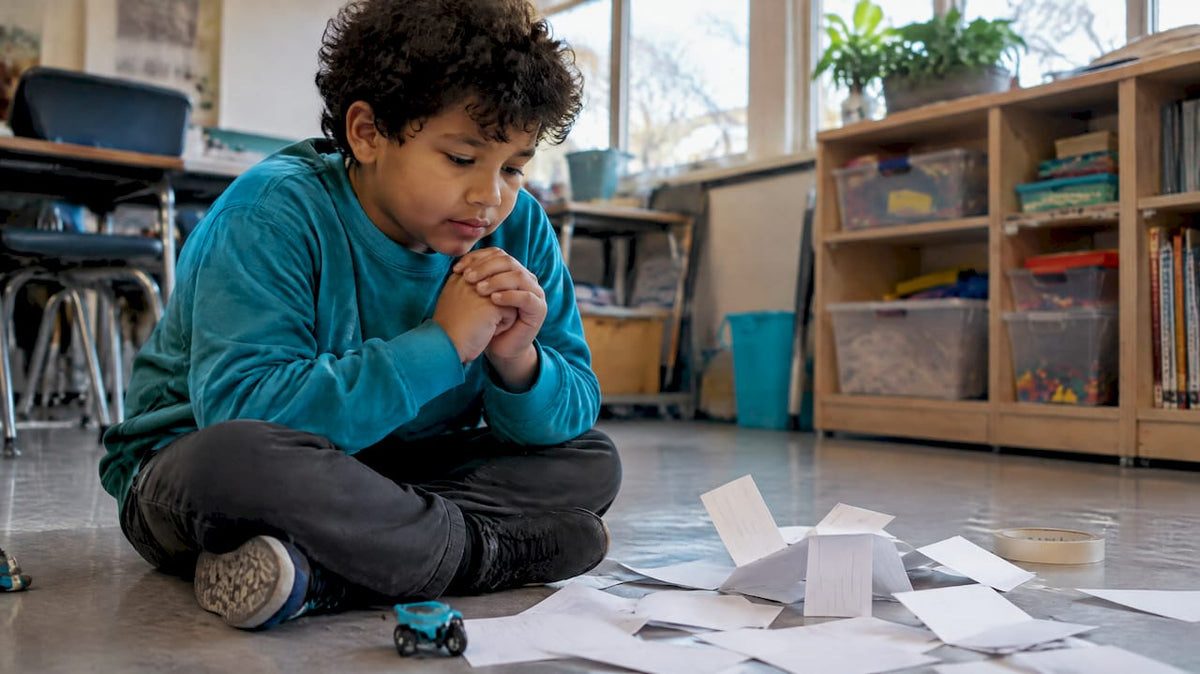
Give each child 20 index cards, a roll of tape and a small toy. The goal is a tower that holds the toy as high as possible for ten seconds. Before the build, ask each child to name one thing they will do if the tower collapses, such as taking three slow breaths or asking for a hint. When it falls, which it will, point to the plan they made.
2. Bridge for a real person (social awareness)
Instead of “build a bridge,” tell a short story: a neighbor who uses a walker needs to cross a creek. Practitioners who run design challenges in elementary classrooms report that stories or “bio cards” about the people affected give children a strong anchor for empathy and purposeful design. Ask what the neighbor would need that the builder would not think of first.
3. Marshmallow and spaghetti with rotating roles (relationship skills)
A classic, with one twist: assign roles and rotate them every five minutes. Try a Builder, a Materials Manager, a Tester and a Encourager. Rotating roles on purpose, rather than leaving groupings to chance, helps everyone contribute equally, as NSTA’s STREAMing Engineering article describes. The quiet child gets a turn to lead, and the confident child gets practice at supporting.
4. Boat foil challenge with a “failure log” (growth mindset)
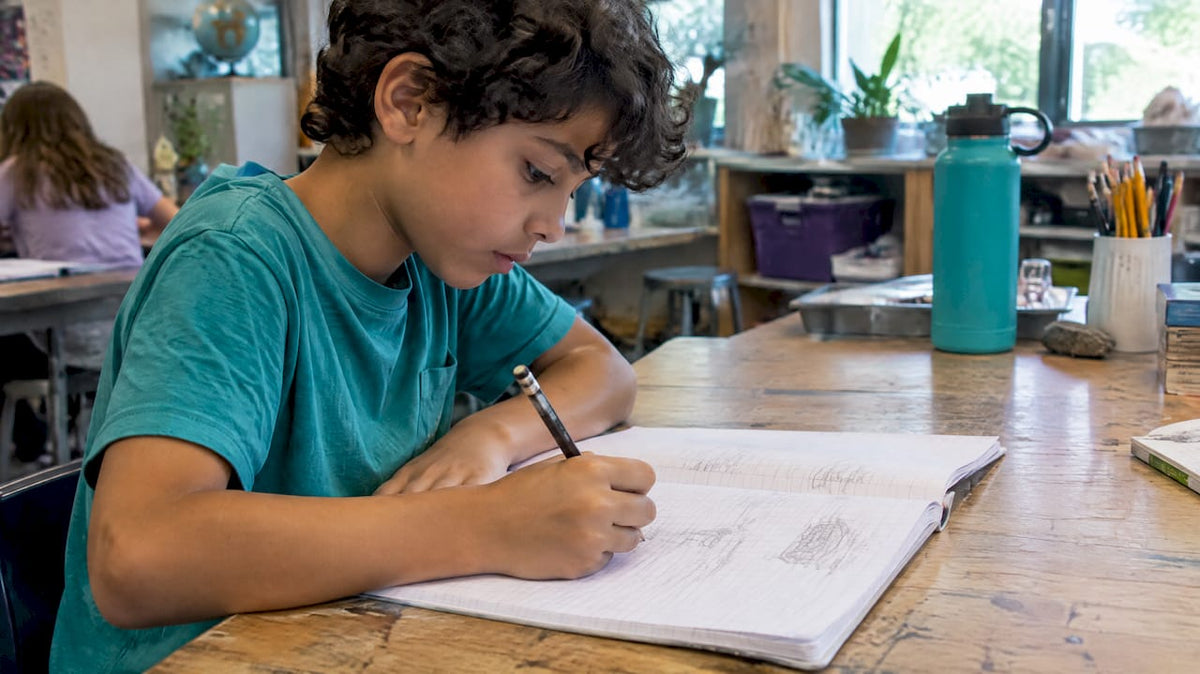
Hand out a square of aluminum foil and a cup of pennies. How many pennies can the boat hold before sinking? After each attempt, children write or draw one line in a failure log: “This sank because…” and “Next time I will…” Dictation works for children who find writing hard. The point is for the log to be a record of learning, not a record of mistakes.
5. Feelings thermometer for a slime lab (self-awareness)
Slime and gooey chemistry is full of surprises: sticky, runny, too stiff. Before starting, children mark on a simple thermometer drawing how they feel (calm, nervous, excited). Check again after the first mix goes wrong, and again at the end. Many children are surprised to see their own feelings move.

6. Fair test partners (responsible decision-making)
Pairs predict which paper towel brand soaks up the most water, then agree on what must stay the same (amount of water, size of towel, time). Before testing, partners must agree on one rule for how they will handle disagreement. Then ask: “Was your result what you hoped for? How do you report it honestly if it was not?”
7. Design swap and feedback (relationship skills)
Children build a simple paper roller coaster for a marble, then trade seats and test each other’s designs. Giving and receiving feedback is a stumbling block for younger children, who often hear it as hurt feelings. Teachers in the same NSTA article use a starter like “I like [X] about your invention because [Y]. Do you want to consider adding [Z]?” to make feedback structured and kind. Print it on a card and leave it on the table.
8. Invention story (self-awareness and identity)
Ask each child to invent something that would help a person they care about, draw it, and tell its story in three sentences: the problem, the idea, the surprise. This connects STEM with writing and reading, and with seeing oneself as an inventor. For more story-driven formats, see our guide to STEM storytelling examples for parents and educators.
Growth mindset in science: language that helps
Adults often ask for growth mindset science activities, and the activities above already are some. What changes the experience is the language around them. A few swaps work across ages 5 to 13:
- Instead of “Good job, you’re so smart,” try “You tried three ways to make that stand. Which one taught you the most?”
- Instead of “It’s okay, it didn’t work,” try “What did that test tell us?”
- Instead of “Hurry up and finish,” try “What do you want to change before the next test?”
- Instead of “Let me show you,” try “What have you tried so far?”
None of this requires a special curriculum. It requires the adult to wait a few seconds longer before stepping in.
Set up the session so it works for every child
Group on purpose
Grouping by ability can quietly tell children where they rank. Teachers running design inquiries describe mixed groupings as the ones that often yield the richest social-emotional outcomes, because every child can be positioned as an expert in their own way. One child may be the best sketcher, another the most careful measurer, another the one who asks the question nobody else thought of.
Split building from sharing
If you can, do the sharing stage on a different day from the building stage. Practitioners find that removing the rush to finish lets children reset and reflect on both their design and how the team worked together. If you only have one session, build in a five-minute break and a movement activity before the debrief.
Use talk moves with younger children
Elementary teachers use talk moves and scaffolding questions to help young children handle tasks like argumentation and evidence-based reasoning. Simple ones: “Can you say more about that?”, “Who can add on to that idea?”, “Do you agree or disagree, and why?”
Make the challenge accessible
For children with dyslexia, dysgraphia, ADHD or sensory sensitivities, offer choices in how they show learning: drawing, speaking, building a model or recording a voice note. Reduce the amount of required writing during the build. Our guide on how to support neurodivergent learners through STEAM goes deeper, and the 30 to 60 minute classroom STEAM activities guide adds universal design tips for low-prep sessions.
Connect the build to the wider world
Social awareness grows when children see that real people far away face real problems. Pairing an engineering challenge with a live map can do that. A tool like a live interactive globe for the classroom lets students look at weather, earthquakes and other events around the planet, which can launch a challenge such as designing a shelter or a warning system for a community they just read about. Then ask the SEL question: who is affected, and how would they want us to help?
Our perspective: confidence is the skill underneath the skills
We started Team Genius Squad from a real family journey with dyslexia and dysgraphia. We saw a child who understood ideas deeply but felt unseen in traditional learning settings, and we saw what changed when she was handed a real experiment and a real role.
That experience shaped our E³ Method: Engage, Encourage, Empower. Children are first drawn in by something tactile and surprising. Then they are encouraged through small, genuine successes. Finally they are empowered to see themselves as scientists, creators and problem-solvers, not just children who followed directions. For us, that identity piece is what SEL in STEM is really about. A child who says “I am an inventor” will tolerate a collapsed tower far better than one who thinks she is bad at science.
Three things we believe, and build into our kits:
- Screen-free is a feature. Hands, materials and conversation make feelings and ideas visible in a way a tablet rarely does.
- Literacy belongs in the lab. Reflection, a short written or dictated record, and storytelling turn an experiment into something a child owns.
- Role play is not a gimmick. Lab coats, badges and certificates help children step into the role of an innovator, and that role gives them permission to be curious and to be wrong.
If you are choosing between a dozen activities, choose the one a child will want to talk about at dinner.
— Tita
Where our kits and Ava fit in
If you would like the materials, the story and the role play ready in one box, our experiment kits are designed for ages 5 to 13 and built around hands-on, screen-free discovery with reading, writing and reflection woven in. A lab coat with safety glasses adds the identity element for children who love to dress the part.
For a live experience, children can meet our young STEM ambassador, Ava N. Simmons, in a 30-minute one-on-one Zoom experiment for 50 USD. Groups can choose a virtual entrepreneurship experience for 550 USD or an in-person group STEM experience for 1100 USD, both one-off prices listed on the same page.

A simple weekly plan
If you want a routine, not a one-off, here is a four-week rhythm that works for a family, a classroom or a small counseling group.
- Week 1, self-awareness: Do the slime lab with the feelings thermometer.
- Week 2, self-management: Run the wobbly tower and make a “what I do when I’m stuck” card.
- Week 3, relationship skills: Try the rotating-role challenge and the design swap with feedback starters.
- Week 4, decision-making and identity: Run the fair test, then have each child tell an invention story and receive a certificate.
For more build ideas, our posts on low-cost STEM design challenges with measurable tests and unplugged engineering challenges that teach iteration and inclusion give you plenty of material to swap in. If you run an afterschool program, look at our afterschool STEM guide.
Family involvement helps too. CASEL’s page on school-family partnership strategies offers research-based ideas for connecting what happens at school with what happens at home. Even a short note home that names the week’s skill and one question to ask at dinner makes the practice stick.
How to tell whether it is working
Skip the test. Watch for small behaviors over several weeks:
- A child who used to quit after the first collapse tries a second version.
- A child asks a partner for an opinion without being prompted.
- A child describes a failed test as “useful” or says “I learned…”
- A child who used to avoid writing is willing to add a line to the log, in words or pictures.
Write one sentence after each session about what you noticed. After a month you will have a record that is more useful than any score, and one you can share with a teacher, counselor or the child.
FAQ
What is the difference between STEM and SEL activities?
STEM activities focus on science, technology, engineering and math content, while SEL activities focus on skills like self-management and empathy. SEL STEM activities do both: the child builds or tests something and also practices one named social-emotional skill. Choosing one skill per challenge keeps it manageable.
How do I add SEL to a STEM lesson I already teach?
Pick one CASEL competency, say it at the start, and add one structure: rotating team roles, a feedback sentence starter or a reflection question at the end. You do not need new materials. Save the reflection for a separate session if you can, so children are not rushing.
What are good growth mindset STEM activities for young children?
Any challenge where the first attempt is expected to fail works well, such as foil boats, paper towers or marble runs. Add a simple failure log with drawing or dictation, and ask “What did that test tell us?” after each try. Praise the strategies children used, not how smart they seem.
Can SEL STEM activities help children who struggle in traditional classrooms?
They can offer a different way in, because the work is tactile and children can show understanding by building, drawing or speaking. Offering choice in how a child responds matters most. For a child with dyslexia, dysgraphia or another learning difference, talk with the child’s teacher, school counselor or specialist about the right supports.
Sources
- ERIC: Assessing the Effect of Project-Based Learning on Science Learning in Elementary Schools
- CASEL District Resource Center: Equity Connections to SEL Competencies
- NSTA: Implementing SEL in STEM
- NSTA: Insulating Tiny Homes
- NSTA: STREAMing Engineering
- NSTA: Argumentation to Inform an Engineering Design Decision
- CASEL: School-Family Partnership Strategies

Leave a comment
This site is protected by hCaptcha and the hCaptcha Privacy Policy and Terms of Service apply.