
K–12 Phenomena Based Science: Grade Band Units and Screen Free Kits
Phenomena-based science centers instruction on observable events that students investigate to build NGSS-aligned explanations, not on textbook facts handed down from the front of the room. A tortoise crossing the Indian Ocean, a lake that catches fire, sand that sings when you walk on it. These are the anchors that pull kids into the three dimensions NGSS asks for, and they turn passive science class into a room full of young investigators chasing an answer nobody has given them yet.
TL;DR:
- Phenomena used as classroom anchors should be complex enough to require sustained investigation and connected to students’ local environments for maximum engagement.
- Effective phenomena range from immediate, sensory experiences for younger students to multi-variable, open-ended problems for high school, scaled appropriately by grade level.
- Systematic, scaffolded investigation sequences that include questioning, data collection, modeling, and explanation build deeper understanding and transfer of scientific concepts.
- Ready-made NOAA modules and hands-on kits from Team Genius Squad provide accessible, manipulatable phenomena that support NGSS-aligned, inquiry-based science instruction.
- Teachers need ongoing practice, professional development, and intentional focus on student-driven questions to successfully implement phenomena-based learning over multiple units.
Table of Contents
- What Phenomena Are and Why NGSS Builds Around Them
- Instructional Qualities of a Strong Phenomenon (And What Kills a Weak One)
- Matching Phenomena to Grade Bands, K Through 12
- Building a Phenomenon-Driven Unit Step by Step
- Classroom-Ready Phenomena and Where to Find Them
- How Team Genius Squad Kits Bring Phenomena to Life Without a Screen
- An Educator’s View on Rolling This Out Fairly
- Get Phenomena-Based Learning Into Your Classroom This Semester
- Sources
- FAQ
What Phenomena Are and Why NGSS Builds Around Them
A phenomenon is something you can observe, not something you already understand. That distinction matters more than it sounds. “Why do leaves change color?” is a phenomenon. “Chlorophyll breaks down in autumn” is an explanation, and the moment you hand students that sentence, you’ve closed the investigation before it opened.
NGSS treats phenomena as the engine, not the decoration. Phenomena drive students to use disciplinary core ideas, science and engineering practices, and crosscutting concepts together to make sense of something real, rather than practicing each dimension in isolation. That’s what “three-dimensional learning” actually means in a classroom: kids aren’t memorizing the water cycle, they’re using it to explain why a specific pond dried up.
Effective phenomena share a few traits:
- They’re specific and observable, not a broad topic like “weather” or “genetics.”
- They generate genuine puzzlement, something students can’t explain on sight.
- They connect naturally to grade-appropriate core ideas without forcing the fit.
Instructional Qualities of a Strong Phenomenon (And What Kills a Weak One)
A phenomenon that only grabs attention for five minutes isn’t doing its job. NSTA warns that phenomena used as a quick hook and then abandoned fail the students who needed them most, because the whole point is to keep returning to that event as students refine their thinking across a unit.
What separates a phenomenon that carries a unit from one that fizzles after day one:
- Investigable complexity. Students can’t resolve it with a quick Google search or a single fact.
- Grade-appropriate reach. The explanation sits just past what students already know, close enough to grasp with scaffolding.
- Cultural and local relevance. A phenomenon tied to a student’s own community lands harder than one from a distant textbook.
- Multiple entry points. Different students can ask different, equally valid questions about it.
Watch for the opposite pattern: a flashy video that entertains but doesn’t connect to any core idea, or a phenomenon so simple that one lecture explains it away.
Pro Tip: Before you commit a phenomenon to a full unit, test it on a colleague who doesn’t teach your subject. If they can explain it fully in under a minute, it’s too thin to anchor real investigation.
Matching Phenomena to Grade Bands, K Through 12
Complexity has to scale with the students in the room, and that means the same broad topic looks completely different depending on grade band.
- K to 2: Keep it immediate and sensory. A puddle disappearing overnight works better than an abstract weather system, and it still supports early ideas about patterns and cause and effect.
- 3 to 5: Add a data component. Why do some trees on the playground lose leaves before others? Students start collecting simple measurements and comparing results.
- 6 to 8: Introduce systems thinking. A local stream running low in August pulls in weather, watershed geography, and human water use at once.
- 9 to 12: Push toward open-ended, multi-variable phenomena, like unexplained fish die-offs in a regional lake, where students design their own investigative approach.
Local and community phenomena consistently outperform generic textbook examples for engagement. Guidance built around place-based education points to the same conclusion: a phenomenon rooted in a student’s own backyard carries weight that a stock photo of a hurricane never will.
Building a Phenomenon-Driven Unit Step by Step
A phenomena-based unit follows a sequence, not a single lesson. Skipping steps is how a promising anchor phenomenon turns into a one-day novelty.
- Introduce the anchor phenomenon. Use video, data, or a physical demonstration. Don’t explain it yet.
- Collect student questions. Post them publicly and prioritize the ones that point toward grade-level DCIs.
- Plan short investigative cycles. Each cycle should use modeling, data analysis, or hands-on experimentation to chip away at one question.
- Gather and organize evidence. Students build toward a claim, not just a collection of facts.
- Construct an explanation. This is where the three dimensions converge into a written or spoken model.
- Apply the explanation to a new context. A design challenge or a related phenomenon tests whether the understanding transfers.
Budget your time deliberately. An anchor phenomenon for a full unit might run several weeks; a smaller investigative phenomenon nested inside it might only need a few class periods. Build in formative checkpoints after each cycle, short written explanations, quick model revisions, or peer critique, so you catch gaps before the final explanation.
A systematic review of phenomenon-based learning and storyline approaches found real promise for engagement and scientific reasoning across K to 12 studies, but the same review flagged sustained teacher preparation and assessment alignment as the deciding factors between a unit that works and one that stalls. Phenomena alone don’t teach; the sequence around them does the heavy lifting.
Classroom-Ready Phenomena and Where to Find Them
You don’t have to invent phenomena from scratch. NOAA’s Science On a Sphere phenomenon-based learning modules offer some of the strongest ready-made options for U.S. classrooms, built around real datasets rather than staged demonstrations.
Examples worth trying:
- A tortoise’s ocean crossing, which pulls in currents, weather patterns, and marine ecosystems at once.
- STEVE, the atmospheric light phenomenon distinct from the aurora, a great fit for high school physics and earth science.
- Ocean plastic accumulation in the Mariana Trench, which connects chemistry, ecology, and human impact.
- Singing sand dunes, an accessible middle school entry point into physics and acoustics.
- Vinegar-and-eggshell acidification models, a low-cost classroom stand-in for real ocean acidification data.
When you’re selecting media or datasets, favor sources that let students manipulate variables or compare time-series data over static images. A single photo generates curiosity for a moment. A dataset generates a genuine investigation.
How Team Genius Squad Kits Bring Phenomena to Life Without a Screen
Every phenomenon eventually needs hands, not just a video. That’s where the E³ Method, Engage, Encourage, Empower, lines up almost exactly with the anchor, investigate, explain sequence NGSS asks for.
- Engage: A kit introduces a real, tactile event, crystals forming, a circuit lighting up, that mirrors the “notice and wonder” stage of an anchor phenomenon.
- Encourage: Role play elements, lab coats, and badges keep students in the identity of an investigator through the messier middle of a unit.
- Empower: Built-in literacy components ask kids to record observations and write explanations, closing the loop between hands-on evidence and a real scientific claim.
| E³ Stage | NGSS Sequence Step | What It Looks Like in the Classroom |
|---|---|---|
| Engage | Anchor phenomenon | Hands-on kit introduces a puzzling, observable event |
| Encourage | Investigate | Role-play and repeated experimentation sustain inquiry |
| Empower | Explain | Writing and reflection turn evidence into a claim |
An Educator’s View on Rolling This Out Fairly
Phenomena-based teaching doesn’t succeed overnight, and pretending otherwise sets teachers up to abandon it after one rocky unit. It takes a semester of practice, real professional development, and a deliberate effort to pull phenomena from students’ own neighborhoods rather than a generic bank. Success looks like more student-generated questions, not a cleaner test score, at least at first.
— Tita
Get Phenomena-Based Learning Into Your Classroom This Semester
Teamgeniussquad turns the phenomenon-to-explanation sequence into something you can hand a student without opening a laptop. While plenty of digital simulations claim to teach three-dimensional learning, a screen-free kit gives kids something to hold while they test a claim, which is exactly the kind of evidence-gathering NGSS units are built around.
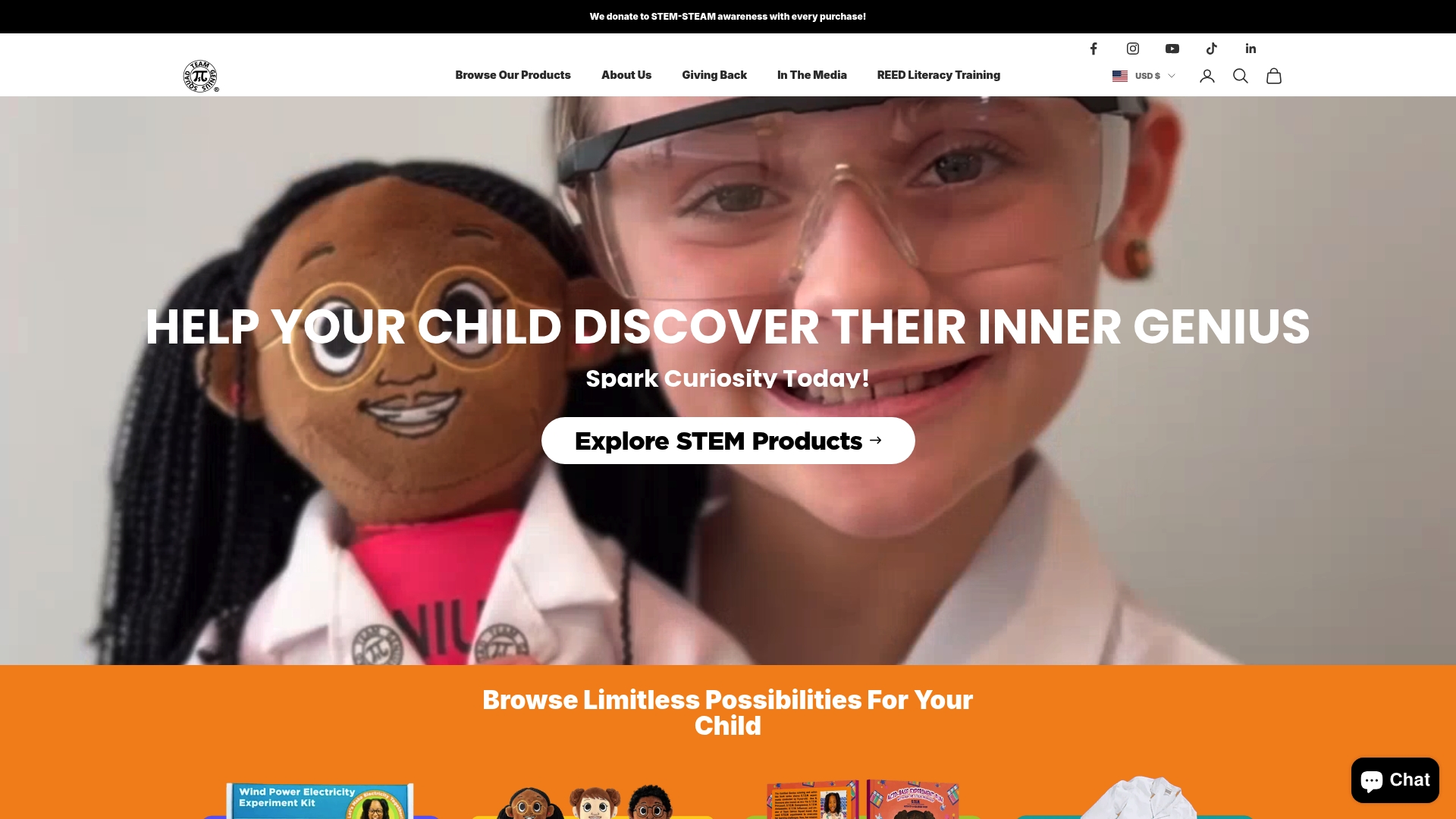
The Experiment Kits work well as the investigative core of a unit, the hands-on cycle where students test variables tied to your anchor phenomenon. For a phenomenon involving circuits or energy transfer, the STEM-STEAM Electricity Lab Experience Bundle gives students a physical system to manipulate instead of a diagram to memorize. And if you want a phenomenon come to life through a real person’s story, the Meet Ava STEM Ambassador experiences let a class talk directly with a young innovator about how she investigates real problems, starting at $50 for a 30-minute one-on-one session. Browse the lesson plans page to match a kit to whatever phenomenon anchors your next unit.
Sources
- Phenomenon-based Learning Modules
- Phenomena (NextGenScience)
- Beyond the hook (NSTA)
- Phenomenon-based learning and storylines in K-12 science education: a systematic review
FAQ
What are some examples of scientific phenomena?
A tortoise crossing an ocean, sand dunes that hum when disturbed, STEVE (an atmospheric light display), ocean plastic accumulating in deep trenches, unexplained fish die-offs, a lake that appears to catch fire, seasonal algae blooms, eggshells dissolving in acid, static electricity building before a storm, and a puddle vanishing overnight are all commonly used across K to 12 classrooms.
What does phenomenon-based learning look like in practice?
A class watches footage of a tortoise’s transoceanic swim, generates questions about currents and navigation, then spends several weeks investigating ocean systems and animal behavior before writing an evidence-based explanation of how the tortoise survived the journey.
What are some cool science phenomena for kids to explore?
Singing sand dunes, glowing STEVE displays, and vinegar-and-eggshell acidification reactions tend to hook younger students because they’re visual, low-cost to demonstrate, and connect to real earth and chemistry concepts.
What are examples of natural phenomena teachers commonly use?
Ocean currents guiding animal migration, atmospheric light events like STEVE, volcanic ash affecting air travel, seasonal ice melt, and regional drought patterns all appear frequently in NGSS-aligned phenomenon libraries because they connect multiple science disciplines at once.
How does Team Genius Squad support phenomena-based units?
Hands-on experiment kits and related experiences can give students a tactile way to investigate and explain phenomena, matching the anchor, investigate, and explain sequence NGSS units rely on without requiring a screen.


Leave a comment
This site is protected by hCaptcha and the hCaptcha Privacy Policy and Terms of Service apply.