Inclusive Earth Day STEM Activities for Ages 5–13 That Teach Engineering
This guide gives parents and educators ready-to-run Earth Day STEM activities for kids ages 5 to 13, organized by theme so you can pick one in minutes. Every project uses low-cost or upcycled materials, follows the engineering design process, and builds real environmental science skills, from water filtration to solar power to citizen-science data collection.
TL;DR:
- Microplastic filters should be tested with various materials, and counting trapped particles reveals the most effective design.
- Oil spill cleanup simulations demonstrate absorption versus dispersion, requiring adult supervision for younger children.
- Children can learn about renewable energy by building solar ovens, solar racers, or lemon batteries, with experiments lasting from 25 minutes to hours in sunlight.
- Using biodegradable seed starters from citrus peels or egg cartons teaches responsible consumption, and compost or soil erosion tests highlight nutrient cycles and erosion risks.
- Many activities cost under $20, utilize household recyclables, and benefit from station rotations and simple data tracking to support iterative engineering practices.
Table of Contents
- Earth Day STEM Activities Organized by Theme
- How to Run These Activities Without the Chaos
- Turning Activities Into Real Engineering Challenges
- Citizen Science Projects That Extend the Impact
- Who’s Behind These Activities
- Why Role-Play Makes the Science Stick
- Bring the Lab Coat Home With Ready-Made Kits
- Where to Find More Lesson Plans
- Sources
- FAQ
Earth Day STEM Activities Organized by Theme
Picking the right project starts with matching the science to what’s on hand. Group your options by theme, and the choice gets a lot easier.
Water and pollution
Microplastic capture challenge. Kids design a filter from coffee filters, cheesecloth, or pantyhose stretched over a cup, then test how much glitter or shredded paper “microplastic” it catches from a cup of water. Time: 20 to 30 minutes. Learning goal: filtration design and particle size. Data task: count trapped particles per trial and log which material performed best. Researchers testing biological approaches to this same problem have found that certain yeast strains can pull microplastics out of water, which makes a great real-world tie-in for older kids asking “what happens after my filter?”
Oil spill cleanup simulation. Pour vegetable oil into a tray of water, then let kids test cotton balls, sand, and dish soap as cleanup tools. Time: 30 minutes. Learning goal: absorption versus dispersion. Safety note: adult supervision for the oil pour with younger kids.
Fog catcher demo. Stretch different mesh materials (window screen, cheesecloth, nylon stocking) over a jar and set it near a cool, humid surface or a simple mister. Weigh the catcher before and after to calculate water collected. Time: 40 minutes over two sessions. This mirrors an actual Science Buddies fog catcher project used to study fog harvesting for drinking water in dry regions.
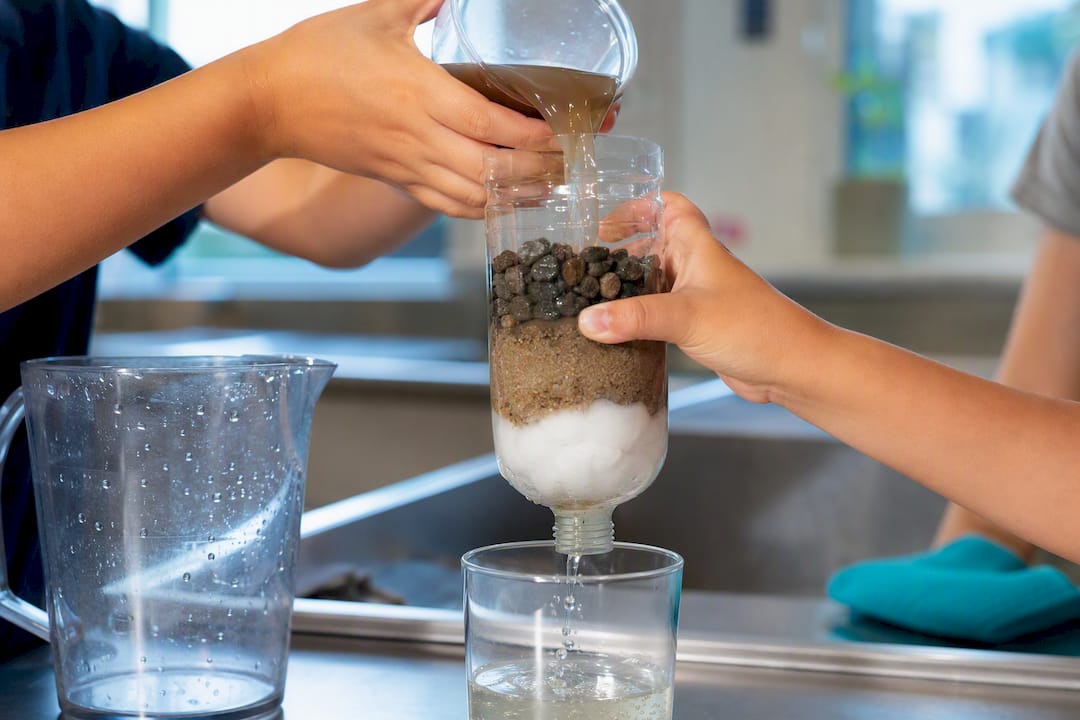
Homemade water filter. Layer sand, gravel, and cotton in a cut plastic bottle to filter muddy water. Time: 20 minutes. Learning goal: multi-stage filtration.
Energy and renewables
Pizza box solar oven. Line a pizza box with foil, cover with plastic wrap, and prop a black paper tray inside to melt a marshmallow or soften chocolate. Time: 30 minutes prep, 1 to 2 hours in direct sun. Learning goal: solar radiation and heat absorption.
Solar-powered racer. Attach a small solar panel and motor kit to a lightweight cardboard chassis and test how far it travels under different light conditions. Time: 45 minutes. Learning goal: energy conversion.
Wind-powered pinwheel generator. Build a paper pinwheel and connect it to a small hand-crank generator or LED to see if wind spin generates enough current to light it. Time: 30 minutes.
Lemon battery circuit. Insert copper and zinc electrodes into lemons wired in series to light a small LED. Time: 25 minutes. Learning goal: chemical energy conversion.
Plants and soil
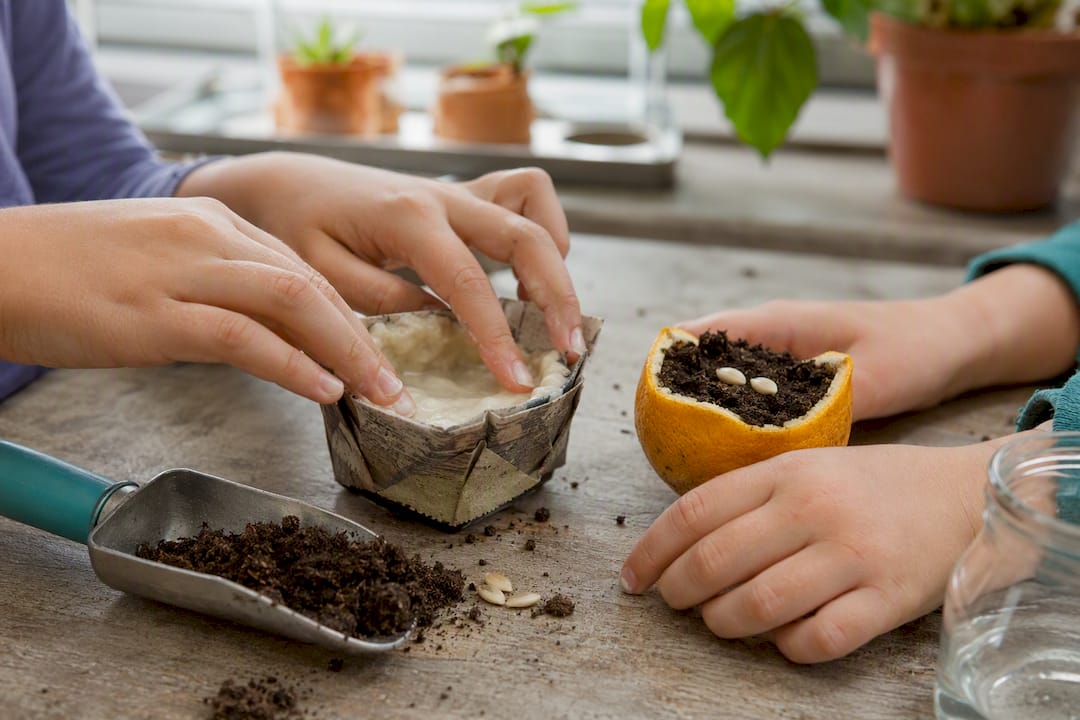
Biodegradable seed starter. Kids build planting pots from citrus peels, egg cartons, or newspaper, then fill them with a cornstarch-and-water “goop” that breaks down naturally. A published lesson plan on biodegradable seed starters ties this directly to responsible consumption goals. Time: 25 minutes to build, ongoing observation over 1 to 2 weeks.
Compost jar experiment. Layer food scraps, soil, and shredded paper in a clear jar and track decomposition over two weeks. Learning goal: decomposition and nutrient cycles.
Soil erosion tray test. Compare bare soil versus soil covered with grass clippings or mulch under simulated rain (a watering can) to see which erodes faster. Time: 20 minutes.
Materials and waste
Bioplastic bag challenge. Mix cornstarch, water, glycerin, and vinegar to form a biodegradable film, then test its strength versus a regular plastic bag. Time: 40 minutes plus drying overnight.
Recycled paper making. Shred scrap paper, blend with water, and press it through a screen to form new sheets. Time: 45 minutes.
Upcycled bird feeder. Turn a milk jug or plastic bottle into a bird feeder and observe which birds visit over a week. Learning goal: habitat and food source design.
Biomimicry and engineering
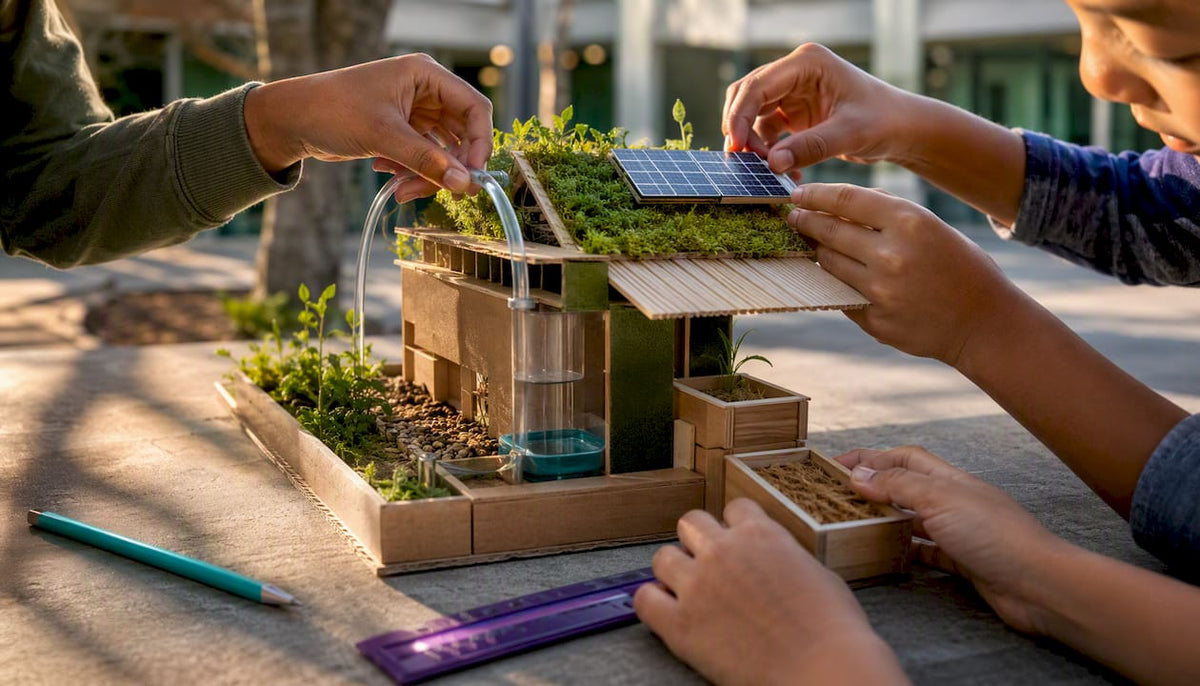
Build-a-mini-living-building. Older kids sketch a miniature structure that captures rainwater, generates solar power, and manages its own waste, inspired by real regenerative design projects like the Kendeda sustainable solar design challenge. Time: 1 to 2 class periods.
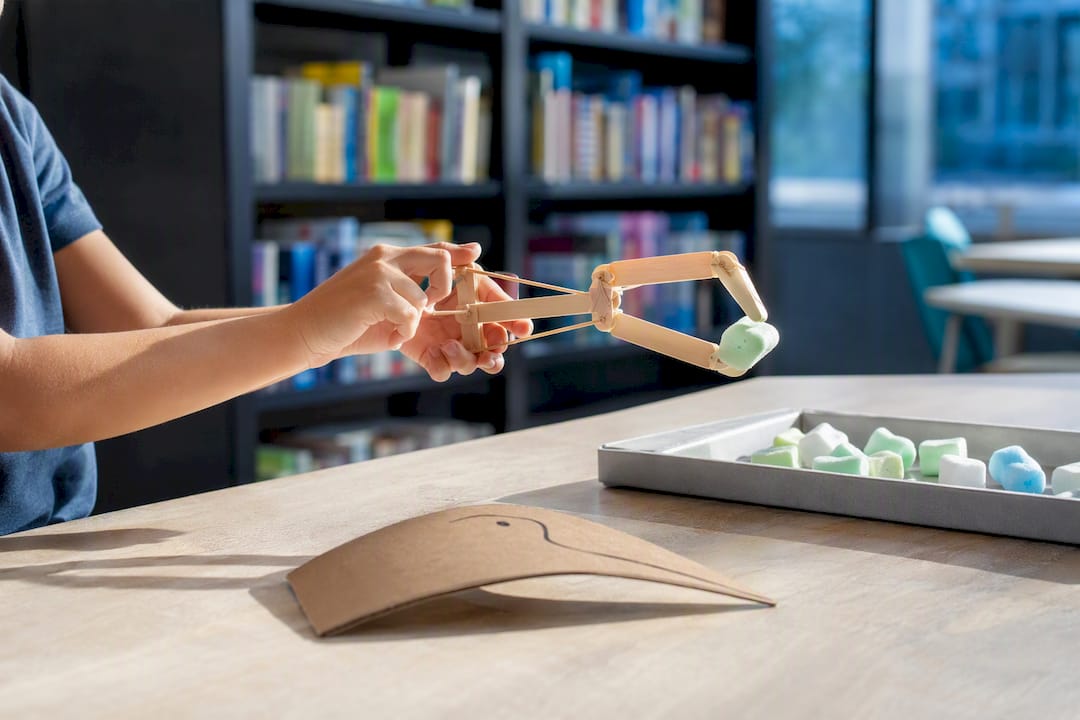
Biomimicry claw grabber. Design a simple mechanical claw inspired by a bird beak or crab pincer to pick up “litter” (small foam pieces) without touching them by hand.
How to Run These Activities Without the Chaos
Running a smooth Earth Day STEM session comes down to three things: cheap materials, the right supervision level, and a simple way to capture what kids learned.
- Substitute freely. Egg cartons replace seed trays, yogurt cups replace beakers, and cereal box cardboard replaces poster board. Most of these projects run under $20 in total materials, and several can use only household items you likely have already.
- Match supervision to age. Ages 5 to 7 need an adult handling any cutting, hot glue, or liquid pours. Ages 8 to 10 can measure and mix independently with a nearby adult. Ages 11 to 13 can run most builds solo, including basic circuits.
- Rotate or go deep. A classroom of 20 works best with station rotation, five or six kids per table, switching every 15 to 20 minutes. A homeschool pod or small group can stretch one project across an afternoon or even several days.
- Log the process, not just the product. Have kids fill out a simple data table (what we tried, what happened, what we’d change) or answer a short Claim-Evidence-Reasoning prompt: what happened, what proves it, why it happened.
Pro Tip: Keep a “materials bin” of clean recyclables (bottle caps, cardboard tubes, yogurt cups) going all month before Earth Day so you’re never scrambling for supplies the night before.
Turning Activities Into Real Engineering Challenges
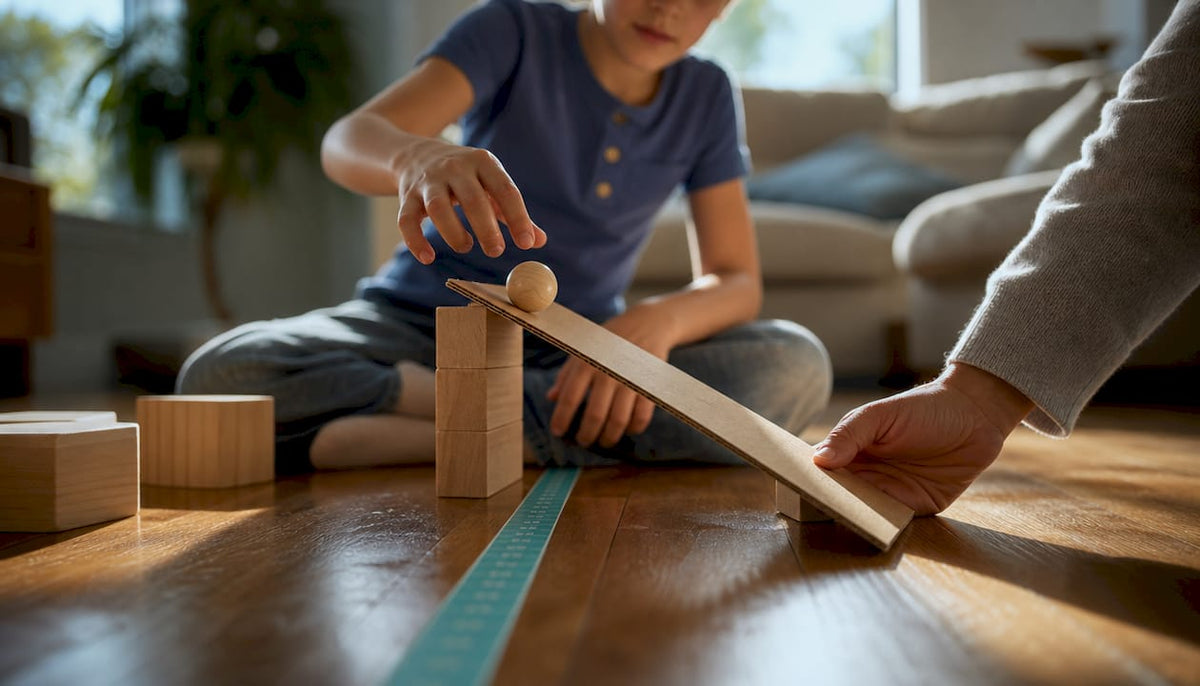
The difference between a craft and an engineering challenge is iteration. Kids who define a problem, build one version, test it, and rebuild it are doing the same work as professional engineers, just at a smaller scale.
- Define the problem. What needs cleaning up, powering, or growing? Frame it as a question: “How much oil can we remove in 10 minutes?”
- Design and prototype. Sketch a plan before building. This step is where the microplastic filter, oil cleanup tool, or solar racer takes shape.
- Test with real measurements. Count particles removed, measure water volume in milliliters, or check voltage output with a simple multimeter.
- Iterate. Change one material or design element and retest.
Practitioner guidance from the TryEngineering microplastic clean-up lesson warns against stopping at the first working prototype. A basic data log converted into a bar graph, showing particles caught per filter design, gives kids real evidence to support their reasoning instead of a vague “it worked.”
Citizen Science Projects That Extend the Impact
Earth Day activities stick longer when kids contribute real data instead of just observing. A few accessible options:
- Pollinator counts through local extension programs, pairing naturally with the seed starter project above.
- The Great Global Cleanup widget lets kids log litter collected during a neighborhood walk.
- iNaturalist Bioblitzes invite kids to photograph and identify local plants and insects.
These options, along with several others, appear on Project Learning Tree’s citizen-science roundup, which includes simple submission tools built for classroom use. Submitting real observations, rather than working from a worksheet, is what researchers point to as the difference between a craft and genuine STEM engagement.
Who’s Behind These Activities
These activities are curated by Team Genius Squad, the creators of hands-on, screen-free STEAM kits built around the trademarked E³ Method, Engage, Encourage, Empower. The brand grew out of a real family’s experience with dyslexia and dysgraphia, and every kit, including the Science Solar Energy Kit with Mirror Disk, is designed so kids see themselves as scientists, not just students following instructions.
Why Role-Play Makes the Science Stick
A kid wearing a lab coat while testing a filter isn’t just playing pretend. That identity shift is where engagement turns into confidence, and confidence is what carries a child from a failed first prototype to a second try. It’s the entire logic behind Engage, Encourage, Empower.
— Tita
Bring the Lab Coat Home With Ready-Made Kits
If you love the solar racer or oven idea but don’t want to hunt for a working solar panel and motor mount, the Science Solar Energy Kit with Mirror Disk gets kids building and testing renewable energy setups without a supply-run detour. It’s built specifically for ages 5 to 13, with instructions designed around neurodivergent-friendly, hands-on learning rather than dense text instructions that trip up struggling readers.
For families or classrooms who want to rotate through several themes instead of just one, the Experiment Kits collection covers multiple STEAM categories in one lesson-ready package, so prep time shrinks to nearly zero. Every kit includes the role-play elements, lab coats, badges, and certificates, that turn a science lesson into an identity a kid gets to try on. Browse the collection and pick the kit that matches your Earth Day theme before the week gets away from you.
Where to Find More Lesson Plans
- Science Buddies Earth Day activities
- TryEngineering lesson library
- SCOPES-DF seed starter lesson
- EarthDay.org educator resources
- Elementary school resource guide
Sources
- Can yeast remove microplastics from water? — SNExplores
- Microplastic clean-up challenge — TryEngineering
- From Waste to Growth: Designing Biodegradable Seed Starters — SCOPES-DF
- Earth Day activities — Science Buddies
- Earth Day citizen-science projects — Project Learning Tree
FAQ
What are some fun STEM activities for Earth Day?
Fog catchers, pizza box solar ovens, oil spill cleanup simulations, and biodegradable seed starters are all hands-on favorites that combine science with visible, testable results.
What are some engaging Earth Day activities for kids?
The most engaging activities let kids test and improve a design, like a microplastic filter or solar racer, rather than complete a one-step craft.
What are five things you can do for Earth Day?
Try a water filtration build, a solar oven, a seed starter, a litter cleanup logged through a citizen-science app, and a simple wind or solar energy circuit.
What are some good ideas for Earth Day projects?
Strong project ideas follow the engineering design process: define a real problem like ocean plastic or energy use, build a prototype, test it with real measurements, and improve it.
How much do these Earth Day STEM activities typically cost?
Most run at low cost using household or upcycled materials like egg cartons, cotton balls, and recycled containers.


Leave a comment
This site is protected by hCaptcha and the hCaptcha Privacy Policy and Terms of Service apply.