Defining STEAM innovators: Who they are and why it matters
Most parents and educators assume STEAM innovators are simply children who love to draw or have a natural flair for the arts. That assumption is worth setting aside. Defining STEAM innovators accurately means understanding that STEAM education uses the arts as a bridge to creative problem-solving, not as a talent screen. The children who thrive as STEAM innovators are not always the ones who pick up a pencil first. They are the ones who keep asking “what if we tried it this way?” and they include some of the most beautifully different minds in your classroom or living room.
Table of Contents
- What does it mean to be a STEAM innovator?
- Supporting neurodivergent children as STEAM innovators
- How arts enhance innovation in STEAM learning
- Practical strategies to nurture STEAM innovators at home and school
- Rethinking STEAM innovation: Beyond creativity to supportive collaboration
- Explore hands-on STEAM resources to support your child’s innovation journey
- Frequently asked questions
Key Takeaways
| Point | Details |
|---|---|
| STEAM innovators | Combine science, technology, engineering, arts, and math to solve real problems through iterative design. |
| Neurodivergent benefits | STEAM learning improves executive functions critical for innovative thinking in children with ADHD. |
| Inclusive innovation | Feeling understood and recognized enhances collaboration, supporting neurodivergent students’ innovation. |
| Arts integration | Including arts leads to creative artifacts and goal-driven, iterative innovation projects for learners. |
| Practical nurturing | Parents and educators can foster STEAM innovation via hands-on activities, clear routines, and scaffolding skills. |
What does it mean to be a STEAM innovator?
When we talk about defining STEAM innovators, we are not describing a personality type. We are describing a set of observable behaviors that any child can develop with the right environment and encouragement. A STEAM innovator is a learner who brings science, technology, engineering, arts, and math together to creatively solve real problems, iterating toward solutions rather than just completing a worksheet or following a recipe. That distinction matters enormously.
STEAM innovators are defined by their process, not their output. They build something, test it, notice what does not work, adjust, and try again. They also communicate their thinking, explaining why they made a certain choice or what they would do differently next time. That combination of action, reflection, and communication is what separates a STEAM innovator from a child who simply enjoys crafts or science experiments.
Think of it this way: a child who builds a bridge out of popsicle sticks and calls it done has completed a project. A child who builds that same bridge, tests whether it holds weight, asks why one side collapsed, redesigns the support structure, and then explains their thinking to a partner is actively artifact-based learning. That second child is demonstrating the core characteristics of STEAM innovators.
Here is a quick summary of what that looks like in practice:
- Iterates on designs rather than accepting a first attempt as final
- Produces tangible outcomes like models, prototypes, or illustrated plans that reflect real needs
- Communicates design intent clearly, explaining what they built and why
- Integrates multiple disciplines, drawing on art, science, and math within the same project
- Responds to feedback by adjusting their approach rather than abandoning the work
These behaviors can show up in a five-year-old experimenting with ramps and toy cars, just as naturally as in a thirteen-year-old designing a solar-powered model house. The capacity is wide. The key is recognizing it when you see it, and creating conditions for it to grow.
Supporting neurodivergent children as STEAM innovators
With a clear definition of STEAM innovators in hand, it becomes vital to understand how to support neurodivergent learners effectively, because many of the children who show the strongest potential as innovators are also the ones who struggle most in traditional learning environments.
Research is giving us powerful reasons to be optimistic here. Children with ADHD who participated in STEAM activities showed statistically significant gains in planning, inhibition, and other executive functions that directly support innovative thinking. These are not soft skills. They are measurable cognitive improvements that show up when children are engaged in purposeful, hands-on discovery rather than passive instruction.
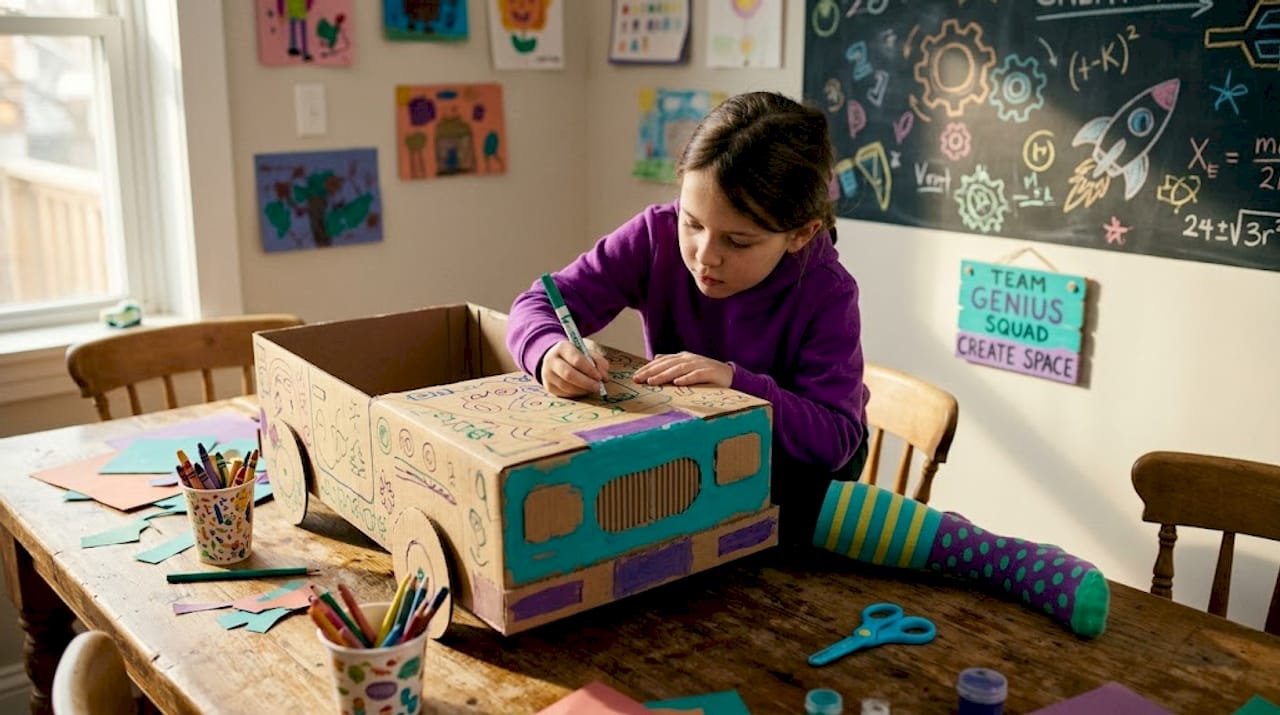
What makes STEAM environments particularly well-suited for neurodivergent learners comes down to structure and belonging. Neurodivergent learners in engineering and making spaces thrive when their lived experiences are honored, when collaboration is predictable, and when they feel genuinely recognized as contributors. Inclusion in these settings is not just about removing barriers. It is about building an environment where every child’s way of participating is considered valid.
You can support neurodivergent STEAM education more effectively by following these steps:
- Set clear start and stop cues. Children who struggle with transitions benefit enormously from knowing exactly when an activity begins and ends.
- Use visible timelines. A simple chart showing the stages of a project helps children plan their work and feel in control of the process.
- Assign predictable roles. Knowing their specific job within a group reduces anxiety and lets children focus on contributing their strengths.
- Celebrate iteration out loud. When a child changes their design after a test, name that behavior as innovation. Say it directly: “That is exactly what innovators do.”
- Build in reflection moments. A quick verbal or drawn summary at the end of an activity reinforces executive skills and builds the communication habits that define STEAM innovators.
Pro Tip: If a child in your care resists group projects, try starting with parallel play where two children work on similar tasks side by side before introducing shared decision-making. This builds the trust and predictability that make collaboration feel safe.
How arts enhance innovation in STEAM learning
Beyond inclusion, the arts play a specific and often underestimated role in what makes STEAM innovation work. Parents and educators sometimes wonder whether the “A” in STEAM is just there to make science more palatable. It is not. Art is the dimension that transforms a functional idea into a communicable, user-centered solution.
Consider how some STEAM programs have students design and fabricate artifacts that meet real client needs, where the art component is not decoration but active problem-solving. Students take on roles like illustrator, fabricator, or designer, and the quality of the final artifact depends directly on how well those creative roles are executed. That is not arts and crafts. That is production work with a purpose.
Effective innovation requires more than a great idea. It requires goal alignment, iterative improvement, and team collaboration, all of which the arts naturally train. When a child sketches their design before building it, they are aligning their goal. When they revise the sketch after testing, they are iterating. When they present the finished piece to a classmate or parent, they are communicating design intent. Every one of those steps is an arts-enhanced innovation behavior.
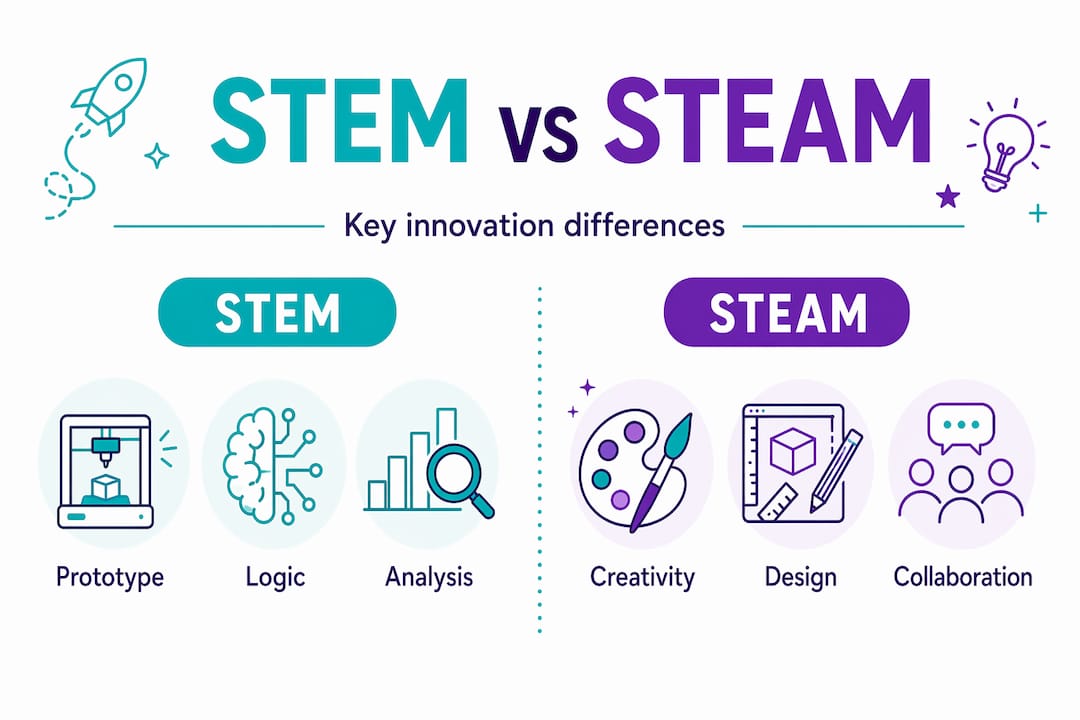
Here is a useful way to see the difference between a traditional STEM approach and a STEAM approach:
| Dimension | Traditional STEM | STEAM approach |
|---|---|---|
| Primary output | Functional prototype | Functional and communicable artifact |
| Design process | Build and test | Sketch, build, test, revise, present |
| Role of aesthetics | Minimal | Central to user experience |
| Communication | Written report | Illustrated explanation or model |
| Student identity | Problem-solver | Creator and innovator |
When you frame the arts as a production and communication tool rather than a decoration layer, children begin to see themselves differently. They are not just doing science. They are building STEAM confidence as creators who solve real problems for real people.
Pro Tip: Ask your child to draw their idea before they build it. That single step develops planning skills, creates a record of their thinking, and makes revision feel natural rather than like failure.
Practical strategies to nurture STEAM innovators at home and school
Understanding the characteristics of STEAM innovators is one thing. Putting that understanding into daily practice is another. These strategies are designed for parents and educators who want to foster genuine innovative behaviors, not just enthusiasm for experiments.
The most important shift you can make is separating creativity from innovation in how you talk about it. Creativity is generating ideas. Innovation is testing and refining those ideas until they meet a real need. Both matter, but children need to understand that iteration is a skill they are building, not a sign that their first idea was wrong.
Here is how to put that into practice:
- Introduce a “Version 2” habit. After any project or experiment, ask: “What would you change in Version 2?” This normalizes iteration as part of the process.
- Use visual timelines for projects. Break a project into stages with simple drawings or sticky notes so children can see the full arc of innovation from idea to final artifact.
- Assign roles that match strengths. Let one child be the designer, another the builder, another the explainer. STEAM team expert insight confirms that observable innovation behaviors include both iterating on work and communicating design intent, so every role contributes.
- Create a safe feedback loop. Teach children to say “I noticed…” instead of “I think you should…” This keeps feedback constructive and keeps creators open to it.
- Document the process, not just the result. Photos of failed attempts, sketches, and revised plans are evidence of innovation in action.
Additional supports that make a real difference:
- Provide short, chunked instructions rather than multi-step directions given all at once
- Use physical timers or visual countdowns so children can self-regulate during open-ended tasks
- Acknowledge neurodivergent children’s innovation success explicitly, because clear routines and recognition have a direct effect on how well they engage
- Incorporate screen-free STEAM strategies to keep hands busy and minds fully present
- Read stories and explore resources that show celebrating diverse minds as a strength, not just an accommodation
Pro Tip: The single most powerful thing you can say to a child mid-project is “I see you working through this.” That acknowledgment of process over product reinforces the innovator identity far more than praising the finished result.
Rethinking STEAM innovation: Beyond creativity to supportive collaboration
Here is an honest observation that most STEAM resources skip over: we have been defining innovation too narrowly for too long, and it is costing us the contributions of our most creative children.
The typical profile of a STEAM innovator focuses on individual genius, the child who has the big idea, builds the model, wins the science fair. But that framing excludes a significant number of children who innovate in deeply collaborative, socially aware ways. Research shows that neurodivergent students often take on emotional labor within teams, working to ensure that everyone feels understood and included. That is not a distraction from innovation. That is a form of innovation that teams desperately need.
When we define innovation as goal-driven iteration plus communication plus inclusive collaboration, something important happens. Children who might not see themselves as “the smart one” suddenly find a role where their particular strengths are essential. The child who keeps the group on track, who notices when a teammate is frustrated and adjusts the dynamic, who makes sure the final design is explained in a way everyone understands: that child is a STEAM innovator too.
This is why the importance of STEAM innovators extends well beyond academic achievement. It is about forming a generation that understands innovation as a shared, human-centered act. Educators and parents who embrace this broader definition will find it transforms how they support neurodivergent supports in STEAM and how they recognize achievement in all its forms. Different minds do not just participate in innovation. They often lead it.
Explore hands-on STEAM resources to support your child’s innovation journey
To support the valuable skills we have explored, the right tools can make the difference between a child who experiments once and forgets, and one who builds a lasting identity as a creator and problem-solver.
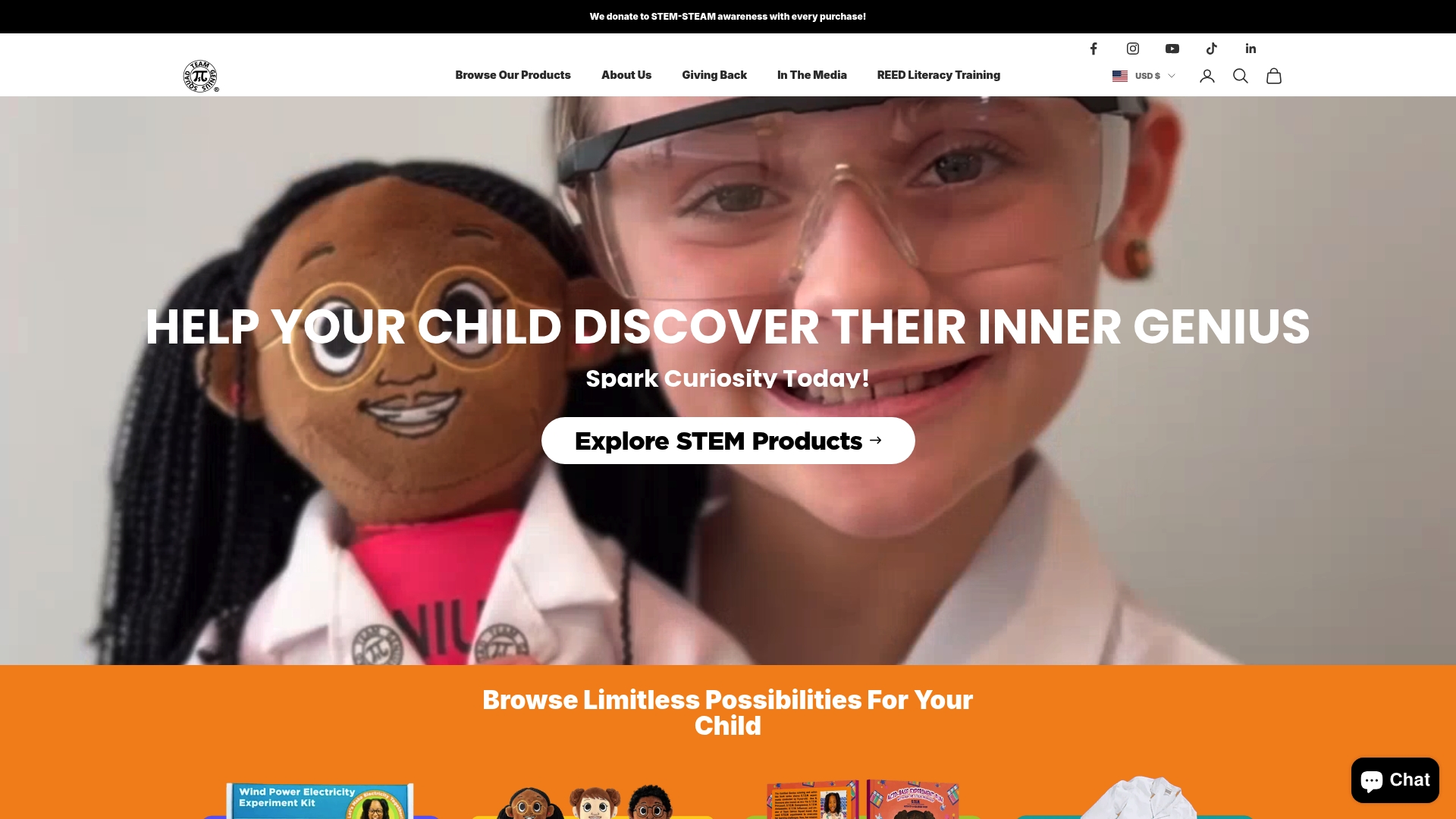
Team Genius Squad’s hands-on, screen-free discovery kits are designed specifically for children ages 5 to 13, including those who learn differently. Our electricity lab bundle gives children a structured, role-play-driven way to iterate real experiments while building the planning and confidence skills that define STEAM innovators. Browse our full selection of STEAM experiment kits designed to scaffold executive functions and celebrate creative thinking. You can also explore our collection of STEAM books and puzzles built for young minds ready to discover that innovation belongs to them.
Frequently asked questions
What exactly is a STEAM innovator in children?
A STEAM innovator is a learner who combines science, technology, engineering, arts, and math to creatively solve real problems by iterating designs and producing tangible outcomes, rather than simply completing assigned tasks. STEAM innovators are defined by their process of iteration and communication, not by a fixed level of artistic or academic talent.
How do STEAM activities help neurodivergent children innovate?
STEAM activities improve executive functions like planning, organization, and inhibition in neurodivergent children, directly supporting their capacity for innovative thinking and problem-solving. Children with ADHD showed measurable cognitive gains from STEAM-based educational activities in recent research, reinforcing why these environments matter.
Why is inclusion important for defining STEAM innovators?
Inclusion shapes how neurodivergent learners experience and express innovation, because they thrive when they feel understood, recognized, and supported with predictable routines and clear roles. Inclusion in makerspaces depends on lived experiences and consistent support during collaboration, not just access to materials.
Can parents foster STEAM innovation at home?
Yes, parents can nurture STEAM innovator behaviors by encouraging hands-on exploration, supporting iterative problem-solving, and scaffolding planning skills with clear routines and positive feedback. Expert insight confirms that effective strategies center on scaffolding executive functions and allowing children to take safe creative risks in low-stakes environments.

Leave a comment
This site is protected by hCaptcha and the hCaptcha Privacy Policy and Terms of Service apply.