
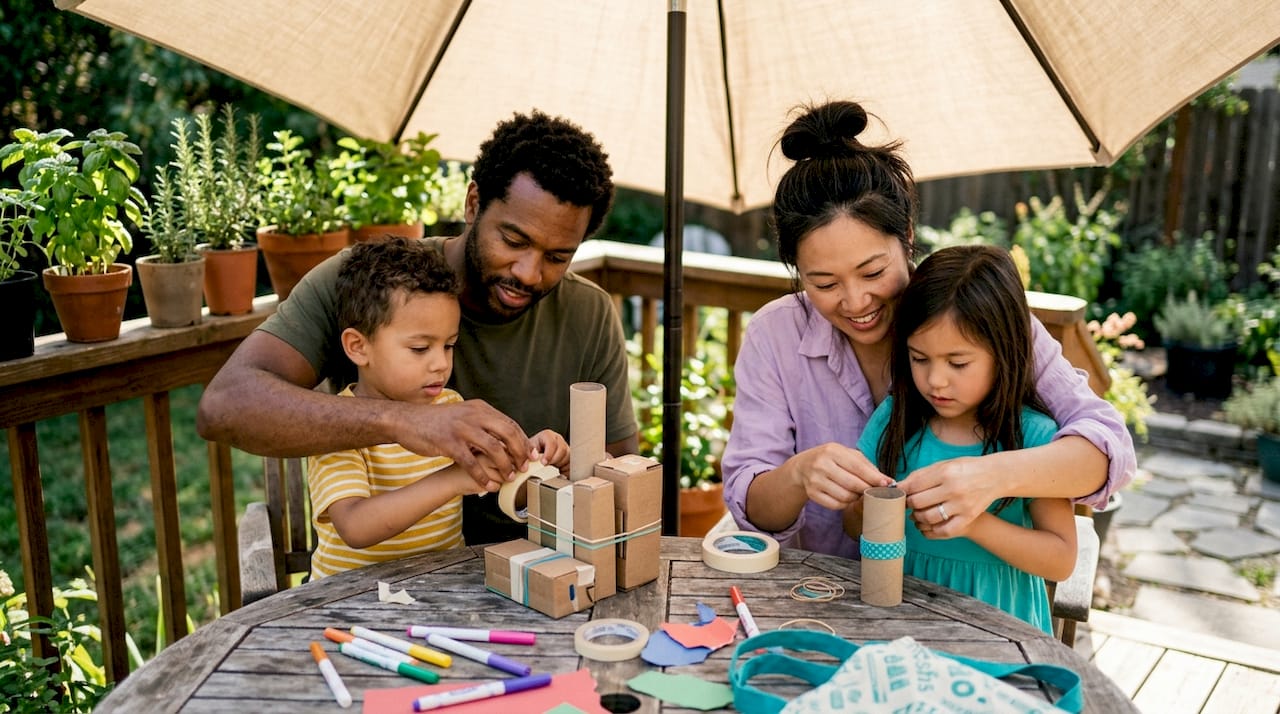
Top Benefits of Family STEM Projects for Young Learners
Family STEM projects are collaborative, hands-on activities where parents and children explore science, technology, engineering, and math together using everyday materials. The benefits of family STEM projects reach far beyond the kitchen table. A 7-week community study with 826 participants showed measurable improvements in parental teaching confidence and children’s STEM school readiness. These activities build critical thinking, strengthen family bonds, and give children a head start on 21st-century skills. Best of all, most projects require nothing more than what you already have at home.
1. What are the top cognitive benefits of family STEM projects?
Family STEM activities directly improve how young children think, reason, and communicate. Home-based STEM play for children ages 1.5 to 7 years enhances spatial reasoning, narrative communication, and fine motor development. These are not abstract gains. They translate directly into stronger reading comprehension, better math performance, and improved writing skills in school.
Spatial reasoning, in particular, is a strong predictor of success in mathematics and science. When a child figures out how to balance a structure made from cardboard tubes, they are practicing the same mental skills used in engineering and architecture. Fine motor development from hands-on building activities also supports handwriting and drawing precision.
- Spatial reasoning: Stacking, sorting, and building activities train the brain to visualize shapes and relationships.
- Narrative communication: Explaining a hypothesis or describing what went wrong builds vocabulary and logical expression.
- Fine motor skills: Cutting, pouring, and assembling small parts strengthen hand control.
- Problem-solving: Designing and testing solutions teaches children to think in steps.
Pro Tip: Ask your child to explain their experiment out loud before and after. This simple habit builds both scientific thinking and language skills at the same time.
The role of hands-on kits in reinforcing these skills is well documented. Tactile learning activates multiple areas of the brain simultaneously, making new concepts stick faster than screen-based instruction alone.

2. How family STEM projects support socio-emotional growth
Collaborative STEM activities teach children how to manage big feelings, communicate clearly, and work as a team. Family STEM projects improve socio-emotional skills such as emotional regulation through collaborative problem solving. When an experiment fails, children must process frustration, regroup, and try again. That process builds resilience.
The family setting makes this even more powerful. Children watch parents model patience and persistence in real time. That observation shapes how children respond to their own setbacks.
- Emotional regulation: Managing disappointment when a bridge collapses teaches self-control.
- Communication: Explaining a design idea to a parent builds confidence and clarity.
- Teamwork: Dividing tasks and sharing materials mirrors real workplace collaboration.
- Belonging: Shared discovery creates positive memories and a sense of family identity.
Accessibility matters here too. Most socio-emotional benefits come from the process, not the materials. A baking soda and vinegar volcano, a paper airplane contest, or a simple sink-or-float experiment with kitchen items delivers the same emotional learning as any expensive kit. The STEAM checklist for parents offers a practical starting point for families who want structure without complexity.
3. What role do parents play in nurturing STEM identity?
Parents are the most powerful influence on whether a child sees themselves as a “science person.” Families actively shape STEM interest by connecting activities to personal interests and goals, not by passively delivering lessons. The distinction matters enormously.
The most effective parental role is that of a co-explorer, not a teacher. Saying “let’s find out together” instead of “let me show you” signals that curiosity is the goal, not getting the right answer. Modeling curiosity rather than teaching builds STEM confidence and reduces anxiety in children. Children who feel safe being wrong are far more likely to keep experimenting.
Direct pressure to pursue STEM can backfire. Research on STEM identity development shows that indirect support, such as watching science documentaries together or visiting a natural history museum, encourages STEM identity more effectively than explicit coaching. This finding is especially significant for girls, where overt pressure tends to increase anxiety rather than interest.
Grounding STEM in lived family experiences deepens youth engagement and motivates civic understanding through science. When a child connects a water filtration experiment to their neighborhood’s water quality, STEM becomes personal and purposeful.
Pro Tip: Watch a nature documentary or science short together, then ask one open question: “What would you want to know more about?” Let your child lead the next experiment from there.
4. Creative STEM project ideas families can try at home
The best family STEM projects use materials you already own and adapt easily to different ages and abilities. Here are proven activities that deliver real learning without a trip to a specialty store.
Egg-drop challenge
Each family member designs a protective container for a raw egg using only paper, tape, and rubber bands. The egg gets dropped from a height. The goal is to keep it intact. This project teaches engineering design, force, and impact. It also generates genuine suspense, which keeps everyone engaged.
Building simple machines
Use cardboard, string, and small weights to build a pulley or lever. Children as young as five can participate by testing which setup lifts a toy most easily. This activity directly connects to physics concepts taught in elementary school.
LEGO and block construction challenges
Set a specific goal, such as building the tallest tower that holds a book, or a bridge that spans two chairs. LEGO-based STEM play is one of the most researched formats for developing spatial reasoning in young children. The open-ended format means every child can participate at their own level.
Sink or float sorting
Fill a bin with water and gather 10 household objects. Predict, then test. Record results in a simple chart. This introduces the scientific method, hypothesis testing, and data recording in a format accessible to preschoolers.
Baking soda and vinegar reactions
Vary the amounts and observe the differences. Add food coloring. Ask why the reaction happens. This classic activity introduces chemistry concepts and encourages observation skills.
Identity-driven STEM ideas for kids ages 5–13 can help you match activities to your child’s specific interests, whether they love animals, space, or building things.
For children with additional needs, the key is adaptability. Simplify the steps, use larger materials, or focus on one variable at a time. Success in family STEM lies in the iterative process, not the perfect result. Celebrate every small improvement. Cheer the redesign as loudly as the success.
Pro Tip: Keep a “STEM journal” where your child draws or writes what happened after each activity. This builds reflection habits and creates a record of growth they can look back on with pride.
5. How STEM projects strengthen family bonds through shared learning
Family STEM activities create shared experiences that become part of a family’s story. STEM interest cultivated within the family context transforms science from a school subject into a family value. That shift has lasting effects on how children approach learning throughout their lives.
When a parent sits down to build a circuit or grow crystals alongside their child, the message is clear: learning matters, and we do it together. That message is more powerful than any worksheet. Families who normalize everyday science talk and shared STEM media report stronger senses of belonging and STEM identity in their children.
The Sisterhood Sleuths outreach program offers a compelling example of how community-based STEM engagement builds confidence and belonging, especially for girls. The same principles apply at home. When children see themselves reflected in the people doing science around them, they begin to believe they belong in that world too.
Key Takeaways
Family STEM projects build cognitive skills, emotional resilience, and family connection simultaneously, making them one of the most efficient investments a parent can make in a child’s development.
| Point | Details |
|---|---|
| Cognitive gains are real | Home STEM play improves spatial reasoning, fine motor skills, and narrative communication in children ages 1.5–7. |
| Parental role shapes identity | Acting as a co-explorer, not a teacher, builds STEM confidence and reduces anxiety in children. |
| Socio-emotional skills grow | Managing experiment failures teaches emotional regulation, teamwork, and communication. |
| Everyday materials are enough | Most high-impact family STEM projects require only household items, not specialty equipment. |
| Process beats perfection | Celebrating iteration and small improvements builds problem-solving resilience over time. |
Why I believe family STEM time is the most underrated parenting tool
I have watched children light up the moment a parent says “I don’t know. Let’s figure it out together.” That phrase does something a lesson plan cannot. It tells a child that curiosity is safe, that being wrong is part of the process, and that discovery is something families do as a team.
The families I see thriving in STEM engagement are not the ones with the most expensive kits or the most science knowledge. They are the ones who show up consistently, keep the pressure low, and treat every failed experiment as a reason to try again. That mindset, modeled by a parent, becomes a child’s internal voice for life.
My honest advice: start smaller than you think you need to. One activity, once a week, done with genuine curiosity, outperforms a packed schedule of structured lessons. The goal is not to raise a scientist. The goal is to raise a child who believes they are capable of figuring things out. STEM projects, done together, are one of the clearest paths to that belief.
Raising brave, curious children is not about having all the answers. Resources like Raising Brave Children remind us that empowerment starts with the small, consistent moments we create at home.
— Tita
Teamgeniussquad makes family STEM engagement easy and meaningful
Teamgeniussquad builds hands-on, screen-free STEAM discovery kits designed for children ages 5–13. Each kit uses the proprietary E³ Method (Engage, Encourage, Empower) to guide children from curiosity to confidence through real experiments, scientist role play, and identity-building tools like lab coats, badges, and certificates.
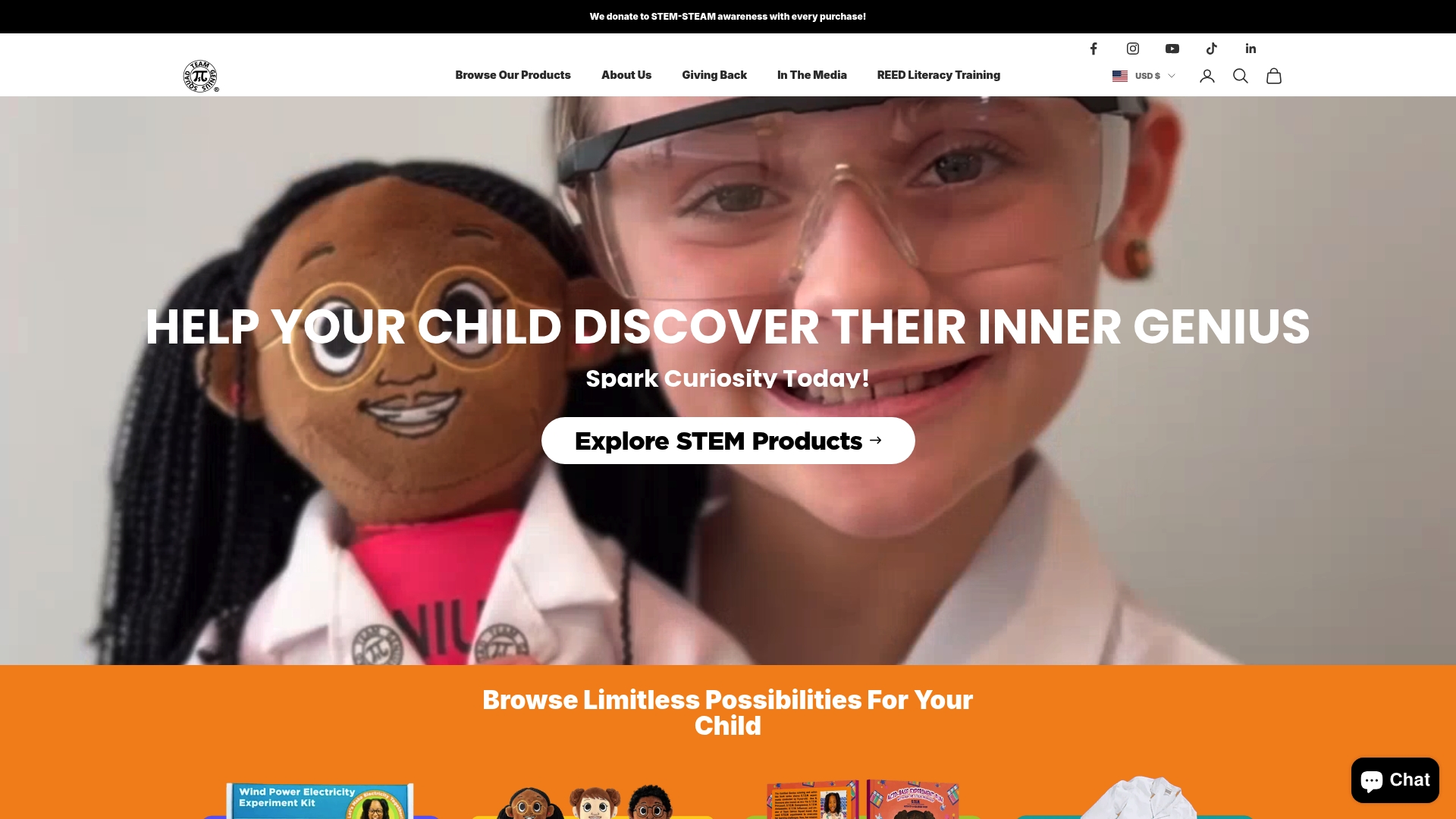
Inspired by a real family journey with dyslexia and dysgraphia, every kit is built for children who learn differently and thrive when given the right environment. Whether you are looking for a solar energy experiment kit or a full experiment kit collection, Teamgeniussquad has tools that turn your kitchen table into a discovery lab. Find Teamgeniussquad kits at Whole Foods locations near you.
FAQ
What are the main benefits of family STEM projects?
Family STEM projects improve children’s spatial reasoning, fine motor skills, emotional regulation, and school readiness while strengthening family bonds through shared problem-solving experiences.
How often should families do STEM activities together?
One focused activity per week is enough to build consistent habits. Frequency and low pressure matter more than duration or complexity.
Do family STEM projects require special materials?
No. Most high-impact activities use household items like tape, cardboard, baking soda, and water. The learning comes from the process, not the materials.
How can parents support STEM interest without adding pressure?
Act as a co-explorer rather than a teacher. Saying “let’s find out together” builds curiosity and confidence more effectively than direct instruction or explicit encouragement to pursue STEM.
Are family STEM projects beneficial for children with learning differences?
Yes. Hands-on, tactile STEM activities are especially effective for children who struggle in traditional learning environments. Adapting steps, using larger materials, and celebrating small wins makes these projects accessible and confidence-building for all learners.


Leave a comment
This site is protected by hCaptcha and the hCaptcha Privacy Policy and Terms of Service apply.