
STEM Careers for Kids: How to Introduce Them, Ages 5–13
The best way to introduce STEM careers to a child is to start with problems, not job titles. Let a 7-year-old fix, build and test something, let a 12-year-old explore the kinds of problems she cares about, and add real career information (what people do all day, what they earn, how they trained) as curiosity grows. Below you will find the data that shows why this matters, a list of careers worth knowing by name, age-by-age ideas, and ways to build the belief that comes first: “I am a science person.”
TL;DR
- STEM jobs are projected to grow 7.4% from 2025 to 2035, against 3.2% for non-STEM jobs, and they pay a higher median wage.
- Researchers describe STEM identity, the feeling of belonging in the field, as a stronger foundation than simple interest in a subject. It grows through hands-on success.
- Start with problems a child cares about, not a list of jobs. Career exploration can begin as early as grade 4.
- Many STEM careers do not require a four-year degree, and STEM now reaches into art, farming, health and entertainment.
Table of Contents
- Why start talking about STEM careers now
- What the job data says, in plain numbers
- STEM careers worth knowing by name
- STEM is wider than a lab coat
- A four-year degree is not the only door
- Start with problems, not job titles
- Ideas by age
- Seven ways to build STEM identity at home or in class
- A note for children who learn differently
- Perspective: what we have learned
- Bring careers into play with Team Genius Squad
- FAQ
- Sources
Why start talking about STEM careers now
Parents and teachers often wait for middle or high school to bring up careers. By then, many children have already decided what kind of person they are. The National Science Foundation’s published research points to early and middle childhood as the critical window when a child decides “I am a STEM person”, and it separates two ideas worth keeping apart:
- STEM interest means liking a subject.
- STEM identity means feeling that you belong in the field.
Identity predicts who keeps going when the work gets hard. The same research describes four ingredients: seeing yourself as a science person, being recognized by others, having a topic that fascinates you, and proving to yourself through hands-on success that you can do it. Notice that adults control two of those four directly. We can recognize effort out loud, and we can set up tasks a child can actually finish.
That is why a conversation about careers at ages 5 to 13 should sound less like “What do you want to be?” and more like “What did you figure out today?”
What the job data says, in plain numbers
You do not need to scare a child with statistics, but you should know them yourself, because they are persuasive when a family is deciding where to put time and money.
- According to the Bureau of Labor Statistics, STEM occupations are projected to grow 7.4% from 2025 to 2035, more than double the 3.2% projected for non-STEM occupations. In 2024, the median annual wage for STEM occupations was $103,580, against $48,000 for non-STEM roles.
- Engineering is broad. In 2024, median pay for engineers ranged from $84,630 for agricultural engineers to $155,020 for computer hardware engineers. Industrial engineering is projected to grow 11.0% from 2024 to 2034, and mechanical engineering 9.1%.
- In technology, information security analysts are projected to grow 28.5% from 2024 to 2034, with a 2024 median wage of $124,910.
- Data science is one of the fastest-growing fields: the BLS Occupational Outlook Handbook lists a 2025 median pay of $120,230 and 35% projected growth for 2025 to 2035.
These are projections and medians, not promises. A career choice made at age 9 will change many times. What the numbers show is that the habits STEM builds, such as testing ideas, reading evidence and solving problems, have a strong market behind them.
STEM careers worth knowing by name
Children can only imagine careers they have heard of. Most kids know “doctor” and “scientist” and not much else. Here are groups of careers to put in front of them, with a kid-sized description of the work.
| Career | What a child can picture | Good first hands-on link |
|---|---|---|
| Chemist or food scientist | Mixing, measuring and testing why things change | Kitchen chemistry, crystals, fizzing reactions |
| Mechanical or civil engineer | Designing things that move or hold weight | Bridges, ramps, towers, pulleys |
| Electrical engineer | Making power flow where it is needed | Simple circuits, batteries, bulbs |
| Data scientist | Finding the story hiding in numbers | Charting the weather or your family’s step counts |
| Information security analyst | A digital detective who protects secrets | Cipher and code games |
| Medical roles (nurse, physician assistant, dentist) | Helping people feel better using science | Pretend clinic play, a toy stethoscope, body puzzles |
| Agricultural engineer or ecologist | Growing food and caring for land and water | Gardening, soil tests, nature walks |
| Atmospheric scientist | Predicting storms and understanding climate | Home weather station, cloud journals |
For classroom or family use, the BLS also publishes a free poster of some of the largest and fastest-growing STEM occupations with typical education and pay, which works well on a wall for older elementary and middle school students.
STEM is wider than a lab coat
One of the most freeing facts for a child who loves drawing, music or animals is that STEM is no longer a separate subject. The National Career Clusters Framework describes STEM skills such as design thinking, data-informed decisions and critical problem-solving as embedded across every career cluster, from Arts and Entertainment to Agriculture.
So a child does not have to choose between a creative passion and a STEM future. A kid who loves fashion might one day work with textile science. A kid who loves games might build them. A kid who loves animals might study ecology or veterinary medicine. When we say this out loud, we remove the fear many children carry, the quiet belief that they are “not a math or science person.”
A four-year degree is not the only door
Many families assume STEM means a university research career. The same career-clusters brief notes that more than half of the STEM workforce does not hold a four-year degree, and these workers earn 60% more annually than non-STEM workers with similar education. Technicians, skilled trades, health support roles and apprenticeships all count.
It helps a child to know there are many routes in. For older students who are curious about where a specific interest can lead, it can be useful to see how specialized training is described, for example in guides to financial engineering courses and the paths that lead to that field. Elementary students do not need this detail, but a parent of a 12-year-old who loves math and money might.
Start with problems, not job titles
Advance CTE, the national association for career and technical education, recommends that career exploration begin as early as grade 4. Its approach uses a career interest survey that asks learners what they enjoy doing, what they are good at, and which real-world problems they want to solve. The point is that a child who can name the problems they care about is better placed to find a matching career later than a child pushed toward one field early.
Try these questions at the dinner table or in a morning meeting:
- What problem did you notice today that you wish someone would fix?
- Who helps with that problem in real life? (A nurse, an engineer, a farmer, a coder.)
- If you had a lab for an hour, what would you test?
- What did you try that did not work, and what did you change?
Question 4 matters most. It teaches that mistakes are data, which is how every working scientist and engineer thinks.
Ideas by age

Ages 5 to 7: play it, name it
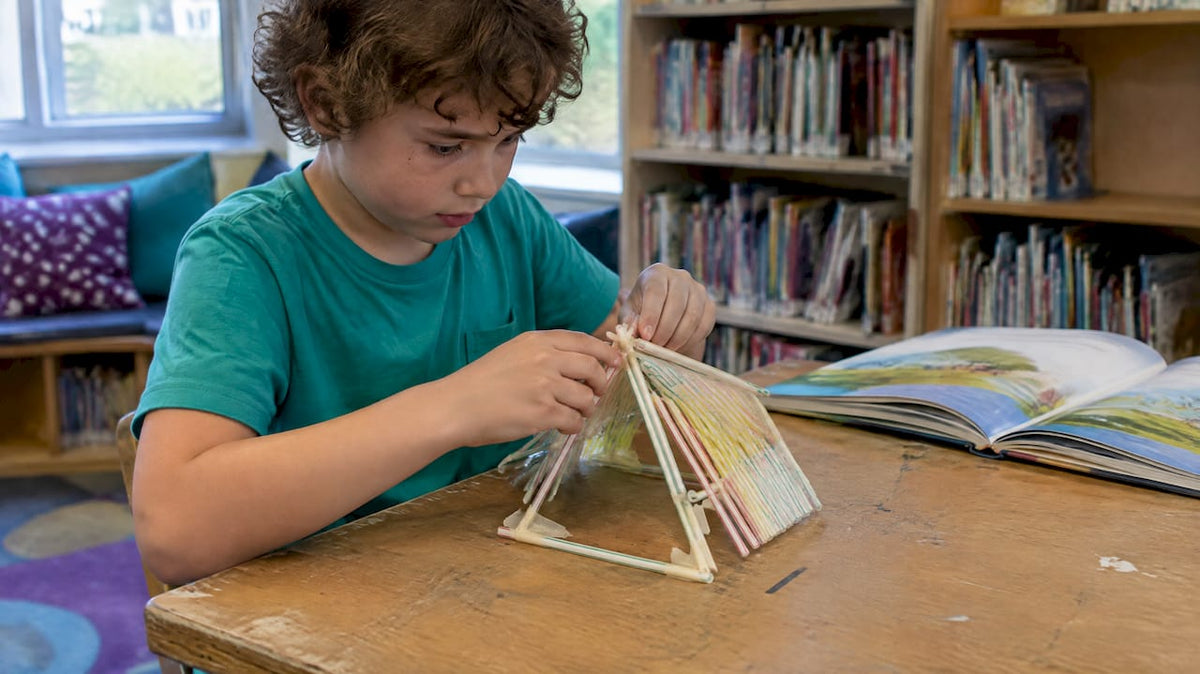
Young children do not need a career talk. They need to be seen doing the work and given the words. Say “You are being an engineer right now” when they build a block ramp. Sensory play, pretend clinics and simple building all count. Our guides on kindergarten STEM activities that build confidence and STEM sensory bins are good places to begin.
Ages 8 to 10: connect it to real people
This is the grade 4 window. Pair each experiment with a real job: after a circuit project, talk about electrical engineers. Read a short biography. Ask a neighbor or relative to describe a typical workday. Research on project-based learning suggests that children’s belief in themselves grows when projects connect to their own community, such as an elementary unit where students solve a real train-track problem, and when they see their work produce a working result. For reading-heavy weeks, our post on literacy-first hands-on STEM shows how to fold writing into experiments.
Ages 11 to 13: let them lead
Tweens want ownership. Invite them to choose a problem in the family, school or neighborhood, plan a solution, and present it. A garden-based family project study with fifth and sixth graders is one example of how community-rooted projects can hold this age group’s attention. Ask them to interview someone in a STEM job, or to make their own career poster. If they already love entrepreneurship, link STEM to building a product or business.
Seven ways to build STEM identity at home or in class
- Praise the process. “You kept adjusting until it balanced” lands better than “You’re so smart.”
- Give children a role. Calling a child “our lead chemist today” makes the identity concrete.
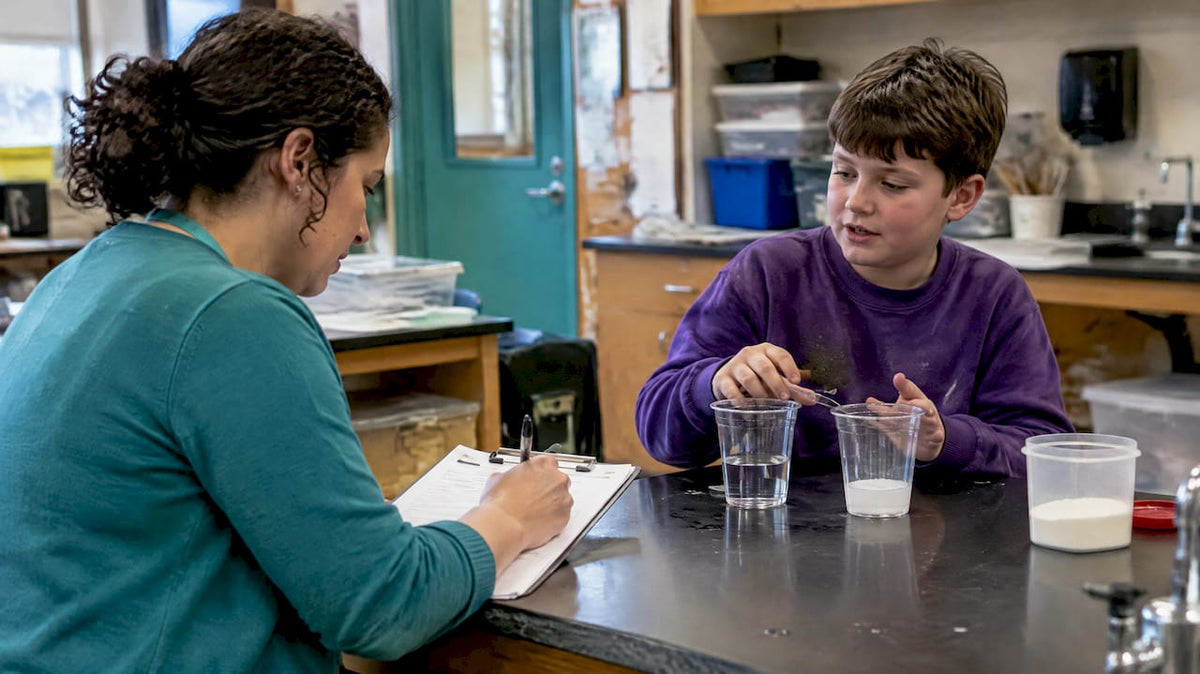
- Let them finish something. A completed experiment with a visible result is proof of ability, especially for children who struggle with traditional paper-based work.
- Use their language. Draw, say aloud or build before writing. Then add a short written reflection.
- Show people who look like them. Choose books, videos and guest speakers that reflect your children.
- Connect to place. Test your own tap water, your own backyard soil, your own playground.
- Keep screens out of the lab. Tactile work gives children something real to point to and say, “I made that.”
For more activity ideas, see our identity-driven STEM ideas for ages 5 to 13 and recycled STEM projects for classrooms. Counselors and afterschool leaders will find a program-level approach in our afterschool STEM activities guide.
A note for children who learn differently
A child with dyslexia, dysgraphia or ADHD may have heard many times what they cannot do in class. STEM careers reward exactly the strengths these learners often show: spatial thinking, persistence, creative problem-solving and the willingness to try a different route. The research on project-based learning says a tangible product gives struggling students visible evidence of ability, and that matters most for children whose written work does not show what they know.
Perspective: what we have learned

We built Team Genius Squad out of a real family journey with dyslexia and dysgraphia. We saw how quickly a child can decide school is not for them, and how quickly that changes when they hold a real experiment in their hands and succeed. That is why our kits are screen-free and combine experiments with reading, writing and reflection, and why we use lab coats, badges and certificates: they say to a child, “You are a scientist,” before anyone asks for the right answer.
Our view is that the first STEM career a child needs is the one they try on at the kitchen table. Job titles come later. Confidence comes first, and we follow what we call the E³ Method: Engage, Encourage, Empower. Get curious, get recognized for effort, then lead your own discovery. A child who has been through that cycle a few times starts to say “I am a scientist” without being told to.
— Tita
Bring careers into play with Team Genius Squad
If you want to turn this article into something your child can hold, our experiment kits give kids ages 5 to 13 real experiments with role play built in. The STEM Puzzle Club House introduces diverse STEM careers in action, and our books and puzzles support the reading side of discovery.
For a live spark, our founder Ava N. Simmons, a young STEM entrepreneur, hosts the Meet Ava experiences: a 30-minute one-on-one Zoom STEM experiment for $50, a virtual group entrepreneurship experience for $550, and an in-person group STEM experience for $1,100. You can find them on our shop-all page. They suit classrooms, clubs and families who want children to meet a young innovator close to their own age.
FAQ
What are some cool STEM careers for kids to learn about?
Start with careers a child can picture: engineers who design bridges and rides, data scientists who find patterns, information security analysts who protect systems, nurses and dentists, ecologists and atmospheric scientists. Pair each with an activity so the job feels real.
When should kids start learning about careers?
Play-based exposure can start at age 5. More structured career exploration is recommended from grade 4, using interest surveys and problem-centered conversations rather than job-title lists.
Do STEM careers always require a college degree?
No. According to the career-clusters brief cited above, more than half of the STEM workforce does not have a four-year degree. Trades, technician roles and health support positions are real STEM routes.
How do I teach science careers in a lesson plan?
Pick one career per week. Open with a real problem that career solves, run a short hands-on activity, read about a person in that role, and finish with a written or drawn reflection. The BLS classroom poster is a free anchor for older students.
What if my child says they are not a science person?
That belief usually comes from a lack of success, not a lack of ability. Give them a small, achievable experiment, praise what they tried, and name what they did as scientific work. Repeat often.
Sources
- Employment in STEM occupations, U.S. Bureau of Labor Statistics
- Force, mass, mechanisms, and vectors: employment projections and wages in engineering, BLS
- Periodic Table Day: BLS periodic table of STEM occupations
- Data Scientists, Occupational Outlook Handbook, BLS
- STEM occupations poster, BLS K-12
- National Science Foundation: STEM identity research
- Make Way for Trains: a community-connected elementary engineering unit, NSF
- From Seeds to Harvest in Seven Weeks, NSF
- Career Interest Survey, Advance CTE
- STEM Career Clusters Framework brief, Advance CTE

Leave a comment
This site is protected by hCaptcha and the hCaptcha Privacy Policy and Terms of Service apply.