

Manganese IV Oxide: Properties, Uses & 2026 Insights
Manganese IV oxide is defined as an inorganic compound with the chemical formula MnO2, commonly called manganese dioxide, and it serves as one of the most widely used oxidizing agents and battery materials in chemistry and industry. With a molar mass of 86.94 g/mol and a blackish-brown crystalline appearance, MnO2 sits at the center of applications ranging from dry-cell batteries to organic synthesis and emerging supercapacitor technology. For chemistry students and researchers, understanding this manganese oxide compound means grasping not just its formula, but its structural complexity, polymorph behavior, and the synthesis conditions that control its performance.
What are the chemical properties of manganese IV oxide?
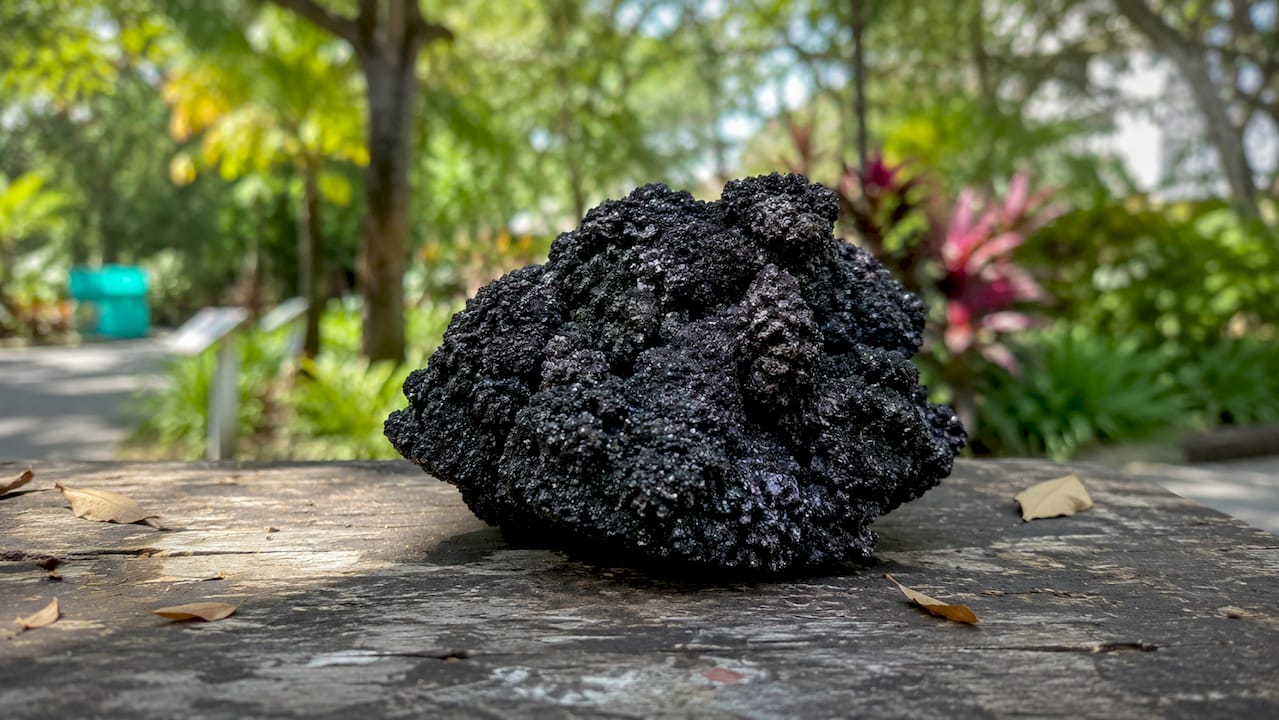
Manganese IV oxide carries manganese in the +4 oxidation state, which is one of the most stable among the many manganese oxidation states that range from +2 to +7. This +4 state gives MnO2 its strong oxidizing character, making it reactive toward organic substrates and electrochemically active in battery systems.
Key physical and chemical data at a glance:
| Property | Value |
|---|---|
| Molecular formula | MnO2 |
| Molar mass | 86.94 g/mol |
| Appearance | Black to dark brown solid |
| Decomposition temperature | ~535 °C |
| Crystal structure | Rutile (β form, most common) |
The compound decomposes at approximately 535 °C, releasing oxygen gas. That thermal instability matters in industrial settings where heat management directly affects product purity and safety.
MnO2 is also characteristically nonstoichiometric, meaning the ratio of manganese to oxygen atoms varies slightly from the ideal 1:2. This solid-state complexity causes real variability in catalytic and synthetic performance depending on which polymorph you are working with. The compound is ionic in nature, with manganese cations and oxide anions forming a lattice, so yes, manganese IV oxide is ionic.
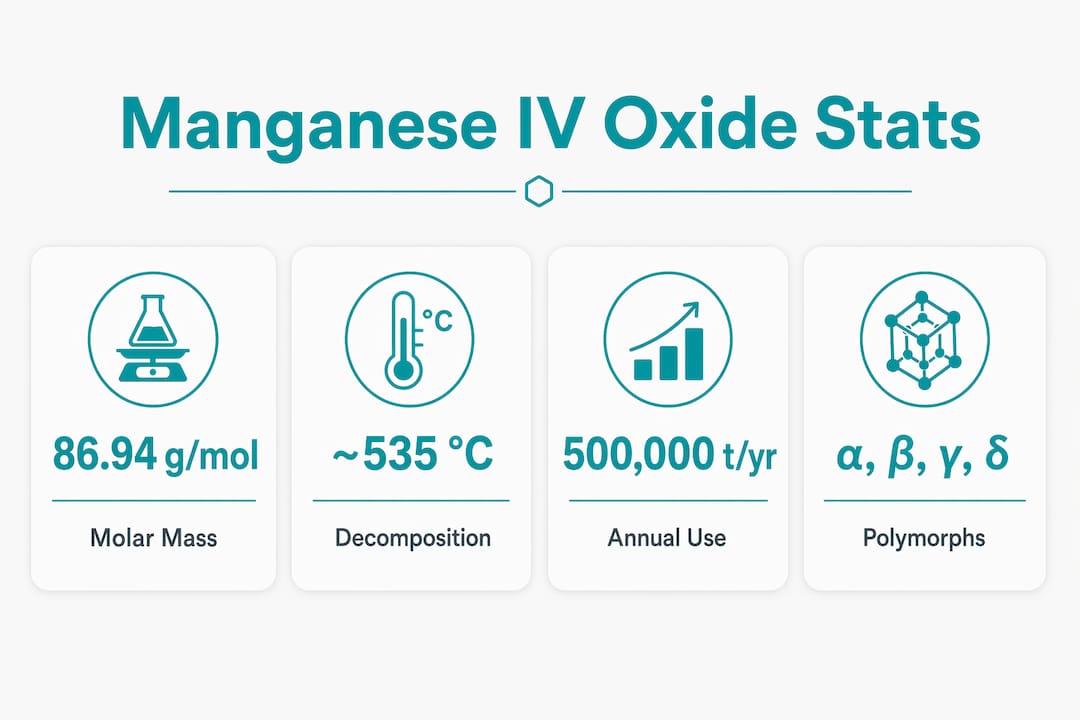
The crystal structure exists in several polymorphic forms, labeled α, β, γ, and δ, each with distinct tunnel sizes and ion accommodation capacities. The β form adopts a rutile structure and is the most thermodynamically stable. The α and δ forms have larger tunnels that allow cation intercalation, which is why they attract attention in energy storage research.
How is manganese IV oxide produced for lab and industrial use?
MnO2 occurs naturally as the mineral pyrolusite, which is the primary ore of manganese and the most abundant manganese mineral on Earth. Natural pyrolusite, however, rarely meets the purity standards required for battery-grade or synthesis-grade applications.
Industrial production relies on two main routes:
- Electrolytic manganese dioxide (EMD): Manganese sulfate solution is electrolyzed, depositing high-purity MnO2 on titanium anodes. EMD delivers the consistent particle size and purity that alkaline battery manufacturers require.
- Chemical manganese dioxide (CMD): Manganese ore is treated with sulfuric acid and then oxidized using chlorate or other oxidants. CMD is less pure than EMD but sufficient for many industrial uses including pigments and ferroalloys.
- Carbothermic reduction and re-oxidation: Ore is reduced to MnO, then re-oxidized under controlled conditions to produce specific MnO2 grades with targeted surface areas.
- Lab-scale synthesis: Potassium permanganate (KMnO4) is reduced in acidic solution, or manganese salts are oxidized with hydrogen peroxide, yielding freshly prepared MnO2 with high surface area and reactivity.
- Electrochemical deposition: MnO2 is deposited from manganese acetate or sulfate solutions onto conductive substrates, giving precise control over morphology and polymorph type.
The distinction between activated and standard MnO2 is critical. Activated manganese dioxide has a much higher reactive surface area than bulk pyrolusite. Only the activated form delivers the catalytic performance needed for organic synthesis and selective oxidation reactions.
Pro Tip: When ordering MnO2 for organic oxidation reactions, always specify “activated” grade from suppliers like Sigma-Aldrich. Standard pyrolusite will give poor yields because its surface area is too low to drive the reaction efficiently.
Purification after synthesis typically involves washing with dilute acid to remove soluble manganese salts, followed by drying at controlled temperatures below 200 °C to preserve surface hydration and reactivity.
What are the main applications of manganese IV oxide?
The uses of manganese IV oxide span energy storage, organic chemistry, metallurgy, and environmental science. Each application exploits a different aspect of the compound’s chemistry.
Battery technology is the largest single use. Approximately 500,000 tonnes of MnO2 are consumed annually, primarily for dry-cell battery production including alkaline and zinc-carbon types. That volume reflects how deeply embedded this compound is in everyday energy storage, from TV remotes to flashlights.
Organic synthesis relies on MnO2 as a selective oxidizing agent. It oxidizes allylic and propargylic alcohols to their corresponding aldehydes or ketones without attacking isolated double bonds or other sensitive functional groups. This selectivity makes it far more useful than stronger oxidants like chromium-based reagents, which are toxic and less discriminating.
Emerging electrochemical applications include:
- Supercapacitors and pseudocapacitors, where MnO2 stores charge through surface redox reactions
- Lithium-ion battery cathodes, where specific polymorphs improve energy density
- Electrocatalysis for oxygen reduction reactions in fuel cells
- Sensor electrodes for detecting heavy metals and gases
Industrial and environmental uses extend the compound’s reach further. MnO2 serves as a pigment, a steel alloy additive that improves hardness and reduces brittleness in ferromanganese production, and an adsorbent for removing hydrogen sulfide and other environmental gases from industrial streams.
The breadth of these manganese IV oxide applications reflects a compound that punches well above its weight in industrial chemistry.
How do polymorph types affect MnO2 performance?
The polymorph form of MnO2 determines its ion accommodation capacity, catalytic activity, and electrochemical behavior more than almost any other structural variable. Choosing the wrong polymorph for your application is one of the most common and costly mistakes in MnO2 research.
| Polymorph | Tunnel Size | Best Application |
|---|---|---|
| α-MnO2 | Large (2×2 tunnels) | Ion intercalation, supercapacitors |
| β-MnO2 | Small (1×1 tunnels) | Stable catalysis, primary batteries |
| δ-MnO2 | Layered structure | Ion exchange, pseudocapacitance |
The β form is the most stable but the least permeable to cations. The α and δ forms accommodate larger ions like K⁺ and Na⁺ within their tunnels, which drives their superior pseudocapacitive performance.
Recent 2026 research on electrochemical deposition has clarified how synthesis potential controls morphology. Optimized deposition at +0.45 V on fluorine-doped tin oxide (FTO) substrates yields a nano-flower architecture with a specific capacitance of 227.5 F/g at 0.5 A/g. That performance is striking. The same study reports 123.04% capacitance retention after 1,000 charge-discharge cycles, meaning the material actually activates further during cycling rather than degrading.
Lower deposition potentials produce superior nano-architectures because slower nucleation allows more ordered crystal growth with higher surface area and more accessible oxygen vacancies. Higher potentials force rapid deposition, yielding dense films with fewer active sites.
Oxygen vacancies deserve special attention. They act as active sites for both catalytic oxidation and charge storage. Engineering MnO2 with controlled vacancy concentrations through synthesis temperature, atmosphere, and precursor chemistry is now a recognized strategy for tailoring performance.
Pro Tip: If you are synthesizing MnO2 for supercapacitor research, target the α or δ polymorph using low-potential electrodeposition or hydrothermal synthesis with potassium-containing precursors. The tunnel chemistry of these forms gives you a measurable edge in capacitance.
What should chemists know when using MnO2 in research?
Practical success with MnO2 depends on understanding the gap between textbook descriptions and real-world reagent behavior. Several factors consistently trip up students and researchers working with this compound.
Freshly prepared vs. bulk MnO2:
- Freshly prepared MnO2 from KMnO4 reduction has high surface area, significant surface hydration, and amorphous character. It is far more reactive in organic oxidations than aged or commercial bulk material.
- Bulk pyrolusite has a well-crystallized β structure with low surface area. It works for industrial processes but gives poor yields in selective organic oxidation.
- Activated MnO2 from commercial suppliers bridges this gap, but you should still check the lot-specific surface area data before use.
Safety and thermal considerations:
- MnO2 is a strong oxidizer and should be stored away from flammable organic solvents and reducing agents.
- Heating above 535 °C releases oxygen, which can accelerate combustion of nearby materials.
- Manganese dust is a respiratory hazard. Always work in a fume hood and use appropriate PPE.
Choosing the right form:
- For organic synthesis: use activated MnO2, freshly prepared or from a reputable supplier, in a 5:1 to 10:1 mass excess relative to substrate.
- For battery research: use EMD-grade MnO2 with controlled particle size distribution.
- For supercapacitor research: synthesize electrochemically or hydrothermally to control polymorph and morphology.
Pro Tip: Store activated MnO2 in a sealed container away from moisture and heat. Surface hydration is actually beneficial for reactivity, but excessive water absorption can cause clumping and uneven reaction rates in organic synthesis.
Key takeaways
Manganese IV oxide is a structurally complex, multi-application compound whose performance in batteries, synthesis, and energy storage depends directly on polymorph selection and synthesis conditions.
| Point | Details |
|---|---|
| Chemical identity | MnO2 has a molar mass of 86.94 g/mol and decomposes at ~535 °C. |
| Polymorph matters | α, β, and δ forms differ in tunnel size, directly affecting catalytic and electrochemical performance. |
| Synthesis controls output | Lower electrodeposition potentials yield nano-flower morphologies with capacitance up to 227.5 F/g. |
| Activated vs. standard | Only activated MnO2 delivers the surface area needed for organic oxidation reactions. |
| Scale of use | 500,000 tonnes consumed annually confirms MnO2 as a cornerstone of global battery production. |
Why MnO2 keeps surprising me after years of study
I have spent considerable time studying inorganic oxidants, and MnO2 remains one of the most deceptively complex compounds in the catalog. Most students encounter it first as the black powder in a zinc-carbon battery or as a catalyst for hydrogen peroxide decomposition in a classic lab demonstration. That introduction undersells it badly.
The nonstoichiometry issue is the part that gets overlooked most often. Two samples labeled “MnO2” from different suppliers or synthesis routes can behave like completely different reagents. I have seen organic oxidation reactions fail entirely because a student used pyrolusite-grade material instead of activated MnO2, even though both carry the same formula on the bottle.
The 2026 nano-flower research is genuinely exciting because it shows that sustainable pseudocapacitive materials with tunable properties are achievable through careful synthesis control, not exotic chemistry. MnO2 is abundant, low-cost, and environmentally friendlier than many competing electrode materials. The fact that its capacitance can increase after 1,000 cycles rather than fade is a counterintuitive result that should make every energy storage researcher pay closer attention to this compound.
My honest advice: treat MnO2 as a family of materials, not a single reagent. The formula is simple. The chemistry is not.
— Tita
Bring MnO2 chemistry to life with Teamgeniussquad
Understanding manganese IV oxide in a textbook is one thing. Seeing oxidation reactions and battery chemistry happen in your own hands is something else entirely. Teamgeniussquad builds hands-on, screen-free STEAM kits that turn abstract chemistry concepts into real discoveries for young learners ages 5–13.

The STEM-STEAM Electricity Lab Bundle brings battery science and electrochemical concepts to life through guided experiments designed around Teamgeniussquad’s E³ Method: Engage, Encourage, Empower. Whether you are a chemistry student looking to connect classroom theory to hands-on practice, or a parent searching for a confidence-building science experience, Teamgeniussquad makes the discovery real. You can also explore the lemon electricity experiment to see electrochemical reactions in action with everyday materials.
FAQ
What is the chemical formula for manganese IV oxide?
Manganese IV oxide has the chemical formula MnO2, with manganese in the +4 oxidation state. Its molar mass is 86.94 g/mol.
Is manganese IV oxide ionic or covalent?
MnO2 is an ionic compound, formed by manganese cations and oxide anions arranged in a crystalline lattice structure.
What are the main uses of manganese IV oxide?
MnO2 is used primarily in dry-cell and alkaline batteries, as a selective oxidizing agent in organic synthesis, and as an additive in steel alloy and pigment production.
How does polymorph type affect MnO2 performance?
The α and δ polymorphs have larger tunnels that accommodate cations for pseudocapacitance, while the β form is more stable and suited to catalysis and primary batteries.
What is the difference between activated and standard MnO2?
Activated MnO2 has a significantly higher reactive surface area than standard bulk pyrolusite, making it the only effective form for organic oxidation reactions in laboratory synthesis.



Leave a comment
This site is protected by hCaptcha and the hCaptcha Privacy Policy and Terms of Service apply.