Fun STEAM Experiments for Kids: Best Ideas for 2026
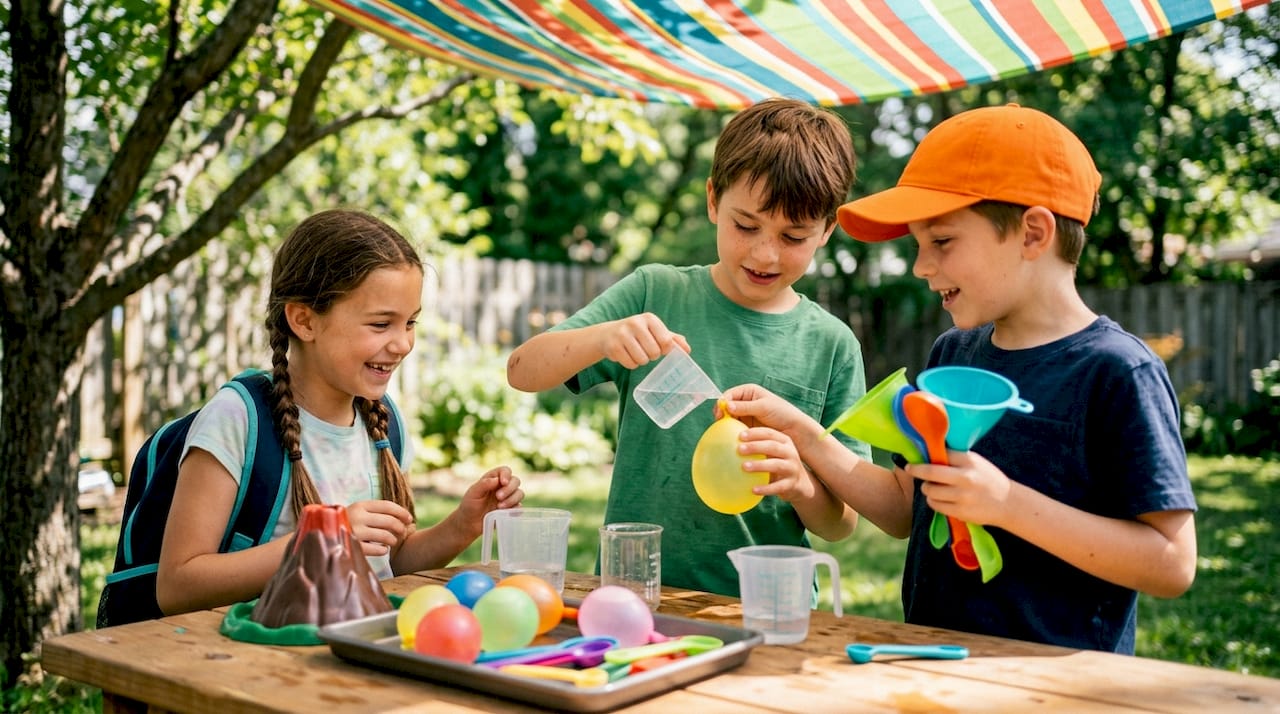
Fun STEAM experiments are interactive activities that combine science, technology, engineering, art, and math to build critical thinking in children ages 5–13. The best hands-on science experiments for 2026 go beyond simple “wow” moments. They teach kids to predict outcomes, test variables, and draw conclusions. Teamgeniussquad’s E³ Method (Engage, Encourage, Empower) reflects exactly what great STEAM education looks like: structured curiosity that builds real confidence. Whether you are a parent setting up a kitchen lab or an educator planning classroom activities, the experiments and events in this guide give you everything you need.
What makes the best STEAM experiments for kids in 2026?
The best STEAM experiments combine safety, low cost, and genuine scientific learning. A great experiment does not require expensive equipment. It requires a clear question, a testable idea, and materials kids can actually handle.
Strong experiments share these qualities:
- Safe materials: Use household items like baking soda, vinegar, film canisters, and craft supplies.
- Scientific method built in: Kids should predict what will happen before they start.
- Variable testing: Change one thing at a time and observe the difference.
- Tactile engagement: Hands-on activities increase engagement and confidence more than passive observation, according to peer-led STEAM programming.
- Collaboration: Two kids working together learn more than one kid working alone.
- Age range fit: Experiments should challenge without frustrating. Ages 5–8 need simpler setups; ages 9–13 can handle multi-step processes.
STEAM education research consistently shows that children who engage with hands-on activities develop stronger problem-solving skills than those who learn through observation alone.
Pro Tip: Ask your child to write or draw their prediction before starting any experiment. That one step transforms a fun activity into a genuine scientific exercise.
Top fun STEAM experiments to try at home or school in 2026
These eight experiments cover the full STEAM spectrum. Each one uses accessible materials, teaches a real concept, and works in both home and classroom settings.
1. Alka-Seltzer rockets
Alka-Seltzer rockets are one of the top-recommended, low-cost chemistry experiments for kids aged 6 and up. You fill a film canister with water, drop in an Alka-Seltzer tablet, seal the lid, flip it upside down, and step back. Gas pressure builds until the lid launches off with force.
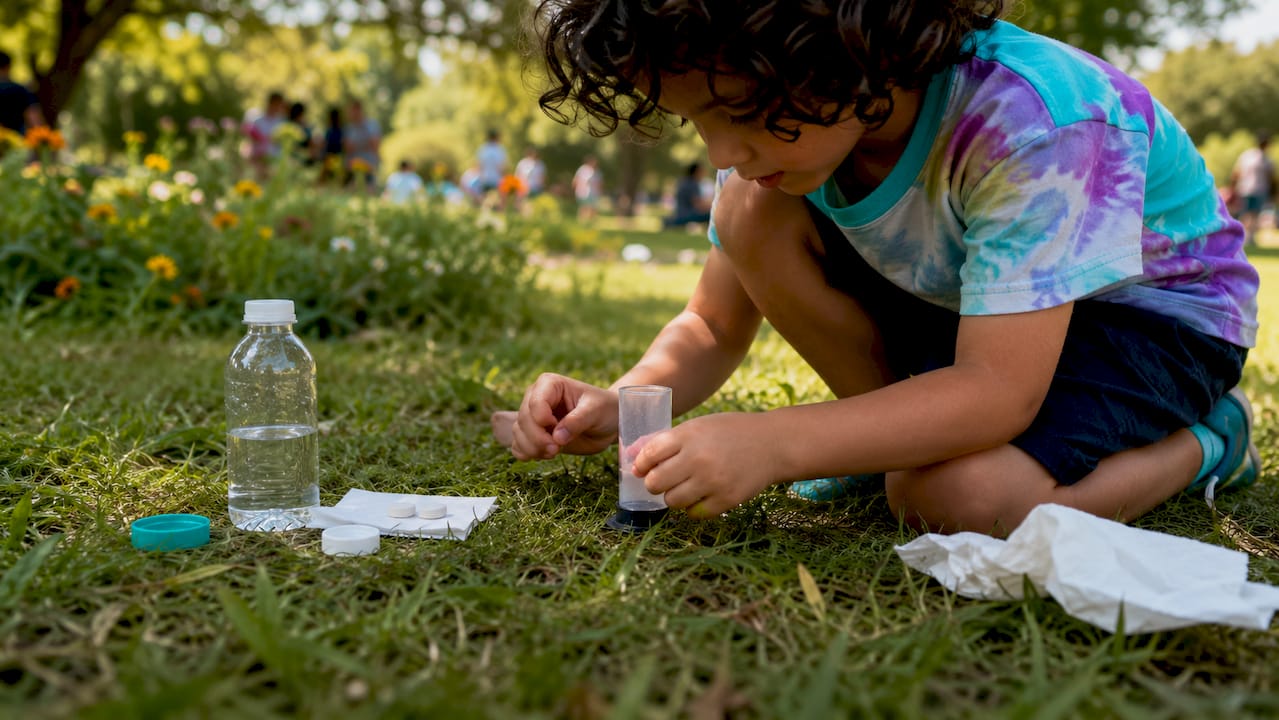
The science here is Newton’s Third Law in action: the gas pushes down, the canister shoots up. Kids learn about chemical reactions, gas pressure, and force simultaneously. The experiment also teaches variable isolation as a core scientific skill, since children can test different amounts of water, different tablet sizes, and different canister orientations.
Pro Tip: Launch only one or two rockets at a time. Lids launch forcefully and unpredictably, so clear the area and use incremental reactant testing (quarter-tablet increments) to compare results safely.
2. Slime chemistry
Slime is a polymer science experiment that teaches kids about non-Newtonian fluids. Mix white school glue with a borax solution or contact lens solution, and the liquid transforms into a stretchy solid. The chemistry involves cross-linking polymer chains, which is a concept that connects directly to materials science and engineering.
Kids can vary the ratio of glue to activator, add glitter or color, and observe how the texture changes. This experiment works especially well for ages 6–12 and pairs naturally with a discussion about how scientists design materials for specific purposes.
3. Bristlebot vibration robots
A bristlebot is a tiny robot made from a toothbrush head, a small battery, and a vibrating motor. The motor causes the bristles to vibrate at a specific frequency, which propels the bot forward. Frequency control in vibration locomotion is the key variable: changing the motor speed changes the direction and speed of movement.
This experiment introduces children to mechanical engineering, friction, and control systems. Older kids (ages 10–13) can experiment with different bristle angles and motor placements to steer their bots. It is one of the most genuinely engaging unique engineering projects for kids because the result moves and responds to their design choices.
4. DIY catapult engineering
Building a catapult from popsicle sticks, rubber bands, and a plastic spoon teaches structural engineering and projectile physics. Kids design, build, test, and redesign. The engineering design cycle is built into the activity naturally.
The learning outcome is clear: children discover that arm length, tension, and launch angle all affect how far a projectile travels. This is a strong classroom experiment because it generates data that kids can graph, connecting engineering directly to math.
5. Baking soda and vinegar volcano
The classic acid-base reaction remains one of the best STEAM experiments for younger children (ages 5–8) because the result is immediate and dramatic. Baking soda (a base) reacts with vinegar (an acid) to produce carbon dioxide gas, water, and sodium acetate.
The art integration angle makes this experiment stand out in 2026 STEAM classrooms. Kids sculpt a volcano from clay or papier-mâché before running the reaction, combining visual art with chemistry. The finished piece becomes a display project that reinforces both the science and the creative process.
6. Solar energy mirror experiment
Reflecting sunlight with mirror disks onto a dark surface demonstrates how solar energy converts to heat. Kids measure temperature changes at different distances and angles, connecting physics to real-world renewable energy concepts. This experiment works best outdoors on a sunny day and suits ages 8–13.
The solar energy kit from Teamgeniussquad includes a mirror disk and guided instructions, making this experiment accessible without any DIY sourcing. The guided format helps children focus on the science rather than the setup.
7. Computer vision and WebHID browser projects
For older children (ages 11–13) with adult supervision, browser-based WebHID technology allows kids to control physical devices directly from a browser tab. Projects using computer vision to detect objects and trigger responses introduce machine learning concepts at a hobbyist level.
This is one of the most exciting emerging interactive STEAM challenges of 2026. No complex coding environment is required. A browser, a connected device, and a curious kid are enough to get started. Edtech platforms integrating AI are increasingly building these tools into accessible formats for younger learners.
8. Egg drop engineering challenge
The egg drop challenge asks kids to build a protective structure from limited materials (straws, tape, cotton balls, plastic bags) that keeps a raw egg intact when dropped from a height. The constraint-based design process mirrors real engineering problems.
This experiment builds resilience as much as it builds engineering skills. When a design fails, kids analyze why and rebuild. That cycle of failure and iteration is the most valuable lesson any STEAM activity can teach.
How summer 2026 STEAM events enrich kids’ learning
Community events give children a STEAM experience that no home experiment can fully replicate. They see peers solving problems, meet mentors working in STEAM careers, and discover that science is a social activity.
Key events running in 2026 include:
- STEAM Academy (April–July 2026): Full-day programming from 8:00 AM to 5:00 PM, combining robotics, hands-on activities, and career exploration with peer-led challenges and interactive vendor booths.
- STEM Exploration Days: Structured around teamwork and interactive challenges, these events build children’s confidence and leadership skills alongside scientific knowledge.
- Virginia’s Summer of Steam railway excursions: Steam-powered railway experiences run during june and july 2026, lasting approximately 1.5 hours each. Families observe real-world mechanical engineering through historic steam locomotives.
These events supplement home and school experiments by showing children that STEAM is alive in the real world. Parents and educators should register early, since capacity at structured programs fills quickly.
What are the emerging STEAM trends and technologies in 2026?
The line between classic experiments and technology-driven projects is narrowing fast. The most forward-looking exciting STEAM activities in 2026 blend both approaches.
Key trends shaping hands-on science experiments this year include:
- WebHID and computer vision projects: Browser-based interfaces now make it possible for children to interact with physical hardware without complex software installation.
- Machine learning at the hobby level: Kids can train simple image classifiers using free browser tools, connecting art (drawing training data) with computer science.
- Vibration-based robotics: Bristlebots and similar projects teach frequency response and control systems through direct physical experimentation.
- Art-technology integration: STEAM education in 2026 increasingly treats art not as decoration but as a design discipline, with projects that require aesthetic and functional decisions simultaneously.
- STEAM trends in 2026: Educators are integrating these tools into structured curricula, making it easier for parents to find resources that align with what kids are learning in school.
The most effective approach is to pair one classic experiment (like Alka-Seltzer rockets) with one technology-based project per session. That combination keeps younger children engaged while stretching older ones toward new concepts.
Key takeaways
The most effective fun STEAM experiments for kids in 2026 combine accessible materials, built-in scientific method practice, and at least one creative or technology-based element to build both knowledge and confidence.
| Point | Details |
|---|---|
| Use the scientific method every time | Ask kids to predict outcomes before starting to build genuine critical thinking skills. |
| Low-cost materials work best | Film canisters, baking soda, and craft supplies deliver strong learning without high expense. |
| Variable testing drives deeper learning | Changing one element at a time teaches kids how real scientists work. |
| Community events add irreplaceable value | Summer 2026 STEAM programs offer peer collaboration and career exposure that home experiments cannot replicate. |
| Emerging tech is accessible now | WebHID and computer vision projects are feasible for ages 11–13 with a browser and adult guidance. |
Why I think “wow moments” are overrated in STEAM education
Most parents and educators measure a STEAM experiment’s success by the reaction in the room. The louder the gasp, the better the lesson. I disagree with that instinct, and years of watching children work through hands-on science experiments have reinforced that view.
The Alka-Seltzer rocket launches with a satisfying pop. Kids cheer. Then it is over. The real learning happens in the five minutes after, when you ask: “What would happen if we used half the tablet?” That question is where curiosity lives. The explosion is just the door.
The experiments that stick with children are the ones where they got something wrong, figured out why, and tried again. The egg drop challenge produces more genuine scientific thinking than any volcano, because failure is built into the design. A child who rebuilds a broken egg protector three times has practiced the engineering design cycle more thoroughly than any worksheet could teach.
My advice to parents and educators: resist the urge to rescue. When a bristlebot spins in circles instead of going straight, do not fix it. Ask questions. “What do you think is causing that?” That single habit, repeated across dozens of experiments, builds the kind of thinker who sees problems as puzzles rather than obstacles.
Teamgeniussquad’s E³ Method captures this philosophy well. Engage first, then encourage the struggle, then empower the child with the confidence that comes from solving it themselves. That sequence matters more than any specific experiment.
— Tita
Teamgeniussquad’s experiment kits for home and classroom STEAM
Teamgeniussquad designs hands-on, screen-free kits that bring the best of these experiments into a structured, confidence-building format. Each kit follows the E³ Method, guiding children from curiosity to discovery without requiring parents to source materials or plan lessons from scratch.
The Science Solar Energy Kit lets kids explore renewable energy concepts with a mirror disk and guided experiments. The experiment kits collection covers a wide range of STEAM topics, each designed to work alongside school curricula or as standalone home projects. Every kit includes role-play elements like lab coats and certificates, so children do not just complete an experiment. They become scientists. Visit Teamgeniussquad to find the right kit for your child’s age and curiosity level.
FAQ
What age is best for starting STEAM experiments?
Children as young as 5 can participate in simple STEAM experiments using safe household materials like baking soda and vinegar. More complex projects involving variable testing and technology suit ages 9–13.
How do fun STEAM experiments build confidence in kids?
Hands-on experiments give children direct evidence of their own capability. Completing a working design or observing a predicted reaction reinforces the belief that they can solve problems, which is the foundation of lasting confidence.
Are STEAM experiments safe for home use?
Most recommended experiments for children use non-toxic household materials. Alka-Seltzer rockets require adult supervision due to forceful lid launches, and technology-based projects like WebHID should involve a parent or educator.
How do I turn a simple experiment into a full STEAM lesson?
Ask your child to predict the outcome before starting, record observations during the experiment, and vary one element afterward to test a new hypothesis. That three-step process applies the scientific method to any activity.
What is the difference between STEM and STEAM education?
STEM covers science, technology, engineering, and math. STEAM adds art, which includes design thinking, creative problem-solving, and visual communication. The art component helps children approach problems from multiple angles and express their findings more clearly.


Leave a comment
This site is protected by hCaptcha and the hCaptcha Privacy Policy and Terms of Service apply.