Camp Kiwi for Kids: Parent's 2026 Choosing Guide
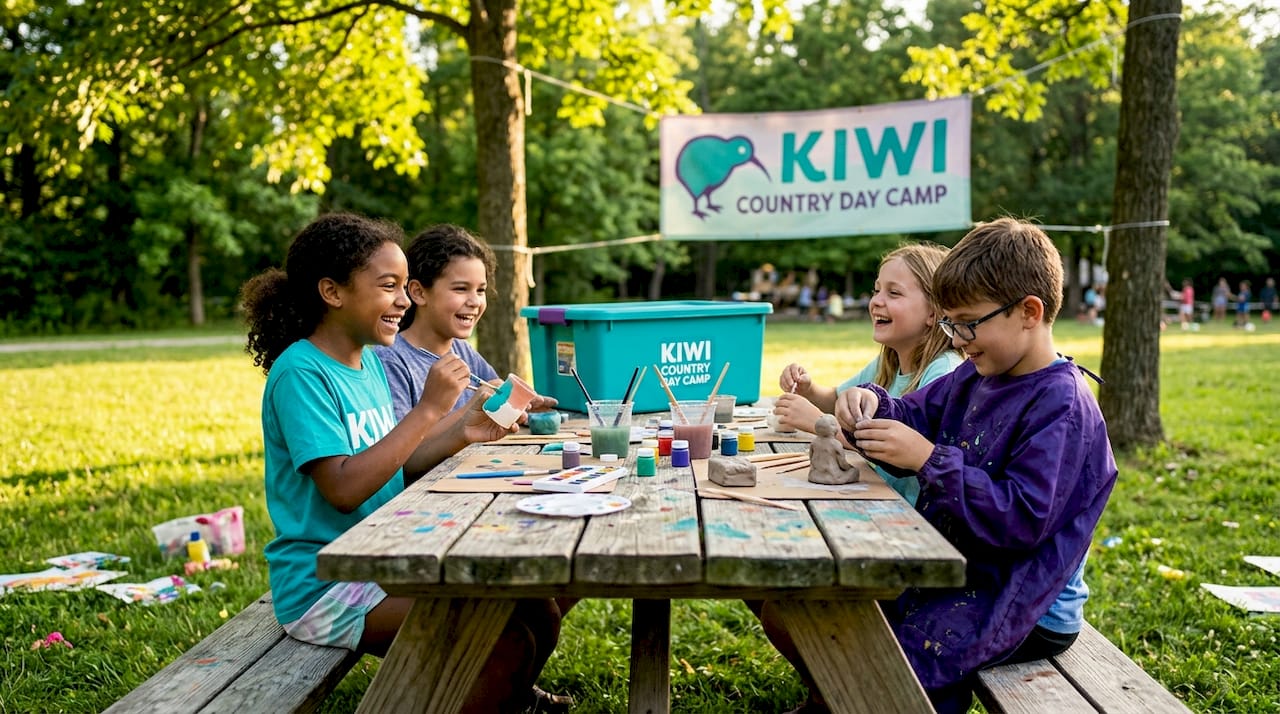
Camp Kiwi is defined as Kiwi Country Day Camp, a traditional summer day camp established in 1952 in Westchester County, NY, offering specialist-led programs in sports, adventure, creative arts, and daily instructional swim. Multiple unrelated camps share the “Kiwi” name, so parents searching for the right fit need clarity before registering. This guide breaks down what each program offers, how they compare, and what to look for when choosing the best outdoor adventure camp for your child aged 5 to 13.
What makes Camp Kiwi stand out among summer camps?
Kiwi Country Day Camp delivers a dynamic daily schedule tailored by age, size, and skill level, which means your 7-year-old and your 12-year-old are never lumped into the same activity group doing the same thing. That distinction matters more than most parents realize. A child who feels appropriately challenged is far more likely to build real confidence than one who is bored or overwhelmed.
The camp’s core programming covers four pillars:
- Sports: Structured team and individual sports led by specialists who focus on skill progression, not just participation.
- Adventure: Outdoor challenges designed to push children beyond their comfort zones in a supervised, supportive setting.
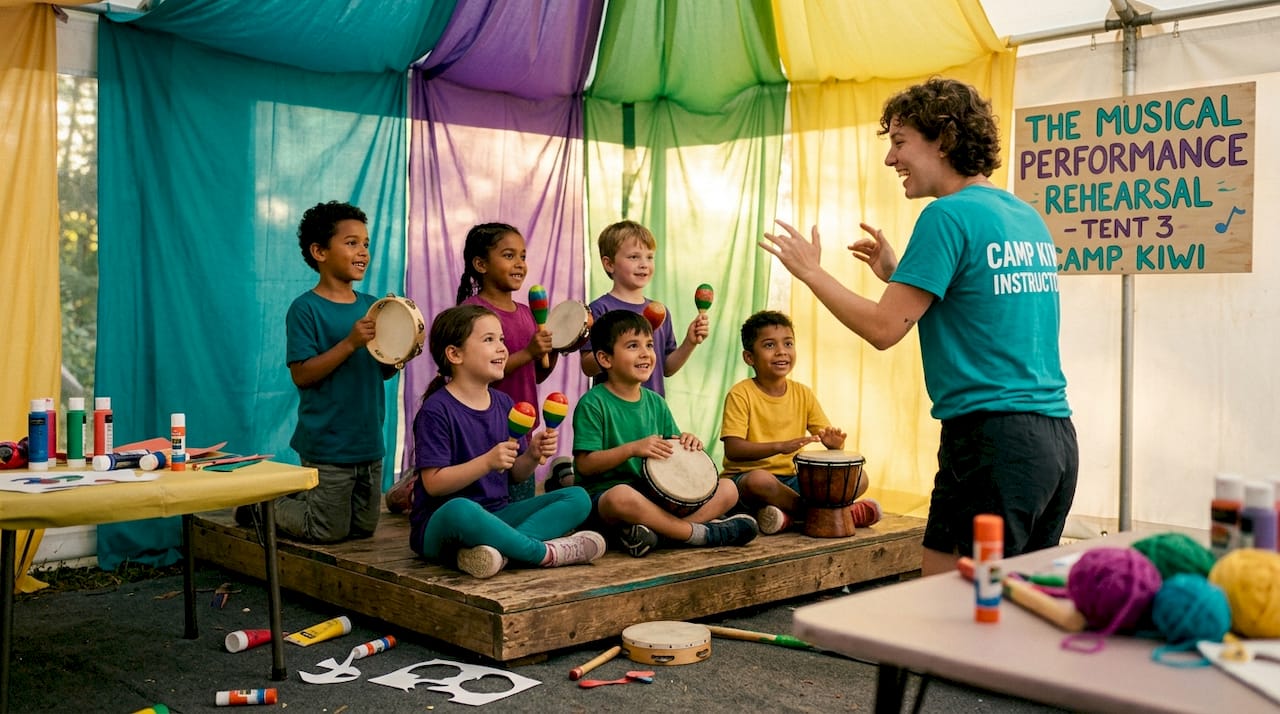
- Performing and creative arts: Drama, crafts, and performing arts programs led by specialists, with performances and showcases that give children a concrete, visible outcome to celebrate.
- Daily instructional swim: Structured swim lessons that track each child’s progress, not just free swim time.
The performing and creative arts component is worth highlighting specifically. Many camps offer “arts and crafts” as a filler activity. Kiwi Country Day Camp builds creative arts into the core schedule with specialist instructors, which means children leave with real skills and real memories of performing for an audience. That kind of experience builds a different kind of confidence than winning a relay race.
Transportation options are available from Ridgefield, Westport, and Wilton, making the camp accessible for Westchester-area families who cannot manage daily drop-off. Spots are limited, and the camp recommends scheduling a personal family tour before registering to see the campus and meet the staff.
Pro Tip: Schedule your family tour on a regular camp day, not a special event day, so your child sees the authentic daily rhythm of the program before committing.
How does Camp Kiwi compare to other similarly named camps?
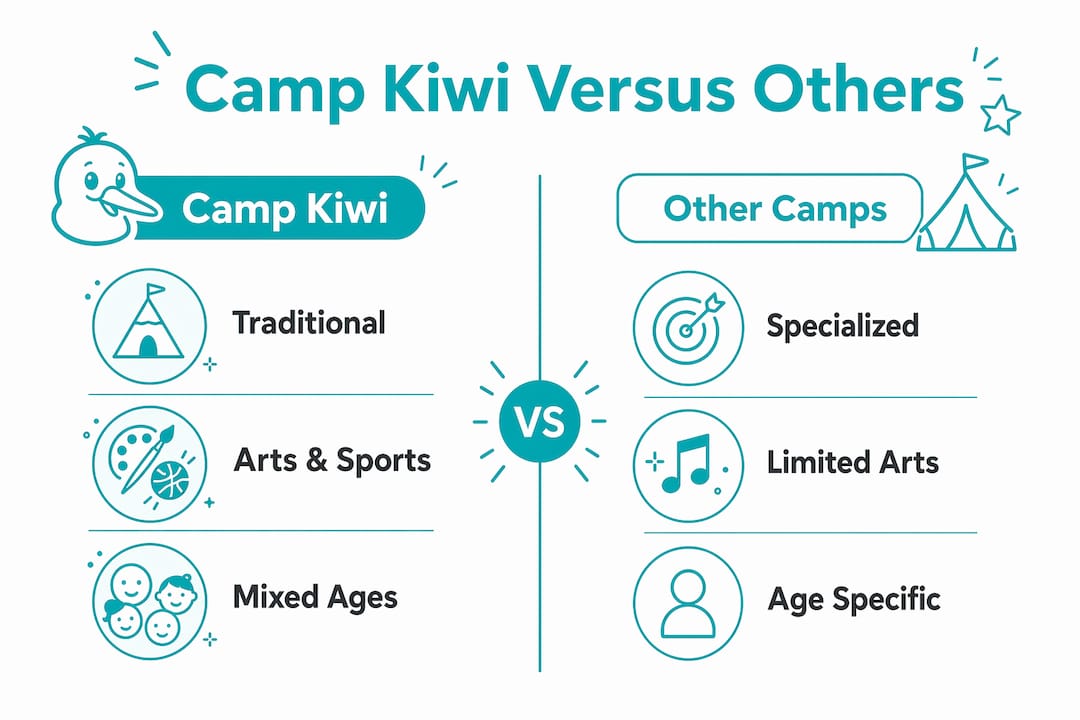
Multiple programs use “Kiwi” in their name, and the differences between them are significant. Here is a direct comparison to help you decide which program fits your child’s needs and your family’s schedule.
| Camp | Age Range | Focus | Session Format | Notable Add-On Fees |
|---|---|---|---|---|
| Kiwi Country Day Camp | Ages 3–15 | Sports, adventure, creative arts, swim | Full summer season | Transportation available |
| Kiwi Racquet and Fitness Club Junior Camp | All skill levels | Pickleball, tennis, fitness, crafts | Full and half-day options | Flexible timing |
| Camp Kiawah (Kiawah Island) | Ages 3–7 | Games, crafts, snacks, themed activities | 8:30am to 4pm | Early drop-off $15/half hour; lunch add-on $10 |
| Camp Xtreme (Kiawah Island) | Ages 8–13 | Competitive sports, team-building | Full day | Early/late pickup $15 per child per half hour |
The Kiwi Racquet and Fitness Club’s Junior Summer Camp is sport-specific, centered on pickleball, tennis, and fitness, with crafts as a secondary activity. It suits families whose children are already drawn to racquet sports or want structured athletic development in a fitness club environment. It is not a traditional outdoor adventure camp.
Camp Kiawah at Kiawah Island Golf Resort is a themed day camp for younger children aged 3 to 7. The full day runs from 8:30am to 4pm, and swimming is weather and season dependent, meaning it may not be available on every camp day. The camp does run rain or shine, with activity adjustments made when swimming is unavailable. The add-on fees for early drop-off and lunch can add up quickly, so parents should request the full fee schedule before budgeting.
Camp Xtreme at the same resort targets ages 8 to 13 with competitive sports and team-building exercises. It is a strong fit for children who thrive in competitive environments and want structured athletic challenges, but it offers less creative arts exposure than Kiwi Country Day Camp.
The key takeaway from this comparison is that program focus drives the experience. A child who loves performing and making things will thrive at Kiwi Country Day Camp. A child who wants to improve their tennis game will get more from Kiwi Racquet and Fitness Club. Matching the program to the child, not just the age range, is the most important decision a parent can make.
What should parents look for when choosing a summer camp?
Choosing the right summer camp for a child aged 5 to 13 requires more than checking the age range and the price. Here are the factors that genuinely shape a child’s experience.
- Age and skill-level separation. Camps that run separate programs by age, size, and skill level produce better outcomes than those with broad groupings. Ask specifically how the camp divides its groups and whether a child who is advanced in one area can be placed accordingly.
- Specialist-led instruction. A generalist counselor running arts and crafts is a different experience from a performing arts specialist running a drama program. Ask who leads each activity and what their background is.
- Camper agency and choice. Camps that give children some control over their activity selection build independence and resilience. Research on self-directed activity models shows that camper choice promotes empowerment beyond what instructor-led models alone can achieve.
- Transparent fee structures. Early drop-off, lunch, and late pickup fees can materially increase the total weekly cost. Always request a complete fee schedule, not just the headline registration price.
- Concrete creative outputs. Ask whether the creative arts program ends in a performance, a showcase, or a finished product your child takes home. Tangible outcomes reinforce a child’s sense of accomplishment in ways that open-ended activity time does not.
- Transportation and logistics. Confirm pickup and drop-off locations, timing, and whether transportation is included or an add-on. A camp that is logistically difficult to access becomes a source of stress rather than joy.
Pro Tip: Ask the camp director to describe a specific day in the life of a child your child’s age. Vague answers about “fun and learning” are a red flag. Specific answers about schedule, instructors, and activity transitions signal a well-run program.
How Camp Kiwi builds confidence and creativity through its programs
The structure of Kiwi Country Day Camp is designed around a principle that Teamgeniussquad recognizes deeply: children build confidence through successful, hands-on discovery, not through passive observation. When a child learns a new swim stroke, performs in a drama showcase, or completes an adventure challenge, they are not just having fun. They are building a mental record of what they are capable of.
Several specific program elements contribute to this:
- Instructional swim progression: Daily swim lessons track each child’s skill development over the summer, giving children a measurable sense of growth that carries beyond the pool.
- Creative arts showcases: When children perform for an audience or display their artwork, they experience the specific confidence that comes from being seen and celebrated for something they created.
- Adventure challenges: Supervised outdoor challenges push children to attempt things they would not try on their own, building resilience through guided risk-taking.
- Community environment: A camp community where children return season after season creates belonging, and belonging is one of the most powerful confidence builders available to a child.
“Children who experience daily achievement in a structured, supportive environment carry that sense of capability into every other area of their lives.”
The creative arts and performing arts programs at Kiwi Country Day Camp are particularly well-suited to children who do not see themselves as athletes. A child who struggles with team sports but discovers a talent for drama or visual art at camp can leave the summer with a completely new understanding of their own abilities. That shift in self-perception is the real value of a well-designed summer camp program.
You can explore screen-free confidence strategies that complement this kind of hands-on, identity-building learning at home as well.
Key takeaways
The most effective summer camp for children aged 5 to 13 is one that matches program focus to the child’s interests, separates groups by age and skill level, and delivers specialist-led instruction with transparent pricing.
| Point | Details |
|---|---|
| Camp Kiwi’s identity | Kiwi Country Day Camp, founded in 1952, is the primary Camp Kiwi, offering sports, arts, adventure, and daily swim. |
| Program matching matters | Choose based on your child’s interests, not just age range. Creative kids thrive at Kiwi Country Day Camp; athletic kids may prefer sport-specific programs. |
| Fee transparency is critical | Always request full fee schedules including early drop-off, lunch, and late pickup costs before budgeting. |
| Specialist instruction drives growth | Camps with specialist-led programs in arts, sports, and swim produce measurable skill progression and confidence gains. |
| Camper choice builds resilience | Programs that give children some agency in activity selection develop independence alongside skill. |
Why I think the “fun camp” label undersells what Kiwi Country Day Camp actually does
When parents describe summer camp to their kids, they usually lead with “it’s going to be so fun.” And it is. But what I have observed in programs like Kiwi Country Day Camp is that the fun is a delivery mechanism for something more durable: a child’s expanding belief in what they can do.
The specialist-led model is the detail most parents overlook when comparing camps. It is easy to focus on the activity list and miss the question of who is actually running each activity and how. A drama program led by a performing arts specialist produces a different child at the end of summer than a drama program led by a college student who also runs the archery station.
I also think parents underestimate the value of the creative arts component specifically. We live in a moment where STEM gets most of the attention in children’s education, and rightly so. But creative confidence, the ability to make something and put it in front of people, is a skill that transfers into every domain of a child’s life. Kiwi Country Day Camp builds both, and that balance is rare.
My practical recommendation: schedule the family tour, ask specific questions about the daily schedule and instructor backgrounds, and register early. Limited spots are not a marketing tactic at a camp that has been running since 1952. They are a reality.
— Tita
Extend your child’s Camp Kiwi learning at home
Camp ends, but the curiosity your child builds over the summer does not have to. Teamgeniussquad creates hands-on, screen-free STEAM discovery kits designed for children aged 5 to 13, built around the same principles that make programs like Kiwi Country Day Camp so effective: specialist-designed activities, real skill progression, and the confidence that comes from completing something challenging.

The STEM-STEAM Electricity Lab Bundle is a high-engagement kit that lets children conduct real experiments at home, step into the role of a scientist, and build the kind of hands-on confidence that complements a summer full of outdoor adventure. Powered by the trademarked E³ Method (Engage, Encourage, Empower), every Teamgeniussquad kit turns learning into discovery. Explore the full collection at Teamgeniussquad and keep the momentum going all year long.
FAQ
What is Camp Kiwi?
Camp Kiwi most commonly refers to Kiwi Country Day Camp, a traditional summer day camp in Westchester County, NY, founded in 1952, offering specialist-led programs in sports, adventure, creative arts, and daily instructional swim for children aged 3 to 15.
What age groups does Kiwi Country Day Camp serve?
Kiwi Country Day Camp serves children aged 3 to 15, with programs divided by age, size, and skill level to give each child age-appropriate challenges and meaningful progression throughout the summer.
How does Camp Kiwi compare to Camp Kiawah?
Camp Kiwi (Kiwi Country Day Camp) is a full-season traditional day camp focused on sports, arts, and swim, while Camp Kiawah is a themed day camp at a golf resort for ages 3 to 7, with add-on fees for early drop-off and lunch that parents should factor into their total cost.
How do I know if a summer camp is right for my child?
Match the camp’s program focus to your child’s interests, confirm that groups are divided by age and skill level, ask who leads each activity, and request a complete fee schedule including any add-on costs before registering.
What creative activities does Camp Kiwi offer?
Kiwi Country Day Camp includes drama, crafts, and performing arts as core program components, led by specialists and culminating in performances and showcases that give children a tangible, confidence-building outcome to celebrate.



Leave a comment
This site is protected by hCaptcha and the hCaptcha Privacy Policy and Terms of Service apply.