

Best Number Stencils for Hands-On STEAM Learning
Picking the right number stencils for a child who learns differently can feel like searching for a needle in a haystack, especially when most products were never designed with neurodivergent minds in view. Number stencils support number recognition, guided tracing, and fine motor engagement, making them a natural fit for screen-free STEAM learning. But not every stencil set delivers the structure, sensory input, and confidence-building experience that neurodivergent children truly need. This guide walks you through exactly what to look for, which tools stand out, and how to pair stencils with bigger STEAM experiences that turn number practice into genuine discovery.
Table of Contents
- Key criteria for selecting number stencils for neurodivergent learners
- Top types of number stencils and hands-on alternatives
- How the top number stencil tools compare
- Best picks for common learning scenarios
- A fresh perspective: Why number stencils are just the beginning
- Next steps: Bring hands-on STEAM learning home
- Frequently asked questions
Key Takeaways
| Point | Details |
|---|---|
| Structured support matters | Number stencils with clear order cues help neurodivergent kids avoid confusion and build skills. |
| Hands-on STEAM boosts confidence | Blending stencils with tactile and inquiry-based tasks greatly increases motivation and learning depth. |
| One size does not fit all | Pattern blocks or alternate multisensory activities provide essential options for kids needing less rigidity. |
| Track small wins | Consistent routines and progress tracking turn everyday practice into real achievements. |
| Stencils are a starting point | True numeracy and creativity bloom when stencils are paired with project-based exploration. |
Key criteria for selecting number stencils for neurodivergent learners
When you begin evaluating number stencils, it helps to think beyond the product description on the box. A stencil that works beautifully for a neurotypical child may feel chaotic, frustrating, or even overwhelming for a child who processes the world differently. The goal is to find tools that reduce friction and build momentum, session by session.
Clear stroke order and start-point guidance is one of the single most important features to prioritize. Many children with dysgraphia, dyslexia, or sensory processing challenges struggle specifically with knowing where to begin a numeral and in which direction to move. Stencils that include arrows, numbered steps, or start-point dots remove that guesswork and give the child a clear, repeatable path to success. Every successful tracing builds a new layer of confidence.
Size and stability matter more than most buyers expect. Large-format stencils are easier to grip and anchor, which reduces the physical frustration that comes from a stencil shifting mid-stroke. For children with low muscle tone or fine motor delays, a stencil that slides around the page can trigger shutdown before the session even begins. Look for stencils with non-slip backing, raised edges, or enough weight to stay put during use.
Material quality shapes the entire sensory experience. Thick plastic stencils are durable and wipe clean, which makes them practical for repeated use. Wooden stencils offer a satisfying weight and texture, and many children who are tactile seekers respond especially well to the natural feel of wood. Wipe-clean laminated cards sit in the middle ground, combining the flexibility of printable formats with the reusability of harder materials.
Adaptability across skill levels is another criterion worth weighing carefully. Structured routines and visual supports are essential for neurodivergent learners, and a good stencil tool should be able to grow with the child rather than become obsolete after a single skill level is mastered. Some sets include number families grouped by stroke similarity (for example, numbers that start with a curve versus numbers that start with a line), which allows educators to introduce a logical sequence rather than jumping between unrelated forms.
Here is a quick checklist of criteria to run through before purchasing any number stencil set:
- Start-point indicators or directional arrows included
- Large enough size for small or developing hands
- Non-slip or stable base material
- Wipe-clean or washable surface for repeated practice
- Clear visual contrast between the numeral and the background
- Optional: data tracking sheets or goal cards included
Pro Tip: Pair any new stencil tool with a brief visual routine, such as a simple “pick, trace, check” chart posted near the workspace. This small addition builds executive function habits alongside handwriting skills, which is especially powerful for children with ADHD or ASD. You can explore more screen-free confidence strategies to layer onto any number practice routine.
For families who want expert-backed guidance on selecting educational tools alongside stencils, this expert educational book guide offers a well-rounded look at how printed materials support hands-on learning.
Top types of number stencils and hands-on alternatives
With selection criteria clarified, let’s look at the most effective styles of number stencils available, because the category itself is wider than most parents and educators realize.
Classic plastic or wooden stencils are the most widely available option and offer real durability. These tend to be simple in design, featuring cutout numerals that a child traces around or inside. Their strength lies in longevity and tactile simplicity. The limitation for neurodivergent learners, however, is that many classic stencils provide no stroke order guidance at all, meaning the child must already know how to form the number correctly or risk reinforcing a flipped or reversed habit. They work best as a reinforcement tool after stroke sequence has already been introduced.
Occupational therapy (OT)-style stencils represent a significant step forward in intentional design. OT-style stencils incorporate stroke guidance, including numbered start points and directional arrows, and they are specifically intended to be stabilized by the child. Many OTs recommend these as a bridge between early number exposure and independent handwriting because they offer just enough structure to guide the hand without fully automating the process. They are especially helpful for children with dysgraphia or motor planning challenges.
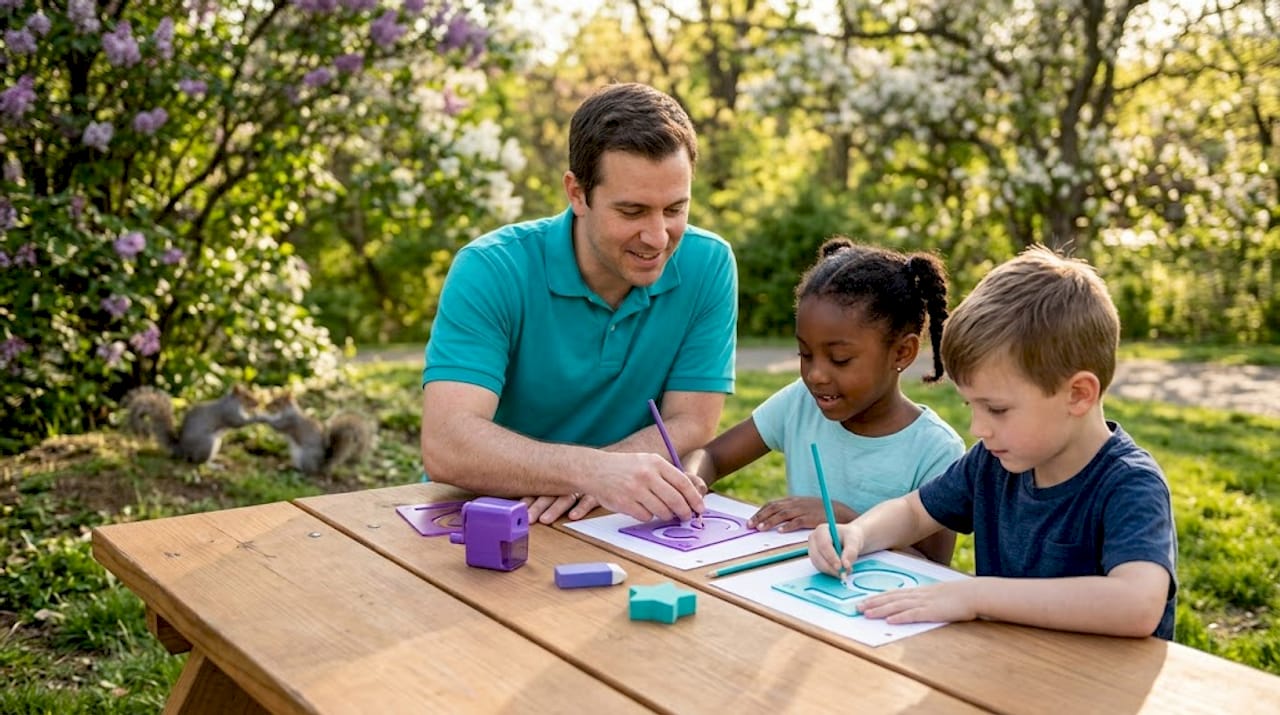
Printable and wipe-clean STEM number mats have become increasingly popular in both home and classroom settings. These laminated cards combine tracing guides, counting visuals, and sometimes simple math prompts all on one surface. A child can trace the numeral, count the corresponding objects, and wipe the card clean for another round, all in a single session. The multi-modal format is especially valuable because it connects numeral formation to actual quantity, which is a distinction many rote-tracing tools skip entirely.
Pattern blocks for number building offer something entirely different. Tactile pattern blocks that build numerals are marketed as supporting fine motor control and recognition through hands-on play, allowing children to construct numbers out of physical pieces rather than tracing over a printed form. This is a powerful alternative for children who feel frustrated by pencil-based tools or who need stronger multisensory input to retain information. It also opens the door to creative play, because building a number out of geometric shapes feels more like play than practice.
For families also exploring literacy tools, the guide to hands-on letter stamp sets shows how the same principles apply to early reading skills.
Pro Tip: If a child resists pencil tracing but loves building with blocks or puzzle pieces, treat pattern block number construction as the primary activity and introduce the stencil tracing as a brief, low-pressure follow-up. Meeting the child where they are reduces resistance dramatically and keeps the session positive. You can find more inspiration in this collection of creative educational books that support multisensory approaches.
Here is a quick breakdown of how each tool type aligns with different learner needs:
- OT-style stencils: Best for children who need explicit motor planning support and stroke sequence guidance
- Classic plastic or wooden stencils: Best for reinforcement once foundational formation is established
- Wipe-clean STEM mats: Best for connecting numeral form to mathematical meaning
- Pattern block number building: Best for tactile seekers, kinesthetic learners, and children who struggle with pencil tools
How the top number stencil tools compare
Each category brings its own strengths, but how do they stack up for specific priorities? The table below offers a side-by-side view to support quick, evidence-based decision-making.
| Tool type | Fine motor support | Stroke order guidance | Multi-sensory engagement | Reusability | Creative STEAM integration |
|---|---|---|---|---|---|
| OT-style stencils | High | High | Moderate | High | Moderate |
| Classic plastic/wood stencils | Moderate | Low | Moderate | High | Low |
| Wipe-clean STEM mats | Moderate | Moderate | High | High | High |
| Pattern blocks | High | Low (by design) | Very high | Very high | Very high |
The table makes one thing clear: no single tool wins across every category. The most effective approach is a combination, and research supports this. STEAM and inquiry-based learning in elementary settings improves critical thinking, problem-solving, creativity, and motivation, which are exactly the outcomes that isolated stencil tracing rarely achieves on its own.
This is not a criticism of stencils. As one perspective from the field notes, stencils and tracing tools tend to focus narrowly on numeral formation and fine motor output, while broader STEAM models emphasize reasoning, creativity, and motivation. A strong curriculum pairs stencil practice with application tasks like counting games, building challenges, or project-based activities rather than treating stenciling as the endpoint of learning.
“The goal isn’t a perfectly traced number. The goal is a child who understands what that number means and believes they are capable of using it.”
When stencil work is paired with activities from STEAM books and puzzles or hands-on project-based STEAM tasks, the formation skill gets anchored in real-world meaning. That context is what transforms a fine motor exercise into a genuine numeracy experience. For additional comparison of how different tools support engagement, this guide on interactive learning books is a valuable companion resource.
Best picks for common learning scenarios
Once you’ve evaluated the core features, it helps to think in terms of real situations rather than abstract categories. Here are scenario-based recommendations designed to match the right tool to the right child.
-
For children who need rigid structure and clear formation rules: Start with OT-style stencils that include numbered stroke steps and start dots. Keep sessions short (five to eight minutes maximum) and celebrate the completion of each number rather than the aesthetic quality of the tracing.
-
For tactile seekers or children who resist pencil tools: Lead with pattern block number building. Let the child construct the number, talk about it, count with it, and then offer the stencil as an optional “show what you built” step rather than the main event.
-
For routine-focused learners with ADHD or ASD: Build a predictable session structure using a visual checklist. The sequence could be as simple as “choose your number, trace it, count it, stamp it.” Pair this with a simple data tracking sheet so the child can see their own progress in a concrete, visual way.
-
For children who are ready to move beyond basics: Combine stencil practice with STEAM challenges. For example, a child traces the number five, then builds a structure using exactly five pieces, then draws a map of five things in their room. This layered approach connects numeral recognition to mathematical thinking and creative application simultaneously.
-
For building creativity and storytelling around numbers: Combine stencils with literacy activities. A child traces the number three, then writes or dictates a short story about three characters going on an adventure. This approach honors the whole child and works beautifully with the STEAM plus literacy integration model that guides intentional learning design.
Small win data tracking is one of the most underused strategies in home and classroom settings. Tracking concrete benchmarks, such as fewer reversed numerals, faster independent completion, or more attempts before asking for help, gives both the child and the educator meaningful evidence of growth without adding pressure. This approach aligns directly with ASD and ADHD support frameworks that prioritize structured, repeatable progress measurement.
Pro Tip: Celebrate every measurable “small win” out loud and specifically. Instead of saying “good job,” try “you traced the seven all the way to the bottom without stopping! That’s a first!” Specific praise builds the kind of self-awareness and confidence that carries beyond the tracing mat. Explore STEAM project bundles for ways to extend these wins into bigger discovery experiences. This activity book checklist is also a practical planning resource for building consistent sessions.
A fresh perspective: Why number stencils are just the beginning
Here is something worth saying plainly: number stencils are a starting line, not a finish line. And in our experience working alongside families navigating dyslexia, dysgraphia, and other learning differences, the children who make the most dramatic progress are rarely the ones who practiced tracing the most. They are the ones who were given the space to do something with the numbers they learned.
Stencils absolutely build fine motor strength and lay the neurological groundwork for number formation. That is real and important work. But when stenciling is used in isolation, children often learn to trace a numeral beautifully without ever connecting it to quantity, position, or real-world meaning. And for a child who already struggles to feel capable in traditional learning settings, a skill that stays on the tracing mat is a missed opportunity.
The most powerful thing you can do is treat stencil practice as one thread in a larger, richer tapestry. When a child traces the number eight and then builds a bridge using eight blocks, or counts eight steps to their bedroom and draws a map, that formation skill becomes a living part of how they understand the world. The numeral stops being an abstract shape and starts being a tool. That shift, from passive tracing to active thinking, is where real confidence is born.
We have seen children who spent months “failing” at worksheets light up completely when given a pattern block set or a project challenge. Their hands knew what to do; they just needed a different invitation. The screen-free confidence approaches we advocate for are built on exactly this premise: different learners need different doors into the same room, and the right tool opens the door without the child even noticing it happened.
Next steps: Bring hands-on STEAM learning home
If you’re ready to take hands-on confidence to the next level, here are resources that do more than just outline numbers.
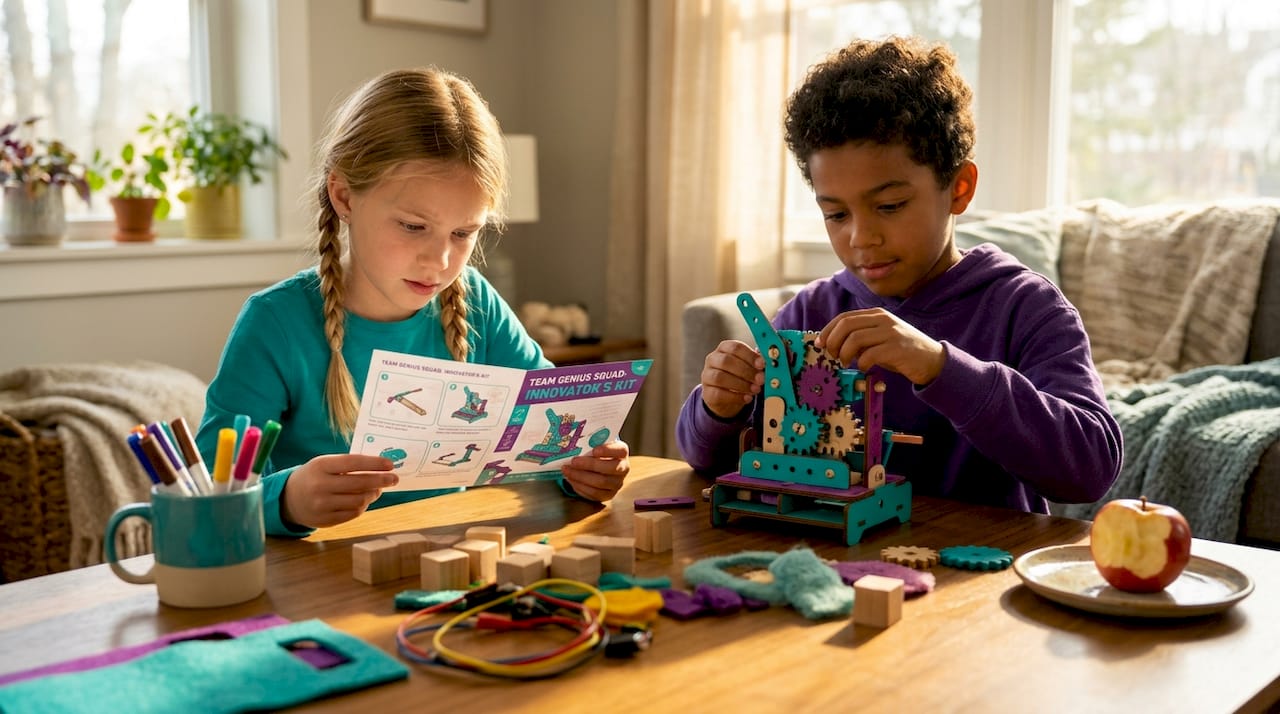
Number stencils are a wonderful anchor for screen-free learning, but children flourish most when those skills connect to bigger, more exciting experiences. At Team Genius Squad, every kit is designed to carry that exact spirit, from the first “engage” moment all the way through to the empowered feeling of completing a real experiment.

The STEAM electricity lab bundle is a perfect companion to number and math skill-building because it asks children to count, measure, and predict as part of genuine scientific exploration. Browsing through hands-on experiment kits gives you a full picture of how tactile learning scales with age and curiosity. And if you want to weave reading and math together, the selection of STEAM books and puzzles bridges literacy and numeracy in a way that feels like play, not homework.
Frequently asked questions
How do number stencils help neurodivergent children with math?
Number stencils provide visual and tactile support for number formation, making math less abstract and more accessible for neurodivergent learners by connecting hand movement to numeral recognition in a concrete, repeatable way.
Which type of number stencil is best for kids with ADHD or ASD?
OT-style stencils with stroke guidance and start-point markers work well for children who need explicit structure, while tactile alternatives like pattern blocks are ideal for kids who find rigid pencil-based tools frustrating or overstimulating.
How can I use number stencils to build math confidence at home?
Set up short, consistent sessions and use a simple data tracker to measure concrete progress benchmarks like fewer reversals or more independent attempts, so both you and your child can see growth clearly and celebrate it specifically.
Are screen-free number stencils enough for STEAM engagement?
Number stencils strengthen writing and fine motor skills, but pairing stencils with application tasks like counting games, building projects, or inquiry challenges delivers the creative and critical thinking growth that broader STEAM learning requires.


Leave a comment
This site is protected by hCaptcha and the hCaptcha Privacy Policy and Terms of Service apply.