13 Mess Free Science Experiments for Home and Classroom, No Cleanup
Contained systems win every time: sealed sensory bottles, sealed reaction bottles, and dry, tray-based physics builds produce the least cleanup while still teaching real concepts about pressure, buoyancy, and force. Some educational kits are built around exactly this principle, so materials come pre-measured instead of requiring guesswork. Below you will find a ready-to-run list, setup tips, and a quick safety note, all suited to kids roughly ages 5 to 13.
TL;DR:
- Sealed containers and pre-measured materials prevent spills and simplify cleanup for activities involving pressure, buoyancy, and force.
- Setting up stations with containment surfaces, pre-measured supplies, and role assignments helps keep experiments low-mess and engaging for groups.
- Safety gear and lab planning, such as adult supervision and clear instructions, are essential even for household ingredients like vinegar and baking soda.
- Kits that include pre-packed materials, safety guidance, and role-play props streamline preparation and encourage curiosity without mess.
- Contained experiments like sensory bottles, condiment diver, and marshmallow launchers are ideal for teaching physics while keeping the environment clean.
Table of Contents
- 1. Top low-mess experiments worth trying with kids
- 2. How to set up, run, and tidy up these experiments
- 3. Shopping list, low-mess swaps, and safety must-dos
- 4. Scaling low-mess experiments for a classroom or group
- 5. Publisher perspective and proof: how Team Genius Squad supports low-mess STEAM
- 6. Letting kids tinker within contained limits
- How Team Genius Squad kits make mess-free science easier
- Sources
- FAQ
1. Top low-mess experiments worth trying with kids
The experiments below share one trait: the materials stay inside something, whether that is a bottle, a bag, or a tray. That single design choice is what keeps a kitchen table clean and a parent’s patience intact.
- Color-mixing sensory bottle. Kids shake a sealed bottle of water, oil, and food coloring to watch colors blend and separate, teaching density without a drop spilled. Materials: clear bottle, water, vegetable oil, food coloring, hot glue for the cap. Ages 5 to 9. Cleanup tip: glue the lid shut once filled and it becomes a reusable, zero-spill tool.
- Magnet exploration bottle. Small magnetic objects sealed in a bottle with clear beads let kids test magnet strength through the plastic wall, covering force and attraction. Materials: bottle, magnetic wand, paperclips, beads, tape. Ages 5 to 8. Cleanup tip: none needed since nothing ever leaves the bottle.
- Condiment diver. A sealed condiment packet dropped into a full water bottle sinks and rises as squeezing changes pressure on the trapped air bubble, a favorite from Exploratorium’s condiment diver activity. Materials: soy sauce or ketchup packet, clear plastic bottle, water. Ages 6 to 12. Cleanup tip: keep the cap tight and this becomes a demo you can reuse for weeks.
- Marshmallow puff tube. Kids blow through a cardboard tube to launch mini marshmallows, exploring air pressure and force the way Exploratorium’s marshmallow puff tube activity describes it. Materials: cardboard tube, mini marshmallows, tape. Ages 6 to 11. Cleanup tip: marshmallows that land on the floor go straight in the trash, no wiping required.
- Pop-bottle pressure demo. A capped bottle with a small amount of trapped air and water shows how pressure changes shape a sealed container, a contained version of the pressure concepts in Exploratorium’s pop bottle activity. Materials: plastic bottle, water, cap. Ages 7 to 12. Cleanup tip: this stays sealed start to finish, so there is nothing to tidy.
- Foil-and-paper battery. Foil, paper soaked in saltwater, and a small LED create a working circuit kids can build and take home, based on the ACS paper battery guide. Materials: aluminum foil, paper, saltwater, LED, tape. Ages 8 to 13. Cleanup tip: pat the paper dry before storing so nothing drips in a backpack.
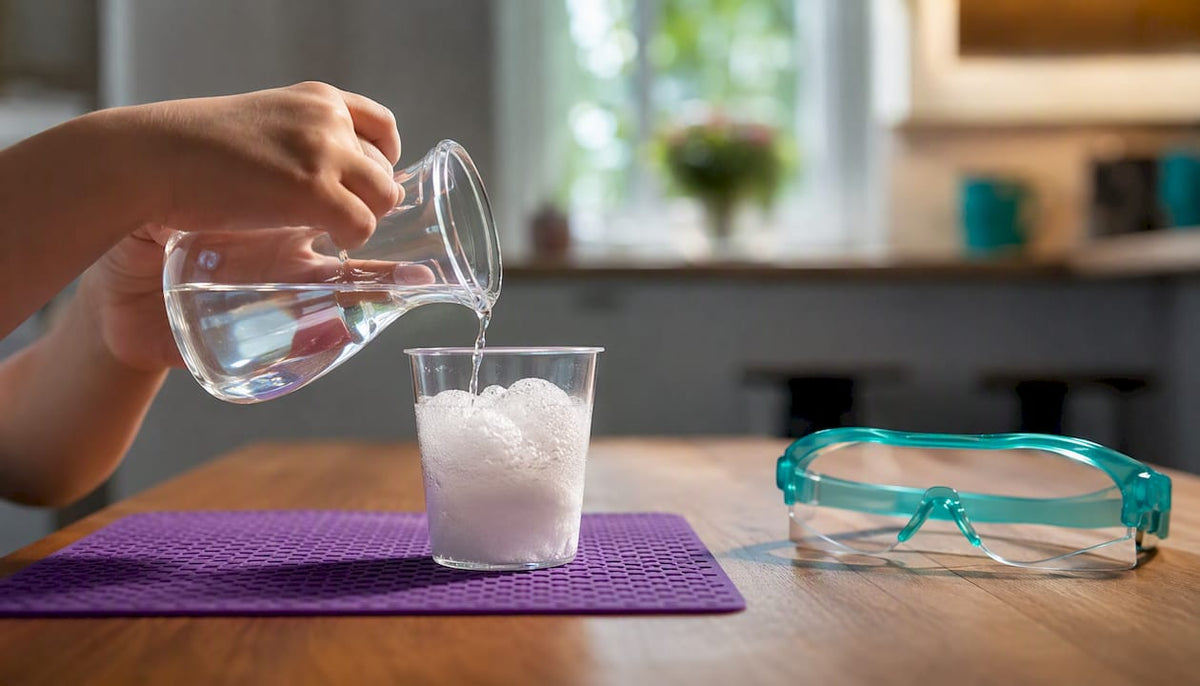
- Sealed baking-soda balloon. Baking soda tucked inside a balloon inflates when dropped into a bottle of vinegar, showing a gas-producing reaction inside a closed loop. Materials: balloon, baking soda, vinegar, bottle, funnel. Ages 6 to 11. Cleanup tip: pour leftover vinegar down the sink right away instead of letting it sit.
- Cloud-in-a-jar fog chamber. Warm water, a lid, and a quick spray of hairspray inside a jar create a swirling fog that demonstrates condensation. Materials: glass jar, warm water, ice on the lid, hairspray. Ages 8 to 13. Cleanup tip: rinse the jar once and it is ready for the next demo.
- Static balloon experiment. Rubbing a balloon on hair and holding it near paper bits or hair strands shows static charge with zero liquid involved. Materials: balloon, paper scraps or hair. Ages 5 to 10. Cleanup tip: sweep paper bits into a bin in seconds.
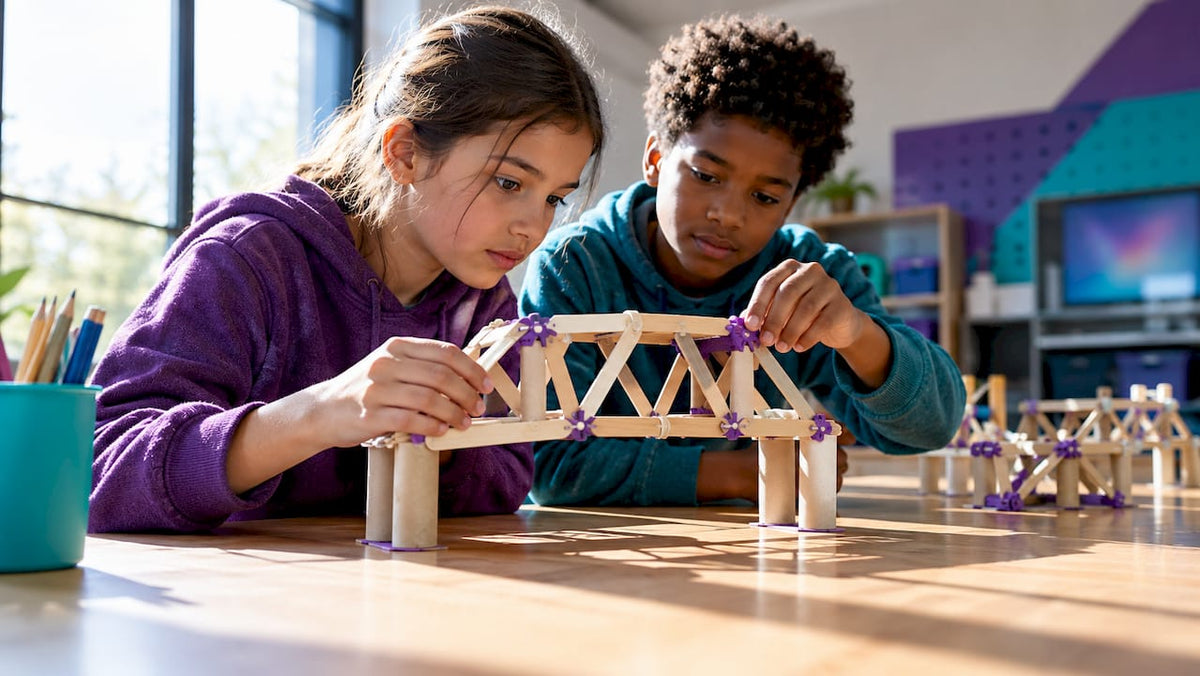
- Tray-based dry engineering build. Toothpicks and mini marshmallows or dry pasta become bridges or towers, teaching structural engineering with parts that never need washing. Materials: toothpicks, mini marshmallows or dry spaghetti, tray. Ages 6 to 12. Cleanup tip: dump extras straight into a bin from the tray.
- Solar sun art on a tray. Dark paper left in sunlight under stencils fades unevenly, showing how light energy changes materials, all contained on a single tray outdoors. Materials: dark construction paper, small objects for stencils, tray. Ages 5 to 10. Cleanup tip: bring the tray inside once the paper is exposed and there is nothing to rinse.
- Sealed volcano bottle. Instead of an open volcano pan, a capped bottle with baking soda and vinegar produces fizzing pressure visible through clear plastic. Materials: clear bottle, baking soda, vinegar, funnel. Ages 6 to 11. Cleanup tip: do this over a sink so any overflow goes straight down the drain.
- Sensory color bag. A zip-top bag with paint and a little dish soap lets kids mix colors by squeezing through sealed plastic, a favorite low-mess swap for open finger painting. Materials: zip-top bag, paint, dish soap, tape. Ages 5 to 9. Cleanup tip: tape the seal shut, and toss the whole bag when the paint dries out.
Physics and mechanics activities like the puff tube and condiment diver dominate this list on purpose. They skip open chemical mixing almost entirely, which keeps the risk of drips, stains, and spills close to zero.
2. How to set up, run, and tidy up these experiments
A little prep turns any of the experiments above into a genuinely mess-free session. The sequence matters as much as the materials.
- Build a station first. Lay out a tray, a zip-top bag, or a sealed bottle before any child touches a material, so spills have nowhere to go but the containment surface.
- Pre-measure everything. Portion vinegar, baking soda, or paint into small cups ahead of time so kids are not pouring from full containers.
- Assign roles. Give one child the job of Materials Manager, another Timekeeper, and a third Clean-Up Captain, so tidying becomes part of the activity instead of an afterthought.
- Demo the risky step yourself. For anything involving a sealed reaction, like the baking-soda balloon, show the setup once before handing over the materials.
- Keep trials short. Three to five minutes per experiment holds attention and limits the window where a spill can happen.
- Reset the tray between rounds. Wipe the single tray or underlay, not the whole table, and the station is ready for the next group.
Pro Tip: Keep one washable tray or a disposable underlay under every station, since a spill contained to one surface takes ten seconds to fix instead of ten minutes.
3. Shopping list, low-mess swaps, and safety must-dos
A small, consistent kit of supplies makes almost any experiment on this list easy to run without a special trip to the store.
- Clear sealed bottles for sensory and pressure demos
- Individually wrapped condiment packets for the diver activity
- A few plastic or metal trays to contain small parts and spills
- Zip-top bags for sensory mixing and dry ingredient storage
- Safety goggles for any step involving vinegar, baking soda, or foil circuits
- Disposable spoons and pre-measured cups to avoid pouring from bulk containers
Swap an open volcano pan for a sealed volcano bottle, and swap open slime mixing for a sensory bag: both cut cleanup time without cutting the learning.
Basic safety habits matter even for kitchen-cabinet ingredients. American Chemical Society guidance for elementary science recommends eye protection, labeled non-food containers, adult supervision during any reaction step, and having a cleanup plan ready before the activity starts, not after.
The American Chemical Society’s safety guidance for elementary classrooms applies its recommendations even to common household reagents like vinegar and baking soda, treating everyday materials with the same planning as a lab.
4. Scaling low-mess experiments for a classroom or group
Running these activities with fifteen kids instead of one takes a bit more structure, but the same containment principles hold.
- Set up rotating stations, each pre-bagged with one experiment’s materials, so groups move without waiting on shared supplies.
- Reserve open-flame or reaction-heavy steps, like the sealed volcano bottle, for a teacher demo rather than full hands-on access.
- Use a one-sentence lab note or a simple three-box observation rubric so kids record results fast instead of lingering at a messy station.
- Place stations near a sink or exit door to cut transition time between rotations.
- Give each station its own tray, so a spill at one stop never spreads to the next group’s setup.
5. Publisher perspective and proof: how Team Genius Squad supports low-mess STEAM
These kits run on a proprietary method that pairs each experiment with role-play props like lab coats and badges so kids step into the identity of a scientist, not just the task. That identity piece reduces friction, because a child playing a role tends to stay curious through a fumbled first try. They are inspired by the founder’s family journey with dyslexia and dysgraphia, built to help kids who learn differently feel capable, not behind. This approach provides pre-packaged materials, clear instructions, and safety guidance built into the box, which covers much of the low-mess planning.

6. Letting kids tinker within contained limits
A sealed bottle that will not pop or a puff tube that misses its mark still teaches something: troubleshooting. Contained failures are the safest kind of failure, and low-mess formats make it easy to try again in minutes instead of dreading the cleanup. Process matters more than a picture-perfect result.
— Tita
How Team Genius Squad kits make mess-free science easier
Team Genius Squad packages the low-mess principles above into ready-made Experiment Kits built for kids ages 5 to 13, so parents and teachers skip the measuring, bagging, and supply runs.

- Pre-measured materials arrive sorted, cutting prep time to minutes.
- Role-play elements like lab coats and badges turn each session into a scientist experience.
- Safety guidance is built into the instructions, not left for a parent to research separately.
- Families who want a live guided session can book a Meet Ava STEM experience for a hands-on, screen-free hour.
Browse the full Experiment Kits collection to find the setup that matches your child’s next low-mess project.
Sources
FAQ
What are some fun science experiments that are not messy?
Sealed sensory bottles, the condiment diver, and the marshmallow puff tube all teach real physics without any liquid or loose material escaping a container. Tray-based builds using toothpicks or dry pasta are equally clean since nothing needs washing afterward.
What are some messy science experiments for kids?
Open volcano pans, uncontained slime mixing, and elephant toothpaste reactions tend to spill or foam beyond their container, which is why ACS safety guidance recommends extra planning for these. Swapping to a sealed bottle version, like the sealed volcano bottle, keeps the same reaction contained.
What are some funny science experiments I can do?
The static balloon trick, where a rubbed balloon makes hair stand on end or lifts paper scraps, tends to get the biggest laughs and needs almost no setup. The marshmallow puff tube is another crowd favorite since kids enjoy the surprise of a mini marshmallow launching across the room.
What is the easiest science experiment to do?
The magnet exploration bottle is about as simple as it gets: seal small magnetic objects in a bottle, hand a child a magnetic wand, and let them test attraction through the plastic wall. It requires no prep beyond sealing the bottle once and can be reused indefinitely.

Leave a comment
This site is protected by hCaptcha and the hCaptcha Privacy Policy and Terms of Service apply.