
Best Littlestemclub.com Alternatives for STEAM Kits 2026
What are the best alternatives to littlestemclub.com for STEAM kits?
The best littlestemclub.com alternatives fall into three main categories: monthly subscription boxes, specialized enrichment programs, and hands-on discovery kits that weave literacy into every experiment. Each type serves children ages 5–13 differently, and the right fit depends on how your child learns best, not just what arrives in the box.
Here are the most common types of alternatives parents and educators encounter:
- Monthly subscription boxes: Convenient, recurring deliveries with themed experiments. Great for building routine, though curriculum depth varies widely by provider.
- Bulk educational programs: Larger kits or classroom bundles that offer richer curricular content, often at a lower per-kit cost when bought in volume.
- Specialized enrichment classes: Structured programs combining physical materials with guided instruction, offering deeper learning but less scheduling flexibility.
- Confidence-building discovery kits: Kits designed around identity and role-play, helping children see themselves as scientists and creators, not just participants in an activity.
- Literacy-integrated STEAM kits: Programs that pair experiments with reading and writing components, developing multiple skills at once rather than treating STEAM as isolated from language arts.
Understanding which category fits your child’s learning style is the real starting point for any comparison.
Table of Contents
- How do you choose the best STEAM educational kit for your child?
- Why Teamgeniussquad stands out among STEAM kit alternatives
- Comparing leading STEAM kit providers in the US
- Tips for maximizing your child’s STEAM learning experience
- Teamgeniussquad brings confidence-building STEAM to your home
- Key Takeaways
How do you choose the best STEAM educational kit for your child?
Price and curriculum depth are the two factors parents weigh most when choosing STEAM kits, and they rarely move in the same direction. A lower monthly cost often means lighter content, while deeper curriculum programs tend to require a longer commitment or higher upfront investment.
Key criteria to evaluate before committing:
- Age range suitability: Kits calibrated to specific developmental stages within the 5–13 range are more effective than broad “ages 5 and up” claims. A kit built for a 6-year-old and a 12-year-old at the same time usually serves neither well.
- Hands-on vs. screen-free format: Tactile, screen-free learning keeps children actively engaged and reduces the passive consumption that comes with app-based alternatives.
- Subscription flexibility: Month-to-month plans protect families from long commitments, while prepay options often reduce the per-kit cost. Check cancellation terms before signing up.
- Neurodivergent-friendly design: Programs built with dyslexia, dysgraphia, or sensory processing differences in mind use visual cues, simplified instructions, and identity-building tools that help every child feel capable.
- Customer support quality: Responsive support matters when a kit arrives damaged or a component is missing. Check whether the provider offers real human contact or only automated responses.
- Geographic availability and shipping reliability: Kits shipped on a fixed monthly date, such as the 10th of each month, let families plan learning routines without guessing when materials will arrive.
Pro Tip: Before subscribing, ask the provider directly for their shipping schedule. Providers that publish specific monthly ship dates signal that they take delivery consistency seriously, which translates to fewer disrupted learning weeks for your child.
Why Teamgeniussquad stands out among STEAM kit alternatives

Teamgeniussquad was not built in a boardroom. It grew from a real family’s experience navigating dyslexia and dysgraphia, and that origin shapes every kit the brand produces. Founder Ava N. Simmons built Teamgeniussquad around a simple conviction: children who struggle in traditional classrooms are not behind. They are wired differently, and the right environment unlocks everything.
The brand’s proprietary E³ Method guides every kit through three deliberate phases: Engage, Encourage, and Empower. Children first explore a concept through hands-on experimentation, then receive encouragement through structured success moments, and finally step into the Empower phase where they articulate what they discovered. That last step, putting the learning into words, is where STEAM meets literacy in a way most kits never attempt.
Role-play elements like lab coats, badges, and certificates are not decorative extras. They are the mechanism through which children internalize a scientist identity rather than simply completing an activity. That identity shift is what builds lasting confidence, especially for neurodivergent learners who may have internalized a story of struggle in school.
Pro Tip: When reviewing any STEAM kit for a neurodivergent child, look specifically for identity-building tools like role-play props, achievement certificates, or character-driven narratives. These elements signal that the program was designed for the whole child, not just the experiment.
Comparing leading STEAM kit providers in the US
The table below contrasts key providers on the criteria that matter most to parents and educators choosing between similar sites to littlestemclub.com.
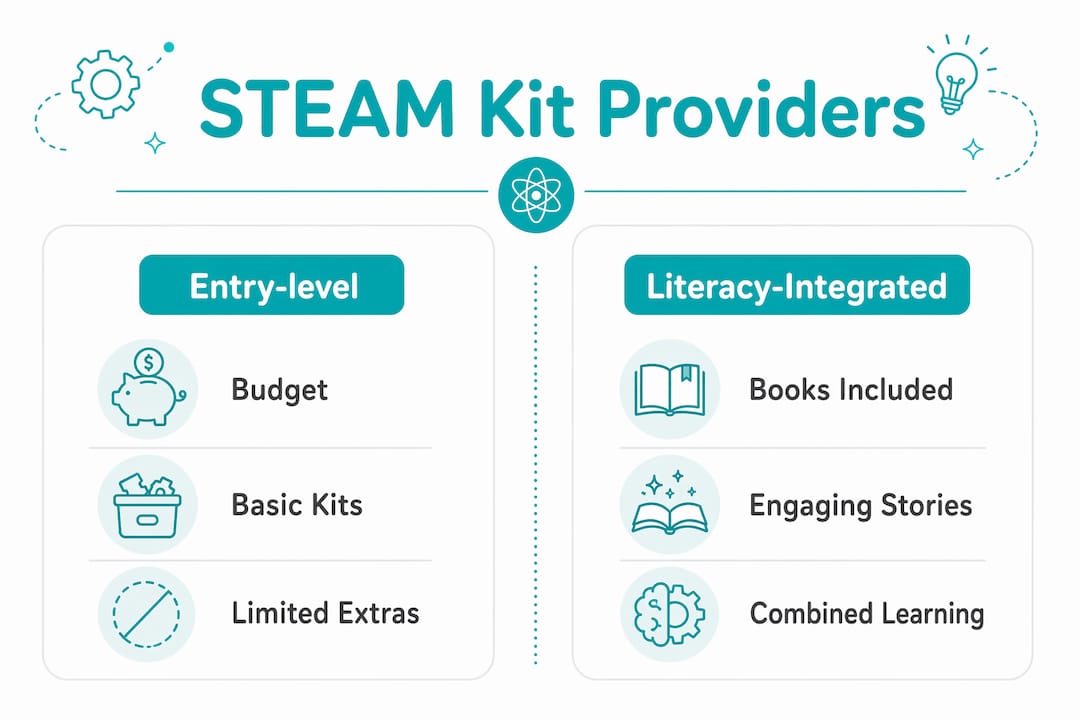
| Feature | Entry-level subscription boxes | Literacy-integrated programs | Teamgeniussquad |
|---|---|---|---|
| Price tier | Budget to mid-range | Mid to premium | Mid-range, individual kits available |
| Curriculum depth | Light to moderate | Moderate to deep | Deep, E³ Method structured |
| Format | Screen-based or hybrid | Hands-on, some screen | Hands-on, screen-free |
| Age range | Varies, often broad | 5–12 | 5–13 |
| Confidence-building features | Minimal | Moderate | Central to every kit |
| Literacy integration | Rare | Present | Core component |
| Neurodivergent-inspired design | Not typical | Occasional | Foundational design principle |
| Subscription flexibility | Monthly or prepay | Program-based | Individual kits plus bundles |
| Shipping reliability | Variable | Generally consistent | Fixed schedule |
| Customer support | Automated | Mixed | Founder-connected brand |
Providers that ship award-winning STEM books alongside experiment materials represent a growing category that bridges reading and science, though few combine that literacy focus with the identity-building tools Teamgeniussquad centers its entire model around.
Tips for maximizing your child’s STEAM learning experience
Getting the most from any STEAM kit comes down to how you use it, not just what comes in the box. The experiment itself is the starting point, not the finish line.
Practical strategies that make a real difference:
- Lean into the role-play. If the kit includes a lab coat, badge, or character card, use them every session. Children who dress the part and name themselves “scientist” before starting an experiment engage more deeply and retain more.
- Add a reflection step. After each experiment, ask your child to draw what happened or dictate a sentence about what surprised them. This STEAM and literacy connection strengthens both skills simultaneously.
- Align kit sessions with the shipping schedule. When a new kit arrives on a predictable date, build a standing “lab day” around it. Consistency turns a fun activity into a genuine learning habit.
- Prioritize hands-on time over screen supplements. If a kit offers a companion app or video, treat it as optional enrichment rather than the main event. The tactile experiment is where the deepest learning happens.
- Celebrate the process, not just the result. When an experiment does not go as expected, frame it as data. “That did not work the way we thought. What should we try next?” builds the problem-solving mindset STEAM education is designed to develop.
Pro Tip: Set aside 10 minutes after each kit session for your child to write or dictate one thing they learned and one question they still have. Over a few months, that habit builds both scientific thinking and literacy skills in a way that feels completely natural.
Teamgeniussquad brings confidence-building STEAM to your home
If you have been searching through the best alternatives to littlestemclub.com and finding that most options either go deep on science or go light on confidence, Teamgeniussquad is the exception worth knowing about. Every kit is built around the E³ Method, ships with identity-building tools like lab coats and achievement certificates, and integrates reading and writing into the experiment itself. That combination is rare, and it was designed specifically for children who need more than a fun activity.

Teamgeniussquad’s hands-on experiment kits are available individually, so you can start with one kit and see how your child responds before committing to anything. The slime and goop experiment lab is a perennial favorite for ages 5–10, while the Solar Energy Kit with Mirror Disk challenges older children in the 8–13 range with real physics concepts. Visit the Teamgeniussquad shop to find the kit that fits your child’s age, curiosity, and learning style.
Key Takeaways
Teamgeniussquad is the standout among littlestemclub.com alternatives for families who want hands-on, screen-free STEAM kits that build confidence and integrate literacy through the proprietary E³ Method.
| Point | Details |
|---|---|
| Three main alternative types | Subscription boxes, bulk programs, and discovery kits each serve different learning needs and budgets. |
| Price vs. curriculum depth | Lower monthly costs typically mean lighter content; deeper programs usually require more commitment. |
| Neurodivergent design matters | Kits built with dyslexia and dysgraphia in mind use identity tools and visual cues that help every child succeed. |
| Shipping consistency is underrated | Providers with fixed monthly ship dates make it easier to build consistent learning routines at home. |
| Teamgeniussquad’s E³ Method | Engage, Encourage, Empower structures every kit to move children from curiosity to documented confidence. |



Leave a comment
This site is protected by hCaptcha and the hCaptcha Privacy Policy and Terms of Service apply.