Why STEAM for Kids: Benefits Every Parent Should Know
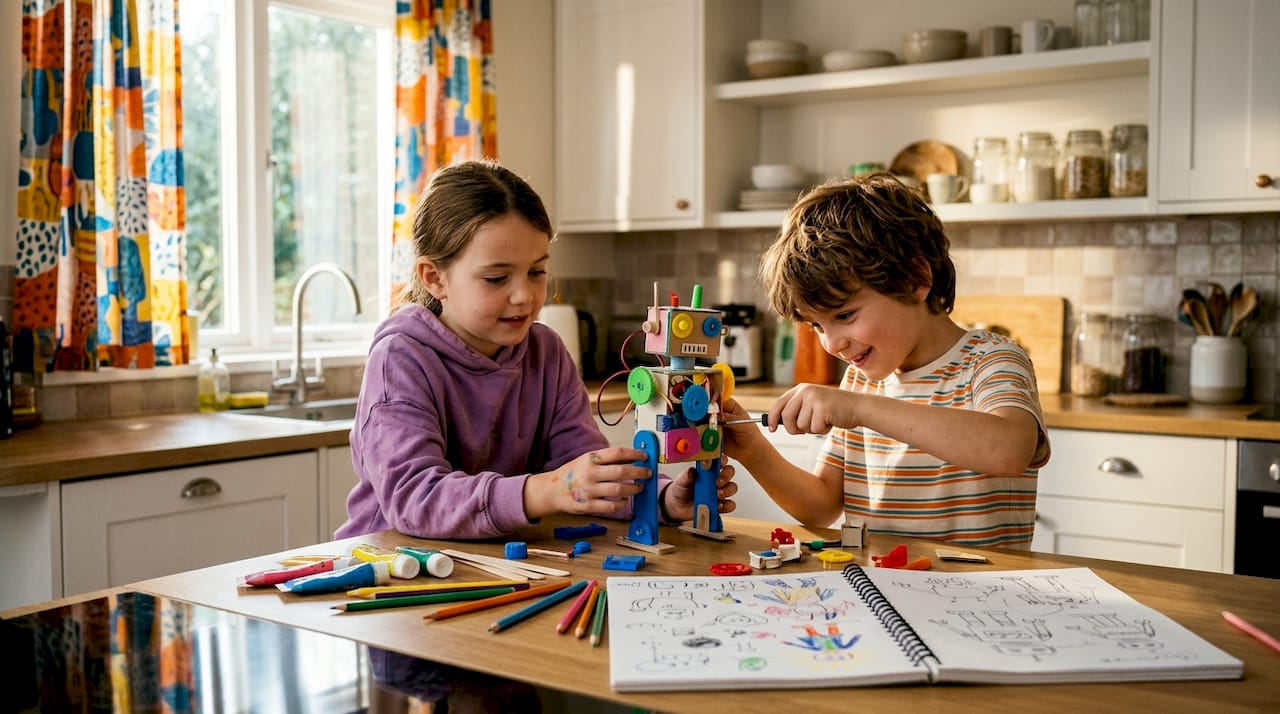
STEAM education is an integrated learning approach that combines science, technology, engineering, arts, and mathematics to build critical thinking, creativity, and real problem-solving skills in children aged 5–13. Unlike traditional subject-by-subject instruction, STEAM treats learning as one connected experience. Children do not memorize facts in isolation. They ask questions, test ideas, and build things that reflect how the world actually works. The arts component is what separates STEAM from STEM, and that distinction matters more than most parents and educators realize.
Why STEAM for kids is more than just science class
STEAM is defined as an interdisciplinary education philosophy where science, technology, engineering, arts, and mathematics are taught together rather than separately. The “A” for arts is not decorative. It is the element that teaches children to communicate ideas, think from multiple perspectives, and imagine solutions before they build them. STEAM adds arts to STEM, fostering both hard and soft skills simultaneously and better preparing children for modern innovation roles. That means a child building a model bridge is also learning to sketch a design, explain their reasoning, and revise their plan when it fails.
Research confirms that early exposure matters deeply. Children form over 1 million new neural connections per second in their first 1,000 days of life, and STEAM-based sensory play builds the executive functions those connections support. Executive function includes working memory, focus, and the ability to shift between tasks. These are the skills children need to succeed in school and beyond, and STEAM play builds them earlier and more durably than rote instruction.
How the arts component transforms STEM into STEAM
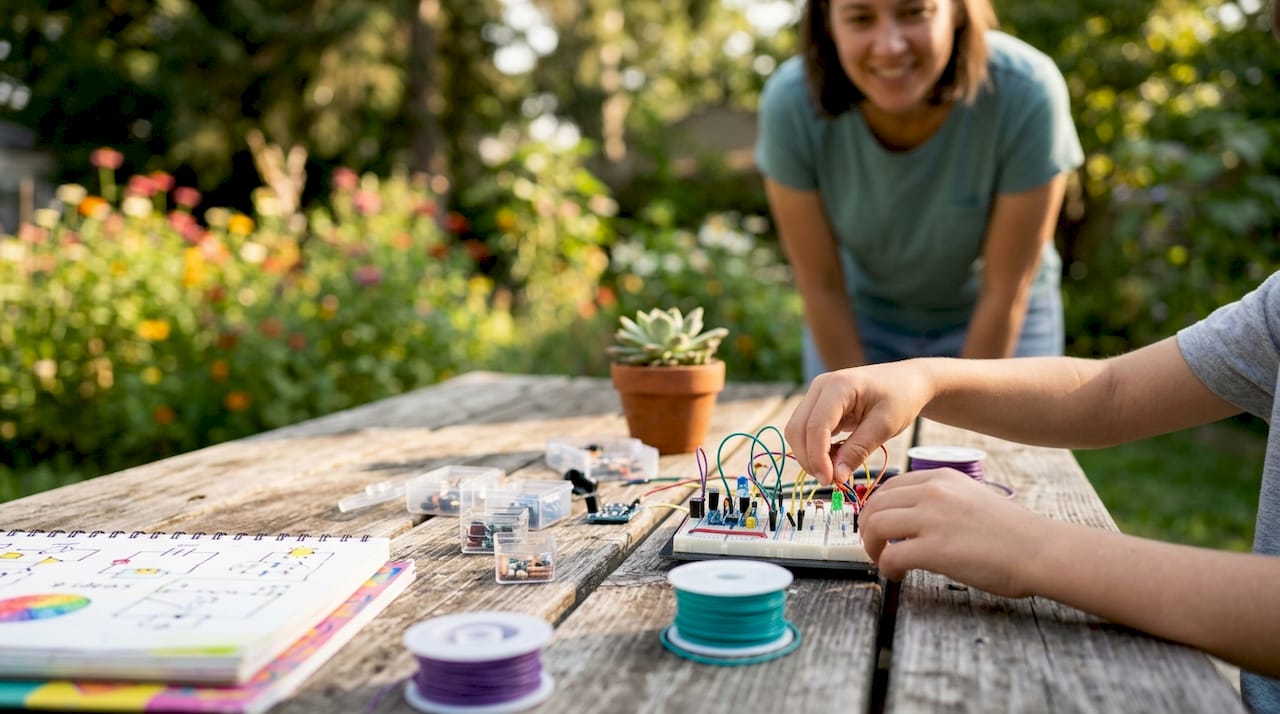
The difference between STEM and STEAM is not just one letter. It is the difference between training a technician and raising an innovator. STEAM fosters empathy and communication alongside technical skills, enabling children to imagine possibilities others cannot see. A child who only learns to code can write a program. A child who learns to code and also learns to tell a story with that program can change how people think.
| Skill area | STEM focus | STEAM focus |
|---|---|---|
| Problem-solving | Technical solutions | Creative and technical solutions |
| Communication | Data reporting | Storytelling and presentation |
| Emotional development | Limited emphasis | Empathy and perspective-taking |
| Innovation | Applying known methods | Imagining new possibilities |
| Collaboration | Task division | Shared creative vision |
Educators who use STEAM report that children engage more deeply when artistic expression is part of the process. A student designing a solar-powered model city is not just applying physics. She is making aesthetic choices, writing a pitch for her design, and defending her decisions to peers. That combination of skills is what contemporary employers value most in graduates today.
Pro Tip: When introducing a STEAM project, ask children to draw or describe their idea before they build it. This simple step activates creative thinking and gives them a plan to revise, which is exactly how real engineers and designers work.
Why child-led, hands-on STEAM activities work best for ages 5–13
Child-led STEAM learning outperforms rigid instruction for children in the 5–13 age range. Hands-on STEAM approaches improve school readiness and problem-solving more than teacher-directed lessons because children learn by doing, not by watching. When a child decides to test whether a paper boat floats better with a flat or pointed hull, she is running a real experiment. She forms a hypothesis, tests it, and adjusts. That process builds resilience alongside knowledge.
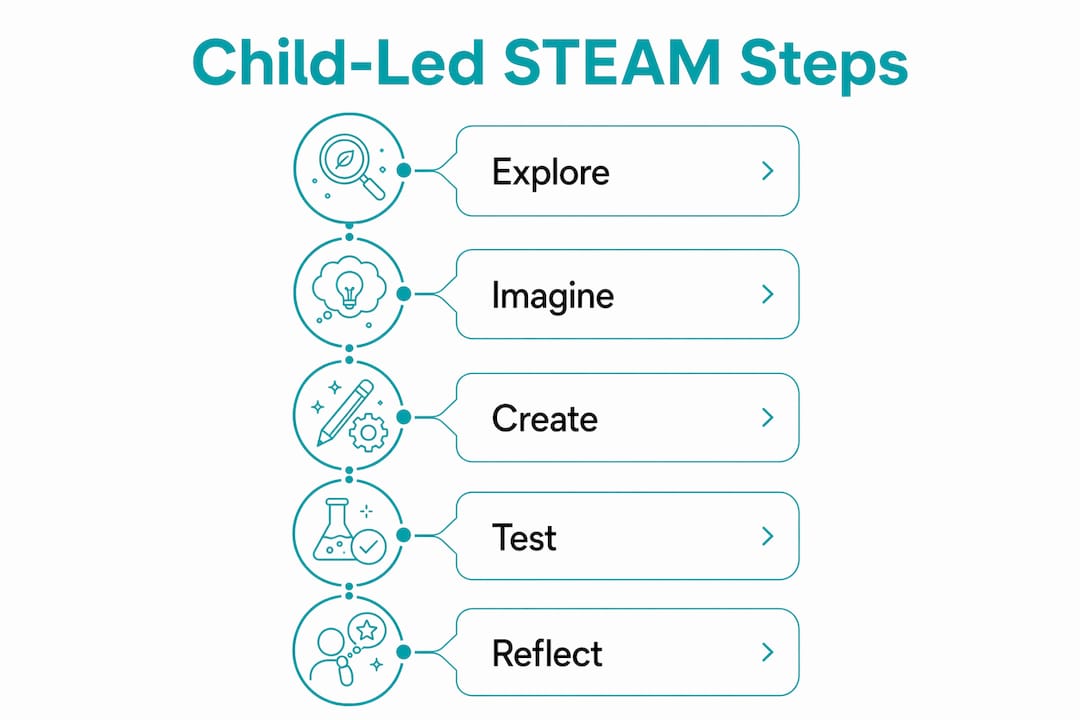
STEAM play from birth to age two lays the foundation for executive function, including working memory, inhibitory control, and cognitive flexibility. By the time children reach ages 5–13, those foundations are ready to support more complex challenges. Hands-on STEAM activities give children the right kind of challenge: open-ended, exploratory, and low-stakes enough to try again when something does not work.
Role-playing as scientists or creators adds another layer of power to STEAM learning. Role-playing as scientists helps neurodivergent children gain a sense of agency that traditional classrooms often lack. When a child puts on a lab coat, picks up a badge, and calls herself a scientist, she is not pretending. She is building an identity. That identity shift is what makes abstract subjects feel personal and meaningful. Teamgeniussquad builds this directly into every kit through its trademarked E³ Method: Engage, Encourage, Empower.
Here are the core benefits that child-led STEAM activities deliver:
- Persistence: Children learn to try again after failure because the activity belongs to them, not to a grade.
- Curiosity: Open-ended projects reward questions more than correct answers.
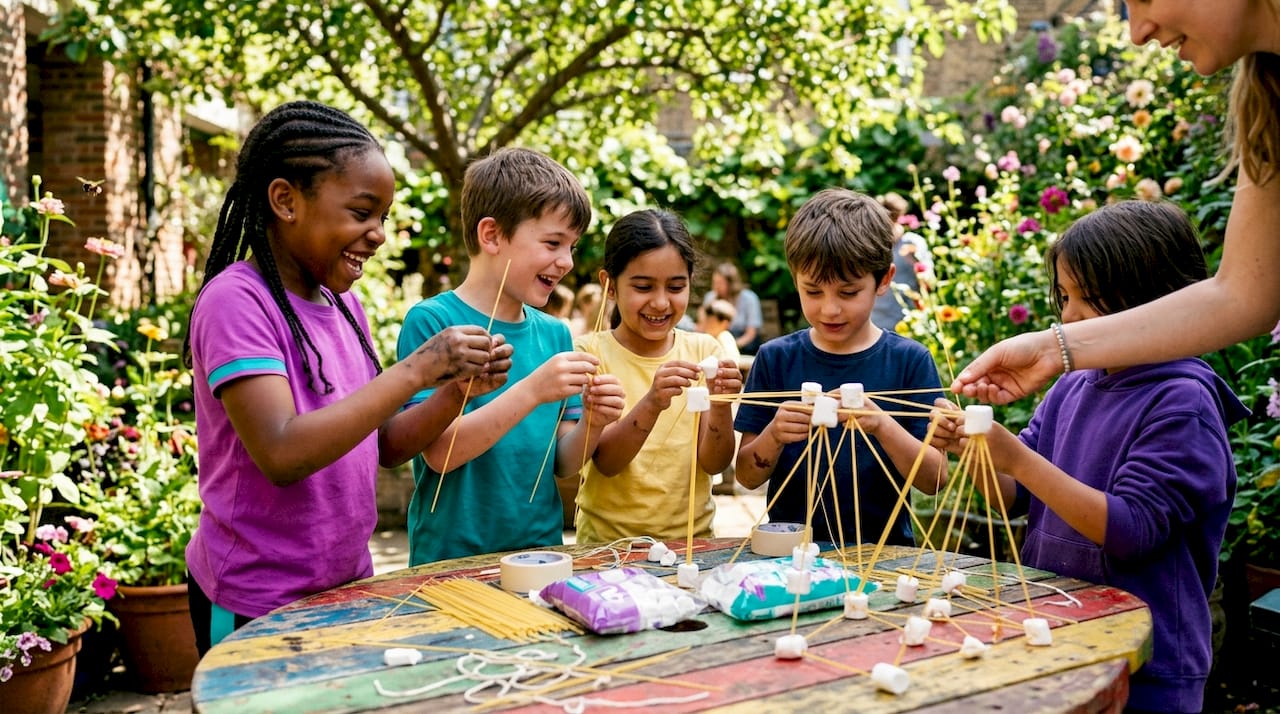
- Collaboration: Group STEAM projects teach children to listen, negotiate, and build on each other’s ideas.
- Confidence: Completing a real experiment gives children proof that they can figure things out.
- Flexible thinking: Changing a design mid-project teaches cognitive flexibility in a natural, low-pressure context.
Pro Tip: Narrate STEAM concepts during everyday moments. When water drains from a bathtub, say “that’s gravity pulling the water down.” When a ball rolls off a table, ask “what do you think will happen next?” This builds foundational understanding without a single worksheet.
What are the best hands-on STEAM activities for children?
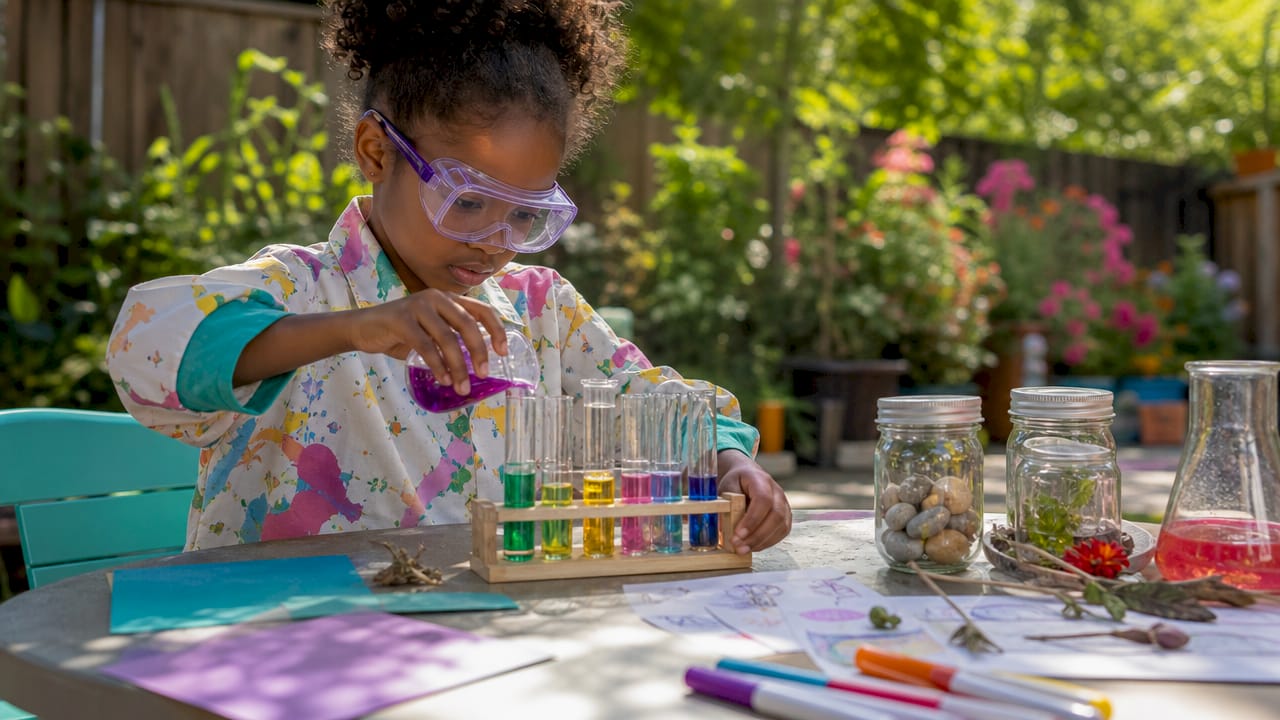
The best STEAM activities for children aged 5–13 are ones that connect multiple subjects through a single, tangible challenge. The goal is not to complete a craft. The goal is to ask a question and find out the answer by building something real. Parents and educators can use these activities to spark that process at home or in the classroom.
-
Boat-building challenge: Give children aluminum foil, tape, and craft sticks. Ask them to build a boat that holds the most pennies without sinking. This activity covers engineering design, physics (buoyancy), and math (counting and comparing loads). Children sketch their design first, build it, test it, and redesign.
-
Baking soda volcano: A classic for good reason. Children mix baking soda and vinegar to create a chemical reaction. The science is real chemistry. The art comes in when children sculpt the volcano shape and decide how to present their experiment to an audience.
-
Solar energy mirror project: Children use mirror disks to reflect sunlight and observe how concentrated light generates heat. This connects physics, environmental science, and engineering. Teamgeniussquad’s solar energy kit makes this experiment accessible for children as young as five.
-
DIY lamp experiment: Children build a simple circuit to light a small bulb. This covers electricity, engineering, and problem-solving. The moment the light turns on is one of the most powerful confidence-building experiences in early STEAM learning.
-
Slime and goop lab: Mixing polymers to create slime teaches chemistry through texture and observation. Children record what changes when they adjust ingredients, practicing scientific method in a completely tactile way.
| Activity | Subjects covered | Key skill developed |
|---|---|---|
| Boat-building challenge | Engineering, physics, math | Design thinking |
| Baking soda volcano | Chemistry, art, communication | Scientific method |
| Solar energy mirror | Physics, environmental science | Inquiry and observation |
| DIY lamp experiment | Electricity, engineering | Problem-solving |
| Slime and goop lab | Chemistry, math | Hypothesis testing |
How does STEAM education prepare kids for the future?
STEAM cultivates innovators, not just technicians. The skills children build through STEAM learning are the exact skills that matter most in a world where problems are complex and solutions require both creativity and knowledge. STEAM develops hard technical skills and soft skills like communication and creativity simultaneously, and those combinations are what employers consistently identify as most valuable.
The long-term benefits of early STEAM engagement go well beyond career preparation. Connection-rich STEAM play supports language, self-regulation, and numeracy, all of which are foundational for school readiness and overall wellbeing. A child who learns to regulate frustration during a failed experiment is practicing the same emotional skill she will need to manage a difficult project at work twenty years later.
The habits STEAM builds are lifelong:
- Curiosity as a default: STEAM children learn to ask “why” and “what if” before accepting the first answer they find.
- Persistence through failure: Iterating on a design teaches children that failure is data, not defeat.
- Flexible thinking: Switching between artistic and technical modes trains the brain to approach problems from multiple angles.
- Emotional intelligence: Collaborative STEAM projects require listening, empathy, and clear communication.
- Self-directed learning: Children who lead their own STEAM projects develop the habit of seeking knowledge independently.
Parents and educators looking to build these habits at home can start with screen-free STEAM strategies that require no special equipment. The most powerful STEAM moments often happen with materials already in the kitchen or backyard.
Key Takeaways
STEAM education builds creativity, critical thinking, and resilience in children aged 5–13 by combining science, technology, engineering, arts, and mathematics into one connected, child-led learning experience.
| Point | Details |
|---|---|
| Arts make STEAM more powerful | Adding arts to STEM builds empathy, communication, and creative problem-solving alongside technical skills. |
| Early brain development matters | Children form over 1 million neural connections per second early in life, and STEAM play builds the executive functions those connections support. |
| Child-led learning outperforms instruction | Hands-on, exploratory STEAM activities build resilience and problem-solving more effectively than rigid, teacher-directed lessons. |
| Role-play builds identity | Dressing as scientists and creators helps children, especially neurodivergent learners, develop confidence and a sense of agency. |
| STEAM prepares kids for real life | The soft skills STEAM builds, including curiosity, persistence, and emotional intelligence, are the skills employers value most. |
STEAM is about wonder first, not worksheets
I have spent years watching children light up the moment they realize an experiment belongs to them. The shift is visible. A child who was disengaged in a traditional classroom will lean forward, ask questions, and refuse to stop when a STEAM project captures her imagination. That is not magic. That is what happens when learning feels like discovery instead of obligation.
The most common mistake I see parents and educators make is turning STEAM into a structured curriculum too quickly. STEAM’s main goal is to teach children how to wonder, ask questions, and test possibilities. It is not about memorizing the periodic table at age seven. It is about building the habit of curiosity before the habit of compliance takes over.
Following a child’s natural interests is the single most effective STEAM strategy available. If a child is obsessed with dinosaurs, that is a geology lesson, a biology lesson, an art project, and a storytelling opportunity all at once. The subject does not matter. The process does. When children feel ownership over their learning, they persist longer, think more creatively, and remember more of what they discover.
The children who thrive in STEAM are not always the ones who excel in traditional school. Often, they are the ones who think differently, ask unexpected questions, and refuse to accept the first answer. Those children deserve a learning environment that celebrates that. Teamgeniussquad was built for exactly that child, and I believe every parent and educator can create that environment with the right tools and the right mindset.
— Tita
Teamgeniussquad STEAM kits: hands-on learning for every child
Teamgeniussquad designs screen-free STEAM discovery kits for children aged 5–13 that turn curiosity into confidence. Each kit is built around the E³ Method: Engage, Encourage, Empower. Children do not just follow instructions. They conduct real experiments, step into the role of scientists, and walk away believing they can figure things out.
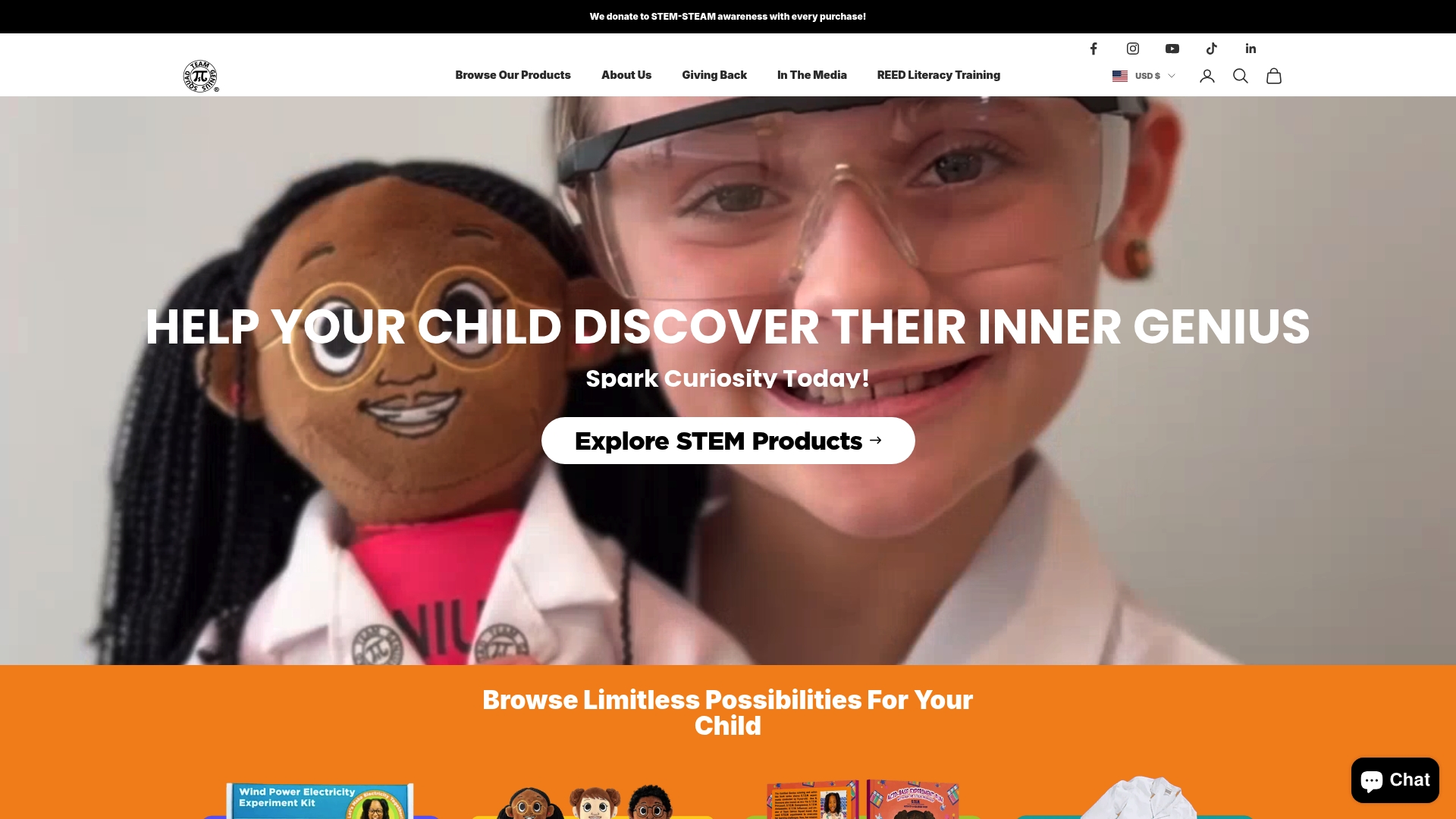
The STEM-STEAM Electricity Lab Bundle is one of the most popular options for parents and educators who want to bring real science into the home or classroom without a screen in sight. For children who love building and creating, the Genius STEAM Starter Bundle includes a lab coat, experiment kit, and the identity-building tools that make STEAM feel real. Every kit is designed to help children, especially those who learn differently, experience the thrill of discovery on their own terms.
FAQ
What does STEAM stand for in education?
STEAM stands for Science, Technology, Engineering, Arts, and Mathematics. The arts component distinguishes STEAM from STEM by adding creative thinking, communication, and empathy to technical skill development.
Why is STEAM important for young children?
STEAM builds executive functions like working memory and cognitive flexibility during the years when the brain is most receptive to new connections. Early STEAM play also supports language development, self-regulation, and numeracy skills that prepare children for school.
How is STEAM different from STEM?
STEAM includes the arts as a core subject alongside science, technology, engineering, and math. This addition teaches children to communicate ideas, think from multiple perspectives, and imagine solutions creatively, skills that STEM alone does not prioritize.
What are easy STEAM activities for kids at home?
Boat-building with foil and tape, baking soda volcanoes, and simple circuit experiments are all effective STEAM activities that require minimal materials. The key is asking open-ended questions during the activity to keep children thinking and experimenting.
Can STEAM education help neurodivergent children?
STEAM role-playing and hands-on discovery give neurodivergent children a sense of agency that traditional classrooms often cannot provide. When children step into the identity of a scientist or creator, abstract subjects become tangible, personal, and meaningful.

Leave a comment
This site is protected by hCaptcha and the hCaptcha Privacy Policy and Terms of Service apply.