LEGO STEM Challenges By Age for Parents and Teachers, E³ Method
LEGO STEM challenges are short, constraint-driven building tasks that teach engineering thinking through rapid prototyping instead of worksheets. This guide hands you ready-to-run activities, printable challenge cards, and facilitation tips for kids ages 5 to 13, using bricks you almost certainly already own.
TL;DR:
- Kids should focus on incremental challenge variations, such as increasing span or weight, to improve engineering skills through repeated testing and reflection.
- Challenges are designed to suit different ages and session lengths, from quick 5-minute activities to longer multi-session projects like city planning.
- Utilize printable challenge cards and randomizer tools to create fair, engaging, and unpredictable building constraints for groups of varying experience.
- Use a standard mixed collection of LEGO bricks and basic accessories, while supervising small pieces and load tests to ensure safety.
- Encourage reflection and iteration by asking targeted questions before and after builds, helping kids develop critical thinking and design awareness.
Table of Contents
- Why LEGO Works for Hands-On STEM Learning
- 12 LEGO Engineering Challenges Kids Actually Finish
- Where to Find Printable Challenge Cards and Lesson Plans
- Scaffolding Challenges by Age and Session Length
- Materials, Setup, and Safety for LEGO Challenges
- How to Talk Kids Through a Build (Without Giving the Answer)
- How Teamgeniussquad’s E³ Method Extends These Challenges
- A Founder’s Note on Building Confidence, Brick by Brick
- Want the Structure Built In? Try a Teamgeniussquad Kit
- Sources
Why LEGO Works for Hands-On STEM Learning
LEGO succeeds as a teaching tool because failure is cheap. A tower collapses, a bridge sags, a car stalls halfway down the ramp, and the fix takes thirty seconds, not a trip to the craft store. That fast feedback loop is exactly what the engineering design process is built on: ask, plan, build, test, improve. Kids repeat that cycle five or six times in a single session without realizing they’re doing science.
The bricks also make abstract concepts touchable:
- Load-bearing structures and center of gravity, felt through a wobbling tower
- Forces and simple machines, seen in gears, levers, and wheels
- Sequences and algorithms, practiced through step-following builds
LEGO Education’s lesson library organizes hundreds of these activities by grade band, which tells you something important: classrooms have already tested this alignment with STEM standards, so you’re not guessing whether it “counts” as real learning.
12 LEGO Engineering Challenges Kids Actually Finish
Each challenge below lists the goal, what you need, how long it runs, and a way to adjust difficulty. Scaffold levels: S (simple, ages 5–7), M (moderate, ages 8–10), C (complex, ages 11–13).
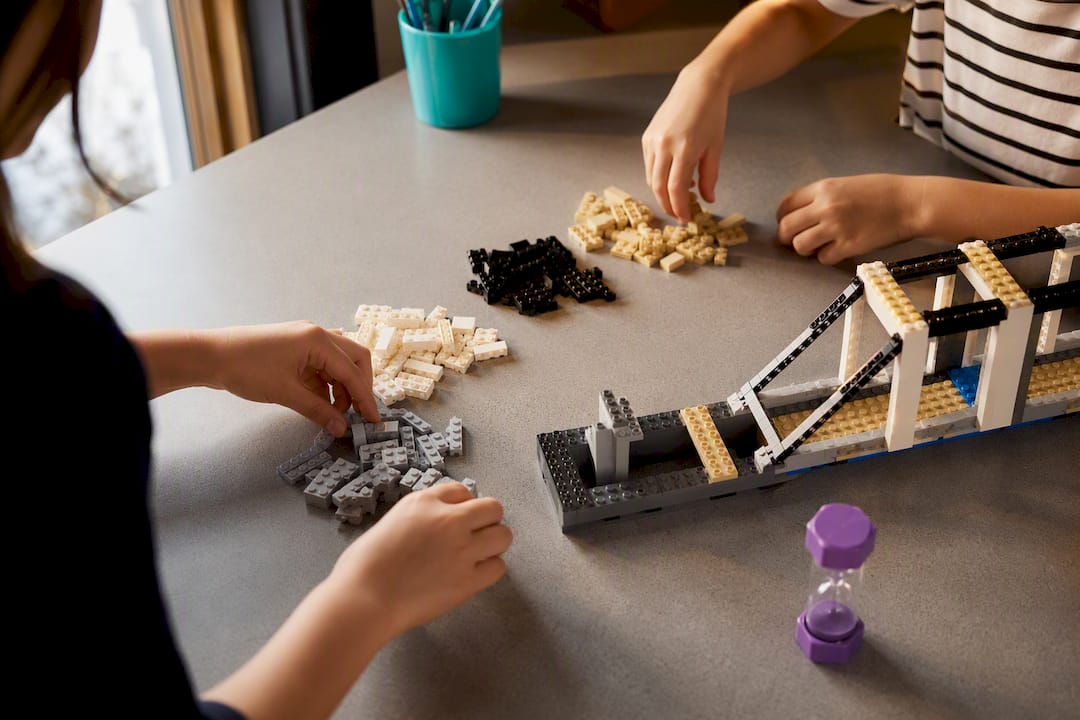
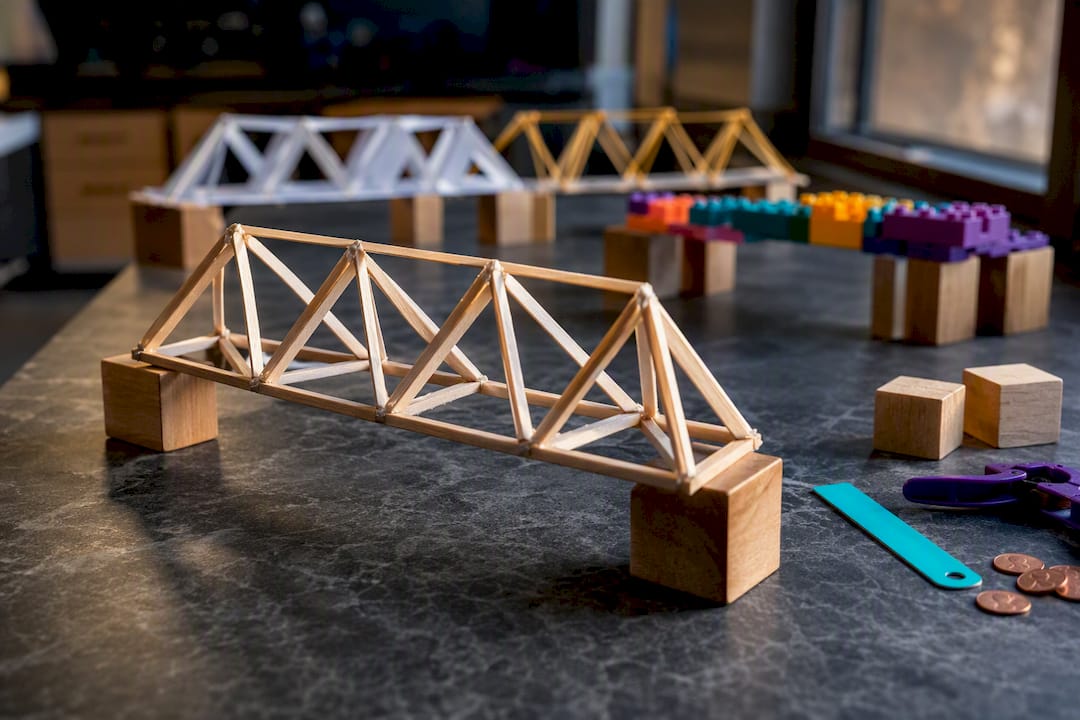
- Bridge Span Challenge (S–C). Goal: span a gap and hold weight. Materials: bricks, a ruler, small weights or toy cars. Time: a typical session length. Test at several increasing spans as recommended by bridge-building lesson plans, adding weight incrementally. Variation: track a mass-to-load ratio for older builders.
- Tower Stability Test (S–M). Goal: build a tall freestanding tower that survives a gentle shake. Materials: bricks, a flat baseplate, a timer. Time: a short building session. Variation: cap the piece count to encourage smart engineering.
- Zip Line Delivery (M). Goal: send a LEGO minifigure or small object down a string zip line. Materials: string, a hook, bricks for anchors. Time: a short to medium length session.
- Balloon or Rubber-Band Car (M–C). Goal: build a car powered by stored energy that travels the farthest. Materials: wheels/axles, balloon or rubber band. Time: a typical session. Variation: race for distance one round, speed the next.
- Marble Maze (S–M). Goal: guide a marble from start to finish using walls and ramps. Materials: baseplate, bricks, a marble. Time: a short to medium session.
- Water-Dam Flow Challenge (M–C). Goal: build a dam that controls water flow through a channel. Materials: a tray, water, bricks. Time: a typical hands-on session inspired by educator activity guides.
- Catapult Launch (M–C). Goal: launch a small object the farthest or most accurately. Materials: bricks, a lever arm, a small projectile. Time: a usual session length.
- Binary Pattern Build (M–C). Goal: represent a number or letter using a two-color brick code. Materials: two brick colors, a baseplate. Time: a short to medium session.
- Algorithm Follow-the-Steps (S–M). Goal: one child gives verbal build instructions, another builds blind. Materials: identical brick sets for two builders. Time: a brief activity.
- Parachute Drop (S–M). Goal: slow a falling minifigure using a parachute. Materials: a plastic bag or fabric scrap, string, a minifigure. Time: a short session.
- Wind-Powered Car (M–C). Goal: build a car that moves using a fan or handheld blowing. Materials: wheels/axles, a sail piece. Time: a typical build session.
- Mini City Planning ©. Goal: design a small town with traffic flow and green space. Materials: baseplates, assorted bricks. Time: may take several sessions.
Pro Tip: Run the same challenge twice in one session with a tighter constraint the second time (fewer pieces, shorter time). Kids improve fast once they know what “worked” the first round.
Where to Find Printable Challenge Cards and Lesson Plans
You don’t need to invent constraints from scratch every week. The STEMtropolis LEGO Challenge Generator randomizes limits like piece count, single-color builds, or one-handed construction, then lets you save the result as a worksheet. That randomness matters more than it sounds: mixed-experience groups compete more fairly when nobody knows the constraint in advance.
For structured, grade-aligned plans, LEGO Education’s lesson hub and the activity roundups at Little Bins for Little Hands cover most of the classics above with photos and variations. Print a batch of challenge cards, laminate them, and rotate them through building stations so kids self-select their next task instead of waiting on you.
Scaffolding Challenges by Age and Session Length
- Ages 5–7: Keep it to one instruction at a time, 5 to 15 minutes, using challenges like Algorithm Follow-the-Steps or Parachute Drop. Success looks like “it worked once,” not perfection.
- Ages 8–10: Stretch to 15 to 30 minutes with a testing element, like the Marble Maze or Zip Line, where kids compare two attempts.
- Ages 11–13: Push to 30 to 45 minutes or multi-session builds, like Mini City Planning or the Bridge Span Challenge, with a data point to track (weight held, distance traveled).
For quick checks, use an observation checklist (did they test before finalizing? did they explain their design choice?) and a one-line reflection prompt: “What would you change if you built this again?”
Materials, Setup, and Safety for LEGO Challenges
You don’t need a themed set. A mixed bucket of standard bricks, plates, wheels, and axles covers most challenges here. Useful low-cost add-ons: rubber bands, string, small weights (coins or washers), and a stopwatch.
- Sort loose bricks into trays by size or color before kids arrive
- Print challenge cards or mats so instructions don’t need repeating
- Watch small pieces around children under 6, and supervise weighted load tests so a stack doesn’t topple onto fingers
Tools like Rebrickable help if your bin is limited, since it matches builds to whatever pieces you actually own.
How to Talk Kids Through a Build (Without Giving the Answer)
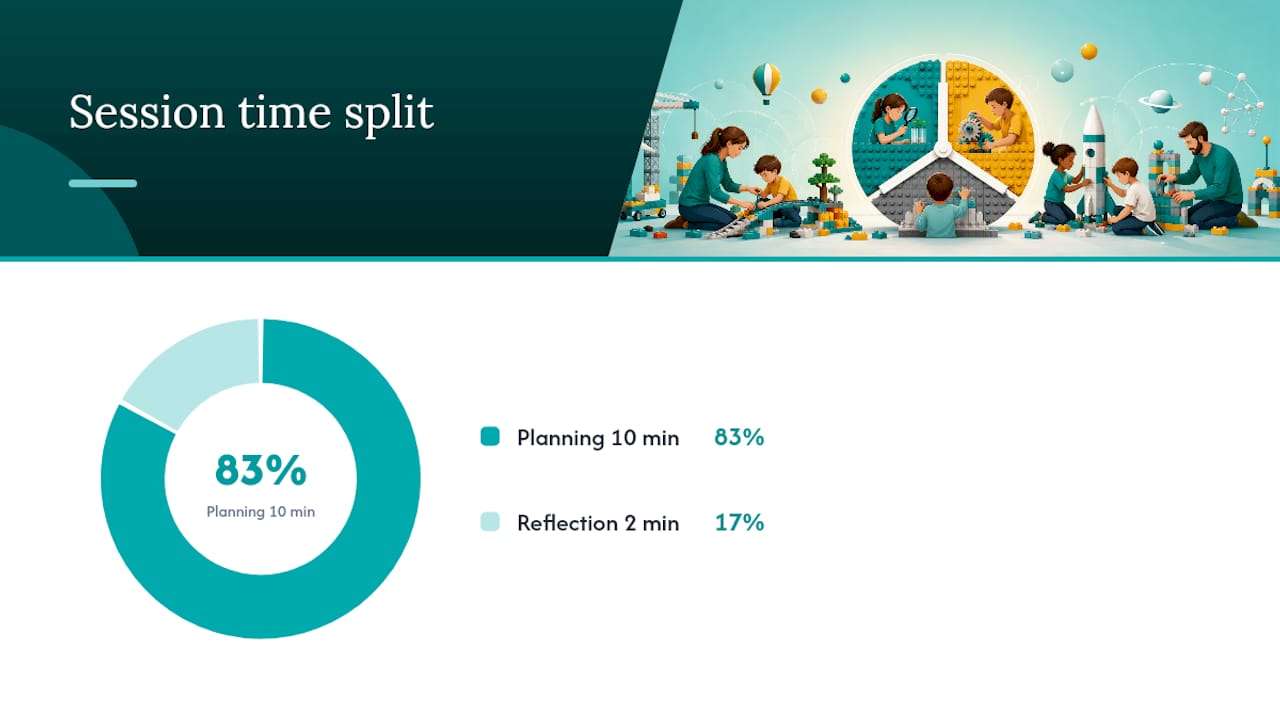
Say this at the start: “You’ve got ten minutes to plan, then we test.” That single line does more than any worksheet, because it tells kids the goal is testing, not perfection.
- Ask “What do you think will happen?” before the first test, not after
- Ask “What’s the weakest part?” after a failure instead of “why didn’t that work?”
- Leave two minutes at the end for a one-sentence written or spoken reflection
For kids who need more structure, especially those with dyslexia or dysgraphia, offer a visual step card instead of a verbal instruction list, and let them dictate their reflection aloud rather than writing it. Pairing the S.T.E.M. Genius Puzzle with a build session gives kids a literacy touchpoint without adding pressure.
Pro Tip: Give the reflection question before the build starts, not after. Kids build with more intention when they know they’ll have to explain a choice later.
How Teamgeniussquad’s E³ Method Extends These Challenges
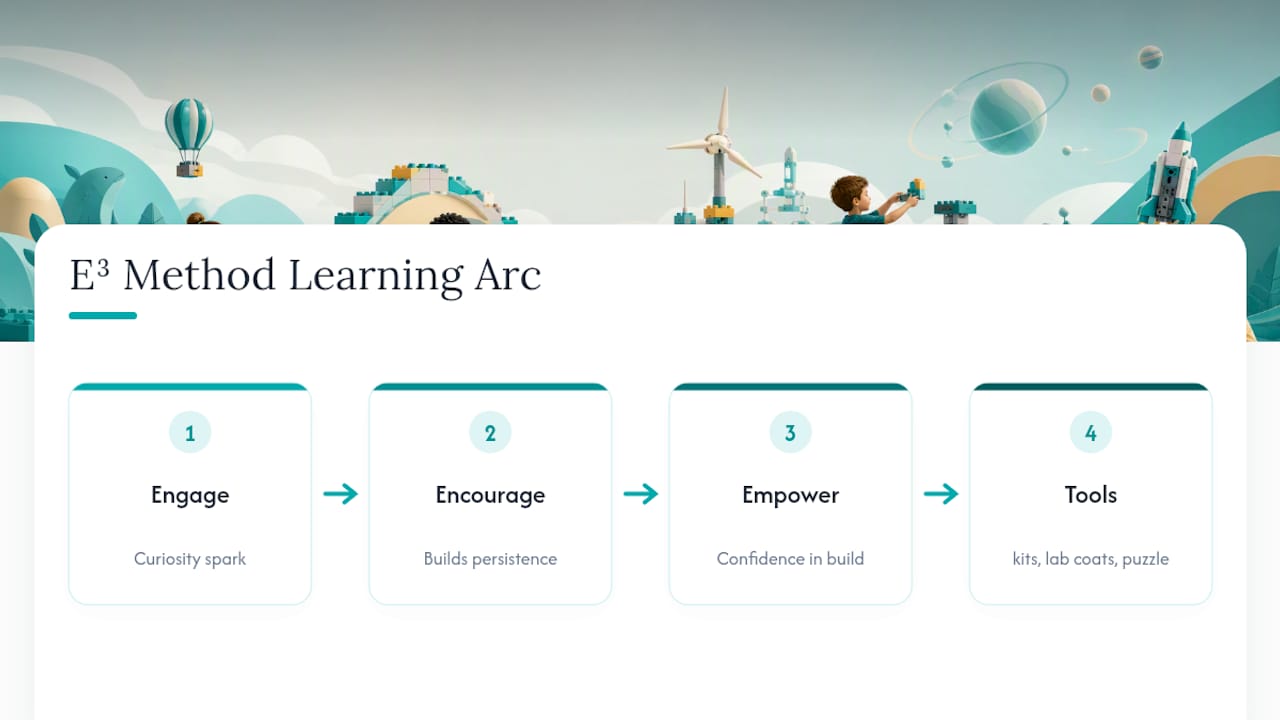
Teamgeniussquad built its kits around the E³ Method: Engage, Encourage, Empower. That’s the same arc a good LEGO challenge follows, from curiosity to persistence to confidence in the finished build. Our kits, role-play lab coats, and the S.T.E.M. Genius Puzzle exist to hand parents and teachers that same structure without the extra prep, especially for kids who need a clearer on-ramp into hands-on learning.
A Founder’s Note on Building Confidence, Brick by Brick
Team Genius Squad grew out of a real family’s experience with dyslexia and dysgraphia, and that shaped a simple belief: kids who struggle with traditional instruction often thrive with their hands. A LEGO challenge that lets a child test, fail, and rebuild without a grade attached does something a worksheet rarely can. Try one this week, watch what your child changes on the second attempt, and let that tell you where to go next.
— Tita
Want the Structure Built In? Try a Teamgeniussquad Kit
Regular LEGO bricks handle every challenge above just fine. Where Teamgeniussquad adds value is structure: our kits come with literacy prompts, role-play elements, and a built-in reflection step so you’re not designing the scaffolding yourself every single week.

If your kids gravitated toward the Water-Dam or Wind-Powered Car challenges, the Science Solar Energy Kit with Mirror Disk extends that same energy-and-forces thinking into a guided experiment with a lab-coat role-play layer built in. It’s a genuine time-saver for a parent or teacher who wants the confidence-building payoff of a LEGO session without writing the lesson plan from scratch. Browse the kit shop to find the next hands-on project for your young builder.
Sources
- STEM & STEAM Lesson Plans & Activities
- LEGO STEM Activities for Kids (Easy Engineering & Science Challenges)
- Rebrickable - Build with LEGO
- The LEGO Bridge Challenge: A Hands-on Lesson in Span and Strength

Leave a comment
This site is protected by hCaptcha and the hCaptcha Privacy Policy and Terms of Service apply.