Benefits of Tactile Learning for Parents and Educators
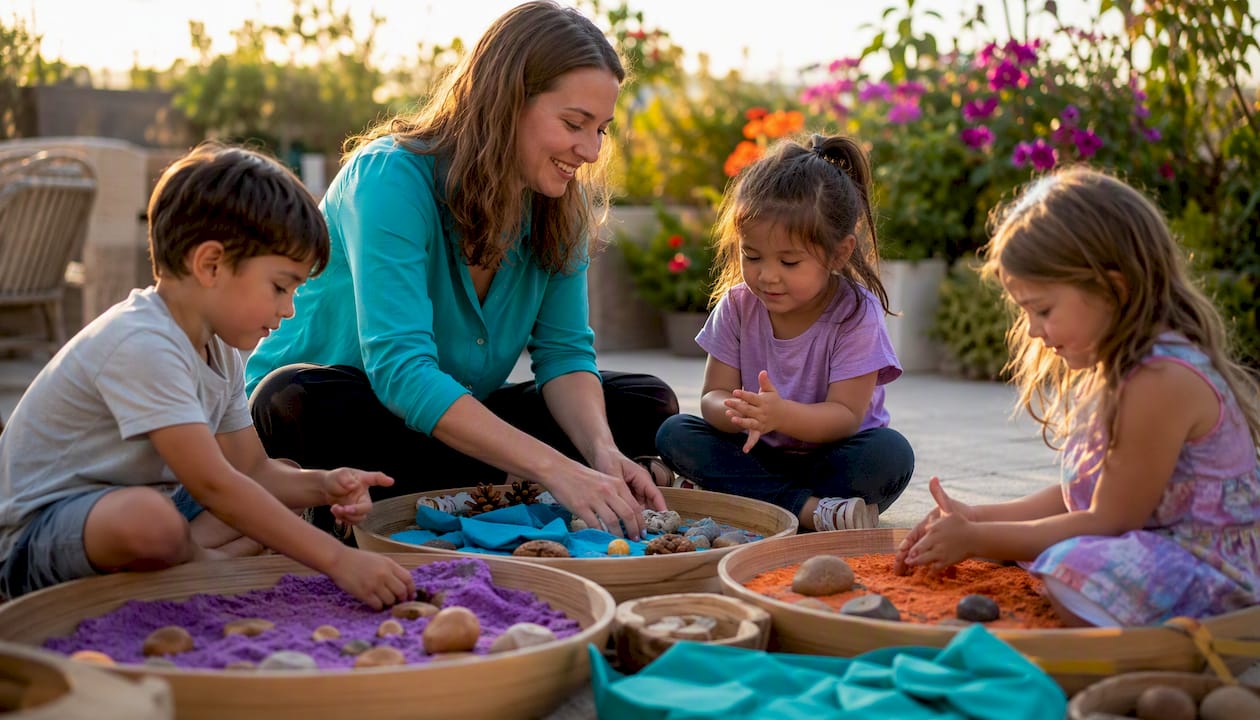
Tactile learning, the practice of building understanding through touch and physical interaction, consistently improves engagement, deepens memory encoding, and sharpens conceptual understanding in children. Research using tangible interfaces found that structured, discovery-based hands-on learning improved end-test scores by about 27% compared with traditional lecture-based instruction. That is not a small margin. For parents and educators wondering how to reach children who seem disengaged or who struggle to retain what they read, the answer often starts with their hands.
Here is what the evidence points to, quickly:
- Children who physically handle objects remember them significantly longer. A study published in Educational Psychology Review found that haptic exploration produced better recall of objects after three weeks compared with seeing-only conditions.
- Preschool block play correlates with higher standardized math scores in later grades, suggesting that spatial, hands-on play builds foundations that last.
- Tactile methods are especially effective for children with low prior knowledge, reducing the cognitive load that abstract instruction places on beginners.
One activity you can try today: give a child a handful of dried beans and ask them to sort, count, and group them by size. Five minutes of that kind of physical engagement activates more learning pathways than a worksheet covering the same concept.
Pro Tip: When you introduce any hands-on activity, name what the child is doing out loud and connect it to the concept. “You just sorted by size, which is exactly what scientists call classification.” That one sentence is what turns play into lasting learning, and it is the core of Teamgeniussquad’s E³ Method: Engage the hands, Encourage the thinking, Empower the understanding.
Table of Contents
- What is tactile learning, and how does it differ from learning-style myths?
- What does the research say about how tactile learning works?
- What are the core benefits of tactile learning for children?
- Practical tactile activities by age group
- How does tactile learning support neurodivergent and struggling learners?
- What are the most common mistakes with tactile learning?
- How do you measure whether tactile learning is working?
- Key Takeaways
- Why tactile learning deserves more credit than it gets
- Teamgeniussquad makes tactile learning ready to use
- Useful sources and further reading
What is tactile learning, and how does it differ from learning-style myths?
Tactile learning refers to acquiring knowledge through physical touch and hands-on manipulation. The terms tactile, haptic, and kinesthetic are often used interchangeably, but they carry slightly different meanings. Haptic refers specifically to the sense of touch and the feedback the body receives from physical contact with objects. Kinesthetic refers more broadly to body movement and physical activity. Tactile sits between the two: it emphasizes the role of the hands and fingertips in exploring, building, and manipulating materials to construct understanding.
Where things get complicated is the popular idea of the “tactile learner” as a fixed personality type. The learning-styles model, which sorts people into visual, auditory, and kinesthetic/tactile buckets, has been repeatedly questioned by researchers who find little evidence that matching instruction to a child’s supposed style improves outcomes. The more accurate and useful framing is this: tactile strategies are a teaching method that benefits most children, not a label that applies to some and not others.
The distinction matters practically:
- A child labeled a “tactile learner” may be denied rich auditory or visual instruction they also need.
- A child labeled a “visual learner” may be denied hands-on activities that would deepen their understanding.
- Treating tactile learning as a flexible strategy, layered with other approaches, produces stronger results than treating it as a fixed prescription.
Think of it less like a personality test and more like a teaching tool you reach for deliberately, the way a skilled teacher reaches for a diagram when a concept is spatial, or a story when a concept is abstract.
What does the research say about how tactile learning works?
The science behind hands-on learning draws on two well-established frameworks: multisensory encoding and embodied cognition. Multisensory encoding holds that when the brain processes information through more than one sense simultaneously, it creates richer, more durable memory traces. Embodied cognition goes further, arguing that physical experience with an object or concept shapes the mental representation of that concept at a fundamental level. You do not just learn about a gear by touching it; the physical experience of turning it becomes part of what you know.
Several lines of research support these frameworks with concrete findings.
| Study / Source | Year | Headline Finding |
|---|---|---|
| ISLS tangible interfaces study | Recent | Guided tactile discovery improved end-test scores by about 27% vs. lecture instruction |
| Educational Psychology Review haptic recall experiment | — | Touching objects produced significantly better 3-week recall than seeing-only conditions |
| Wolfgang longitudinal block play study (via Scientific American) | Longitudinal | Preschool block play correlated with higher standardized math scores in later grades |
| Frontiers in Psychology low prior knowledge study | — | Tactile methods improved initial comprehension for students with low prior knowledge |
A few mechanisms explain these results. First, physical manipulation reduces cognitive load for novices. When a child is learning a new concept, abstract symbols and text demand heavy mental processing. A concrete object gives the brain a scaffold to hang new information on, freeing working memory for understanding rather than decoding. Second, tactile tasks create what researchers call “preparation for future learning”: children who explore a concept physically before receiving formal instruction understand the formal instruction more deeply when it arrives.
One important caveat from the research: guided exploration outperforms unguided free play. When children manipulate materials without any explicit connection to the concept being taught, the learning gains shrink considerably. The physical activity alone is not the magic ingredient. The magic is in the intentional link between what the hands are doing and what the mind is meant to understand.
What are the core benefits of tactile learning for children?
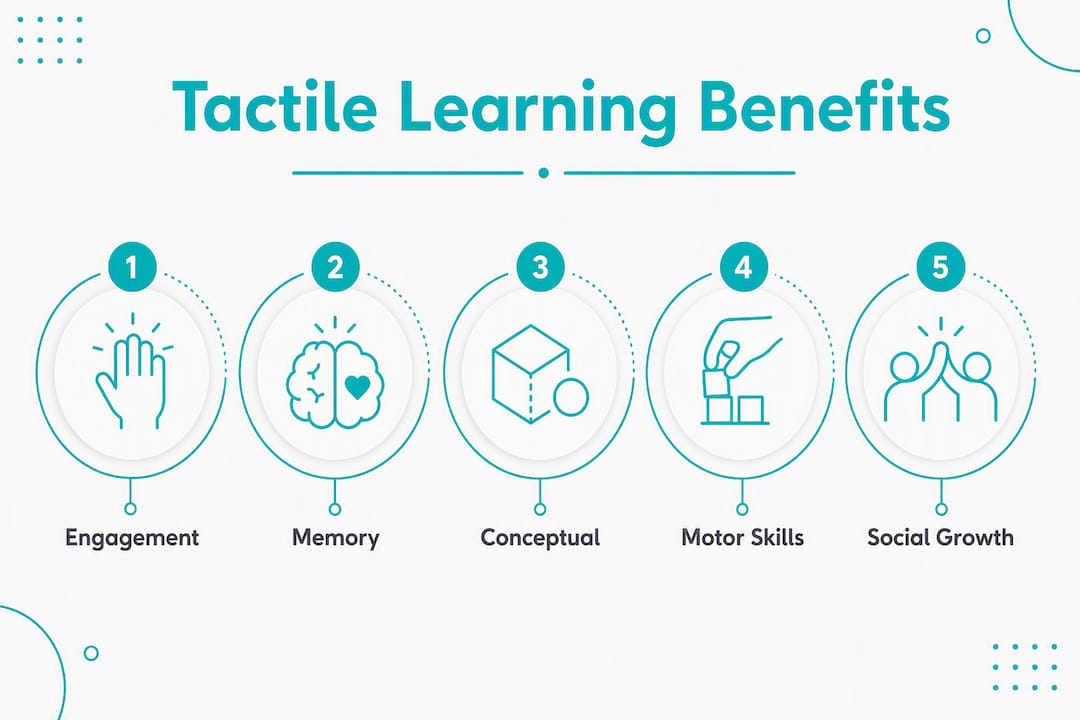
Engagement and motivation
Touch activates situational interest, the kind of curiosity that pulls a child into a task rather than requiring external pressure to keep them there. When children handle real materials, they ask more questions, stay on task longer, and are more likely to seek out related information afterward. This matters enormously in classrooms where attention is the scarcest resource.
Memory and long-term retention
The haptic recall research is striking: children and adults who physically handle objects remember them significantly better weeks later than those who only observe them. The body’s involvement in learning creates what memory researchers call an “enactment effect,” where performing an action encodes the associated concept more deeply than passive reception. For parents helping children study for tests, this translates directly: have them build, sort, or act out the concept rather than re-read the notes.
Conceptual understanding and spatial reasoning
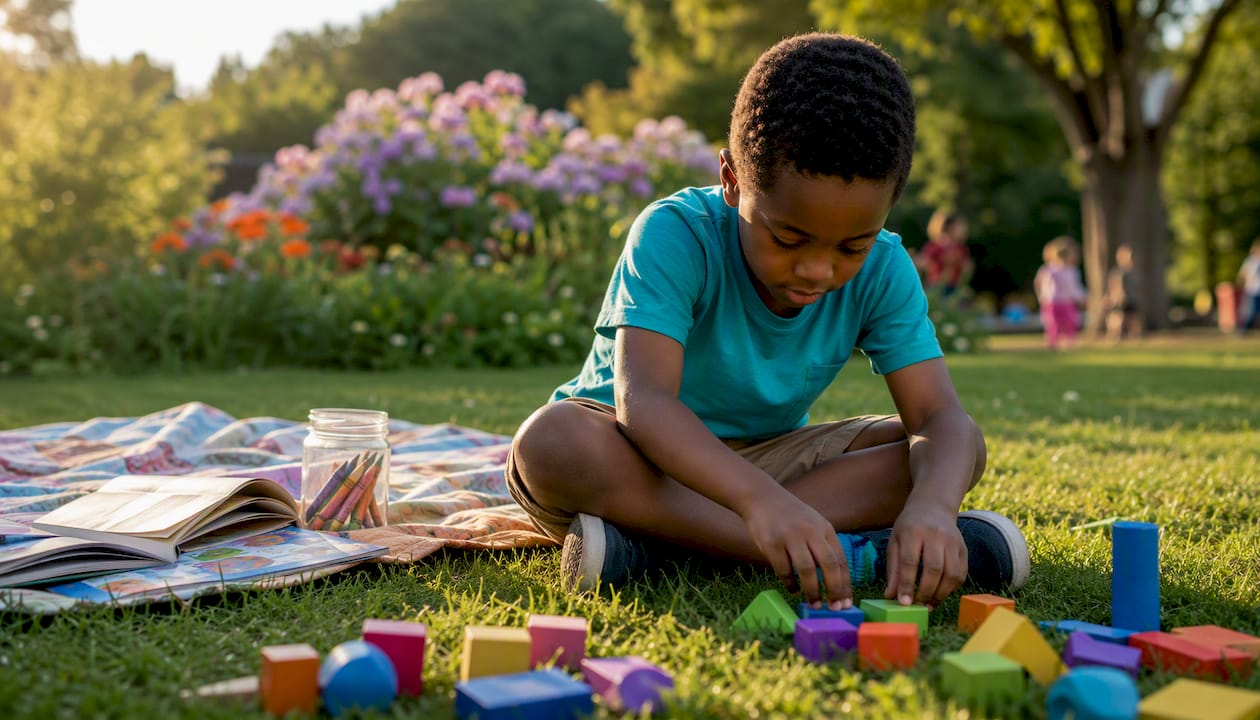
Block play and model-building develop spatial reasoning in ways that abstract diagrams cannot fully replicate. When a child physically assembles a model of the solar system, they experience the relative distances and sizes in a way that a poster on the wall cannot convey. The Wolfgang longitudinal study found that children who engaged in more block play during preschool scored higher on standardized math assessments years later, a finding that points to the long-term academic payoff of early hands-on spatial play.
Motor skills, language, and social-emotional growth
Tactile sensory activities strengthen fine motor skills, sensory processing, focus, and emotional regulation in young children. Beyond the physical, tactile activities generate rich language opportunities: when a child describes the texture of clay, the weight of a block, or the resistance of a spring, they are building vocabulary through direct experience. Group tactile projects, building a bridge together, conducting a shared experiment, also develop collaboration and communication skills that purely individual tasks do not.
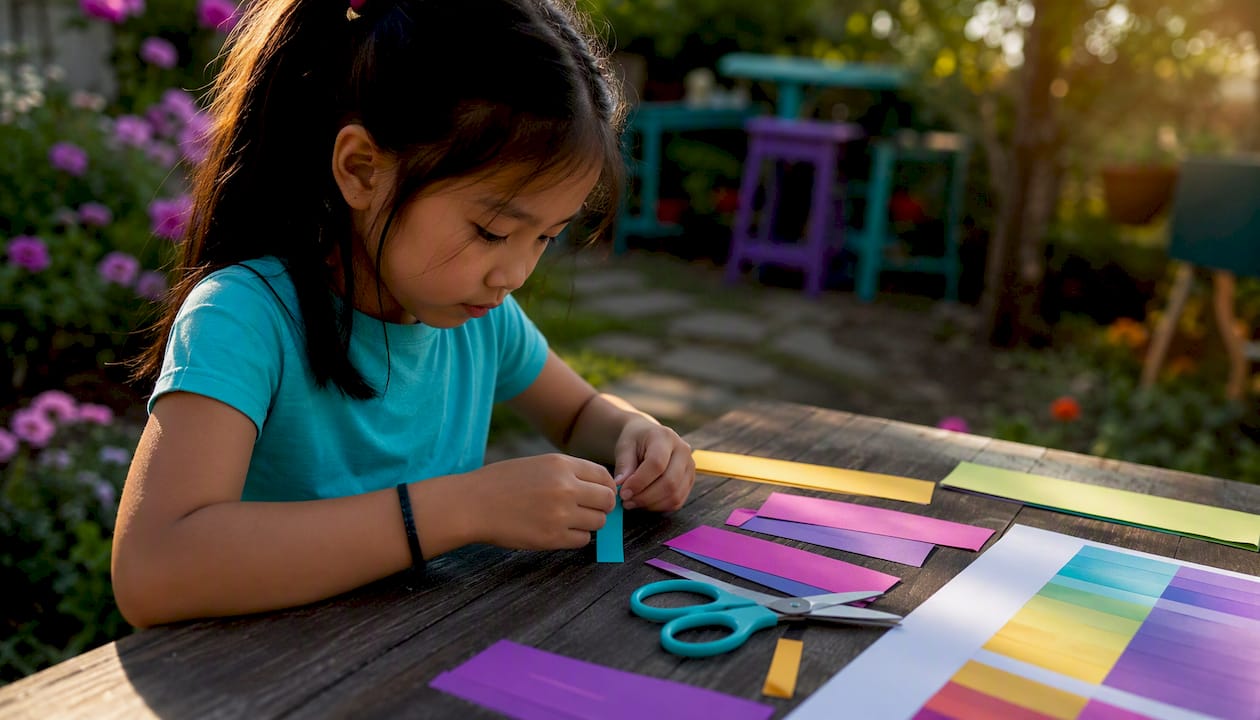
Classroom example: A second-grade teacher introduces fractions by having students fold paper strips into halves, thirds, and fourths. Children who physically fold and compare the strips consistently outperform those who only see fraction diagrams on a board, because the folding makes the relationship between parts and wholes tangible.
Home example: A parent working on multiplication with a reluctant learner sets out arrays of small objects, pennies, buttons, or blocks, and asks the child to arrange them in rows. The physical act of building the array makes the abstract multiplication table something the child has made, not just memorized.
Practical tactile activities by age group
The goal here is not to overwhelm you with a list. It is to give you a ready-to-use menu, organized by developmental stage, so you can pick something and try it this week. For multi-sensory classroom ideas that complement these activities, Teacher’s Pet offers practical resources worth bookmarking.
Preschool (ages 3–5): sensory exploration and vocabulary
Learning goals: Fine motor development, sensory vocabulary, early math concepts (sorting, counting, size).
- Sensory bins — Fill a bin with rice, sand, or dried pasta. Hide small objects inside. Children find, name, and sort them. Materials: plastic bin, filler material, small toys. Time: 15–20 minutes.
- Playdough letters — Roll and shape letters or numbers from playdough. Materials: playdough, letter cards. Time: 10–15 minutes.
- Nature sorting — Collect leaves, rocks, and sticks outside. Sort by texture, size, or color. Materials: outdoor materials, sorting trays. Time: 20 minutes.
- Water pouring — Practice pouring water between containers of different sizes to build early volume concepts. Materials: cups, water, towels. Time: 10 minutes.
Limited space adaptation: Sensory bins work on a kitchen table with a plastic tablecloth underneath. Nature sorting works with a small collection of household objects.
Elementary (ages 6–10): concrete math and science
Learning goals: Number operations, measurement, scientific observation, early geometry.
- Fraction strips — Cut paper into equal parts to explore fractions physically. Materials: paper, scissors, rulers. Time: 20–25 minutes.
- Base-ten blocks — Build two- and three-digit numbers using physical blocks, then add or subtract by trading. Materials: base-ten block set or cut-paper versions. Time: 20–30 minutes.
- Simple circuits — Connect a battery, wire, and small bulb to explore electrical circuits. Materials: basic circuit kit or battery/wire/bulb. Time: 30 minutes.
- Measurement scavenger hunt — Measure objects around the room using rulers and record findings. Materials: rulers, recording sheet. Time: 20 minutes.
- Seed dissection — Open seeds and beans to observe internal structures. Materials: dried beans, magnifying glasses, paper towels. Time: 20 minutes.
Scaffolding tip: After each activity, ask children to draw what they built or observed and label it. This bridges the physical experience to the symbolic representation, which is where the deepest learning happens.
Preteen (ages 11–13): model building and lab work
Learning goals: Systems thinking, hypothesis testing, data recording, applied math.
- Bridge engineering challenge — Build the strongest bridge possible using index cards and tape, then test with weights. Materials: index cards, tape, small weights. Time: 45–60 minutes.
- Solar energy exploration — Use mirrors or reflective surfaces to direct sunlight and observe energy transfer. Materials: mirrors, sunlight, thermometer. Time: 30–40 minutes.
- Ecosystem models — Build a terrarium or food web diagram using physical cards and string. Materials: small plants, soil, jar, or card sets. Time: 45 minutes.
- Geometry with clay — Sculpt 3D geometric shapes and calculate surface area and volume. Materials: clay, rulers. Time: 30–40 minutes.
Teens (ages 14+): applied projects and prototyping
Learning goals: Design thinking, iteration, real-world problem solving, presentation skills.
- Prototype challenge — Design and build a solution to a real problem (water filtration, packaging design) using available materials. Materials: vary by challenge. Time: 60–90 minutes.
- Chemistry labs — Conduct titration or pH testing with household materials. Materials: vinegar, baking soda, pH strips. Time: 45 minutes.
- Structural analysis — Build and test load-bearing structures using spaghetti and marshmallows. Materials: spaghetti, marshmallows. Time: 45–60 minutes.
Activity checklist for teachers and parents:
- [ ] Identify the concept you want to teach
- [ ] Choose a tactile activity that physically represents that concept
- [ ] Gather materials in advance (5–10 minutes of prep)
- [ ] Name the concept explicitly before and after the activity
- [ ] Ask children to explain or draw what they did
- [ ] Fade the physical materials gradually as understanding grows
For a curated list of curiosity-building activities for ages 5–13, Teamgeniussquad’s blog offers ready-to-use ideas that align with these developmental goals.
How does tactile learning support neurodivergent and struggling learners?
For children with dyslexia, dysgraphia, ADHD, or sensory processing differences, tactile learning is not just a nice alternative. It often removes the primary barrier to understanding. Children who struggle with reading and writing carry a heavy cognitive load just to decode text or form letters on a page. When instruction relies entirely on those channels, the child’s working memory is consumed by the mechanics of reading or writing before they can even begin to process the concept being taught.
Tactile methods reduce that cognitive load by giving children a concrete anchor for new ideas. A child who cannot yet read the word “density” fluently can still feel the difference between a heavy and a light object of the same size, and that physical experience becomes the foundation on which the vocabulary and the concept can later be built.
Practical adaptations for neurodivergent learners:
- Sensory-friendly materials: Offer options. Some children are sensitive to certain textures (wet sand, slime). Keep dry alternatives available, like kinetic sand, smooth stones, or foam blocks.
- Role-play and identity tools: Putting on a lab coat or receiving a “scientist badge” gives children a role to inhabit, which reduces performance anxiety and increases engagement. This is central to Teamgeniussquad’s approach: children step into the identity of an innovator, not just the role of a student completing a task.
- Multi-step guided exploration: Break activities into small, clearly sequenced steps. Children with ADHD benefit from knowing exactly what comes next, and children with dyslexia benefit from instructions delivered verbally and demonstrated physically rather than presented as a written list.
- Reduced time pressure: Allow children to work at their own pace through the physical exploration phase before moving to recording or reflection.
For inclusive STEAM activity adaptations designed specifically for neurodivergent learners, Teamgeniussquad’s guide offers concrete, classroom-tested strategies.
Pro Tip: Before assessing a neurodivergent child’s understanding, let them demonstrate it physically first. Ask them to show you with the materials rather than write or say the answer. You will often find the understanding is there; the barrier was the output format, not the learning.
What are the most common mistakes with tactile learning?
Hands-on activities can fail just as easily as any other teaching method, and the failure mode is usually the same: the activity becomes an end in itself rather than a means to understanding. Here are the pitfalls worth knowing before you start.
- Unguided play without a debrief: Children who freely explore materials without explicit connection to a concept often enjoy the activity but retain little of the intended learning. The physical engagement is necessary but not sufficient.
- Manipulatives as busywork: Handing out blocks or clay to keep children occupied during a lesson is not tactile learning. The activity must be designed to represent the concept, not just to fill time.
- Assuming tactile equals better for every topic: Some concepts are genuinely better taught through direct explanation, reading, or discussion. Forcing a hands-on activity onto a topic where it does not naturally fit wastes time and can confuse children.
- Skipping the vocabulary link: Children who build a model but never hear or use the correct vocabulary for what they built have an experience without a label. The label is what makes the experience transferable to tests, conversations, and future learning.
- Never fading the materials: If children always need physical objects to solve a problem, the goal of abstract reasoning has not been reached. Gradually removing the physical support is part of the teaching plan, not an afterthought.
Red flags that an activity is not producing learning: the child cannot explain what they did in their own words, performance on related assessments does not improve after several sessions, or the child treats the materials as toys rather than tools. When you see these signs, the fix is usually more explicit instruction before and after the activity, not more hands-on time.
How do you measure whether tactile learning is working?
Measuring the impact of hands-on learning does not require formal testing infrastructure. Simple, consistent observation and a few quick checks will tell you what you need to know.
What to measure and when
- Before the first session: Ask the child to explain the concept in their own words or draw what they know. This is your baseline.
- Immediately after each session: Ask one or two recall questions verbally. “What did you notice when you added the vinegar?” “How many groups did you make?” Note whether the child can answer without the materials in front of them.
- One week later: Repeat the same baseline question from step one. Improvement here is the clearest signal that learning has transferred to memory.
- After 2–6 weeks of consistent practice: Look for transfer: can the child apply the concept in a new context or with different materials? This is the strongest evidence of genuine understanding.
- After 3+ months: Check whether skills appear in unrelated tasks. A child who built fraction strips in October should handle recipe fractions in January without needing to re-learn the concept.
Simple measures you can use right now
- Engagement log: Note how long the child stays on task without redirection. A baseline of two minutes growing to ten minutes over four weeks is meaningful progress.
- Vocabulary check: Before and after a unit, ask the child to name and define five key terms. Track how many they can use correctly in a sentence.
- Skill rubric: For motor-based activities, use a simple three-point scale: “needs support,” “can do with prompting,” “can do independently.” Rate the same task every two weeks.
- Quick recall test: Three to five questions, answered verbally or by pointing to objects. No writing required, which keeps the assessment from conflating recall with writing ability.
Observational prompts for teachers:
- Does the child initiate questions during the activity?
- Does the child connect the activity to something they already know?
- Does the child use the correct vocabulary without being prompted?
A timeline to set realistic expectations: engagement gains are usually visible within one to three sessions. Vocabulary growth typically appears within two to four weeks of consistent tactile instruction. Conceptual transfer, the ability to apply the concept in a new situation, generally requires six to twelve weeks of regular practice.
Key Takeaways
Tactile learning improves engagement, memory, and conceptual understanding most reliably when hands-on activities are explicitly linked to vocabulary and concepts, then gradually faded as children build abstract reasoning.
| Point | Details |
|---|---|
| Guided beats unguided | Structured tactile tasks with explicit concept links improve outcomes; free play without a debrief rarely does. |
| Memory gains are durable | Haptic exploration produced significantly better recall after three weeks compared with seeing-only conditions. |
| Works for most learners | Tactile strategies benefit children broadly, especially those with low prior knowledge or neurodivergent learning profiles. |
| Measure in stages | Track engagement within sessions, vocabulary after 2–4 weeks, and concept transfer after several weeks. |
| Teamgeniussquad’s E³ kits | Teamgeniussquad’s screen-free STEAM experiment kits apply the Engage, Encourage, Empower framework to make tactile learning structured, age-appropriate, and measurable. |
Why tactile learning deserves more credit than it gets
There is a version of this conversation that goes sideways quickly: someone mentions tactile learning, someone else says “learning styles are a myth,” and the whole idea gets dismissed. That dismissal is a mistake, and it is worth being direct about why.
The learning-styles myth critique is valid and important. Sorting children into fixed categories and teaching them only in their “preferred style” does not improve outcomes. But that critique does not touch the underlying evidence for tactile methods as a teaching strategy. The research on haptic memory, embodied cognition, and manipulative-based math instruction is not about learning styles. It is about how human brains encode information, and it applies to most children most of the time.
What gets underestimated is the specificity required. Handing a child a pile of blocks and walking away is not tactile learning. It is supervised play. The difference between an activity that produces measurable learning gains and one that produces a fun afternoon is the intentional design: the explicit concept link before the activity, the vocabulary named during it, and the reflection that follows. That design is what the research actually supports, and it is what separates purposeful hands-on learning from well-intentioned busywork.
For children who struggle in traditional environments, especially those with dyslexia, dysgraphia, or ADHD, this distinction is not academic. It is the difference between a child who believes they cannot learn and one who discovers they can, when the right conditions are created for them. That belief, once built, tends to outlast any single lesson.
Teamgeniussquad makes tactile learning ready to use
If you have read this far, you have the framework. What most parents and educators need next is not more theory; it is a structured, ready-to-run activity that puts the research into practice without requiring hours of preparation.
Teamgeniussquad’s hands-on STEAM experiment kits are built specifically for children ages 5–13 and designed around the E³ Method: every kit Engages children with a real experiment, Encourages them through guided discovery, and Empowers them with the vocabulary, reflection, and identity tools to own what they learned. Each kit is screen-free, includes all materials, and comes with role-play elements like lab coats and scientist badges that help children step into the identity of an innovator rather than just completing a task.
The kits are especially well-suited to the neurodivergent-friendly adaptations described in this guide. Inspired by a real family journey with dyslexia and dysgraphia, Teamgeniussquad’s design philosophy centers on children who need a different path to confidence, not a simpler one. The Science Solar Energy Kit is a strong starting point for the preteen activities described above, pairing real experimentation with structured reflection that builds both scientific vocabulary and self-belief.
Visit Teamgeniussquad to find the kit that fits your child’s age and curiosity, and start building the kind of hands-on learning that sticks.
Useful sources and further reading
The sources below are the strongest starting points for parents, educators, and researchers who want to go deeper on tactile and hands-on learning.
| Source | Year | What it supports |
|---|---|---|
| Educational Psychology Review: haptic recall study | — | Evidence for durable memory gains from touching real objects; guidance on guided vs. unguided exploration |
| ISLS: tangible interfaces and discovery learning | Recent | ~27% learning improvement from guided tactile discovery vs. lecture instruction |
| Scientific American: touch and learning | Recent | Block play and spatial reasoning; critique of fixed learning-style labels |
| Frontiers in Psychology: low prior knowledge learners | — | Tactile methods reduce cognitive load for beginners and neurodivergent learners |
| University of Illinois: tactile devices and learning | — | Expert commentary on haptics as multi-sensory bridges for abstract concepts |
| WGU: what is tactile learning? | Reference | Accessible overview of tactile/kinesthetic learning for educators |
| ABCmouse: tactile learning overview | Reference | Practical activity ideas across math, science, and literacy subjects |
| LearningAbledKids: tactile learning style | Reference | Project-based kits, textured materials, and manipulative recommendations |
| NHWS: tactile sensory activities and development | — | Fine motor, focus, and emotional regulation benefits for young children |
| Teacher’s Pet: multi-sensory approach to learning | Reference | Practical classroom implementation of multi-sensory and tactile methods |
| Teamgeniussquad: hands-on STEAM kits guide | Reference | How physical STEAM kits support conceptual learning and classroom engagement |
Key notes on these sources:
- The Educational Psychology Review study is the strongest single source for the memory-retention claim; read it before citing the haptic recall finding in any formal context.
- The ISLS study is the clearest evidence for the 27% learning improvement figure; the finding applies to guided discovery with tangible interfaces, not unstructured play.
- Scientific American’s piece is the most accessible entry point for parents who want a readable overview of the research without technical jargon.
- The Frontiers in Psychology study is the most directly relevant source for educators working with neurodivergent or struggling learners.
- WGU’s overview is a reliable, practitioner-friendly reference for teachers who want a clear definition and classroom framing.

Leave a comment
This site is protected by hCaptcha and the hCaptcha Privacy Policy and Terms of Service apply.