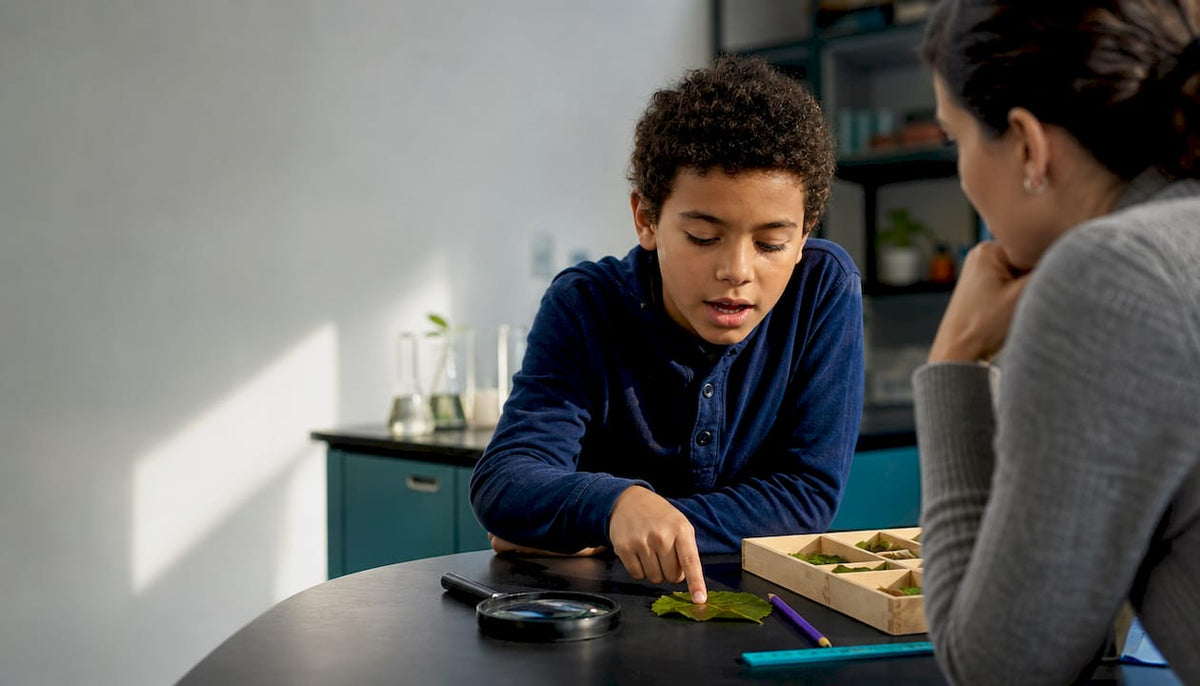
Parents: UDL First IEP Phrases That Make Science Accommodations Happen
Effective science accommodations rest on a UDL-first approach: pair Universal Design for Learning with targeted, classroom-tested supports that keep grade-level expectations intact. Focus on five categories at the IEP table: presentation, response, equipment, timing, and setting. Before the meeting, write down which accommodations your child already uses during science instruction, since that history is your strongest leverage for getting them written into the plan.
TL;DR:
- Most effective science accommodations focus on removing barriers unrelated to the science content and are based on individual student needs.
- Presentations like labeled diagrams, visual glossaries, and large print, along with response options such as oral answers and dictation, are key supports.
- Measurable IEP goals should specify conditions, behaviors, measurement methods, and timeframes to monitor progress accurately.
- Inquiry-based labs can be adapted by reducing variables, providing premade data tables, and allowing verbal explanations to maintain rigor without overloading executive function.
- Accurate assessment accommodations must be documented and practiced during regular instruction to ensure they are effective and legally compliant.
Table of Contents
- What Are the Best IEP Accommodations for Science?
- How Do You Write Measurable IEP Goals for Science?
- Can Inquiry-Based Labs Stay Rigorous With Accommodations?
- What Does IDEA Require for Science Assessment Accommodations?
- How Do You Write Clear, Implementable IEP Accommodation Language?
- Practicing Science Skills at Home Between IEP Meetings
- What I’d Tell Any Parent Walking Into an IEP Meeting
- Bring the Practice Home With Teamgeniussquad
- Resources Worth Bookmarking
- Sources
- FAQ
What Are the Best IEP Accommodations for Science?
The strongest science accommodations remove a barrier that has nothing to do with the science itself. A student who understands photosynthesis but can’t hold a pencil steady enough to draw a diagram needs a response accommodation, not a lower bar for content mastery. That distinction, choosing supports based on what actually blocks the student rather than their diagnosis label, is the single most useful idea in this entire framework, and it comes straight from UDL principles applied to science instruction.
Here’s a working catalog organized by category, pulled from what actually shows up in functioning IEPs:
Presentation supports help students take in information:
- Pre-taught vocabulary lists before a new unit starts
- Visual glossaries pairing terms like “hypothesis” or “variable” with images
- Labeled diagrams instead of blank ones for note-taking
- Tactile graphics for students with visual impairments
- Large print materials and closed captions on any video content
Response options change how a student shows what they know:
- A scribe or proctor who records answers the student dictates
- Oral responses in place of written lab reports
- Recorded verbal explanations of a process or conclusion
- Drawing or model-based responses instead of paragraph answers
Equipment and materials bridge physical or processing gaps:
- Magnifiers for reading small print on data tables or specimens
- Audio recording devices for capturing observations hands-free
- Speech-to-text software for students whose writing speed lags their thinking
- UDL-aligned notebooks with scaffolded templates, similar to the SNUDLE model CAST has tested in classrooms nationwide
Timing and scheduling address processing speed and stamina:
- Extended time on labs and written assessments
- Built-in breaks during multi-step experiments
- Small-group testing environments
- Staggered deadlines for multi-day lab reports
Setting accommodations control the environment itself:
- Reduced-distraction spaces for tests or focused observation work
- A lab partner or adult assistant for tasks requiring fine motor control
- Adaptive lab tools like weighted grips or one-handed measuring devices
Pro Tip: Before requesting any accommodation, name the specific barrier out loud in the meeting. “She can explain her reasoning verbally but freezes when asked to write it” gets you a response accommodation faster than “she needs extra support.”
How Do You Write Measurable IEP Goals for Science?
A measurable science goal needs four parts: the condition under which the student performs the task, the observable behavior, how it’s measured, and the timeframe. Skip any of the four and the goal becomes nearly impossible to track, let alone defend at the next annual review.
- Condition. What support or context is provided? (“Given a labeled diagram and a word bank…”)
- Behavior. What will the student actually do? (“…will classify five household objects as solids, liquids, or gases…”)
- Measurement. How is success defined? (“…with 80% accuracy across three consecutive trials…”)
- Timeframe. By when? (“…by the end of the third quarter.”)
Elementary-level examples:
- “Given a teacher checklist, the student will record three independent observations during a science demonstration with 80% accuracy in four out of five trials.”
- “Using a scaffolded science notebook page, the student will draw and label evidence of a physical change with 75% accuracy across three observation periods.”
Secondary-level examples:
- “Given a lab template with two pre-assigned variables, the student will design and carry out a controlled investigation, correctly identifying the independent and dependent variable in 4 out of 5 trials.”
- “The student will produce a written or oral claim supported by three pieces of evidence, meeting the criteria on a teacher-provided rubric with 80% accuracy across two consecutive assessments.”
Progress monitoring doesn’t need to be complicated. A simple rubric scored weekly, a frequency count of independent observations logged per lab, or a running data sheet the science teacher updates after each unit all work. What matters is consistency: the same measurement tool, applied the same way, so a parent can look at eight weeks of data and see an actual trend instead of a teacher’s vague impression that “things seem better.”
Can Inquiry-Based Labs Stay Rigorous With Accommodations?
Yes, and the mechanism matters: you adjust the volume of a task, not its cognitive demand. A student who struggles with working memory doesn’t need an easier question to investigate. They need fewer variables to track while investigating the same question at the same depth. A classroom vignette on adapting assignments for students with learning disabilities describes exactly this: a teacher reduced the number of variables and provided a premade data table, and students still met the full NGSS learning objective for that unit.
Practical scaffolds that reduce executive load without touching rigor:
- Premade data tables so students focus on collecting and interpreting numbers, not formatting a chart from scratch
- Sentence starters for writing claims and evidence statements (“I observed that… which suggests…”)
- Visual models of the investigation process posted where students can reference them mid-lab
- Checklists breaking a multi-step lab into sequential, checkable actions
Alternative expression matters just as much as scaffolding the task itself. If a student can explain the relationship between force and motion out loud but can’t organize that explanation into a five-paragraph lab report, let them record a verbal explanation or build a physical model instead. The science content is identical. Only the output format changed.
Instructional models help too. Push-in co-teaching, where a special education teacher works inside the general science classroom rather than pulling students out, keeps students in the same investigation as their peers while getting real-time support. Station rotations let a teacher work with a small group needing more scaffolding while others move independently. Structured peer supports, pairing a student with a classmate for specific lab roles, work especially well when the peer’s job is clearly defined rather than “help them out.” Teachers frequently haven’t been trained to adapt inquiry labs this way, which is part of why professional development gaps show up so often in classrooms that otherwise want to do this well.
What Does IDEA Require for Science Assessment Accommodations?
Federal law is specific here. Under 34 CFR §300.320, an IEP must state any accommodations necessary to measure a student’s academic achievement on district and state assessments. This isn’t a suggestion. It’s a documentation requirement, and an IEP team that skips it has left a legal gap.
A national review of state accommodation policies found that presentation and equipment supports, including large print, braille, reading questions aloud, magnification, and extended time, were allowed across most states reviewed, though specific allowances vary by state.
That variability matters. What Ohio permits on a state science assessment may not match what Texas or California allows, so check your current state assessment manual rather than assuming last year’s rules still apply.
One operational rule trips up more families than anything else: an accommodation used for the first time on a high-stakes test is invalid. If your child hasn’t practiced with a scribe, speech-to-text software, or extended time during regular classroom instruction, adding it only for the state test can actually hurt performance rather than help it. Document accommodations as they’re introduced in class, and make sure the IEP team logs the same supports for testing that show up in daily instruction. Also record the participation decision itself, whether the student takes the regular assessment with accommodations or an alternate assessment, along with the team’s rationale for that choice.

How Do You Write Clear, Implementable IEP Accommodation Language?
Vague language is the quiet reason so many accommodations exist on paper but never happen in the classroom. “Visual aids as needed” tells a substitute teacher nothing. Specific, operational wording is what makes an accommodation enforceable, a point legal guidance on IEP documentation backs up directly.
Compare these side by side:
| Vague phrasing | Specific, implementable phrasing |
|---|---|
| “Extra time on tests” | “Time and a half on all science quizzes and unit tests, administered in the resource room” |
| “Visual supports” | “Labeled diagram provided for each new lab procedure, reviewed with student before independent work begins” |
| “Assistive technology” | “Speech-to-text software (student’s existing Chromebook dictation tool) available for all written lab reports” |
| “Preferential seating” | “Seated near the demonstration table during all hands-on labs” |
Notice the pattern: who provides it, what exactly it looks like, and how often it happens. That’s the template to bring to the meeting.
Pro Tip: Bring a sample of your child’s actual science classwork to the IEP meeting. A worksheet showing a struggle to complete written responses under time pressure makes your accommodation request concrete in a way no verbal description can match.
An advocacy checklist worth bringing:
- Samples of recent science classwork showing the specific struggle
- Written or verbal feedback from the current science teacher
- A brief demonstration of any assistive tool the student already uses successfully
- A request for a specific implementation timeline, not just “starting soon”
- A follow-up date on the calendar to check whether the accommodation is actually happening
If a support isn’t working after a few weeks, request a classroom observation or a short interim meeting rather than waiting for the annual review. Ask whether staff received training on the tool or strategy. Half of implementation failures come down to a teacher never having been shown how to use the accommodation, not resistance to using it.
Practicing Science Skills at Home Between IEP Meetings
Accommodations written into an IEP govern the classroom and testing, but the skills underneath them, following a sequence, describing an observation, explaining a process out loud, need to practice somewhere lower stakes than a graded assignment. Hands-on, screen-free kits give students a place to rehearse lab vocabulary and procedural steps without a grade attached, which matters most for kids who freeze up when writing is the only way to prove they understood something.
A well-designed method like Engage, Encourage, Empower starts with tactile engagement, builds toward guided practice, and ends with the student explaining what they did in their own words. Role-play elements like lab coats and science-themed accessories let a child rehearse “sounding like a scientist” before doing it in front of classmates, providing low-stress rehearsal that can make oral response accommodations feel less intimidating when it counts.
What I’d Tell Any Parent Walking Into an IEP Meeting
Most of the science accommodations that actually work aren’t complicated. They’re specific. The families who get results are the ones who show up with a worksheet, a timeline request, and language the teacher can act on Monday morning, not just a diagnosis and a hope. Try one or two accommodations at a time, watch what happens over a few weeks, and adjust. Schedule that meeting, and bring something concrete to the table.
— Tita
Bring the Practice Home With Teamgeniussquad
There are screen-free kits available that allow families to rehearse the kinds of skills an IEP accommodation is meant to support, without a grade or classroom audience watching. If your child benefits from oral response accommodations or needs to practice explaining a process before writing it down, that’s a rehearsal you can run at the kitchen table.
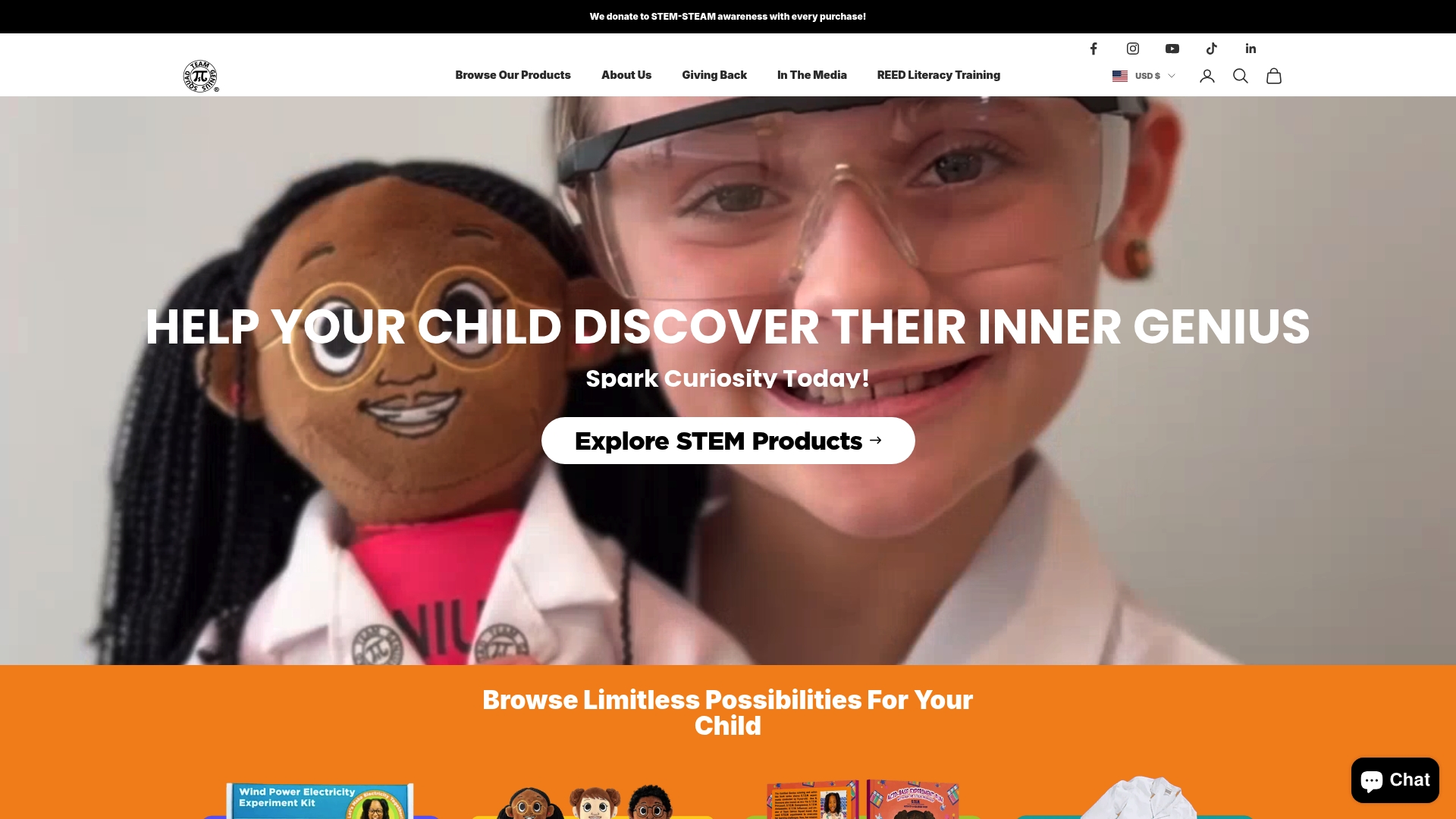
The Meet Ava sessions offer kids ages 5 to 13 one-on-one or group formats to practice describing an experiment out loud with a STEM ambassador guiding them, providing low-pressure verbal rehearsal that may help make oral-response accommodations less daunting on test day. For families who want tactile, screen-free practice between sessions, browse the full collection of experiment kits and role-play tools built around the same Engage, Encourage, Empower framework. Book a session or pick a kit that matches your child’s current science unit, and give them a place to practice before it counts.
Resources Worth Bookmarking
- IDEA regulations on IEP content, 34 CFR §300.320
- CAST’s SNUDLE science notebook project
- NSTA’s UDL solutions for common science barriers
- U.S. Department of Education assistive technology guidance
Sources
- UDL solutions for common science barriers — NSTA
- Individualized education program — LII / Cornell Law
FAQ
What Are the Most Common IEP Accommodations for Science?
The most common accommodations fall into five buckets: presentation (visual glossaries, labeled diagrams), response (scribes, oral answers), equipment (magnifiers, speech-to-text tools), timing (extended time, breaks), and setting (reduced-distraction spaces, lab partners). Most students use a combination of two or three, not just one.
What Are Some Examples of IEP Goals for Science Skills?
A measurable elementary goal might read: “Given a teacher checklist, the student will record three independent observations during a demonstration with 80% accuracy in four out of five trials.” A secondary example: “The student will design a controlled investigation with two pre-assigned variables and produce a written or oral claim supported by three pieces of evidence at 80% accuracy.”
What Are the 13 Disability Categories Required for an IEP?
IDEA lists 13 disability categories that qualify a student for special education services, including specific learning disability, autism, speech or language impairment, other health impairment, and emotional disturbance among others. A student’s category doesn’t determine which science accommodations they need; the specific barrier they face in the classroom does.
What Is the Best Science Curriculum for Students With Disabilities?
There’s no single curriculum that works for every student, but NGSS-aligned inquiry programs paired with UDL scaffolds, like CAST’s SNUDLE science notebook, have shown improved sensemaking outcomes for students with disabilities. Screen-free, hands-on kits like those from Teamgeniussquad can supplement classroom curricula by giving students low-stakes practice with the same vocabulary and procedural sequences.
How Do I Know If an Accommodation Is Actually Working?
Track it with the same measurement tool for at least three to four weeks, whether that’s a rubric score, a frequency count, or a teacher checklist. If the data doesn’t show movement, request a classroom observation before the next scheduled review rather than waiting for the annual meeting.

Leave a comment
This site is protected by hCaptcha and the hCaptcha Privacy Policy and Terms of Service apply.